Dermatoscope and Magnifiers
 Diagnostic Kits
 Vital Signs Monitors
 Stethoscopes and Accessories
 Otoscopes, Ophthalmoscopes, and Retinoscopes
 Reflex Hammers and Neurological Tools
 Scales and Measuring Devices
 Spirometers and Pulmonary Function Tests
 Electrosurgical Units and Accessories
 Cutting Instruments
 Grasping and Holding Instruments
 Hemostatic Instruments
 Specialized Surgical Sets
 Single-Use Procedure Trays and Packs
 Surgical Drapes, Gowns, and Covers
 Tissue Unifying Instruments
 Radiation Protection
 X-Ray Machines and Accessories
 Ultrasound Systems and Probes
 MRI and CT Scanners
 Radiology Consumables
 Bone Densitometers
 Fluoroscopy Equipment
 Imaging Tables and Positioning Aids
 Microscopes and Accessories
 Centrifuges and Separators
 Analyzers
 Incubators and Ovens
 Pipettes, Dispensers, and Lab Glassware
 Refrigerators, Freezers, and Storage Units
 Lab Consumables
 Sterilizers and Autoclaves for Lab Use
 Multi-Parameter Monitors
 Ventilators and Respiratory Support Devices
 Defibrillators and AEDs
 Infusion Pumps and IV Systems
 Patient Warmers and Cooling Devices
 Central Monitoring Stations
 Accessories
 Anesthesia Machines and Workstations
 Oxygen Concentrators and Delivery Systems
 Nebulizers and Inhalers
 CPAP/BiPAP Machines
 Airway Management
 Anesthesia Masks, Circuits, and Bags
 Humidifiers and Heaters
 Respiratory Therapy Accessories
 First Aid Kits and Cabinets
 Emergency Resuscitation Equipment
 Trauma Supplies
 Emergency Carts and Crash Carts
 Burn Care Products
 Bleeding Control
 Automated External Defibrillators (AEDs)
 Transport and Evacuation
 Wheelchairs and Accessories
 Walkers, Crutches, and Canes
 Prosthetics and Orthotics
 Physical Therapy Equipment
 Transfer Devices
 Bathroom Safety
 Orthopedic Traction and Tables
 Hot/Cold Therapy Packs and Units
 Beds and Mattresses
 Chairs and Stools
 Tables
 Cabinets and Storage
 Privacy Screens & Curtains
 Stands and Racks
 Linens and Textiles
 Lighting
 Autoclaves and Sterilizers
 Ultrasonic Cleaners
 Disinfectant Solutions and Wipes
 Sterilization Pouches, Wraps, and Indicators
 Instrument Trays and Containers
 UV and Ozone Disinfection Devices
 Washer Disinfectors
 Wound Care
 Gloves
 Masks and Respirators
 Catheters and Tubing
 Swabs, Applicators, and Sponges
 Incontinence Products
 Personal Protective Equipment (PPE)
 Dental Chairs and Units
 Handpieces and Burs
 Instruments
 Consumables
 Sterilization for Dental Use
 Orthodontic Supplies
 Endodontic Tools
 Slit Lamps and Tonometers
 Lensometers and Phoropters
 Ophthalmic Surgical Instruments
 Eyewear Frames and Lenses
 Contact Lens Supplies
 Vision Testing Charts and Devices
 Eye Care Consumables
 Laser Systems for Eye Care
 ENT Exam Chairs and Tables
 Endoscopes
 Audiometers and Hearing Tests
 ENT Instruments
 Nasal and Throat Packs
 Hearing Aids and Accessories
 Otology Supplies
 Fetal Dopplers and Monitors
 Delivery Beds and Tables
 Gynecological Instruments
 Neonatal Incubators and Warmers
 Breast Pumps and Accessories
 Contraceptive Devices
 Maternity Supports and Pads
 Neonatal Consumables
 Cystoscopes and Urethroscopes
 Dialysis Machines and Supplies
 Urological Catheters and Bags
 Lithotripters
 Prostate Treatment Devices
 Urinary Incontinence Products
 Kidney Stone Management Tools
 Consumables & Disposables
 EEG and EMG Machines
 Neurosurgical Instruments
 Nerve Stimulators
 Headrests and Positioning Aids
 Lumbar Puncture Kits
 Seizure Monitoring Devices
 Consumables
 Rehabilitation for Neurological Conditions
 ECG Machines and Accessories
 Holter Monitors
 Stress Test Systems
 Pacemakers and Defibrillator Accessories
 Vascular Access Devices
 Cardiac Catheters and Guidewires
 Blood Flow Meters
 Consumables
 Orthopedic Instruments
 Casts, Splints, and Padding
 Joint Replacement Supplies
 Prosthetic Limbs and Components
 Bone Grafts and Substitutes
 Traction Devices
 Orthopedic Braces and Supports
 Rehabilitation Aids for Orthopedics
 Home Oxygen Therapy
 Hospital Beds for Home Use
 Mobility Aids
 Bathroom and Daily Living Aids
 Wound Care for Home
 Monitoring Devices
 Enteral Feeding Pumps and Tubes
 Hand Sanitizers and Dispensers
 Face Shields and Goggles
 Isolation Gowns and Suits
 Biohazard Waste Containers
 Air Purifiers and HEPA Filters
 Surface Disinfectants
 Sharps Containers
 Protective Barriers
 Cardiovascular & Endurance Training
 Strength Training & Weightlifting
 Functional Training & Core Conditioning
 Physical Therapy & Rehabilitation
 Sports & Outdoor Recreation
 Gym Flooring & Facility Equipment
 Fitness Monitoring & Accessories
 Kids & Novelties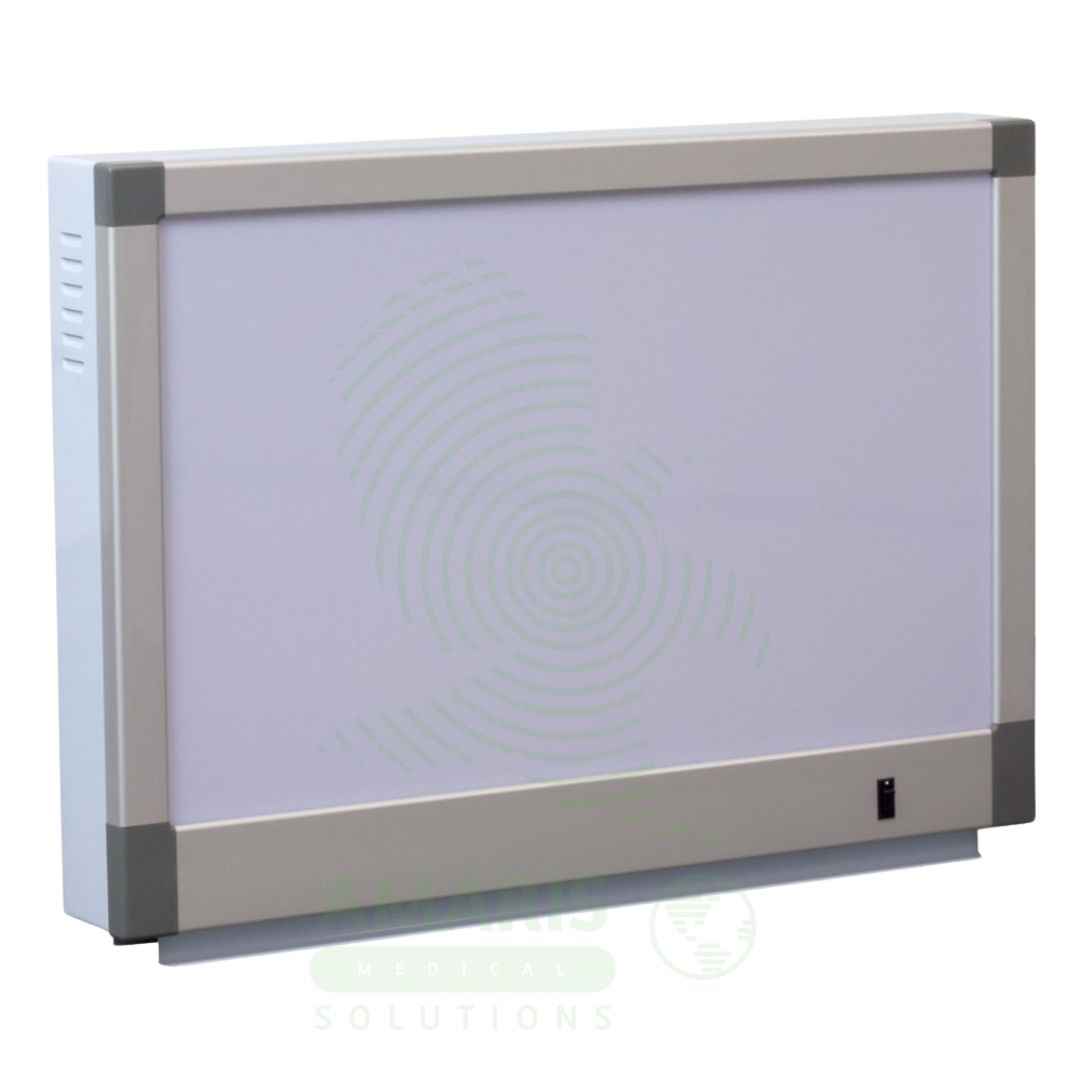

X-ray Viewer
$1.00
WhatsApp Order
An X-ray Viewer (or film illuminator) is a light-emitting device designed specifically for viewing analog radiographic films. It provides a uniform, high-luminance white light source that backlights the film, making the captured image of bones, organs, and tissues visible for medical diagnosis. While its role has diminished with the widespread adoption of digital radiography and PACS monitors, it remains a crucial tool for reviewing historical film archives, in clinics with hybrid analog/digital systems, and for teaching. Modern LED viewers offer cool operation, energy efficiency, and consistent light quality, serving as an essential interface between the physical film and the diagnostician’s eye.
Description
X-ray Viewer
PRIMARY CLINICAL & DIAGNOSTIC USES
1. Viewing and Interpreting Radiographic Films
-
Primary Use: Provides a uniformly illuminated, high-luminance light source for viewing and interpreting analog X-ray films, allowing physicians and radiologists to visualize the captured image by backlighting the developed film, making differences in tissue density clearly visible for diagnosis.
-
How it helps: For the radiologist and clinician, the X-ray viewer transforms a sheet of film into a diagnostic tool—illuminating the subtle shades of gray that reveal fractures, tumors, and infections, and providing the contrast needed to distinguish normal anatomy from pathology. For the patient, this viewing ensures that their X-ray films can be properly interpreted, leading to accurate diagnosis and appropriate treatment.
2. Diagnosis of Medical Conditions from Film
-
Primary Use: Essential for diagnosing fractures, dislocations, lung diseases, abdominal conditions, and dental issues by providing the necessary contrast and clarity to see anatomical details and pathologies captured on the film.
-
How it helps: For the emergency physician, orthopedist, and pulmonologist, the X-ray viewer brings diagnostic images to life—revealing the hairline fracture that might otherwise be missed, showing the infiltrate that confirms pneumonia, and demonstrating the obstruction that explains a patient’s abdominal pain. For the patient, proper film viewing means that their condition is accurately diagnosed and appropriately treated.
3. Comparison of Current and Prior Studies
-
Primary Use: Multi-panel viewers allow side-by-side comparison of new and old X-ray films to assess disease progression, healing of fractures, or changes in tumor size over time.
-
How it helps: For the radiologist and treating physician, the ability to place current and prior films side by side on a multi-panel viewer provides invaluable perspective—showing whether a fracture is healing, a tumor is growing, or pneumonia is resolving, and guiding decisions about continuing, changing, or stopping treatment. For the patient, this comparison ensures that treatment decisions are based on objective evidence of how their condition is evolving over time.
4. Surgical and Procedural Planning
-
Primary Use: Used by surgeons to review pre-operative X-rays in the operating room or clinic to plan surgical approaches, select appropriate implants, or visualize fracture patterns before reduction and fixation.
-
How it helps: For the orthopedic surgeon and operating room team, having an X-ray viewer in the surgical suite means the patient’s films are available for immediate reference during the procedure—confirming fracture patterns, guiding implant selection, and ensuring that the surgical approach matches the pre-operative plan. For the patient undergoing surgery, this ready access to their images means the surgeon can refer back to the films throughout the procedure, ensuring accuracy and optimal outcomes.
5. Teaching and Case Discussion
-
Primary Use: Provides a communal viewing platform for medical students, residents, and healthcare teams to discuss radiographic findings, anatomy, and pathology during teaching conferences or clinical rounds.
-
How it helps: For the medical educator and trainees, the X-ray viewer creates a shared space for learning—allowing groups to gather around illuminated films, point out findings, discuss differential diagnoses, and build the interpretive skills essential for clinical practice. For the future patients who will be cared for by these trainees, every teaching session on an X-ray viewer contributes to their diagnostic accuracy and clinical competence.
SECONDARY & SUPPORTIVE USES
1. Quality Control of Film Processing: Used in radiology departments to check the density, contrast, and overall quality of films produced by automated processors, ensuring diagnostic adequacy. For the radiology manager and technologist, regular review of processed films ensures that imaging quality remains high.
2. Review of Other Analog Imaging Films: Can be used to view other types of analog medical imaging films, such as those from older CT scanners, mammography units, or nuclear medicine studies. For departments maintaining historical archives, X-ray viewers provide access to all types of analog imaging.
3. Forensic and Veterinary Radiology: Used in non-human settings, such as forensic pathology or veterinary clinics, to examine skeletal remains or animal radiographs. For the forensic anthropologist and veterinarian, X-ray viewers provide the same essential viewing capability as in human medicine.
4. Display of Photographic Negatives: In non-medical contexts, the uniform light box is suitable for viewing photographic negatives or slides. For professionals working with analog photography, X-ray viewers provide ideal illumination for reviewing film.
KEY PRODUCT FEATURES
1. BASIC IDENTIFICATION ATTRIBUTES
-
Type: A light-emitting device designed specifically for illuminating and viewing X-ray films.
-
Designation: Also called a Film Viewer, Illuminator, Light Box, or Negatoscope.
-
Common Variants:
-
Single-Panel Viewer: A basic unit for viewing one film at a time.
-
Multi-Panel Viewer: A bank of multiple light boxes (e.g., 4-panel, 6-panel, 8-panel) mounted together, allowing viewing of an entire series of films (e.g., a full spine or chest series).
-
Motorized Viewer: Features a rolling film carrier that allows easy scrolling through long films (e.g., leg length studies).
-
Variable Brightness Viewer: Allows adjustment of light intensity to optimally view different film densities (e.g., very dark chest films vs. lighter extremity films).
-
LED Viewer: Modern viewers using energy-efficient, cool-running, and uniformly distributed LED light sources, replacing older fluorescent tube models.
-
2. TECHNICAL & PERFORMANCE PROPERTIES
-
Light Source:
-
Traditional: Fluorescent tubes.
-
Modern: Light Emitting Diodes (LEDs). LEDs offer superior uniformity, longer lifespan, lower heat output, and instant-on capability.
-
-
Luminance and Uniformity: Must provide high, consistent brightness (measured in candela per square meter - cd/m² or nits) across the entire viewing surface without hotspots or dark edges, which is critical for accurate diagnosis.
-
Color Temperature: Typically provides a "cool white" or "daylight" color temperature (around 5500-6500K) that is optimal for viewing the blue-tinted base of radiographic film.
-
Viewing Surface: Made of durable, translucent acrylic or polycarbonate that diffuses light evenly.
3. PHYSICAL & OPERATIONAL PROPERTIES
-
Mounting: Can be wall-mounted, ceiling-mounted on a swing arm, or built into a viewing workstation (alternator).
-
Size: Sized to accommodate standard film formats (e.g., 14" x 17", 10" x 12", 8" x 10"). Multi-panel viewers match the combined dimensions of multiple films.
-
Controls: May include a simple on/off switch or more advanced controls for brightness adjustment and individual panel activation.
4. SAFETY & COMPLIANCE ATTRIBUTES
-
Regulatory Status: Typically Class I medical device (low risk) when intended for medical film viewing.
-
Electrical Safety: Must comply with electrical safety standards for medical equipment (e.g., IEC 60601).
-
Heat Emission: Older fluorescent models emit significant heat, which can damage films left on them for extended periods. LED viewers run cool.
5. STORAGE & HANDLING ATTRIBUTES
-
Storage: N/A – It is a fixed or mounted piece of equipment.
-
Cleaning: Wipe the acrylic viewing surface regularly with a soft, damp cloth and mild cleaner to remove dust and fingerprints. Do not use abrasive cleaners.
-
Maintenance (Fluorescent Models): Requires periodic replacement of fluorescent tubes as they dim or fail. LED models require minimal maintenance.
-
Film Handling: Films should be placed and removed gently to avoid scratching the viewing surface.
6. LABORATORY & CLINICAL APPLICATIONS
-
Primary Application: A fundamental piece of equipment in radiology reading rooms, orthopedic clinics, emergency departments, dental offices, and operating rooms where analog film-based imaging is still utilized or archived films need to be reviewed.
-
Transition to Digital: While largely superseded by digital monitors (PACS workstations) in modern digital radiology departments, X-ray viewers remain essential for viewing historical film archives and in facilities that have not fully transitioned to digital radiography.
SAFETY HANDLING PRECAUTIONS
1. SAFETY PRECAUTIONS
-
Avoid Film Damage: Do not leave films on a fluorescent viewer for prolonged periods, as heat can cause the film to warp or the emulsion to melt.
-
Electrical Safety: Ensure the power cord is in good condition. Do not use it if the housing is cracked or damaged.
-
Ergonomics: Position the viewer at an appropriate height and distance to prevent neck and eye strain during prolonged viewing sessions. Ambient room lighting should be controlled to reduce glare on the film surface.
2. FIRST AID MEASURES
-
Electrical Shock: Unplug the unit immediately. Do not touch the patient or equipment. Seek medical attention if necessary.
-
Broken Fluorescent Tube: Ventilate the area. Carefully dispose of broken glass and tube according to local regulations for mercury-containing waste. Avoid skin contact.
3. FIRE FIGHTING MEASURES
-
Flammability: Plastic housing and internal electrical components are combustible.
-
Extinguishing Media: For electrical fires, use a CO₂ or dry chemical extinguisher.
Related products
C-Arm Surgical System
A C-Arm Surgical System is a mobile fluoroscopic X-ray imaging device with a distinctive C-shaped arm connecting the X-ray tube and detector. It is an indispensable tool in modern operating rooms and interventional suites, providing real-time live imaging to guide complex procedures in orthopedics, spine surgery, pain management, and vascular interventions. Its mobility allows precise positioning around the patient, while features like pulsed fluoroscopy and dose monitoring are critical for radiation safety. Modern flat-panel systems offer high-resolution imaging and advanced capabilities like 3D Cone-Beam CT. Safe operation demands rigorous adherence to radiation protection protocols (ALARA) for both patients and the surgical team.
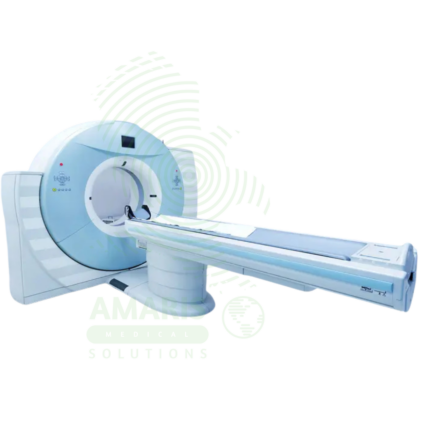
Computed Tomography (CT)
Computed Tomography (CT) is a diagnostic imaging modality that uses X-rays and computer processing to create detailed cross-sectional images of the body. Essential for trauma evaluation, cancer diagnosis, vascular imaging, and surgical planning, CT provides rapid, high-resolution images that guide life-saving decisions in emergency medicine, oncology, and surgery. Advanced multi-slice systems enable whole-body scanning in seconds with sub-millimeter resolution. Radiation dose optimization and contrast safety protocols are essential for patient safety.
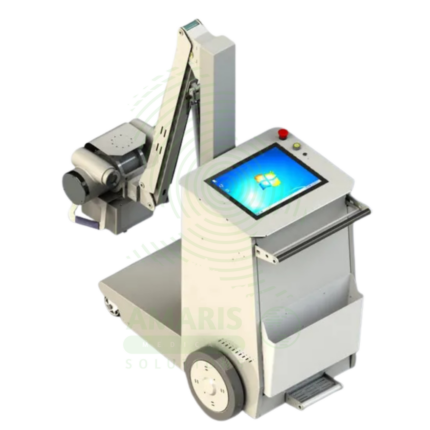
Digital & Analog X-ray Machine
A Digital & Analog X-ray Machine is a fundamental medical imaging device that uses a controlled beam of ionizing radiation to produce static or real-time images of the body's internal structures. It is indispensable for diagnosing fractures, lung diseases, dental issues, and many abdominal conditions. The transition from Analog (film-based) to Digital (CR or DR) technology has revolutionized the field, offering faster results, superior image manipulation, improved dose efficiency, and seamless integration into digital healthcare networks. Its operation demands strict adherence to radiation safety protocols (ALARA) to protect patients and staff, making it a cornerstone of safe, effective diagnostic medicine.
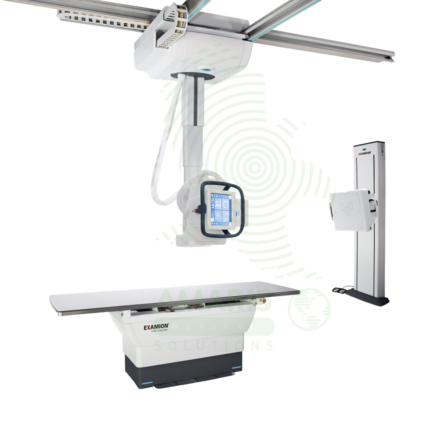
Digital Ceiling X-ray
A Digital Ceiling X-ray is a ceiling-mounted digital radiography system for general diagnostic imaging of the skeletal, chest, abdominal, and extremity anatomy. The ceiling-mounted tube assembly provides full room coverage for flexible patient positioning, while digital flat panel detectors produce immediate high-resolution images for rapid diagnosis. Integrated with PACS and RIS, it supports efficient digital workflow from image acquisition to interpretation. Used in radiology departments, emergency rooms, and outpatient imaging centers.
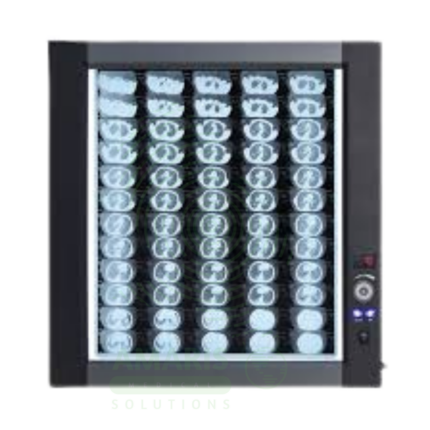
LED Medical Film Viewer
An LED Medical Film Viewer is a light box designed for viewing and interpreting analog X-ray films. Using LED backlight technology, it provides uniform, high-luminance illumination with instant on capability and long life. Available in single, dual, and multi-panel configurations, it supports side-by-side comparison of current and prior studies, pre-operative planning, and group teaching. Essential for radiology departments, orthopedic clinics, emergency departments, and operating rooms where film-based imaging is still used.
Magnetic Resonance Imaging
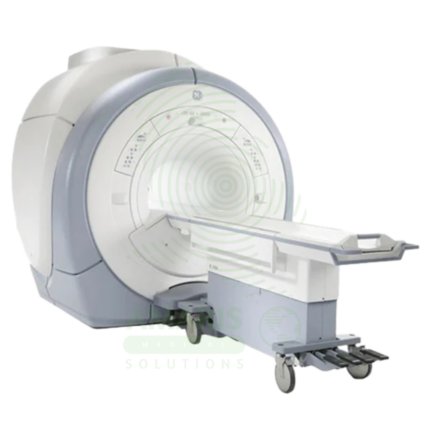
Magnetic Resonance Imaging (MRI) is a non-invasive diagnostic imaging modality that uses powerful magnetic fields and radiofrequency waves to produce detailed images of soft tissues, organs, and internal structures without ionizing radiation. It is the gold standard for imaging the brain, spinal cord, joints, muscles, and ligaments, and is essential for neurological, musculoskeletal, oncologic, and cardiovascular diagnosis. MRI provides exceptional soft tissue contrast, enabling precise anatomical characterization, tumor staging, and treatment planning. Strict safety protocols for ferromagnetic screening and contrast administration are essential for patient safety.
Mobile Film
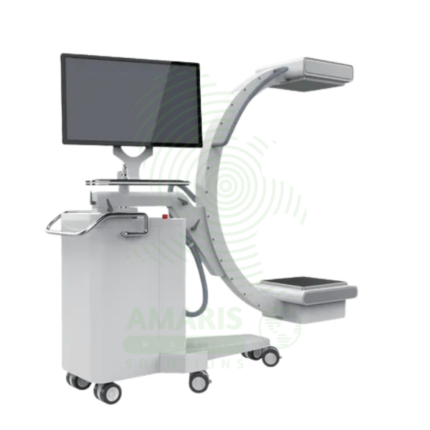
Mobile Film is a battery-powered, portable X-ray system using traditional film cassettes for bedside imaging in intensive care units, neonatal intensive care units, emergency departments, and operating rooms. The mobile unit enables chest, abdominal, and extremity imaging at the patient's bedside, eliminating the risks associated with transporting critically ill patients. Film cassettes are processed in darkroom or daylight processors for image development. Used in hospitals without digital radiography capabilities or as backup for digital systems.