Dermatoscope and Magnifiers
 Diagnostic Kits
 Vital Signs Monitors
 Stethoscopes and Accessories
 Otoscopes, Ophthalmoscopes, and Retinoscopes
 Reflex Hammers and Neurological Tools
 Scales and Measuring Devices
 Spirometers and Pulmonary Function Tests
 Electrosurgical Units and Accessories
 Cutting Instruments
 Grasping and Holding Instruments
 Hemostatic Instruments
 Specialized Surgical Sets
 Single-Use Procedure Trays and Packs
 Surgical Drapes, Gowns, and Covers
 Tissue Unifying Instruments
 Radiation Protection
 X-Ray Machines and Accessories
 Ultrasound Systems and Probes
 MRI and CT Scanners
 Radiology Consumables
 Bone Densitometers
 Fluoroscopy Equipment
 Imaging Tables and Positioning Aids
 Microscopes and Accessories
 Centrifuges and Separators
 Analyzers
 Incubators and Ovens
 Pipettes, Dispensers, and Lab Glassware
 Refrigerators, Freezers, and Storage Units
 Lab Consumables
 Sterilizers and Autoclaves for Lab Use
 Multi-Parameter Monitors
 Ventilators and Respiratory Support Devices
 Defibrillators and AEDs
 Infusion Pumps and IV Systems
 Patient Warmers and Cooling Devices
 Central Monitoring Stations
 Accessories
 Anesthesia Machines and Workstations
 Oxygen Concentrators and Delivery Systems
 Nebulizers and Inhalers
 CPAP/BiPAP Machines
 Airway Management
 Anesthesia Masks, Circuits, and Bags
 Humidifiers and Heaters
 Respiratory Therapy Accessories
 First Aid Kits and Cabinets
 Emergency Resuscitation Equipment
 Trauma Supplies
 Emergency Carts and Crash Carts
 Burn Care Products
 Bleeding Control
 Automated External Defibrillators (AEDs)
 Transport and Evacuation
 Wheelchairs and Accessories
 Walkers, Crutches, and Canes
 Prosthetics and Orthotics
 Physical Therapy Equipment
 Transfer Devices
 Bathroom Safety
 Orthopedic Traction and Tables
 Hot/Cold Therapy Packs and Units
 Beds and Mattresses
 Chairs and Stools
 Tables
 Cabinets and Storage
 Privacy Screens & Curtains
 Stands and Racks
 Linens and Textiles
 Lighting
 Autoclaves and Sterilizers
 Ultrasonic Cleaners
 Disinfectant Solutions and Wipes
 Sterilization Pouches, Wraps, and Indicators
 Instrument Trays and Containers
 UV and Ozone Disinfection Devices
 Washer Disinfectors
 Wound Care
 Gloves
 Masks and Respirators
 Catheters and Tubing
 Swabs, Applicators, and Sponges
 Incontinence Products
 Personal Protective Equipment (PPE)
 Dental Chairs and Units
 Handpieces and Burs
 Instruments
 Consumables
 Sterilization for Dental Use
 Orthodontic Supplies
 Endodontic Tools
 Slit Lamps and Tonometers
 Lensometers and Phoropters
 Ophthalmic Surgical Instruments
 Eyewear Frames and Lenses
 Contact Lens Supplies
 Vision Testing Charts and Devices
 Eye Care Consumables
 Laser Systems for Eye Care
 ENT Exam Chairs and Tables
 Endoscopes
 Audiometers and Hearing Tests
 ENT Instruments
 Nasal and Throat Packs
 Hearing Aids and Accessories
 Otology Supplies
 Fetal Dopplers and Monitors
 Delivery Beds and Tables
 Gynecological Instruments
 Neonatal Incubators and Warmers
 Breast Pumps and Accessories
 Contraceptive Devices
 Maternity Supports and Pads
 Neonatal Consumables
 Cystoscopes and Urethroscopes
 Dialysis Machines and Supplies
 Urological Catheters and Bags
 Lithotripters
 Prostate Treatment Devices
 Urinary Incontinence Products
 Kidney Stone Management Tools
 Consumables & Disposables
 EEG and EMG Machines
 Neurosurgical Instruments
 Nerve Stimulators
 Headrests and Positioning Aids
 Lumbar Puncture Kits
 Seizure Monitoring Devices
 Consumables
 Rehabilitation for Neurological Conditions
 ECG Machines and Accessories
 Holter Monitors
 Stress Test Systems
 Pacemakers and Defibrillator Accessories
 Vascular Access Devices
 Cardiac Catheters and Guidewires
 Blood Flow Meters
 Consumables
 Orthopedic Instruments
 Casts, Splints, and Padding
 Joint Replacement Supplies
 Prosthetic Limbs and Components
 Bone Grafts and Substitutes
 Traction Devices
 Orthopedic Braces and Supports
 Rehabilitation Aids for Orthopedics
 Home Oxygen Therapy
 Hospital Beds for Home Use
 Mobility Aids
 Bathroom and Daily Living Aids
 Wound Care for Home
 Monitoring Devices
 Enteral Feeding Pumps and Tubes
 Hand Sanitizers and Dispensers
 Face Shields and Goggles
 Isolation Gowns and Suits
 Biohazard Waste Containers
 Air Purifiers and HEPA Filters
 Surface Disinfectants
 Sharps Containers
 Protective Barriers
 Cardiovascular & Endurance Training
 Strength Training & Weightlifting
 Functional Training & Core Conditioning
 Physical Therapy & Rehabilitation
 Sports & Outdoor Recreation
 Gym Flooring & Facility Equipment
 Fitness Monitoring & Accessories
 Kids & Novelties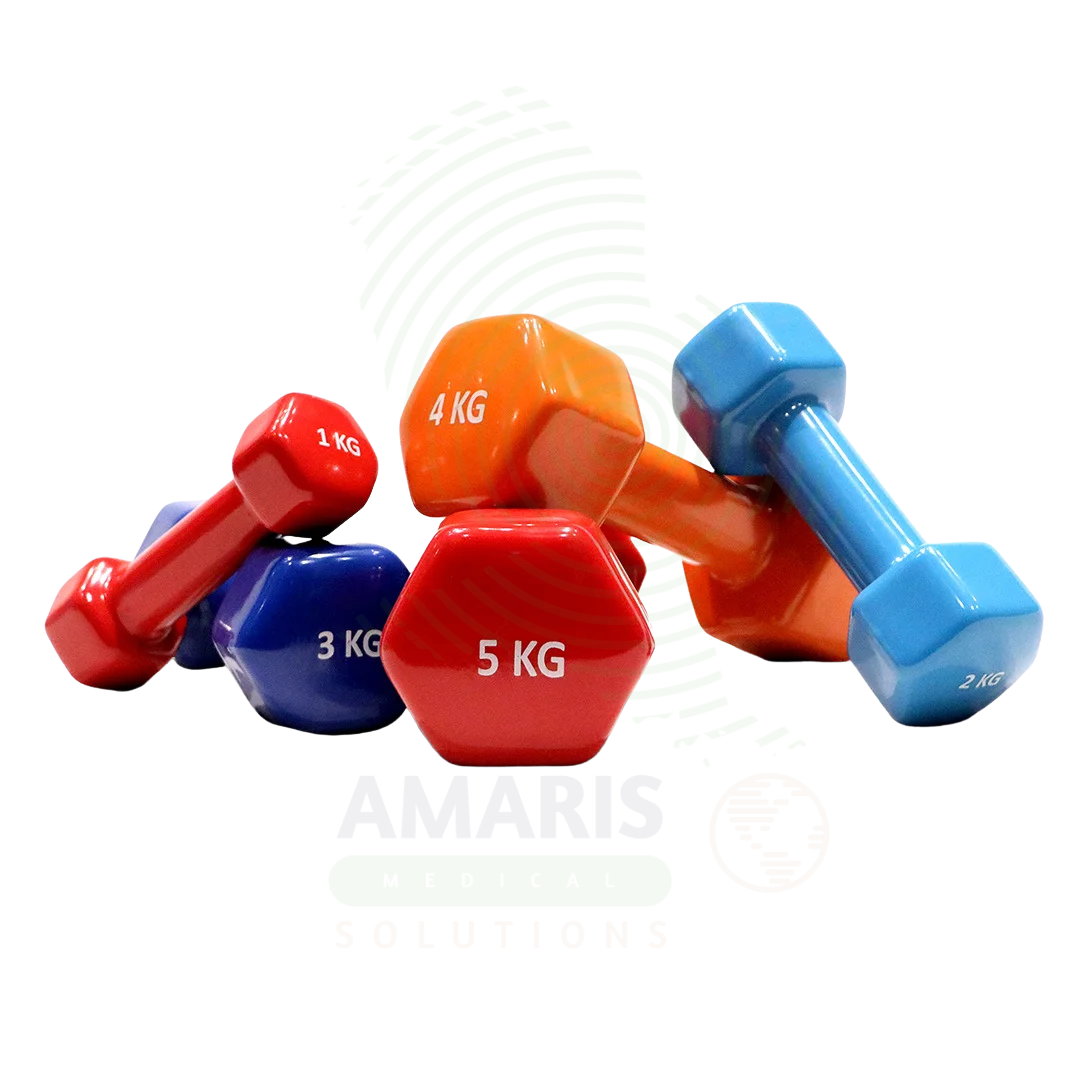
Vinyl Dumbbells
$1.00
WhatsApp Order
Vinyl Dumbbells are weighted handheld weights with a smooth, durable vinyl coating, used for progressive resistance training of upper and lower extremities in rehabilitation and fitness settings. Available in weights ranging from one to twenty pounds, with color-coded identification for easy weight selection, these dumbbells provide a simple, effective tool for progressive resistance training that can be easily advanced as strength improves. For the physical therapist and occupational therapist, vinyl dumbbells enable targeted strengthening of the biceps, triceps, deltoids, pectorals, and upper back musculature—rebuilding the strength needed for lifting, carrying, pushing, and pulling activities essential for independent self-care and household tasks. When held during squats, lunges, step-ups, and deadlifts, they add resistance that strengthens the quadriceps, hamstrings, gluteals, and calf muscles—improving the strength needed for stair climbing, rising from a chair, and safe community ambulation. The smooth vinyl coating is comfortable to hold, resists corrosion from sweat, and protects the underlying cast iron core from damage. For the patient recovering from rotator cuff injury, total joint replacement, stroke, or general deconditioning, vinyl dumbbells provide safe, progressive resistance training that builds functional strength, improves mobility, and supports return to independent living.
Description
Vinyl Dumbbells
PRIMARY CLINICAL & DIAGNOSTIC USES
1. Progressive Resistance Training for Upper Extremity Strengthening
-
Primary Use: Provides a set of weighted handheld weights with a smooth, durable vinyl coating, used for progressive resistance exercises targeting the biceps, triceps, deltoids, pectorals, and upper back musculature.
-
How it helps: For the physical therapist and occupational therapist, vinyl dumbbells provide a simple, effective tool for progressive resistance training that can be easily advanced by increasing weight—enabling targeted strengthening of upper extremity muscles essential for lifting, carrying, pushing, and pulling activities. For the patient recovering from rotator cuff injury, shoulder surgery, or general deconditioning, dumbbell exercises rebuild the strength needed for independent self-care, household tasks, and return to work.
2. Lower Extremity Strengthening and Functional Mobility
-
Primary Use: Held in the hands during squats, lunges, step-ups, and deadlifts to add resistance, strengthening the quadriceps, hamstrings, gluteals, and calf muscles.
-
How it helps: For the physical therapist and sports medicine clinician, vinyl dumbbells provide external resistance for lower extremity strengthening exercises that mimic functional movement patterns—improving the strength needed for stair climbing, rising from a chair, and safe community ambulation. For the patient recovering from total knee replacement, hip fracture, or deconditioning, dumbbell-assisted lower extremity exercises rebuild functional strength essential for independent mobility.
3. Bilateral and Unilateral Training for Symmetry
-
Primary Use: Can be used simultaneously (bilateral) or one limb at a time (unilateral) to address strength asymmetries and retrain neuromuscular control.
-
How it helps: For the physical therapist and neurological specialist, vinyl dumbbells allow for unilateral training that identifies and corrects strength imbalances between limbs—critical for patients recovering from stroke, hemiparesis, or unilateral orthopedic injuries. For the patient with weakness on one side, unilateral dumbbell training restores symmetry, improves balance, and reduces compensatory movement patterns that can lead to secondary injuries.
4. Grip Strength and Forearm Conditioning
-
Primary Use: Holding and controlling dumbbells challenges grip strength and forearm stabilizers, providing secondary conditioning for the hand and wrist musculature.
-
How it helps: For the occupational therapist and hand therapist, the grip required to hold and control dumbbells during upper extremity exercises provides valuable grip strengthening and forearm conditioning—essential for patients with arthritis, carpal tunnel syndrome, or post-operative hand weakness. For the patient, regular dumbbell use builds the grip strength needed for opening jars, carrying groceries, and performing activities of daily living.
SECONDARY & SUPPORTIVE USES
1. Rotator Cuff and Shoulder Rehabilitation: Used for progressive strengthening of the rotator cuff, deltoids, and scapular stabilizers following shoulder injury or surgery.
2. Total Knee Replacement Rehabilitation: Used for squat, lunge, and step-up exercises to rebuild quadriceps and hamstring strength.
3. Total Hip Replacement Rehabilitation: Used for hip abductor and extensor strengthening while maintaining hip precautions.
4. ACL Reconstruction Rehabilitation: Used for closed-chain and open-chain strengthening of quadriceps and hamstrings.
5. Carpal Tunnel Syndrome Management: Used for grip strengthening and forearm conditioning to support the carpal tunnel.
6. Arthritis Grip Strength Maintenance: Used for controlled grip and upper extremity strengthening to maintain hand function.
7. Stroke Rehabilitation Upper Extremity: Used for unilateral and bilateral upper extremity strengthening in patients with hemiparesis.
8. Parkinson’s Disease Strength Training: Used for progressive resistance training to maintain upper and lower extremity function.
9. Multiple Sclerosis Strength Maintenance: Used for controlled resistance training to maintain muscle strength and function.
10. Geriatric Deconditioning: Used for safe, progressive strengthening to maintain independence in activities of daily living.
11. Osteoarthritis Management: Used for pain-free strengthening of muscles surrounding arthritic joints.
12. Rheumatoid Arthritis Exercise: Used for gentle resistance training during periods of active disease.
13. Fibromyalgia Graded Exercise: Used for low-resistance strengthening to improve function without symptom exacerbation.
14. Obesity and Metabolic Conditioning: Used for resistance training to increase lean muscle mass and metabolic rate.
15. Home Exercise Program: Provides portable, adjustable resistance for home-based strengthening programs.
16. Pilates and Yoga Integration: Used to add resistance to traditional Pilates and yoga exercises.
17. Group Exercise Classes: Used in strength training classes for senior fitness and general wellness programs.
KEY PRODUCT FEATURES
1. BASIC IDENTIFICATION ATTRIBUTES
-
Device Type: Weighted handheld weights with a smooth, durable vinyl coating, used for progressive resistance training of upper and lower extremities in rehabilitation and fitness settings.
-
Designation: Vinyl Dumbbells, Coated Dumbbells, Neoprene Dumbbells, Vinyl Weights, Hand Weights, Exercise Dumbbells, Rehabilitation Dumbbells, Therapy Weights, Fitness Dumbbells.
-
Key Components:
o Weight Core: Cast iron or steel weight.
o Coating: Vinyl, neoprene, or rubber coating.
o Grip: Textured or contoured grip area.
o Color: Color-coded by weight.
o Shape: Hexagonal or round design to prevent rolling.
2. TECHNICAL & PERFORMANCE PROPERTIES
-
Weight Range: Typically 1-20 pounds in various increments (1lb, 2lb, 3lb, 5lb, 8lb, 10lb, 12lb, 15lb, 20lb).
-
Coating Material: Vinyl (smooth, durable), neoprene (soft, non-slip), rubber (grippy, durable).
-
Core Material: Cast iron or steel.
-
Grip: Textured or contoured for secure hold.
-
Color Coding: Standard color-coded weights for easy identification (e.g., pink for 2lb, light blue for 3lb, etc.).
-
Shape: Hexagonal (prevents rolling) or round (traditional).
-
Weight Accuracy: Marked weight on each dumbbell.
-
Durability: High durability with proper use; coating resists chipping and corrosion.
3. PHYSICAL & OPERATIONAL PROPERTIES
-
Construction: Solid cast iron core with seamless vinyl coating.
-
Grip Surface: Smooth, non-slip texture.
-
Weight Markings: Embossed or printed weight on end cap or handle.
-
Portability: Portable; easily transported in pairs.
-
Storage: Store on rack, in bin, or on floor.
-
Cleaning: Wipe with damp cloth; mild soap if needed; air dry.
4. SAFETY & COMPLIANCE ATTRIBUTES
-
Regulatory Status: Class I medical device when labeled for therapeutic exercise; fitness equipment if for general wellness.
-
Weight Accuracy: Marked weight on product.
-
Coating Integrity: Seamless coating prevents exposure to metal core.
-
Non-Toxic: Materials are non-toxic for safe handling.
-
Corrosion Resistance: Vinyl coating protects against sweat and moisture.
5. STORAGE & HANDLING ATTRIBUTES
-
Storage: Store in a clean, dry location; avoid dropping on hard surfaces.
-
Cleaning: Wipe with damp cloth and mild disinfectant; air dry.
-
Inspection: Inspect coating for cracks, chips, or damage before each use; discard if coating is compromised.
-
Weight Selection: Select appropriate weight for patient ability; start light and progress gradually.
-
Grip Check: Ensure grip surface is clean and dry before use.
6. LABORATORY & CLINICAL APPLICATIONS
-
Primary Application: Progressive resistance training for upper and lower extremity strengthening, functional mobility training, and rehabilitation in physical therapy, occupational therapy, and fitness settings.
-
Clinical Role: Essential rehabilitation and conditioning equipment in physical therapy clinics, occupational therapy departments, sports medicine facilities, and home healthcare for strength training and functional rehabilitation.
SAFETY HANDLING PRECAUTIONS
1. SAFETY PRECAUTIONS
-
Weight Selection: Select appropriate weight for patient ability; start light and progress gradually.
-
Grip Security: Ensure dry, secure grip before lifting; use wrist straps if needed.
-
Controlled Movement: Perform exercises with controlled, smooth movements; avoid jerky motions or momentum.
-
Spotting: Use spotter for heavy weights or complex movements.
-
Supervision: Patients with balance impairment, cognitive deficits, or severe weakness require supervision.
-
Medical Clearance: Patients with cardiac, pulmonary, or uncontrolled metabolic conditions require medical clearance before resistance training.
-
Contraindications: Avoid in patients with acute fractures, recent joint replacement without clearance, or unstable joint pathology.
-
Footwear: Wear closed-toe athletic shoes for standing exercises.
-
Hydration: Keep water available during exercise.
2. FIRST AID MEASURES
-
Muscle Strain: If muscle strain occurs, stop exercise, rest, apply ice if needed, assess for injury.
-
Joint Pain: If joint pain occurs, stop exercise, assess technique, reduce weight; consult a therapist if pain persists.
-
Dropped Dumbbell: If dumbbell is dropped, assess for foot or lower extremity injury; ensure clear area before resuming.
-
Grip Failure: If grip fails, allow dumbbell to drop safely; assess for injury.
3. FIRE FIGHTING MEASURES
-
Flammability: Metal core is non-flammable; vinyl coating is combustible.
-
Extinguishing Media: Use water, foam, dry chemical, or carbon dioxide for fire involving coating materials.
-
Fire Response: No special fire hazards beyond typical combustible materials.
Related products
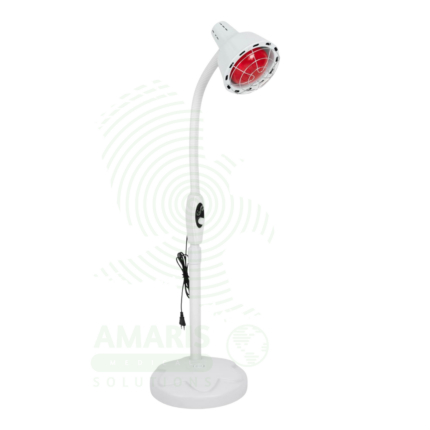
Infrared Therapy Lamp Stand
An Infrared Therapy Lamp Stand is a professional-grade, floor-standing device that emits broad-spectrum infrared radiation to deliver deep-heat therapy to large areas of the body. Designed for clinical use in physical therapy, chiropractic, and pain management clinics, it features adjustable height and tilt panels on a stable, mobile stand for targeted treatment of the back, shoulders, and legs. Its primary uses include pain relief for musculoskeletal conditions, tissue warming for rehabilitation, and promoting muscle relaxation. Safe operation requires strict adherence to contraindications, treatment time/distance guidelines, and continuous patient monitoring to prevent burns or overheating.
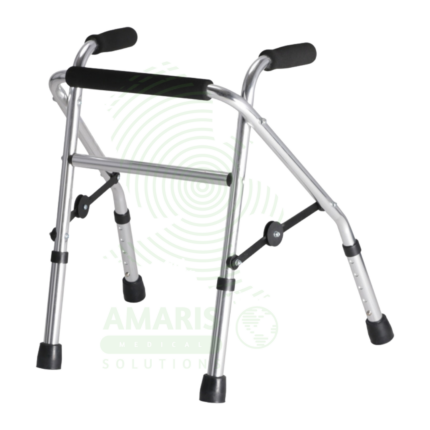
Pediatric Walking Frame
A Pediatric Walking Frame (Gait Trainer) is a supportive wheeled frame specifically designed to facilitate walking and standing for children with physical disabilities such as cerebral palsy. It provides adjustable postural support through a harness, trunk pad, and pelvic guide, enabling safe practice of gait patterns, weight-bearing, and upright mobility. Its primary role is therapeutic, aiming to develop ambulation skills, improve postural control, and promote independence and participation. Correct professional setup and supervision are essential for safety and to ensure it reinforces proper movement rather than abnormal patterns.
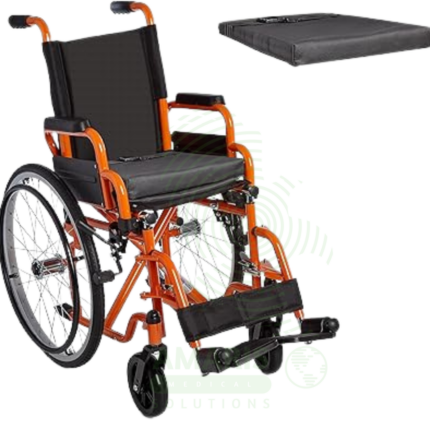
Pediatric Wheelchair
A Pediatric Wheelchair is a specially sized and designed mobility device for children with long-term physical disabilities. Its core functions are to provide independent or assisted mobility, deliver critical postural support to promote proper skeletal development and prevent deformities, and serve as a platform for inclusion in home, school, and community life. Unlike adult chairs, it features extensive adjustability to accommodate growth and modular seating systems tailored to each child's specific postural and medical needs. Prescription and fitting by a rehabilitation team are essential for safe and effective use.
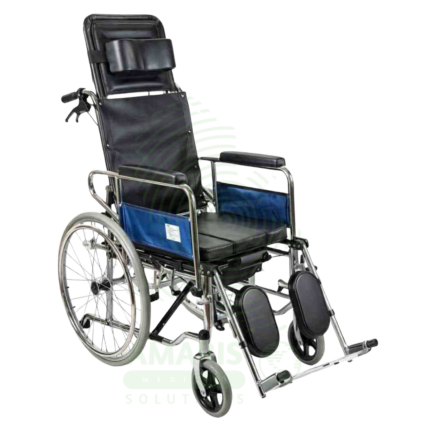
Reclining Commode Wheelchair
A Reclining Commode Wheelchair is a complex manual chair that integrates a reclining backrest with a commode seat. It is designed for patients who require adjustable positioning for pressure relief, respiratory support, or comfort, and who need a built-in toileting solution. It addresses the needs of individuals with severe neurological conditions, spinal injuries, or advanced illnesses. Critical safety features include anti-tip levers, a mandatory seat belt, and a robust recline lock. Its use requires vigilant attention to stability and shear prevention, making it a specialized tool for high-dependency care settings.
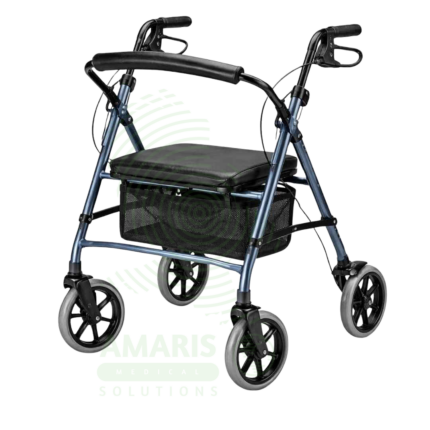
Rollator Walking Aid
A Rollator Walking Aid is a wheeled walking aid with hand brakes, a seat, and a storage basket, designed to provide stability, rest, and carrying capacity for individuals with balance or endurance issues. It allows for continuous, rolling support during walking, making it ideal for both indoor and community mobility. Key safety features include height-adjustable handles, reliable hand brakes for speed control, and a locking function to secure the device when using the seat. It is a fundamental tool for promoting safe, independent ambulation and social participation among the elderly and those with mobility impairments.
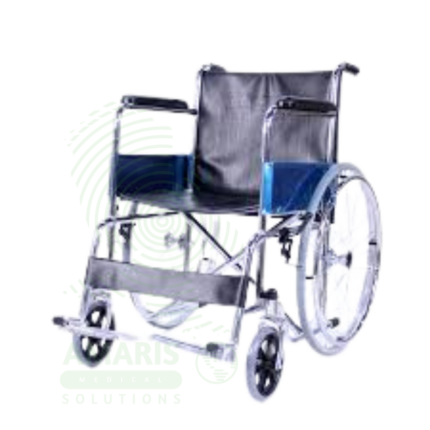
Standard Wheelchair
The Standard Wheelchair is a manually operated, folding or rigid-frame chair with two large rear wheels and two front casters, designed for basic patient mobility. It is used to transport non-ambulatory patients within healthcare facilities, support recovery from injury or surgery, and provide temporary mobility assistance. Key features include handrims for self-propulsion, attendant push handles, flip-up footrests, and wheel locks. As a fundamental piece of equipment in hospitals, clinics, and communities, it requires proper use of brakes and safe transfer techniques to prevent accidents.
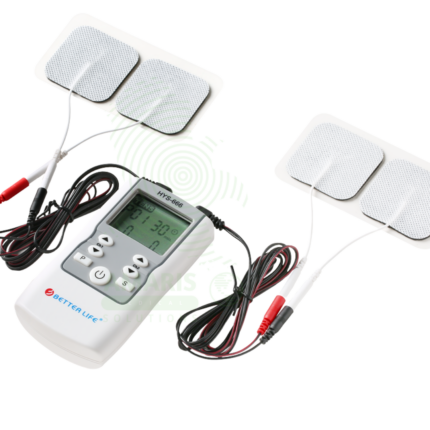
TENS Machine
A TENS Machine is an electronic device used for non-invasive pain management, capable of independently controlling up to four pairs of electrodes (eight total) to treat multiple or complex pain areas simultaneously. By delivering adjustable, low-voltage electrical pulses through the skin, it modulates pain signals via the Gate Control mechanism and may stimulate the body's natural painkillers. Its key adjustable parameters—pulse rate, width, and amplitude—allow for personalized therapy for conditions ranging from arthritis to post-surgical pain. Safe operation requires strict adherence to electrode placement guidelines and contraindications, making it a versatile tool for clinical and prescribed home use.