Dermatoscope and Magnifiers
 Diagnostic Kits
 Vital Signs Monitors
 Stethoscopes and Accessories
 Otoscopes, Ophthalmoscopes, and Retinoscopes
 Reflex Hammers and Neurological Tools
 Scales and Measuring Devices
 Spirometers and Pulmonary Function Tests
 Electrosurgical Units and Accessories
 Cutting Instruments
 Grasping and Holding Instruments
 Hemostatic Instruments
 Specialized Surgical Sets
 Single-Use Procedure Trays and Packs
 Surgical Drapes, Gowns, and Covers
 Tissue Unifying Instruments
 Radiation Protection
 X-Ray Machines and Accessories
 Ultrasound Systems and Probes
 MRI and CT Scanners
 Radiology Consumables
 Bone Densitometers
 Fluoroscopy Equipment
 Imaging Tables and Positioning Aids
 Microscopes and Accessories
 Centrifuges and Separators
 Analyzers
 Incubators and Ovens
 Pipettes, Dispensers, and Lab Glassware
 Refrigerators, Freezers, and Storage Units
 Lab Consumables
 Sterilizers and Autoclaves for Lab Use
 Multi-Parameter Monitors
 Ventilators and Respiratory Support Devices
 Defibrillators and AEDs
 Infusion Pumps and IV Systems
 Patient Warmers and Cooling Devices
 Central Monitoring Stations
 Accessories
 Anesthesia Machines and Workstations
 Oxygen Concentrators and Delivery Systems
 Nebulizers and Inhalers
 CPAP/BiPAP Machines
 Airway Management
 Anesthesia Masks, Circuits, and Bags
 Humidifiers and Heaters
 Respiratory Therapy Accessories
 First Aid Kits and Cabinets
 Emergency Resuscitation Equipment
 Trauma Supplies
 Emergency Carts and Crash Carts
 Burn Care Products
 Bleeding Control
 Automated External Defibrillators (AEDs)
 Transport and Evacuation
 Wheelchairs and Accessories
 Walkers, Crutches, and Canes
 Prosthetics and Orthotics
 Physical Therapy Equipment
 Transfer Devices
 Bathroom Safety
 Orthopedic Traction and Tables
 Hot/Cold Therapy Packs and Units
 Beds and Mattresses
 Chairs and Stools
 Tables
 Cabinets and Storage
 Privacy Screens & Curtains
 Stands and Racks
 Linens and Textiles
 Lighting
 Autoclaves and Sterilizers
 Ultrasonic Cleaners
 Disinfectant Solutions and Wipes
 Sterilization Pouches, Wraps, and Indicators
 Instrument Trays and Containers
 UV and Ozone Disinfection Devices
 Washer Disinfectors
 Wound Care
 Gloves
 Masks and Respirators
 Catheters and Tubing
 Swabs, Applicators, and Sponges
 Incontinence Products
 Personal Protective Equipment (PPE)
 Dental Chairs and Units
 Handpieces and Burs
 Instruments
 Consumables
 Sterilization for Dental Use
 Orthodontic Supplies
 Endodontic Tools
 Slit Lamps and Tonometers
 Lensometers and Phoropters
 Ophthalmic Surgical Instruments
 Eyewear Frames and Lenses
 Contact Lens Supplies
 Vision Testing Charts and Devices
 Eye Care Consumables
 Laser Systems for Eye Care
 ENT Exam Chairs and Tables
 Endoscopes
 Audiometers and Hearing Tests
 ENT Instruments
 Nasal and Throat Packs
 Hearing Aids and Accessories
 Otology Supplies
 Fetal Dopplers and Monitors
 Delivery Beds and Tables
 Gynecological Instruments
 Neonatal Incubators and Warmers
 Breast Pumps and Accessories
 Contraceptive Devices
 Maternity Supports and Pads
 Neonatal Consumables
 Cystoscopes and Urethroscopes
 Dialysis Machines and Supplies
 Urological Catheters and Bags
 Lithotripters
 Prostate Treatment Devices
 Urinary Incontinence Products
 Kidney Stone Management Tools
 Consumables & Disposables
 EEG and EMG Machines
 Neurosurgical Instruments
 Nerve Stimulators
 Headrests and Positioning Aids
 Lumbar Puncture Kits
 Seizure Monitoring Devices
 Consumables
 Rehabilitation for Neurological Conditions
 ECG Machines and Accessories
 Holter Monitors
 Stress Test Systems
 Pacemakers and Defibrillator Accessories
 Vascular Access Devices
 Cardiac Catheters and Guidewires
 Blood Flow Meters
 Consumables
 Orthopedic Instruments
 Casts, Splints, and Padding
 Joint Replacement Supplies
 Prosthetic Limbs and Components
 Bone Grafts and Substitutes
 Traction Devices
 Orthopedic Braces and Supports
 Rehabilitation Aids for Orthopedics
 Home Oxygen Therapy
 Hospital Beds for Home Use
 Mobility Aids
 Bathroom and Daily Living Aids
 Wound Care for Home
 Monitoring Devices
 Enteral Feeding Pumps and Tubes
 Hand Sanitizers and Dispensers
 Face Shields and Goggles
 Isolation Gowns and Suits
 Biohazard Waste Containers
 Air Purifiers and HEPA Filters
 Surface Disinfectants
 Sharps Containers
 Protective Barriers
 Cardiovascular & Endurance Training
 Strength Training & Weightlifting
 Functional Training & Core Conditioning
 Physical Therapy & Rehabilitation
 Sports & Outdoor Recreation
 Gym Flooring & Facility Equipment
 Fitness Monitoring & Accessories
 Kids & Novelties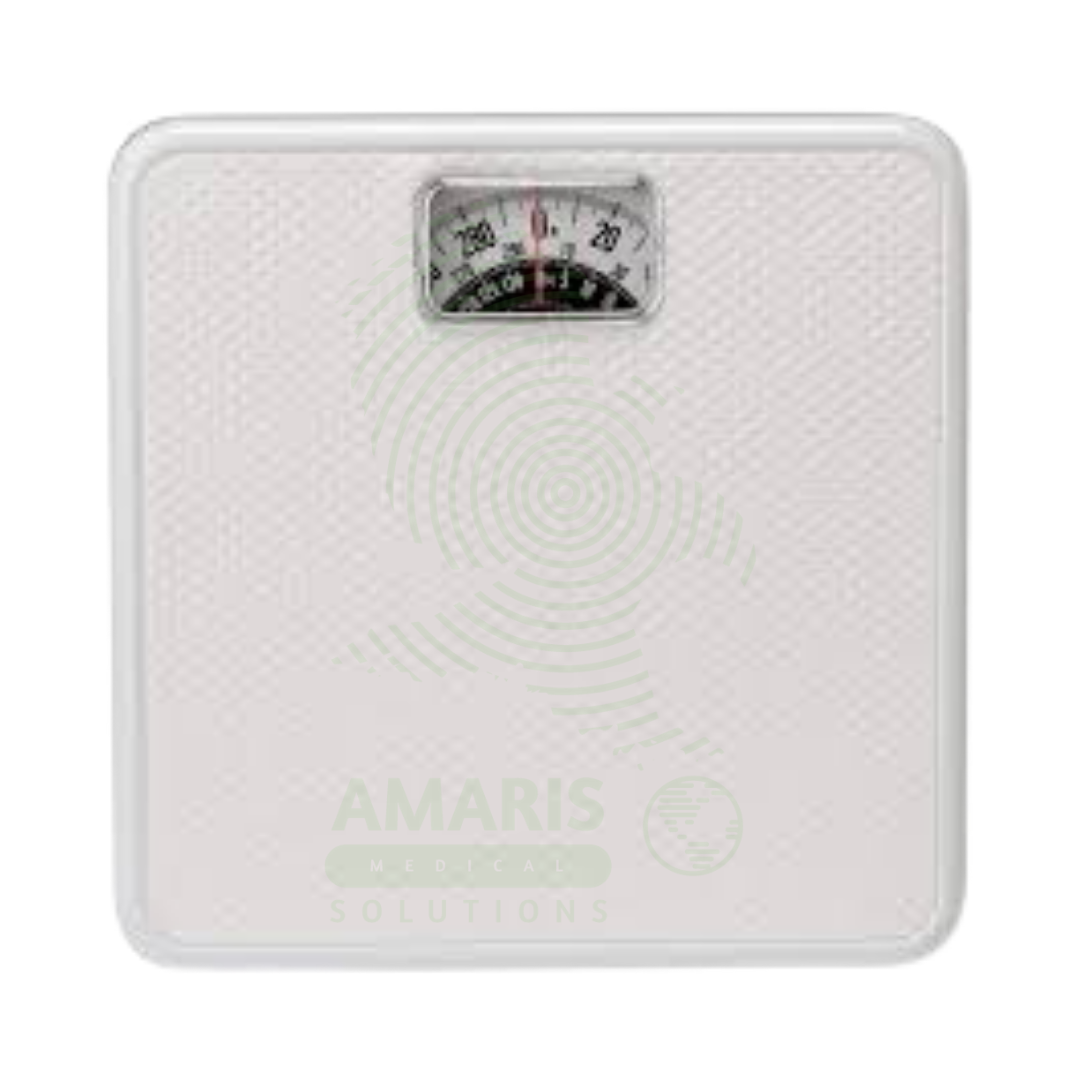
Analogue Bathroom Weighing Scale
WhatsApp Order
An Analogue Bathroom Weighing Scale is a mechanical Class I medical device (for health monitoring) using a precision spring and lever system to measure body weight without batteries or electronics. Features include enameled steel, stainless steel, or ABS plastic platform (25-30 cm square), large circular dial (10-15 cm diameter) with clear numerals and pointer, zero adjustment knob for calibration before each use, weight capacity 120-180 kg (265-400 lbs) standard (heavy-duty models to 250 kg/550 lbs), and graduation 0.5 kg or 1 lb increments with accuracy ±0.5-1 kg. Primary clinical applications include home weight monitoring for patients who prefer non-electronic devices, chronic disease management in resource-limited settings (heart failure, CKD), geriatric and low-vision patient weighing (large, clear dial), bariatric patient monitoring (higher weight capacities), pediatric growth monitoring in home settings, pregnancy weight tracking, and post-hospitalization transition monitoring. Critical safety considerations include verifying zero adjustment before each use, placement on hard level surface (not carpet), staying within weight capacity, reading at eye level to avoid parallax error, and recognizing that spring fatigue over years may affect accuracy. Essential non-electronic alternative for patients needing simple, reliable, battery-free weight monitoring.
Description
Analogue Bathroom Weighing Scale
PRIMARY CLINICAL & DIAGNOSTIC USES
1. Home Weight Monitoring Without Batteries or Electronics:
-
Primary Use: Provides reliable weight measurement for patients who prefer simplicity, cannot manage digital devices due to visual impairment, or need a scale that functions without batteries in remote or resource-limited settings. The mechanical design ensures operation regardless of power availability.
-
How it helps: Offers peace of mind to patients who want a simple, no-fuss way to track their weight, with no batteries to change, no displays to decipher, and no risk of electronic failure.
2. Chronic Disease Management in Resource-Limited Settings:
-
Primary Use: Enables daily weight monitoring for patients with congestive heart failure, chronic kidney disease, or hypertension in areas where battery replacement is challenging or unaffordable. The analogue scale requires no power source and minimal maintenance.
-
How it helps: Brings essential health monitoring to communities where batteries are scarce and electricity unreliable, ensuring that even patients in the most remote areas can track the daily weights that keep them out of the hospital.
3. Geriatric and Low-Vision Patient Weighing:
-
Primary Use: Large, clear dial with high-contrast numbers and a prominent pointer allows elderly patients and those with visual impairments to read their weight without struggling with small digital displays or backlighting issues.
-
How it helps: Empowers older adults and those with vision problems to maintain independence in health monitoring, with a simple, readable dial that shows weight at a glance without squinting or magnifying glasses.
4. Bariatric Patient Monitoring:
-
Primary Use: Many analogue bathroom scales offer higher weight capacities than standard digital models, making them suitable for patients in weight management programs who require monitoring at higher body weights where digital alternatives may be unavailable or cost-prohibitive.
-
How it helps: Provides a practical, affordable monitoring solution for patients at higher weights, ensuring everyone has access to the tools they need for weight management regardless of their size.
5. Pediatric Growth Monitoring in Home Settings:
-
Primary Use: Parents who prefer simplicity use analogue scales for between-visit weight checks in children, particularly useful in homes where batteries are not regularly available or for second homes without digital equipment.
-
How it helps: Gives parents a simple, reliable way to track their children’s growth without worrying about dead batteries or complicated setup, whether at home or at a vacation property.
6. Pregnancy Weight Tracking in Economical Home Monitoring:
-
Primary Use: Expectant mothers use analogue scales for regular weight monitoring during pregnancy when digital options are not accessible or desired, ensuring appropriate weight gain detection without battery dependence.
-
How it helps: Supports healthy pregnancies by providing an affordable, no-fuss way for mothers-to-be to track the weight gain that signals their baby is growing well.
7. Post-Hospitalization Transition Monitoring:
-
Primary Use: Patients discharged from hospital with instructions to monitor daily weights can use analogue scales as a simple, reliable option that requires no technical knowledge or battery maintenance during the vulnerable transition period.
-
How it helps: Removes barriers to following discharge instructions, giving recovering patients a simple tool they can use immediately without reading manuals or figuring out complex features.
SECONDARY & SUPPORTIVE USES
1. Fitness and Wellness Tracking for Technology-Averse Individuals: Provides simple weight monitoring for individuals who prefer mechanical devices over digital technology for personal fitness tracking, supporting health goals without complexity.
2. Second Home or Vacation Property Monitoring: Offers reliable weight measurement in locations where batteries may not be regularly available or devices left unused for extended periods, ensuring monitoring continues even when away from home.
3. Emergency Preparedness and Disaster Kits: Essential component of home emergency preparedness kits where electronic devices may fail during power outages, providing reliable weight monitoring when it’s needed most.
4. Developing World and Humanitarian Aid: Suitable for distribution in international aid programs where battery availability is limited and simplicity of use is paramount, bringing basic health monitoring to underserved populations.
5. School and Community Health Programs: Provides durable, low-maintenance weight measurement for school health offices and community screening programs with limited budgets, supporting public health initiatives.
6. Nursing Home and Assisted Living Backup: Serves as backup scale in facilities during power outages or when digital scales require battery replacement, ensuring resident care continues uninterrupted.
7. Veterinary Use for Small Animal Weighing: Used in home settings for weighing pets where simplicity and durability are valued over digital features, helping pet owners monitor their animals’ health.
KEY PRODUCT FEATURES
1. BASIC IDENTIFICATION ATTRIBUTES
-
Device Type: Mechanical bathroom scale using spring mechanism to measure body weight without batteries or electronics.
-
Common Names: Analogue Bathroom Scale, Mechanical Scale, Dial Scale, Spring Scale, Manual Scale.
-
Components:
-
Platform: Metal or reinforced plastic platform supporting the user.
-
Dial: Circular face with numbered increments and rotating pointer.
-
Spring Mechanism: Internal spring that compresses proportionally to weight applied.
-
Lever System: Transfers platform movement to spring and pointer mechanism.
-
Zero Adjustment Knob: External knob to calibrate pointer to zero before use.
-
Non-Slip Surface: Textured platform surface for safe footing.
-
-
Weight Capacity: 120-180 kg (265-400 lbs) standard; heavy-duty models available to 200-250 kg (440-550 lbs).
-
Graduation: 0.5 kg or 1 lb increments typical; some models offer 0.2 kg increments.
-
Accuracy: ±0.5-1 kg (±1-2 lbs) depending on quality and spring condition.
2. TECHNICAL & PERFORMANCE PROPERTIES
-
Measurement Mechanism: Precision spring and lever system; weight compresses spring, movement translated to pointer on calibrated dial.
-
Spring Type: Carbon steel or alloy spring; tension calibrated at factory.
-
Zero Adjustment: External knob allows the user to reset pointer to zero before each use, compensating for spring fatigue or temperature effects.
-
Dial Size: 10-15 cm (4-6 inch) diameter with clear, bold numerals.
-
Pointer: Red or black pointer for easy reading against a numbered background.
-
Graduation Marks: Clear lines at 0.5 kg or 1 lb intervals; some models have color zones for easy reference.
-
Overload Protection: Mechanism designed to stop at maximum capacity; exceeding capacity may damage spring.
-
Temperature Sensitivity: Spring tension may vary with extreme temperature; store at room temperature.
3. PHYSICAL & OPERATIONAL PROPERTIES
-
Platform Dimensions: 25-30 cm × 25-30 cm (10-12 inches square) typical.
-
Platform Material Options:
-
Enameled Steel: Durable, classic, may rust if scratched.
-
Stainless Steel: Premium, corrosion-resistant, easy to clean.
-
ABS Plastic: Lightweight, economical, textured surface.
-
-
Dial Housing: Metal or ABS plastic with clear protective lens.
-
Height: 5-8 cm (2-3 inches) low profile.
-
Weight: 2-4 kg (4.4-8.8 lbs) heavier than digital due to mechanical components.
-
Non-Slip Feet: Rubberized pads for stability.
-
Non-Slip Surface: Textured platform or adhesive non-slip strips.
-
Color Options: White, beige, gray, or classic mechanical appearance.
4. SAFETY & COMPLIANCE ATTRIBUTES
-
Regulatory Status: Class I medical device when marketed for health monitoring; general consumer product otherwise.
-
Accuracy Standards: Should meet OIML Class III or IV accuracy for non-medical use; medical use requires verification.
-
Mechanical Safety: No electrical components; no shock or fire hazard.
-
Platform Integrity: Must support weight without bending or breaking.
-
Non-Slip Surface: Textured or coated to prevent falls.
-
Stability: Wide base with non-slip feet prevents tipping.
-
Zero Adjustment: External knob allows users to verify and correct zero before each use.
-
No Batteries: Operates indefinitely without power source.
5. STORAGE & HANDLING ATTRIBUTES
-
Storage: Store flat in a clean, dry environment; avoid extreme temperatures that may affect spring tension.
-
Cleaning: Wipe with damp cloth and mild soap; do not immerse. Avoid abrasive cleaners that damage dial lens or platform surface.
-
Zero Check: Before each use, verify pointer at zero; adjust with external knob if needed.
-
Calibration: Spring may fatigue over years; compare to known reference weight periodically; replace if consistently inaccurate.
-
Inspection: Check platform for damage, dial lens for cracks, non-slip feet for wear.
-
Moving: Keep upright; avoid dropping which may damage internal mechanisms.
-
Long-Term Storage: Spring may relax over time; recalibrate with zero adjustment before use after long storage.
6. LABORATORY & CLINICAL APPLICATIONS
-
Primary Application: Home weight monitoring for patients who prefer or require non-electronic devices, including those in resource-limited settings, with visual impairments, or needing high weight capacity beyond standard digital options.
-
Measurement Guidelines:
-
Place the scale on a hard, level surface (not carpet).
-
Verify pointer at zero before stepping on; adjust if needed.
-
Step onto the center of the platform with feet evenly distributed.
-
Stand still; wait for the pointer to stabilize (may oscillate briefly).
-
Read weight at pointer position; estimate between graduations if needed.
-
Record reading for trend tracking.
-
-
Interpretation:
-
Heart failure: daily monitoring for rapid gain >2 kg (4.4 lbs) in 24-48 hours.
-
Weight loss programs: track weekly trends; expect 0.5-1 kg (1-2 lbs) per week.
-
-
Limitations: Less precise than digital (±0.5-1 kg); spring may fatigue over years; difficult to read exact weight between graduations; no memory or averaging features.
SAFETY HANDLING PRECAUTIONS
1. SAFETY PRECAUTIONS
-
Zero Check Always: Always verify and adjust zero before each use; failure to do so guarantees inaccurate readings.
-
Surface Requirements: Use on hard, level surface; carpet or uneven flooring causes significant inaccuracy.
-
Weight Capacity: Do not exceed maximum capacity; spring damage or platform failure may occur.
-
Step Gently: Step onto the center of platform; sudden impact may damage the mechanism.
-
Pointer Reading: Read at eye level to avoid parallax error; position scale where dial is easily visible.
-
Not for Critical Medical Decisions: Use for trend monitoring; sudden changes should be confirmed with more accurate devices if available.
-
Spring Fatigue: Over many years, spring may weaken; compare periodically to known reference.
-
Moisture Protection: Keep dry; moisture may rust internal components.
-
Child Safety: Supervise children; ensure stable footing.
2. FIRST AID MEASURES
-
Rapid Weight Gain: If weight increases >2 kg (4.4 lbs) in 24-48 hours with shortness of breath or edema, contact a healthcare provider immediately.
-
Platform Damage: If platform bends or breaks during use, step off carefully; assess for injury.
-
Fall from Scale: Assess for injury; document incident.
-
Inaccurate Readings Suspected: Compare to known reference weight (e.g., 10 kg dumbbell) to verify accuracy.
3. FIRE FIGHTING MEASURES
-
Flammability: Plastic and painted metal components are combustible.
-
Extinguishing Media: Use water, foam, CO₂, or dry chemical as appropriate for surrounding fire.
Related products
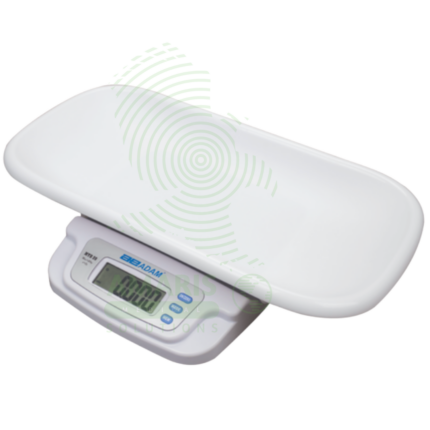
Digital Baby Weighing Scale
A Digital Baby Weighing Scale is a high-precision medical device designed exclusively for the safe and accurate measurement of infant and toddler weight. Featuring a stable, hygienic platform with gram-level precision, it is indispensable in hospitals (especially NICUs), pediatric clinics, and community health settings. Its core functions—such as hold, tare, and zeroing—ensure reliable readings even with a moving child. Accurate weight data is foundational for assessing growth, calculating medication doses, managing nutrition, and detecting early signs of health issues, making this scale a critical tool for safeguarding infant health and development.
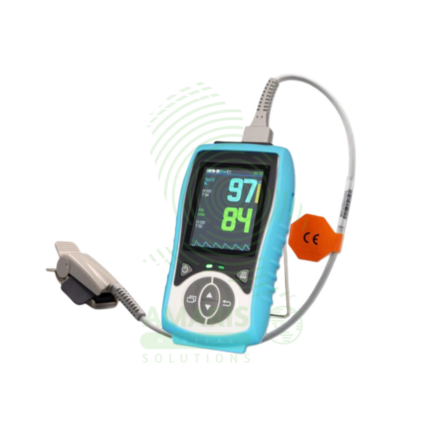
Handheld Pulse Oximeter
A Handheld Pulse Oximeter is a professional-grade, portable medical device used by healthcare providers for accurate and reliable monitoring of blood oxygen saturation (SpO2) and pulse rate. It consists of a durable, feature-rich monitor unit and separate, interchangeable sensors for use on fingers, toes, or ears. Superior to basic fingertip models, it offers advanced functions like configurable alarms, detailed plethysmograph display, trend memory, and data connectivity. Its robust design, clinical accuracy under challenging conditions (motion, low perfusion), and versatility make it an essential tool in hospitals, clinics, ambulances, and home health for patient assessment and monitoring.
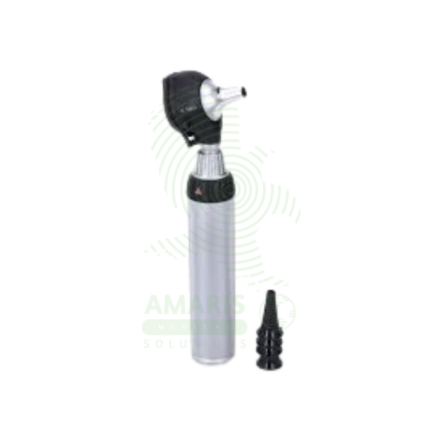
LED Otoscope
An LED Otoscope is a handheld medical device used for illuminating and magnifying the external ear canal and tympanic membrane. Featuring a bright, cool, and long-lasting LED light source, it provides superior visualization for diagnosing common conditions like ear infections, wax impaction, and perforations. Its design, incorporating a reusable handle/head and disposable specula, ensures hygiene and patient safety. As an essential tool in family medicine, pediatrics, and ENT, it enables clinicians to perform accurate otoscopic examinations and, when equipped with an insufflator, crucial pneumatic otoscopy to assess middle ear function.

Littman Stethoscope (Classic 4 Cardiology)
A Littman Stethoscope (Classic 4 Cardiology) represents the pinnacle of acoustic auscultation technology. Designed for clinicians who require the highest level of diagnostic accuracy, it features dual tunable diaphragms and dual-lumen tubing to provide exceptional acoustic sensitivity and ambient noise reduction. Its innovative design allows the user to hear both high and low-frequency sounds by simply adjusting pressure on either side of the chestpiece, making it the instrument of choice for cardiologists, intensivists, and specialists who cannot afford to miss a subtle murmur, rub, or breath sound. It combines superior performance with the durability and comfort expected from the Littmann brand.
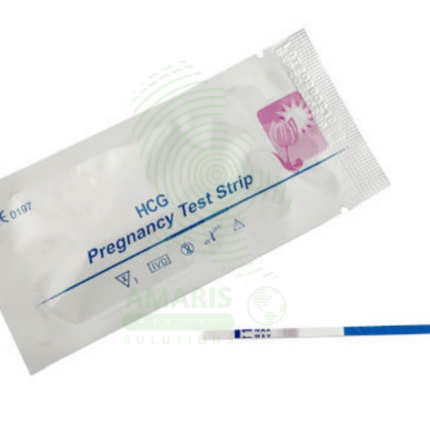
Pregnancy Test Strips
Pregnancy Test Strips are simple, dip-style lateral flow devices designed for the rapid, qualitative detection of human chorionic gonadotropin (hCG) in urine to indicate pregnancy. As the most fundamental format of home pregnancy tests, they offer high sensitivity (often from 10 mIU/mL), affordability, and a quick result within 3-5 minutes. Their ease of use makes them a widely accessible first step in pregnancy detection for personal use and clinical screening. A visible test line, even if faint, is a positive result, though confirmation with a healthcare provider is always recommended.
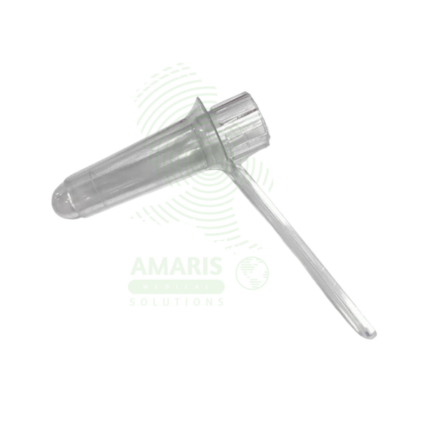
Proctoscope
A Proctoscope is a rigid, straight-tube endoscope specifically designed for the examination and treatment of the anal canal and distal rectum. It enables direct visualization to diagnose conditions like hemorrhoids, fissures, and proctitis, and serves as a conduit for therapeutic procedures such as band ligation. Available in reusable (autoclavable metal) or disposable (single-use plastic) formats, it is a fundamental tool in colorectal practice. Its effective use requires proper patient preparation, gentle insertion technique, and stringent adherence to sterilization protocols to ensure patient safety and diagnostic accuracy.
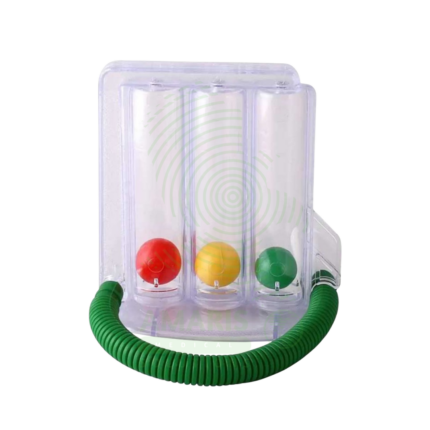
Spirometer
A Spirometer is an essential diagnostic medical device used to measure how much and how quickly air can be inhaled and exhaled by the lungs. By performing forced breathing maneuvers, it generates key parameters—primarily Forced Vital Capacity (FVC) and Forced Expiratory Volume in 1 second (FEV1)—that are fundamental for diagnosing and monitoring obstructive and restrictive lung diseases like Asthma and COPD. Requiring daily calibration and strict adherence to international standards (ATS/ERS), it provides the objective, reproducible data needed for clinical decision-making in pulmonology, primary care, occupational health, and pre-operative assessment.