Dermatoscope and Magnifiers
 Diagnostic Kits
 Vital Signs Monitors
 Stethoscopes and Accessories
 Otoscopes, Ophthalmoscopes, and Retinoscopes
 Reflex Hammers and Neurological Tools
 Scales and Measuring Devices
 Spirometers and Pulmonary Function Tests
 Electrosurgical Units and Accessories
 Cutting Instruments
 Grasping and Holding Instruments
 Hemostatic Instruments
 Specialized Surgical Sets
 Single-Use Procedure Trays and Packs
 Surgical Drapes, Gowns, and Covers
 Tissue Unifying Instruments
 Radiation Protection
 X-Ray Machines and Accessories
 Ultrasound Systems and Probes
 MRI and CT Scanners
 Radiology Consumables
 Bone Densitometers
 Fluoroscopy Equipment
 Imaging Tables and Positioning Aids
 Microscopes and Accessories
 Centrifuges and Separators
 Analyzers
 Incubators and Ovens
 Pipettes, Dispensers, and Lab Glassware
 Refrigerators, Freezers, and Storage Units
 Lab Consumables
 Sterilizers and Autoclaves for Lab Use
 Multi-Parameter Monitors
 Ventilators and Respiratory Support Devices
 Defibrillators and AEDs
 Infusion Pumps and IV Systems
 Patient Warmers and Cooling Devices
 Central Monitoring Stations
 Accessories
 Anesthesia Machines and Workstations
 Oxygen Concentrators and Delivery Systems
 Nebulizers and Inhalers
 CPAP/BiPAP Machines
 Airway Management
 Anesthesia Masks, Circuits, and Bags
 Humidifiers and Heaters
 Respiratory Therapy Accessories
 First Aid Kits and Cabinets
 Emergency Resuscitation Equipment
 Trauma Supplies
 Emergency Carts and Crash Carts
 Burn Care Products
 Bleeding Control
 Automated External Defibrillators (AEDs)
 Transport and Evacuation
 Wheelchairs and Accessories
 Walkers, Crutches, and Canes
 Prosthetics and Orthotics
 Physical Therapy Equipment
 Transfer Devices
 Bathroom Safety
 Orthopedic Traction and Tables
 Hot/Cold Therapy Packs and Units
 Beds and Mattresses
 Chairs and Stools
 Tables
 Cabinets and Storage
 Privacy Screens & Curtains
 Stands and Racks
 Linens and Textiles
 Lighting
 Autoclaves and Sterilizers
 Ultrasonic Cleaners
 Disinfectant Solutions and Wipes
 Sterilization Pouches, Wraps, and Indicators
 Instrument Trays and Containers
 UV and Ozone Disinfection Devices
 Washer Disinfectors
 Wound Care
 Gloves
 Masks and Respirators
 Catheters and Tubing
 Swabs, Applicators, and Sponges
 Incontinence Products
 Personal Protective Equipment (PPE)
 Dental Chairs and Units
 Handpieces and Burs
 Instruments
 Consumables
 Sterilization for Dental Use
 Orthodontic Supplies
 Endodontic Tools
 Slit Lamps and Tonometers
 Lensometers and Phoropters
 Ophthalmic Surgical Instruments
 Eyewear Frames and Lenses
 Contact Lens Supplies
 Vision Testing Charts and Devices
 Eye Care Consumables
 Laser Systems for Eye Care
 ENT Exam Chairs and Tables
 Endoscopes
 Audiometers and Hearing Tests
 ENT Instruments
 Nasal and Throat Packs
 Hearing Aids and Accessories
 Otology Supplies
 Fetal Dopplers and Monitors
 Delivery Beds and Tables
 Gynecological Instruments
 Neonatal Incubators and Warmers
 Breast Pumps and Accessories
 Contraceptive Devices
 Maternity Supports and Pads
 Neonatal Consumables
 Cystoscopes and Urethroscopes
 Dialysis Machines and Supplies
 Urological Catheters and Bags
 Lithotripters
 Prostate Treatment Devices
 Urinary Incontinence Products
 Kidney Stone Management Tools
 Consumables & Disposables
 EEG and EMG Machines
 Neurosurgical Instruments
 Nerve Stimulators
 Headrests and Positioning Aids
 Lumbar Puncture Kits
 Seizure Monitoring Devices
 Consumables
 Rehabilitation for Neurological Conditions
 ECG Machines and Accessories
 Holter Monitors
 Stress Test Systems
 Pacemakers and Defibrillator Accessories
 Vascular Access Devices
 Cardiac Catheters and Guidewires
 Blood Flow Meters
 Consumables
 Orthopedic Instruments
 Casts, Splints, and Padding
 Joint Replacement Supplies
 Prosthetic Limbs and Components
 Bone Grafts and Substitutes
 Traction Devices
 Orthopedic Braces and Supports
 Rehabilitation Aids for Orthopedics
 Home Oxygen Therapy
 Hospital Beds for Home Use
 Mobility Aids
 Bathroom and Daily Living Aids
 Wound Care for Home
 Monitoring Devices
 Enteral Feeding Pumps and Tubes
 Hand Sanitizers and Dispensers
 Face Shields and Goggles
 Isolation Gowns and Suits
 Biohazard Waste Containers
 Air Purifiers and HEPA Filters
 Surface Disinfectants
 Sharps Containers
 Protective Barriers
 Cardiovascular & Endurance Training
 Strength Training & Weightlifting
 Functional Training & Core Conditioning
 Physical Therapy & Rehabilitation
 Sports & Outdoor Recreation
 Gym Flooring & Facility Equipment
 Fitness Monitoring & Accessories
 Kids & Novelties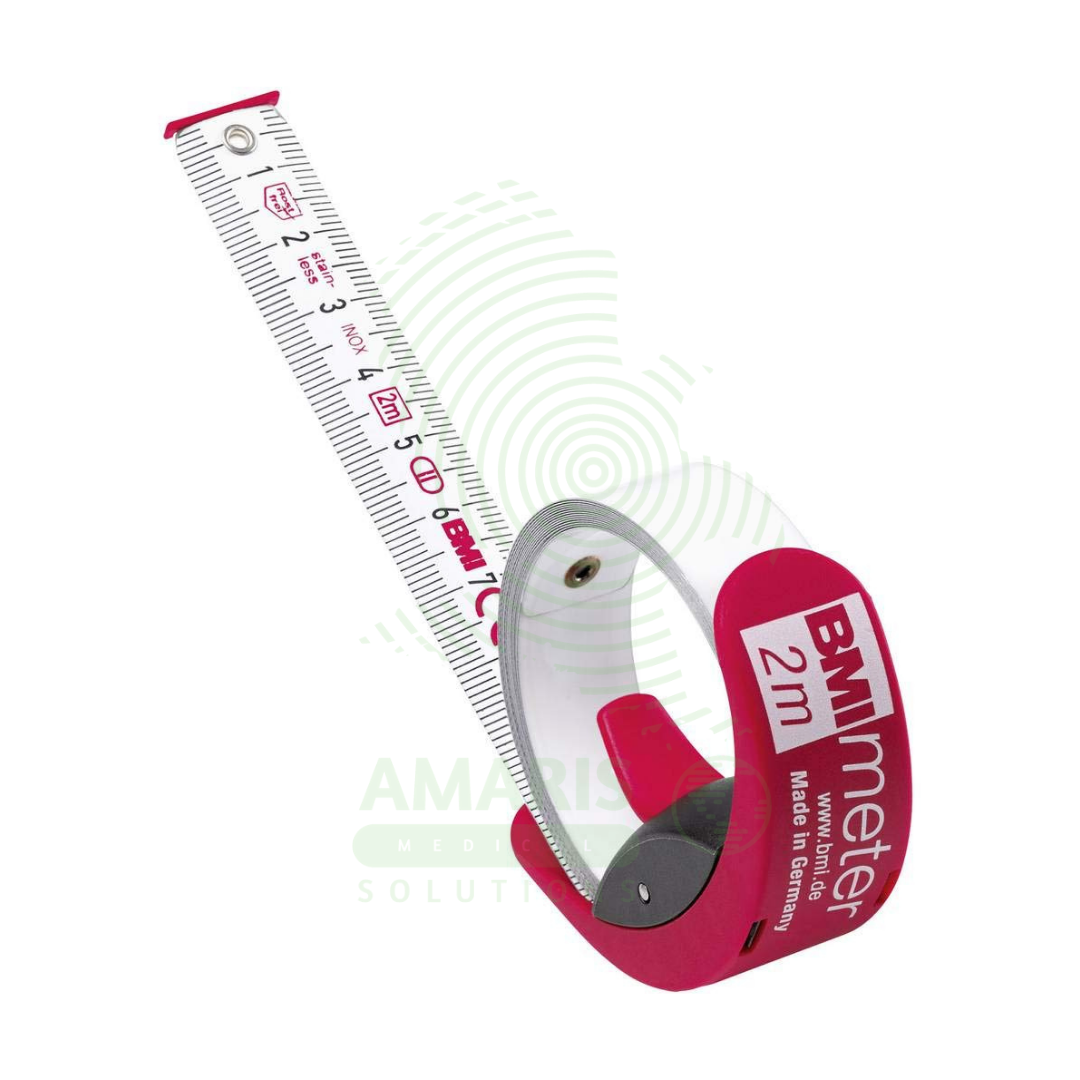
BMI Tape
WhatsApp Order
A BMI Tape is a rapid screening tool that estimates an individual’s Body Mass Index (BMI) category by measuring body circumference, most commonly the waist. It features a color-coded scale that directly displays BMI ranges (Underweight, Normal, Overweight, Obese), eliminating the need for separate height and weight measurements and manual calculation. While highly useful for community health screenings, wellness programs, and patient education due to its portability and simplicity, it is an approximate method. Its accuracy is limited compared to BMI calculated from precise clinical measurements, and it should be used as an initial screening indicator rather than a definitive diagnostic tool.
Description
BMI Tape
PRIMARY CLINICAL & DIAGNOSTIC USES
1. Direct BMI Assessment without Calculation:
-
Primary Use: The primary use is to provide an immediate, direct readout of an individual’s Body Mass Index (BMI) category without the need to measure height and weight separately and perform a manual calculation. This enables rapid screening in high-volume settings.
-
How it helps: Eliminates time-consuming calculations and potential math errors, allowing healthcare providers to screen more patients efficiently and start important conversations about weight-related health risks immediately.
2. Community & Public Health Screening:
-
Primary Use: Used in community health campaigns, workplace wellness programs, health fairs, and pharmacy-based screenings to quickly categorize individuals as underweight, normal weight, overweight, or obese according to standard WHO/NIH BMI classifications.
-
How it helps: Brings basic health screening to places where people live, work, and shop, making it easier to identify individuals who may be unaware of their weight-related health risks and connect them with appropriate resources.
3. Primary Care & General Practice Triage:
-
Primary Use: Provides a fast, initial screening tool during routine check-ups or patient intake to identify individuals who may benefit from further nutritional assessment, counseling, or medical evaluation related to weight.
-
How it helps: Streamlines the intake process in busy practices, flagging patients who need more focused attention on weight management so doctors can prioritize discussions about diet, exercise, and associated health risks.
4. Patient Education & Awareness:
-
Primary Use: Serves as a visual and tangible tool to help patients understand their BMI category, facilitating conversations about weight management, health risks, and lifestyle changes.
-
How it helps: Turns an abstract number into a concrete, understandable concept that patients can see and grasp, making conversations about weight less confrontational and more productive for both patient and provider.
5. Fitness & Wellness Industry:
-
Primary Use: Used by personal trainers, nutritionists, and in gyms to quickly assess clients’ BMI as part of initial fitness assessments.
-
How it helps: Provides fitness professionals with a quick, non-intimidating way to establish baseline health metrics for new clients, helping them design personalized workout and nutrition plans tailored to individual needs.
SECONDARY & SUPPORTIVE USES
1. Epidemiological Surveys: Can be used for rapid data collection on population-level BMI categories in field studies where carrying scales and height boards is impractical, supporting public health research and policy development.
2. School Health Programs: Used for basic health screenings of children and adolescents, noting that BMI-for-age percentiles (not adult categories) should be used for this group. Some tapes are designed specifically for pediatric use with different scales, helping identify growth concerns early.
3. Monitoring Weight Management Programs: Can provide a quick, approximate way to track changes in BMI category over time during a diet or exercise program, though it is less precise than calculated BMI from exact measurements, offering motivational feedback for individuals on their health journey.
KEY PRODUCT FEATURES
1. BASIC IDENTIFICATION ATTRIBUTES
-
Device Type: Specialized, pre-calibrated anthropometric tape.
-
Core Function: Directly correlates a measured body circumference (typically waist or a combination) with a corresponding BMI range or category.
-
Design: Looks like a standard measuring tape but is printed with BMI categories (e.g., Underweight, Normal, Overweight, Obese) instead of, or in addition to, standard length units. Many work by measuring waist circumference at a specific point.
2. TECHNICAL & PERFORMANCE PROPERTIES
-
Measurement Method: Most common BMI tapes operate on the principle that waist circumference is a strong correlate of BMI and body fat percentage, especially for assessing central obesity. The user wraps the tape around their waist (at the level of the umbilicus or narrowest point), and the reading window or scale directly shows the corresponding BMI range.
-
BMI Zones/Categories: Clearly marked with color-coded zones and text based on standard classifications (e.g., WHO):
-
Underweight (e.g., Blue, BMI < 18.5)
-
Normal (e.g., Green, BMI 18.5–24.9)
-
Overweight (e.g., Yellow, BMI 25–29.9)
-
Obese (e.g., Red, BMI ≥ 30)
-
-
Scale & Calibration: The correlation between circumference and BMI is pre-calculated and printed on the tape based on population averages. Accuracy is an estimate and can vary based on an individual's body composition (muscle vs. fat), height, and ethnicity.
-
Material: Made of non-stretch fibreglass or similar material to ensure consistent measurement.
3. PHYSICAL & OPERATIONAL PROPERTIES
-
Portability: Extremely lightweight, compact, and durable. Fits in a pocket or small kit.
-
Ease of Use: Designed for self-use or use by minimally trained personnel. The color-coding allows for instant interpretation.
-
No Power Required: A simple mechanical tool.
4. SAFETY & COMPLIANCE ATTRIBUTES
-
Regulatory Status: Generally considered a screening or educational tool rather than a definitive diagnostic medical device. It does not typically require FDA clearance or CE marking as a Class I device, though it may be sold as a wellness product.
-
Limitations Disclosure: Reputable products include clear instructions noting that the tape provides an estimate and is not a substitute for a clinical assessment or BMI calculated from accurately measured height and weight.
5. STORAGE & HANDLING ATTRIBUTES
-
Storage: Store rolled or flat in a dry place.
-
Cleaning: Wipe with a damp cloth if needed.
-
Lifespan: Long-lasting unless physically damaged or printed markings fade.
6. LABORATORY & CLINICAL APPLICATIONS
-
Primary Application: A rapid, approximate screening tool for BMI categorization in non-clinical and low-resource settings. It is a surrogate measure.
-
Important Limitation: It is not as accurate as calculating BMI from directly measured height (using a stadiometer) and weight (using a calibrated scale). It should not be used for diagnosis, medical dosing, or in populations where body composition differs significantly from the average (e.g., highly muscular athletes, pregnant women, the elderly with sarcopenia).
SAFETY HANDLING PRECAUTIONS
1. SAFETY PRECAUTIONS
-
Correct Measurement Technique: For waist-based tapes, the measurement must be taken at the correct anatomical site (usually midway between the lower rib and the top of the hip bone, or at the umbilicus). The tape should be snug but not compressing the skin, and the person should be exhaling normally.
-
Understanding of Limitations: Users must be informed that this is a screening tool, not a diagnostic test. Any reading in the "Overweight" or "Obese" category, or any health concern, should be followed up with a professional healthcare assessment using standard methods.
-
Not for Pediatric Diagnosis: Standard adult BMI tapes should not be used for children. Specialized pediatric tapes using BMI-for-age percentiles exist but are less common.
2. FIRST AID MEASURES
-
General: The device poses no hazard.
3. FIRE FIGHTING MEASURES
-
Flammability: The tape material is combustible.
-
Extinguishing Media: Use standard extinguishing media.
Related products
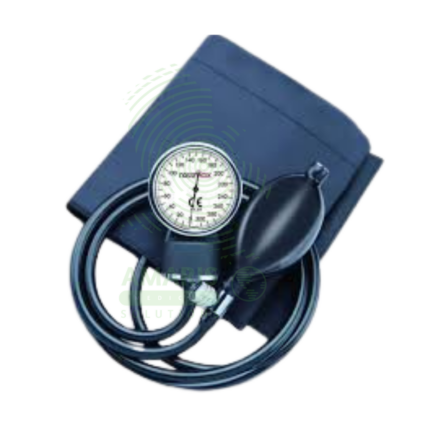
Aneroid Blood Pressure Monitor
The Aneroid Blood Pressure Monitor is a manual, mechanical sphygmomanometer used for the accurate, non-invasive measurement of arterial blood pressure. Operating on the auscultatory method, it consists of an inflatable cuff, a pump bulb with a release valve, and a calibrated dial gauge. Renowned for its reliability, durability, and independence from electrical power, it serves as a clinical gold standard and essential tool in physician offices, hospitals, and for guided home monitoring. Its accuracy is dependent on proper technique, correct cuff size, and regular calibration, making it a fundamental device for diagnosing and managing hypertension and assessing cardiovascular health.
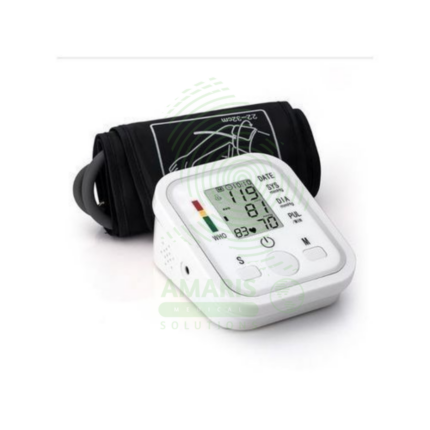
Digital Blood Pressure Monitor
A Digital Blood Pressure Monitor is an automatic electronic device that measures and displays systolic pressure, diastolic pressure, and pulse rate using the oscillometric method. Designed primarily for home and clinical use, it offers a user-friendly alternative to manual aneroid devices, requiring minimal training. Key features often include irregular heartbeat detection, multi-user memory, and connectivity for data tracking. Its accuracy, when clinically validated and used with correct technique, makes it an indispensable tool for the diagnosis and management of hypertension, empowering patients and supporting healthcare providers with reliable ambulatory data.
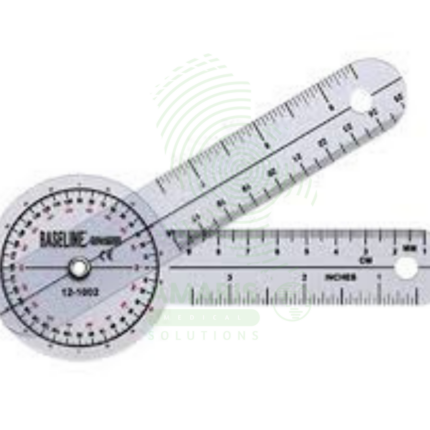
Goniometer
A goniometer is a calibrated, handheld measuring instrument designed to precisely quantify joint range of motion in degrees. Essential for physical and occupational therapy, orthopedic assessment, and rehabilitation medicine, it consists of a protractor-like body with two arms—one stationary, one movable—that align with the patient's limb segments. Available in various sizes for different joints (from fingers to hips) and in materials including transparent plastic, stainless steel, and digital formats, it transforms subjective observations of mobility into objective, reproducible data. This fundamental clinical tool guides diagnosis, documents treatment progress, supports disability determinations, and provides the evidence base for therapeutic interventions.
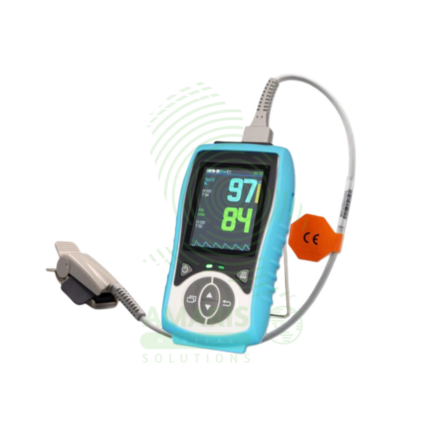
Handheld Pulse Oximeter
A Handheld Pulse Oximeter is a professional-grade, portable medical device used by healthcare providers for accurate and reliable monitoring of blood oxygen saturation (SpO2) and pulse rate. It consists of a durable, feature-rich monitor unit and separate, interchangeable sensors for use on fingers, toes, or ears. Superior to basic fingertip models, it offers advanced functions like configurable alarms, detailed plethysmograph display, trend memory, and data connectivity. Its robust design, clinical accuracy under challenging conditions (motion, low perfusion), and versatility make it an essential tool in hospitals, clinics, ambulances, and home health for patient assessment and monitoring.
MUAC Tape
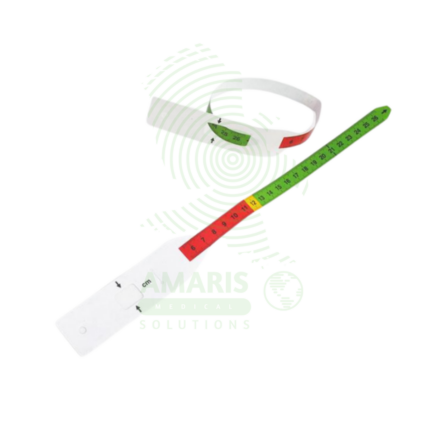
A MUAC Tape (Mid-Upper Arm Circumference) is a specialized, color-coded measuring tape used globally as the primary field tool for screening children aged 6-59 months for acute malnutrition. Its simple design—featuring red, yellow, and green zones corresponding to Severe Acute Malnutrition, Moderate Acute Malnutrition, and normal nutritional status—allows for instant, non-invasive assessment without the need for scales, calculation, or literacy. Durable, portable, and inexpensive, it is the cornerstone of community-based nutrition programs, emergency relief efforts, and public health surveillance, enabling early detection and life-saving intervention for malnourished children in even the most resource-constrained settings.
Ophthalmoscope
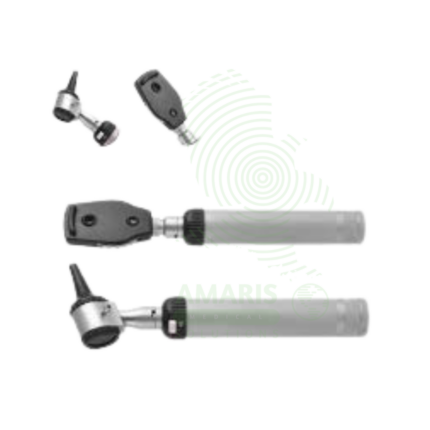
An Ophthalmoscope is a handheld diagnostic instrument used to examine the interior of the eye, specifically the fundus (retina, optic disc, blood vessels, and macula). By providing illuminated magnification, it serves as a vital screening tool for detecting ocular diseases like glaucoma and retinal disorders, and more importantly, for identifying signs of systemic conditions such as diabetes, hypertension, and increased intracranial pressure. Its operation involves selecting appropriate apertures and compensating lenses to obtain a clear view. While offering a detailed but narrow field of vision, mastery of the direct ophthalmoscope remains a cornerstone skill in general medicine, neurology, and ophthalmology for assessing vascular and neurological health.
Patient Monitor
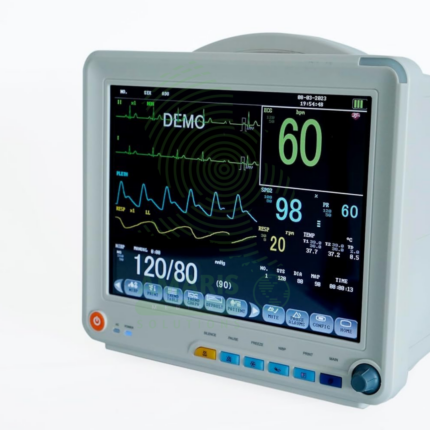
The Patient Monitor (6 Parameters BCCMS8000) is a versatile multi-parameter monitor designed for continuous surveillance of core vital signs in various clinical settings. It tracks six essential parameters—ECG, SpO2, Non-Invasive Blood Pressure (NIBP), Respiration, Temperature, and Pulse Rate—providing clinicians with real-time waveforms and numerical data on a clear color display. With its robust alarm system, battery backup for transport, and reliable performance, it is a fundamental tool for ensuring patient safety on general hospital wards, during procedures, and in emergency departments. Its design balances comprehensive monitoring capability with user-friendly operation.