Dermatoscope and Magnifiers
 Diagnostic Kits
 Vital Signs Monitors
 Stethoscopes and Accessories
 Otoscopes, Ophthalmoscopes, and Retinoscopes
 Reflex Hammers and Neurological Tools
 Scales and Measuring Devices
 Spirometers and Pulmonary Function Tests
 Electrosurgical Units and Accessories
 Cutting Instruments
 Grasping and Holding Instruments
 Hemostatic Instruments
 Specialized Surgical Sets
 Single-Use Procedure Trays and Packs
 Surgical Drapes, Gowns, and Covers
 Tissue Unifying Instruments
 Radiation Protection
 X-Ray Machines and Accessories
 Ultrasound Systems and Probes
 MRI and CT Scanners
 Radiology Consumables
 Bone Densitometers
 Fluoroscopy Equipment
 Imaging Tables and Positioning Aids
 Microscopes and Accessories
 Centrifuges and Separators
 Analyzers
 Incubators and Ovens
 Pipettes, Dispensers, and Lab Glassware
 Refrigerators, Freezers, and Storage Units
 Lab Consumables
 Sterilizers and Autoclaves for Lab Use
 Multi-Parameter Monitors
 Ventilators and Respiratory Support Devices
 Defibrillators and AEDs
 Infusion Pumps and IV Systems
 Patient Warmers and Cooling Devices
 Central Monitoring Stations
 Accessories
 Anesthesia Machines and Workstations
 Oxygen Concentrators and Delivery Systems
 Nebulizers and Inhalers
 CPAP/BiPAP Machines
 Airway Management
 Anesthesia Masks, Circuits, and Bags
 Humidifiers and Heaters
 Respiratory Therapy Accessories
 First Aid Kits and Cabinets
 Emergency Resuscitation Equipment
 Trauma Supplies
 Emergency Carts and Crash Carts
 Burn Care Products
 Bleeding Control
 Automated External Defibrillators (AEDs)
 Transport and Evacuation
 Wheelchairs and Accessories
 Walkers, Crutches, and Canes
 Prosthetics and Orthotics
 Physical Therapy Equipment
 Transfer Devices
 Bathroom Safety
 Orthopedic Traction and Tables
 Hot/Cold Therapy Packs and Units
 Beds and Mattresses
 Chairs and Stools
 Tables
 Cabinets and Storage
 Privacy Screens & Curtains
 Stands and Racks
 Linens and Textiles
 Lighting
 Autoclaves and Sterilizers
 Ultrasonic Cleaners
 Disinfectant Solutions and Wipes
 Sterilization Pouches, Wraps, and Indicators
 Instrument Trays and Containers
 UV and Ozone Disinfection Devices
 Washer Disinfectors
 Wound Care
 Gloves
 Masks and Respirators
 Catheters and Tubing
 Swabs, Applicators, and Sponges
 Incontinence Products
 Personal Protective Equipment (PPE)
 Dental Chairs and Units
 Handpieces and Burs
 Instruments
 Consumables
 Sterilization for Dental Use
 Orthodontic Supplies
 Endodontic Tools
 Slit Lamps and Tonometers
 Lensometers and Phoropters
 Ophthalmic Surgical Instruments
 Eyewear Frames and Lenses
 Contact Lens Supplies
 Vision Testing Charts and Devices
 Eye Care Consumables
 Laser Systems for Eye Care
 ENT Exam Chairs and Tables
 Endoscopes
 Audiometers and Hearing Tests
 ENT Instruments
 Nasal and Throat Packs
 Hearing Aids and Accessories
 Otology Supplies
 Fetal Dopplers and Monitors
 Delivery Beds and Tables
 Gynecological Instruments
 Neonatal Incubators and Warmers
 Breast Pumps and Accessories
 Contraceptive Devices
 Maternity Supports and Pads
 Neonatal Consumables
 Cystoscopes and Urethroscopes
 Dialysis Machines and Supplies
 Urological Catheters and Bags
 Lithotripters
 Prostate Treatment Devices
 Urinary Incontinence Products
 Kidney Stone Management Tools
 Consumables & Disposables
 EEG and EMG Machines
 Neurosurgical Instruments
 Nerve Stimulators
 Headrests and Positioning Aids
 Lumbar Puncture Kits
 Seizure Monitoring Devices
 Consumables
 Rehabilitation for Neurological Conditions
 ECG Machines and Accessories
 Holter Monitors
 Stress Test Systems
 Pacemakers and Defibrillator Accessories
 Vascular Access Devices
 Cardiac Catheters and Guidewires
 Blood Flow Meters
 Consumables
 Orthopedic Instruments
 Casts, Splints, and Padding
 Joint Replacement Supplies
 Prosthetic Limbs and Components
 Bone Grafts and Substitutes
 Traction Devices
 Orthopedic Braces and Supports
 Rehabilitation Aids for Orthopedics
 Home Oxygen Therapy
 Hospital Beds for Home Use
 Mobility Aids
 Bathroom and Daily Living Aids
 Wound Care for Home
 Monitoring Devices
 Enteral Feeding Pumps and Tubes
 Hand Sanitizers and Dispensers
 Face Shields and Goggles
 Isolation Gowns and Suits
 Biohazard Waste Containers
 Air Purifiers and HEPA Filters
 Surface Disinfectants
 Sharps Containers
 Protective Barriers
 Cardiovascular & Endurance Training
 Strength Training & Weightlifting
 Functional Training & Core Conditioning
 Physical Therapy & Rehabilitation
 Sports & Outdoor Recreation
 Gym Flooring & Facility Equipment
 Fitness Monitoring & Accessories
 Kids & Novelties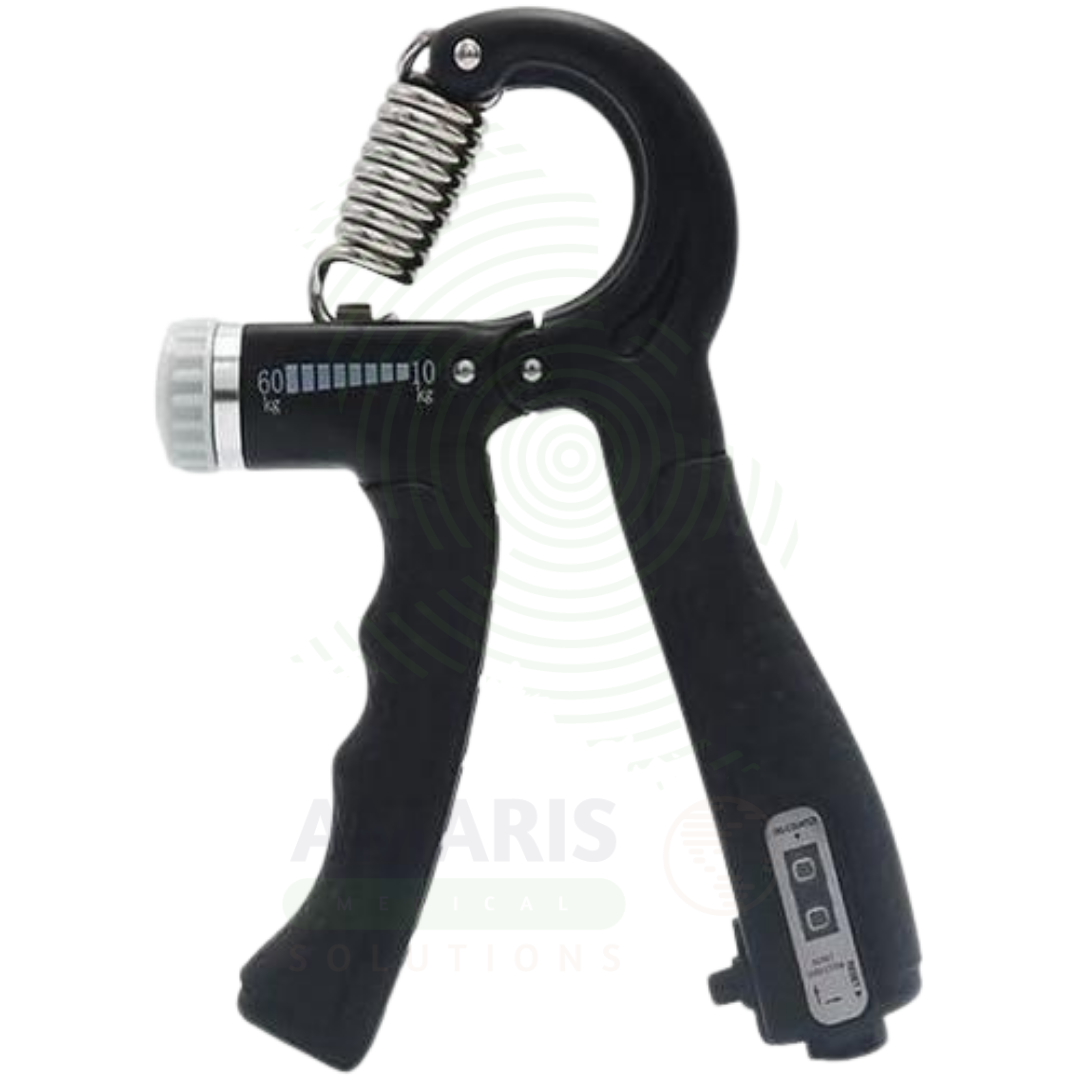
Hand Grip
$1.00
WhatsApp Order
A Hand Grip is a spring-loaded hand exerciser with two handles that is compressed by squeezing, designed to develop grip strength, forearm conditioning, and hand function in rehabilitation and fitness settings. The spring mechanism provides adjustable or fixed resistance ranging from 10 to 200 pounds, allowing patients to progress from light grip strengthening to advanced forearm conditioning as strength improves. For the physical therapist and occupational therapist, the hand grip provides targeted, progressive resistance training for the intrinsic hand muscles, thenar eminence, and forearm flexors—critical for restoring grip strength needed for opening jars, carrying groceries, turning doorknobs, and performing activities of daily living. For patients with arthritis, carpal tunnel syndrome, or post-operative hand weakness, progressive hand grip exercises rebuild functional grip strength essential for independence. For patients with neurological conditions such as stroke or traumatic brain injury, the hand grip provides a simple, measurable tool for retraining grip strength and motor control. Compact, portable, and requiring no additional equipment, the hand grip is an effective tool for grip strength rehabilitation, sports performance enhancement, and home exercise programs across the lifespan.
Description
Hand Grip
PRIMARY CLINICAL & DIAGNOSTIC USES
1. Grip Strength Development for Hand Weakness
-
Primary Use: Provides a spring-loaded device with two handles that is compressed by squeezing, developing grip strength in the finger flexors, thenar muscles, and forearm musculature.
-
How it helps: For the physical therapist and occupational therapist, the hand grip provides targeted, progressive resistance training for the intrinsic hand muscles and forearm flexors—critical for restoring grip strength needed for opening jars, carrying groceries, turning doorknobs, and performing activities of daily living. For the patient with arthritis, carpal tunnel syndrome, or post-operative hand weakness, progressive hand grip exercises rebuild functional grip strength essential for independence.
2. Forearm and Wrist Stabilizer Conditioning
-
Primary Use: The repetitive squeezing action strengthens the forearm flexors, wrist stabilizers, and finger flexor tendons, improving overall hand and wrist function.
-
How it helps: For the hand therapist and occupational therapist, the hand grip provides specific conditioning for the muscles and tendons that stabilize the wrist and fingers—improving endurance and reducing fatigue during sustained gripping activities. For the patient with writer’s cramp, repetitive strain injury, or tennis elbow, hand grip exercises condition the forearm musculature to tolerate daily activities.
3. Arthritis Grip Strength Maintenance
-
Primary Use: Provides controlled, low-resistance squeezing exercises that maintain hand function and reduce stiffness in patients with osteoarthritis or rheumatoid arthritis affecting the hands.
-
How it helps: For the rheumatologist and occupational therapist, the hand grip allows patients with arthritic hand changes to perform gentle, controlled grip exercises that maintain joint mobility, reduce stiffness, and preserve functional grip strength—delaying the loss of hand function. For the patient with hand arthritis, regular grip exercises reduce morning stiffness and maintain the ability to perform self-care tasks.
4. Neurological Hand Function Retraining
-
Primary Use: Used to retrain grip strength, motor control, and hand function in patients with neurological conditions affecting the upper extremity.
-
How it helps: For the neurological physical therapist and occupational therapist, the hand grip provides a simple, measurable tool for retraining grip strength and motor control in patients with stroke, traumatic brain injury, or peripheral neuropathy—improving hand function for grasping, holding, and manipulating objects. For the patient with hemiparesis, regular grip exercises restore hand function essential for dressing, eating, and performing daily activities.
SECONDARY & SUPPORTIVE USES
1. Carpal Tunnel Syndrome Rehabilitation: Used for progressive grip strengthening to support the carpal tunnel and reduce symptoms.
2. Tennis Elbow (Lateral Epicondylitis) Management: Used for eccentric and concentric grip strengthening to treat and prevent tennis elbow.
3. Golfer’s Elbow (Medial Epicondylitis) Management: Used for grip strengthening of wrist flexors to treat and prevent golfer’s elbow.
4. Arthritis Hand Function Maintenance: Used for controlled grip strengthening to maintain hand function in patients with hand arthritis.
5. Post-Casting Rehabilitation: Used to rebuild grip strength following removal of wrist or hand casts.
6. Distal Radius Fracture Recovery: Used for progressive grip strengthening following wrist fracture rehabilitation.
7. Trigger Finger Rehabilitation: Used to improve tendon gliding and reduce triggering episodes.
8. De Quervain’s Tenosynovitis Management: Used for controlled grip strengthening with thumb stabilization exercises.
9. Stroke Rehabilitation Upper Extremity: Used for grip strength retraining in patients with hemiparesis.
10. Parkinson’s Disease Hand Function: Used for grip strengthening to maintain hand dexterity and function.
11. Multiple Sclerosis Hand Weakness: Used for grip strengthening to maintain hand function and reduce fatigue.
12. Geriatric Hand Function Maintenance: Used to maintain grip strength for independence in activities of daily living.
13. Rock Climbing and Grip Sport Training: Used for sport-specific grip strength and endurance training.
14. Martial Arts and Combat Sports: Used for grip strength and forearm conditioning.
15. Occupational Grip Strength Maintenance: Used for workers requiring sustained grip strength (construction, mechanics, manufacturing).
16. Sports Performance Enhancement: Used for grip strength training for tennis, golf, baseball, and racquet sports.
17. Home Exercise Program: Provides portable, self-contained resistance training tool for home-based grip strengthening.
KEY PRODUCT FEATURES
1. BASIC IDENTIFICATION ATTRIBUTES
-
Device Type: A spring-loaded hand exerciser with two handles that is compressed by squeezing, designed to develop grip strength, forearm conditioning, and hand function.
-
Designation: Hand Grip, Hand Gripper, Grip Strengthener, Grip Exerciser, Hand Exerciser, Forearm Trainer, Grip Trainer, Adjustable Hand Grip, Spring Grip, Hand Strengthener.
-
Key Components:
o Handles: Metal or plastic handles with textured grip.
o Spring: Steel spring providing resistance.
o Resistance Adjustment: Adjustable spring tension (some models).
o Counters: Digital or mechanical repetition counter (some models).
o Padding: Foam or rubber padding on handles (some models).
2. TECHNICAL & PERFORMANCE PROPERTIES
-
Resistance Range: Typically 10-200 pounds depending on model.
-
Resistance Types: Fixed resistance (single spring) or adjustable resistance (multiple springs or adjustable tension).
-
Handle Material: Metal (chrome-plated, aluminum), plastic (polypropylene), or rubber-coated.
-
Handle Grip: Textured, knurled, or foam-padded for comfort.
-
Spring Material: Tempered steel.
-
Spring Tension: Measured in pounds of force required to close handles.
-
Adjustability: Some models allow resistance adjustment via screw mechanism or spring selection.
-
Dimensions: Compact size; fits in hand.
-
Weight: Lightweight (typically 0.5-2 pounds).
3. PHYSICAL & OPERATIONAL PROPERTIES
-
Construction: Metal or plastic handles with steel spring.
-
Grip Surface: Textured or padded for secure hold.
-
Portability: Small and lightweight; easily carried in pocket or bag.
-
Storage: Minimal space required.
-
Noise: Minimal noise during use; spring may produce sound.
-
Cleaning: Wipe with damp cloth; air dry.
4. SAFETY & COMPLIANCE ATTRIBUTES
-
Regulatory Status: Class I medical device when labeled for therapeutic exercise; fitness equipment if for general wellness.
-
Resistance Markings: Marked resistance level on device.
-
Grip Security: Textured surface prevents hand slippage.
-
Spring Integrity: Tempered steel resists fatigue with normal use.
-
Non-Toxic: Materials are non-toxic for safe handling.
5. STORAGE & HANDLING ATTRIBUTES
-
Storage: Store in a clean, dry location; keep away from children.
-
Cleaning: Wipe handles and spring with damp cloth; mild soap if needed; air dry.
-
Inspection: Inspect spring for fatigue, handle looseness, or damage before each use; discard if compromised.
-
Resistance Selection: Select appropriate resistance for patient ability; start light and progress gradually.
6. LABORATORY & CLINICAL APPLICATIONS
-
Primary Application: Grip strength development, forearm conditioning, hand function retraining, and rehabilitation in physical therapy, occupational therapy, hand therapy, and sports medicine settings.
-
Clinical Role: Essential rehabilitation equipment in physical therapy clinics, occupational therapy departments, hand therapy units, sports medicine facilities, and home healthcare for grip strengthening and hand function rehabilitation.
SAFETY HANDLING PRECAUTIONS
1. SAFETY PRECAUTIONS
-
Resistance Selection: Select appropriate resistance for patient ability; start light and progress gradually.
-
Proper Technique: Squeeze with controlled, smooth motion; release slowly; avoid rapid, jerky repetitions.
-
Grip Security: Ensure dry, secure grip on handles before squeezing.
-
Repetitions: Perform prescribed repetitions; avoid overtraining which may cause hand fatigue or strain.
-
Supervision: Patients with cognitive deficits or severe weakness require supervision.
-
Medical Clearance: Patients with acute hand fractures, recent tendon repairs, or unstable joint pathology require medical clearance before use.
-
Skin Check: Inspect hand skin for calluses or irritation; use gloves if needed.
-
Hydration: Keep water available during exercise.
2. FIRST AID MEASURES
-
Muscle Strain: If muscle strain occurs, stop exercise, rest, apply ice if needed, assess for injury.
-
Tendon Pain: If tendon pain (wrist, finger) occurs, discontinue use, rest, apply ice; consult therapist before resuming.
-
Joint Pain: If finger or wrist joint pain occurs, stop exercise, assess technique, reduce resistance; consult a therapist if pain persists.
-
Grip Slippage: If grip slips, release tension immediately; assess for injury; ensure dry handles before resuming.
3. FIRE FIGHTING MEASURES
-
Flammability: Metal components are non-flammable; plastic and rubber grips may burn.
-
Extinguishing Media: Use water, foam, dry chemical, or carbon dioxide for fire involving grip materials.
-
Fire Response: No special fire hazards beyond typical combustible materials.
Related products
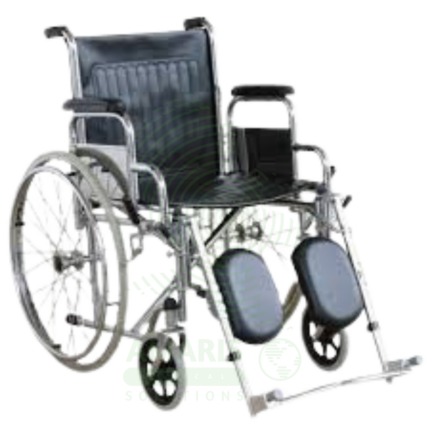
Detachable Wheelchair
A Detachable Wheelchair is a manual wheelchair designed for easy disassembly and transport. Its key feature is a folding X-frame and quick-release wheels, allowing it to break down into compact parts for storage in car trunks or small spaces. While offering superior portability and convenience for travel and occasional use, it is generally less efficient for long-distance self-propulsion than a rigid-frame wheelchair. Safety depends on ensuring all components, especially wheels and frame locks, are securely assembled before each use.
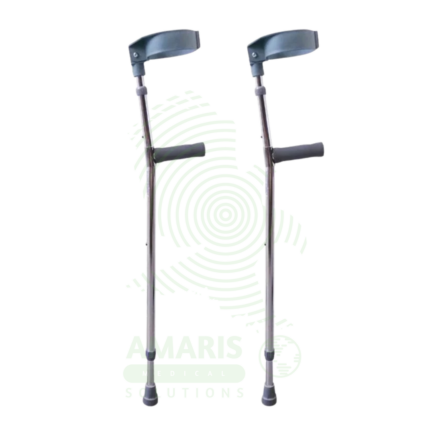
Elbow & Axiliary Crutches
An Elbow & Axiliary Crutches feature a forearm cuff and are designed for long-term mobility, offering a natural gait for unilateral or bilateral conditions. Auxiliary (Underarm) Crutches have an axillary pad and are for short-term, non-weight-bearing use after injury or surgery. Both require precise fitting—forearm crutch cuffs must be below the elbow, and underarm crutch weight must be borne through the hands to avoid nerve damage. Proper gait training from a therapist is essential for safe use of either type.
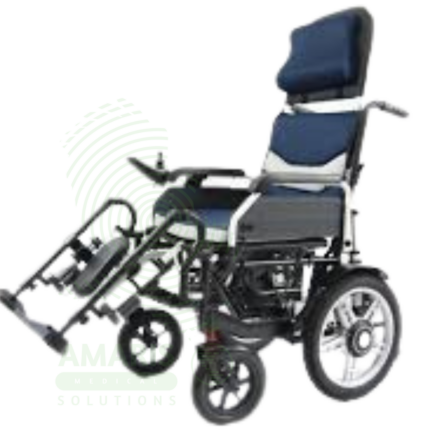
Electric Reclining Wheelchair
An Electric Reclining Wheelchair is a sophisticated powered mobility device that provides both independent locomotion and powered positioning. It features a motorized backrest that reclines to near-horizontal and synchronized elevating leg rests, allowing users to independently manage pressure relief, circulation, breathing, and comfort without leaving the chair. Prescribed for individuals with complex needs such as spinal cord injuries, severe fatigue, or circulatory disorders, it enhances independence and medical stability. Its use requires thorough training due to the significant change in stability and footprint when reclined, and it demands more rigorous maintenance than standard power chairs.
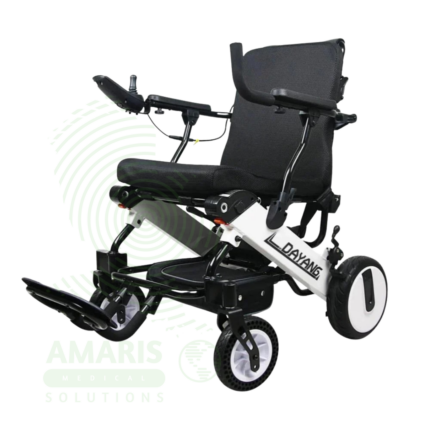
Electric Wheelchair
An Electric Wheelchair is a battery-powered mobility device prescribed for individuals with significant mobility impairments who cannot self-propel a manual chair. It provides independent indoor and outdoor mobility through a joystick or alternative control system. Key features often include power seating functions (tilt, recline) for pressure relief and postural support, and are available in various drive configurations (rear, mid, front-wheel) for different environments. As complex rehabilitation technology, it requires professional evaluation, user training, and regular maintenance to ensure safe operation, enhance independence, and improve the user's quality of life.
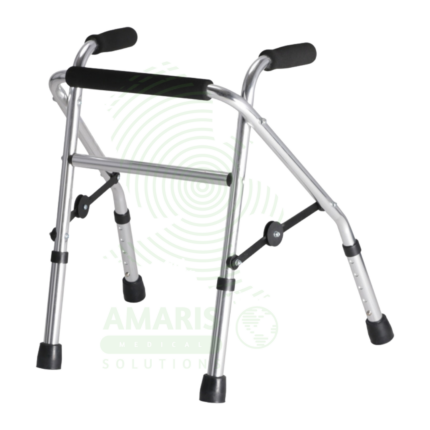
Pediatric Walking Frame
A Pediatric Walking Frame (Gait Trainer) is a supportive wheeled frame specifically designed to facilitate walking and standing for children with physical disabilities such as cerebral palsy. It provides adjustable postural support through a harness, trunk pad, and pelvic guide, enabling safe practice of gait patterns, weight-bearing, and upright mobility. Its primary role is therapeutic, aiming to develop ambulation skills, improve postural control, and promote independence and participation. Correct professional setup and supervision are essential for safety and to ensure it reinforces proper movement rather than abnormal patterns.
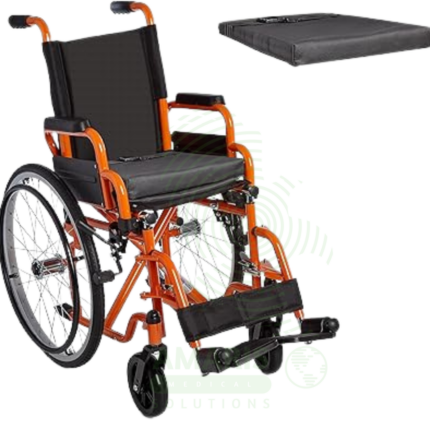
Pediatric Wheelchair
A Pediatric Wheelchair is a specially sized and designed mobility device for children with long-term physical disabilities. Its core functions are to provide independent or assisted mobility, deliver critical postural support to promote proper skeletal development and prevent deformities, and serve as a platform for inclusion in home, school, and community life. Unlike adult chairs, it features extensive adjustability to accommodate growth and modular seating systems tailored to each child's specific postural and medical needs. Prescription and fitting by a rehabilitation team are essential for safe and effective use.
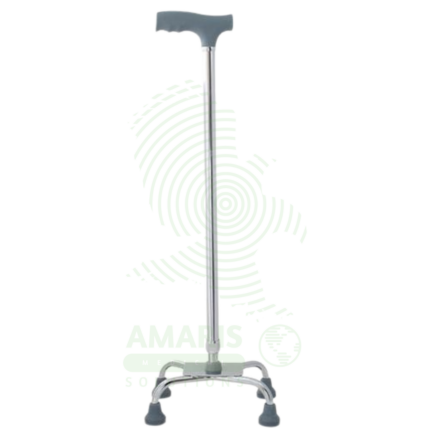
Quadpod Walking Stick
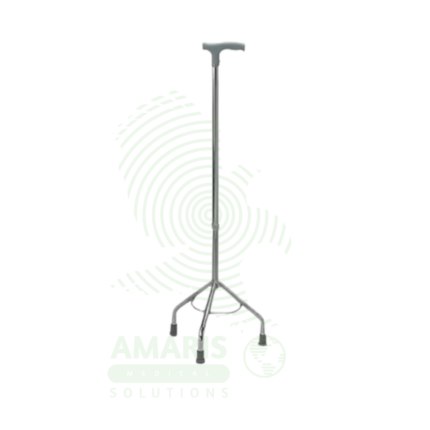
A Quadpod Walking Stick (Quad Cane) is a mobility aid featuring a four-legged base attached to a single shaft, providing significantly greater stability than a standard cane. It is designed for individuals with moderate balance issues or who need to safely offload weight from one leg due to pain or injury. Its wide base offers multi-directional support but requires a specific "lift-and-place" gait technique. While offering more security, its wider footprint can be cumbersome in tight spaces. Proper fitting and user training are essential for safe and effective use as a medically prescribed aid.