Dermatoscope and Magnifiers
 Diagnostic Kits
 Vital Signs Monitors
 Stethoscopes and Accessories
 Otoscopes, Ophthalmoscopes, and Retinoscopes
 Reflex Hammers and Neurological Tools
 Scales and Measuring Devices
 Spirometers and Pulmonary Function Tests
 Electrosurgical Units and Accessories
 Cutting Instruments
 Grasping and Holding Instruments
 Hemostatic Instruments
 Specialized Surgical Sets
 Single-Use Procedure Trays and Packs
 Surgical Drapes, Gowns, and Covers
 Tissue Unifying Instruments
 Radiation Protection
 X-Ray Machines and Accessories
 Ultrasound Systems and Probes
 MRI and CT Scanners
 Radiology Consumables
 Bone Densitometers
 Fluoroscopy Equipment
 Imaging Tables and Positioning Aids
 Microscopes and Accessories
 Centrifuges and Separators
 Analyzers
 Incubators and Ovens
 Pipettes, Dispensers, and Lab Glassware
 Refrigerators, Freezers, and Storage Units
 Lab Consumables
 Sterilizers and Autoclaves for Lab Use
 Multi-Parameter Monitors
 Ventilators and Respiratory Support Devices
 Defibrillators and AEDs
 Infusion Pumps and IV Systems
 Patient Warmers and Cooling Devices
 Central Monitoring Stations
 Accessories
 Anesthesia Machines and Workstations
 Oxygen Concentrators and Delivery Systems
 Nebulizers and Inhalers
 CPAP/BiPAP Machines
 Airway Management
 Anesthesia Masks, Circuits, and Bags
 Humidifiers and Heaters
 Respiratory Therapy Accessories
 First Aid Kits and Cabinets
 Emergency Resuscitation Equipment
 Trauma Supplies
 Emergency Carts and Crash Carts
 Burn Care Products
 Bleeding Control
 Automated External Defibrillators (AEDs)
 Transport and Evacuation
 Wheelchairs and Accessories
 Walkers, Crutches, and Canes
 Prosthetics and Orthotics
 Physical Therapy Equipment
 Transfer Devices
 Bathroom Safety
 Orthopedic Traction and Tables
 Hot/Cold Therapy Packs and Units
 Beds and Mattresses
 Chairs and Stools
 Tables
 Cabinets and Storage
 Privacy Screens & Curtains
 Stands and Racks
 Linens and Textiles
 Lighting
 Autoclaves and Sterilizers
 Ultrasonic Cleaners
 Disinfectant Solutions and Wipes
 Sterilization Pouches, Wraps, and Indicators
 Instrument Trays and Containers
 UV and Ozone Disinfection Devices
 Washer Disinfectors
 Wound Care
 Gloves
 Masks and Respirators
 Catheters and Tubing
 Swabs, Applicators, and Sponges
 Incontinence Products
 Personal Protective Equipment (PPE)
 Dental Chairs and Units
 Handpieces and Burs
 Instruments
 Consumables
 Sterilization for Dental Use
 Orthodontic Supplies
 Endodontic Tools
 Slit Lamps and Tonometers
 Lensometers and Phoropters
 Ophthalmic Surgical Instruments
 Eyewear Frames and Lenses
 Contact Lens Supplies
 Vision Testing Charts and Devices
 Eye Care Consumables
 Laser Systems for Eye Care
 ENT Exam Chairs and Tables
 Endoscopes
 Audiometers and Hearing Tests
 ENT Instruments
 Nasal and Throat Packs
 Hearing Aids and Accessories
 Otology Supplies
 Fetal Dopplers and Monitors
 Delivery Beds and Tables
 Gynecological Instruments
 Neonatal Incubators and Warmers
 Breast Pumps and Accessories
 Contraceptive Devices
 Maternity Supports and Pads
 Neonatal Consumables
 Cystoscopes and Urethroscopes
 Dialysis Machines and Supplies
 Urological Catheters and Bags
 Lithotripters
 Prostate Treatment Devices
 Urinary Incontinence Products
 Kidney Stone Management Tools
 Consumables & Disposables
 EEG and EMG Machines
 Neurosurgical Instruments
 Nerve Stimulators
 Headrests and Positioning Aids
 Lumbar Puncture Kits
 Seizure Monitoring Devices
 Consumables
 Rehabilitation for Neurological Conditions
 ECG Machines and Accessories
 Holter Monitors
 Stress Test Systems
 Pacemakers and Defibrillator Accessories
 Vascular Access Devices
 Cardiac Catheters and Guidewires
 Blood Flow Meters
 Consumables
 Orthopedic Instruments
 Casts, Splints, and Padding
 Joint Replacement Supplies
 Prosthetic Limbs and Components
 Bone Grafts and Substitutes
 Traction Devices
 Orthopedic Braces and Supports
 Rehabilitation Aids for Orthopedics
 Home Oxygen Therapy
 Hospital Beds for Home Use
 Mobility Aids
 Bathroom and Daily Living Aids
 Wound Care for Home
 Monitoring Devices
 Enteral Feeding Pumps and Tubes
 Hand Sanitizers and Dispensers
 Face Shields and Goggles
 Isolation Gowns and Suits
 Biohazard Waste Containers
 Air Purifiers and HEPA Filters
 Surface Disinfectants
 Sharps Containers
 Protective Barriers
 Cardiovascular & Endurance Training
 Strength Training & Weightlifting
 Functional Training & Core Conditioning
 Physical Therapy & Rehabilitation
 Sports & Outdoor Recreation
 Gym Flooring & Facility Equipment
 Fitness Monitoring & Accessories
 Kids & Novelties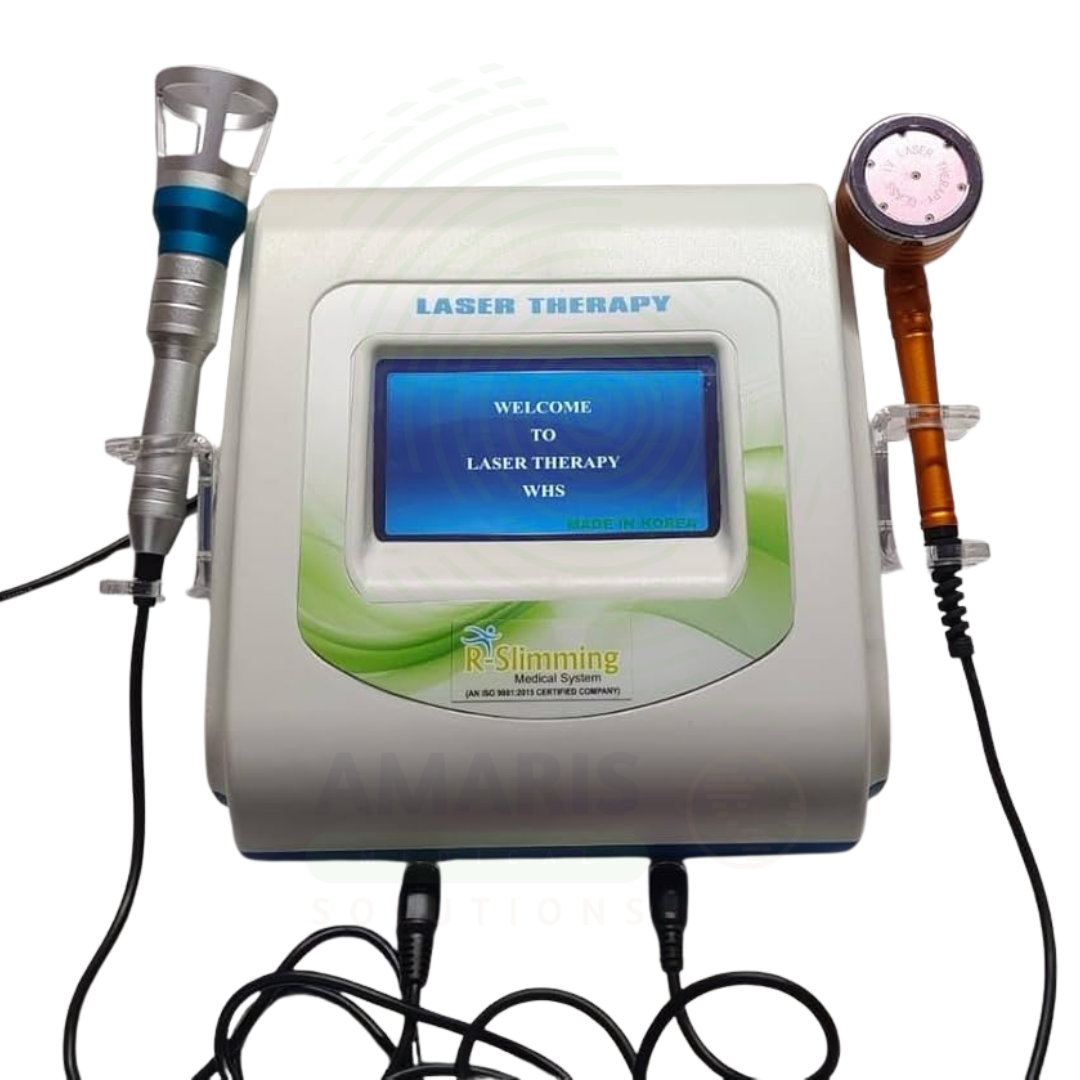
Laser Therapy Systems (Hair Removal, Vascular)
$1.00
WhatsApp Order
Laser Therapy Systems for Hair Removal and Vascular treatment are high-energy medical devices that use specific wavelengths of light to selectively target melanin in hair follicles or oxyhemoglobin in blood vessels. Through selective photothermolysis, they provide permanent hair reduction and effectively treat vascular lesions like spider veins and port-wine stains. These Class 4 laser systems require rigorous safety protocols, including mandatory wavelength-specific eyewear, operator expertise in parameter selection, and thorough patient screening. Treatment efficacy and safety depend on matching the correct laser type (e.g., Alexandrite, Diode, Pulsed Dye) to the patient’s skin type and condition.
Description
Laser Therapy Systems (Hair Removal, Vascular)
PRIMARY CLINICAL & DIAGNOSTIC USES
1. Permanent Hair Reduction
-
Primary Use: Targets and destroys hair follicles by selectively heating the melanin pigment within them, a process known as selective photothermolysis, providing long-term solution for unwanted hair.
-
How it helps: For the dermatologist and licensed aesthetician, this technology offers a predictable, scientifically-grounded method for permanent hair reduction that adapts to different skin types and hair colors. For the patient tired of endless shaving, painful waxing, or costly electrolysis, laser hair removal means freedom from daily grooming routines—smooth, hair-free skin that lasts, restoring time, money, and confidence.
2. Vascular Lesion Treatment
-
Primary Use: Treats benign vascular lesions by targeting oxyhemoglobin in blood vessels; light energy is absorbed by blood, generating heat that coagulates and collapses the vessel, leading to gradual absorption by the body.
-
How it helps: For the vascular specialist and dermatologic surgeon, the laser provides a non-invasive method to selectively destroy abnormal blood vessels while leaving surrounding skin intact. For the patient with facial redness, spider veins, or birthmarks, this technology gradually fades the visible vessels, restoring clear, even-toned skin and often resolving years of self-consciousness about their appearance.
3. Specific Vascular Conditions Treated
-
Primary Use: Addresses telangiectasias (spider veins), rosacea (facial redness), port-wine stain birthmarks, cherry angiomas, and hemangiomas.
-
How it helps: For the clinician, each condition requires specific wavelength and pulse duration selection to match the vessel size and depth—a customizable approach to vascular pathology. For the patient with rosacea who blushes uncontrollably or the child with a port-wine stain facing social challenges, laser therapy offers hope of visible improvement, reducing redness and restoring normal skin appearance.
4. Treatment of Leg Veins
-
Primary Use: Specifically used for smaller, superficial varicose and spider veins on the legs, often as an alternative or adjunct to sclerotherapy.
-
How it helps: For the phlebologist and vein specialist, laser therapy provides a needle-free option for patients who fear injections or have veins too small for sclerotherapy. For the patient embarrassed by unsightly leg veins that limit wearing shorts or skirts, laser treatment gradually erases these visible vessels, restoring confidence in their appearance and eliminating the need for cover-up makeup or concealing clothing.
SECONDARY & SUPPORTIVE USES
1. Pigmented Lesion Treatment: For the dermatologist, certain systems with appropriate wavelengths can also treat benign pigmented lesions like sunspots and freckles by targeting melanin. For the patient with age spots or uneven pigmentation, this dual capability means a single system can address both vascular and pigment concerns, simplifying treatment plans.
2. Skin Rejuvenation (Non-Ablative): For the cosmetic dermatologist, vascular-specific lasers can stimulate collagen remodeling as a secondary benefit when treating diffuse redness. For the patient seeking overall skin improvement, this means reduced redness plus subtle smoothing of fine lines and improved texture—a two-for-one benefit from their treatment sessions.
3. Onychomycosis (Nail Fungus) Treatment: For the podiatrist and dermatologist, specific laser systems are FDA-cleared for temporary increase in clear nail by targeting fungal organisms. For the patient with stubborn nail fungus that hasn’t responded to topical treatments or who cannot take oral antifungals, laser offers a non-systemic alternative that gradually improves nail appearance without the risk of liver toxicity.
KEY PRODUCT FEATURES
1. BASIC IDENTIFICATION ATTRIBUTES
-
Device Type: An electrically-powered, high-precision medical/aesthetic laser device designed for selective photothermolysis.
-
Designation: Systems are categorized by their primary clinical application (Hair Removal, Vascular) and defined by their laser medium, which determines the wavelength.
-
Core System Types by Wavelength:
-
For Hair Removal & Pigment: Alexandrite (755 nm), Diode (800-810 nm), Nd:YAG (1064 nm). The Nd:YAG is preferred for darker skin tones.
-
For Vascular Lesions: Pulsed Dye Laser (PDL - 585-595 nm), KTP (532 nm), Nd:YAG (1064 nm in a specific mode). PDL is the gold standard for many vascular conditions.
-
-
Core Components:
-
Laser Console: Houses the power supply, laser medium, cooling system, and control computer.
-
Handpiece: Contains the focusing optics and, often, an integrated contact cooling tip (sapphire window or cryogen spray) to protect the epidermis.
-
Foot Pedal: For hands-free control of laser pulse emission.
-
User Interface: Touchscreen or display for setting parameters (fluence, pulse width, spot size).
-
2. TECHNICAL & PERFORMANCE PROPERTIES
-
Wavelength: The single most critical attribute, measured in nanometers (nm). It determines the target chromophore (melanin for hair, oxyhemoglobin for vessels) and depth of penetration.
-
Fluence: The energy delivered per unit area (Joules/cm²). Adjustable to match the treatment target and patient skin type.
-
Pulse Width/Duration: The time over which the energy is delivered (milliseconds to seconds). Must be shorter than or equal to the target's thermal relaxation time to selectively damage it without affecting surrounding tissue.
-
Spot Size: The diameter of the laser beam at the skin surface. Larger spot sizes allow deeper penetration and faster treatment of larger areas.
-
Repetition Rate: The speed at which pulses can be delivered (Hz), affecting treatment speed.
3. PHYSICAL & OPERATIONAL PROPERTIES
-
Cooling System: Essential for safety and comfort. Includes contact cooling (chilled tip on handpiece), cryogen spray, or air cooling to protect the epidermis from thermal damage (especially in darker skin) and reduce pain.
-
Portability: Range from compact, tabletop units to larger, mobile consoles on wheels.
4. SAFETY & COMPLIANCE ATTRIBUTES
-
Regulatory Status: Classified as a Class II or higher medical device (moderate to high risk), requiring FDA clearance/approval or equivalent for specific indications.
-
Laser Safety Class: Typically a Class 4 laser product, capable of causing severe eye and skin injury. Mandatory safety protocols are required.
-
Safety Features: Key-operated master switch, emergency stop, standby mode, protective housing, and wavelength-specific safety eyewear for everyone in the treatment room.
-
Electrical Safety: Must comply with medical electrical equipment standards (e.g., IEC 60601-1).
5. STORAGE & HANDLING ATTRIBUTES
-
Storage: Store in a clean, dry, climate-controlled environment. Protect from dust and physical impact.
-
Cleaning: The exterior and handpiece must be cleaned and disinfected between patients according to manufacturer protocols, using approved agents that do not damage optics or plastics.
-
Calibration & Maintenance: Requires regular preventive maintenance and calibration by qualified service engineers to ensure consistent output and safety. Laser output should be checked periodically with a power meter.
6. LABORATORY & CLINICAL APPLICATIONS
-
Primary Application: A core device in dermatology, plastic surgery, and medical aesthetic clinics for performing non-invasive or minimally invasive procedures.
-
Clinical Role: Requires a highly trained operator (physician, nurse, or technician under supervision) who can accurately diagnose the condition, select the correct device and parameters, and manage potential side effects.
SAFETY HANDLING PRECAUTIONS
1. SAFETY PRECAUTIONS
-
Eye Protection: THE MOST CRITICAL RULE. Everyone in the room must wear laser safety glasses specific to the device's wavelength. Permanent eye damage can occur from direct or reflected beams.
-
Skin Typing & Test Spot: Always perform a Fitzpatrick skin type assessment. A test spot on a representative area is mandatory to determine the safe and effective treatment parameters before proceeding with full treatment.
-
Contraindications: Absolute contraindications include active infection in the treatment area, history of keloid scarring, pregnancy (for elective procedures), and use of photosensitizing medications. Relative contraindications include recent sun exposure, tanning (natural or artificial), and certain medical conditions (e.g., lupus, epilepsy).
-
Parameter Selection: Using incorrect parameters (too high fluence, wrong pulse width) can cause burns, blisters, hypopigmentation, or hyperpigmentation.
-
Fire Hazard: Remove all flammable materials (alcohol wipes, gauze, hair) from the treatment area. The laser can ignite these.
2. FIRST AID MEASURES
-
Laser Burn: If a burn or blister occurs, apply cool compresses. Do not break blisters. Treat as a thermal burn; prescribe topical antibiotics if needed. Inform the patient about the risk of scarring or pigment changes.
-
Eye Exposure: If accidental eye exposure occurs, seek immediate ophthalmological evaluation, even if asymptomatic.
-
Fire: In case of a fire ignited by the laser, turn off the laser, activate the room's fire alarm if necessary, and use a CO2 or dry chemical fire extinguisher. Evacuate if required.
3. FIRE FIGHTING MEASURES
-
Flammability: The device contains combustible electrical and plastic components.
-
Ignition Source: The laser beam itself is a potent ignition source for fabrics, gases, and alcohol.
-
Extinguishing Media: For an electrical fire involving the console, disconnect power and use a CO2 extinguisher. Do not use water.
Related products
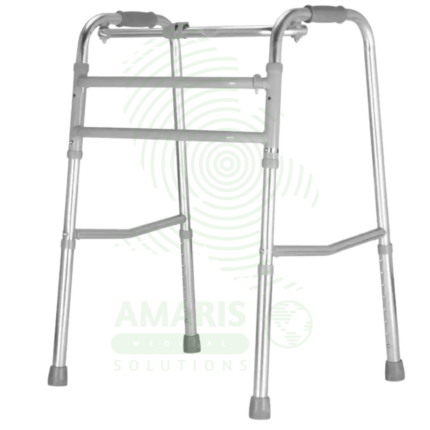
Adult Walking Frame
An Adult Walking Frame is a rigid, non-wheeled mobility aid designed to provide maximum stability during walking. It is used by lifting and placing the frame forward with each step, making it ideal for individuals with severe balance issues, significant weakness, or those in early post-operative recovery. Key features include a lightweight aluminum frame, height-adjustable legs, and replaceable rubber tips. Proper fitting and gait training by a healthcare professional are essential for safe use, as incorrect technique can increase fall risk. It is the most stable ambulatory aid before progressing to wheeled walkers or canes.
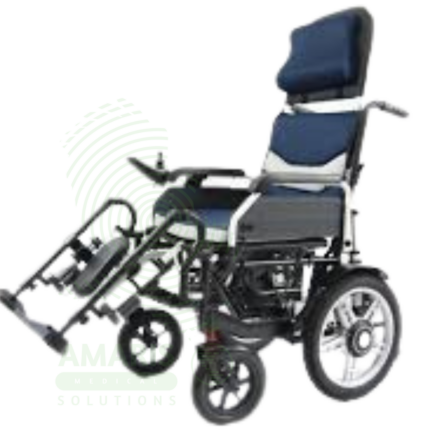
Electric Reclining Wheelchair
An Electric Reclining Wheelchair is a sophisticated powered mobility device that provides both independent locomotion and powered positioning. It features a motorized backrest that reclines to near-horizontal and synchronized elevating leg rests, allowing users to independently manage pressure relief, circulation, breathing, and comfort without leaving the chair. Prescribed for individuals with complex needs such as spinal cord injuries, severe fatigue, or circulatory disorders, it enhances independence and medical stability. Its use requires thorough training due to the significant change in stability and footprint when reclined, and it demands more rigorous maintenance than standard power chairs.
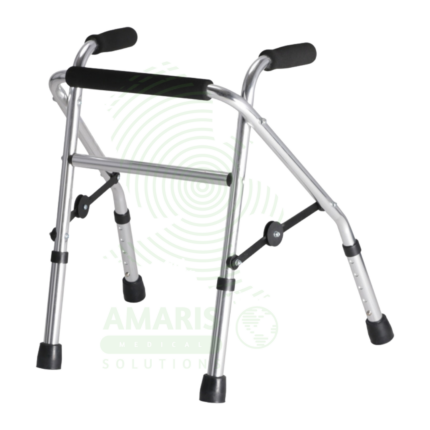
Pediatric Walking Frame
A Pediatric Walking Frame (Gait Trainer) is a supportive wheeled frame specifically designed to facilitate walking and standing for children with physical disabilities such as cerebral palsy. It provides adjustable postural support through a harness, trunk pad, and pelvic guide, enabling safe practice of gait patterns, weight-bearing, and upright mobility. Its primary role is therapeutic, aiming to develop ambulation skills, improve postural control, and promote independence and participation. Correct professional setup and supervision are essential for safety and to ensure it reinforces proper movement rather than abnormal patterns.
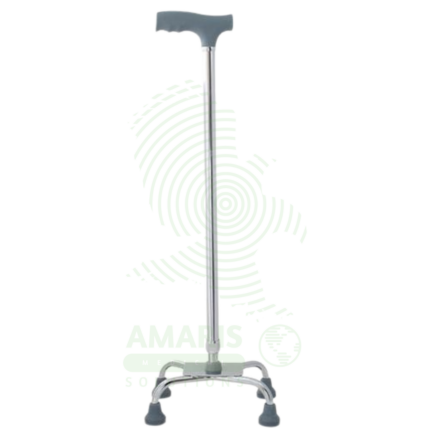
Quadpod Walking Stick
A Quadpod Walking Stick (Quad Cane) is a mobility aid featuring a four-legged base attached to a single shaft, providing significantly greater stability than a standard cane. It is designed for individuals with moderate balance issues or who need to safely offload weight from one leg due to pain or injury. Its wide base offers multi-directional support but requires a specific "lift-and-place" gait technique. While offering more security, its wider footprint can be cumbersome in tight spaces. Proper fitting and user training are essential for safe and effective use as a medically prescribed aid.
Reclining Wheelchair
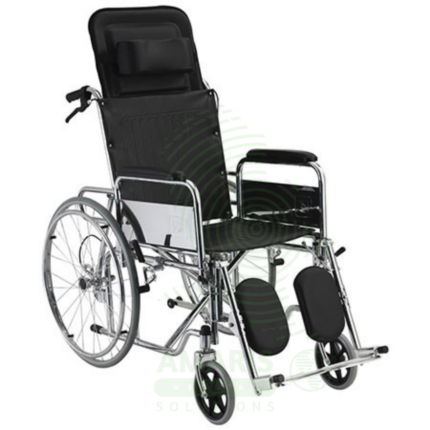
A Reclining Wheelchair is a manual wheelchair with a backrest that can be manually adjusted to various angles. It is designed for users who need to change their sitting position for pressure relief, circulatory management, respiratory support, or comfort but do not require powered mobility. Key safety features include a robust locking mechanism, mandatory use of anti-tip levers and a seat belt when reclined, and synchronized elevating leg rests to prevent sliding. It is heavier and less maneuverable than a standard wheelchair but provides essential positioning options for individuals with specific postural and medical needs.
Standard Wheelchair
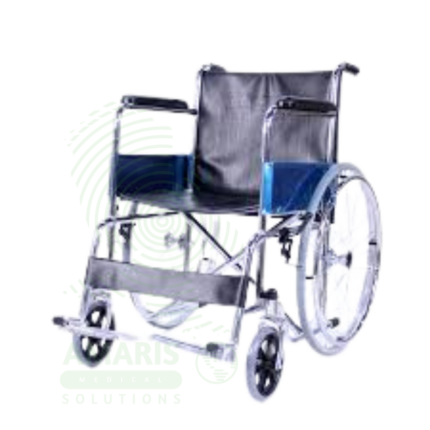
The Standard Wheelchair is a manually operated, folding or rigid-frame chair with two large rear wheels and two front casters, designed for basic patient mobility. It is used to transport non-ambulatory patients within healthcare facilities, support recovery from injury or surgery, and provide temporary mobility assistance. Key features include handrims for self-propulsion, attendant push handles, flip-up footrests, and wheel locks. As a fundamental piece of equipment in hospitals, clinics, and communities, it requires proper use of brakes and safe transfer techniques to prevent accidents.
Tripod Walking Stick
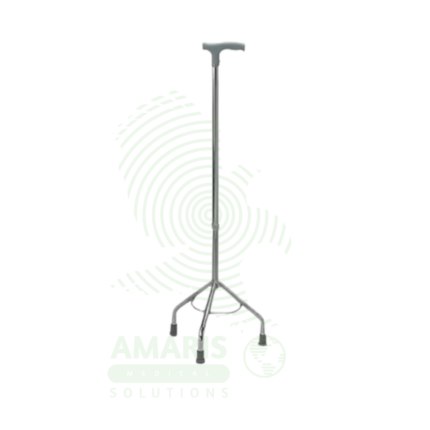
A Tripod Walking Stick is a mobility aid with a three-legged base, offering greater stability than a standard cane but with better maneuverability than a quad cane. It is designed for individuals with mild to moderate balance issues or who need to safely offload partial weight from a lower limb. The tripod base provides a secure, multi-point contact with the ground but requires a deliberate "lift-and-place" walking technique. Proper fitting by a healthcare professional and user training are essential for safe use, making it a common transitional aid in rehabilitation programs.