Dermatoscope and Magnifiers
 Diagnostic Kits
 Vital Signs Monitors
 Stethoscopes and Accessories
 Otoscopes, Ophthalmoscopes, and Retinoscopes
 Reflex Hammers and Neurological Tools
 Scales and Measuring Devices
 Spirometers and Pulmonary Function Tests
 Electrosurgical Units and Accessories
 Cutting Instruments
 Grasping and Holding Instruments
 Hemostatic Instruments
 Specialized Surgical Sets
 Single-Use Procedure Trays and Packs
 Surgical Drapes, Gowns, and Covers
 Tissue Unifying Instruments
 Radiation Protection
 X-Ray Machines and Accessories
 Ultrasound Systems and Probes
 MRI and CT Scanners
 Radiology Consumables
 Bone Densitometers
 Fluoroscopy Equipment
 Imaging Tables and Positioning Aids
 Microscopes and Accessories
 Centrifuges and Separators
 Analyzers
 Incubators and Ovens
 Pipettes, Dispensers, and Lab Glassware
 Refrigerators, Freezers, and Storage Units
 Lab Consumables
 Sterilizers and Autoclaves for Lab Use
 Multi-Parameter Monitors
 Ventilators and Respiratory Support Devices
 Defibrillators and AEDs
 Infusion Pumps and IV Systems
 Patient Warmers and Cooling Devices
 Central Monitoring Stations
 Accessories
 Anesthesia Machines and Workstations
 Oxygen Concentrators and Delivery Systems
 Nebulizers and Inhalers
 CPAP/BiPAP Machines
 Airway Management
 Anesthesia Masks, Circuits, and Bags
 Humidifiers and Heaters
 Respiratory Therapy Accessories
 First Aid Kits and Cabinets
 Emergency Resuscitation Equipment
 Trauma Supplies
 Emergency Carts and Crash Carts
 Burn Care Products
 Bleeding Control
 Automated External Defibrillators (AEDs)
 Transport and Evacuation
 Wheelchairs and Accessories
 Walkers, Crutches, and Canes
 Prosthetics and Orthotics
 Physical Therapy Equipment
 Transfer Devices
 Bathroom Safety
 Orthopedic Traction and Tables
 Hot/Cold Therapy Packs and Units
 Beds and Mattresses
 Chairs and Stools
 Tables
 Cabinets and Storage
 Privacy Screens & Curtains
 Stands and Racks
 Linens and Textiles
 Lighting
 Autoclaves and Sterilizers
 Ultrasonic Cleaners
 Disinfectant Solutions and Wipes
 Sterilization Pouches, Wraps, and Indicators
 Instrument Trays and Containers
 UV and Ozone Disinfection Devices
 Washer Disinfectors
 Wound Care
 Gloves
 Masks and Respirators
 Catheters and Tubing
 Swabs, Applicators, and Sponges
 Incontinence Products
 Personal Protective Equipment (PPE)
 Dental Chairs and Units
 Handpieces and Burs
 Instruments
 Consumables
 Sterilization for Dental Use
 Orthodontic Supplies
 Endodontic Tools
 Slit Lamps and Tonometers
 Lensometers and Phoropters
 Ophthalmic Surgical Instruments
 Eyewear Frames and Lenses
 Contact Lens Supplies
 Vision Testing Charts and Devices
 Eye Care Consumables
 Laser Systems for Eye Care
 ENT Exam Chairs and Tables
 Endoscopes
 Audiometers and Hearing Tests
 ENT Instruments
 Nasal and Throat Packs
 Hearing Aids and Accessories
 Otology Supplies
 Fetal Dopplers and Monitors
 Delivery Beds and Tables
 Gynecological Instruments
 Neonatal Incubators and Warmers
 Breast Pumps and Accessories
 Contraceptive Devices
 Maternity Supports and Pads
 Neonatal Consumables
 Cystoscopes and Urethroscopes
 Dialysis Machines and Supplies
 Urological Catheters and Bags
 Lithotripters
 Prostate Treatment Devices
 Urinary Incontinence Products
 Kidney Stone Management Tools
 Consumables & Disposables
 EEG and EMG Machines
 Neurosurgical Instruments
 Nerve Stimulators
 Headrests and Positioning Aids
 Lumbar Puncture Kits
 Seizure Monitoring Devices
 Consumables
 Rehabilitation for Neurological Conditions
 ECG Machines and Accessories
 Holter Monitors
 Stress Test Systems
 Pacemakers and Defibrillator Accessories
 Vascular Access Devices
 Cardiac Catheters and Guidewires
 Blood Flow Meters
 Consumables
 Orthopedic Instruments
 Casts, Splints, and Padding
 Joint Replacement Supplies
 Prosthetic Limbs and Components
 Bone Grafts and Substitutes
 Traction Devices
 Orthopedic Braces and Supports
 Rehabilitation Aids for Orthopedics
 Home Oxygen Therapy
 Hospital Beds for Home Use
 Mobility Aids
 Bathroom and Daily Living Aids
 Wound Care for Home
 Monitoring Devices
 Enteral Feeding Pumps and Tubes
 Hand Sanitizers and Dispensers
 Face Shields and Goggles
 Isolation Gowns and Suits
 Biohazard Waste Containers
 Air Purifiers and HEPA Filters
 Surface Disinfectants
 Sharps Containers
 Protective Barriers
 Cardiovascular & Endurance Training
 Strength Training & Weightlifting
 Functional Training & Core Conditioning
 Physical Therapy & Rehabilitation
 Sports & Outdoor Recreation
 Gym Flooring & Facility Equipment
 Fitness Monitoring & Accessories
 Kids & Novelties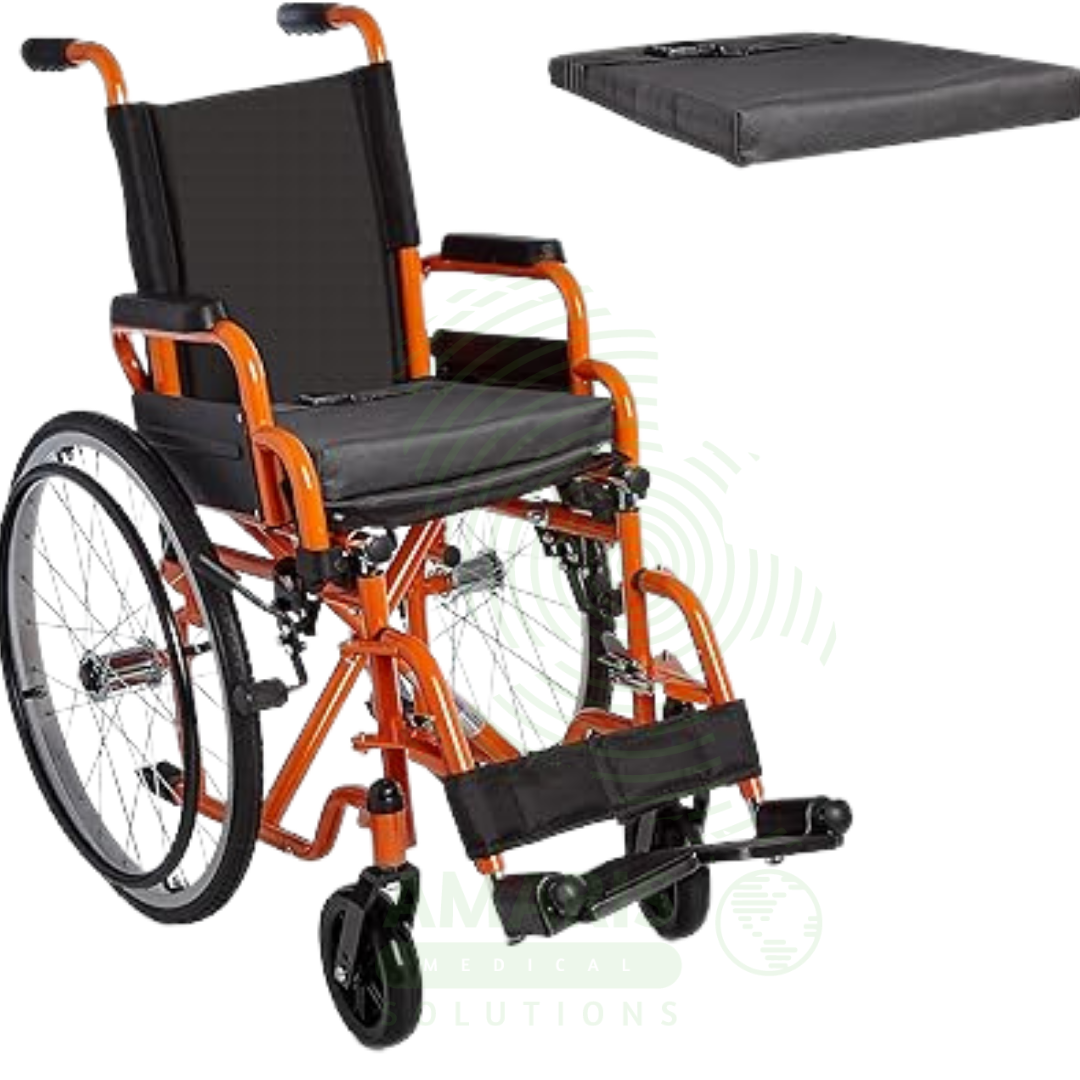
Pediatric Wheelchair
WhatsApp Order
A Pediatric Wheelchair is a specially sized and designed mobility device for children with long-term physical disabilities. Its core functions are to provide independent or assisted mobility, deliver critical postural support to promote proper skeletal development and prevent deformities, and serve as a platform for inclusion in home, school, and community life. Unlike adult chairs, it features extensive adjustability to accommodate growth and modular seating systems tailored to each child’s specific postural and medical needs. Prescription and fitting by a rehabilitation team are essential for safe and effective use.
Description
Pediatric Wheelchair
PRIMARY CLINICAL & DIAGNOSTIC USES
1. Mobility and Independence for Children with Congenital or Acquired Disabilities
-
Primary Use: Provides age-appropriate, self-directed or caregiver-assisted mobility for children who cannot walk due to conditions such as cerebral palsy, spina bifida, muscular dystrophy, spinal cord injury, or severe genetic syndromes, enabling participation in childhood activities.
-
How it helps: For the pediatric physiatrist and rehabilitation team, a pediatric wheelchair is the tool that transforms a child from a passive observer into an active participant—allowing them to move through their world, explore their environment, and engage with peers in ways that are essential to childhood development. For the child who cannot walk, having their own wheelchair means they can keep up with friends, explore the playground, and experience the independence and joy of movement that every child deserves.
2. Postural Support and Skeletal Development
-
Primary Use: Provides critical, adjustable postural support during growth years, essential for preventing or managing orthopedic deformities, promoting symmetrical development, and improving respiratory and digestive function.
-
How it helps: For the pediatric orthopedist and seating specialist, a well-fitted wheelchair is a medical necessity that shapes a child’s physical future—supporting the spine to prevent scoliosis, positioning the hips to maintain joint integrity, and aligning the trunk to optimize breathing and digestion. For the growing child with disabilities, proper seating means their body develops as normally as possible, preventing the painful deformities that would otherwise limit their function and comfort throughout life.
3. Therapeutic Positioning and Tone Management
-
Primary Use: Used as a therapeutic tool to position a child optimally to manage abnormal muscle tone, facilitate functional use of arms and hands, and provide a stable base for vision, communication, and feeding.
-
How it helps: For the occupational therapist and speech-language pathologist, the pediatric wheelchair is the foundation upon which all other therapy is built—providing the stability that allows a child to focus on reaching for toys, the positioning that enables clear speech, and the support that makes feeding safe and successful. For the child with cerebral palsy or other neurological conditions, being properly positioned in their wheelchair means their arms are free to play, their voice is easier to use, and they can engage with the world rather than fighting against their own body.
4. Integration into Educational and Social Environments
-
Primary Use: Facilitates inclusion by providing mobility that allows the child to access classrooms, playgrounds, and community spaces alongside peers, supporting cognitive development, social interaction, and psychological well-being.
-
How it helps: For the special education teacher and school administrator, a pediatric wheelchair is an inclusion tool that allows a child with disabilities to participate fully in school life—moving from classroom to cafeteria, joining peers on the playground, and being present in all the spaces where childhood happens. For the child, their wheelchair means they are not left behind in a separate room while others learn and play together; they are part of the group, part of the community, part of the childhood experience.
SECONDARY & SUPPORTIVE USES
1. Rehabilitation and Skill Development: Used in physical and occupational therapy to develop propulsion skills, upper body strength, and spatial awareness, serving as a platform for practicing transfers and activities of daily living. For the child working to gain independence, their wheelchair is both the tool and the goal—mastering it means mastering their world.
2.Transport for Medical Appointments and Procedures: Provides safe, comfortable transport for children within hospital settings, to clinics, and during outpatient visits, reducing anxiety and physical strain on parents. For the family navigating a child’s complex medical needs, a reliable wheelchair simplifies the logistics of care and reduces the physical burden on parents.
3. Adaptive Seating for Specialized Activities: Can be configured with accessories to function as an adaptive seating system for specific activities like powered mobility training, computer access, or customized transportation. For the child whose needs evolve, a wheelchair that adapts grows with them.
4. Growth Accommodation and Long-Term Use: Designed with adjustability to accommodate a child’s growth over several years, making it a cost-effective long-term mobility solution. For parents facing the expense of medical equipment, a chair that adjusts as their child grows represents both practical and financial relief.
5. Family Mobility and Caregiver Support: Reduces the physical burden on parents and caregivers by providing an efficient means of transportation, enabling family outings and improving overall quality of life for the entire family. For the family of a child with disabilities, a wheelchair that works well means they can go to the park, the mall, the zoo—they can be a family out in the world together.
6. Preparation for Adult Mobility: For adolescents, a pediatric wheelchair serves as a transition to adult models, helping them master the skills and responsibility required for independent mobility in adulthood. For the teen approaching adulthood, learning to manage their own mobility equipment builds the independence and confidence they will need for adult life.
KEY PRODUCT FEATURES
1. BASIC IDENTIFICATION ATTRIBUTES
-
Product Type: A mobility device sized and designed specifically for infants, children, and adolescents, with a strong emphasis on postural support and growth.
-
Core Design: A scaled-down wheelchair frame with a high degree of adjustability and modularity. It prioritizes proper positioning over compactness.
-
Key Components:
-
Adjustable, Modular Seating System: Includes adjustable seat depth and width, a variety of backrests (solid, contoured), pelvic guides (abductors, adductors), lateral trunk supports, headrests, and harness systems.
-
Growth-Oriented Frame: Allows for significant adjustment in key dimensions. May be a rigid frame or a folding frame.
-
Proportional Wheels: Smaller drive wheels (typically 20-22 inch for older children) and casters appropriate for the child's size and propulsion ability.
-
Adaptive Accessories: Tray tables, ventilator mounts, oxygen holders, IV pole holders, and specialized control interfaces for powered models.
-
Lightweight Construction: Often made of aluminum or composite materials to be manageable for both the child and caregivers.
-
2. TECHNICAL & PERFORMANCE PROPERTIES
-
Adjustability Ranges: Precise, incremental adjustments in seat width (e.g., 10-16 inches), seat depth, back height, and footrest length are standard.
-
Seating System Complexity: Ranges from basic supportive seats to highly contoured, custom-molded seating systems for children with severe postural needs.
-
Weight Capacity: Sized by age/weight ranges (e.g., toddler: up to 50 lbs, child: up to 100 lbs, youth: up to 150 lbs).
-
Propulsion Options: Self-Propelled (with handrims), Attendant-Propelled (transit chair without handrims), or Powered with pediatric-specific joystick or alternative controls.
3. PHYSICAL & OPERATIONAL PROPERTIES
-
Construction: Durable but lightweight materials. Frames are often brightly colored.
-
Dimensions: Overall smaller footprint, but seating systems can add width.
-
Transportability: Many models fold or disassemble for car transport. Caregiver-friendly handles are common.
4. SAFETY & COMPLIANCE ATTRIBUTES
-
Regulatory Status: Class I medical device.
-
Safety Standards: Must meet pediatric-specific safety and performance standards.
-
Restraint Systems: Integrated, child-appropriate pelvic and chest harnesses are common and essential.
5. STORAGE & HANDLING ATTRIBUTES
-
Storage: Should be stored in a clean, dry area. Modular parts should be kept together.
-
Cleaning & Disinfection: Clean fabrics and surfaces with child-safe, non-toxic disinfectants. Upholstery is often removable and washable.
-
Maintenance: Regular checks of growth adjustments, bolt tightness, and tire pressure. Seating components must be inspected for wear.
6. LABORATORY & CLINICAL APPLICATIONS
-
Primary Application: A prescribed, complex piece of rehabilitation technology for children. It is not just a chair but a developmental tool. Evaluation and prescription involve a multidisciplinary team (PT, OT, seating specialist) to match the chair to the child's specific medical, functional, and growth needs.
SAFETY HANDLING PRECAUTIONS
1. SAFETY PRECAUTIONS
-
Proper Prescription and Fit (CRITICAL): A pediatric wheelchair must be prescribed and fitted by a qualified professional. An ill-fitting chair can cause injury, promote deformity, and hinder development.
-
Growth Checks: The chair's dimensions must be re-evaluated every 6-12 months to ensure it still fits correctly as the child grows.
-
Secure Restraints: Always use the provided postural supports and restraints (pelvic belt, chest harness) as configured by the therapist to maintain safe positioning, especially in vehicles during transport.
-
Terrain and Environment Suitability: Ensure the chair (and its wheels) is appropriate for the child's primary environments (smooth indoor floors, playground carpet, outdoor sidewalks).
-
Supervision: Children in wheelchairs, especially beginners, require supervision for safety and to reinforce proper propulsion techniques to prevent overuse injuries.
2. FIRST AID MEASURES
-
Fall or Tip-Over: If the chair tips, first ensure the child's airway is clear. Check for injuries, particularly to the head, neck, or limbs. Comfort the child and assess for pain.
-
Entrapment or Pinch: If a finger or limb is caught in moving parts, carefully free it and provide first aid for pinches or minor cuts.
3. FIRE FIGHTING MEASURES
-
Flammability: Upholstery and plastics are combustible.
-
Extinguishing Media: Use water, foam, or CO₂. Evacuate the child first.
Related products
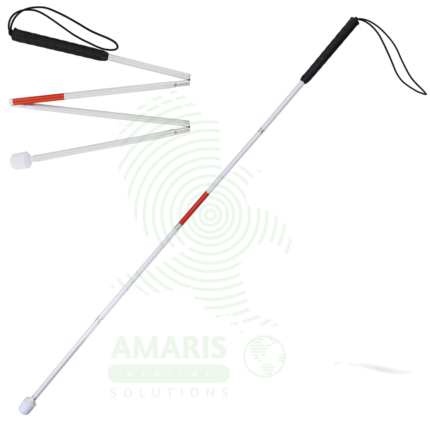
Blind Cane
A Blind Cane (white cane) is a specialized, lightweight mobility tool used by individuals who are blind or visually impaired for navigation and environmental awareness. Its core function is tactile and auditory detection of obstacles, drop-offs, and surface changes one step ahead of the user. Key features include a white shaft for visibility, an ergonomic grip, and a replaceable, specialized tip. It is not a walking stick for balance but a sensory probe. Its effective and safe use requires mandatory training in specific techniques from a certified Orientation and Mobility (O&M) specialist.
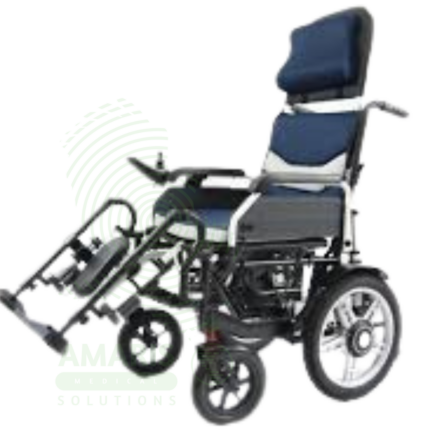
Electric Reclining Wheelchair
An Electric Reclining Wheelchair is a sophisticated powered mobility device that provides both independent locomotion and powered positioning. It features a motorized backrest that reclines to near-horizontal and synchronized elevating leg rests, allowing users to independently manage pressure relief, circulation, breathing, and comfort without leaving the chair. Prescribed for individuals with complex needs such as spinal cord injuries, severe fatigue, or circulatory disorders, it enhances independence and medical stability. Its use requires thorough training due to the significant change in stability and footprint when reclined, and it demands more rigorous maintenance than standard power chairs.
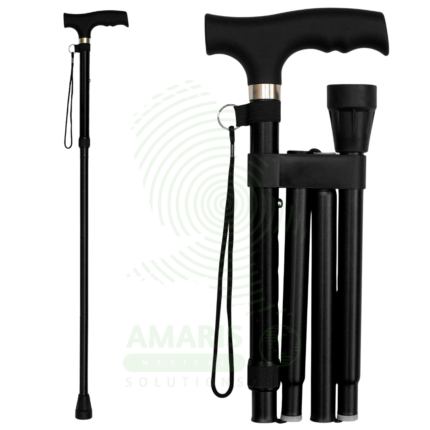
Foldable Walking Stick
A Foldable Walking Stick combines a stabilizing four-point base with a multi-section shaft that folds for compact storage and portability. It is designed for individuals who need reliable stability for moderate balance or weight-bearing issues but also require a discreet, transportable aid for use in the community. Key safety features include secure segment locking mechanisms and a quad base that must be placed flat. It is ideal for travel, occasional use, and active seniors, but requires diligent checking of all locks before each use to prevent collapse.
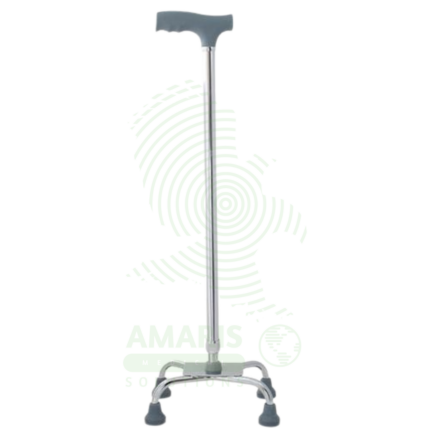
Quadpod Walking Stick
A Quadpod Walking Stick (Quad Cane) is a mobility aid featuring a four-legged base attached to a single shaft, providing significantly greater stability than a standard cane. It is designed for individuals with moderate balance issues or who need to safely offload weight from one leg due to pain or injury. Its wide base offers multi-directional support but requires a specific "lift-and-place" gait technique. While offering more security, its wider footprint can be cumbersome in tight spaces. Proper fitting and user training are essential for safe and effective use as a medically prescribed aid.
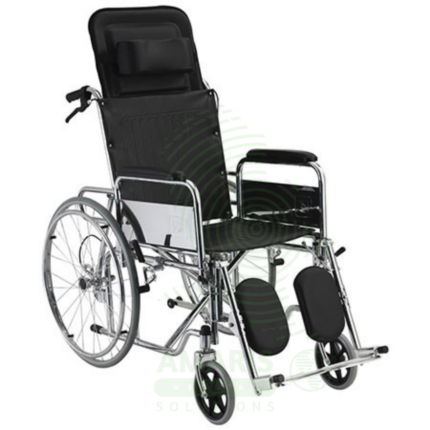
Reclining Wheelchair
A Reclining Wheelchair is a manual wheelchair with a backrest that can be manually adjusted to various angles. It is designed for users who need to change their sitting position for pressure relief, circulatory management, respiratory support, or comfort but do not require powered mobility. Key safety features include a robust locking mechanism, mandatory use of anti-tip levers and a seat belt when reclined, and synchronized elevating leg rests to prevent sliding. It is heavier and less maneuverable than a standard wheelchair but provides essential positioning options for individuals with specific postural and medical needs.
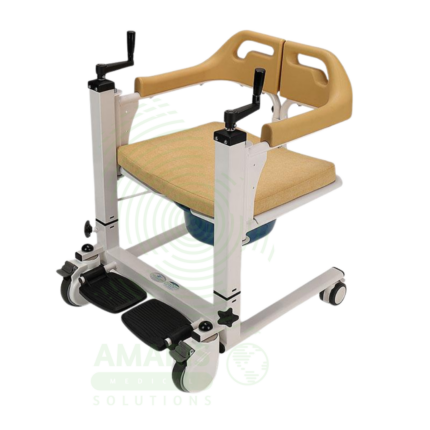
Transfer Chair
A Transfer Chair is a simple, armless mobile chair on four swivel casters designed specifically for safe, lateral seated patient transfers. Its core function is to allow caregivers to move patients who cannot stand between surfaces like beds, wheelchairs, toilets, and cars with minimal lifting, thereby preventing caregiver injuries and patient falls. Key features include a low, armless seat for unobstructed sliding, locking casters for stability, and a compact, maneuverable design. It is a fundamental piece of equipment in any safe patient handling program.
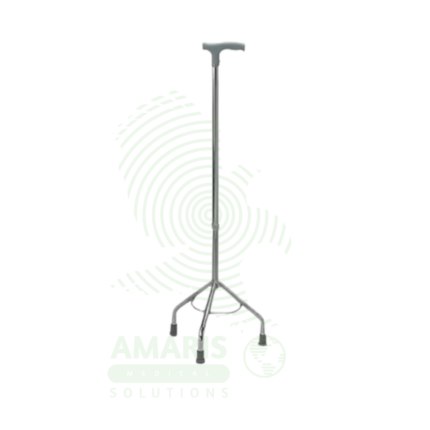
Tripod Walking Stick
A Tripod Walking Stick is a mobility aid with a three-legged base, offering greater stability than a standard cane but with better maneuverability than a quad cane. It is designed for individuals with mild to moderate balance issues or who need to safely offload partial weight from a lower limb. The tripod base provides a secure, multi-point contact with the ground but requires a deliberate "lift-and-place" walking technique. Proper fitting by a healthcare professional and user training are essential for safe use, making it a common transitional aid in rehabilitation programs.