Dermatoscope and Magnifiers
 Diagnostic Kits
 Vital Signs Monitors
 Stethoscopes and Accessories
 Otoscopes, Ophthalmoscopes, and Retinoscopes
 Reflex Hammers and Neurological Tools
 Scales and Measuring Devices
 Spirometers and Pulmonary Function Tests
 Electrosurgical Units and Accessories
 Cutting Instruments
 Grasping and Holding Instruments
 Hemostatic Instruments
 Specialized Surgical Sets
 Single-Use Procedure Trays and Packs
 Surgical Drapes, Gowns, and Covers
 Tissue Unifying Instruments
 Radiation Protection
 X-Ray Machines and Accessories
 Ultrasound Systems and Probes
 MRI and CT Scanners
 Radiology Consumables
 Bone Densitometers
 Fluoroscopy Equipment
 Imaging Tables and Positioning Aids
 Microscopes and Accessories
 Centrifuges and Separators
 Analyzers
 Incubators and Ovens
 Pipettes, Dispensers, and Lab Glassware
 Refrigerators, Freezers, and Storage Units
 Lab Consumables
 Sterilizers and Autoclaves for Lab Use
 Multi-Parameter Monitors
 Ventilators and Respiratory Support Devices
 Defibrillators and AEDs
 Infusion Pumps and IV Systems
 Patient Warmers and Cooling Devices
 Central Monitoring Stations
 Accessories
 Anesthesia Machines and Workstations
 Oxygen Concentrators and Delivery Systems
 Nebulizers and Inhalers
 CPAP/BiPAP Machines
 Airway Management
 Anesthesia Masks, Circuits, and Bags
 Humidifiers and Heaters
 Respiratory Therapy Accessories
 First Aid Kits and Cabinets
 Emergency Resuscitation Equipment
 Trauma Supplies
 Emergency Carts and Crash Carts
 Burn Care Products
 Bleeding Control
 Automated External Defibrillators (AEDs)
 Transport and Evacuation
 Wheelchairs and Accessories
 Walkers, Crutches, and Canes
 Prosthetics and Orthotics
 Physical Therapy Equipment
 Transfer Devices
 Bathroom Safety
 Orthopedic Traction and Tables
 Hot/Cold Therapy Packs and Units
 Beds and Mattresses
 Chairs and Stools
 Tables
 Cabinets and Storage
 Privacy Screens & Curtains
 Stands and Racks
 Linens and Textiles
 Lighting
 Autoclaves and Sterilizers
 Ultrasonic Cleaners
 Disinfectant Solutions and Wipes
 Sterilization Pouches, Wraps, and Indicators
 Instrument Trays and Containers
 UV and Ozone Disinfection Devices
 Washer Disinfectors
 Wound Care
 Gloves
 Masks and Respirators
 Catheters and Tubing
 Swabs, Applicators, and Sponges
 Incontinence Products
 Personal Protective Equipment (PPE)
 Dental Chairs and Units
 Handpieces and Burs
 Instruments
 Consumables
 Sterilization for Dental Use
 Orthodontic Supplies
 Endodontic Tools
 Slit Lamps and Tonometers
 Lensometers and Phoropters
 Ophthalmic Surgical Instruments
 Eyewear Frames and Lenses
 Contact Lens Supplies
 Vision Testing Charts and Devices
 Eye Care Consumables
 Laser Systems for Eye Care
 ENT Exam Chairs and Tables
 Endoscopes
 Audiometers and Hearing Tests
 ENT Instruments
 Nasal and Throat Packs
 Hearing Aids and Accessories
 Otology Supplies
 Fetal Dopplers and Monitors
 Delivery Beds and Tables
 Gynecological Instruments
 Neonatal Incubators and Warmers
 Breast Pumps and Accessories
 Contraceptive Devices
 Maternity Supports and Pads
 Neonatal Consumables
 Cystoscopes and Urethroscopes
 Dialysis Machines and Supplies
 Urological Catheters and Bags
 Lithotripters
 Prostate Treatment Devices
 Urinary Incontinence Products
 Kidney Stone Management Tools
 Consumables & Disposables
 EEG and EMG Machines
 Neurosurgical Instruments
 Nerve Stimulators
 Headrests and Positioning Aids
 Lumbar Puncture Kits
 Seizure Monitoring Devices
 Consumables
 Rehabilitation for Neurological Conditions
 ECG Machines and Accessories
 Holter Monitors
 Stress Test Systems
 Pacemakers and Defibrillator Accessories
 Vascular Access Devices
 Cardiac Catheters and Guidewires
 Blood Flow Meters
 Consumables
 Orthopedic Instruments
 Casts, Splints, and Padding
 Joint Replacement Supplies
 Prosthetic Limbs and Components
 Bone Grafts and Substitutes
 Traction Devices
 Orthopedic Braces and Supports
 Rehabilitation Aids for Orthopedics
 Home Oxygen Therapy
 Hospital Beds for Home Use
 Mobility Aids
 Bathroom and Daily Living Aids
 Wound Care for Home
 Monitoring Devices
 Enteral Feeding Pumps and Tubes
 Hand Sanitizers and Dispensers
 Face Shields and Goggles
 Isolation Gowns and Suits
 Biohazard Waste Containers
 Air Purifiers and HEPA Filters
 Surface Disinfectants
 Sharps Containers
 Protective Barriers
 Cardiovascular & Endurance Training
 Strength Training & Weightlifting
 Functional Training & Core Conditioning
 Physical Therapy & Rehabilitation
 Sports & Outdoor Recreation
 Gym Flooring & Facility Equipment
 Fitness Monitoring & Accessories
 Kids & Novelties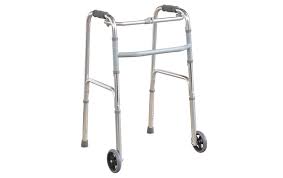
Walker
$1.00
WhatsApp Order
A Walker is a rigid, non-wheeled frame walking aid designed to provide maximum stability and support. It is used by lifting and placing the frame forward with each step, making it ideal for individuals with significant balance issues, weakness, or those in early post-operative recovery who require a secure, stationary base. Its key features include a lightweight aluminum frame, height-adjustable legs, and rubber tips. Proper fitting and gait training are essential for safe use, as incorrect technique can increase fall risk. It is the most stable ambulatory aid before progressing to wheeled walkers or canes.
Description
Walker
PRIMARY CLINICAL & DIAGNOSTIC USES
1. Maximal Stability and Weight-Bearing Support During Ambulation
-
Primary Use: Provides a wide, stationary base of support for individuals who require significant assistance with balance, weight-bearing, or strength, offering the highest level of stability among ambulatory aids by requiring the user to lift and place the frame with each step.
-
How it helps: For the physical therapist and rehabilitation specialist, the walker is the foundation upon which safe ambulation is built for patients with profound weakness or instability—its four points of contact with the ground create a stable platform that surrounds the user, providing support in all directions. For the patient who cannot walk without assistance, a walker means they can take steps independently, moving through their environment with a secure frame that catches them if they stumble and supports them when they tire.
2. Fall Prevention for High-Risk, Unsteady Patients
-
Primary Use: Used for patients with severe balance deficits, lower extremity weakness, recent surgery, or neurological conditions where a loss of balance is likely, with the need to plant the walker before each step ensuring a secure point of contact is always ahead.
-
How it helps: For the geriatrician and fall prevention coordinator, the walker is a proven intervention for patients at the highest fall risk—its design forces a safe gait pattern, requiring the user to establish a stable base before each forward step. For the patient whose balance is severely compromised by neurological disease, age-related weakness, or recent illness, a walker means they can continue to move through their world without the constant fear of falling, knowing that support is always within reach.
3. Rehabilitation from Lower Extremity Injuries or Surgeries
-
Primary Use: Essential during the early phases of recovery from fractures, joint replacements, or soft tissue repairs, allowing for protected, partial weight-bearing as prescribed, providing a stable platform while limiting load on the healing limb.
-
How it helps: For the orthopedic surgeon and physical therapist, the walker is the tool that allows patients to begin mobilizing immediately after surgery while strictly adhering to weight-bearing restrictions—transferring load through the arms and frame rather than through healing bone or replaced joints. For the patient recovering from hip replacement, knee surgery, or fracture fixation, a walker means they can stand and walk during the critical early healing phase, maintaining muscle strength and preventing complications while protecting their surgical site.
4. Gait Retraining and Strength Building
-
Primary Use: Used in physical therapy to safely practice walking patterns, improve lower body strength, and build confidence in patients re-learning to walk after a stroke, spinal injury, or prolonged illness.
-
How it helps: For the neuro-rehabilitation therapist and physical therapist, the walker provides the security that allows patients to focus on the complex task of re-learning to walk—providing the stability that frees them to think about foot placement, weight shift, and balance rather than simply surviving upright. For the patient working to walk again after a life-altering event, the walker is both safety net and training partner, supporting them through countless repetitions until their body remembers how to move.
SECONDARY & SUPPORTIVE USES
1. Assistance with Standing from a Seated Position: Provides stable handholds for users to push up from a chair or toilet, reducing the force required by the lower limbs. For the patient with weak legs, having a sturdy walker positioned in front provides the leverage needed to stand independently.
2. Static Standing Support: Can be used as a stationary support frame to help users maintain a standing position for activities like washing at a sink or talking, when walking is not required. For the individual who cannot stand unsupported, a walker provides a way to be upright and engaged.
3. Visual and Proprioceptive Cueing: The act of lifting and placing the walker provides strong visual and proprioceptive feedback that can help organize movement and improve safety for users with sensory or cognitive impairments. For the patient with Parkinson’s who experiences freezing, the walker’s frame provides a visual target that can help initiate stepping.
4. Management of Severe Arthritis or Pain: Allows users to transfer weight through their arms to the walker’s handles, significantly offloading painful hips, knees, or feet during ambulation. For the patient with severe arthritis, walking with a walker means they can remain mobile despite joint pain that would otherwise confine them to a chair.
5. Geriatric Support for General Debility: Provides a sense of security and practical support for elderly individuals experiencing generalized weakness, dizziness, or fear of falling, enabling them to remain ambulatory. For the frail older adult whose world has shrunk to the size of their home, a walker means they can still move from bedroom to kitchen, from chair to bathroom, maintaining independence and quality of life.
KEY PRODUCT FEATURES
1. BASIC IDENTIFICATION ATTRIBUTES
-
Product Type: A rigid, non-wheeled frame walking aid that must be lifted and moved forward with each step. Also called a standard walker or pick-up walker.
-
Core Design: A three-sided rectangular frame (open at the user's front) with four adjustable legs and hand grips.
-
Key Components:
-
Frame: Typically tubular aluminum. Can be rigid or folding.
-
Legs: Four vertical posts, often with rubber tips (ferrules) to prevent slipping.
-
Hand Grips: Molded plastic or foam grips at the top of the front two posts.
-
Height Adjustment Mechanism: Push buttons or pins on the legs to set the correct height.
-
Optional Accessories: Glides or wheels on the front legs (to create a "two-wheel walker"), baskets, trays.
-
2. TECHNICAL & PERFORMANCE PROPERTIES
-
Stability: Provides the highest level of stability due to its wide base and stationary nature during stance phase.
-
Weight Capacity: Typically 250-350 lbs (113-159 kg). Heavy-duty models are available.
-
Height Range: Adjustable to fit users of different statures.
-
Gait Pattern: Requires a discontinuous, slower gait: 1) Lift walker and place it ahead, 2) Step forward into the walker. This is its primary functional characteristic.
3. PHYSICAL & OPERATIONAL PROPERTIES
-
Construction: Lightweight aluminum. Durable and easy to clean.
-
Weight: Very light (5-8 lbs / 2-4 kg) for easy lifting.
-
Portability: Folding models collapse for transport in a car.
4. SAFETY & COMPLIANCE ATTRIBUTES
-
Regulatory Status: Class I medical device.
-
Safety Standards: Must meet standards for strength and stability.
5. STORAGE & HANDLING ATTRIBUTES
-
Storage: Can be leaned against a wall or folded flat.
-
Cleaning & Disinfection: Wipe down handles and frame with disinfectant. Check rubber tips for wear and replace when smooth.
-
Maintenance: Inspect frame for damage. Ensure height adjustment locks are secure. Replace worn tips immediately.
6. LABORATORY & CLINICAL APPLICATIONS
-
Primary Application: The foundational ambulatory aid in hospitals, rehabilitation centers, and home care for patients requiring maximum stability. It is often the first device issued post-operatively or after a debilitating event, with progression to more mobile aids (rollators, canes) as recovery permits.
SAFETY HANDLING PRECAUTIONS
1. SAFETY PRECAUTIONS
-
Proper Height (CRITICAL): The walker must be adjusted so the user's elbows are flexed at 15-30 degrees when holding the grips. Too high or too low causes poor posture and instability.
-
Correct Gait Sequence: User must be trained to move the walker first, then step into it. Stepping too far forward defeats its purpose and can cause a backwards fall.
-
Secure Placement: Ensure all four rubber tips are firmly on the ground before bearing weight. Do not use on throw rugs.
-
Inspect Tips: Worn, smooth rubber tips are a major slip hazard and must be replaced.
-
Clear Path: Ensure the walking path is free of cords, clutter, and loose rugs.
2. FIRST AID MEASURES
-
Fall Due to Tip or Slip: If the user falls, do not attempt to lift them with the walker. Safely move the walker aside and assist the user from the floor using proper techniques or call for help.
-
Walker Collapse: If a leg buckle or joint fails, discontinue use immediately. The user should not attempt to walk with a damaged walker.
3. FIRE FIGHTING MEASURES
-
Flammability: Plastic grips and rubber tips are combustible.
-
Extinguishing Media: Use water, foam, or CO₂.
Related products
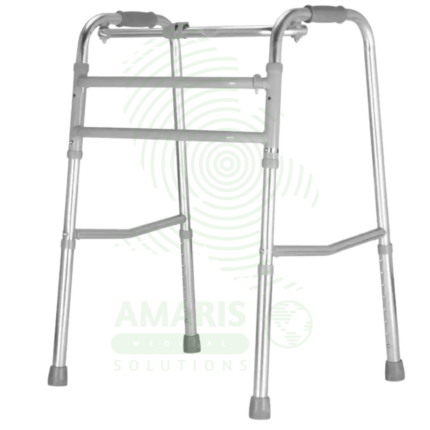
Adult Walking Frame
An Adult Walking Frame is a rigid, non-wheeled mobility aid designed to provide maximum stability during walking. It is used by lifting and placing the frame forward with each step, making it ideal for individuals with severe balance issues, significant weakness, or those in early post-operative recovery. Key features include a lightweight aluminum frame, height-adjustable legs, and replaceable rubber tips. Proper fitting and gait training by a healthcare professional are essential for safe use, as incorrect technique can increase fall risk. It is the most stable ambulatory aid before progressing to wheeled walkers or canes.
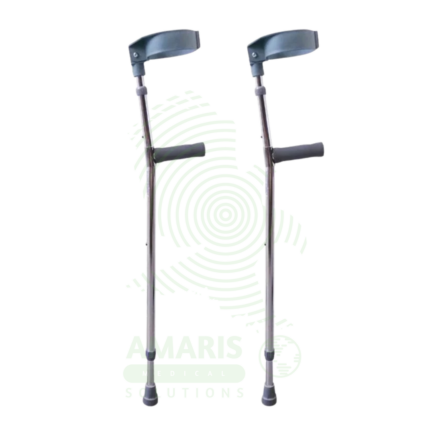
Elbow & Axiliary Crutches
An Elbow & Axiliary Crutches feature a forearm cuff and are designed for long-term mobility, offering a natural gait for unilateral or bilateral conditions. Auxiliary (Underarm) Crutches have an axillary pad and are for short-term, non-weight-bearing use after injury or surgery. Both require precise fitting—forearm crutch cuffs must be below the elbow, and underarm crutch weight must be borne through the hands to avoid nerve damage. Proper gait training from a therapist is essential for safe use of either type.
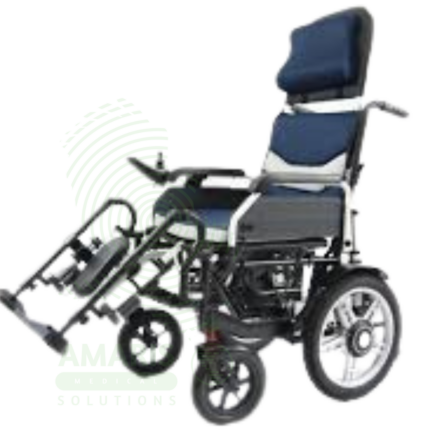
Electric Reclining Wheelchair
An Electric Reclining Wheelchair is a sophisticated powered mobility device that provides both independent locomotion and powered positioning. It features a motorized backrest that reclines to near-horizontal and synchronized elevating leg rests, allowing users to independently manage pressure relief, circulation, breathing, and comfort without leaving the chair. Prescribed for individuals with complex needs such as spinal cord injuries, severe fatigue, or circulatory disorders, it enhances independence and medical stability. Its use requires thorough training due to the significant change in stability and footprint when reclined, and it demands more rigorous maintenance than standard power chairs.
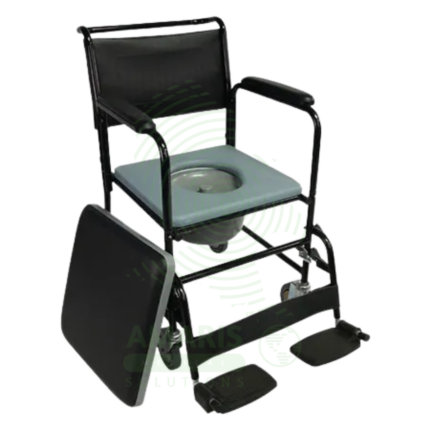
Orthopedic Commode Chair
An Orthopedic Commode Chair is a specialized hybrid device designed for patients with lower limb injuries or surgeries requiring non-weight-bearing status. It combines an extended-frame orthopedic wheelchair with an elevating leg rest and a commode seat, allowing for simultaneous fracture management (leg elevation/immobilization), pressure sore prevention (heel off-loading), and safe, hygienic toileting without dangerous transfers. Its use mandates the constant engagement of anti-tip levers due to a high risk of backwards tipping and requires careful navigation of its substantial length.
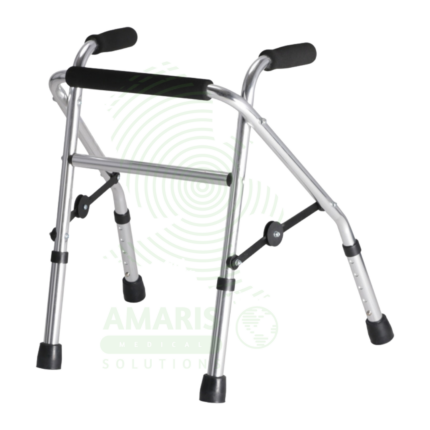
Pediatric Walking Frame
A Pediatric Walking Frame (Gait Trainer) is a supportive wheeled frame specifically designed to facilitate walking and standing for children with physical disabilities such as cerebral palsy. It provides adjustable postural support through a harness, trunk pad, and pelvic guide, enabling safe practice of gait patterns, weight-bearing, and upright mobility. Its primary role is therapeutic, aiming to develop ambulation skills, improve postural control, and promote independence and participation. Correct professional setup and supervision are essential for safety and to ensure it reinforces proper movement rather than abnormal patterns.
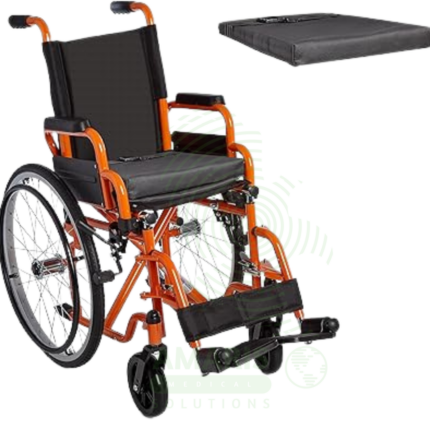
Pediatric Wheelchair
A Pediatric Wheelchair is a specially sized and designed mobility device for children with long-term physical disabilities. Its core functions are to provide independent or assisted mobility, deliver critical postural support to promote proper skeletal development and prevent deformities, and serve as a platform for inclusion in home, school, and community life. Unlike adult chairs, it features extensive adjustability to accommodate growth and modular seating systems tailored to each child's specific postural and medical needs. Prescription and fitting by a rehabilitation team are essential for safe and effective use.
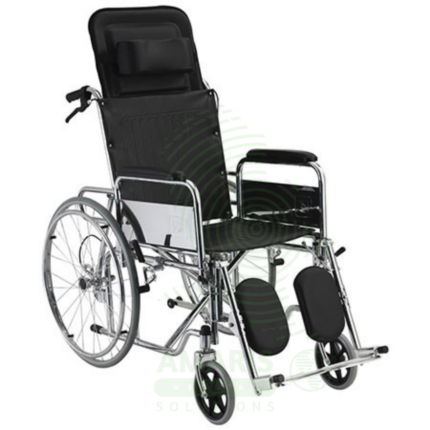
Reclining Wheelchair
A Reclining Wheelchair is a manual wheelchair with a backrest that can be manually adjusted to various angles. It is designed for users who need to change their sitting position for pressure relief, circulatory management, respiratory support, or comfort but do not require powered mobility. Key safety features include a robust locking mechanism, mandatory use of anti-tip levers and a seat belt when reclined, and synchronized elevating leg rests to prevent sliding. It is heavier and less maneuverable than a standard wheelchair but provides essential positioning options for individuals with specific postural and medical needs.