Dermatoscope and Magnifiers
 Diagnostic Kits
 Vital Signs Monitors
 Stethoscopes and Accessories
 Otoscopes, Ophthalmoscopes, and Retinoscopes
 Reflex Hammers and Neurological Tools
 Scales and Measuring Devices
 Spirometers and Pulmonary Function Tests
 Electrosurgical Units and Accessories
 Cutting Instruments
 Grasping and Holding Instruments
 Hemostatic Instruments
 Specialized Surgical Sets
 Single-Use Procedure Trays and Packs
 Surgical Drapes, Gowns, and Covers
 Tissue Unifying Instruments
 Radiation Protection
 X-Ray Machines and Accessories
 Ultrasound Systems and Probes
 MRI and CT Scanners
 Radiology Consumables
 Bone Densitometers
 Fluoroscopy Equipment
 Imaging Tables and Positioning Aids
 Microscopes and Accessories
 Centrifuges and Separators
 Analyzers
 Incubators and Ovens
 Pipettes, Dispensers, and Lab Glassware
 Refrigerators, Freezers, and Storage Units
 Lab Consumables
 Sterilizers and Autoclaves for Lab Use
 Multi-Parameter Monitors
 Ventilators and Respiratory Support Devices
 Defibrillators and AEDs
 Infusion Pumps and IV Systems
 Patient Warmers and Cooling Devices
 Central Monitoring Stations
 Accessories
 Anesthesia Machines and Workstations
 Oxygen Concentrators and Delivery Systems
 Nebulizers and Inhalers
 CPAP/BiPAP Machines
 Airway Management
 Anesthesia Masks, Circuits, and Bags
 Humidifiers and Heaters
 Respiratory Therapy Accessories
 First Aid Kits and Cabinets
 Emergency Resuscitation Equipment
 Trauma Supplies
 Emergency Carts and Crash Carts
 Burn Care Products
 Bleeding Control
 Automated External Defibrillators (AEDs)
 Transport and Evacuation
 Wheelchairs and Accessories
 Walkers, Crutches, and Canes
 Prosthetics and Orthotics
 Physical Therapy Equipment
 Transfer Devices
 Bathroom Safety
 Orthopedic Traction and Tables
 Hot/Cold Therapy Packs and Units
 Beds and Mattresses
 Chairs and Stools
 Tables
 Cabinets and Storage
 Privacy Screens & Curtains
 Stands and Racks
 Linens and Textiles
 Lighting
 Autoclaves and Sterilizers
 Ultrasonic Cleaners
 Disinfectant Solutions and Wipes
 Sterilization Pouches, Wraps, and Indicators
 Instrument Trays and Containers
 UV and Ozone Disinfection Devices
 Washer Disinfectors
 Wound Care
 Gloves
 Masks and Respirators
 Catheters and Tubing
 Swabs, Applicators, and Sponges
 Incontinence Products
 Personal Protective Equipment (PPE)
 Dental Chairs and Units
 Handpieces and Burs
 Instruments
 Consumables
 Sterilization for Dental Use
 Orthodontic Supplies
 Endodontic Tools
 Slit Lamps and Tonometers
 Lensometers and Phoropters
 Ophthalmic Surgical Instruments
 Eyewear Frames and Lenses
 Contact Lens Supplies
 Vision Testing Charts and Devices
 Eye Care Consumables
 Laser Systems for Eye Care
 ENT Exam Chairs and Tables
 Endoscopes
 Audiometers and Hearing Tests
 ENT Instruments
 Nasal and Throat Packs
 Hearing Aids and Accessories
 Otology Supplies
 Fetal Dopplers and Monitors
 Delivery Beds and Tables
 Gynecological Instruments
 Neonatal Incubators and Warmers
 Breast Pumps and Accessories
 Contraceptive Devices
 Maternity Supports and Pads
 Neonatal Consumables
 Cystoscopes and Urethroscopes
 Dialysis Machines and Supplies
 Urological Catheters and Bags
 Lithotripters
 Prostate Treatment Devices
 Urinary Incontinence Products
 Kidney Stone Management Tools
 Consumables & Disposables
 EEG and EMG Machines
 Neurosurgical Instruments
 Nerve Stimulators
 Headrests and Positioning Aids
 Lumbar Puncture Kits
 Seizure Monitoring Devices
 Consumables
 Rehabilitation for Neurological Conditions
 ECG Machines and Accessories
 Holter Monitors
 Stress Test Systems
 Pacemakers and Defibrillator Accessories
 Vascular Access Devices
 Cardiac Catheters and Guidewires
 Blood Flow Meters
 Consumables
 Orthopedic Instruments
 Casts, Splints, and Padding
 Joint Replacement Supplies
 Prosthetic Limbs and Components
 Bone Grafts and Substitutes
 Traction Devices
 Orthopedic Braces and Supports
 Rehabilitation Aids for Orthopedics
 Home Oxygen Therapy
 Hospital Beds for Home Use
 Mobility Aids
 Bathroom and Daily Living Aids
 Wound Care for Home
 Monitoring Devices
 Enteral Feeding Pumps and Tubes
 Hand Sanitizers and Dispensers
 Face Shields and Goggles
 Isolation Gowns and Suits
 Biohazard Waste Containers
 Air Purifiers and HEPA Filters
 Surface Disinfectants
 Sharps Containers
 Protective Barriers
 Cardiovascular & Endurance Training
 Strength Training & Weightlifting
 Functional Training & Core Conditioning
 Physical Therapy & Rehabilitation
 Sports & Outdoor Recreation
 Gym Flooring & Facility Equipment
 Fitness Monitoring & Accessories
 Kids & Novelties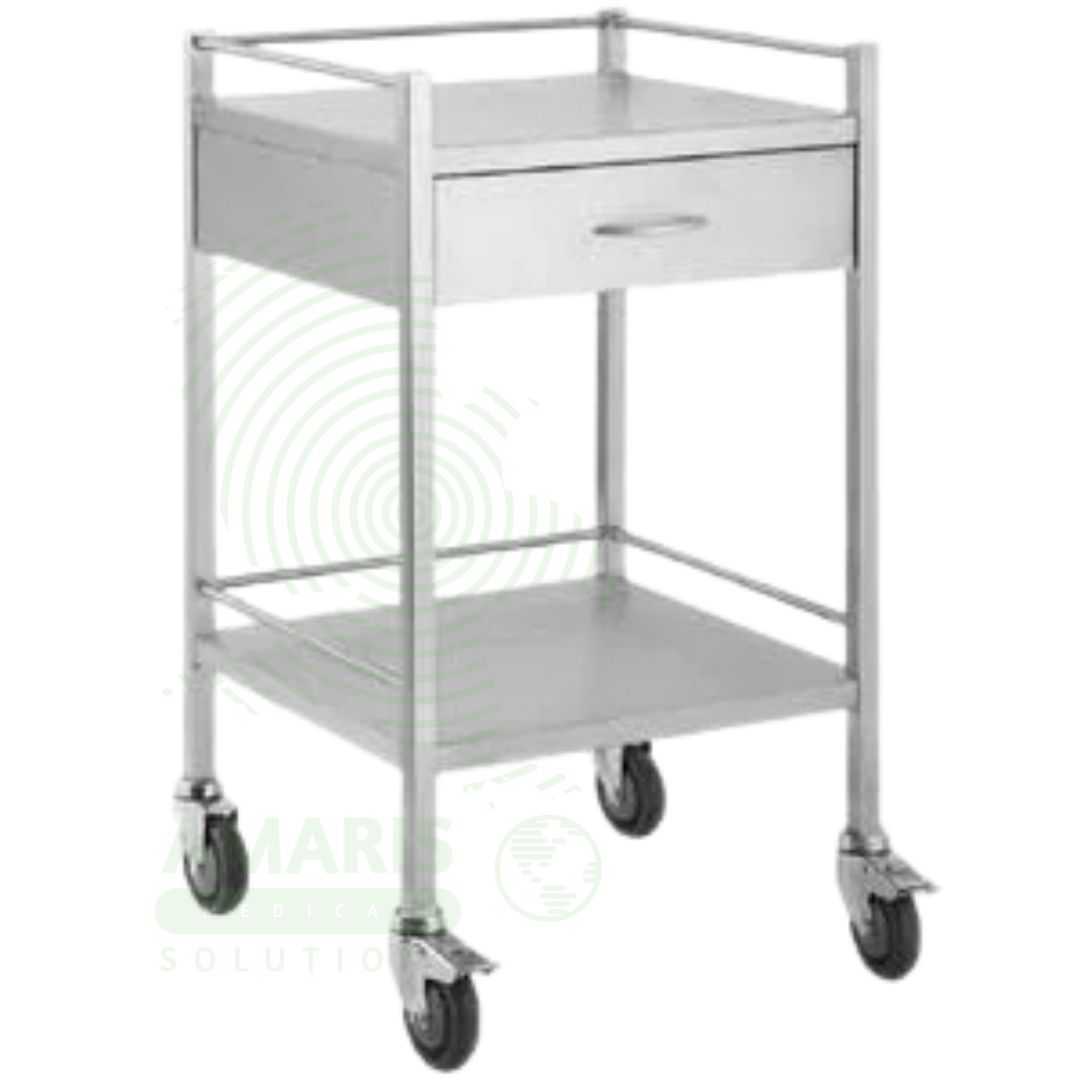
Stainless Steel Trolley
$1.00
WhatsApp Order
A Stainless Steel Trolley is a mobile cart constructed from durable, corrosion-resistant stainless steel, designed for the most demanding clinical and service environments. Its primary uses include the sterile transport of surgical instruments, serving as a procedure workstation in ORs, transporting specimens in morgues and labs, and handling pharmaceuticals or food. The non-porous, seamless surface can withstand autoclaving and aggressive chemical disinfection, making it the standard for infection control, durability, and cleanability in hospitals, laboratories, and sterile processing areas.
Description
Stainless Steel Trolley
PRIMARY CLINICAL & DIAGNOSTIC USES
1. Sterile Instrument and Procedure Tray Transport
-
Definitive Use: Provides a non-porous, autoclavable surface for the sterile transport of surgical instrument sets, sterile procedure trays, and packs from the Central Sterile Supply Department to operating theaters, procedure rooms, and wards, with seamless construction preventing microbial harborage.
-
How it helps: For the sterile processing technician and operating room nurse, the stainless steel trolley is the reliable workhorse that moves sterile supplies from the autoclave to the point of use—a surface that can itself be sterilized, that won’t harbor bacteria in microscopic cracks, and that can be wiped down with the most aggressive disinfectants without degradation. For the surgical patient, every instrument set that arrives sterile at the operating room door has likely traveled on a stainless steel trolley, its cleanable surface an essential link in the chain of sterility assurance.
2. Mobile Workstation for Aseptic Procedures
-
Primary Use: Serves as a clean, durable, and easy-to-disinfect surface for setting up sterile fields and performing aseptic procedures in operating rooms, minor procedure rooms, endoscopy suites, and labor and delivery units, withstanding harsh chemical disinfectants.
-
How it helps: For the scrub nurse and surgical team, the stainless steel trolley positioned near the operating table holds basins, instruments, and supplies in a sterile configuration—a surface that can be prepped as part of the sterile field, that reflects light to improve visibility, and that can be rapidly cleaned between cases. For the patient undergoing a procedure, the sterile instruments and supplies arranged on that trolley represent the meticulous aseptic technique that protects them from surgical site infection.
3. Pharmacy Compounding and Sterile Preparation
-
Primary Use: Used in hospital pharmacies, especially in IV admixture and cytotoxic drug preparation areas, as a mobile, chemical-resistant, and easy-to-clean surface for organizing ingredients, equipment, and finished products under laminar flow hoods or in cleanrooms.
-
How it helps: For the compounding pharmacist preparing sterile IV medications or hazardous chemotherapy drugs, the stainless steel trolley provides a surface that won’t absorb spills, that resists corrosion from potent chemicals, and that can be thoroughly decontaminated between preparations. For the patient receiving an IV medication or chemotherapy infusion, the sterility and safety of that dose depend in part on the cleanable surfaces where it was prepared.
4. Morgue and Pathology Specimen Transport
-
Primary Use: Essential in mortuary and pathology laboratory settings for transporting and holding specimens, cadavers, or organs, with the stainless steel surface impervious to formalin, other fixatives, and biological fluids, and capable of thorough decontamination.
-
How it helps: For the pathologist, autopsy technician, and morgue staff, the stainless steel trolley provides a surface that can withstand the harshest chemicals used in tissue fixation, that won’t absorb biological fluids, and that can be sterilized after each use. For the deceased and their families, and for the accuracy of pathological diagnosis that guides patient care, having equipment that can be properly cleaned between cases ensures dignity and prevents cross-contamination.
SECONDARY & SUPPORTIVE USES
1. Food Service and Nutrition Delivery: Used in hospital kitchens and for ward meal service to transport food trays, keeping hot foods hot and cold foods cold, while providing a hygienic surface that meets food safety standards. For the patient whose nutrition supports healing, a clean, food-safe transport system ensures meals arrive appetizing and safe.
2. Linen and Medical Waste Collection: Employed for the collection and transport of soiled linen or regulated medical waste from patient care areas to holding locations, with the durable, cleanable surface preventing leakage and contamination of the trolley itself. For the environmental services team, a trolley that can be properly cleaned after waste transport protects both staff and patients from cross-contamination.
3. Laboratory and Diagnostic Sample Transport: Used in clinical laboratories to safely transport racks of patient samples between departments or within the lab, with resistance to chemical spills. For the patient whose lab results depend on samples reaching the analyzer intact, a clean, stable transport surface ensures specimens arrive undamaged and uncontaminated.
4. Anesthesia and Emergency Equipment Cart: Configured as a robust cart to hold anesthesia machines, ventilators, or emergency airway equipment, providing a stable, mobile platform that can withstand the rigors of daily use and frequent cleaning. For the critically ill patient depending on life support equipment, a stable, clean cart ensures their devices function properly and infection risks are minimized.
5. Cleaning and Environmental Services Cart: Used by housekeeping staff to transport cleaning chemicals, equipment, and supplies, with stainless steel resisting damage from corrosive cleaning agents. For the patient whose room is cleaned with powerful disinfectants, having equipment that can carry those chemicals safely ensures environmental hygiene is maintained.
KEY PRODUCT FEATURES
1. BASIC IDENTIFICATION ATTRIBUTES
-
Product Type: A mobile cart or trolley constructed primarily from stainless steel.
-
Core Design: A rectangular frame with shelves, often on casters, made from sheets and tubing of austenitic stainless steel (typically Grade 304 or 316). May have solid shelves, wire shelves, or a combination.
-
Key Components:
-
Frame & Shelves: Constructed from welded stainless steel. Shelves may be solid, perforated, or wire mesh.
-
Casters: Four heavy-duty swivel casters, often with brakes, suitable for the load and floor type.
-
Handles: A push handle at one or both ends, often integrated into the frame.
-
Kick Plate/Bumper: A lower apron to protect the cart from impact.
-
Optional Features: Drawers, cabinet doors, IV pole holders, railings.
-
2. TECHNICAL & PERFORMANCE PROPERTIES
-
Material Grade: 304 Stainless Steel offers excellent general corrosion resistance. 316 Stainless Steel (surgical grade) provides superior resistance to chlorides and harsh chemicals, ideal for constant exposure to saline, bleach, and bodily fluids.
-
Surface Finish: A #4 Brushed or Satin finish is standard, providing a smooth, non-glare, scratch-concealing surface. A #2B mill finish is less common. A #7 Mirror finish is used in ultra-clean environments.
-
Autoclavability: The entire trolley or its key components can withstand sterilization in an autoclave (steam sterilization) without degradation, a critical feature for sterile processing.
-
Weight Capacity: High static and dynamic load ratings due to the strength of steel construction. Often rated for several hundred pounds per shelf.
-
Seamless Construction: Welds are ground and polished smooth to eliminate crevices where bacteria or contaminants can accumulate.
3. PHYSICAL & OPERATIONAL PROPERTIES
-
Construction: Welded stainless steel construction with continuous welds. No crevices or seams that can trap contaminants.
-
Cleanability: The non-porous surface prevents absorption of contaminants. Can be cleaned with steam, aggressive chemical disinfectants (bleach, peroxides), and abrasive cleaners without damage.
-
Durability: Highly resistant to dents, scratches, and corrosion under normal use. Will not rust.
-
Magnetism: Austenitic stainless steels are generally non-magnetic.
4. SAFETY & COMPLIANCE ATTRIBUTES
-
Regulatory Status: Considered equipment or furnishings. May need to comply with food safety standards (if used in nutrition) or material safety standards for cleanrooms.
-
Biocompatibility: Surgical-grade stainless steel is inherently biocompatible and non-toxic.
-
Infection Control Compliance: Represents the highest standard of cleanable surface for infection control in ORs, sterile processing, and isolation areas.
5. STORAGE & HANDLING ATTRIBUTES
-
Storage: Can be stored in unheated areas. No special storage requirements.
-
Cleaning & Disinfection (PRIMARY ADVANTAGE): Clean with a neutral pH detergent and warm water. Disinfect with an EPA-registered hospital disinfectant. For terminal cleaning or sterilization, it can be autoclaved or wiped with a sporicidal agent. Rinse thoroughly after chlorine-based disinfectants to prevent pitting.
-
Maintenance: Inspect for deep scratches, dents, or corrosion pits that could harbor bacteria. Minor scratches can be polished out. Lubricate casters and brakes periodically.
6. LABORATORY & CLINICAL APPLICATIONS
-
Primary Application: The workhorse of environments where hygiene, durability, chemical resistance, and sterilizability are paramount: operating rooms, sterile processing departments (SPD), morgues, pathology labs, pharmacies, and food service areas. It is chosen for function over cost.
SAFETY HANDLING PRECAUTIONS
1. SAFETY PRECAUTIONS
-
Load Securement: Ensure heavy items are placed on lower shelves and the load is balanced to prevent tipping. Secure loose items.
-
Caster Brakes: Engage brakes whenever the trolley is stationary, especially when loading/unloading or during procedures.
-
Chemical Handling: While resistant, prolonged exposure to high-concentration chlorides can cause pitting corrosion. Follow dilution instructions for disinfectants and rinse after use.
-
Manual Handling: Be aware of the trolley's weight when loaded. Use proper pushing/pulling techniques to avoid musculoskeletal injury.
-
Sharp Edges: Inspect for any burrs or sharp edges from damage, especially on welded seams.
2. FIRST AID MEASURES
-
Tip-Over: If the trolley tips, ensure no one is trapped. Lift carefully with assistance. Check for injuries and damage to the trolley or its contents.
-
Chemical Exposure: If concentrated disinfectant splashes from the surface onto skin or eyes, rinse immediately with copious water and seek medical attention if needed.
-
Cut from Sharp Edge: Provide standard first aid for cuts. The trolley should be removed from service until the sharp edge is repaired.
3. FIRE FIGHTING MEASURES
-
Flammability: Stainless steel is non-combustible and will not contribute to a fire.
-
Extinguishing Media: Use any appropriate extinguishing media for the surrounding fire or the contents of the trolley. The trolley itself presents no fire hazard.
Related products
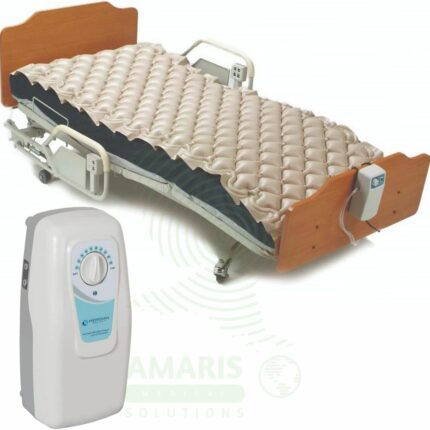
Alternating Mattress
An Alternating Mattress is a powered, dynamic support surface designed for the prevention and treatment of pressure injuries in high-risk, immobile patients. Its core function is the cyclical inflation and deflation of air cells, which constantly shifts pressure away from bony prominences to maintain tissue perfusion. Consisting of a durable air-cell mattress, an intelligent control pump with alarms, and a fluid-proof cover, it is a critical intervention in intensive care, spinal units, and wound care. Its use requires vigilant monitoring of alarms and patient skin integrity as part of a comprehensive pressure injury prevention protocol.
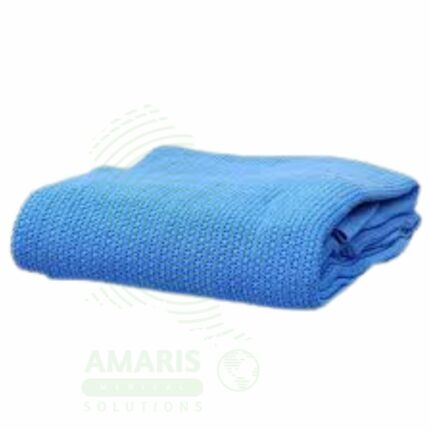
Cellular Blankets
Cellular Blankets are lightweight, breathable blankets with a distinctive honeycomb knit structure. Primarily used in healthcare for patient warmth and thermal regulation, they work by trapping insulating air within their cells while allowing moisture to escape, preventing overheating and sweating. Available in reusable (cotton/polyester) or disposable forms, they are essential for maintaining patient comfort, dignity, and temperature stability in wards, recovery areas, and during transport. Their safety depends on strict adherence to single-patient use and proper high-temperature laundering for reusable versions.
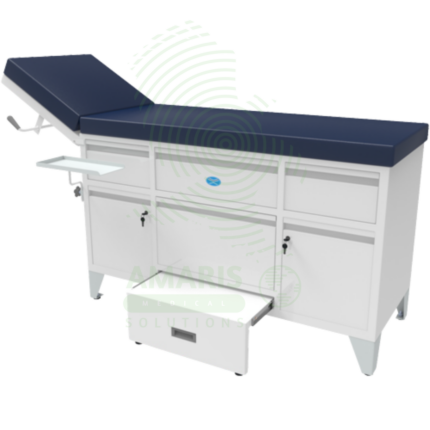
Examination Couch
An Examination Couch is a versatile, height-adjustable table designed as the central fixture in medical exam rooms. It provides a clean, comfortable, and adaptable surface for patient examinations, minor outpatient procedures, and diagnostic testing. Key features often include an adjustable backrest, extendable stirrups for gynecological/urological exams, and easy-clean upholstery. Its primary function is to facilitate efficient and ergonomic patient care while ensuring comfort and safety for both the patient and the clinician in general practice, specialty clinics, and urgent care settings.
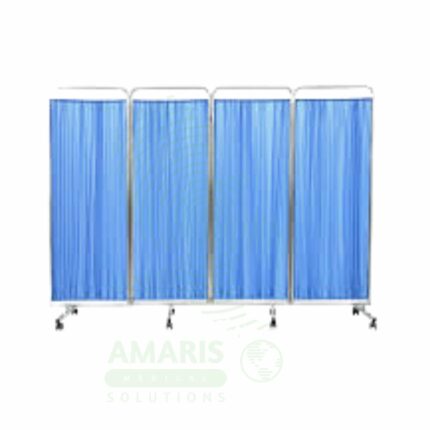
Foldable Ward Screen
A Foldable Ward Screen is a portable, folding partition used to create instant visual privacy around a patient's bed or procedure area in multi-bed hospital wards, emergency departments, and clinics. Typically consisting of three hinged opaque panels, it provides dignity during examinations and personal care, aids in infection control by creating temporary barriers, and helps manage the clinical environment. Its free-standing, foldable design allows for easy deployment, storage, and cleaning, making it a fundamental piece of non-clinical equipment for patient-centered care in shared spaces.
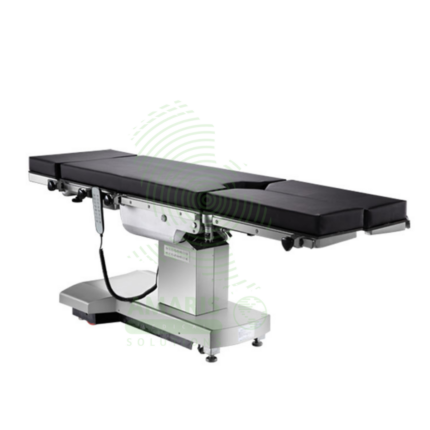
Hydraulic & Electric Operating Table
An Hydraulic & Electric Operating Table is the primary, heavy-duty patient positioning system in an operating room. Hydraulic models offer reliable, power-independent control, while electric models provide precise, programmable articulation. It is engineered for stability, a high weight capacity, and a wide range of motions (height, tilt, flexion) to optimize surgical exposure and ergonomics across all specialties. Safe use requires securing the patient, adhering to weight limits, careful padding to prevent nerve injury, and clear communication before any movement. It is a critical piece of capital equipment that forms the foundation for safe and effective surgical intervention.
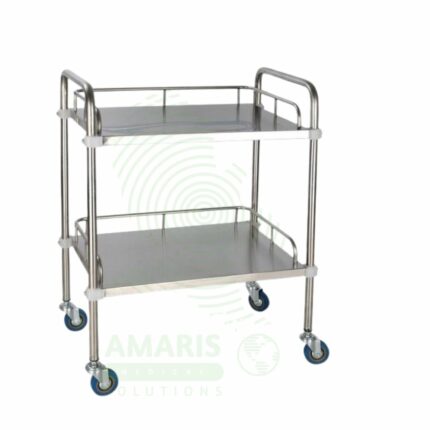
Instrument & Medicine Trolley
An Instrument & Medicine Trolley is a versatile, secure, mobile cart designed to transport, organize, and administer both medical instruments and medications. It functions as a mobile workstation for procedures, medication rounds, or emergency response, depending on its configuration. Key features include lockable, compartmentalized drawers for secure storage, a flat work surface, and smooth-rolling casters for mobility. Its adaptability makes it essential across hospital settings, from wards to treatment rooms, ensuring that organized, secure, and complete sets of tools and drugs are delivered efficiently to the point of patient care.
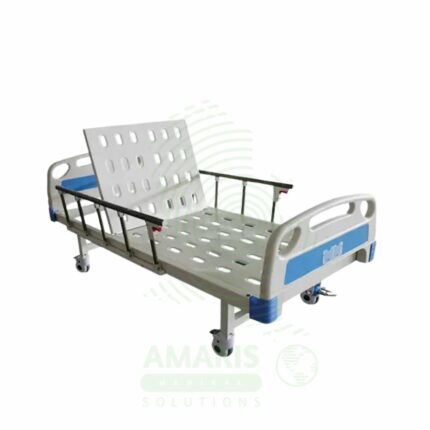
Single Crank Hospital Bed
A Single Crank Hospital Bed is the most basic type of manually adjustable bed, featuring only one hand crank to raise and lower the head section. It provides essential backrest elevation for patient comfort, feeding, and respiratory support but lacks knee elevation and height adjustment. Its simplicity makes it durable and low-cost, but it poses significant risks: patients are prone to sliding down the bed, and caregivers face ergonomic hazards due to the fixed height and manual operation. It is suitable only for minimal-care settings where patient mobility and clinical needs are very low.