Dermatoscope and Magnifiers
 Diagnostic Kits
 Vital Signs Monitors
 Stethoscopes and Accessories
 Otoscopes, Ophthalmoscopes, and Retinoscopes
 Reflex Hammers and Neurological Tools
 Scales and Measuring Devices
 Spirometers and Pulmonary Function Tests
 Electrosurgical Units and Accessories
 Cutting Instruments
 Grasping and Holding Instruments
 Hemostatic Instruments
 Specialized Surgical Sets
 Single-Use Procedure Trays and Packs
 Surgical Drapes, Gowns, and Covers
 Tissue Unifying Instruments
 Radiation Protection
 X-Ray Machines and Accessories
 Ultrasound Systems and Probes
 MRI and CT Scanners
 Radiology Consumables
 Bone Densitometers
 Fluoroscopy Equipment
 Imaging Tables and Positioning Aids
 Microscopes and Accessories
 Centrifuges and Separators
 Analyzers
 Incubators and Ovens
 Pipettes, Dispensers, and Lab Glassware
 Refrigerators, Freezers, and Storage Units
 Lab Consumables
 Sterilizers and Autoclaves for Lab Use
 Multi-Parameter Monitors
 Ventilators and Respiratory Support Devices
 Defibrillators and AEDs
 Infusion Pumps and IV Systems
 Patient Warmers and Cooling Devices
 Central Monitoring Stations
 Accessories
 Anesthesia Machines and Workstations
 Oxygen Concentrators and Delivery Systems
 Nebulizers and Inhalers
 CPAP/BiPAP Machines
 Airway Management
 Anesthesia Masks, Circuits, and Bags
 Humidifiers and Heaters
 Respiratory Therapy Accessories
 First Aid Kits and Cabinets
 Emergency Resuscitation Equipment
 Trauma Supplies
 Emergency Carts and Crash Carts
 Burn Care Products
 Bleeding Control
 Automated External Defibrillators (AEDs)
 Transport and Evacuation
 Wheelchairs and Accessories
 Walkers, Crutches, and Canes
 Prosthetics and Orthotics
 Physical Therapy Equipment
 Transfer Devices
 Bathroom Safety
 Orthopedic Traction and Tables
 Hot/Cold Therapy Packs and Units
 Beds and Mattresses
 Chairs and Stools
 Tables
 Cabinets and Storage
 Privacy Screens & Curtains
 Stands and Racks
 Linens and Textiles
 Lighting
 Autoclaves and Sterilizers
 Ultrasonic Cleaners
 Disinfectant Solutions and Wipes
 Sterilization Pouches, Wraps, and Indicators
 Instrument Trays and Containers
 UV and Ozone Disinfection Devices
 Washer Disinfectors
 Wound Care
 Gloves
 Masks and Respirators
 Catheters and Tubing
 Swabs, Applicators, and Sponges
 Incontinence Products
 Personal Protective Equipment (PPE)
 Dental Chairs and Units
 Handpieces and Burs
 Instruments
 Consumables
 Sterilization for Dental Use
 Orthodontic Supplies
 Endodontic Tools
 Slit Lamps and Tonometers
 Lensometers and Phoropters
 Ophthalmic Surgical Instruments
 Eyewear Frames and Lenses
 Contact Lens Supplies
 Vision Testing Charts and Devices
 Eye Care Consumables
 Laser Systems for Eye Care
 ENT Exam Chairs and Tables
 Endoscopes
 Audiometers and Hearing Tests
 ENT Instruments
 Nasal and Throat Packs
 Hearing Aids and Accessories
 Otology Supplies
 Fetal Dopplers and Monitors
 Delivery Beds and Tables
 Gynecological Instruments
 Neonatal Incubators and Warmers
 Breast Pumps and Accessories
 Contraceptive Devices
 Maternity Supports and Pads
 Neonatal Consumables
 Cystoscopes and Urethroscopes
 Dialysis Machines and Supplies
 Urological Catheters and Bags
 Lithotripters
 Prostate Treatment Devices
 Urinary Incontinence Products
 Kidney Stone Management Tools
 Consumables & Disposables
 EEG and EMG Machines
 Neurosurgical Instruments
 Nerve Stimulators
 Headrests and Positioning Aids
 Lumbar Puncture Kits
 Seizure Monitoring Devices
 Consumables
 Rehabilitation for Neurological Conditions
 ECG Machines and Accessories
 Holter Monitors
 Stress Test Systems
 Pacemakers and Defibrillator Accessories
 Vascular Access Devices
 Cardiac Catheters and Guidewires
 Blood Flow Meters
 Consumables
 Orthopedic Instruments
 Casts, Splints, and Padding
 Joint Replacement Supplies
 Prosthetic Limbs and Components
 Bone Grafts and Substitutes
 Traction Devices
 Orthopedic Braces and Supports
 Rehabilitation Aids for Orthopedics
 Home Oxygen Therapy
 Hospital Beds for Home Use
 Mobility Aids
 Bathroom and Daily Living Aids
 Wound Care for Home
 Monitoring Devices
 Enteral Feeding Pumps and Tubes
 Hand Sanitizers and Dispensers
 Face Shields and Goggles
 Isolation Gowns and Suits
 Biohazard Waste Containers
 Air Purifiers and HEPA Filters
 Surface Disinfectants
 Sharps Containers
 Protective Barriers
 Cardiovascular & Endurance Training
 Strength Training & Weightlifting
 Functional Training & Core Conditioning
 Physical Therapy & Rehabilitation
 Sports & Outdoor Recreation
 Gym Flooring & Facility Equipment
 Fitness Monitoring & Accessories
 Kids & Novelties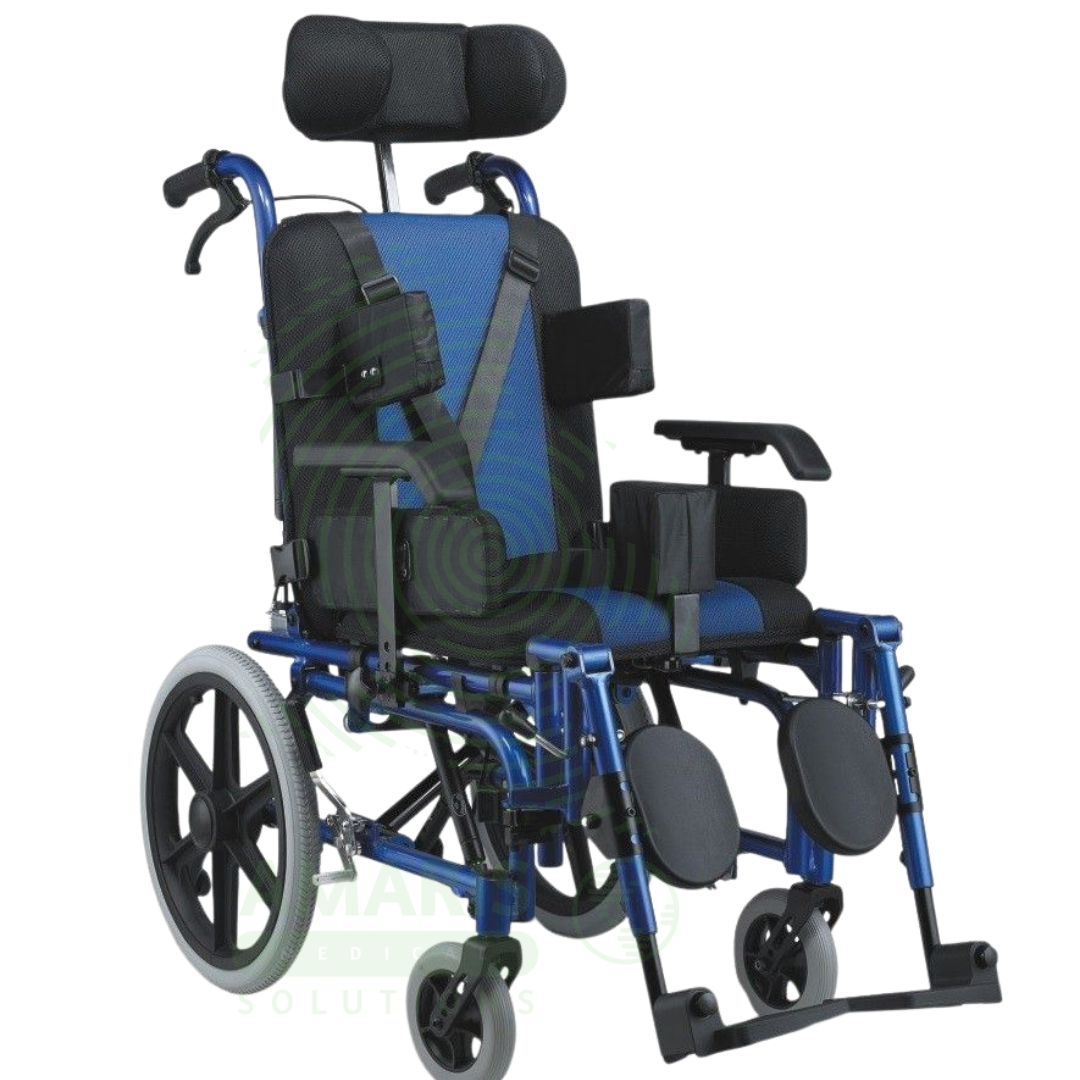
Cerebral Palsy Wheelchair
$1.00
WhatsApp Order
A Cerebral Palsy Wheelchair is a highly specialized, modular seating system on a wheelchair base, designed exclusively for the complex postural management needs of individuals with CP. Its primary purpose is therapeutic: to provide extensive, adjustable support to normalize posture, prevent skeletal deformities, manage muscle tone, and maximize the user’s functional abilities. Key features include a tilt-in-space mechanism, custom-contoured seating, and numerous pelvic, trunk, and head supports. It is a medically prescribed device that requires expert configuration and regular re-assessment to ensure safety and efficacy as part of a lifelong postural management strategy.
Description
Cerebral Palsy Wheelchair
PRIMARY CLINICAL & DIAGNOSTIC USES
1. Postural Management and Deformity Prevention
-
Primary Use: Provides extensive, customizable postural support to counteract the abnormal muscle tone and movement patterns of Cerebral Palsy, aiming to maintain proper skeletal alignment of the pelvis, spine, and extremities to prevent or slow the progression of contractures, hip subluxation, and scoliosis.
-
How it helps: For the physiatrist, orthopedic surgeon, and seating specialist, the cerebral palsy wheelchair is a 24-hour postural management system—a carefully engineered environment that positions the child’s body in ways that resist the deforming forces of spasticity and gravity. For the child with CP, this chair means their hips stay in their sockets, their spine grows straighter, and their joints remain flexible, preventing the painful deformities that would otherwise limit their function and quality of life.
2. Facilitation of Functional Movement and Activity
-
Primary Use: Positions the child in a stable, symmetrical, and optimally aligned posture to maximize their functional abilities, including improving head control for vision, stabilizing the trunk to allow for better arm and hand use, and providing a stable base for activities.
-
How it helps: For the occupational therapist and special education teacher, a properly positioned child in a well-fitted wheelchair can suddenly access skills that were previously impossible—reaching for toys, activating a communication device, participating in classroom activities, or self-feeding. For the child whose body does not cooperate with their intentions, the wheelchair provides the external stability that allows their emerging abilities to be expressed, transforming them from passive observer to active participant.
3. Management of Abnormal Muscle Tone and Reflexes
-
Primary Use: The seating system is designed to dampen the effects of spasticity, dystonia, and retained primitive reflexes through features like contoured seats, adductor guides, and harnesses that help normalize tone, reduce involuntary movements, and inhibit abnormal reflex patterns.
-
How it helps: For the physical therapist and neurodevelopmental specialist, the wheelchair’s positioning components become tools for tone management—using graded pressure, joint positioning, and stability to calm overactive muscles and reduce the interference of primitive reflexes. For the child whose body is constantly pulled by spasticity or thrown by dystonia, the chair provides a haven of stability where their muscles can relax and their movements can become more purposeful.
4. Enhanced Respiratory and Digestive Function
-
Primary Use: Proper upright positioning with adequate trunk and pelvic support can improve chest expansion for better breathing and help maintain proper alignment of internal organs to aid digestion and reduce reflux.
-
How it helps: For the pulmonologist and gastroenterologist managing the medical complications of CP, proper seating is not just about posture—it is medical equipment that supports respiratory function and reduces aspiration risk. For the child whose breathing is compromised by their position or who struggles with reflux and feeding, a well-fitted wheelchair means fewer respiratory infections, better nutrition, and greater comfort after meals.
SECONDARY & SUPPORTIVE USES
1. Mobility and Participation: Provides the means for self-propelled, attendant-propelled, or powered mobility, enabling the child to explore their environment, access education, and participate in social and community activities. For the child who cannot walk, the wheelchair is their legs—the vehicle that carries them to the classroom, the playground, and the world beyond their home.
2. Pressure Distribution and Skin Integrity Management: For non-mobile children with CP, the contoured seating system is designed to distribute sitting pressure evenly, reducing the high risk of pressure injuries over bony prominences. For the child who cannot shift their own weight, the chair’s pressure management features protect their skin from breakdown that would lead to pain, hospitalization, and prolonged bed rest.
3. Integration of Assistive Technology: Serves as the primary mounting platform for essential assistive devices such as communication boards, speech-generating devices, laptop trays, and ventilator mounts. For the child who communicates through technology, the wheelchair is the foundation upon which their voice is built.
4. Feeding and Oral Motor Support: Proper head and trunk alignment facilitated by the wheelchair can improve safety and efficiency during feeding and swallowing, and provide better positioning for oral motor therapy. For the child with feeding difficulties, the chair’s positioning support makes mealtimes safer and more successful.
5. Transportation Safety: When configured with appropriate accessories and used with compatible vehicle tie-down systems, it functions as a safe transportation seat for the child in adapted vehicles. For the family traveling to appointments, school, and community activities, knowing their child is secure in their wheelchair during transport provides peace of mind.
6. Therapeutic Intervention and Carry-Over: The wheelchair is an extension of therapy, providing 24-hour postural management that carries the benefits of positioning achieved in therapy sessions throughout the child’s daily routine. For the therapist, this means the child is always practicing good posture, even when not in active therapy.
7. Growth Accommodation and Long-Term Support: Designed to be highly adjustable to accommodate the child’s growth over many years, providing consistent postural support through developmental stages. For the family, a chair that grows with their child represents both financial practicality and continuity of care through changing years.
KEY PRODUCT FEATURES
1. BASIC IDENTIFICATION ATTRIBUTES
-
Product Type: A highly specialized, modular seating system mounted on a manual or powered wheelchair base, prescribed specifically for the complex postural needs of individuals with Cerebral Palsy.
-
Core Design: Focuses on the seating interface rather than just the frame. It features multiple, adjustable components to control posture in all planes (anterior-posterior, lateral, vertical).
-
Key Components:
-
Custom-Contoured Seating: Often includes a molded or highly adjustable seat and back system to match the individual's anatomy, providing maximal contact and support.
-
Pelvic Stabilization System: A deep contoured seat or use of pelvic belts, hip guides, and sub-ASIS bars to position and stabilize the pelvis in a neutral, upright orientation (the foundation for all other positioning).
-
Trunk Support System: Adjustable lateral thoracic supports, scapular pads, and anterior chest harnesses to maintain spinal alignment and prevent leaning or rotation.
-
Head Support System: Customizable headrests (often with lateral wings) to promote neutral head alignment and control.
-
Leg and Foot Positioning: Abductor pads, medial knee supports, heel cups, and strapping to manage hip rotation, adduction, and foot position.
-
Tilt-in-Space or Recline Mechanism: A critical feature on most CP wheelchairs. Allows the entire seat to tilt backward as a unit, providing pressure relief and postural rest without changing the child's hip, knee, or trunk angles.
-
2. TECHNICAL & PERFORMANCE PROPERTIES
-
Tilt-in-Space Range: The ability to tilt the entire seating system rearward, typically up to 45 degrees, while maintaining fixed seat-to-back and leg angles.
-
Adjustability: Millimeter-precise adjustability of all support components to fine-tune posture.
-
Modularity: Components can be added, removed, or exchanged as the child's tone, growth, or function changes.
-
Seating Interface Materials: Use of pressure-mapping materials, viscoelastic foams, and custom-molded composites.
3. PHYSICAL & OPERATIONAL PROPERTIES
-
Construction: Durable, medical-grade materials. The base is typically a heavy-duty, adjustable pediatric or adult wheelchair frame.
-
Weight: Can be very heavy due to the robust frame and numerous positioning components.
-
Mobility: Often attendant-propelled due to the user's limited arm function. Powered bases are common for individuals who can operate a joystick or other drive control.
4. SAFETY & COMPLIANCE ATTRIBUTES
-
Regulatory Status: Class I medical device, but often involves custom components.
-
Transportation Safety: Should be used with a crash-tested seating system and compatible wheelchair tie-down and occupant restraint system (WTORS) for vehicle travel.
5. STORAGE & HANDLING ATTRIBUTES
-
Storage: Requires significant space. Components are delicate and should be stored carefully.
-
Cleaning & Disinfection: Upholstery and supports must be cleaned regularly with compatible agents. Contoured systems may have crevices that need attention.
-
Maintenance: Frequent checks of all bolts, straps, and adjustment mechanisms are essential, as forces from tone and movement can loosen them.
6. LABORATORY & CLINICAL APPLICATIONS
-
Primary Application: A cornerstone of the postural management program for individuals with moderate to severe CP. It is considered medical equipment, not just furniture, and is central to preventing secondary complications and maximizing function and participation. Prescription involves a complex assessment by a specialist seating team.
SAFETY HANDLING PRECAUTIONS
1. SAFETY PRECAUTIONS
-
Professional Assessment and Fitting (ABSOLUTELY CRITICAL): This wheelchair must be prescribed and configured by a clinical team experienced in complex seating (OT, PT, ATP). Incorrect positioning can cause harm.
-
Regular Re-evaluation: The child's posture and tone change with growth, surgery, or medication. The chair must be re-assessed at least annually.
-
Secure Use of All Restraints: All pelvic, chest, and leg positioning straps must be used as prescribed to maintain safe alignment and prevent falls or injury from unexpected movements.
-
Tilt Function Awareness: When tilted, the chair's center of gravity changes. Ensure anti-tip levers are used and the chair is on a level surface.
-
Skin Checks: Despite pressure management, diligent daily skin inspections are required, especially over areas in contact with supports.
2. FIRST AID MEASURES
-
Fall from Chair Due to Tone: If a sudden extensor spasm causes the child to arch out of the chair, carefully lower them to the floor if possible, protect their head, and loosen restraints. Do not restrain forcibly. Assess for injury.
-
Choking/Respiratory Distress: If compromised in a reclined position, return the chair to upright immediately and perform standard first aid. The chair's positioning may impact airway management.
3. FIRE FIGHTING MEASURES
-
Flammability: Upholstery, foams, and plastics are combustible.
-
Extinguishing Media: Use water, foam, or CO₂. Evacuate the individual first.
Related products
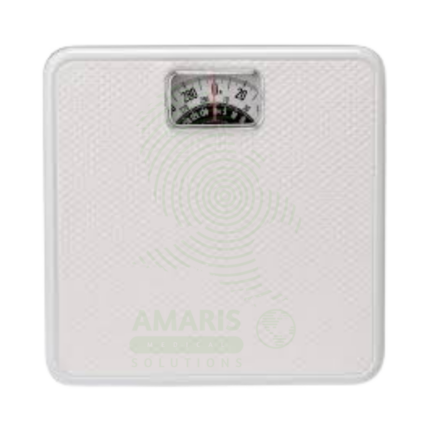
Analogue Bathroom Weighing Scale
An Analogue Bathroom Weighing Scale is a mechanical Class I medical device (for health monitoring) using a precision spring and lever system to measure body weight without batteries or electronics. Features include enameled steel, stainless steel, or ABS plastic platform (25-30 cm square), large circular dial (10-15 cm diameter) with clear numerals and pointer, zero adjustment knob for calibration before each use, weight capacity 120-180 kg (265-400 lbs) standard (heavy-duty models to 250 kg/550 lbs), and graduation 0.5 kg or 1 lb increments with accuracy ±0.5-1 kg. Primary clinical applications include home weight monitoring for patients who prefer non-electronic devices, chronic disease management in resource-limited settings (heart failure, CKD), geriatric and low-vision patient weighing (large, clear dial), bariatric patient monitoring (higher weight capacities), pediatric growth monitoring in home settings, pregnancy weight tracking, and post-hospitalization transition monitoring. Critical safety considerations include verifying zero adjustment before each use, placement on hard level surface (not carpet), staying within weight capacity, reading at eye level to avoid parallax error, and recognizing that spring fatigue over years may affect accuracy. Essential non-electronic alternative for patients needing simple, reliable, battery-free weight monitoring.
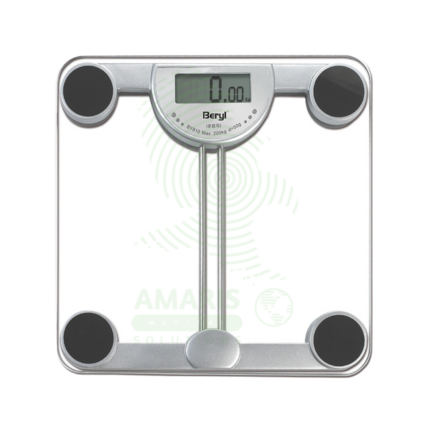
Digital Bathroom Weighing Scale
A Digital Bathroom Weighing Scale is a Class I medical device (for health monitoring) using strain gauge sensor technology (four high-precision sensors, accuracy ±0.1-0.3 kg) to measure body weight in home settings. Features include tempered glass, stainless steel, or ABS plastic platform (30-35 cm square), backlit LCD display with large numerals, auto-on/off, low battery indicator, overload warning, and weight capacity 150-200 kg (330-440 lbs) standard, with bariatric models to 300 kg (660 lbs). Measurement units switchable between kg, lb, and st. Primary clinical applications include home weight monitoring for chronic disease management (congestive heart failure fluid detection, chronic kidney disease), obesity and weight management programs, bariatric surgery pre- and post-operative monitoring, diabetes management and metabolic health, pregnancy weight gain tracking, geriatric nutritional status monitoring (detecting malnutrition), and pediatric growth monitoring. Critical safety considerations include use on hard, level surface (not carpet), consistent weighing conditions (same time, minimal clothing), inspection of glass platform for cracks, staying within weight capacity, and recognition that rapid weight gain >2-3 kg in 24-48 hours may indicate fluid overload requiring medical attention. Essential tool for home-based chronic disease management and health monitoring.
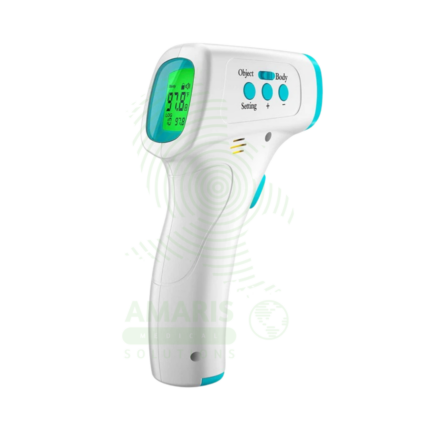
Non-Touch Digital Thermometer
A Non-Touch Digital Thermometer is a Class II medical device using infrared thermopile sensor technology (8-14 µm spectral response) to measure body temperature from the forehead or temporal artery without skin contact in 1-3 seconds with accuracy ±0.2-0.3°C. Features include backlit LCD display, fever alert (audible and color-coded), memory storage (10-50 readings), auto-shutoff, and selectable modes (body/surface/ambient). Measurement distance 3-15 cm; requires clean, dry forehead free of hair, sweat, or cosmetics. Primary clinical applications include pediatric fever screening in infants and children (non-distressing), infection control and isolation precautions (reduces healthcare worker exposure), mass screening at airports, schools, and workplaces, neonatal and NICU temperature monitoring (minimal handling), burn unit and wound care patients (non-contact over damaged skin), intraoperative and post-anesthesia care, and geriatric/dementia care (non-stressful for agitated patients). Critical safety considerations include environmental acclimation (10-15 minutes at room temperature), clean sensor lens, correct measurement distance, avoidance of laser in eyes (if equipped), and confirmation of suspected fever with contact thermometer. Essential screening tool for infection control, pediatrics, and high-volume settings.
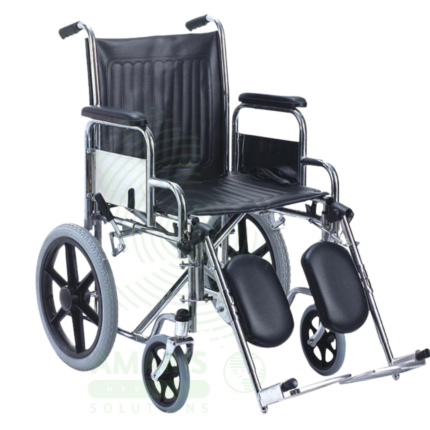
Orthopedic Wheelchair
An Orthopedic Wheelchair is a specialized manual wheelchair with an extended frame and elevating leg rests, designed to support patients who must keep one or both lower limbs in a straight, non-weight-bearing position. It is primarily used for managing lower limb fractures, post-operative recovery (e.g., hip replacements), and conditions requiring heel-off-loading to prevent pressure sores. Its key safety consideration is a heightened risk of tipping backwards due to the forward weight of the extended leg, requiring cautious use, engagement of anti-tip levers, and awareness of its increased length during navigation.
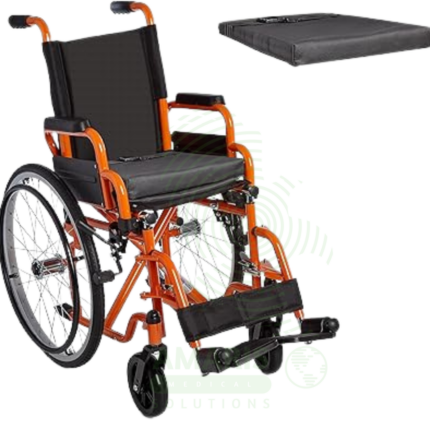
Pediatric Wheelchair
A Pediatric Wheelchair is a specially sized and designed mobility device for children with long-term physical disabilities. Its core functions are to provide independent or assisted mobility, deliver critical postural support to promote proper skeletal development and prevent deformities, and serve as a platform for inclusion in home, school, and community life. Unlike adult chairs, it features extensive adjustability to accommodate growth and modular seating systems tailored to each child's specific postural and medical needs. Prescription and fitting by a rehabilitation team are essential for safe and effective use.
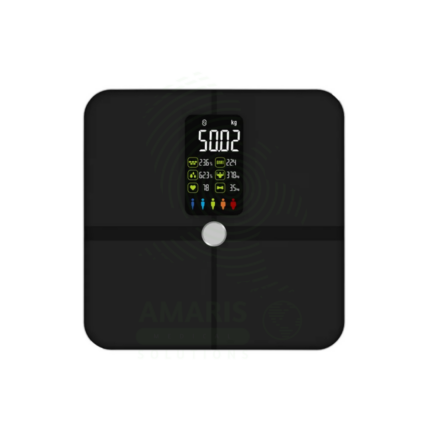
Smart Weighting Scale With Bluetooth
A Smart Weighting Scale With Bluetooth is a digital body weight scale with integrated wireless technology that transmits weight measurements from home to smartphones and healthcare platforms for remote patient monitoring. Features four high-precision strain gauge sensors providing accuracy ±0.1-0.3 kg, tempered glass or reinforced plastic platform with 180-400 lb capacity, backlit LCD display, and Bluetooth 4.0-5.0 LE connectivity. Advanced models include bioelectrical impedance analysis (BIA) for body composition (body fat, muscle mass, bone mass, hydration, visceral fat). Primary clinical applications include remote weight monitoring in heart failure management (early fluid overload detection), obesity and weight management programs, bariatric surgery pre/post-operative monitoring, chronic kidney disease fluid management, pregnancy weight gain tracking, telehealth programs, and medication-induced weight change surveillance. Class I medical device (weight function); Class II if body composition claims made. Critical safety considerations include weight capacity limits, platform integrity inspection, proper surface placement (hard, level), standardized weighing conditions, BIA contraindications (pacemakers, ICDs, pregnancy), and rapid weight gain recognition in heart failure patients.
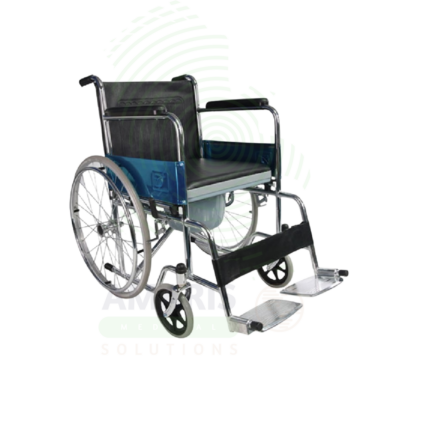
Standard Commode Wheelchair With Castors
A Standard Commode Wheelchair With Castors is a mobile commode chair that combines the functions of a wheelchair and a bedside commode. Designed for non-ambulatory patients, post-operative patients, and those requiring incontinence management, it eliminates hazardous transfers to a separate toilet, reducing fall risk and preserving dignity. Locking castors provide stability during use, while the removable pan allows for easy cleaning. Essential for hospitals, long-term care facilities, and home healthcare settings.