Dermatoscope and Magnifiers
 Diagnostic Kits
 Vital Signs Monitors
 Stethoscopes and Accessories
 Otoscopes, Ophthalmoscopes, and Retinoscopes
 Reflex Hammers and Neurological Tools
 Scales and Measuring Devices
 Spirometers and Pulmonary Function Tests
 Electrosurgical Units and Accessories
 Cutting Instruments
 Grasping and Holding Instruments
 Hemostatic Instruments
 Specialized Surgical Sets
 Single-Use Procedure Trays and Packs
 Surgical Drapes, Gowns, and Covers
 Tissue Unifying Instruments
 Radiation Protection
 X-Ray Machines and Accessories
 Ultrasound Systems and Probes
 MRI and CT Scanners
 Radiology Consumables
 Bone Densitometers
 Fluoroscopy Equipment
 Imaging Tables and Positioning Aids
 Microscopes and Accessories
 Centrifuges and Separators
 Analyzers
 Incubators and Ovens
 Pipettes, Dispensers, and Lab Glassware
 Refrigerators, Freezers, and Storage Units
 Lab Consumables
 Sterilizers and Autoclaves for Lab Use
 Multi-Parameter Monitors
 Ventilators and Respiratory Support Devices
 Defibrillators and AEDs
 Infusion Pumps and IV Systems
 Patient Warmers and Cooling Devices
 Central Monitoring Stations
 Accessories
 Anesthesia Machines and Workstations
 Oxygen Concentrators and Delivery Systems
 Nebulizers and Inhalers
 CPAP/BiPAP Machines
 Airway Management
 Anesthesia Masks, Circuits, and Bags
 Humidifiers and Heaters
 Respiratory Therapy Accessories
 First Aid Kits and Cabinets
 Emergency Resuscitation Equipment
 Trauma Supplies
 Emergency Carts and Crash Carts
 Burn Care Products
 Bleeding Control
 Automated External Defibrillators (AEDs)
 Transport and Evacuation
 Wheelchairs and Accessories
 Walkers, Crutches, and Canes
 Prosthetics and Orthotics
 Physical Therapy Equipment
 Transfer Devices
 Bathroom Safety
 Orthopedic Traction and Tables
 Hot/Cold Therapy Packs and Units
 Beds and Mattresses
 Chairs and Stools
 Tables
 Cabinets and Storage
 Privacy Screens & Curtains
 Stands and Racks
 Linens and Textiles
 Lighting
 Autoclaves and Sterilizers
 Ultrasonic Cleaners
 Disinfectant Solutions and Wipes
 Sterilization Pouches, Wraps, and Indicators
 Instrument Trays and Containers
 UV and Ozone Disinfection Devices
 Washer Disinfectors
 Wound Care
 Gloves
 Masks and Respirators
 Catheters and Tubing
 Swabs, Applicators, and Sponges
 Incontinence Products
 Personal Protective Equipment (PPE)
 Dental Chairs and Units
 Handpieces and Burs
 Instruments
 Consumables
 Sterilization for Dental Use
 Orthodontic Supplies
 Endodontic Tools
 Slit Lamps and Tonometers
 Lensometers and Phoropters
 Ophthalmic Surgical Instruments
 Eyewear Frames and Lenses
 Contact Lens Supplies
 Vision Testing Charts and Devices
 Eye Care Consumables
 Laser Systems for Eye Care
 ENT Exam Chairs and Tables
 Endoscopes
 Audiometers and Hearing Tests
 ENT Instruments
 Nasal and Throat Packs
 Hearing Aids and Accessories
 Otology Supplies
 Fetal Dopplers and Monitors
 Delivery Beds and Tables
 Gynecological Instruments
 Neonatal Incubators and Warmers
 Breast Pumps and Accessories
 Contraceptive Devices
 Maternity Supports and Pads
 Neonatal Consumables
 Cystoscopes and Urethroscopes
 Dialysis Machines and Supplies
 Urological Catheters and Bags
 Lithotripters
 Prostate Treatment Devices
 Urinary Incontinence Products
 Kidney Stone Management Tools
 Consumables & Disposables
 EEG and EMG Machines
 Neurosurgical Instruments
 Nerve Stimulators
 Headrests and Positioning Aids
 Lumbar Puncture Kits
 Seizure Monitoring Devices
 Consumables
 Rehabilitation for Neurological Conditions
 ECG Machines and Accessories
 Holter Monitors
 Stress Test Systems
 Pacemakers and Defibrillator Accessories
 Vascular Access Devices
 Cardiac Catheters and Guidewires
 Blood Flow Meters
 Consumables
 Orthopedic Instruments
 Casts, Splints, and Padding
 Joint Replacement Supplies
 Prosthetic Limbs and Components
 Bone Grafts and Substitutes
 Traction Devices
 Orthopedic Braces and Supports
 Rehabilitation Aids for Orthopedics
 Home Oxygen Therapy
 Hospital Beds for Home Use
 Mobility Aids
 Bathroom and Daily Living Aids
 Wound Care for Home
 Monitoring Devices
 Enteral Feeding Pumps and Tubes
 Hand Sanitizers and Dispensers
 Face Shields and Goggles
 Isolation Gowns and Suits
 Biohazard Waste Containers
 Air Purifiers and HEPA Filters
 Surface Disinfectants
 Sharps Containers
 Protective Barriers
 Cardiovascular & Endurance Training
 Strength Training & Weightlifting
 Functional Training & Core Conditioning
 Physical Therapy & Rehabilitation
 Sports & Outdoor Recreation
 Gym Flooring & Facility Equipment
 Fitness Monitoring & Accessories
 Kids & Novelties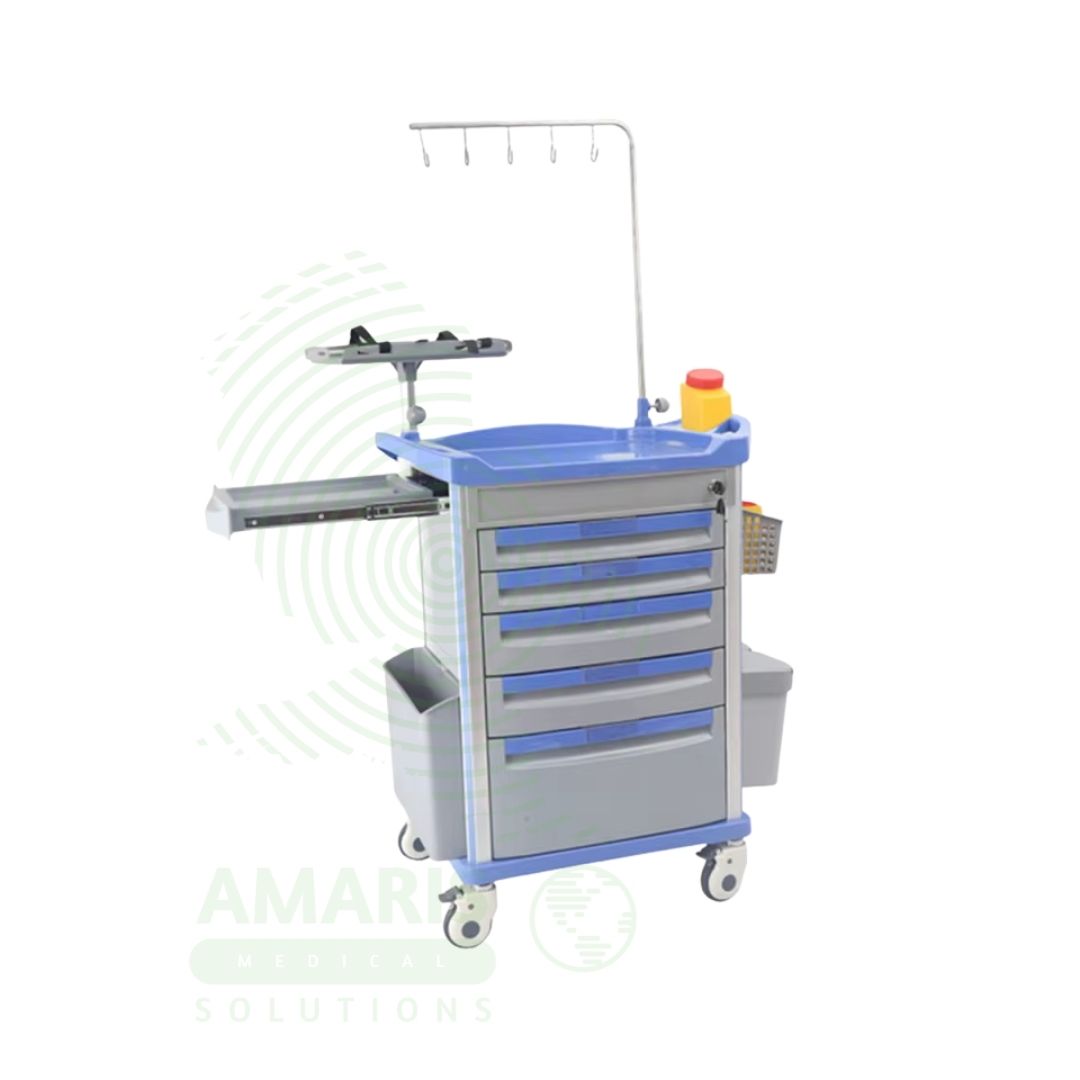
ABS Trolley (Crash Cart)
$1.00
WhatsApp Order
An ABS Trolley Crash Cart is a mobile, durable resuscitation station constructed from impact-resistant ABS plastic, designed for the immediate management of cardiac arrest and medical emergencies. It consolidates and organizes all essential equipment—including a defibrillator, emergency medications, airway management tools, and IV supplies—into a standardized, rapidly deployable unit following ACLS/PALS protocols. Its primary function is to eliminate treatment delays by delivering a complete set of resources directly to the patient’s bedside. Rigorous daily checks and strict restocking protocols ensure it is always in a state of immediate readiness, making it a critical component of hospital safety infrastructure.
Description
ABS Trolley (Crash Cart)
PRIMARY CLINICAL & DIAGNOSTIC USES
1. Immediate, Centralized Access to Cardiac Arrest and Advanced Life Support Equipment
-
Definitive Use: Houses, organizes, and rapidly transports the complete set of medications, devices, and supplies mandated for hospital-based resuscitation following protocols like ACLS and PALS, serving as the primary physical response system for a “Code Blue” or medical emergency.
-
How it helps: For the code team, floor nurse, and rapid responder, the crash cart arriving at the bedside transforms a chaotic emergency into a structured response—everything needed to save a life, from defibrillator to drugs, airways to IV supplies, all in one mobile unit. For the patient in cardiac arrest, every second without intervention decreases survival; the crash cart’s immediate availability means that defibrillation, medications, and airway management begin moments after collapse, not minutes later when equipment is gathered piecemeal.
2. Facilitation of Time-Critical Interventions During Resuscitation
-
Primary Use: Provides immediate, at-hand access to essential tools for definitive airway management, circulatory support, and pharmacological interventions, collapsing the time to first treatment.
-
How it helps: For the code team leader and responding clinicians, the crash cart’s organized drawers mean that when epinephrine is needed, it’s found instantly; when the airway must be secured, the laryngoscope is ready; when defibrillation is indicated, the pads are attached and the machine charged. For the patient in cardiac arrest, this organization translates directly to shorter intervals between interventions—faster shocks, earlier medications, quicker airway control—all of which improve the chances of survival and good neurological outcome.
3. Standardization of Emergency Response Across a Facility
-
Primary Use: Ensures that every emergency team, regardless of location or time, has immediate access to an identically stocked and organized set of resources, eliminating variation and search time during a crisis.
-
How it helps: For the hospital administration and patient safety officers, standardized crash carts mean that a nurse floated from the ICU to the med-surg floor, or a physician responding to a code in an unfamiliar unit, knows exactly where to find every supply—the same drawer, the same layout, the same organization throughout the facility. For every patient who arrests anywhere in the hospital, this standardization ensures that the response is consistent, that nothing is missed because of unfamiliarity, and that evidence-based protocols can be followed without hesitation.
4. Secured Storage and Rapid Deployment of High-Alert Emergency Medications
-
Primary Use: The locked drug drawers provide secure, organized, and instantly accessible inventory of time-critical, high-risk medications with pre-filled syringes often arranged for quick identification and administration.
-
How it helps: For the pharmacist and code nurse, the crash cart’s drug drawer balances security with urgency—locked to prevent diversion and tampering, but designed for immediate access when seconds count, with pre-filled syringes and clear labeling that eliminates calculation errors in crisis. For the patient in arrest, this means that epinephrine, amiodarone, atropine, and other life-saving drugs are drawn up and ready, administered correctly and quickly when every heartbeat matters.
SECONDARY & SUPPORTIVE USES
1. Procedural Support for Emergency Airway and Vascular Access: The crash cart serves as a complete, mobile procedural station for performing and securing a definitive airway, establishing intraosseous or central venous access, and performing needle decompression for tension pneumothorax during a resuscitation event. For the patient whose life depends on these critical procedures, having all necessary supplies on a single cart means no delay while staff run for additional equipment.
2. Rapid Response Team and Medical Emergency Team Support: Configured for use by RRTs to manage deteriorating patients before cardiac arrest occurs, the crash cart contains tools for urgent assessment and targeted interventions—non-invasive ventilation, specific antidotes, fluid resuscitation. For the patient whose condition is declining but not yet arrested, early intervention from a fully equipped cart can prevent the code altogether.
3. Disaster Preparedness and Mass Casualty Triage Station: Pre-positioned in emergency departments or other key areas, crash carts serve as pre-stocked supply hubs to manage multiple critically ill patients during internal or external disasters. For the community struck by disaster, having multiple fully stocked carts ready means that when many patients arrive at once, resuscitation supplies are immediately available for each.
4. Mobile Emergency Supply Center for High-Acuity Units: Placed in high-risk areas like Cardiac Care Units, Emergency Departments, and Post-Anesthesia Care Units, crash carts serve as ready-to-go backups, reducing the time staff spend retrieving emergency items from central storage during an urgent situation. For the patient in a monitored unit who suddenly deteriorates, having a cart just steps away means intervention begins immediately.
5. High-Fidelity Simulation and Clinical Training: Crash carts are essential tools for conducting realistic mock code drills and emergency scenario training, allowing multidisciplinary teams to practice crisis resource management, equipment familiarization, and protocol adherence under pressure. For the countless patients whose lives will be saved by well-trained code teams, every drill, every simulation, and every practice session on a crash cart contributes to their survival when the real emergency comes.
KEY PRODUCT FEATURES
1. BASIC IDENTIFICATION ATTRIBUTES
-
Product Type: A mobile, multi-drawer emergency resuscitation cart constructed from Acrylonitrile Butadiene Styrene (ABS) plastic or with ABS drawers.
-
Core Design: A rectangular cart on lockable casters, featuring a standardized arrangement of shallow, partitioned drawers and shelves, topped by a dedicated platform for a defibrillator/monitor. The ABS construction offers durability and ease of cleaning.
-
Key Components:
-
Defibrillator/Monitor Shelf: A prominent, often recessed upper shelf designed to securely hold a combination defibrillator, ECG monitor, and non-invasive blood pressure device.
-
Color-Coded, Labeled Drawer System: Multiple drawers with clear, standardized labels (e.g., "AIRWAY," "DRUGS," "IV ACCESS," "BREATHING") and often color-coded fronts (e.g., red for airway) for rapid visual identification.
-
Emergency Drug Module: A removable, typically lockable tray or box containing pre-filled syringes and vials of first-line emergency medications.
-
Procedure Surface: A flat, wipe-clean ABS top for temporary placement of equipment during the code.
-
Oxygen Cylinder Holder & Suction Mount: Secures a portable "D" or "E" size oxygen cylinder and a suction canister/unit.
-
Integrated Sharps Container & Waste Bin: For immediate safe disposal.
-
Power Source: May include a power strip or internal battery to charge the defibrillator.
-
2. TECHNICAL & PERFORMANCE PROPERTIES
-
Material (ABS): Offers high impact resistance, chemical resistance to disinfectants, low weight compared to metal, and does not rust or corrode. Provides a seamless, easy-to-clean surface.
-
Mobility & Stability: Features large, dual-swivel locking casters for swift, quiet movement and a low center of gravity to prevent tipping when laden with heavy equipment like a defibrillator.
-
Drawer Organization: Drawers have custom foam or plastic inserts with cutouts for specific instruments (laryngoscope handles, blades, ET tubes) to ensure everything has a designated place and missing items are immediately apparent.
-
Security: Equipped with a central locking system for the entire cart and individual locks for controlled substance drawers.
3. PHYSICAL & OPERATIONAL PROPERTIES
-
Construction: Cabinetry made of molded ABS plastic or with ABS drawers mounted on a metal frame. Extremely durable and resistant to dents.
-
Standardization: Stocked according to a facility-wide, pharmacy-approved formulary list. Layouts often follow national resuscitation council guidelines to ensure universal familiarity.
-
Audit and Checklist Compatibility: Designed to facilitate daily or weekly checks with visible checklists/tags to verify drug expiry dates, equipment presence, and functionality.
4. SAFETY & COMPLIANCE ATTRIBUTES
-
Regulatory Compliance: While the cart is furniture, its contents are highly regulated. It must facilitate compliance with controlled substance storage laws and medication safety standards.
-
Emergency Readiness Status: Subject to mandatory, documented routine checks (often daily) to ensure 100% readiness. A sealed tag or electronic log indicates it is fully stocked and operational.
-
Infection Control: The non-porous ABS surface can be aggressively cleaned and disinfected after use in an isolation room or following exposure to body fluids.
5. STORAGE & HANDLING ATTRIBUTES
-
Storage: Permanently stationed in a strategic, universally known, and unobstructed location with clear signage. It is not stored in a closet.
-
Cleaning & Disinfection: Must be thoroughly decontaminated after every use. ABS surfaces allow wiping with a broad spectrum of hospital-grade disinfectants. All drawers and equipment must be cleaned during the restocking process.
-
Restocking Protocol (CRITICAL): After each use, the cart is exchanged for a fully stocked one. The used cart undergoes a meticulous, documented restocking procedure by designated personnel (often pharmacy and nursing) to exact par levels, followed by re-sealing.
6. LABORATORY & CLINICAL APPLICATIONS
-
Primary Application: The physical embodiment of a hospital's emergency response capability. It is a pre-packed, logistical system engineered to deliver a standardized bundle of life-saving interventions to a patient in extremis within the first critical minutes of a cardiopulmonary arrest or medical crisis.
SAFETY HANDLING PRECAUTIONS
1. SAFETY PRECAUTIONS
-
Readiness Seal Integrity (CRITICAL): The cart's sealed tag must only be broken during a genuine emergency. Using it for non-emergency supplies compromises readiness and is a critical safety violation.
-
Secure Transport: Lock casters when the cart is stationary during a code. Ensure the defibrillator is securely fastened before movement.
-
Controlled Access: Maintain locked status for drug drawers. Access should be restricted to authorized code team members.
-
Universal Familiarity: All clinical staff must be trained on the standardized layout. Time wasted searching for equipment during a resuscitation is detrimental to outcomes.
-
Post-Code Protocol: A used cart must be immediately removed from service, exchanged, and sent for restocking. It must never be left unattended or unsealed.
2. FIRST AID MEASURES
-
Cart Failure During a Code: If a wheel fails or the cart becomes unusable mid-resuscitation, focus on patient care using equipment already retrieved. Designate a runner to fetch a backup cart or specific items from a secondary location.
-
Drug Error or Contamination: Follow institutional protocols for medication error reporting and patient management. This underscores the need for standardized layouts and clear labeling.
3. FIRE FIGHTING MEASURES
-
Flammability: ABS plastic is combustible. Contents include flammable materials (paper, alcohol wipes) and an oxygen cylinder which is a severe fire accelerant.
-
Extinguishing Media: Use water, foam, or CO₂. If safe, turn off the oxygen cylinder. The absolute priority is to evacuate the patient and remove the oxygen source from the vicinity of the fire.
Related products
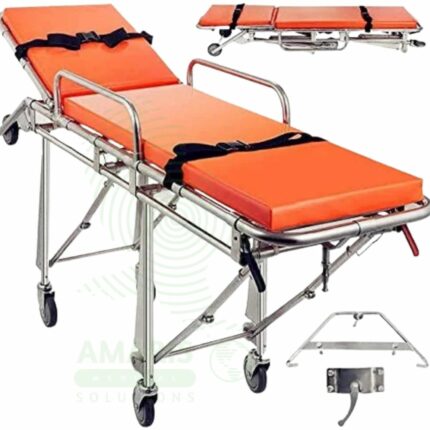
Ambulance Stretcher Trolley
An Ambulance Stretcher Trolley is a heavy-duty, purpose-built mobile cot designed for the demanding environment of emergency medical services. Its core functions are the safe extrication of patients from ground level, their secure restraint during road transport, and serving as a stable platform for pre-hospital critical care. Key distinguishing features include a robust retractable undercarriage for ambulance loading, a wide height adjustment range, large all-terrain wheels, an integrated crash-tested patient restraint system, and positive locking mechanisms for ambulance mounting. It is engineered to withstand physical stress, ensure patient safety during vehicle movement, and comply with specific ambulance equipment standards, making it the fundamental patient-handling tool for paramedics and EMTs.
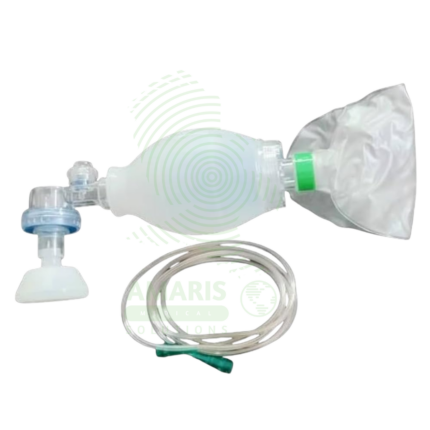
Breath Resuscitation Bag
A Breath Resuscitation Bag (manual resuscitator, bag-valve-mask) is a Class II medical device used to deliver positive-pressure ventilation to patients in respiratory arrest, cardiac arrest, or respiratory failure. Available in adult (1,500-2,000 mL), pediatric (450-750 mL), and infant/neonatal (200-350 mL) sizes with self-inflating silicone or PVC bags, one-way non-rebreathing valves, transparent cushioned masks, and oxygen reservoirs for high FiO2 delivery (90-100% with reservoir). Oxygen inlet allows connection to flow meter (10-15 L/min recommended). Pediatric/neonatal models include pressure-limiting valves (35-45 cmH2O) to prevent barotrauma. Essential for CPR (AHA guidelines: adult 10-12 breaths/min, child 12-20, infant 20-30), preoxygenation before intubation, transport ventilation, and recovery from anesthesia. Critical safety considerations include avoiding excessive ventilation pressure (prevents gastric insufflation), maintaining proper mask seal, monitoring chest rise, and having backup equipment readily available. Indispensable emergency airway equipment in hospitals, ambulances, crash carts, and emergency response kits worldwide.
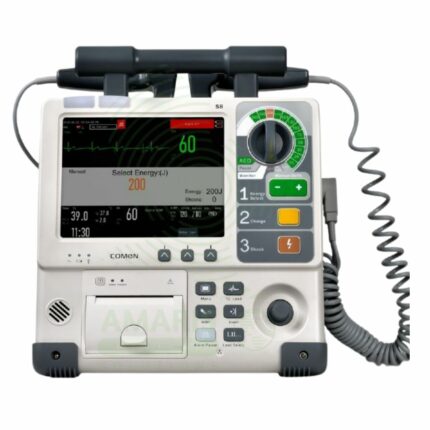
Defibrillator Monitor
The Defibrillator Monitor is a critical, portable life-support device that combines continuous patient monitoring with immediate defibrillation and pacing capabilities. It is the frontline tool for managing cardiac arrest (through defibrillation) and unstable arrhythmias (through synchronized cardioversion or pacing) in emergency departments, during patient transport, and for hospital code teams. Essential for safe operation are rigorous daily self-tests, correct pad placement, and the strict protocol of clearing all personnel before delivering a shock. Its integrated monitoring of ECG, SpO2, and NIBP allows for comprehensive patient assessment at the point of greatest need.
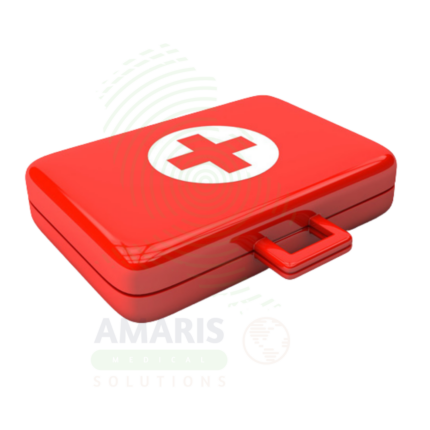
First Aid Boxes
First Aid Boxes are durable, portable containers designed for the organized storage, protection, and rapid deployment of first aid supplies and equipment for immediate treatment of minor injuries and medical emergencies. Available in multiple configurations including personal, Class A (basic workplace), Class B (comprehensive/high-hazard), industrial/heavy-duty, wall-mounted, portable/trauma, vehicle, and specialty variants (burn, eye injury). Constructed from impact-resistant materials (ABS plastic, polycarbonate, HDPE, stainless steel, aluminum) with secure latching mechanisms, carrying handles, mounting provisions, and organizational compartments. Essential for regulatory compliance in workplace, school, vehicle, and public facility settings. Critical safety principles include unobstructed accessibility, regular inspection and restocking, removal of expired contents, and absolute prohibition of sharps disposal within the unit. An indispensable component of occupational health and safety, emergency preparedness, and community first response.
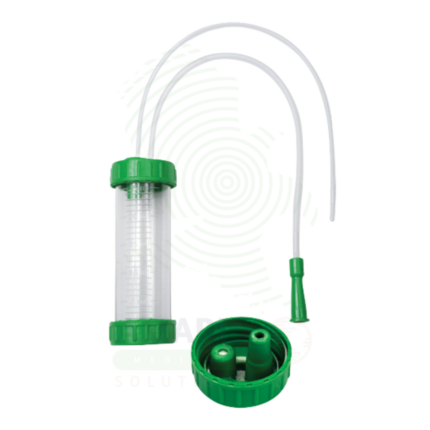
Mucus Extractor
Mucus Extractors are sterile, single-use handheld suction devices designed for the rapid clearance of secretions from the oral cavity, pharynx, and trachea, with distinct configurations for neonatal and adult populations. Neonatal/infant extractors feature soft, flexible, small-diameter tips with low suction capacity (30-60 mL) to minimize trauma to delicate airways. Adult/universal extractors (Yank Auer) are rigid, large-bore, angled devices with multiple suction eyes and high-flow capacity (150-300 mL) for rapid clearance of blood, vomitus, and thick secretions. Select models incorporate sterile specimen traps for collection of respiratory secretions for microbiological analysis. Critical safety requirements include strict limitation of suction duration (≤10 seconds; ≤5 seconds in neonates), avoidance of excessive suction pressure (neonates ≤80 mmHg), use of non-traumatic multiple-eye tips for vulnerable patients, and absolute single-use protocol. An indispensable airway device in neonatal resuscitation, pediatric care, emergency medicine, and perioperative settings.
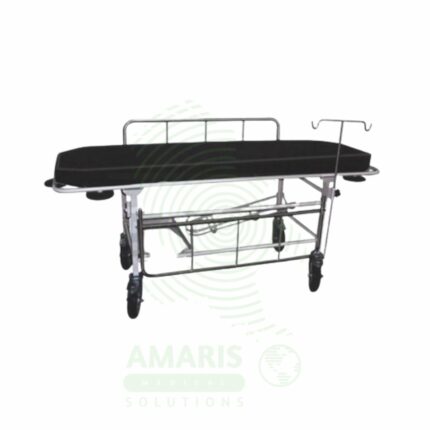
Patient Trolley
A Patient Trolley (also known as a hospital stretcher or gurney) is a mobile, height-adjustable wheeled bed essential for the safe transport and temporary holding of patients within a healthcare facility. Its core function is to serve as the primary link between clinical departments (e.g., Ward to Radiology, ED to OR), enabling efficient patient flow. Key features include locking casters, safety side rails, an IV pole, and a thin, cleanable mattress. Designed for maneuverability in corridors and elevators, it is the fundamental piece of equipment for patient logistics, emergency response, and serving as a mobile treatment platform in hospitals and large clinics.
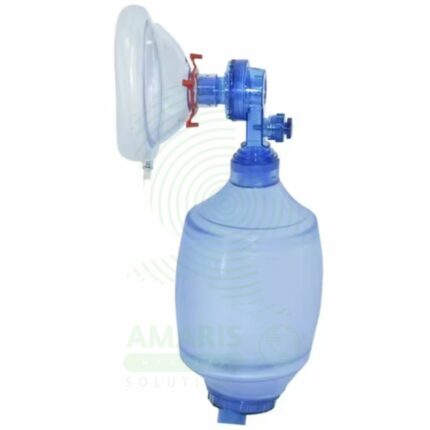
Silicone & PVC Ambubag
A Silicone & PVC Ambubag is a manual, self-inflating resuscitation bag used to provide emergency positive-pressure ventilation to non-breathing or inadequately breathing patients. As the core component of Bag-Valve-Mask (BVM) resuscitation, it is a critical, immediate-response device found in all crash carts and emergency settings. Silicone versions are durable and reusable; PVC versions are cost-effective and disposable. Effective use requires training to achieve a proper mask seal, appropriate ventilation rate and volume, and integration with oxygen supplementation. It is the fundamental tool for airway management and respiratory support prior to securing a definitive airway or accessing a mechanical ventilator.