Dermatoscope and Magnifiers
 Diagnostic Kits
 Vital Signs Monitors
 Stethoscopes and Accessories
 Otoscopes, Ophthalmoscopes, and Retinoscopes
 Reflex Hammers and Neurological Tools
 Scales and Measuring Devices
 Spirometers and Pulmonary Function Tests
 Electrosurgical Units and Accessories
 Cutting Instruments
 Grasping and Holding Instruments
 Hemostatic Instruments
 Specialized Surgical Sets
 Single-Use Procedure Trays and Packs
 Surgical Drapes, Gowns, and Covers
 Tissue Unifying Instruments
 Radiation Protection
 X-Ray Machines and Accessories
 Ultrasound Systems and Probes
 MRI and CT Scanners
 Radiology Consumables
 Bone Densitometers
 Fluoroscopy Equipment
 Imaging Tables and Positioning Aids
 Microscopes and Accessories
 Centrifuges and Separators
 Analyzers
 Incubators and Ovens
 Pipettes, Dispensers, and Lab Glassware
 Refrigerators, Freezers, and Storage Units
 Lab Consumables
 Sterilizers and Autoclaves for Lab Use
 Multi-Parameter Monitors
 Ventilators and Respiratory Support Devices
 Defibrillators and AEDs
 Infusion Pumps and IV Systems
 Patient Warmers and Cooling Devices
 Central Monitoring Stations
 Accessories
 Anesthesia Machines and Workstations
 Oxygen Concentrators and Delivery Systems
 Nebulizers and Inhalers
 CPAP/BiPAP Machines
 Airway Management
 Anesthesia Masks, Circuits, and Bags
 Humidifiers and Heaters
 Respiratory Therapy Accessories
 First Aid Kits and Cabinets
 Emergency Resuscitation Equipment
 Trauma Supplies
 Emergency Carts and Crash Carts
 Burn Care Products
 Bleeding Control
 Automated External Defibrillators (AEDs)
 Transport and Evacuation
 Wheelchairs and Accessories
 Walkers, Crutches, and Canes
 Prosthetics and Orthotics
 Physical Therapy Equipment
 Transfer Devices
 Bathroom Safety
 Orthopedic Traction and Tables
 Hot/Cold Therapy Packs and Units
 Beds and Mattresses
 Chairs and Stools
 Tables
 Cabinets and Storage
 Privacy Screens & Curtains
 Stands and Racks
 Linens and Textiles
 Lighting
 Autoclaves and Sterilizers
 Ultrasonic Cleaners
 Disinfectant Solutions and Wipes
 Sterilization Pouches, Wraps, and Indicators
 Instrument Trays and Containers
 UV and Ozone Disinfection Devices
 Washer Disinfectors
 Wound Care
 Gloves
 Masks and Respirators
 Catheters and Tubing
 Swabs, Applicators, and Sponges
 Incontinence Products
 Personal Protective Equipment (PPE)
 Dental Chairs and Units
 Handpieces and Burs
 Instruments
 Consumables
 Sterilization for Dental Use
 Orthodontic Supplies
 Endodontic Tools
 Slit Lamps and Tonometers
 Lensometers and Phoropters
 Ophthalmic Surgical Instruments
 Eyewear Frames and Lenses
 Contact Lens Supplies
 Vision Testing Charts and Devices
 Eye Care Consumables
 Laser Systems for Eye Care
 ENT Exam Chairs and Tables
 Endoscopes
 Audiometers and Hearing Tests
 ENT Instruments
 Nasal and Throat Packs
 Hearing Aids and Accessories
 Otology Supplies
 Fetal Dopplers and Monitors
 Delivery Beds and Tables
 Gynecological Instruments
 Neonatal Incubators and Warmers
 Breast Pumps and Accessories
 Contraceptive Devices
 Maternity Supports and Pads
 Neonatal Consumables
 Cystoscopes and Urethroscopes
 Dialysis Machines and Supplies
 Urological Catheters and Bags
 Lithotripters
 Prostate Treatment Devices
 Urinary Incontinence Products
 Kidney Stone Management Tools
 Consumables & Disposables
 EEG and EMG Machines
 Neurosurgical Instruments
 Nerve Stimulators
 Headrests and Positioning Aids
 Lumbar Puncture Kits
 Seizure Monitoring Devices
 Consumables
 Rehabilitation for Neurological Conditions
 ECG Machines and Accessories
 Holter Monitors
 Stress Test Systems
 Pacemakers and Defibrillator Accessories
 Vascular Access Devices
 Cardiac Catheters and Guidewires
 Blood Flow Meters
 Consumables
 Orthopedic Instruments
 Casts, Splints, and Padding
 Joint Replacement Supplies
 Prosthetic Limbs and Components
 Bone Grafts and Substitutes
 Traction Devices
 Orthopedic Braces and Supports
 Rehabilitation Aids for Orthopedics
 Home Oxygen Therapy
 Hospital Beds for Home Use
 Mobility Aids
 Bathroom and Daily Living Aids
 Wound Care for Home
 Monitoring Devices
 Enteral Feeding Pumps and Tubes
 Hand Sanitizers and Dispensers
 Face Shields and Goggles
 Isolation Gowns and Suits
 Biohazard Waste Containers
 Air Purifiers and HEPA Filters
 Surface Disinfectants
 Sharps Containers
 Protective Barriers
 Cardiovascular & Endurance Training
 Strength Training & Weightlifting
 Functional Training & Core Conditioning
 Physical Therapy & Rehabilitation
 Sports & Outdoor Recreation
 Gym Flooring & Facility Equipment
 Fitness Monitoring & Accessories
 Kids & Novelties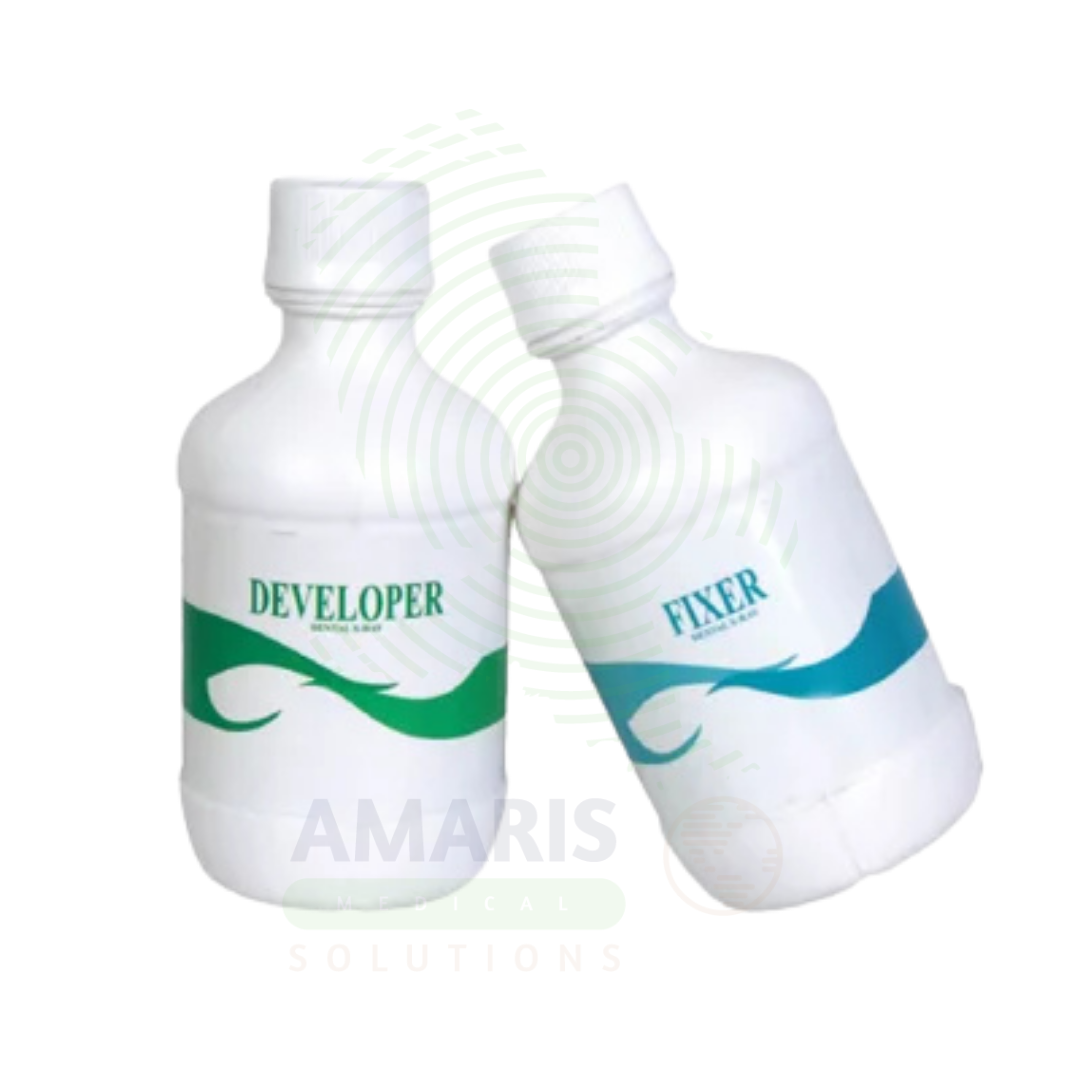


Dental X-ray Fixer & Developer
$1.00
WhatsApp Order
Dental X-ray Fixer & Developer are the two chemical solutions used to process analog dental X-ray films, converting the latent image into a permanent diagnostic radiograph. The Developer reduces exposed silver halide to metallic silver, creating the image, while the Fixer removes unexposed halides and hardens the emulsion. Their use requires strict adherence to time-temperature protocols, hazardous material handling with full PPE, and mandated environmental controls—most critically, silver recovery from used fixer. While fundamental to film-based radiology, the transition to digital imaging has reduced their prevalence, though they remain essential in practices maintaining analog systems.
Description
Dental X-ray Fixer & Developer
PRIMARY CLINICAL & DIAGNOSTIC USES
1. Chemical Processing of Analog Dental X-ray Films
-
Primary Use: Used in manual or automatic darkroom development of exposed intraoral and extraoral dental X-ray films. The Developer reduces exposed silver halide crystals to metallic silver, creating the visible image. The Fixer dissolves and removes unexposed, undeveloped silver halide crystals, making the image permanent and stable.
-
How it helps: For the dental radiographer and clinical staff, these chemical solutions transform the latent image captured on film into a permanent, viewable radiograph—essential for accurate diagnosis. For the patient, properly processed films ensure that the dentist can identify caries, periodontal disease, and other pathologies with clarity and confidence.
2. Creation of Permanent Diagnostic Radiographs
-
Primary Use: This chemical process transforms the latent image captured on film into a permanent, viewable radiograph essential for diagnosing caries, periodontal disease, periapical pathologies, and evaluating dental anatomy.
-
How it helps: For the dentist, properly processed radiographs provide the diagnostic information needed to detect pathology, plan treatment, and monitor healing. For the patient, this means accurate diagnosis and appropriate treatment planning based on clear, interpretable images.
3. Manual Tank Processing
-
Primary Use: Used in a two-tank or three-tank manual system in a darkroom, where films are immersed sequentially in developer, rinse water or stop bath, and fixer.
-
How it helps: For the dental assistant and radiographer, manual processing provides a reliable method for developing films in practices without automatic processors. For the patient, this ensures that radiographs are available for immediate interpretation without sending films to an outside laboratory.
4. Automatic Processor Chemistry
-
Primary Use: Serves as the chemical solutions in automatic dental film processors, where films are fed through rollers that transport them through developer, fixer, wash, and dryer compartments.
-
How it helps: For the dental practice, automatic processors streamline workflow—reducing processing time and allowing for rapid development of radiographs. For the patient, this means shorter appointment times and immediate availability of diagnostic images.
5. Quality Control in Film-Based Radiology
-
Primary Use: Consistent, fresh chemistry is critical for producing radiographs with optimal density, contrast, and detail. Exhausted or contaminated solutions lead to poor-quality, non-diagnostic images.
-
How it helps: For the dental team, monitoring solution freshness ensures that radiographs meet diagnostic standards—preventing retakes and reducing patient radiation exposure. For the patient, this means fewer repeat exposures and confidence that their radiographs are diagnostically reliable.
6. Development of Latent Image
-
Primary Use: The developer chemically reduces exposed silver halide crystals to black metallic silver, creating the visible image proportional to the amount of radiation that reached each area of the film.
-
How it helps: For the radiographer, proper development chemistry ensures that the image accurately represents the radiographic densities captured during exposure. For the patient, this means that subtle pathologies are not missed due to underdevelopment or fogging.
7. Fixing and Image Permanence
-
Primary Use: The fixer removes unexposed silver halide crystals that would otherwise darken with light exposure, rendering the image permanent and light-resistant.
-
How it helps: For the dental practice, proper fixing ensures that radiographs remain stable over time without fading or discoloration. For the patient, this means that their radiographic records remain diagnostic for future reference and comparison.
8. Hardening of Emulsion
-
Primary Use: The fixer contains hardening agents that strengthen the gelatin emulsion, making the film more resistant to scratching and handling damage.
-
How it helps: For the dental assistant handling processed films, hardened emulsions resist damage during mounting and storage. For the patient, this ensures that their radiographic records remain intact over time.
9. Time-Temperature Development Control
-
Primary Use: Manual processing requires precise control of development time based on solution temperature to achieve consistent, diagnostic-quality images.
-
How it helps: For the radiographer, understanding time-temperature relationships allows for predictable results even with variable conditions. For the patient, this ensures consistent image quality regardless of when films are processed.
10. Chemical Concentration and Activity
-
Primary Use: Solutions must maintain proper chemical concentration and activity to achieve optimal development and fixation; exhausted solutions produce poor-quality images.
-
How it helps: For dental practice, regular monitoring and replenishment of chemistry ensures consistent results. For the patient, this means radiographs that are consistently diagnostic with minimal retakes.
11. Solution Separation to Prevent Contamination
-
Primary Use: Developer and fixer must be kept separate to prevent chemical cross-contamination that would ruin the processing chemistry.
-
How it helps: For the radiographer, proper handling prevents contamination that would lead to image artifacts and poor quality. For the patient, this ensures that each radiograph is processed correctly the first time.
SECONDARY & SUPPORTIVE USES
1. Replenishment of Processor Solutions: Developer and fixer are used to replenish automatic processors to maintain solution activity and volume as films are processed. For the practice, replenishment extends the life of processing chemicals; for the patient, this ensures consistent image quality throughout the life of the chemistry.
2. Manual Development of Specialized Films: Can be used for processing other types of radiographic films in specific scenarios. For the dental practice, this provides flexibility for processing various film types; for the patient, this ensures that all radiographic needs can be met in-house.
3. Wash and Rinse Stages: Water baths or rinse solutions are used between developer and fixer to prevent chemical carryover that would contaminate solutions and degrade image quality. For the radiographer, proper washing ensures clean, artifact-free images; for the patient, this contributes to diagnostic-quality radiographs.
4. Dryer Function in Automatic Processors: Automatic processors include a drying stage that removes residual moisture from processed films, allowing for immediate handling and mounting. For the practice, this streamlines workflow; for the patient, this means faster availability of diagnostic images.
5. Processing Monitoring and Quality Assurance: Test strips and sensitometric evaluation are used to monitor chemical activity and ensure consistent processing quality. For the practice, this supports quality assurance programs; for the patient, this ensures that radiographic diagnostic quality is maintained over time.
6. Disposal of Spent Chemicals: Exhausted developer and fixer must be disposed of properly as hazardous waste, following environmental regulations. For the practice, proper disposal ensures regulatory compliance; for the community, this prevents environmental contamination with silver and chemical residues.
KEY PRODUCT FEATURES
1. BASIC IDENTIFICATION ATTRIBUTES
-
Type: Two separate chemical solutions used in sequence for processing radiographic film.
-
Designation: X-ray Developer Solution and X-ray Fixer Solution. Often sold as a kit or separately.
-
Common Formulations:
-
Developer Components: Contains hydroquinone and phenidone as reducing agents, an alkaline accelerator (like sodium carbonate), a preservative (sodium sulfite), and a restrainer (potassium bromide).
-
Fixer Components: Contains ammonium thiosulfate or sodium thiosulfate as the fixing agent (halide solvent), an acidifier (acetic acid or sulfite) to neutralize alkaline developer, a hardener (potassium alum), and a preservative.
-
Form: Concentrated liquid to be diluted with water, ready-to-use liquid, or powder to be mixed.
-
2. TECHNICAL & PERFORMANCE PROPERTIES
-
Chemical Reaction (Developer): Converts exposed silver halide (AgBr) to black metallic silver (Ag). Development time and temperature are critical.
-
Chemical Reaction (Fixer): Dissolves unexposed silver halide crystals into soluble silver thiosulfate complexes, which are then washed away. Fixing time is critical to ensure permanence.
-
Solution Strength and Activity: Measured by the number of films processed or time in use. Solutions become exhausted and must be replaced.
-
Temperature Sensitivity: Developer activity is highly temperature-dependent. Standard manual processing requires strict temperature control (usually 20°C / 68°F).
-
pH: Developer is alkaline (pH ~10-11). Fixer is acidic (pH ~4-5).
3. PHYSICAL & OPERATIONAL PROPERTIES
-
Mixing and Preparation: Must be mixed accurately according to manufacturer instructions using precise water temperature and volume.
-
Darkroom Requirements: Manual processing requires a light-tight darkroom with safelights (red or brown filter compatible with film type).
-
Processing Cycles: Follow strict time-temperature guidelines (e.g., Develop for 4.5 min @ 20°C, Rinse, Fix for 9 min @ 20°C, then wash for 20 min).
-
Replenishment: Automatic processors require regular replenishment based on film area processed to maintain chemical activity.
4. SAFETY & COMPLIANCE ATTRIBUTES
-
Regulatory Status: Considered a chemical reagent. Subject to workplace safety regulations.
-
Hazardous Material: Both solutions are chemical hazards.
-
Developer: Alkaline, corrosive, can cause skin and eye burns. Some components are toxic.
-
Fixer: Acidic, corrosive, and contains silver complexes. Silver-contaminated fixer is a hazardous waste.
-
-
Environmental Regulations: Silver recovery is MANDATORY from used fixer before disposal to prevent environmental contamination. Requires a silver recovery unit (ionic exchange or metallic replacement).
-
Ventilation: Darkrooms/processor areas require adequate ventilation due to chemical fumes.
5. STORAGE & HANDLING ATTRIBUTES
-
Storage: Store in a cool, dark place in tightly sealed, original containers. Separate from acids and other incompatible chemicals.
-
Shelf Life: Concentrates have a shelf life. Mixed solutions have a shorter useful life (weeks to months).
-
Disposal: Must be handled as hazardous chemical waste. Never pour down the drain. Used developer and fixer (especially silver-laden fixer) require disposal through a licensed hazardous waste contractor.
6. LABORATORY & CLINICAL APPLICATIONS
-
Primary Application: The essential chemistry for any dental practice or department using analog (film-based) X-ray systems, either with manual darkroom tanks or automatic processors.
-
Declining Use: With the widespread adoption of digital radiography, its use is now limited to practices still utilizing film.
SAFETY HANDLING PRECAUTIONS
1. SAFETY PRECAUTIONS
-
Personal Protective Equipment (PPE): Always wear chemical-resistant gloves, safety goggles, and a lab coat/apron when handling or mixing chemicals.
-
Avoid Skin and Eye Contact: In case of contact, flush immediately with copious water.
-
Do Not Mix Concentrates: Add concentrates to water, not water to concentrates, to prevent splashing and violent reactions.
-
Silver Recovery Unit: Must be installed and maintained on the fixer outlet of any automatic processor or fixer tank. Check and service it regularly.
-
Chemical Incompatibility: Keep developer and fixer separate. Contamination of developer with fixer (even fumes) will ruin the developer.
-
Adequate Washing: Inadequate washing after fixation leaves thiosulfate residue ("hypo") which will cause the film to yellow and fade over time.
2. FIRST AID MEASURES
-
Eye Contact: Hold eyelids open and rinse continuously with gentle flowing water for at least 15-20 minutes. Seek immediate medical attention.
-
Skin Contact: Remove contaminated clothing. Wash skin thoroughly with soap and water. If irritation develops, seek medical advice.
-
Inhalation: Move to fresh air. If breathing is difficult, seek medical attention.
-
Ingestion: Do NOT induce vomiting. Rinse mouth. Give 1-2 glasses of water to drink. Seek immediate medical attention.
3. FIRE FIGHTING MEASURES
-
Flammability: Not typically highly flammable, but components may be combustible.
-
Extinguishing Media: Use appropriate media for surrounding fire. Consider fumes and decomposition products.
Related products
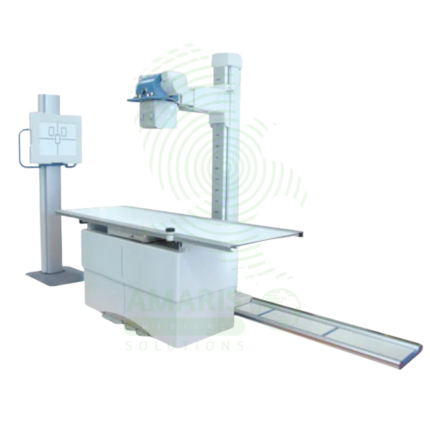
Analogue Fixed X-ray Machine
An Analogue Fixed X-ray Machine is a permanent installation X-ray system using traditional film cassettes for general radiography in radiology departments and imaging centers. Featuring ceiling-mounted tube assemblies, tilting tables, and wall stands, it provides essential diagnostic imaging for skeletal, chest, abdominal, and extremity examinations using film technology. Film cassettes are processed in darkroom facilities, producing permanent physical images for patient records and consultation. Used in facilities without digital radiography, as backup for digital systems, and in resource-limited settings.
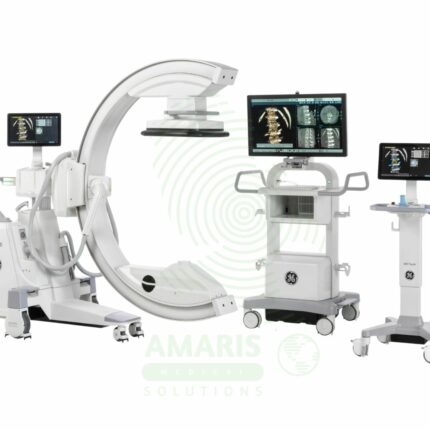
C-Arm Surgical System
A C-Arm Surgical System is a mobile fluoroscopic X-ray imaging device with a distinctive C-shaped arm connecting the X-ray tube and detector. It is an indispensable tool in modern operating rooms and interventional suites, providing real-time live imaging to guide complex procedures in orthopedics, spine surgery, pain management, and vascular interventions. Its mobility allows precise positioning around the patient, while features like pulsed fluoroscopy and dose monitoring are critical for radiation safety. Modern flat-panel systems offer high-resolution imaging and advanced capabilities like 3D Cone-Beam CT. Safe operation demands rigorous adherence to radiation protection protocols (ALARA) for both patients and the surgical team.
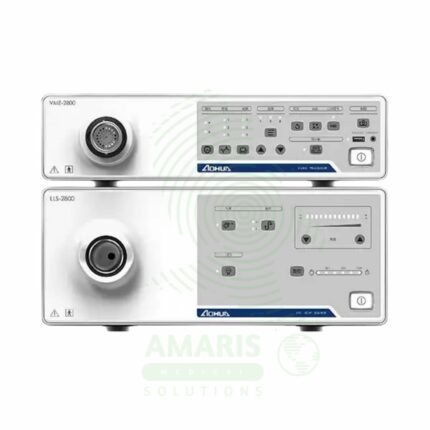
Endoscopy System
The Endoscopy System is a complete video processor and light source stack that forms the core of a modern digital endoscopy suite. It provides high-definition imaging for compatible Fujinon flexible video endoscopes, enabling diagnostic and therapeutic procedures in gastroenterology, pulmonology, and urology. Key features include advanced image processing and enhancement technologies like Narrow Band Imaging (NBI) for improved diagnostic accuracy. As a critical piece of capital equipment, it requires careful handling, the use of compatible accessories, and regular professional maintenance to ensure optimal performance and safety.
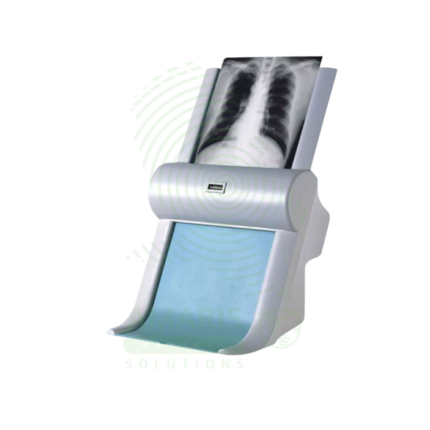
Film Digitizer
A Film Digitizer is a specialized scanner that converts analog radiographic films into high-fidelity digital images (DICOM format). It is the essential tool for migrating historical film archives into a modern digital PACS, enabling filmless workflow, remote access, and long-term preservation of diagnostic records. Its critical performance characteristics are a wide optical density range (to capture all film details) and high spatial resolution. By creating secure, accessible digital copies, it protects against the loss of physical films and integrates past patient history with current digital imaging, supporting comprehensive care and efficient radiology practice.
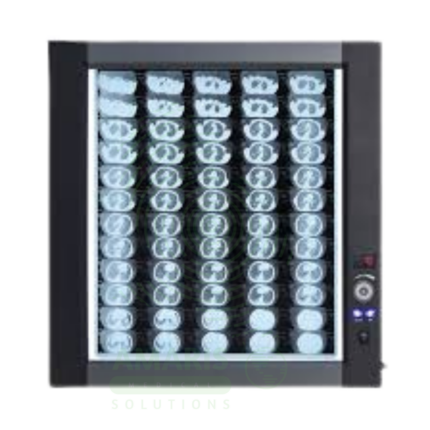
LED Medical Film Viewer
An LED Medical Film Viewer is a light box designed for viewing and interpreting analog X-ray films. Using LED backlight technology, it provides uniform, high-luminance illumination with instant on capability and long life. Available in single, dual, and multi-panel configurations, it supports side-by-side comparison of current and prior studies, pre-operative planning, and group teaching. Essential for radiology departments, orthopedic clinics, emergency departments, and operating rooms where film-based imaging is still used.
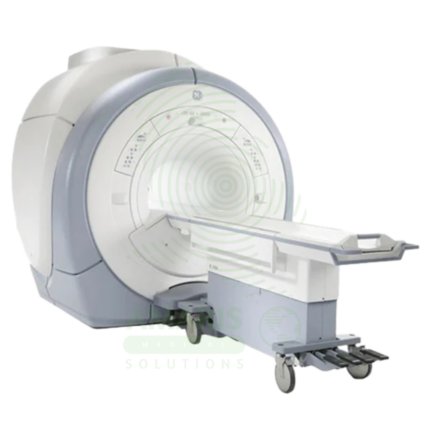
Magnetic Resonance Imaging
Magnetic Resonance Imaging (MRI) is a non-invasive diagnostic imaging modality that uses powerful magnetic fields and radiofrequency waves to produce detailed images of soft tissues, organs, and internal structures without ionizing radiation. It is the gold standard for imaging the brain, spinal cord, joints, muscles, and ligaments, and is essential for neurological, musculoskeletal, oncologic, and cardiovascular diagnosis. MRI provides exceptional soft tissue contrast, enabling precise anatomical characterization, tumor staging, and treatment planning. Strict safety protocols for ferromagnetic screening and contrast administration are essential for patient safety.
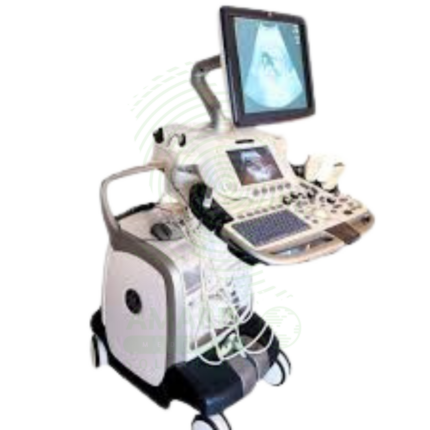
Ultrasound Machine
The Ultrasound Machine is a diagnostic imaging system that uses high-frequency sound waves to produce real-time, dynamic images of internal body structures, including soft tissues, organs, blood vessels, and developing fetuses. It provides non-invasive, radiation-free visualization using multiple transducer probes for abdominal, cardiac, obstetric, gynecological, vascular, and musculoskeletal examinations. With core features like B-mode grayscale imaging, M-mode for motion assessment, and comprehensive Doppler capabilities (Color, Power, Spectral), it offers essential diagnostic functionality for evaluating anatomy, physiology, and blood flow. Its portability, digital image storage, and user-friendly interface make it a practical tool for hospitals, clinics, emergency departments, and point-of-care settings across virtually all medical specialties, requiring proper operator training and adherence to probe disinfection protocols for safe and effective use.