Dermatoscope and Magnifiers
 Diagnostic Kits
 Vital Signs Monitors
 Stethoscopes and Accessories
 Otoscopes, Ophthalmoscopes, and Retinoscopes
 Reflex Hammers and Neurological Tools
 Scales and Measuring Devices
 Spirometers and Pulmonary Function Tests
 Electrosurgical Units and Accessories
 Cutting Instruments
 Grasping and Holding Instruments
 Hemostatic Instruments
 Specialized Surgical Sets
 Single-Use Procedure Trays and Packs
 Surgical Drapes, Gowns, and Covers
 Tissue Unifying Instruments
 Radiation Protection
 X-Ray Machines and Accessories
 Ultrasound Systems and Probes
 MRI and CT Scanners
 Radiology Consumables
 Bone Densitometers
 Fluoroscopy Equipment
 Imaging Tables and Positioning Aids
 Microscopes and Accessories
 Centrifuges and Separators
 Analyzers
 Incubators and Ovens
 Pipettes, Dispensers, and Lab Glassware
 Refrigerators, Freezers, and Storage Units
 Lab Consumables
 Sterilizers and Autoclaves for Lab Use
 Multi-Parameter Monitors
 Ventilators and Respiratory Support Devices
 Defibrillators and AEDs
 Infusion Pumps and IV Systems
 Patient Warmers and Cooling Devices
 Central Monitoring Stations
 Accessories
 Anesthesia Machines and Workstations
 Oxygen Concentrators and Delivery Systems
 Nebulizers and Inhalers
 CPAP/BiPAP Machines
 Airway Management
 Anesthesia Masks, Circuits, and Bags
 Humidifiers and Heaters
 Respiratory Therapy Accessories
 First Aid Kits and Cabinets
 Emergency Resuscitation Equipment
 Trauma Supplies
 Emergency Carts and Crash Carts
 Burn Care Products
 Bleeding Control
 Automated External Defibrillators (AEDs)
 Transport and Evacuation
 Wheelchairs and Accessories
 Walkers, Crutches, and Canes
 Prosthetics and Orthotics
 Physical Therapy Equipment
 Transfer Devices
 Bathroom Safety
 Orthopedic Traction and Tables
 Hot/Cold Therapy Packs and Units
 Beds and Mattresses
 Chairs and Stools
 Tables
 Cabinets and Storage
 Privacy Screens & Curtains
 Stands and Racks
 Linens and Textiles
 Lighting
 Autoclaves and Sterilizers
 Ultrasonic Cleaners
 Disinfectant Solutions and Wipes
 Sterilization Pouches, Wraps, and Indicators
 Instrument Trays and Containers
 UV and Ozone Disinfection Devices
 Washer Disinfectors
 Wound Care
 Gloves
 Masks and Respirators
 Catheters and Tubing
 Swabs, Applicators, and Sponges
 Incontinence Products
 Personal Protective Equipment (PPE)
 Dental Chairs and Units
 Handpieces and Burs
 Instruments
 Consumables
 Sterilization for Dental Use
 Orthodontic Supplies
 Endodontic Tools
 Slit Lamps and Tonometers
 Lensometers and Phoropters
 Ophthalmic Surgical Instruments
 Eyewear Frames and Lenses
 Contact Lens Supplies
 Vision Testing Charts and Devices
 Eye Care Consumables
 Laser Systems for Eye Care
 ENT Exam Chairs and Tables
 Endoscopes
 Audiometers and Hearing Tests
 ENT Instruments
 Nasal and Throat Packs
 Hearing Aids and Accessories
 Otology Supplies
 Fetal Dopplers and Monitors
 Delivery Beds and Tables
 Gynecological Instruments
 Neonatal Incubators and Warmers
 Breast Pumps and Accessories
 Contraceptive Devices
 Maternity Supports and Pads
 Neonatal Consumables
 Cystoscopes and Urethroscopes
 Dialysis Machines and Supplies
 Urological Catheters and Bags
 Lithotripters
 Prostate Treatment Devices
 Urinary Incontinence Products
 Kidney Stone Management Tools
 Consumables & Disposables
 EEG and EMG Machines
 Neurosurgical Instruments
 Nerve Stimulators
 Headrests and Positioning Aids
 Lumbar Puncture Kits
 Seizure Monitoring Devices
 Consumables
 Rehabilitation for Neurological Conditions
 ECG Machines and Accessories
 Holter Monitors
 Stress Test Systems
 Pacemakers and Defibrillator Accessories
 Vascular Access Devices
 Cardiac Catheters and Guidewires
 Blood Flow Meters
 Consumables
 Orthopedic Instruments
 Casts, Splints, and Padding
 Joint Replacement Supplies
 Prosthetic Limbs and Components
 Bone Grafts and Substitutes
 Traction Devices
 Orthopedic Braces and Supports
 Rehabilitation Aids for Orthopedics
 Home Oxygen Therapy
 Hospital Beds for Home Use
 Mobility Aids
 Bathroom and Daily Living Aids
 Wound Care for Home
 Monitoring Devices
 Enteral Feeding Pumps and Tubes
 Hand Sanitizers and Dispensers
 Face Shields and Goggles
 Isolation Gowns and Suits
 Biohazard Waste Containers
 Air Purifiers and HEPA Filters
 Surface Disinfectants
 Sharps Containers
 Protective Barriers
 Cardiovascular & Endurance Training
 Strength Training & Weightlifting
 Functional Training & Core Conditioning
 Physical Therapy & Rehabilitation
 Sports & Outdoor Recreation
 Gym Flooring & Facility Equipment
 Fitness Monitoring & Accessories
 Kids & Novelties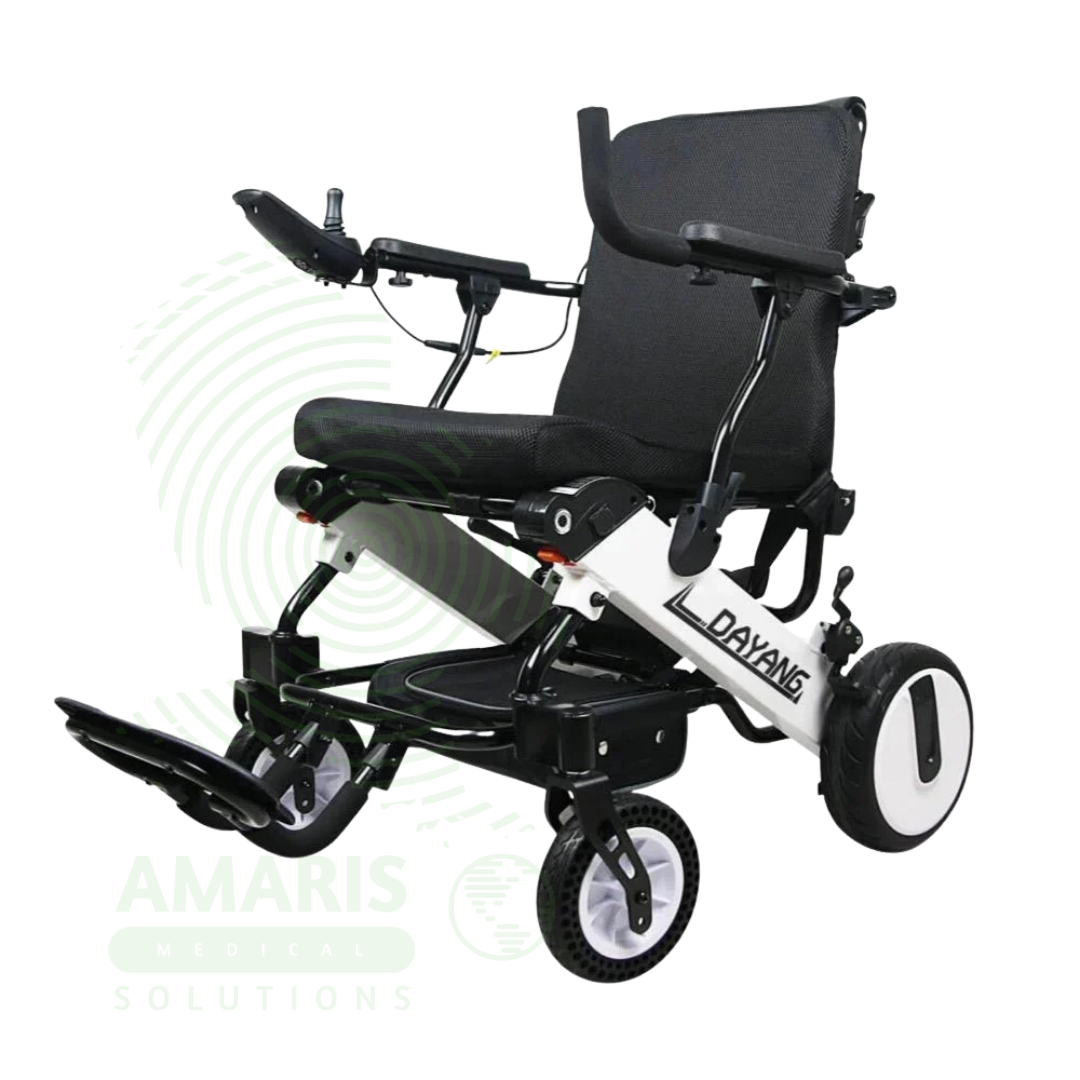
Electric Wheelchair
WhatsApp Order
An Electric Wheelchair is a battery-powered mobility device prescribed for individuals with significant mobility impairments who cannot self-propel a manual chair. It provides independent indoor and outdoor mobility through a joystick or alternative control system. Key features often include power seating functions (tilt, recline) for pressure relief and postural support, and are available in various drive configurations (rear, mid, front-wheel) for different environments. As complex rehabilitation technology, it requires professional evaluation, user training, and regular maintenance to ensure safe operation, enhance independence, and improve the user’s quality of life.
Description
Electric Wheelchair
PRIMARY CLINICAL & DIAGNOSTIC USES
1. Independent Mobility for Individuals with Severe Mobility Impairment
-
Primary Use: Provides self-directed, powered mobility for users who cannot propel a manual wheelchair independently due to conditions such as spinal cord injuries, advanced neuromuscular diseases, severe arthritis, advanced COPD, or major limb amputations.
-
How it helps: For the physiatrist, rehabilitation specialist, and occupational therapist, the electric wheelchair transforms a patient’s potential for independence from theoretical to actual—enabling individuals with minimal physical strength to move through their environment under their own control. For the user with quadriplegia, advanced ALS, or severe weakness, an electric wheelchair means they can go where they want, when they want, without waiting for assistance, restoring a fundamental level of autonomy that manual mobility cannot provide.
2. Rehabilitation and Functional Independence Training
-
Primary Use: Used in physical and occupational therapy settings to train patients with new or progressive disabilities on the skills required for independent living, including maneuvering in confined spaces, navigating ramps and curbs, and operating the controls, thereby maximizing functional independence and quality of life.
-
How it helps: For the rehabilitation team, the electric wheelchair is both a training tool and a goal—teaching patients to master their environment, to navigate complex spaces, and to operate technology that will become essential to their daily lives. For the patient adjusting to a new disability, learning to drive an electric wheelchair is a milestone that represents hope, competence, and a future where they can still participate in the world.
3. Pressure Relief and Management for High-Risk Users
-
Primary Use: Many electric wheelchairs feature power seat functions such as tilt-in-space, recline, and elevating leg rests, critical for users at high risk of pressure injuries, allowing them to perform independent, frequent weight shifts and position changes to relieve pressure on the sacrum and other bony prominences.
-
How it helps: For the wound care nurse and seating specialist, power seat functions are medical necessities that prevent the devastating complications of immobility—allowing users to shift pressure off vulnerable areas throughout the day without requiring staff assistance. For the user with spinal cord injury or insensate skin, being able to tilt or recline at will means they can protect themselves from pressure injuries that would otherwise lead to hospitalization, surgery, and months of bed rest.
4. Access to Community and Social Participation
-
Primary Use: Enables users to travel longer distances, navigate varied terrains, and participate in community, vocational, and social activities that would be inaccessible or exhausting with a manual chair, thus combating isolation and promoting mental well-being.
-
How it helps: For the community integration specialist and social worker, the electric wheelchair is a tool for combating the social isolation that so often accompanies severe disability—allowing users to shop, attend events, visit friends, and engage in community life. For the individual whose world had shrunk to the size of their home, an electric wheelchair opens doors to employment, relationships, and participation in the broader world.
SECONDARY & SUPPORTIVE USES
1. Respiratory and Postural Support for Users with Complex Needs: For individuals with conditions like advanced scoliosis or poor trunk control, customized seating systems on an electric wheelchair base provide vital postural support, which can improve respiratory function, digestion, and comfort. For the user whose posture compromises their breathing or causes pain, a properly fitted seating system integrated with power mobility transforms their daily experience.
2.Transport of Medical Equipment: The wheelchair serves as a mobile platform for users who need to carry essential medical equipment such as portable ventilators, oxygen concentrators, suction machines, or infusion pumps, integrating these devices securely for full-day mobility. For the medically complex user, having their life-support equipment travel with them means they can leave home despite their technological dependence.
3. Bariatric Mobility Solution: Heavy-duty electric wheelchairs with expanded weight capacities provide a safe and dignified mobility solution for bariatric patients, supporting their weight and enabling mobility that manual assistance cannot practically provide. For the bariatric user, a properly rated electric wheelchair means they can move independently through the world without the indignity of equipment failure or the limitation of inadequate seating.
4. Environmental Control Unit Interface: For users with very limited hand function, the wheelchair’s control system can be integrated with environmental control units to operate lights, phones, computers, and other devices, serving as a central hub for independence. For the user whose only reliable movement is a sip-and-puff or chin control, having that same interface control both their mobility and their environment multiplies their independence exponentially.
5. Therapeutic Positioning and Tone Management: The ability to adjust tilt and recline helps manage muscle tone, reduce extensor spasms, and improve overall postural alignment for users with spasticity or dystonia. For the user whose body is subject to uncontrolled muscle contractions, power positioning provides both relief and a means to interrupt spasticity before it becomes painful or dangerous.
KEY PRODUCT FEATURES
1. BASIC IDENTIFICATION ATTRIBUTES
-
Product Type: A powered mobility device, also known as a Power Wheelchair or Electric Powered Indoor/Outdoor Chair (EPIOC).
-
Core Design: A wheeled chair base powered by electric motors, controlled via a joystick or alternative input device, with a customizable seating system mounted on top.
-
Key Components:
-
Frame & Base: The rigid or foldable chassis, housing the drive wheels, casters, motors, and batteries. Drive configurations include rear-wheel, mid-wheel, or front-wheel drive.
-
Power System: Deep-cycle sealed lead-acid or lithium-ion batteries, battery charger, and motor controllers.
-
Control Interface: Typically a proportional joystick mounted on the armrest. Alternatives include sip-and-puff, chin control, head array, or switch scanning systems.
-
Seating System: Includes the seat pan, backrest, cushions, and often power functions (tilt, recline, seat elevator, standing).
-
Electronics Module: The central computer that interprets control inputs and manages power to the motors.
-
2. TECHNICAL & PERFORMANCE PROPERTIES
-
Drive Configuration: Rear-Wheel Drive (RWD): Stable at high speeds, good for outdoors. Mid-Wheel Drive (MWD): Excellent indoor maneuverability (smallest turning radius). Front-Wheel Drive (FWD): Good for rough terrain and curbs.
-
Range: The distance achievable on a single battery charge, typically 10-20 miles (16-32 km), dependent on user weight, terrain, and use of power seating functions.
-
Speed: Typically up to 4-6 mph (6.5-9.5 km/h) for indoor/outdoor models, compliant with local regulations.
-
Gradeability: The maximum slope the chair can climb, usually expressed as a percentage (e.g., 10-15%).
-
Weight Capacity: Standard models support ~250-300 lbs (113-136 kg). Bariatric models support 400-700+ lbs (181-318+ kg).
-
Seat Functions: Power Tilt, Power Recline, Power Leg Elevation, Power Seat Elevator, Power Standing.
3. PHYSICAL & OPERATIONAL PROPERTIES
-
Construction: Frame made of aluminum or steel. Components are robust to withstand daily use.
-
Dimensions: Critical for indoor accessibility (doorway width, turning radius). Overall length, width, and seat height are key specifications.
-
Transportability: Some models are designed to be disassembled or folded for transport in a vehicle, though they are heavy and require a wheelchair-accessible van or lift.
4. SAFETY & COMPLIANCE ATTRIBUTES
-
Regulatory Status: Classified as a Class I or II medical device (e.g., FDA Class II, EU Class I) and may also be considered a motorized vehicle subject to local accessibility laws.
-
Safety Standards: Must comply with standards such as ISO 7176 or ANSI/RESNA for performance, safety, and durability.
-
Restraint Systems: Must be used with compatible vehicle mounting systems and occupant restraints (wheelchair tie-downs and occupant restraint systems - WTORS) for safe transport in vehicles.
5. STORAGE & HANDLING ATTRIBUTES
-
Storage: Should be stored in a dry area, plugged into its charger when not in use for extended periods to maintain battery health.
-
Charging: Batteries must be charged daily. Use only the manufacturer-provided charger. Avoid complete discharge.
-
Cleaning & Disinfection: Wipe down the frame, controls, and seating surfaces regularly with a damp cloth and mild disinfectant. Avoid soaking electronics. Cushions should be cleaned per manufacturer instructions.
-
Preventive Maintenance: Requires regular professional servicing (e.g., every 6-12 months) to check motor brushes, tire wear, bearing lubrication, electrical connections, and controller function.
6. LABORATORY & CLINICAL APPLICATIONS
-
Primary Application: A prescribed, complex rehabilitation technology (CRT) device. It is not merely a chair but a medically necessary intervention to address mobility deficits that significantly impair major life activities. Prescription involves a comprehensive evaluation by a clinician (OT/PT) and a rehabilitation technology supplier.
SAFETY HANDLING PRECAUTIONS
1. SAFETY PRECAUTIONS
-
Comprehensive User Training (CRITICAL): The user must undergo formal training on operation, safety, battery management, and basic troubleshooting before independent use.
-
Environmental Awareness: Users must be trained to assess terrain (avoid soft sand, deep gravel, steep slopes beyond chair rating), recognize drop-offs (curbs, stairs), and be cautious on wet or icy surfaces.
-
Battery & Charging Safety: Never modify chargers or use damaged batteries. Prevent charging in extreme temperatures. Be aware of fire risk with damaged lithium-ion batteries.
-
Regular Inspection: User should perform daily pre-use checks of tire pressure, brakes, and battery charge. Look for loose parts or damage.
-
Safe Transport: Never occupy an electric wheelchair while it is being transported in a vehicle unless it is correctly secured with a WTORS. The chair must be properly tied down and the user must use a vehicle seatbelt.
2. FIRST AID MEASURES
-
Tip-Over: If the chair tips, first ensure the user's airway is clear and they are breathing. Do not attempt to right the chair with the user in it. Call for assistance to carefully lift the user out and assess for injury.
-
Runaway Chair (Control Malfunction): If the chair moves uncontrollably, try to turn the power off at the main switch (often on the controller or under the seat). If unable, guide it to a soft stop (e.g., against a wall) if possible without endangering others.
-
Electrical Malfunction/Smoke: If smoke or sparks are seen, turn off power immediately if safe to do so. Evacuate the user from the chair and move away from it. Do not use water on an electrical fire.
3. FIRE FIGHTING MEASURES
-
Flammability: Upholstery, plastics, and electronics are combustible. Batteries pose a significant fire risk if damaged or improperly charged.
-
Extinguishing Media: For electrical/ battery fires, use a Class D fire extinguisher (for lithium metal) or a dry chemical extinguisher. For other fires, use CO₂ or water. Evacuate the user first. Lithium-ion battery fires can reignite; professional hazard management is required.
Related products
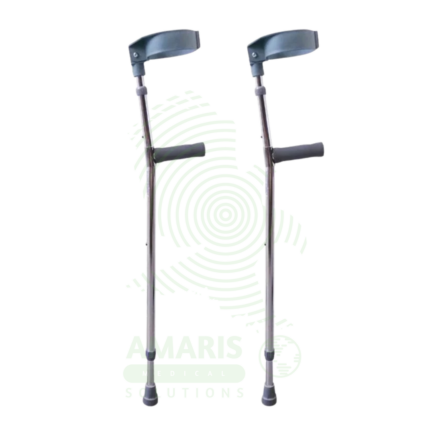
Elbow & Axiliary Crutches
An Elbow & Axiliary Crutches feature a forearm cuff and are designed for long-term mobility, offering a natural gait for unilateral or bilateral conditions. Auxiliary (Underarm) Crutches have an axillary pad and are for short-term, non-weight-bearing use after injury or surgery. Both require precise fitting—forearm crutch cuffs must be below the elbow, and underarm crutch weight must be borne through the hands to avoid nerve damage. Proper gait training from a therapist is essential for safe use of either type.
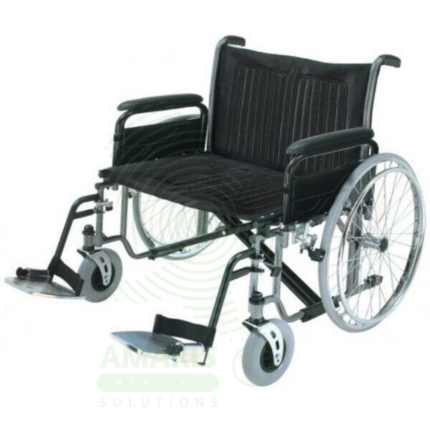
Extra Wide Wheelchair
An Extra Wide Wheelchair is a heavy-duty manual wheelchair designed with a seat width greater than 20 inches to safely and comfortably accommodate bariatric patients or individuals with unique seating needs. Key features include a reinforced wide frame, high weight capacity, wide footrests, and robust components. Its primary use is to provide dignified and stable mobility for patients of size, though its increased dimensions require careful planning for doorway accessibility and make it heavier and less maneuverable than standard chairs. It is a fundamental tool for safe patient handling in bariatric care.
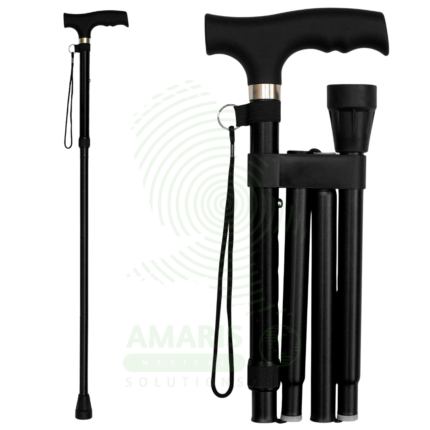
Foldable Walking Stick
A Foldable Walking Stick combines a stabilizing four-point base with a multi-section shaft that folds for compact storage and portability. It is designed for individuals who need reliable stability for moderate balance or weight-bearing issues but also require a discreet, transportable aid for use in the community. Key safety features include secure segment locking mechanisms and a quad base that must be placed flat. It is ideal for travel, occasional use, and active seniors, but requires diligent checking of all locks before each use to prevent collapse.
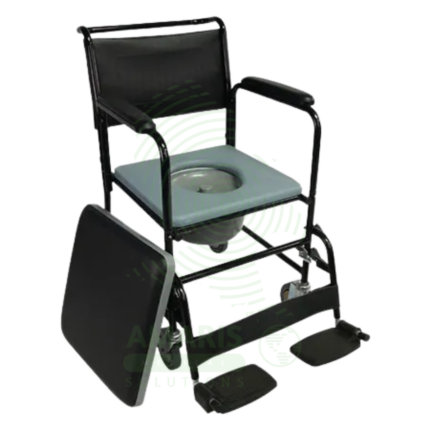
Orthopedic Commode Chair
An Orthopedic Commode Chair is a specialized hybrid device designed for patients with lower limb injuries or surgeries requiring non-weight-bearing status. It combines an extended-frame orthopedic wheelchair with an elevating leg rest and a commode seat, allowing for simultaneous fracture management (leg elevation/immobilization), pressure sore prevention (heel off-loading), and safe, hygienic toileting without dangerous transfers. Its use mandates the constant engagement of anti-tip levers due to a high risk of backwards tipping and requires careful navigation of its substantial length.
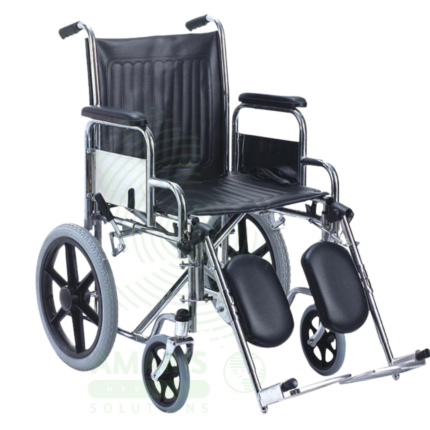
Orthopedic Wheelchair
An Orthopedic Wheelchair is a specialized manual wheelchair with an extended frame and elevating leg rests, designed to support patients who must keep one or both lower limbs in a straight, non-weight-bearing position. It is primarily used for managing lower limb fractures, post-operative recovery (e.g., hip replacements), and conditions requiring heel-off-loading to prevent pressure sores. Its key safety consideration is a heightened risk of tipping backwards due to the forward weight of the extended leg, requiring cautious use, engagement of anti-tip levers, and awareness of its increased length during navigation.
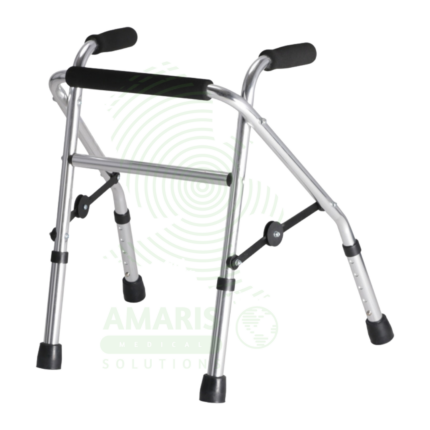
Pediatric Walking Frame
A Pediatric Walking Frame (Gait Trainer) is a supportive wheeled frame specifically designed to facilitate walking and standing for children with physical disabilities such as cerebral palsy. It provides adjustable postural support through a harness, trunk pad, and pelvic guide, enabling safe practice of gait patterns, weight-bearing, and upright mobility. Its primary role is therapeutic, aiming to develop ambulation skills, improve postural control, and promote independence and participation. Correct professional setup and supervision are essential for safety and to ensure it reinforces proper movement rather than abnormal patterns.
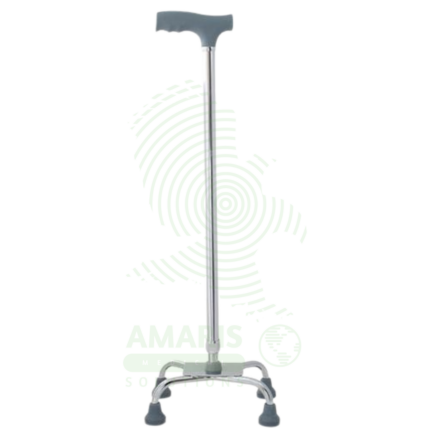
Quadpod Walking Stick
A Quadpod Walking Stick (Quad Cane) is a mobility aid featuring a four-legged base attached to a single shaft, providing significantly greater stability than a standard cane. It is designed for individuals with moderate balance issues or who need to safely offload weight from one leg due to pain or injury. Its wide base offers multi-directional support but requires a specific "lift-and-place" gait technique. While offering more security, its wider footprint can be cumbersome in tight spaces. Proper fitting and user training are essential for safe and effective use as a medically prescribed aid.