Dermatoscope and Magnifiers
 Diagnostic Kits
 Vital Signs Monitors
 Stethoscopes and Accessories
 Otoscopes, Ophthalmoscopes, and Retinoscopes
 Reflex Hammers and Neurological Tools
 Scales and Measuring Devices
 Spirometers and Pulmonary Function Tests
 Electrosurgical Units and Accessories
 Cutting Instruments
 Grasping and Holding Instruments
 Hemostatic Instruments
 Specialized Surgical Sets
 Single-Use Procedure Trays and Packs
 Surgical Drapes, Gowns, and Covers
 Tissue Unifying Instruments
 Radiation Protection
 X-Ray Machines and Accessories
 Ultrasound Systems and Probes
 MRI and CT Scanners
 Radiology Consumables
 Bone Densitometers
 Fluoroscopy Equipment
 Imaging Tables and Positioning Aids
 Microscopes and Accessories
 Centrifuges and Separators
 Analyzers
 Incubators and Ovens
 Pipettes, Dispensers, and Lab Glassware
 Refrigerators, Freezers, and Storage Units
 Lab Consumables
 Sterilizers and Autoclaves for Lab Use
 Multi-Parameter Monitors
 Ventilators and Respiratory Support Devices
 Defibrillators and AEDs
 Infusion Pumps and IV Systems
 Patient Warmers and Cooling Devices
 Central Monitoring Stations
 Accessories
 Anesthesia Machines and Workstations
 Oxygen Concentrators and Delivery Systems
 Nebulizers and Inhalers
 CPAP/BiPAP Machines
 Airway Management
 Anesthesia Masks, Circuits, and Bags
 Humidifiers and Heaters
 Respiratory Therapy Accessories
 First Aid Kits and Cabinets
 Emergency Resuscitation Equipment
 Trauma Supplies
 Emergency Carts and Crash Carts
 Burn Care Products
 Bleeding Control
 Automated External Defibrillators (AEDs)
 Transport and Evacuation
 Wheelchairs and Accessories
 Walkers, Crutches, and Canes
 Prosthetics and Orthotics
 Physical Therapy Equipment
 Transfer Devices
 Bathroom Safety
 Orthopedic Traction and Tables
 Hot/Cold Therapy Packs and Units
 Beds and Mattresses
 Chairs and Stools
 Tables
 Cabinets and Storage
 Privacy Screens & Curtains
 Stands and Racks
 Linens and Textiles
 Lighting
 Autoclaves and Sterilizers
 Ultrasonic Cleaners
 Disinfectant Solutions and Wipes
 Sterilization Pouches, Wraps, and Indicators
 Instrument Trays and Containers
 UV and Ozone Disinfection Devices
 Washer Disinfectors
 Wound Care
 Gloves
 Masks and Respirators
 Catheters and Tubing
 Swabs, Applicators, and Sponges
 Incontinence Products
 Personal Protective Equipment (PPE)
 Dental Chairs and Units
 Handpieces and Burs
 Instruments
 Consumables
 Sterilization for Dental Use
 Orthodontic Supplies
 Endodontic Tools
 Slit Lamps and Tonometers
 Lensometers and Phoropters
 Ophthalmic Surgical Instruments
 Eyewear Frames and Lenses
 Contact Lens Supplies
 Vision Testing Charts and Devices
 Eye Care Consumables
 Laser Systems for Eye Care
 ENT Exam Chairs and Tables
 Endoscopes
 Audiometers and Hearing Tests
 ENT Instruments
 Nasal and Throat Packs
 Hearing Aids and Accessories
 Otology Supplies
 Fetal Dopplers and Monitors
 Delivery Beds and Tables
 Gynecological Instruments
 Neonatal Incubators and Warmers
 Breast Pumps and Accessories
 Contraceptive Devices
 Maternity Supports and Pads
 Neonatal Consumables
 Cystoscopes and Urethroscopes
 Dialysis Machines and Supplies
 Urological Catheters and Bags
 Lithotripters
 Prostate Treatment Devices
 Urinary Incontinence Products
 Kidney Stone Management Tools
 Consumables & Disposables
 EEG and EMG Machines
 Neurosurgical Instruments
 Nerve Stimulators
 Headrests and Positioning Aids
 Lumbar Puncture Kits
 Seizure Monitoring Devices
 Consumables
 Rehabilitation for Neurological Conditions
 ECG Machines and Accessories
 Holter Monitors
 Stress Test Systems
 Pacemakers and Defibrillator Accessories
 Vascular Access Devices
 Cardiac Catheters and Guidewires
 Blood Flow Meters
 Consumables
 Orthopedic Instruments
 Casts, Splints, and Padding
 Joint Replacement Supplies
 Prosthetic Limbs and Components
 Bone Grafts and Substitutes
 Traction Devices
 Orthopedic Braces and Supports
 Rehabilitation Aids for Orthopedics
 Home Oxygen Therapy
 Hospital Beds for Home Use
 Mobility Aids
 Bathroom and Daily Living Aids
 Wound Care for Home
 Monitoring Devices
 Enteral Feeding Pumps and Tubes
 Hand Sanitizers and Dispensers
 Face Shields and Goggles
 Isolation Gowns and Suits
 Biohazard Waste Containers
 Air Purifiers and HEPA Filters
 Surface Disinfectants
 Sharps Containers
 Protective Barriers
 Cardiovascular & Endurance Training
 Strength Training & Weightlifting
 Functional Training & Core Conditioning
 Physical Therapy & Rehabilitation
 Sports & Outdoor Recreation
 Gym Flooring & Facility Equipment
 Fitness Monitoring & Accessories
 Kids & Novelties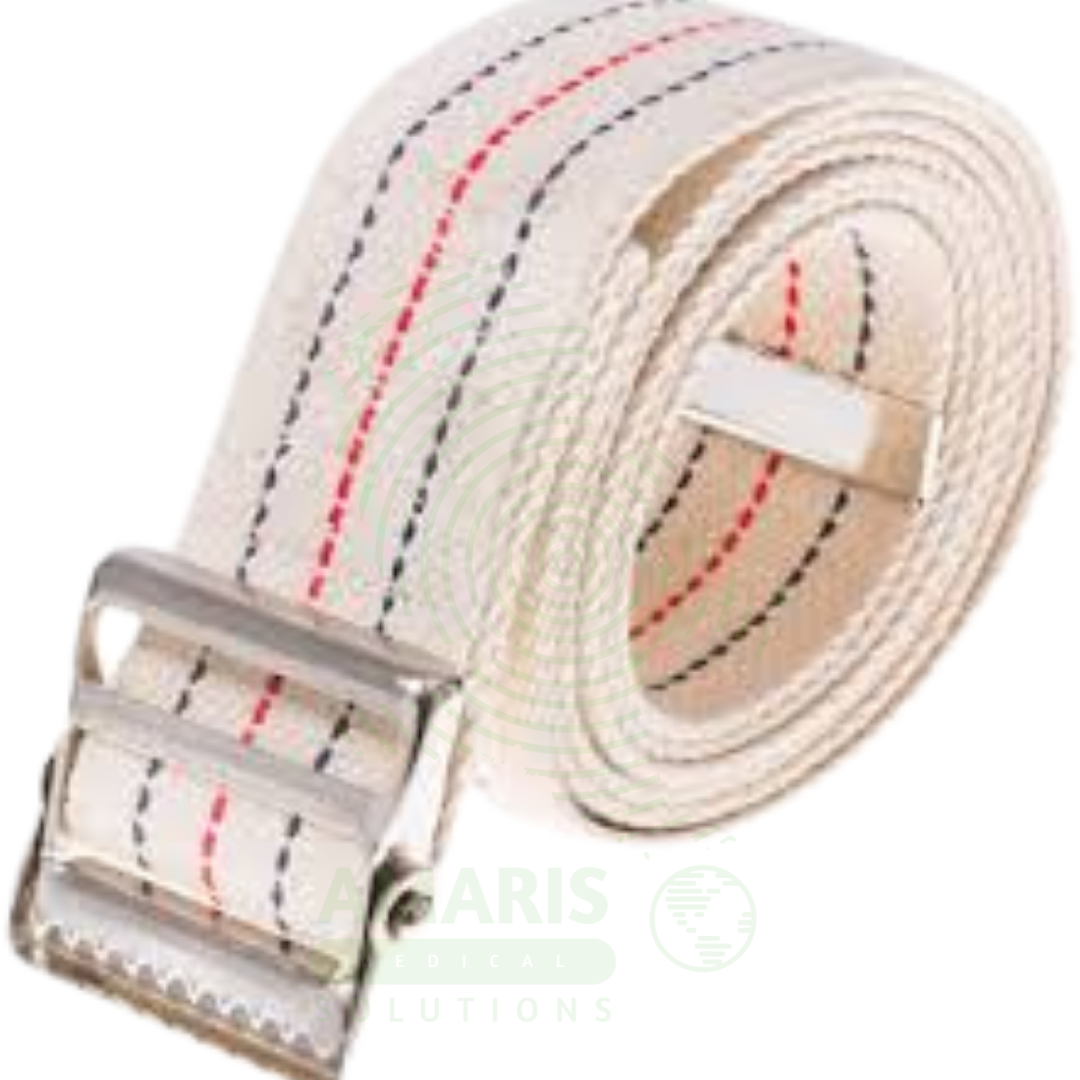
Gait Belt
WhatsApp Order
A Gait Belt (or Transfer Belt) is a simple but vital safety device made of strong, adjustable webbing that is secured around a patient’s waist. It provides healthcare workers and caregivers with a secure handhold to safely assist with patient transfers, walking, and balance during rehabilitation. Its primary purposes are to prevent patient falls and reduce caregiver injury by enabling proper body mechanics during lifting and mobility tasks. Correct application over clothing, regular inspection for wear, and proper cleaning are essential for its safe and effective use in hospitals, clinics, and home care settings.
Description
Gait Belt
PRIMARY CLINICAL & DIAGNOSTIC USES
1. Patient Transfer and Ambulation Safety
-
Primary Use: Provides healthcare providers with a secure handhold during patient transfers and during assisted ambulation, acting as a safety device to prevent patient falls and reduce caregiver back strain by allowing for proper biomechanical lifting and support close to the patient’s center of gravity.
-
How it helps: For the nurse, physical therapist, and nursing assistant who perform multiple transfers every shift, the gait belt transforms an unstable, high-risk maneuver into a controlled, safe movement—giving them a reliable handhold that connects them directly to the patient’s center of mass, allowing them to guide, support, and catch with proper body mechanics. For the patient being transferred from bed to chair or helped to walk, the belt around their waist provides the secure connection that makes them feel safe, knowing that the person helping them has a firm grip and will not let them fall.
2. Fall Prevention and Balance Assistance
-
Primary Use: For patients who are unsteady, weak, or at high risk for falls, the belt provides a point of control for the caregiver to quickly stabilize the patient if they lose balance, stumble, or begin to fall, allowing for a safer, controlled descent.
-
How it helps: For the fall prevention coordinator and bedside caregiver, a gait belt worn by an at-risk patient means that when the inevitable loss of balance occurs, they have something to hold onto—a way to steady the patient before they fall, or to control the descent if a fall cannot be prevented. For the unsteady patient taking their first steps after prolonged illness or surgery, knowing that a caregiver has hold of the belt around their waist provides the confidence to move forward, reducing the fear that itself contributes to falls.
3. Gait Training in Rehabilitation
-
Primary Use: In physical and occupational therapy, the belt is used to provide minimal, graded support as patients re-learn to walk or improve their gait pattern following surgery, stroke, injury, or prolonged illness, allowing the therapist to safely challenge balance while being ready to prevent a fall.
-
How it helps: For the physical therapist guiding a patient through gait training, the belt is the safety line that allows them to push the patient’s limits—encouraging longer strides, challenging balance, and working on coordination, all while maintaining the ability to catch and stabilize instantly. For the patient working to walk again after a stroke, hip fracture, or deconditioning illness, the belt around their waist means they can focus on the complex task of walking without the paralyzing fear of falling.
4. Assisting Patients with Partial Weight-Bearing Status
-
Primary Use: For patients who can bear some weight on their legs but need significant assistance, the gait belt gives the caregiver leverage to help the patient stand, pivot, and sit safely while the patient participates in the movement.
-
How it helps: For the nursing staff assisting a patient with partial weight-bearing restrictions after joint replacement or fracture, the belt provides the controlled leverage needed to help the patient stand and pivot while protecting the surgical site. For the patient navigating the terrifying first days after hip or knee surgery, having a caregiver with a firm hold on the belt provides the security they need to participate in their own transfer, bearing as much weight as they can while knowing they won’t fall.
5. Promoting Patient Independence and Confidence
-
Primary Use: By providing a safety “link” to the caregiver, it can give anxious or fearful patients the confidence to attempt transfers and walking exercises they might otherwise refuse, thereby promoting mobility and independence.
-
How it helps: For the rehabilitation team working with a fearful patient, the gait belt is both physical and psychological support—a tangible reminder that someone is there to catch them, which can be enough to overcome the fear that keeps them bedbound. For the patient who has already fallen once and fears it happening again, the belt and the hands that hold it provide the confidence to try again, to take that step, to regain the mobility that fear has stolen.
SECONDARY & SUPPORTIVE USES
1. Positioning in Bed or Chair: Can be used as a handle to assist with repositioning or boosting a patient up in bed or in a chair with greater control and less shearing force on the patient’s skin. For the caregiver tasked with repositioning a dependent patient, the belt provides a handhold that protects both their back and the patient’s fragile skin.
2. Training Tool for Caregivers: Used to educate family members and home caregivers on safe transfer techniques to protect both the patient and themselves from injury. For the family member now serving as primary caregiver, learning to use a gait belt properly can mean the difference between safe care and caregiver injury.
3. Securing During Specific Procedures: May be used to gently secure a confused or combative patient in a seated position for brief periods during essential care, though never as a restraint. For the clinician needing to complete a brief but essential procedure on a confused patient, the belt provides a means of gentle support that maintains safety without constituting restraint.
KEY PRODUCT FEATURES
1. BASIC IDENTIFICATION ATTRIBUTES
-
Type: A patient handling and mobility aid.
-
Designation: Also commonly called a Transfer Belt, Walking Belt, or Safety Belt.
-
Common Variants:
-
Standard Padded Nylon Belt: A long strap of heavy-duty nylon webbing with a sturdy metal or plastic buckle. May have additional padding for patient comfort.
-
Quick-Release Buckle Belt: Features a buckle that can be released instantly with one hand (often by pulling a tab), which is a critical safety feature.
-
Belt with Handles: Has multiple sewn-on handles around the circumference, providing caregivers with more grip options. Some have a single large handle.
-
Disposable/Non-Woven Belt: Made of a strong, non-woven material for single-patient use in hospitals to prevent cross-contamination.
-
2. TECHNICAL & PERFORMANCE PROPERTIES
-
Material:
-
Webbing: Heavy-duty nylon, polyester, or cotton webbing with a high tensile strength (typically rated for 1000+ lbs).
-
Buckle: Durable metal or high-impact plastic quick-release or friction-style buckle.
-
Padding: Closed-cell foam or felt padding for patient comfort, often covering 1/3 to 1/2 of the belt.
-
-
Strength and Durability: Must be rated to withstand the forces of catching a falling patient and the pulling/tugging of daily transfers without tearing or buckle failure.
3. PHYSICAL & OPERATIONAL PROPERTIES
-
Adjustability: Must be highly adjustable via the buckle to fit securely around a wide range of waist/chest sizes (typically from 20 to 60+ inches). Should fit snugly over clothing but not too tight to cause discomfort or restrict breathing.
-
Length and Width: Typically 1.5 to 2 inches wide and 54 to 60 inches long to allow for proper overlap and fastening.
-
Handhold: The entire belt serves as a handhold. Models with specific handles provide defined, non-slip grip points.
4. SAFETY & COMPLIANCE ATTRIBUTES
-
Regulatory Status: Generally considered a patient aid or medical supply. Not typically a regulated medical device.
-
Safety Standards: Should be constructed to meet general safety and strength standards for patient handling equipment.
-
Quick-Release Mechanism: Considered a best-practice safety feature to allow for immediate removal if the patient becomes distressed, the belt gets caught, or in an emergency.
5. STORAGE & HANDLING ATTRIBUTES
-
Storage: Hang or coil in a clean, dry area. Inspect regularly for wear.
-
Cleaning & Disinfection: CRITICAL for infection control. Nylon/polyester belts can be cleaned with a hospital-grade disinfectant wipe or washed with soap and water, then disinfected with an approved solution (e.g., diluted bleach, quaternary ammonium). Must be thoroughly dried. Disposable belts are discarded after single-patient use.
-
Replacement: Inspect before each use. Replace immediately if the webbing is frayed, torn, faded, or stiff, if stitching is coming undone, or if the buckle is cracked, corroded, or does not latch securely.
6. LABORATORY & CLINICAL APPLICATIONS
-
Primary Application: A fundamental safety tool in nursing, physical therapy, occupational therapy, home health care, and long-term care facilities.
-
Universal Precautions: Its use is considered a standard safety precaution for any patient with impaired mobility, balance, or strength.
SAFETY HANDLING PRECAUTIONS
1. SAFETY PRECAUTIONS
-
Proper Application (CRITICAL): The belt must be applied over clothing, positioned around the patient's waist or lower chest (below the rib cage and above the hip bones). It should be snug enough that you cannot slide more than two fingers underneath. Never apply over bare skin or around the neck.
-
Correct Handhold Grip: Caregiver should grasp the belt from underneath with a palms-up grip, keeping their back straight and using their legs to lift. Never hook fingers into the belt.
-
Patient Assessment: Assess the patient's ability, cooperation, and pain level before using. Do not use on patients with abdominal wounds, recent abdominal surgery, fractures of the ribs/spine/hips, or severe osteoporosis, as the pressure could cause injury.
-
Never Used as a Restraint: It is a safety and transfer aid, not a device to tie or restrain a patient to a bed or chair.
2. FIRST AID MEASURES
-
If a Patient Falls While Using a Belt: The caregiver's priority is to guide the patient to the floor in as controlled a manner as possible, using the belt for support, while protecting the patient's head. After the fall, loosen or unbuckle the belt immediately.
-
If Belt Causes Patient Discomfort or Injury: Remove the belt immediately. Assess for skin abrasions, bruising, or pain. Report the incident.
3. FIRE FIGHTING MEASURES
-
Flammability: Nylon and polyester webbing is combustible but not highly flammable.
-
Extinguishing Media: Use water, foam, or CO₂ as appropriate for the surrounding fire.
Related products
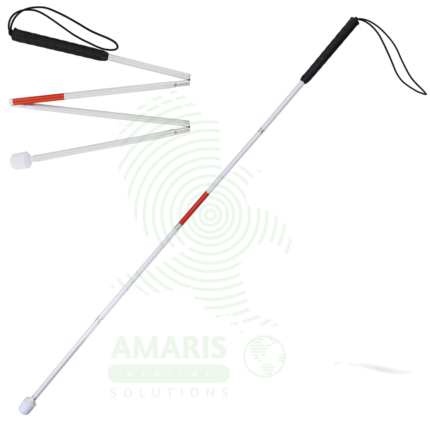
Blind Cane
A Blind Cane (white cane) is a specialized, lightweight mobility tool used by individuals who are blind or visually impaired for navigation and environmental awareness. Its core function is tactile and auditory detection of obstacles, drop-offs, and surface changes one step ahead of the user. Key features include a white shaft for visibility, an ergonomic grip, and a replaceable, specialized tip. It is not a walking stick for balance but a sensory probe. Its effective and safe use requires mandatory training in specific techniques from a certified Orientation and Mobility (O&M) specialist.
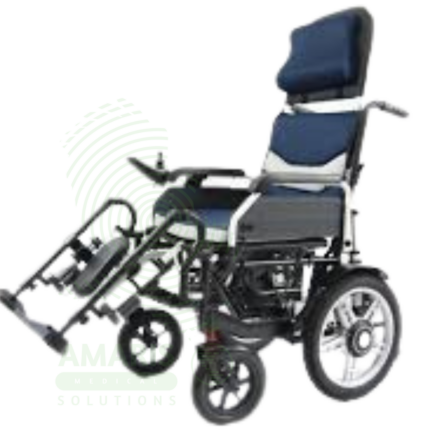
Electric Reclining Wheelchair
An Electric Reclining Wheelchair is a sophisticated powered mobility device that provides both independent locomotion and powered positioning. It features a motorized backrest that reclines to near-horizontal and synchronized elevating leg rests, allowing users to independently manage pressure relief, circulation, breathing, and comfort without leaving the chair. Prescribed for individuals with complex needs such as spinal cord injuries, severe fatigue, or circulatory disorders, it enhances independence and medical stability. Its use requires thorough training due to the significant change in stability and footprint when reclined, and it demands more rigorous maintenance than standard power chairs.
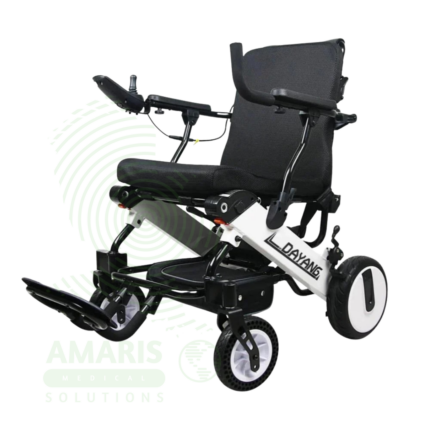
Electric Wheelchair
An Electric Wheelchair is a battery-powered mobility device prescribed for individuals with significant mobility impairments who cannot self-propel a manual chair. It provides independent indoor and outdoor mobility through a joystick or alternative control system. Key features often include power seating functions (tilt, recline) for pressure relief and postural support, and are available in various drive configurations (rear, mid, front-wheel) for different environments. As complex rehabilitation technology, it requires professional evaluation, user training, and regular maintenance to ensure safe operation, enhance independence, and improve the user's quality of life.
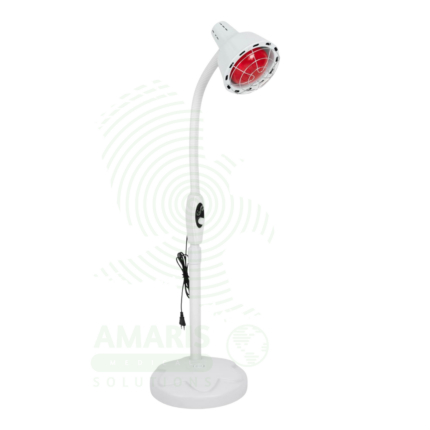
Infrared Therapy Lamp Stand
An Infrared Therapy Lamp Stand is a professional-grade, floor-standing device that emits broad-spectrum infrared radiation to deliver deep-heat therapy to large areas of the body. Designed for clinical use in physical therapy, chiropractic, and pain management clinics, it features adjustable height and tilt panels on a stable, mobile stand for targeted treatment of the back, shoulders, and legs. Its primary uses include pain relief for musculoskeletal conditions, tissue warming for rehabilitation, and promoting muscle relaxation. Safe operation requires strict adherence to contraindications, treatment time/distance guidelines, and continuous patient monitoring to prevent burns or overheating.
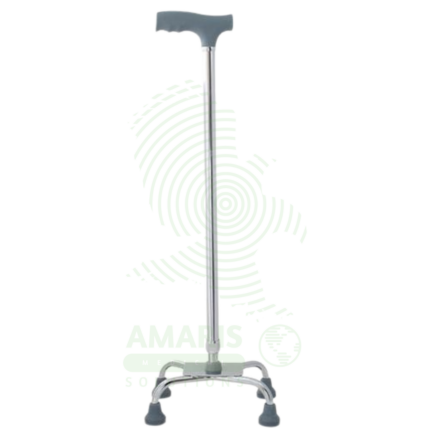
Quadpod Walking Stick
A Quadpod Walking Stick (Quad Cane) is a mobility aid featuring a four-legged base attached to a single shaft, providing significantly greater stability than a standard cane. It is designed for individuals with moderate balance issues or who need to safely offload weight from one leg due to pain or injury. Its wide base offers multi-directional support but requires a specific "lift-and-place" gait technique. While offering more security, its wider footprint can be cumbersome in tight spaces. Proper fitting and user training are essential for safe and effective use as a medically prescribed aid.
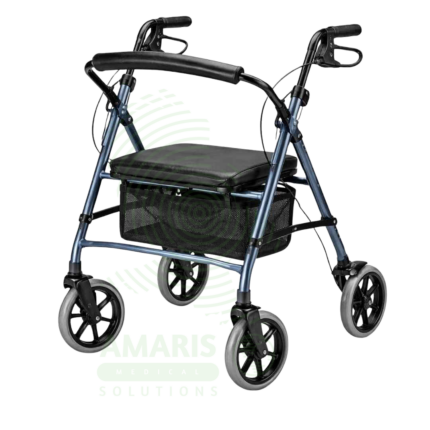
Rollator Walking Aid
A Rollator Walking Aid is a wheeled walking aid with hand brakes, a seat, and a storage basket, designed to provide stability, rest, and carrying capacity for individuals with balance or endurance issues. It allows for continuous, rolling support during walking, making it ideal for both indoor and community mobility. Key safety features include height-adjustable handles, reliable hand brakes for speed control, and a locking function to secure the device when using the seat. It is a fundamental tool for promoting safe, independent ambulation and social participation among the elderly and those with mobility impairments.
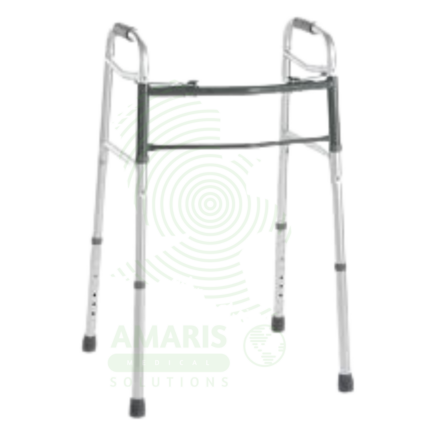
Walker
A Walker is a rigid, non-wheeled frame walking aid designed to provide maximum stability and support. It is used by lifting and placing the frame forward with each step, making it ideal for individuals with significant balance issues, weakness, or those in early post-operative recovery who require a secure, stationary base. Its key features include a lightweight aluminum frame, height-adjustable legs, and rubber tips. Proper fitting and gait training are essential for safe use, as incorrect technique can increase fall risk. It is the most stable ambulatory aid before progressing to wheeled walkers or canes.