Dermatoscope and Magnifiers
 Diagnostic Kits
 Vital Signs Monitors
 Stethoscopes and Accessories
 Otoscopes, Ophthalmoscopes, and Retinoscopes
 Reflex Hammers and Neurological Tools
 Scales and Measuring Devices
 Spirometers and Pulmonary Function Tests
 Electrosurgical Units and Accessories
 Cutting Instruments
 Grasping and Holding Instruments
 Hemostatic Instruments
 Specialized Surgical Sets
 Single-Use Procedure Trays and Packs
 Surgical Drapes, Gowns, and Covers
 Tissue Unifying Instruments
 Radiation Protection
 X-Ray Machines and Accessories
 Ultrasound Systems and Probes
 MRI and CT Scanners
 Radiology Consumables
 Bone Densitometers
 Fluoroscopy Equipment
 Imaging Tables and Positioning Aids
 Microscopes and Accessories
 Centrifuges and Separators
 Analyzers
 Incubators and Ovens
 Pipettes, Dispensers, and Lab Glassware
 Refrigerators, Freezers, and Storage Units
 Lab Consumables
 Sterilizers and Autoclaves for Lab Use
 Multi-Parameter Monitors
 Ventilators and Respiratory Support Devices
 Defibrillators and AEDs
 Infusion Pumps and IV Systems
 Patient Warmers and Cooling Devices
 Central Monitoring Stations
 Accessories
 Anesthesia Machines and Workstations
 Oxygen Concentrators and Delivery Systems
 Nebulizers and Inhalers
 CPAP/BiPAP Machines
 Airway Management
 Anesthesia Masks, Circuits, and Bags
 Humidifiers and Heaters
 Respiratory Therapy Accessories
 First Aid Kits and Cabinets
 Emergency Resuscitation Equipment
 Trauma Supplies
 Emergency Carts and Crash Carts
 Burn Care Products
 Bleeding Control
 Automated External Defibrillators (AEDs)
 Transport and Evacuation
 Wheelchairs and Accessories
 Walkers, Crutches, and Canes
 Prosthetics and Orthotics
 Physical Therapy Equipment
 Transfer Devices
 Bathroom Safety
 Orthopedic Traction and Tables
 Hot/Cold Therapy Packs and Units
 Beds and Mattresses
 Chairs and Stools
 Tables
 Cabinets and Storage
 Privacy Screens & Curtains
 Stands and Racks
 Linens and Textiles
 Lighting
 Autoclaves and Sterilizers
 Ultrasonic Cleaners
 Disinfectant Solutions and Wipes
 Sterilization Pouches, Wraps, and Indicators
 Instrument Trays and Containers
 UV and Ozone Disinfection Devices
 Washer Disinfectors
 Wound Care
 Gloves
 Masks and Respirators
 Catheters and Tubing
 Swabs, Applicators, and Sponges
 Incontinence Products
 Personal Protective Equipment (PPE)
 Dental Chairs and Units
 Handpieces and Burs
 Instruments
 Consumables
 Sterilization for Dental Use
 Orthodontic Supplies
 Endodontic Tools
 Slit Lamps and Tonometers
 Lensometers and Phoropters
 Ophthalmic Surgical Instruments
 Eyewear Frames and Lenses
 Contact Lens Supplies
 Vision Testing Charts and Devices
 Eye Care Consumables
 Laser Systems for Eye Care
 ENT Exam Chairs and Tables
 Endoscopes
 Audiometers and Hearing Tests
 ENT Instruments
 Nasal and Throat Packs
 Hearing Aids and Accessories
 Otology Supplies
 Fetal Dopplers and Monitors
 Delivery Beds and Tables
 Gynecological Instruments
 Neonatal Incubators and Warmers
 Breast Pumps and Accessories
 Contraceptive Devices
 Maternity Supports and Pads
 Neonatal Consumables
 Cystoscopes and Urethroscopes
 Dialysis Machines and Supplies
 Urological Catheters and Bags
 Lithotripters
 Prostate Treatment Devices
 Urinary Incontinence Products
 Kidney Stone Management Tools
 Consumables & Disposables
 EEG and EMG Machines
 Neurosurgical Instruments
 Nerve Stimulators
 Headrests and Positioning Aids
 Lumbar Puncture Kits
 Seizure Monitoring Devices
 Consumables
 Rehabilitation for Neurological Conditions
 ECG Machines and Accessories
 Holter Monitors
 Stress Test Systems
 Pacemakers and Defibrillator Accessories
 Vascular Access Devices
 Cardiac Catheters and Guidewires
 Blood Flow Meters
 Consumables
 Orthopedic Instruments
 Casts, Splints, and Padding
 Joint Replacement Supplies
 Prosthetic Limbs and Components
 Bone Grafts and Substitutes
 Traction Devices
 Orthopedic Braces and Supports
 Rehabilitation Aids for Orthopedics
 Home Oxygen Therapy
 Hospital Beds for Home Use
 Mobility Aids
 Bathroom and Daily Living Aids
 Wound Care for Home
 Monitoring Devices
 Enteral Feeding Pumps and Tubes
 Hand Sanitizers and Dispensers
 Face Shields and Goggles
 Isolation Gowns and Suits
 Biohazard Waste Containers
 Air Purifiers and HEPA Filters
 Surface Disinfectants
 Sharps Containers
 Protective Barriers
 Cardiovascular & Endurance Training
 Strength Training & Weightlifting
 Functional Training & Core Conditioning
 Physical Therapy & Rehabilitation
 Sports & Outdoor Recreation
 Gym Flooring & Facility Equipment
 Fitness Monitoring & Accessories
 Kids & Novelties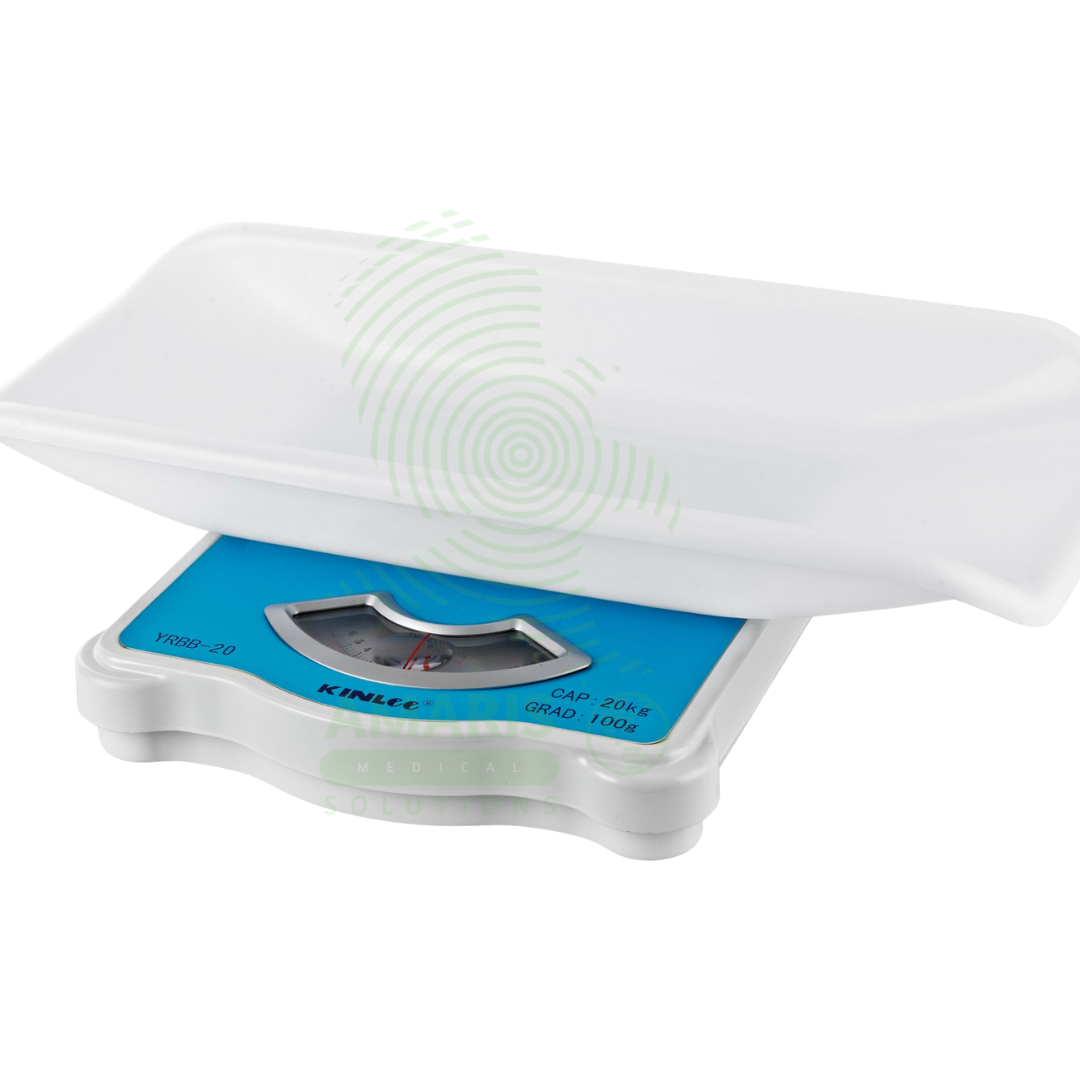
Manual Baby Weighing Scale
WhatsApp Order
A Manual Baby Weighing Scale is a simple, mechanical device used to measure infant weight without the need for electricity or batteries. Operating on a spring or balance principle, it features a suspended sling or seat and a dial display. Its primary advantage is durability and portability for use in community health, outreach programs, and areas with unreliable power. While less precise than digital scales, it provides a reliable and accessible means to monitor growth trends and screen for undernutrition in resource-limited settings, making it a vital tool for basic pediatric care in the field.
Description
Manual Baby Weighing Scale
PRIMARY CLINICAL & DIAGNOSTIC USES
1. Infant Growth Monitoring in Resource-Limited Settings:
-
Primary Use: The primary use is for tracking infant weight in clinics, community health centers, and home-based care programs where electricity is unreliable or unavailable. It provides a vital, low-cost method for assessing nutritional status and detecting failure to thrive.
-
How it helps: Brings essential growth monitoring to the world’s most remote communities, ensuring that even where there is no electricity, babies can be weighed and their health tracked.
2. Field Health Campaigns & Outreach:
-
Primary Use: Essential for large-scale public health initiatives, such as vaccination drives and nutrition supplementation programs in rural or remote areas, where portability and independence from power sources are critical.
-
How it helps: Empowers health workers to take growth monitoring directly to the communities that need it most, weighing babies at vaccination sites, nutrition centers, and even in homes without worrying about batteries or charging.
3. Basic Pediatric Screening:
-
Primary Use: Used by community health workers (CHWs) and nurses in primary care settings to perform routine weight checks, enabling the identification of underweight infants who require further assessment or referral.
-
How it helps: Puts the power to identify malnutrition in the hands of frontline health workers, allowing them to spot problems early and connect families with life-saving resources.
4. Backup Weighing in Clinical Settings:
-
Primary Use: Serves as a reliable backup in hospitals and clinics during power outages or when digital scales require maintenance.
-
How it helps: Ensures that infant weighing never stops, even when the power goes out or digital equipment fails, maintaining continuity of care for the most vulnerable patients.
5. Home-Based Growth Monitoring:
-
Primary Use: Suitable for use by parents or caregivers at home, especially in regions without consistent electricity, to periodically check an infant’s weight gain.
-
How it helps: Empowers parents to take an active role in monitoring their baby’s health, providing a simple tool they can use at home to ensure their child is growing well.
SECONDARY & SUPPORTIVE USES
1. Educational Tool for Health Workers: Used in training programs to teach the fundamentals of growth monitoring and the importance of accurate weight measurement, building the skills of frontline health workers.
2. Historical/Reference Measurement: In some traditional settings, still used to provide a baseline measurement that can be compared with digital scale readings for verification, ensuring accuracy across different devices.
KEY PRODUCT FEATURES
1. BASIC IDENTIFICATION ATTRIBUTES
-
Device Type: Mechanical, non-electronic weighing scale.
-
Principle of Operation: Utilizes a spring mechanism (spring scale) or a balance beam with sliding counterweights (Salter-type scale).
-
Design: Typically consists of a sling, seat, or pan suspended from the measuring gauge. The infant is placed in the sling/seat, and the weight is read directly from a dial or pointer on a calibrated face.
-
Patient Group: Designed for infants and young children, usually with a capacity up to 16 kg or 20 kg.
2. TECHNICAL & PERFORMANCE PROPERTIES
-
Capacity & Graduation: Typical capacity: 0-16 kg. The scale face is marked in 100-gram (0.1 kg) increments. Precision is lower than digital scales, with a typical accuracy of ±0.1 kg (100g) or ±0.05 kg (50g).
-
Readability: Weight is read from a pointer on a circular dial or a linear scale. Requires the user to stand directly in front of the pointer to avoid parallax error.
-
Tare Adjustment: May include a manual zeroing dial or knob to adjust the pointer to zero before weighing, accounting for the weight of a cloth or diaper in the sling.
-
Calibration: Requires periodic manual calibration using known test weights. The spring mechanism can lose accuracy over time or if overloaded, necessitating re-adjustment.
3. PHYSICAL & OPERATIONAL PROPERTIES
-
Portability & Durability: Extremely lightweight, compact, and robust. Made of metal and durable plastic with no electronic components, making it resistant to dust, humidity, and rough handling.
-
Power Source: Requires no batteries or electricity.
-
Sling/Seat: Features a durable fabric or plastic sling/seat that is easily removable for cleaning.
4. SAFETY & COMPLIANCE ATTRIBUTES
-
Regulatory Status: Classified as a measuring instrument. May need to comply with non-automatic weighing instrument directives (like NAWI in the EU) for trade purposes, but medical regulatory requirements are typically less stringent than for digital devices.
-
Accuracy Standards: Should be manufactured to a defined accuracy class (e.g., Class III). Initial verification is important.
-
Safety: No electrical hazards. The primary safety concern is ensuring the sling/seat is securely attached and the infant is safely restrained.
5. STORAGE & HANDLING ATTRIBUTES
-
Storage: Store in a dry place. Hang by its hook or lay flat. Avoid storing with heavy items on top that could deform the spring.
-
Cleaning: The sling/seat can be wiped with a damp cloth or washed with mild soap. The body of the scale can be wiped clean. Do not immerse in water.
-
Maintenance & Calibration: Check zero-point regularly. Calibrate periodically by suspending a known weight (e.g., a 5 kg test weight) and adjusting the scale if the reading is incorrect. Protect from shocks and overloads.
6. LABORATORY & CLINICAL APPLICATIONS
-
Primary Application: A functional tool for obtaining a practical estimate of infant weight in non-critical, resource-constrained environments where the priority is accessibility and reliability over ultra-high precision.
-
Limitation: Not suitable for clinical situations requiring precise gram-level measurements (e.g., monitoring very low birth weight neonates, exact medication dosing).
SAFETY HANDLING PRECAUTIONS
1. SAFETY PRECAUTIONS
-
Infant Safety: Never leave the infant unattended. Securely hold the infant in the sling with one hand while reading the scale with the other, or have an assistant help. Ensure all hooks and attachments are secure before use.
-
Correct Reading: Ensure the scale is hanging vertically and freely (not touching walls) and that you view the pointer straight on to avoid reading errors.
-
Weight Limit: Do not exceed the maximum capacity, as this can permanently damage the spring mechanism.
-
Hygiene: Clean the sling between uses, especially in community settings.
2. FIRST AID MEASURES
-
General: If an infant falls, provide standard care. The device itself poses minimal hazard.
-
Mechanical Failure: If a hook or sling fails, discontinue use immediately.
3. FIRE FIGHTING MEASURES
-
Flammability: The fabric sling and some plastic parts are combustible.
-
Extinguishing Media: Use standard extinguishing media appropriate for the surrounding fire.
Related products
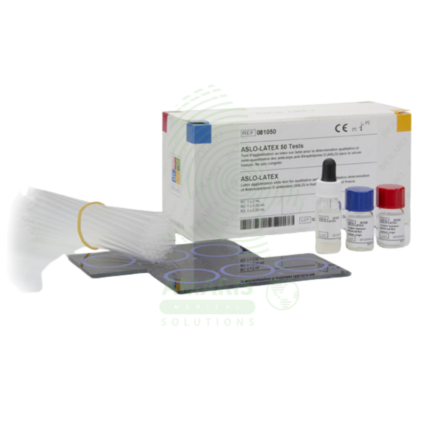
Anti-Streptol Olysin O Titer (ASOT)
Anti-Streptol Olysin O Titer (ASOT) is a quantitative or semi-quantitative serological test (latex agglutination, turbidimetry, nephelometry, or ELISA) for detecting antibodies against streptolysin O, an exotoxin produced by Group A Streptococcus. Elevated or rising titers indicate recent streptococcal infection and are essential for diagnosing post-streptococcal sequelae including acute rheumatic fever (Jones criteria) and post-streptococcal glomerulonephritis. The test requires serum samples; acute and convalescent (2-4 weeks apart) with fourfold rise confirms recent infection. Reference range typically <200-250 Todd units/mL (adults), varies by age and population. Primary clinical applications include diagnosis of Group A streptococcal infections, acute rheumatic fever evaluation, post-streptococcal glomerulonephritis diagnosis, differentiation of acute vs. past infection, evaluation of unexplained arthritis or carditis, pediatric inflammatory conditions (PANDAS), and monitoring disease activity in rheumatic fever. Critical safety precautions include proper timing of acute and convalescent samples, awareness of false negatives/positives, clinical correlation for diagnosis, and standard biohazard precautions. Essential test for rheumatology, nephrology, cardiology, and infectious disease practice.
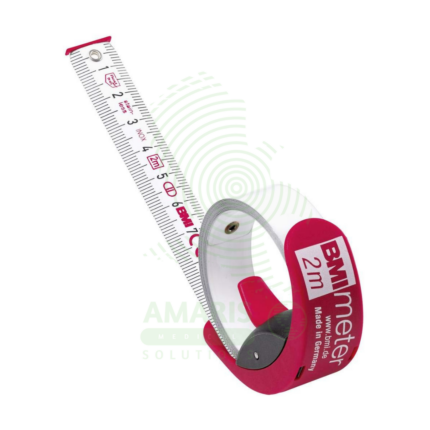
BMI Tape
A BMI Tape is a rapid screening tool that estimates an individual's Body Mass Index (BMI) category by measuring body circumference, most commonly the waist. It features a color-coded scale that directly displays BMI ranges (Underweight, Normal, Overweight, Obese), eliminating the need for separate height and weight measurements and manual calculation. While highly useful for community health screenings, wellness programs, and patient education due to its portability and simplicity, it is an approximate method. Its accuracy is limited compared to BMI calculated from precise clinical measurements, and it should be used as an initial screening indicator rather than a definitive diagnostic tool.
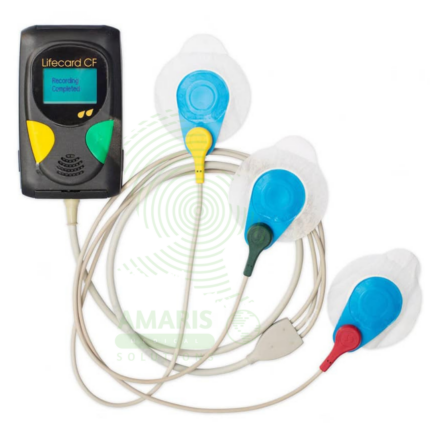
Holter ECG Monitor
A Holter ECG Monitor is a portable, wearable medical device used for continuous, long-term recording of a patient's heart's electrical activity over 24 to 48 hours or more. It is the cornerstone diagnostic tool for detecting intermittent cardiac arrhythmias, evaluating unexplained symptoms like syncope or palpitations, and monitoring the efficacy of antiarrhythmic treatments or implanted cardiac device function. Consisting of a small digital recorder connected to chest electrodes (or an all-in-one adhesive patch), it allows patients to maintain their normal daily routine while capturing a comprehensive electrocardiographic record.

Littman Stethoscope (Classic 4 Cardiology)
A Littman Stethoscope (Classic 4 Cardiology) represents the pinnacle of acoustic auscultation technology. Designed for clinicians who require the highest level of diagnostic accuracy, it features dual tunable diaphragms and dual-lumen tubing to provide exceptional acoustic sensitivity and ambient noise reduction. Its innovative design allows the user to hear both high and low-frequency sounds by simply adjusting pressure on either side of the chestpiece, making it the instrument of choice for cardiologists, intensivists, and specialists who cannot afford to miss a subtle murmur, rub, or breath sound. It combines superior performance with the durability and comfort expected from the Littmann brand.
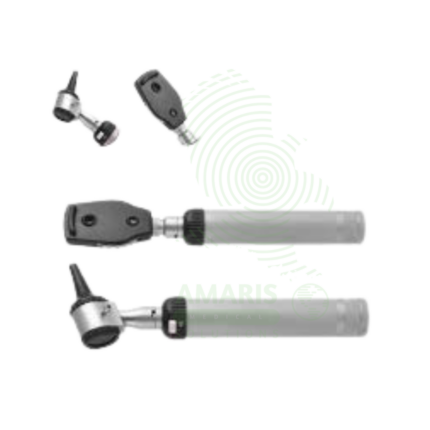
Ophthalmoscope
An Ophthalmoscope is a handheld diagnostic instrument used to examine the interior of the eye, specifically the fundus (retina, optic disc, blood vessels, and macula). By providing illuminated magnification, it serves as a vital screening tool for detecting ocular diseases like glaucoma and retinal disorders, and more importantly, for identifying signs of systemic conditions such as diabetes, hypertension, and increased intracranial pressure. Its operation involves selecting appropriate apertures and compensating lenses to obtain a clear view. While offering a detailed but narrow field of vision, mastery of the direct ophthalmoscope remains a cornerstone skill in general medicine, neurology, and ophthalmology for assessing vascular and neurological health.
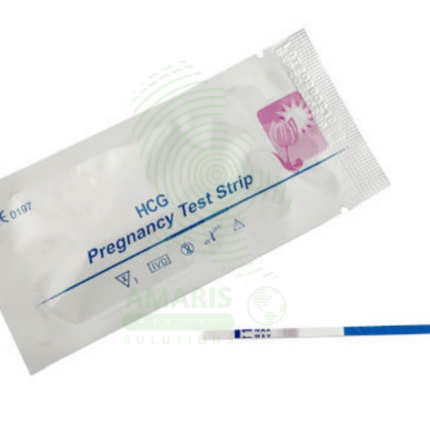
Pregnancy Test Strips
Pregnancy Test Strips are simple, dip-style lateral flow devices designed for the rapid, qualitative detection of human chorionic gonadotropin (hCG) in urine to indicate pregnancy. As the most fundamental format of home pregnancy tests, they offer high sensitivity (often from 10 mIU/mL), affordability, and a quick result within 3-5 minutes. Their ease of use makes them a widely accessible first step in pregnancy detection for personal use and clinical screening. A visible test line, even if faint, is a positive result, though confirmation with a healthcare provider is always recommended.
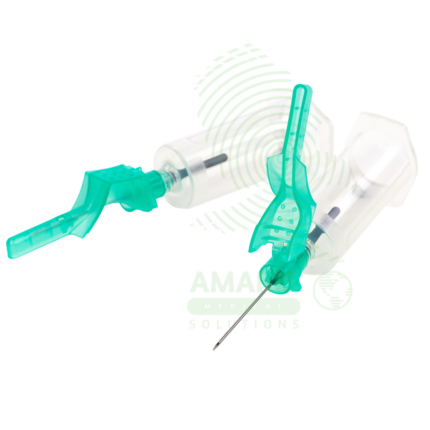
SAFE SERIES Blood Collection Needles
The SAFE SERIES (AM-SAFE) by Beijing Precil (Mindray subsidiary) is a comprehensive line of safety-engineered blood collection devices designed to prevent accidental needlestick injuries in healthcare workers. The series includes venous blood collection needles (AM-SAFE-V), standard safety needles (AM-SAFE1), winged infusion sets/butterfly needles (AM-SAFE2), high-gauge thin-wall needles for fragile veins (AM-SAFE3), premium coated needles for enhanced patient comfort (AM-GOLD), and nurse-friendly one-handed safety variants (AM-NURSE). All devices incorporate integral safety mechanisms that shield the contaminated needle immediately after withdrawal, complying with OSHA Needlestick Safety and Prevention Act requirements. Available in various gauges (18G-25G) and configurations for routine venipuncture, difficult vein access, pediatric/geriatric patients, and frequent blood draws. Sterile, single-use, latex-free, and color-coded for easy gauge identification. Essential safety devices for blood collection in hospitals, clinics, laboratories, and home healthcare settings.