Dermatoscope and Magnifiers
 Diagnostic Kits
 Vital Signs Monitors
 Stethoscopes and Accessories
 Otoscopes, Ophthalmoscopes, and Retinoscopes
 Reflex Hammers and Neurological Tools
 Scales and Measuring Devices
 Spirometers and Pulmonary Function Tests
 Electrosurgical Units and Accessories
 Cutting Instruments
 Grasping and Holding Instruments
 Hemostatic Instruments
 Specialized Surgical Sets
 Single-Use Procedure Trays and Packs
 Surgical Drapes, Gowns, and Covers
 Tissue Unifying Instruments
 Radiation Protection
 X-Ray Machines and Accessories
 Ultrasound Systems and Probes
 MRI and CT Scanners
 Radiology Consumables
 Bone Densitometers
 Fluoroscopy Equipment
 Imaging Tables and Positioning Aids
 Microscopes and Accessories
 Centrifuges and Separators
 Analyzers
 Incubators and Ovens
 Pipettes, Dispensers, and Lab Glassware
 Refrigerators, Freezers, and Storage Units
 Lab Consumables
 Sterilizers and Autoclaves for Lab Use
 Multi-Parameter Monitors
 Ventilators and Respiratory Support Devices
 Defibrillators and AEDs
 Infusion Pumps and IV Systems
 Patient Warmers and Cooling Devices
 Central Monitoring Stations
 Accessories
 Anesthesia Machines and Workstations
 Oxygen Concentrators and Delivery Systems
 Nebulizers and Inhalers
 CPAP/BiPAP Machines
 Airway Management
 Anesthesia Masks, Circuits, and Bags
 Humidifiers and Heaters
 Respiratory Therapy Accessories
 First Aid Kits and Cabinets
 Emergency Resuscitation Equipment
 Trauma Supplies
 Emergency Carts and Crash Carts
 Burn Care Products
 Bleeding Control
 Automated External Defibrillators (AEDs)
 Transport and Evacuation
 Wheelchairs and Accessories
 Walkers, Crutches, and Canes
 Prosthetics and Orthotics
 Physical Therapy Equipment
 Transfer Devices
 Bathroom Safety
 Orthopedic Traction and Tables
 Hot/Cold Therapy Packs and Units
 Beds and Mattresses
 Chairs and Stools
 Tables
 Cabinets and Storage
 Privacy Screens & Curtains
 Stands and Racks
 Linens and Textiles
 Lighting
 Autoclaves and Sterilizers
 Ultrasonic Cleaners
 Disinfectant Solutions and Wipes
 Sterilization Pouches, Wraps, and Indicators
 Instrument Trays and Containers
 UV and Ozone Disinfection Devices
 Washer Disinfectors
 Wound Care
 Gloves
 Masks and Respirators
 Catheters and Tubing
 Swabs, Applicators, and Sponges
 Incontinence Products
 Personal Protective Equipment (PPE)
 Dental Chairs and Units
 Handpieces and Burs
 Instruments
 Consumables
 Sterilization for Dental Use
 Orthodontic Supplies
 Endodontic Tools
 Slit Lamps and Tonometers
 Lensometers and Phoropters
 Ophthalmic Surgical Instruments
 Eyewear Frames and Lenses
 Contact Lens Supplies
 Vision Testing Charts and Devices
 Eye Care Consumables
 Laser Systems for Eye Care
 ENT Exam Chairs and Tables
 Endoscopes
 Audiometers and Hearing Tests
 ENT Instruments
 Nasal and Throat Packs
 Hearing Aids and Accessories
 Otology Supplies
 Fetal Dopplers and Monitors
 Delivery Beds and Tables
 Gynecological Instruments
 Neonatal Incubators and Warmers
 Breast Pumps and Accessories
 Contraceptive Devices
 Maternity Supports and Pads
 Neonatal Consumables
 Cystoscopes and Urethroscopes
 Dialysis Machines and Supplies
 Urological Catheters and Bags
 Lithotripters
 Prostate Treatment Devices
 Urinary Incontinence Products
 Kidney Stone Management Tools
 Consumables & Disposables
 EEG and EMG Machines
 Neurosurgical Instruments
 Nerve Stimulators
 Headrests and Positioning Aids
 Lumbar Puncture Kits
 Seizure Monitoring Devices
 Consumables
 Rehabilitation for Neurological Conditions
 ECG Machines and Accessories
 Holter Monitors
 Stress Test Systems
 Pacemakers and Defibrillator Accessories
 Vascular Access Devices
 Cardiac Catheters and Guidewires
 Blood Flow Meters
 Consumables
 Orthopedic Instruments
 Casts, Splints, and Padding
 Joint Replacement Supplies
 Prosthetic Limbs and Components
 Bone Grafts and Substitutes
 Traction Devices
 Orthopedic Braces and Supports
 Rehabilitation Aids for Orthopedics
 Home Oxygen Therapy
 Hospital Beds for Home Use
 Mobility Aids
 Bathroom and Daily Living Aids
 Wound Care for Home
 Monitoring Devices
 Enteral Feeding Pumps and Tubes
 Hand Sanitizers and Dispensers
 Face Shields and Goggles
 Isolation Gowns and Suits
 Biohazard Waste Containers
 Air Purifiers and HEPA Filters
 Surface Disinfectants
 Sharps Containers
 Protective Barriers
 Cardiovascular & Endurance Training
 Strength Training & Weightlifting
 Functional Training & Core Conditioning
 Physical Therapy & Rehabilitation
 Sports & Outdoor Recreation
 Gym Flooring & Facility Equipment
 Fitness Monitoring & Accessories
 Kids & Novelties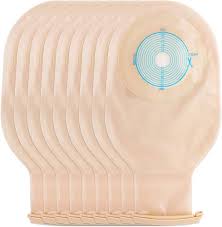

One piece Ostomy bag (Pediatrics) – Integrated type for Child (Drainable)
WhatsApp Order
The One piece Ostomy bag (Pediatrics) – Integrated type for Child (Drainable) is a disposable, single-unit medical appliance specifically designed for the collection and management of intestinal effluent (stool) following ileostomy or colostomy surgery in children (typically ages 1-12 years) . This pediatric-specific ostomy system combines a soft, gentle hydrocolloid skin barrier and a collection pouch into a seamless, one-piece design, featuring a secure drainable closure (Lock ‘n Roll™, InvisiClose®, or Velcro®) at the drainage end for easy, hygienic emptying by parents, caregivers, or older children .
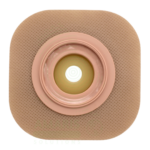
The pediatric drainable pouch is significantly shorter than adult models (typically 4-7 inches in length, 190-400 mL capacity) and features a cut-to-fit skin barrier (typically 10-51 mm diameter) that accommodates the stomas of growing children . The soft hydrocolloid adhesive (e.g., SoftFlex™, Stomahesive®, Assura spiral adhesive) is specially formulated for sensitive pediatric skin, providing secure fixation while allowing atraumatic removal without causing skin tears or irritation .
Constructed with multi-layer, 100% odor-proof film and covered with soft, breathable, non-rustling non-woven fabric (ComfortWear™), the pouch includes an integrated low-profile activated charcoal filter (e.g., AF300™) that allows flatus to escape while containing odor, preventing visible “ballooning” that can be distressing for school-aged children . Many pediatric pouches feature child-friendly designs—teddy bear prints on the fabric backing—along with a “split back” fabric design that allows caregivers to inspect the stoma without removing the pouch .
The drainable design allows caregivers or older children to empty the pouch multiple times daily without changing the entire appliance. This reduces skin trauma from frequent full changes, lowers supply costs, and enables more normal daily routines for the child and family. The secure closure systems (Lock ‘n Roll™ microseal, InvisiClose®, or Velcro®) ensure leak-proof containment between emptying episodes .
For the pediatric surgeon and stoma care nurse, the pediatric one-piece drainable system simplifies post-operative management for children with congenital anomalies (imperforate anus, Hirschsprung’s disease), inflammatory bowel disease, or traumatic bowel injury requiring temporary or permanent fecal diversion . For the child and family, this appliance provides security, skin protection, dignity, and the opportunity for full participation in age-appropriate activities—including play, school, swimming, and sports—with minimal disruption to daily life.
Description
One piece Ostomy bag (Pediatrics) – Integrated type for Child (Drainable)
PRIMARY CLINICAL & DIAGNOSTIC USES
1. Post-Operative Fecal Diversion Following Pediatric Intestinal Surgery
-
Primary Use: Provides a sterile, single-use, one-piece drainable ostomy appliance specifically sized for children (typically ages 1-12 years), combining a soft hydrocolloid skin barrier and a collection pouch as an integrated unit, designed for the management of fecal output following surgical creation of a colostomy or ileostomy .
-
How it helps: For the pediatric surgeon and stoma care nurse, the integrated one-piece system simplifies post-operative management of children who have undergone bowel surgery for conditions such as Hirschsprung’s disease, imperforate anus, or inflammatory bowel disease. The integrated design provides a secure, leak-resistant seal around the stoma through the use of a thin, flexible hydrocolloid adhesive that conforms to a child’s active body contours . For the child recovering from intestinal surgery, the one-piece system provides reliable skin protection and comfort, reducing the risk of post-operative complications and supporting return to normal activities.
2. Management of Liquid to Semi-Formed Stool Output in Pediatric Ileostomies and Colostomies
-
Primary Use: Specifically designed to manage the continuous output typical of pediatric ileostomies and colostomies, featuring a child-sized pouch (approximately 4-7 inches in length) with a drainable outlet capable of managing liquid to semi-formed stool .
-
How it helps: For the pediatric gastroenterologist and home care nurse, the drainable pediatric pouch is essential for managing the ongoing needs of children with permanent ostomies. The drainable design allows caregivers or older children to empty the pouch multiple times daily without removing the entire appliance, preserving the integrity of the child’s peristomal skin and reducing the frequency of full appliance changes . For the child with a high-output ileostomy, the drainable pouch allows for hygienic, discreet emptying throughout the day, reducing disruption to school, play, and family activities.
3. Protection of Pediatric Peristomal Skin
-
Primary Use: Utilizes a soft, medical-grade hydrocolloid skin barrier (e.g., SoftFlex, Stomahesive, Assura spiral adhesive) specifically formulated for children’s sensitive skin, featuring a gentle adhesive that provides secure fixation while allowing atraumatic removal without causing skin tears or irritation .
-
How it helps: For the wound ostomy and continence nurse (WOCN) and pediatric dermatologist, the gentle hydrocolloid barrier is critical for preventing Medical Adhesive-Related Skin Injury (MARSI) and contact dermatitis—complications that are particularly common in children due to their active lifestyle and sensitive skin. The one-piece design means the barrier and pouch are removed as a single unit, minimizing skin manipulation . For the child, proper skin protection prevents painful irritation, bleeding, and itching around the stoma—directly improving quality of life and reducing the risk of hospital readmission for skin breakdown.
4. Child-Friendly Design for Comfort and Acceptance
-
Primary Use: Features soft, breathable non-woven fabric covering on the body-facing side (ComfortWear™ panels) to reduce friction and noise, with many products featuring child-friendly designs such as teddy bear prints or opaque beige fabric for discretion .
-
How it helps: For the pediatric ostomate and their family, the soft fabric backing is essential for comfort during daily activities, including running, jumping, playing, and sleeping. The non-rustle material prevents embarrassing noises during quiet activities or in school settings. The low-profile filter (AF300™ or similar) helps prevent “ballooning” (pouch bloating from trapped gas) and “pancaking” (pouch flattening), ensuring the pouch functions properly during active play . For the child, the cute teddy bear prints transform a medical device into something less threatening, reducing anxiety and supporting positive body image .
SECONDARY & SUPPORTIVE USES
1. Post-Operative Management Following Surgery for Congenital Anomalies: Provides essential ostomy management for children born with imperforate anus, Hirschsprung’s disease, or other congenital anomalies requiring immediate or staged surgical correction .
2. Pediatric Inflammatory Bowel Disease (IBD) Surgery: Used for children with severe Crohn’s disease or ulcerative colitis who require colectomy with ileostomy formation, providing long-term ostomy management during childhood and adolescence .
3. Management of Necrotizing Enterocolitis (NEC) in Infants: Provides essential post-operative ostomy care for children who have undergone bowel resection for NEC, with drainable pouches allowing frequent emptying of liquid output typical of small bowel stomas.
4. Clostridium Difficile Colitis in Pediatric Patients: Used in severe cases of refractory C. difficile colitis requiring surgical intervention with fecal diversion in children.
5. Trauma and Emergency Pediatric Surgery: Used in emergency surgical settings for children with traumatic bowel injuries (e.g., from motor vehicle accidents, penetrating trauma) requiring temporary fecal diversion.
6. Post-Operative Monitoring of Stoma Output in Children: Used in the immediate post-operative period to measure and record stoma output volume, providing clinicians with critical data on bowel function recovery, nutritional absorption, and fluid/electrolyte balance.
7. Transition from Hospital to Home Care for Pediatric Ostomates: Facilitates early hospital discharge by providing parents with a simple, easy-to-apply appliance that allows for confident continuation of care in the home environment, with child-friendly designs that reduce anxiety for both child and parent .
8. School and Daycare Management for Children with Ostomies: Supports school-aged children by providing a low-profile, discreet, odor-proof pouching system that allows independent emptying in school bathrooms (for older children) or discreet management by school nurses, enabling full participation in classroom and social activities without embarrassment .
9. Travel and Active Lifestyle Management for Pediatric Ostomates: For children and families, the drainable system is preferred for travel, camping, vacations, and extracurricular activities (swimming, sports, dance) where access to a toilet for emptying is available .
10. Pediatric Oncology and Post-Tumor Resection Care: Supports children who have undergone tumor resection surgery where bowel resection and temporary ostomy creation is required.
11. Palliative Care for Pediatric Patients with Advanced Malignancy: Used in pediatric palliative care for children with advanced, inoperable abdominal or pelvic malignancies causing bowel obstruction, where a diverting ostomy is created for palliation to relieve symptoms and improve end-of-life quality of life.
12. Caregiver Training and Parent Education: Essential teaching device for training parents in pediatric ostomy management before hospital discharge, with the simple integrated design allowing hands-on learning without complex assembly requirements.
13. Use as a Shorter Pouch for Small-Statured Adults: Pediatric pouches (shorter length) are sometimes used by small-statured or short-waisted adults who struggle with the length of standard adult pouches, providing a more discreet option .
14. Pre-Operative Stoma Site Marking and Education: Used in pre-operative planning with children and families to demonstrate pouching system size and appearance, reducing anxiety and improving preparedness.
15. Split Back Design for Stoma Monitoring: Many pediatric pouches feature a split-back design in the fabric covering, allowing parents and healthcare providers to inspect the stoma and peristomal skin without removing the pouch, reducing unnecessary appliance changes and skin trauma .
KEY PRODUCT FEATURES
1. BASIC IDENTIFICATION ATTRIBUTES
-
Device Type: A single-use, one-piece drainable ostomy bag specifically designed for pediatric patients (children, typically ages 1-12 years), consisting of an integrated soft hydrocolloid skin barrier (baseplate) and collection pouch as a single unit .
-
Designation: One-piece pediatric ostomy bag, child colostomy bag, pediatric drainable pouch, child stoma bag, one-piece drainable pediatric ostomy appliance, Pediatric One-Piece Pouch.
-
Key Components:
-
Pouch Body: A leak-proof, 100% odor-proof collection chamber made of multi-layer film (including EVOH or similar barrier technology) with pediatric-appropriate capacity (approx. 190-400 mL, 4-7 inches in length) .
-
Skin Barrier (Flange/Baseplate): An integrated soft hydrocolloid adhesive disc (e.g., SoftFlex™, Stomahesive®, Assura spiral adhesive) with a cut-to-fit opening (typically 10-51 mm diameter) specifically formulated for sensitive pediatric skin, featuring gentle adhesion and atraumatic removal .
-
Drainable Outlet: An open-ended tail at the bottom of the pouch with a secure closure system (Lock 'n Roll™, InvisiClose®, Velcro®, or pediatric wire clamp) for easy emptying .
-
Filter: An integrated low-profile activated charcoal filter (e.g., AF300™) allowing flatus to escape while containing odor, preventing ballooning and pancaking .
-
Comfort Layer: A soft, breathable double-sided non-woven fabric (ComfortWear™) covering the body-facing side to reduce friction, noise (rustling), and moisture against sensitive skin; may feature teddy bear prints .
-
Split Back Design: A fabric split or window in the body-side covering that allows caregivers to inspect the stoma without removing the pouch .
-
2. TECHNICAL & PERFORMANCE PROPERTIES
-
GMDN Term Definition: One-piece intestinal ostomy bag, open-ended (drainable). A plastic pouch designed to be attached around a stoma for use as a receptacle for intestinal output following a colostomy or ileostomy. It consists of two separate parts including the pouch with a flange and a base plate, both having a flange locking mechanism. The distal end of the pouch can be opened for drainage of the waste and emptied, e.g., several times per day. This is a single-use device .
-
FDA Product Code: EZS (Ostomy Pouch)
-
Pediatric Capacity: Standard pediatric pouches range from 190-400 mL capacity; pouch length approximately 4-7 inches (10-18 cm), significantly shorter than adult pouches (typically 11-12 inches) .
-
Cut-to-Fit Range: Skin barrier opening is adjustable, typically ranging from 10 mm to 51 mm (0.4-2.0 inches), accommodating various pediatric stoma sizes from infants to older children .
-
Skin Barrier Material: Soft medical-grade hydrocolloid adhesive; standard wear (1-3 days); gentle adhesion specifically formulated for sensitive pediatric skin; atraumatic removal .
-
Pouch Film: High-barrier, multi-layer film ensuring 100% odor-proof containment; rustle-free material; available in transparent or opaque options .
-
Closure Type: Lock 'n Roll™ microseal closure (plastic interlocking fasteners), InvisiClose® integrated clipless closure, Velcro® (hook-and-loop), or pediatric wire clamp .
-
Filter Type: Low-profile activated charcoal filter (e.g., AF300™); allows slow release and deodorization of gas; helps prevent ballooning; available in models with or without filter .
-
Body-side Covering: Soft double-sided non-woven fabric that is quiet, breathable, non-rustling; may feature teddy bear prints or opaque beige fabric for discretion .
-
Sterility: Non-sterile; intended for use on clean, intact peristomal skin.
-
Single-Use: Intended for single patient use only; the bag is typically changed every 1-3 days, depending on output volume and skin condition. The drainable pouch can be emptied multiple times daily before changing the full appliance.
-
Latex-Free: Manufactured without natural rubber latex to accommodate patients with latex allergies .
-
HCPCS Code: A5061 (for pediatric drainable pouches)
-
Manufacturers: ConvaTec (Little Ones®), Hollister (Pouchkins™), Coloplast (Assura®), Eakin Healthcare (Select Paediatric), Salts Healthcare (Confidence® Comfort) .
3. PHYSICAL & OPERATIONAL PROPERTIES
-
Configuration: One-piece integrated system where the skin barrier and collection pouch are permanently attached as a single unit; no assembly required .
-
Appearance: Available in transparent, translucent, or opaque (fabric-covered) options. Opaque fabric pouches often feature teddy bear prints or beige fabric for discretion .
-
Standard Dimensions: Pouch length approximately 4-7 inches (10-18 cm); significantly shorter than adult pouches to fit child's body size .
-
Flexibility: The pouch and integrated barrier are designed to flex with the child's body movement during active play, running, jumping, and sports. Available in flat or soft convex configurations for challenging stoma anatomy .
-
Wear Time: Standard wear time is 1 to 3 days, depending on stoma type (ileostomy output is more corrosive and may require more frequent changes), output volume, and skin condition.
-
Packaging: Individually wrapped and sold in boxes (e.g., 10, 20, 30 pieces), often with measurement tools and illustrated instructions .
-
Accessories: Typically supplied with a stoma measuring card for custom-cutting the opening, disposal bags, and illustrated instructions.
-
Split Back Inspection Window: The split back design in the fabric covering allows caregivers to inspect the stoma and peristomal skin without removing the pouch .
-
Odor Control: Certified to meet odor-barrier efficacy standards using multilayer high-barrier co-extrusion membrane.
4. SAFETY & COMPLIANCE ATTRIBUTES
-
Regulatory Status: Class I medical device (FDA Product Code EZS; GMDN Code 64583) .
-
Quality Standards: Complies with international ostomy standards; manufactured under quality management systems (ISO 13485). CE certified .
-
Biocompatibility: Manufactured with skin-friendly, hypoallergenic, non-irritating materials; the hydrocolloid barrier is free from natural rubber latex and common sensitizers; specifically tested for sensitive pediatric skin. British Skin Foundation recognized, Skin Health Alliance dermatologically accredited .
-
Odor Control: Certified to meet odor-barrier efficacy standards using multilayer high-barrier co-extrusion membrane and activated carbon filter.
-
Latex-Free: Manufactured without natural rubber latex to accommodate patients with latex allergies .
-
Expiration: 3 years from date of manufacture.
-
Closure Certification: Lock 'n Roll™ closure provides secure microseal; InvisiClose® provides integrated clipless closure .
5. STORAGE & HANDLING ATTRIBUTES
-
Storage: Store in a cool, dry place at room temperature (below 25°C / 77°F recommended). Avoid exposure to direct sunlight, extreme heat, or humidity, which can degrade the adhesive and film. Keep out of reach of children.
-
Shelf Life: 3 years from the date of manufacture when stored properly.
-
Disposal: Empty contents into the toilet. Dispose of used bag in general waste as per local regulations. Do not flush the bag itself.
-
Pre-use Preparation: For best adhesion, warm the skin barrier with body heat before applying; ensure peristomal skin is clean, dry, and free of lotions, oils, or adhesive residue .
-
Cutting Instructions: Use the provided stoma measuring guide to determine correct stoma size. Cut the opening no larger than 1-2 mm (1/16-1/8 inch) larger than the stoma to prevent skin exposure to corrosive effluent .
-
Closure Care: After emptying, wipe the drainable outlet clean before folding and pressing the Lock 'n Roll™ or Velcro closure firmly to ensure a secure, leak-proof seal .
-
Filter Care: When showering or swimming, use the provided filter cover sticker (if available) to prevent water from entering the filter.
6. LABORATORY & CLINICAL APPLICATIONS
-
Primary Application: Collection and management of liquid to semi-formed intestinal effluent from a diverted bowel following ileostomy or colostomy in pediatric patients, including toddlers, young children, and school-aged children .
-
Clinical Role: Essential post-operative and long-term care device in pediatric surgery, pediatric gastroenterology, pediatric oncology, and home healthcare for the management of children with a stoma.
SAFETY HANDLING PRECAUTIONS
1. SAFETY PRECAUTIONS
-
Skin Preparation: The peristomal skin must be clean, completely dry, and free of lotions, oils, powders, or adhesive residue before application to ensure proper adhesion and prevent skin breakdown. Avoid using baby oils or creams, as they impair adhesive bonding .
-
Customization: The opening must be cut to the correct size—no larger than 1-2 mm (1/16-1/8 inch) of the stoma. An opening that is too large will expose fragile pediatric skin to corrosive effluent and cause maceration, excoriation, and potential infection .
-
Monitor for Leaks: Change the appliance immediately if any effluent is observed leaking under the barrier to prevent skin damage. Leakage can occur more frequently in active children due to their constant movement.
-
Showering and Bathing: The pouch can be worn while bathing or showering. Use the provided filter cover sticker to prevent water from entering the filter. Use a swim belt or waterproof tape around the barrier edges for swimming.
-
Signs of Skin Breakdown: Discontinue use and consult a stoma care nurse or pediatrician if the peristomal skin becomes red, weepy, raw, itchy, or develops a rash, indicating possible fungal infection (candidiasis), contact dermatitis, or adhesive allergy .
-
Active Child Considerations: Children are highly active (running, jumping, climbing). Ensure the pouch has a low-profile design, secure closure, and soft fabric covering to withstand active play without leakage or discomfort .
-
Dehydration Monitoring: Pediatric ostomates (particularly those with ileostomies) are at high risk for dehydration and electrolyte imbalance. Monitor stoma output volume, urine output, oral intake, and weight; consult a clinician immediately for signs of dehydration (dry mucous membranes, decreased urination, lethargy).
-
Growth Considerations: As the child grows, the stoma size may change, and the skin barrier opening may need to be adjusted. Regularly measure the stoma (especially during growth spurts) to ensure continued proper fit.
-
School Considerations: For school-aged children, ensure the pouch has a low-profile design, is odor-proof, and can be emptied independently by the child in school bathrooms with appropriate training. Brief the school nurse on the child's ostomy care needs.
-
Filter Management: The integrated filter (e.g., AF300™) allows gas to escape but may become clogged with liquid stool. If ballooning occurs, check the filter and replace the pouch if necessary .
2. FIRST AID MEASURES
-
Adhesive Allergy: If signs of an allergic reaction (rash, severe itching, blistering, redness spreading beyond the barrier area) occur at the adhesive site, remove the appliance immediately, gently cleanse the skin with warm water, discontinue use of that brand, and consult a clinician.
-
Bleeding Stoma: If the stoma bleeds slightly when cleaning or measuring (common due to the high vascularity of stomal tissue), apply gentle pressure with a clean, dry gauze pad for a few minutes. Contact a clinician immediately if bleeding is profuse, does not stop, or if there is blood in the stool output.
-
Leakage or Skin Irritation: If a leak occurs, remove the appliance immediately, gently cleanse the skin with warm water (avoid soaps and wipes containing alcohol, oils, or fragrances), dry thoroughly, and apply a new bag. If irritation persists, a barrier powder or wipe may be required .
-
Closure Failure: If the Lock 'n Roll™ or Velcro closure fails to seal securely, replace the entire pouch immediately to prevent leakage. For older children, teach them to check the closure each time after emptying .
-
Ballooning (Pouch Bloating): If the pouch balloons with gas, ensure the filter is not blocked by stool or moisture; replace the filter cover if needed; if ballooning persists, change the pouch and consult a stoma care nurse .
-
Pancaking (Pouch Flattening): If the pouch becomes flattened (pancaking), use the filter cover to control air exchange; teach older children to gently pull the pouch away from the body to introduce a small amount of air; ensure the filter is not blocked .
-
Signs of Dehydration in Children with High-Output Ostomies: Monitor for dry mucous membranes, decreased urination (less than 3-4 times per day), lethargy, irritability, or poor feeding. Seek immediate medical attention if any of these signs are present.
3. FIRE FIGHTING MEASURES
-
Flammability: The plastic pouch and non-woven fabric are combustible. Keep away from open flames, direct heat sources, cigarettes, and lighters.
-
Extinguishing Media: Use water, foam, CO₂, or dry chemical for fires involving combustible material. The pouch presents no special fire hazard beyond typical plastics.
-
Storage Warning: Do not store ostomy supplies near radiators, heating vents, or in vehicles during hot weather, as extreme heat can degrade the adhesive and film.
Related products
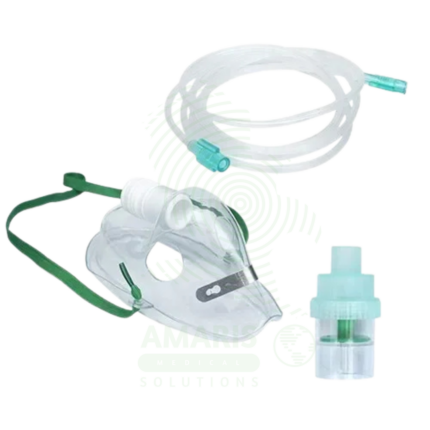
Adult & Pediatric Nebulizer Kit
An Adult & Pediatric Nebulizer Kit is a complete set of patient-contact components required for aerosol medication delivery, including a nebulizer cup, connecting tubing, and both an adult mouthpiece and a pediatric mask (or universal fit). Designed for use with a compressor, it provides the delivery circuit for treating asthma, COPD, and other respiratory conditions. Available in disposable (single-patient-use) formats for infection control in clinics or reusable formats for home care, its proper use, coupled with rigorous cleaning for reusable kits, is essential for effective therapy and preventing respiratory infections. The kit's universal connectors ensure compatibility with standard compressors.
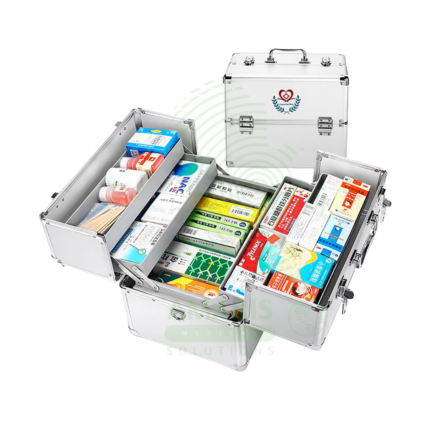
Aluminium First Aid Kit For Ambulance
An Aluminium First Aid Kit for Ambulance is a heavy-duty, weather-resistant storage case specifically designed for organizing, protecting, and securing medical supplies in emergency medical service vehicles. Constructed from 1.2-2.0 mm aluminium alloy with reinforced corners, durable latches, and rubber gaskets (IP54-IP67 rated), these cases protect contents from vibration, impact, moisture, and temperature extremes during emergency response. Available in various configurations including single compartment, multi-drawer, and clear-lid models with customizable interior dividers, elastic straps, and pouches. Designed to meet ambulance equipment mounting standards (KKK-A-1822, NFPA 1917, CEN 1789) with proper installation to withstand collision forces. Primary clinical applications include organized storage of airway management devices, bleeding control supplies, wound care materials, diagnostic equipment, emergency medications, IV supplies, splinting equipment, PPE, and obstetric supplies for BLS, ALS, and CCT ambulance services. Critical safety considerations include proper vehicle mounting to prevent projectile hazards, secure latching during transport, regular inventory management, expiration date monitoring, and decontamination after biohazard exposure. Essential equipment for organized, efficient, and safe emergency medical response.
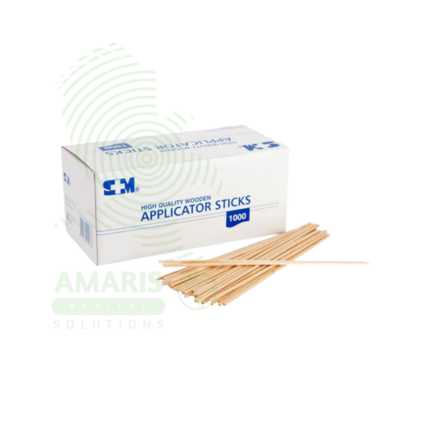
Applicator Sticks
Applicator Sticks are single-use medical devices with absorbent tips (cotton, rayon, flocked polyester) on wood, plastic, or paper shafts for collecting clinical specimens (throat, nasal, wound, cervical, urethral, rectal) for microbiological culture, rapid testing, and molecular diagnostics. Sterile individually wrapped or non-sterile bulk formats. Flocked swabs provide >90% specimen release for PCR testing. Primary applications include specimen collection for infection diagnosis, wound care and antiseptic application, gynecological sampling (Pap smears, STI testing), eye/ear specimen collection, laboratory slide preparation, and forensic evidence collection. Critical precautions include single-use only, sterile technique, proper collection method, and biohazard disposal. Essential consumable in all clinical settings.
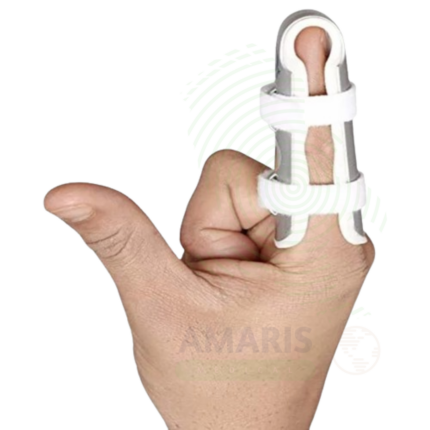
Finger Cot
A Finger Cot is a small, finger-shaped protective covering used to protect minor finger wounds, diabetic ulcers, surgical incisions, and amputation stumps, as well as to provide barrier protection for healthcare workers and laboratory personnel. Made from latex, nitrile, vinyl, or silicone, it provides a comfortable, secure fit while protecting the finger from contamination, moisture, friction, and irritants. Available in various sizes, materials, and sterile or non-sterile versions. Latex-free options are available for individuals with latex allergy.
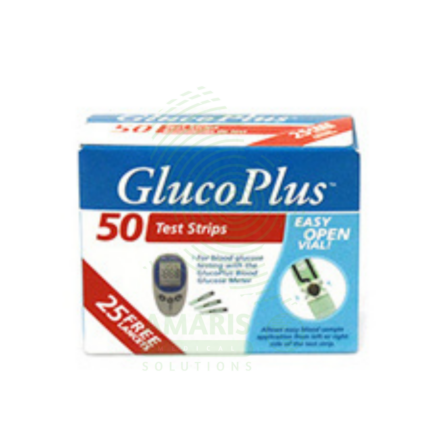
Glucosics Blood Sugar Sticks
Glucosics Blood Sugar Sticks are single-use, disposable electrochemical test sticks (ISO 15197:2013 compliant) designed exclusively for use with Glucosics glucose meters to measure capillary blood glucose from 0.5-1.0 µL samples in 5-7 seconds. Each stick contains glucose oxidase or glucose dehydrogenase reagents that generate electrical current proportional to glucose concentration (20-600 mg/dL range). Packaging options include multi-stick vials (25-100 sticks) with desiccant for daily use or individually foil-wrapped sticks for travel. Sticks feature no-coding automatic calibration, hematocrit compensation (20-60%), and interference resistance. Primary clinical applications include daily blood glucose testing for Type 1, Type 2, and gestational diabetes management, hypoglycemia and hyperglycemia detection, pre- and post-meal glucose assessment, and hospital point-of-care testing. Critical safety precautions include single-use only, immediate vial closure after stick removal to prevent humidity damage, storage at 2-30°C away from bathrooms and temperature extremes, never using expired sticks, proper hand hygiene before testing, and disposal in sharps containers. Essential consumable for diabetes self-management when used with Glucosics meters.
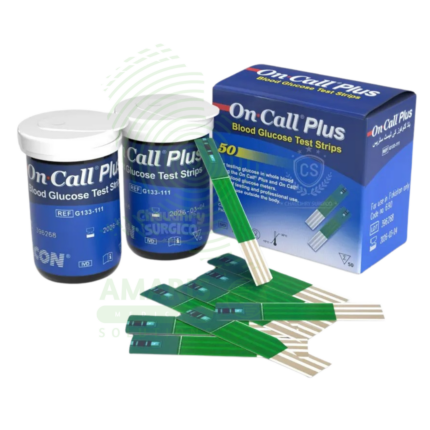
On Call Blood Sugar Strips
On Call Blood Sugar Strips are single-use, disposable electrochemical test strips (ISO 15197:2013 compliant) designed exclusively for use with On Call glucose meters to measure capillary blood glucose from 0.5-1.0 µL samples in 5-7 seconds. Each strip contains glucose oxidase or glucose dehydrogenase reagents that generate electrical current proportional to glucose concentration (20-600 mg/dL range). Packaging options include multi-strip vials (25-100 strips) with desiccant for daily use or individually foil-wrapped strips for travel. Strips feature no-coding automatic calibration, hematocrit compensation (20-60%), and interference resistance. Primary clinical applications include daily blood glucose testing for Type 1, Type 2, and gestational diabetes management, hypoglycemia and hyperglycemia detection, pre- and post-meal glucose assessment, and hospital point-of-care testing. Critical safety precautions include single-use only, immediate vial closure after strip removal to prevent humidity damage, storage at 2-30°C away from bathrooms and temperature extremes, never using expired strips, proper hand hygiene before testing, and disposal in sharps containers. Essential consumable for diabetes self-management when used with On Call meters.
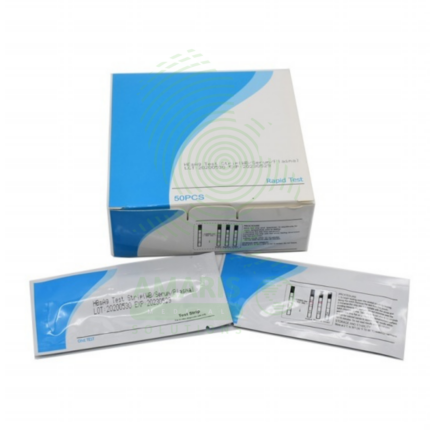
Rapid Test Kits (HIV, HBV, HCV, Malaria)
Rapid Test Kits for HIV, HBV, HCV, and Malaria are single-use, immunochromatographic devices designed for the quick, preliminary screening of these critical infectious diseases at the point of care. By detecting specific antibodies or antigens in a small blood sample (or oral fluid for some HIV tests), they provide a visual result within 15-30 minutes without the need for laboratory equipment. Their primary role is to expand access to testing in community and resource-limited settings, enabling immediate counseling, triage, and referral for confirmatory testing and treatment. As essential tools in public health, they are characterized by their simplicity, speed, and critical importance in early diagnosis and outbreak response.