Dermatoscope and Magnifiers
 Diagnostic Kits
 Vital Signs Monitors
 Stethoscopes and Accessories
 Otoscopes, Ophthalmoscopes, and Retinoscopes
 Reflex Hammers and Neurological Tools
 Scales and Measuring Devices
 Spirometers and Pulmonary Function Tests
 Electrosurgical Units and Accessories
 Cutting Instruments
 Grasping and Holding Instruments
 Hemostatic Instruments
 Specialized Surgical Sets
 Single-Use Procedure Trays and Packs
 Surgical Drapes, Gowns, and Covers
 Tissue Unifying Instruments
 Radiation Protection
 X-Ray Machines and Accessories
 Ultrasound Systems and Probes
 MRI and CT Scanners
 Radiology Consumables
 Bone Densitometers
 Fluoroscopy Equipment
 Imaging Tables and Positioning Aids
 Microscopes and Accessories
 Centrifuges and Separators
 Analyzers
 Incubators and Ovens
 Pipettes, Dispensers, and Lab Glassware
 Refrigerators, Freezers, and Storage Units
 Lab Consumables
 Sterilizers and Autoclaves for Lab Use
 Multi-Parameter Monitors
 Ventilators and Respiratory Support Devices
 Defibrillators and AEDs
 Infusion Pumps and IV Systems
 Patient Warmers and Cooling Devices
 Central Monitoring Stations
 Accessories
 Anesthesia Machines and Workstations
 Oxygen Concentrators and Delivery Systems
 Nebulizers and Inhalers
 CPAP/BiPAP Machines
 Airway Management
 Anesthesia Masks, Circuits, and Bags
 Humidifiers and Heaters
 Respiratory Therapy Accessories
 First Aid Kits and Cabinets
 Emergency Resuscitation Equipment
 Trauma Supplies
 Emergency Carts and Crash Carts
 Burn Care Products
 Bleeding Control
 Automated External Defibrillators (AEDs)
 Transport and Evacuation
 Wheelchairs and Accessories
 Walkers, Crutches, and Canes
 Prosthetics and Orthotics
 Physical Therapy Equipment
 Transfer Devices
 Bathroom Safety
 Orthopedic Traction and Tables
 Hot/Cold Therapy Packs and Units
 Beds and Mattresses
 Chairs and Stools
 Tables
 Cabinets and Storage
 Privacy Screens & Curtains
 Stands and Racks
 Linens and Textiles
 Lighting
 Autoclaves and Sterilizers
 Ultrasonic Cleaners
 Disinfectant Solutions and Wipes
 Sterilization Pouches, Wraps, and Indicators
 Instrument Trays and Containers
 UV and Ozone Disinfection Devices
 Washer Disinfectors
 Wound Care
 Gloves
 Masks and Respirators
 Catheters and Tubing
 Swabs, Applicators, and Sponges
 Incontinence Products
 Personal Protective Equipment (PPE)
 Dental Chairs and Units
 Handpieces and Burs
 Instruments
 Consumables
 Sterilization for Dental Use
 Orthodontic Supplies
 Endodontic Tools
 Slit Lamps and Tonometers
 Lensometers and Phoropters
 Ophthalmic Surgical Instruments
 Eyewear Frames and Lenses
 Contact Lens Supplies
 Vision Testing Charts and Devices
 Eye Care Consumables
 Laser Systems for Eye Care
 ENT Exam Chairs and Tables
 Endoscopes
 Audiometers and Hearing Tests
 ENT Instruments
 Nasal and Throat Packs
 Hearing Aids and Accessories
 Otology Supplies
 Fetal Dopplers and Monitors
 Delivery Beds and Tables
 Gynecological Instruments
 Neonatal Incubators and Warmers
 Breast Pumps and Accessories
 Contraceptive Devices
 Maternity Supports and Pads
 Neonatal Consumables
 Cystoscopes and Urethroscopes
 Dialysis Machines and Supplies
 Urological Catheters and Bags
 Lithotripters
 Prostate Treatment Devices
 Urinary Incontinence Products
 Kidney Stone Management Tools
 Consumables & Disposables
 EEG and EMG Machines
 Neurosurgical Instruments
 Nerve Stimulators
 Headrests and Positioning Aids
 Lumbar Puncture Kits
 Seizure Monitoring Devices
 Consumables
 Rehabilitation for Neurological Conditions
 ECG Machines and Accessories
 Holter Monitors
 Stress Test Systems
 Pacemakers and Defibrillator Accessories
 Vascular Access Devices
 Cardiac Catheters and Guidewires
 Blood Flow Meters
 Consumables
 Orthopedic Instruments
 Casts, Splints, and Padding
 Joint Replacement Supplies
 Prosthetic Limbs and Components
 Bone Grafts and Substitutes
 Traction Devices
 Orthopedic Braces and Supports
 Rehabilitation Aids for Orthopedics
 Home Oxygen Therapy
 Hospital Beds for Home Use
 Mobility Aids
 Bathroom and Daily Living Aids
 Wound Care for Home
 Monitoring Devices
 Enteral Feeding Pumps and Tubes
 Hand Sanitizers and Dispensers
 Face Shields and Goggles
 Isolation Gowns and Suits
 Biohazard Waste Containers
 Air Purifiers and HEPA Filters
 Surface Disinfectants
 Sharps Containers
 Protective Barriers
 Cardiovascular & Endurance Training
 Strength Training & Weightlifting
 Functional Training & Core Conditioning
 Physical Therapy & Rehabilitation
 Sports & Outdoor Recreation
 Gym Flooring & Facility Equipment
 Fitness Monitoring & Accessories
 Kids & Novelties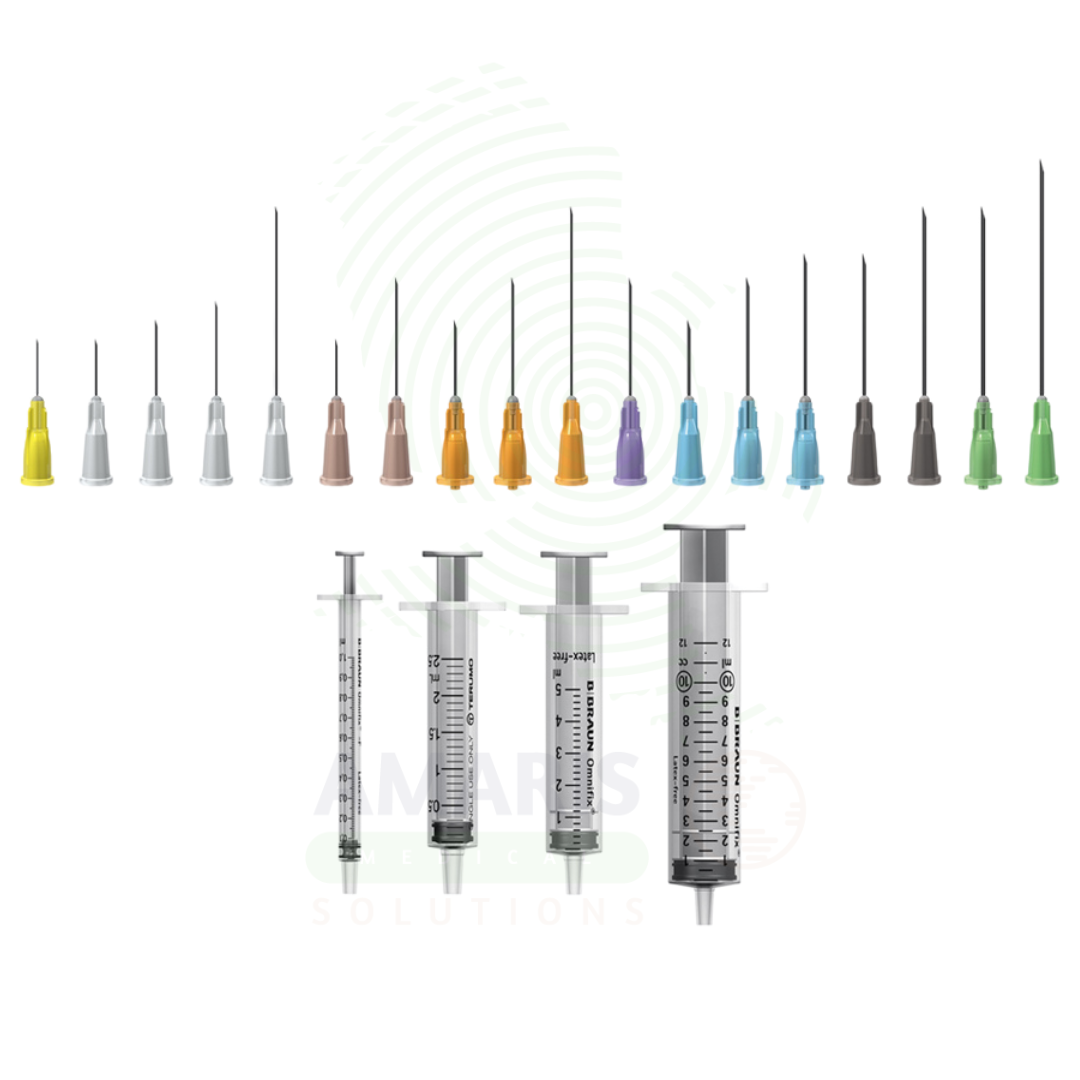

Syringes & Needles
$1.00
WhatsApp Order
Syringes & Needles are sterile, single-use medical devices used for parenteral administration of medications, withdrawal of bodily fluids, and blood collection. A syringe consists of a graduated barrel and plunger; a needle consists of a hub and hollow beveled cannula. Available in a wide range of volumes (0.5 mL to 60 mL), needle gauges (18G to 30G), and lengths (3/8″ to 3.5″), selection is determined by route of administration, medication volume, and patient characteristics. Safety-engineered devices with passive or active needle shielding are standard to prevent sharp injuries. Strict aseptic technique, immediate disposal into puncture-resistant sharps containers, and absolute single-use protocols are critical for patient safety and healthcare worker protection.
Description
Syringes & Needles
PRIMARY CLINICAL & DIAGNOSTIC USES
1. Parenteral Administration of Medications
-
Primary Use: Delivers liquid medications into the body via various routes, including intramuscular, subcutaneous, intradermal, and intravenous, enabling rapid systemic absorption for vaccines, antibiotics, analgesics, hormones, and emergency drugs.
-
How it helps: For the nurse, physician, and healthcare provider, the syringe and needle are the tools that transform a medication from a vial into a treatment reaching the patient’s bloodstream or tissues—delivering vaccines that prevent disease, antibiotics that fight infection, insulin that sustains life, and pain medications that provide comfort. For the patient, a single injection can mean protection from influenza, relief from severe pain, or the daily dose of insulin that keeps them alive.
2. Venipuncture and Blood Collection
-
Primary Use: Used in conjunction with vacuum collection systems or as standalone devices for obtaining venous blood samples for diagnostic laboratory testing, including complete blood counts, chemistry panels, blood cultures, and serological assays.
-
How it helps: For the phlebotomist and laboratory team, the needle is the gateway to the diagnostic information contained in blood—drawing samples that reveal anemia, infection, organ function, and countless other parameters that guide medical decisions. For the patient, a blood draw with a sterile needle provides the answers their doctor needs to diagnose illness, monitor treatment, and maintain health.
3. Administration of Local Anesthetics
-
Primary Use: Essential for delivering local anesthetic agents for dental procedures, minor surgical interventions, laceration repair, and regional nerve blocks, providing pain control during invasive procedures.
-
How it helps: For the dentist, emergency physician, and surgeon performing procedures that would otherwise be painful, the syringe loaded with local anesthetic transforms a potentially traumatic experience into a comfortable one—numbing the site before incision, allowing for laceration repair without suffering, and enabling dental work that patients can tolerate. For the patient, that injection of anesthetic means they can undergo necessary procedures without fear of pain.
4. Aspiration of Bodily Fluids
-
Primary Use: Used to aspirate fluids from body cavities or cysts for diagnostic or therapeutic purposes, including paracentesis, thoracentesis, arthrocentesis, and abscess drainage.
-
How it helps: For the interventionalist and proceduralist, the syringe and needle provide access to fluid collections that hold diagnostic information or cause symptoms—draining pleural fluid that impairs breathing, removing synovial fluid to diagnose joint infection, or aspirating an abscess to relieve pain and obtain culture material. For the patient, needle aspiration can provide both diagnosis and therapeutic relief in a single procedure.
5. Intravenous Line Access and Flushing
-
Primary Use: Employed to access existing IV ports, central lines, and saline locks for medication administration, line flushing with heparin or saline, and blood sampling without repeated venipuncture.
-
How it helps: For the nurse managing a patient with an IV line, the syringe is the tool for maintaining that lifeline—flushing to keep the line patent, administering medications through the port, and drawing blood without another needle stick. For the patient with difficult venous access, a well-maintained IV line means medications can be delivered and blood drawn without repeated attempts.
6. Reconstitution and Transfer of Medications
-
Primary Use: Used to withdraw sterile diluent and inject it into vials containing powdered medications for reconstitution, then withdraw the prepared solution for administration, and for transferring medications between containers.
-
How it helps: For the pharmacist and nurse preparing medications, the syringe is the essential tool for mixing and transferring—reconstituting antibiotics that come as powders, drawing up exact doses from multi-dose vials, and ensuring that patients receive medications in the correct concentration. For the patient, proper reconstitution means they receive the full therapeutic dose as intended.
SECONDARY & SUPPORTIVE USES
1. Tuberculin Skin Testing: Specialized small-volume syringes with fine-gauge needles are used for intradermal administration of purified protein derivative for tuberculosis screening. For the patient undergoing TB screening, precise intradermal injection ensures accurate test results.
2. Allergy Testing: Used to administer small, controlled amounts of allergen extracts intradermally or subcutaneously for diagnostic allergy testing and immunotherapy. For the patient with suspected allergies, these injections identify triggers and guide treatment.
3. Fine-Needle Aspiration Biopsy: Utilized with small-gauge needles to aspirate cellular material from masses, nodules, or lymph nodes for cytological examination. For the patient with a suspicious lump, FNA provides minimally invasive diagnosis.
4. Irrigation of Wounds and Body Cavities: Used with larger syringes without needles, or with specialized irrigation tips, to flush wounds, sinuses, or body cavities with sterile saline or antiseptic solutions. For the patient with a contaminated wound, irrigation cleanses the site and promotes healing.
5. Enteral Feeding and Medication Administration: Oral syringes are used specifically for administering liquid nutrition or medications via enteral feeding tubes or orally, preventing dangerous misconnections with IV lines. For the patient receiving tube feedings, oral syringes ensure safe delivery.
6. Veterinary Applications: Widely used in veterinary medicine for medication administration, vaccination, fluid therapy, and blood collection in companion animals and livestock. For the family pet, the same sterile syringes and needles provide the same quality of care as in human medicine.
7. Dental Cartridge Syringes: Specialized syringes designed to accommodate anesthetic cartridges and disposable needles for intraoral injections in dentistry. For the dental patient, these syringes deliver local anesthesia that makes treatment comfortable.
KEY PRODUCT FEATURES
1. BASIC IDENTIFICATION ATTRIBUTES
-
Product Type: A medical device consisting of a barrel, plunger, and (when assembled) a detachable or integrated needle for injection or aspiration of fluids.
-
Designation: Categorized by volume capacity, needle gauge, needle length, number of parts, and tip type.
-
Core Components:
-
Barrel: Graduated cylinder containing the fluid. Materials: polypropylene, polycarbonate, glass.
-
Plunger: Rod with rubber/polymer tip that creates a seal and forces fluid through the needle.
-
Needle Hub: Plastic base that attaches to the syringe tip.
-
Needle Cannula: Hollow metal shaft, ground to a beveled point.
-
-
Tip Type Variants:
-
Luer-Lok: Threaded tip that locks needle securely, prevents accidental disconnection during high-pressure injection.
-
Luer-Slip: Friction-fit tip, allows rapid needle attachment/detachment.
-
Eccentric Tip: Offset tip for superficial injections or parallel-to-skin access.
-
Catheter Tip: Elongated tip for irrigation or enteral feeding (non-needle).
-
Oral Tip: Rounded, non-luer tip for oral/enteral use only.
-
2. TECHNICAL & PERFORMANCE PROPERTIES
-
Volume Capacity: Ranges from 0.5 mL (tuberculin/insulin) to 60 mL (irrigation/large volume). Graduation markings must be clear, accurate, and permanently affixed.
-
Needle Gauge: Diameter of the needle lumen. Inverse relationship: higher gauge = smaller diameter. Ranges from 7G (large, veterinary) to 34G (ultra-fine). Common clinical gauges: 18G (large), 22G (standard), 25G (small), 27-30G (insulin/pediatric).
-
Needle Length: Ranges from 3/8 inch (9.5 mm) for intradermal to 3.5 inches (88 mm) for deep intramuscular or spinal injections.
-
Bevel Type: Standard bevel (12°) for general use, short bevel for intradermal/superficial injections, long bevel for venipuncture, tri-bevel for specialized applications.
-
Dead Space: The volume of fluid remaining in the syringe hub and needle after complete depression of the plunger. Low dead-space syringes reduce medication waste and are critical for expensive or scarce medications.
-
Injection Force: The force required to depress the plunger at a given flow rate. Affected by needle gauge, fluid viscosity, and barrel lubrication.
3. PHYSICAL & OPERATIONAL PROPERTIES
-
Sterility: All syringes and needles intended for injection are terminally sterilized (ethylene oxide, gamma irradiation) and individually packaged with sterility assurance level (SAL) of 10⁻⁶.
-
Packaging: Individually sealed in sterile, peel-open pouches or rigid blister packs. Often packaged separately (syringe + needle) or as pre-assembled units.
-
Scale/Graduations: Printed or molded onto the barrel in appropriate increments (e.g., 0.01 mL for insulin syringes, 0.1 mL for 3 mL syringes, 1 mL for 10+ mL syringes).
-
Color Coding: Needle hubs are internationally color-coded by gauge (e.g., orange=25G, blue=23G, black=22G, green=21G, yellow=20G, pink=16G, etc.) for rapid identification.
4. SAFETY & COMPLIANCE ATTRIBUTES
-
Regulatory Standards: Must meet stringent international and regional standards:
-
ISO 7886-1: Sterile hypodermic syringes for single use.
-
ISO 7864: Sterile hypodermic needles for single use.
-
ISO 594/ISO 80369: Luer taper fittings.
-
FDA 510(k) Clearance: Required for marketing in the United States.
-
CE Marking: Required for European market.
-
-
Sharps Injury Prevention: Increasing regulatory and clinical mandates for safety-engineered devices featuring:
-
Passive or active needle shielding mechanisms.
-
Retractable needles that withdraw into the barrel.
-
Hinged or sliding sheaths that cover needle after use.
-
Compliance with Needlestick Safety and Prevention Act (US) and EU Directive 2010/32/EU.
-
-
Biocompatibility: All materials in contact with medication or patient tissue must be non-pyrogenic, non-cytotoxic, and meet ISO 10993 standards.
-
Latex-Free: Syringe plunger tips and other components must be manufactured without natural rubber latex.
-
Non-Pyrogenic: Certified free of endotoxins that could cause febrile reactions when introduced into the bloodstream.
5. STORAGE & HANDLING ATTRIBUTES
-
Storage: Store in original, unopened packaging in a cool, dry environment. Protect from extreme temperatures, direct sunlight, moisture, and physical damage. Do not store near chemicals or fumes that may degrade materials.
-
Shelf Life: Typically 3-5 years from date of manufacture. Expiration date printed on each package. Do not use it after expiration; sterility and material integrity cannot be guaranteed.
-
Package Inspection: Before use, inspect packaging for any signs of compromise: tears, punctures, moisture ingress, or damage to sterile barrier. Do not use it if integrity is questionable.
-
Single-Use Protocol: Syringes and needles are strictly single-use devices. They are never to be reused, even on the same patient. Reuse is associated with:
-
Loss of sterility and risk of infection.
-
Blunting or bending of needle tip causing tissue trauma.
-
Cross-contamination and pathogen transmission.
-
Risk of bloodborne disease outbreaks (e.g., hepatitis, HIV).
-
-
Sharps Disposal: Used syringes/needles are classified as sharps waste. They must be immediately discarded into puncture-resistant, leak-proof, closable sharps containers located at the point of use. Never recap, bend, break, or manually remove needles before disposal.
6. LABORATORY & CLINICAL APPLICATIONS
-
Primary Application: The fundamental device for parenteral medication delivery and fluid aspiration across all healthcare settings: hospitals, clinics, physician offices, dental practices, long-term care facilities, and home healthcare.
-
Selection Criteria: Selection is determined by:
-
Route of administration: Determines needle gauge and length.
-
Medication volume: Determines syringe size.
-
Medication viscosity: Influences needle gauge selection.
-
Patient characteristics: Age, body habitus, tissue condition.
-
Injection site: Deltoid, vastus lateralis, ventrogluteal, dorsogluteal, abdomen.
-
Safety requirements: Needlestick prevention mandates.
-
SAFETY HANDLING PRECAUTIONS
1. SAFETY PRECAUTIONS
-
Sharps Injury Prevention (Most Important): Activate safety mechanism immediately after use, before disposal. Never recap needles unless using a one-handed scoop technique with no alternative. Keep sharps container within arm's reach. Never pass an exposed needle to another person.
-
Aseptic Technique: Perform hand hygiene before handling. Cleanse the patient's injection site with appropriate antiseptic (alcohol, chlorhexidine, iodine) using concentric circles and allow it to dry. Do not touch the needle or contaminate sterile components.
-
Air Bubble Elimination: After drawing medication, hold the syringe vertically, tap the barrel to dislodge air bubbles, and depress plunger slightly to expel air. Air emboli in vascular injections can be life-threatening.
-
Correct Needle Selection: Using inappropriately long or large-gauge needles can cause tissue trauma, pain, hematoma, or inadvertent nerve/bone contact. Using inappropriately short or small-gauge needles may fail to deposit medication in the correct tissue plane.
-
Site Rotation: For patients requiring frequent injections (e.g., insulin, anticoagulants), rotate injection sites systematically to prevent lipohypertrophy, lipoatrophy, fibrosis, and reduced medication absorption.
-
Avoid Recapping: The majority of needlestick injuries occur during recapping. Use safety-engineered devices and dispose immediately.
-
Medication Verification: Verify the "Five Rights" (right patient, right medication, right dose, right route, right time) before administration. Check for discoloration, particulates, or expiration of medication.
-
Patient Education: Instruct patients and caregivers on proper technique, site rotation, sharps disposal, and recognition of adverse reactions.
2. FIRST AID MEASURES
-
Needlestick Injury: Immediately wash the affected area vigorously with soap and water. Do not squeeze or suck the wound. Report the incident immediately to supervisor/occupational health. Follow institutional post-exposure prophylaxis (PEP) protocols for bloodborne pathogen exposure (HIV, HBV, HCV). Complete incident documentation.
-
Needle Fracture/Embolization: If a needle breaks and remains embedded in tissue, do not attempt to remove it. Immobilize the area and transport the patient immediately to emergency care for surgical retrieval.
-
Injection Site Reaction: For localized pain, erythema, or swelling post-injection, apply cold compress and monitor. Severe allergic reactions (urticaria, angioedema, dyspnea, hypotension) require immediate emergency medical attention (anaphylaxis protocol).
-
Inadvertent Intra-Arterial Injection: Signs include severe distal pain, blanching, pallor, and motor deficit. This is a medical emergency requiring immediate vascular surgery consultation.
-
Medication Extravasation: If medication infiltrates into surrounding tissue, stop injection immediately, aspirate residual medication, apply appropriate warm/cold compress, and follow specific antidote/extravasation kit protocols per medication type.
3. FIRE FIGHTING MEASURES
-
Flammability: Plastic syringe components (polypropylene, polycarbonate) are combustible. Needles are non-combustible metal.
-
Extinguishing Media: Use water, foam, CO₂, or dry chemical powder as appropriate for the surrounding fire. Burning plastic produces toxic smoke; use self-contained breathing apparatus (SCBA) in enclosed spaces.
-
Sharps Containers in Fire: If a sharps container is involved in fire, do not attempt to retrieve it. Evacuate area and notify emergency responders of hazardous medical waste presence.
Related products
Adult & Pediatric Nebulizer Kit
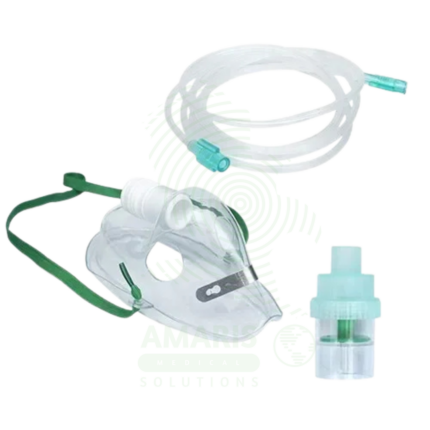
An Adult & Pediatric Nebulizer Kit is a complete set of patient-contact components required for aerosol medication delivery, including a nebulizer cup, connecting tubing, and both an adult mouthpiece and a pediatric mask (or universal fit). Designed for use with a compressor, it provides the delivery circuit for treating asthma, COPD, and other respiratory conditions. Available in disposable (single-patient-use) formats for infection control in clinics or reusable formats for home care, its proper use, coupled with rigorous cleaning for reusable kits, is essential for effective therapy and preventing respiratory infections. The kit's universal connectors ensure compatibility with standard compressors.
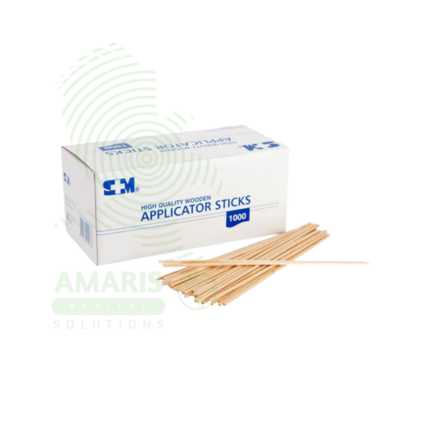
Applicator Sticks
Applicator Sticks are single-use medical devices with absorbent tips (cotton, rayon, flocked polyester) on wood, plastic, or paper shafts for collecting clinical specimens (throat, nasal, wound, cervical, urethral, rectal) for microbiological culture, rapid testing, and molecular diagnostics. Sterile individually wrapped or non-sterile bulk formats. Flocked swabs provide >90% specimen release for PCR testing. Primary applications include specimen collection for infection diagnosis, wound care and antiseptic application, gynecological sampling (Pap smears, STI testing), eye/ear specimen collection, laboratory slide preparation, and forensic evidence collection. Critical precautions include single-use only, sterile technique, proper collection method, and biohazard disposal. Essential consumable in all clinical settings.
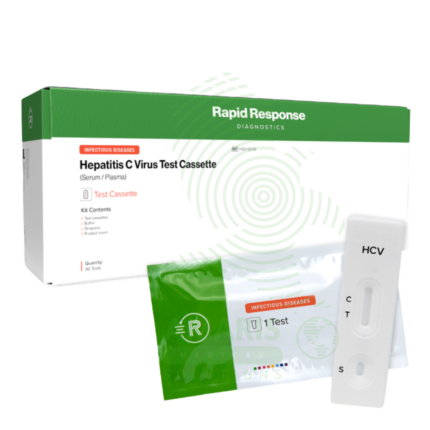
Hepatitis C Test Kit
The Hepatitis C Test Kit is an in vitro diagnostic device for the detection of Hepatitis C virus antibodies or RNA in human blood, serum, or plasma samples. Available in rapid, laboratory immunoassay, and molecular formats, it screens for HCV infection, confirms active infection with RNA testing, and monitors treatment response. With high sensitivity and specificity exceeding 99%, it is essential for identifying infected individuals, linking them to curative direct-acting antiviral therapy, and confirming cure. Essential applications include risk-based screening of high-risk populations, birth cohort screening of baby boomers, evaluation of acute hepatitis, management of occupational exposures, and monitoring of antiviral therapy that can cure over 95% of infections. All patient samples must be handled with universal precautions, and positive antibody results require confirmatory testing.
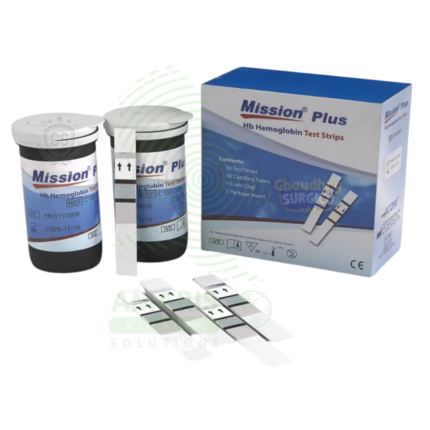
Mission plus strips
Mission Plus Strips are single-use, disposable electrochemical test strips (ISO 15197:2013 compliant) designed exclusively for use with Mission Plus glucose meters to measure capillary blood glucose from 0.5-1.0 µL samples in 5-7 seconds. Each strip contains glucose oxidase or glucose dehydrogenase reagents that generate electrical current proportional to glucose concentration (20-600 mg/dL range). Packaging options include multi-strip vials (25-100 strips) with desiccant for daily use or individually foil-wrapped strips for travel. Strips feature no-coding automatic calibration, hematocrit compensation (20-60%), and interference resistance. Primary clinical applications include daily blood glucose testing for Type 1, Type 2, and gestational diabetes management, hypoglycemia and hyperglycemia detection, pre- and post-meal glucose assessment, and hospital point-of-care testing. Critical safety precautions include single-use only, immediate vial closure after strip removal to prevent humidity damage, storage at 2-30°C away from bathrooms and temperature extremes, never using expired strips, proper hand hygiene before testing, and disposal in sharps containers. Essential consumable for diabetes self-management when used with Mission Plus meters.
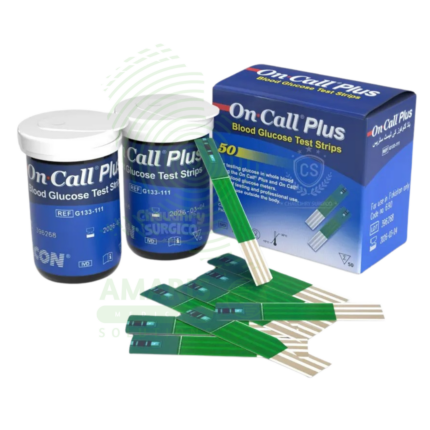
On Call Blood Sugar Strips
On Call Blood Sugar Strips are single-use, disposable electrochemical test strips (ISO 15197:2013 compliant) designed exclusively for use with On Call glucose meters to measure capillary blood glucose from 0.5-1.0 µL samples in 5-7 seconds. Each strip contains glucose oxidase or glucose dehydrogenase reagents that generate electrical current proportional to glucose concentration (20-600 mg/dL range). Packaging options include multi-strip vials (25-100 strips) with desiccant for daily use or individually foil-wrapped strips for travel. Strips feature no-coding automatic calibration, hematocrit compensation (20-60%), and interference resistance. Primary clinical applications include daily blood glucose testing for Type 1, Type 2, and gestational diabetes management, hypoglycemia and hyperglycemia detection, pre- and post-meal glucose assessment, and hospital point-of-care testing. Critical safety precautions include single-use only, immediate vial closure after strip removal to prevent humidity damage, storage at 2-30°C away from bathrooms and temperature extremes, never using expired strips, proper hand hygiene before testing, and disposal in sharps containers. Essential consumable for diabetes self-management when used with On Call meters.
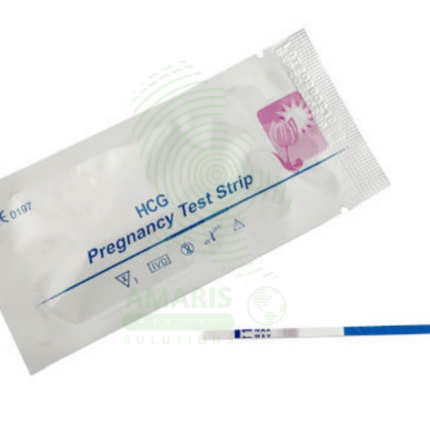
Pregnancy Test Strips
Pregnancy Test Strips are simple, dip-style lateral flow devices designed for the rapid, qualitative detection of human chorionic gonadotropin (hCG) in urine to indicate pregnancy. As the most fundamental format of home pregnancy tests, they offer high sensitivity (often from 10 mIU/mL), affordability, and a quick result within 3-5 minutes. Their ease of use makes them a widely accessible first step in pregnancy detection for personal use and clinical screening. A visible test line, even if faint, is a positive result, though confirmation with a healthcare provider is always recommended.
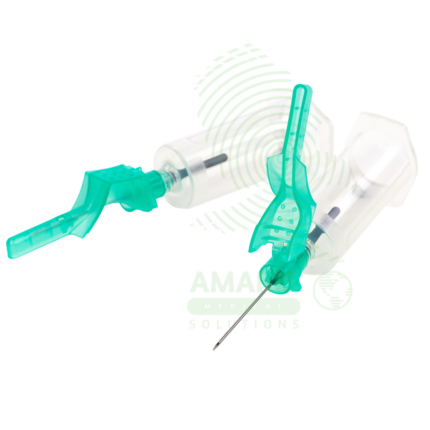
SAFE SERIES Blood Collection Needles
The SAFE SERIES (AM-SAFE) by Beijing Precil (Mindray subsidiary) is a comprehensive line of safety-engineered blood collection devices designed to prevent accidental needlestick injuries in healthcare workers. The series includes venous blood collection needles (AM-SAFE-V), standard safety needles (AM-SAFE1), winged infusion sets/butterfly needles (AM-SAFE2), high-gauge thin-wall needles for fragile veins (AM-SAFE3), premium coated needles for enhanced patient comfort (AM-GOLD), and nurse-friendly one-handed safety variants (AM-NURSE). All devices incorporate integral safety mechanisms that shield the contaminated needle immediately after withdrawal, complying with OSHA Needlestick Safety and Prevention Act requirements. Available in various gauges (18G-25G) and configurations for routine venipuncture, difficult vein access, pediatric/geriatric patients, and frequent blood draws. Sterile, single-use, latex-free, and color-coded for easy gauge identification. Essential safety devices for blood collection in hospitals, clinics, laboratories, and home healthcare settings.