Dermatoscope and Magnifiers
 Diagnostic Kits
 Vital Signs Monitors
 Stethoscopes and Accessories
 Otoscopes, Ophthalmoscopes, and Retinoscopes
 Reflex Hammers and Neurological Tools
 Scales and Measuring Devices
 Spirometers and Pulmonary Function Tests
 Electrosurgical Units and Accessories
 Cutting Instruments
 Grasping and Holding Instruments
 Hemostatic Instruments
 Specialized Surgical Sets
 Single-Use Procedure Trays and Packs
 Surgical Drapes, Gowns, and Covers
 Tissue Unifying Instruments
 Radiation Protection
 X-Ray Machines and Accessories
 Ultrasound Systems and Probes
 MRI and CT Scanners
 Radiology Consumables
 Bone Densitometers
 Fluoroscopy Equipment
 Imaging Tables and Positioning Aids
 Microscopes and Accessories
 Centrifuges and Separators
 Analyzers
 Incubators and Ovens
 Pipettes, Dispensers, and Lab Glassware
 Refrigerators, Freezers, and Storage Units
 Lab Consumables
 Sterilizers and Autoclaves for Lab Use
 Multi-Parameter Monitors
 Ventilators and Respiratory Support Devices
 Defibrillators and AEDs
 Infusion Pumps and IV Systems
 Patient Warmers and Cooling Devices
 Central Monitoring Stations
 Accessories
 Anesthesia Machines and Workstations
 Oxygen Concentrators and Delivery Systems
 Nebulizers and Inhalers
 CPAP/BiPAP Machines
 Airway Management
 Anesthesia Masks, Circuits, and Bags
 Humidifiers and Heaters
 Respiratory Therapy Accessories
 First Aid Kits and Cabinets
 Emergency Resuscitation Equipment
 Trauma Supplies
 Emergency Carts and Crash Carts
 Burn Care Products
 Bleeding Control
 Automated External Defibrillators (AEDs)
 Transport and Evacuation
 Wheelchairs and Accessories
 Walkers, Crutches, and Canes
 Prosthetics and Orthotics
 Physical Therapy Equipment
 Transfer Devices
 Bathroom Safety
 Orthopedic Traction and Tables
 Hot/Cold Therapy Packs and Units
 Beds and Mattresses
 Chairs and Stools
 Tables
 Cabinets and Storage
 Privacy Screens & Curtains
 Stands and Racks
 Linens and Textiles
 Lighting
 Autoclaves and Sterilizers
 Ultrasonic Cleaners
 Disinfectant Solutions and Wipes
 Sterilization Pouches, Wraps, and Indicators
 Instrument Trays and Containers
 UV and Ozone Disinfection Devices
 Washer Disinfectors
 Wound Care
 Gloves
 Masks and Respirators
 Catheters and Tubing
 Swabs, Applicators, and Sponges
 Incontinence Products
 Personal Protective Equipment (PPE)
 Dental Chairs and Units
 Handpieces and Burs
 Instruments
 Consumables
 Sterilization for Dental Use
 Orthodontic Supplies
 Endodontic Tools
 Slit Lamps and Tonometers
 Lensometers and Phoropters
 Ophthalmic Surgical Instruments
 Eyewear Frames and Lenses
 Contact Lens Supplies
 Vision Testing Charts and Devices
 Eye Care Consumables
 Laser Systems for Eye Care
 ENT Exam Chairs and Tables
 Endoscopes
 Audiometers and Hearing Tests
 ENT Instruments
 Nasal and Throat Packs
 Hearing Aids and Accessories
 Otology Supplies
 Fetal Dopplers and Monitors
 Delivery Beds and Tables
 Gynecological Instruments
 Neonatal Incubators and Warmers
 Breast Pumps and Accessories
 Contraceptive Devices
 Maternity Supports and Pads
 Neonatal Consumables
 Cystoscopes and Urethroscopes
 Dialysis Machines and Supplies
 Urological Catheters and Bags
 Lithotripters
 Prostate Treatment Devices
 Urinary Incontinence Products
 Kidney Stone Management Tools
 Consumables & Disposables
 EEG and EMG Machines
 Neurosurgical Instruments
 Nerve Stimulators
 Headrests and Positioning Aids
 Lumbar Puncture Kits
 Seizure Monitoring Devices
 Consumables
 Rehabilitation for Neurological Conditions
 ECG Machines and Accessories
 Holter Monitors
 Stress Test Systems
 Pacemakers and Defibrillator Accessories
 Vascular Access Devices
 Cardiac Catheters and Guidewires
 Blood Flow Meters
 Consumables
 Orthopedic Instruments
 Casts, Splints, and Padding
 Joint Replacement Supplies
 Prosthetic Limbs and Components
 Bone Grafts and Substitutes
 Traction Devices
 Orthopedic Braces and Supports
 Rehabilitation Aids for Orthopedics
 Home Oxygen Therapy
 Hospital Beds for Home Use
 Mobility Aids
 Bathroom and Daily Living Aids
 Wound Care for Home
 Monitoring Devices
 Enteral Feeding Pumps and Tubes
 Hand Sanitizers and Dispensers
 Face Shields and Goggles
 Isolation Gowns and Suits
 Biohazard Waste Containers
 Air Purifiers and HEPA Filters
 Surface Disinfectants
 Sharps Containers
 Protective Barriers
 Cardiovascular & Endurance Training
 Strength Training & Weightlifting
 Functional Training & Core Conditioning
 Physical Therapy & Rehabilitation
 Sports & Outdoor Recreation
 Gym Flooring & Facility Equipment
 Fitness Monitoring & Accessories
 Kids & Novelties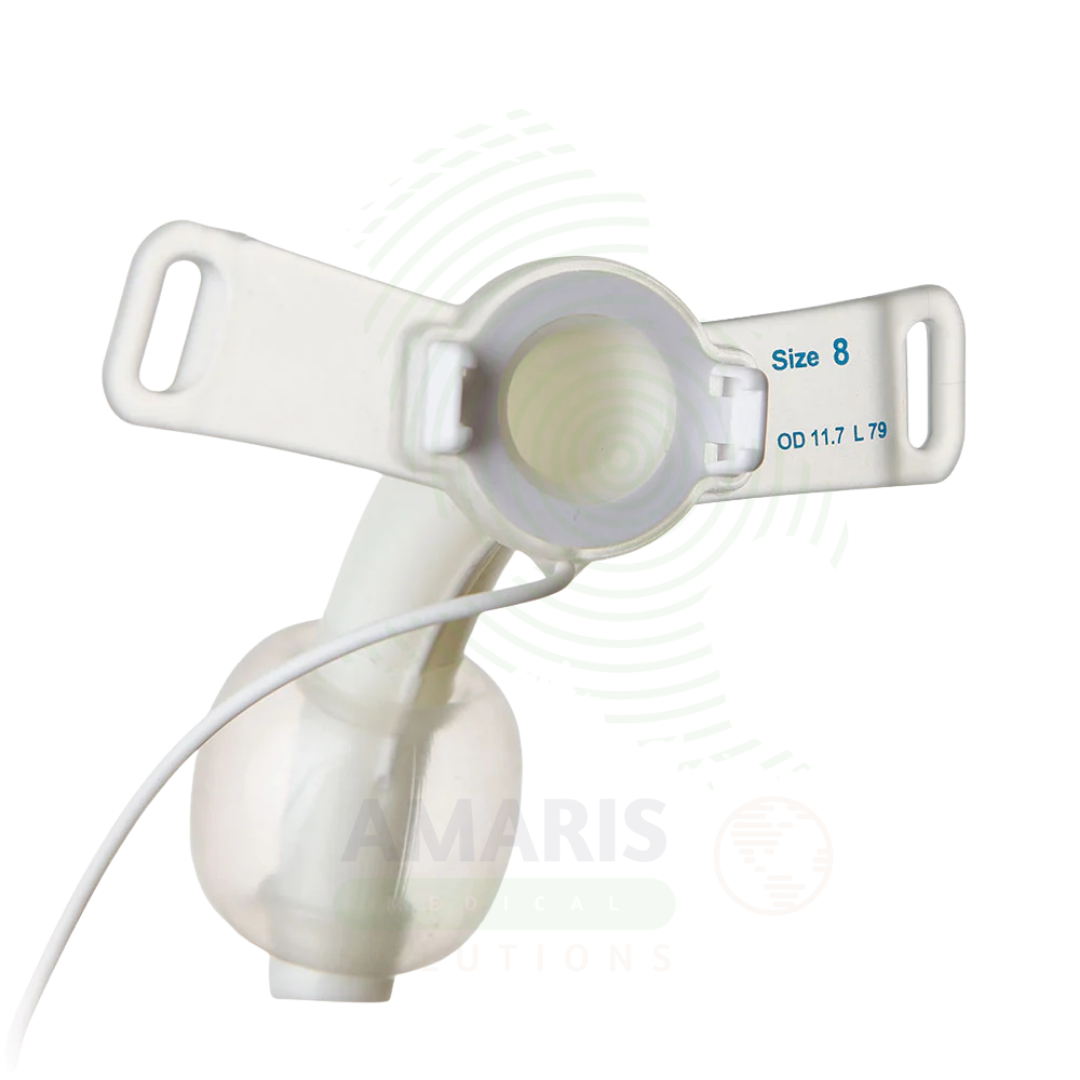
Double Barrel Tracheostomy Tubes Cuffed
$1.00
WhatsApp Order
Double Barrel Tracheostomy Tubes Cuffed are dual-lumen tracheostomy tubes designed for complex airway management, allowing simultaneous ventilation and airway access through separate channels. The dual cuffs provide independent sealing for each lumen, enabling continuous ventilation during suctioning, bronchoscopy, or medication delivery. Essential for intensive care, thoracic surgery, and patients requiring frequent airway interventions, they provide uninterrupted respiratory support while maintaining airway access.
Description
Double Barrel Tracheostomy Tubes Cuffed
PRIMARY CLINICAL & DIAGNOSTIC USES
1. Dual Airway Access for Complex Respiratory Management
-
Primary Use: Provides two separate airway channels within a single tracheostomy tube, allowing for simultaneous ventilation, suctioning, or medication delivery through one lumen while the other maintains ventilation. This is essential for patients requiring frequent airway interventions or those with complex respiratory needs.
-
How it helps: For the intensivist and respiratory therapist, the double barrel design allows for uninterrupted ventilation while providing a dedicated channel for suctioning, bronchoscopy, or medication delivery—maintaining respiratory support while addressing airway needs. For the patient with complex respiratory requirements, this means continuous ventilation without interruption during necessary airway procedures.
2. Independent Ventilation for Each Lung
-
Primary Use: The dual lumen design allows for selective ventilation of each mainstem bronchus when properly positioned, enabling independent control of ventilation to each lung in patients with unilateral lung disease, bronchopleural fistula, or during thoracic procedures.
-
How it helps: For the thoracic surgeon and intensivist, double barrel tracheostomy tubes provide the ability to ventilate each lung independently—allowing for differential management of lung pathology, selective lung isolation, and tailored ventilatory support. For the patient with unilateral lung disease or requiring lung isolation, this enables optimized ventilation and protection of the healthy lung.
3. Continuous Ventilation During Suctioning
-
Primary Use: One lumen maintains ventilation while the other allows for suctioning of secretions without interrupting respiratory support, reducing the risk of desaturation during airway clearance procedures.
-
How it helps: For the respiratory therapist and critical care nurse, the dual lumen design enables simultaneous ventilation and suctioning—preventing the oxygen desaturation that often occurs when patients are disconnected from the ventilator for airway clearance. For the patient with copious secretions or tenacious mucus, this means effective airway clearance without the risk of hypoxemia.
4. Dedicated Channel for Bronchoscopy
-
Primary Use: Provides a dedicated lumen for passage of a bronchoscope while the other lumen maintains ventilation, allowing for diagnostic and therapeutic bronchoscopy without interrupting respiratory support.
-
How it helps: For the pulmonologist and intensivist, the double barrel design enables bronchoscopy to be performed on a ventilated patient without disconnecting the ventilator—allowing for continuous monitoring and support throughout the procedure. For the patient requiring bronchoscopy, this means the procedure can be performed safely without repeated episodes of desaturation.
4. Simultaneous Medication Delivery
-
Primary Use: Allows for continuous or intermittent delivery of aerosolized medications, mucolytics, or bronchodilators through one lumen while ventilation continues through the other.
-
How it helps: For the respiratory therapist, the dedicated channel enables uninterrupted medication delivery while maintaining ventilation—allowing for simultaneous treatment of airway conditions without compromising respiratory support. For the patient with reactive airways or thick secretions, this means continuous therapy without interruption to ventilation.
SECONDARY & SUPPORTIVE USES
1. Management of Bronchopleural Fistula: Allows for differential ventilation to manage air leaks while maintaining adequate ventilation.
2. Lung Isolation for Thoracic Procedures: Enables selective lung ventilation during thoracic surgery or interventional procedures.
3. Difficult Weaning: Provides additional airway access for weaning strategies in patients with complex respiratory failure.
4. Pediatric Applications: Smaller double barrel tracheostomy tubes available for children with complex airway needs.
5. Home Ventilation: Used for long-term ventilated patients requiring frequent airway interventions.
6. Tracheal Stenosis Management: Provides airway support while allowing for interventions in patients with tracheal narrowing.
KEY PRODUCT FEATURES
1. BASIC IDENTIFICATION ATTRIBUTES
-
Device Type: A dual-lumen tracheostomy tube with inflatable cuffs for each lumen, allowing for independent airway management.
-
Designation: Double Barrel Tracheostomy Tube, Dual Lumen Tracheostomy Tube, Double Lumen Trach Tube.
-
Key Components:
-
Two Separate Lumens: Independent channels for ventilation and airway access.
-
Dual Cuffs: Two inflatable cuffs, one for each lumen, providing separate sealing.
-
Pilot Balloons: Two pilot balloons for monitoring cuff inflation.
-
Inflation Valves: One-way valves for cuff inflation with syringe.
-
Connectors: Standard 15 mm connectors for ventilator circuits.
-
Flange: Adjustable neck flange for secure positioning.
-
Depth Markings: Centimeter markings for accurate placement.
-
2. TECHNICAL & PERFORMANCE PROPERTIES
-
Sizes: Various sizes for pediatric and adult patients.
-
Lumen Diameter: Each lumen sized to accommodate suction catheters or bronchoscopes.
-
Cuff Type: High-volume, low-pressure cuffs to minimize tracheal injury.
-
Cuff Pressure: Maintain between 20-30 cm H₂O to prevent mucosal ischemia.
-
Material: Medical-grade silicone or PVC; biocompatible, non-toxic.
-
Sterility: Ethylene oxide or gamma irradiation sterilized.
3. PHYSICAL & OPERATIONAL PROPERTIES
-
Construction: Dual-lumen design with separate channels; smooth, atraumatic surface.
-
Flange: Adjustable for patient comfort; securement tape or ties.
-
Connectors: Standard 15 mm ISO connectors for each lumen.
-
Pilot Balloons: Color-coded for each cuff.
-
Packaging: Sterile, single-use; individually packaged.
4. SAFETY & COMPLIANCE ATTRIBUTES
-
Regulatory Status: Class II medical device regulated by FDA.
-
Cuff Safety: High-volume, low-pressure design minimizes tracheal injury risk.
-
Biocompatibility: Materials safe for tracheal contact.
-
Latex-Free: Manufactured without natural rubber latex.
5. STORAGE & HANDLING ATTRIBUTES
-
Storage: Store in a clean, dry location at room temperature; protect from heat.
-
Sterility Maintenance: Do not use it if the package is opened, damaged, or wet.
-
Expiration: Check expiration date before use; do not use after expiration.
-
Single-Use Only: Intended for single patient use only; do not resterilize or reuse.
6. LABORATORY & CLINICAL APPLICATIONS
-
Primary Application: Complex airway management requiring simultaneous ventilation and airway access.
-
Clinical Role: Essential equipment in intensive care, thoracic surgery, and long-term ventilation.
SAFETY HANDLING PRECAUTIONS
1. SAFETY PRECAUTIONS
-
Lumen Identification: Clearly identify which lumen is for ventilation and which is for access.
-
Cuff Pressure Monitoring: Monitor both cuffs independently; maintain pressures within safe range.
-
Tube Positioning: Verify correct positioning by bronchoscopy or radiography.
-
Suctioning Technique: Use appropriate suction catheter size for each lumen.
-
Securement: Ensure tube is properly secured to prevent dislodgement.
-
Regular Inspection: Monitor for tube migration or cuff failure.
2. FIRST AID MEASURES
-
Tube Displacement: If tube is displaced, manually ventilate patient; replace tube as needed.
-
Cuff Rupture: If cuff ruptures, consider tube replacement if the seal cannot be maintained.
-
Obstruction: If lumen is obstructed, attempt to suction; consider tube replacement if patency cannot be restored.
3. FIRE FIGHTING MEASURES
-
Flammability: Plastic components are combustible; an oxygen-enriched environment increases fire risk.
-
Extinguishing Media: For fire, disconnect oxygen source; use appropriate extinguisher.
Related products
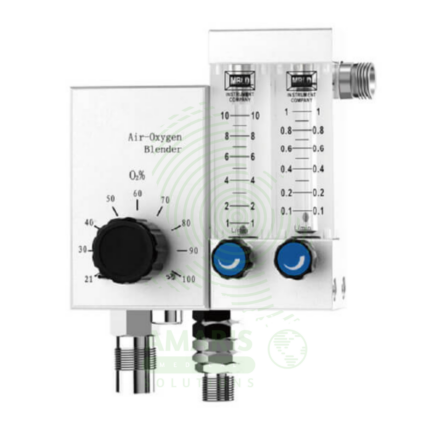
Air & Oxygen Blender
An Air & Oxygen Blender is a Class II medical device that precisely mixes compressed medical air and oxygen to deliver controlled fractions of inspired oxygen (FiO2 21-100%) to patients requiring respiratory support. Essential in neonatal, pediatric, and adult critical care, these devices ensure accurate oxygen delivery via ventilators, CPAP systems, oxygen hoods, incubators, and transport systems. Operating at 40-60 psi inlet pressure, they maintain set FiO2 within ±2-5% accuracy across varying flow demands (0-120 L/min). Gas-specific DISS or NIST fittings prevent dangerous cross-connection between oxygen and air supplies. Available in wall-mounted, rail-mounted, portable, and ventilator-integrated configurations. Primary clinical applications include neonatal intensive care (oxygen hoods, incubators, nasal CPAP), pediatric and adult mechanical ventilation, non-invasive ventilation, and critical care transport. Critical safety requirements include verification of correct gas connections, regular calibration, leak testing, and immediate response to gas supply failure alarms. Indispensable for preventing both hypoxemia and oxygen toxicity (particularly retinopathy of prematurity in neonates) in patients requiring precise oxygen therapy.
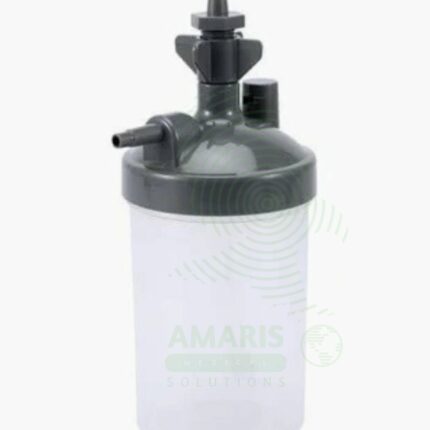
Humidifier Bottle
A Humidifier Bottle is a water reservoir device that adds moisture to dry medical oxygen before delivery to the patient. It attaches between the oxygen flow meter and the patient's oxygen delivery device, bubbling oxygen through sterile water to achieve relative humidity levels of 80-95%. Essential for patients receiving oxygen at flow rates above 4-6 liters per minute, it prevents drying of the nasal mucosa, pharynx, and lower airways, reducing discomfort and maintaining normal mucociliary clearance. Available in disposable sterile and reusable configurations, the bottle requires daily water changes with sterile water and proper positioning below the patient to prevent water carryover. Pressure relief valves protect against over-pressurization.
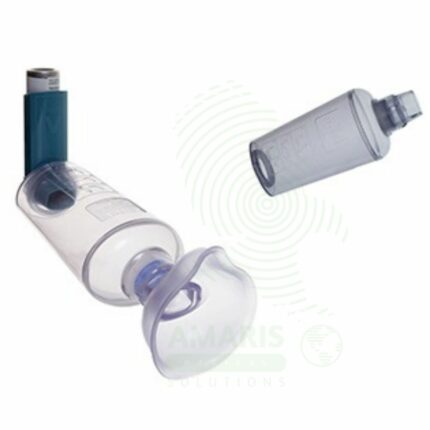
Inhaler Spacer with Child Mask
An Inhaler Spacer with Child Mask is a valved holding chamber designed to optimize aerosol medication delivery from metered-dose inhalers to infants and young children. The spacer captures the medication spray, allowing the child to inhale over multiple breaths, while the soft mask creates a seal over the nose and mouth. This improves pulmonary drug deposition, reduces oropharyngeal side effects, and eliminates the need for complex breath coordination. Essential for pediatric asthma management, the spacer enables effective inhaler use in children as young as infancy, supporting home management of reactive airway disease.
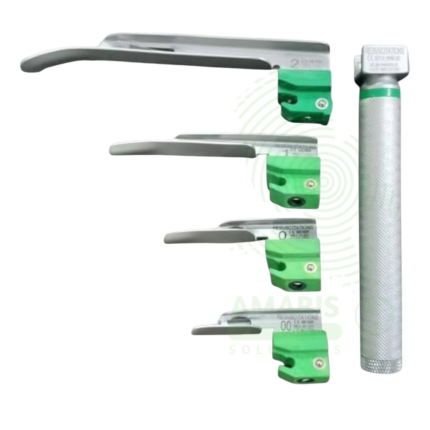
Miller Fiber Optic Laryngoscope
A Miller Fiber Optic Laryngoscope is a rigid laryngoscope with straight Miller blade (sizes 0-4, 70-160 mm) incorporating an integrated fiber optic light bundle that transmits bright, focused illumination (2,000-10,000+ Lux) from a handle-mounted LED or xenon bulb to the blade tip for enhanced visualization during tracheal intubation. The straight blade design allows direct elevation of the epiglottis rather than the indirect vallecula technique, making it particularly useful for pediatric/neonatal intubation, patients with floppy or prominent epiglottis, anterior airways, and difficult airways requiring direct epiglottic control. Features stainless steel reusable blades, ergonomic handles with knurled grip, ISO standard hook-on fittings, and steam autoclave compatibility. Primary clinical applications include direct epiglottis elevation for tracheal intubation (especially pediatric and neonatal), difficult airway management with fiber optic illumination, patients with prominent or floppy epiglottis, cervical spine precautions, anterior airway management, teaching and training (straight blade technique), and neonatal resuscitation. Class II medical device requiring FDA clearance. Critical safety considerations include pre-use light check (dark spots indicate broken fibers), appropriate blade size selection (especially critical in pediatrics), proper lifting technique (direct epiglottic lift, not levering on teeth), pediatric fragility awareness, battery verification, fiber optic care (avoid sharp bending), and backup device availability.
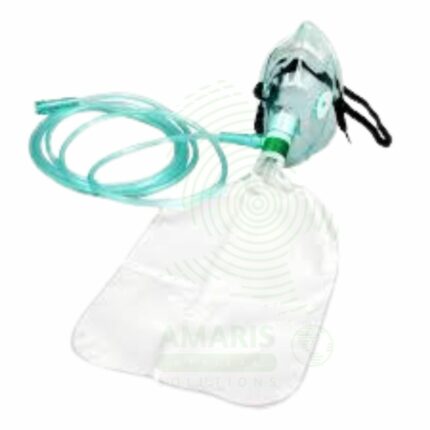
Non-Rebreathing Oxygen Mask
An Non-Rebreathing Oxygen Mask is a high-concentration oxygen delivery device designed for emergency use in critically hypoxic patients. It features a face mask with an attached reservoir bag and a system of one-way valves to prevent the rebreathing of exhaled carbon dioxide, allowing for the delivery of up to 95% FiO2. Its safe operation depends on a minimum oxygen flow of 10-15 L/min to keep the reservoir bag inflated. It is contraindicated where uncontrolled high-flow oxygen may be harmful (e.g., in some COPD patients) and carries a severe fire risk. It is a vital, immediate-intervention tool found in all emergency response settings.
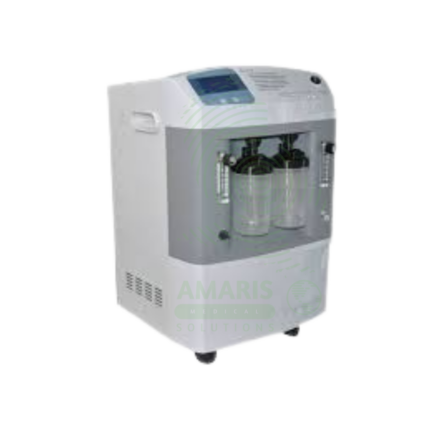
Oxygen Concentrator
An Oxygen Concentrator is a Class II medical device that delivers 90-95% pure supplemental oxygen to patients with chronic hypoxemia using pressure swing adsorption (PSA) technology to concentrate oxygen from room air. Available as stationary/home units (10-30 kg, 0.5-10 L/min continuous flow) for long-term oxygen therapy (LTOT) and portable/ambulatory units (1-10 kg, 0.5-3 L/min pulse-dose or continuous flow) for active patients requiring mobility. Features include oxygen purity monitoring with alarms, digital flow control, hour meters, washable filters, and (for portable units) rechargeable batteries, FAA approval for travel, and pulse-dose delivery to conserve oxygen. Primary clinical indications include COPD, pulmonary fibrosis, cystic fibrosis, and other chronic respiratory conditions with resting, exertional, or nocturnal hypoxemia (PaO2 ≤55 mmHg or SpO2 ≤88%). Essential for home-based oxygen therapy, enabling patients to maintain independence, reduce hospitalizations, and improve quality of life. Critical safety precautions include NO SMOKING in the oxygen environment, keeping away from heat sources and open flames, proper electrical safety, regular filter cleaning, and having backup oxygen for power outages.
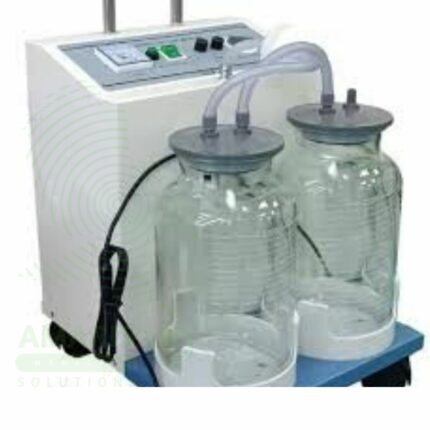
Two Bottle Suction Machine
A Two Bottle Suction Machine is a high-capacity suction unit designed for continuous, extended use in critical care, surgical, and post-operative settings. The dual-bottle system allows for seamless rotation between bottles, enabling uninterrupted suction during bottle emptying, while the larger total capacity accommodates patients with excessive secretions. Used in intensive care units, operating rooms, and post-anesthesia care units, it provides reliable suction for airway clearance, surgical field management, and chest drainage. Enhanced overflow protection, continuous operation capability, and robust pump design make it essential for patients requiring prolonged or high-volume suction support.