Dermatoscope and Magnifiers
 Diagnostic Kits
 Vital Signs Monitors
 Stethoscopes and Accessories
 Otoscopes, Ophthalmoscopes, and Retinoscopes
 Reflex Hammers and Neurological Tools
 Scales and Measuring Devices
 Spirometers and Pulmonary Function Tests
 Electrosurgical Units and Accessories
 Cutting Instruments
 Grasping and Holding Instruments
 Hemostatic Instruments
 Specialized Surgical Sets
 Single-Use Procedure Trays and Packs
 Surgical Drapes, Gowns, and Covers
 Tissue Unifying Instruments
 Radiation Protection
 X-Ray Machines and Accessories
 Ultrasound Systems and Probes
 MRI and CT Scanners
 Radiology Consumables
 Bone Densitometers
 Fluoroscopy Equipment
 Imaging Tables and Positioning Aids
 Microscopes and Accessories
 Centrifuges and Separators
 Analyzers
 Incubators and Ovens
 Pipettes, Dispensers, and Lab Glassware
 Refrigerators, Freezers, and Storage Units
 Lab Consumables
 Sterilizers and Autoclaves for Lab Use
 Multi-Parameter Monitors
 Ventilators and Respiratory Support Devices
 Defibrillators and AEDs
 Infusion Pumps and IV Systems
 Patient Warmers and Cooling Devices
 Central Monitoring Stations
 Accessories
 Anesthesia Machines and Workstations
 Oxygen Concentrators and Delivery Systems
 Nebulizers and Inhalers
 CPAP/BiPAP Machines
 Airway Management
 Anesthesia Masks, Circuits, and Bags
 Humidifiers and Heaters
 Respiratory Therapy Accessories
 First Aid Kits and Cabinets
 Emergency Resuscitation Equipment
 Trauma Supplies
 Emergency Carts and Crash Carts
 Burn Care Products
 Bleeding Control
 Automated External Defibrillators (AEDs)
 Transport and Evacuation
 Wheelchairs and Accessories
 Walkers, Crutches, and Canes
 Prosthetics and Orthotics
 Physical Therapy Equipment
 Transfer Devices
 Bathroom Safety
 Orthopedic Traction and Tables
 Hot/Cold Therapy Packs and Units
 Beds and Mattresses
 Chairs and Stools
 Tables
 Cabinets and Storage
 Privacy Screens & Curtains
 Stands and Racks
 Linens and Textiles
 Lighting
 Autoclaves and Sterilizers
 Ultrasonic Cleaners
 Disinfectant Solutions and Wipes
 Sterilization Pouches, Wraps, and Indicators
 Instrument Trays and Containers
 UV and Ozone Disinfection Devices
 Washer Disinfectors
 Wound Care
 Gloves
 Masks and Respirators
 Catheters and Tubing
 Swabs, Applicators, and Sponges
 Incontinence Products
 Personal Protective Equipment (PPE)
 Dental Chairs and Units
 Handpieces and Burs
 Instruments
 Consumables
 Sterilization for Dental Use
 Orthodontic Supplies
 Endodontic Tools
 Slit Lamps and Tonometers
 Lensometers and Phoropters
 Ophthalmic Surgical Instruments
 Eyewear Frames and Lenses
 Contact Lens Supplies
 Vision Testing Charts and Devices
 Eye Care Consumables
 Laser Systems for Eye Care
 ENT Exam Chairs and Tables
 Endoscopes
 Audiometers and Hearing Tests
 ENT Instruments
 Nasal and Throat Packs
 Hearing Aids and Accessories
 Otology Supplies
 Fetal Dopplers and Monitors
 Delivery Beds and Tables
 Gynecological Instruments
 Neonatal Incubators and Warmers
 Breast Pumps and Accessories
 Contraceptive Devices
 Maternity Supports and Pads
 Neonatal Consumables
 Cystoscopes and Urethroscopes
 Dialysis Machines and Supplies
 Urological Catheters and Bags
 Lithotripters
 Prostate Treatment Devices
 Urinary Incontinence Products
 Kidney Stone Management Tools
 Consumables & Disposables
 EEG and EMG Machines
 Neurosurgical Instruments
 Nerve Stimulators
 Headrests and Positioning Aids
 Lumbar Puncture Kits
 Seizure Monitoring Devices
 Consumables
 Rehabilitation for Neurological Conditions
 ECG Machines and Accessories
 Holter Monitors
 Stress Test Systems
 Pacemakers and Defibrillator Accessories
 Vascular Access Devices
 Cardiac Catheters and Guidewires
 Blood Flow Meters
 Consumables
 Orthopedic Instruments
 Casts, Splints, and Padding
 Joint Replacement Supplies
 Prosthetic Limbs and Components
 Bone Grafts and Substitutes
 Traction Devices
 Orthopedic Braces and Supports
 Rehabilitation Aids for Orthopedics
 Home Oxygen Therapy
 Hospital Beds for Home Use
 Mobility Aids
 Bathroom and Daily Living Aids
 Wound Care for Home
 Monitoring Devices
 Enteral Feeding Pumps and Tubes
 Hand Sanitizers and Dispensers
 Face Shields and Goggles
 Isolation Gowns and Suits
 Biohazard Waste Containers
 Air Purifiers and HEPA Filters
 Surface Disinfectants
 Sharps Containers
 Protective Barriers
 Cardiovascular & Endurance Training
 Strength Training & Weightlifting
 Functional Training & Core Conditioning
 Physical Therapy & Rehabilitation
 Sports & Outdoor Recreation
 Gym Flooring & Facility Equipment
 Fitness Monitoring & Accessories
 Kids & Novelties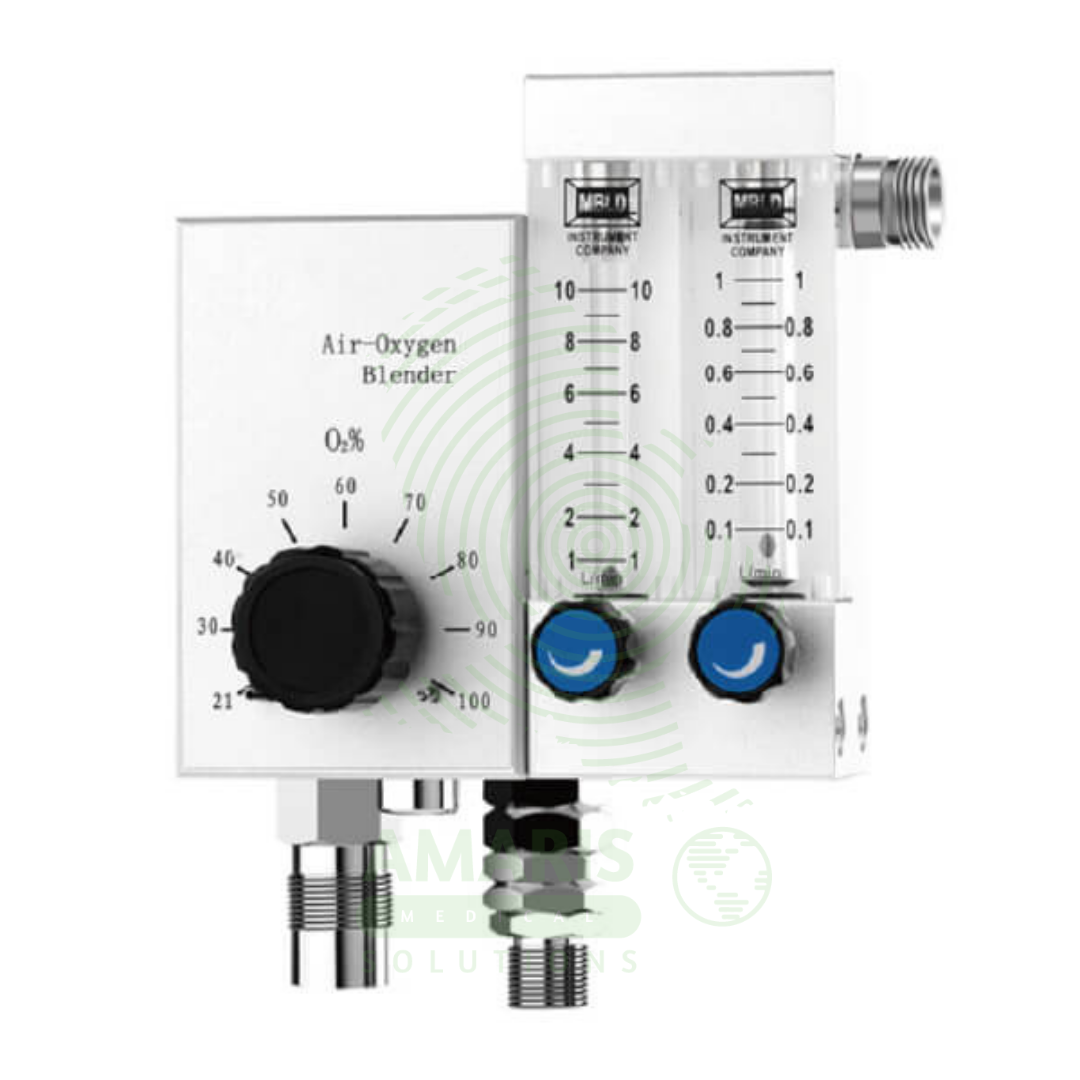
Air & Oxygen Blender
$1.00
WhatsApp Order
An Air & Oxygen Blender is a Class II medical device that precisely mixes compressed medical air and oxygen to deliver controlled fractions of inspired oxygen (FiO2 21-100%) to patients requiring respiratory support. Essential in neonatal, pediatric, and adult critical care, these devices ensure accurate oxygen delivery via ventilators, CPAP systems, oxygen hoods, incubators, and transport systems. Operating at 40-60 psi inlet pressure, they maintain set FiO2 within ±2-5% accuracy across varying flow demands (0-120 L/min). Gas-specific DISS or NIST fittings prevent dangerous cross-connection between oxygen and air supplies. Available in wall-mounted, rail-mounted, portable, and ventilator-integrated configurations. Primary clinical applications include neonatal intensive care (oxygen hoods, incubators, nasal CPAP), pediatric and adult mechanical ventilation, non-invasive ventilation, and critical care transport. Critical safety requirements include verification of correct gas connections, regular calibration, leak testing, and immediate response to gas supply failure alarms. Indispensable for preventing both hypoxemia and oxygen toxicity (particularly retinopathy of prematurity in neonates) in patients requiring precise oxygen therapy.
Description
Air & Oxygen Blender
PRIMARY CLINICAL & DIAGNOSTIC USES
1. Precise Oxygen Delivery in Neonatal and Pediatric Care
-
Primary Use: Essential in neonatal and pediatric intensive care units (NICU/PICU) to deliver precise, blended oxygen concentrations (21-100%) to infants and children receiving respiratory support.
-
How it helps: For the neonatologist and respiratory therapist, it allows them to dial in the exact fraction of oxygen a fragile infant needs, avoiding dangerous swings. For the premature baby and their worried family, this precision is critical—it provides the exact oxygen their developing body requires without the risk of blindness (retinopathy of prematurity) or lung damage caused by too much or too little oxygen.
2. Oxygen Therapy for Chronic Respiratory Conditions
-
Primary Use: Used in adult respiratory care to deliver controlled oxygen concentrations to patients with COPD, pulmonary fibrosis, and other chronic lung diseases.
-
How it helps: For the pulmonologist, it enables personalized oxygen prescribing based on the patient’s specific condition and blood gas results. For the patient with chronic lung disease, it ensures they receive enough oxygen to function without suppressing their drive to breathe (a particular concern in some COPD patients), striking the perfect balance between safety and comfort.
3. Mechanical Ventilation Support
-
Primary Use: Integrated into ventilator circuits to provide precise FiO₂ (fraction of inspired oxygen) control during invasive and non-invasive mechanical ventilation.
-
How it helps: For the intensivist and respiratory therapist managing a critically ill patient, it provides the ability to fine-tune oxygen delivery moment by moment as the patient’s condition changes. For the ventilated patient, this means their oxygen levels are continuously optimized—high enough to keep organs functioning, but low enough to prevent the lung injury and toxicity that comes from prolonged exposure to pure oxygen.
4. CPAP and BiPAP Therapy
-
Primary Use: Used with CPAP and BiPAP systems to deliver blended oxygen for patients with sleep apnea, respiratory distress, or weaning from mechanical ventilation.
-
How it helps: For the sleep medicine specialist and respiratory team, it allows for effective non-invasive support without the risks of uncontrolled oxygen. For the patient transitioning off a ventilator or managing sleep-disordered breathing, it provides comfortable, precisely dosed support that helps them breathe easier without the side effects of incorrect oxygen levels.
5. Transport Ventilation
-
Primary Use: Portable air/oxygen blenders are used during intra-hospital and inter-hospital transport of critically ill patients requiring continuous oxygen therapy with precise FiO₂ control.
-
How it helps: For the critical care transport team, a portable blender ensures that the precision of the ICU follows the patient through hallways, elevators, and ambulances. For the unstable patient being moved between facilities or departments, it provides continuity of care—the same exact oxygen concentration they stabilized on in the ICU travels with them, preventing deterioration during this vulnerable period.
6. Anesthesia Delivery Systems
-
Primary Use: Integrated into anesthesia machines to deliver precise oxygen/nitrous oxide mixtures during surgical procedures.
-
How it helps: For the anesthesiologist, it provides reliable control over gas mixtures, ensuring the patient remains at the optimal depth of anesthesia while maintaining safe oxygen levels. For the patient undergoing surgery, it is an invisible but critical safeguard, ensuring they receive exactly the gas mixture needed to remain unconscious, pain-free, and physiologically stable throughout the procedure.
SECONDARY & SUPPORTIVE USES
1. Research and Laboratory Applications: For the research scientist, it enables precise gas mixing for experimental protocols. For the future patient, it supports the development of new respiratory treatments and a deeper understanding of lung physiology.
2. Veterinary Medicine: For the veterinarian, it provides the same precision in anesthesia and critical care for animals. For the pet owner, it ensures their beloved companion receives the same high standard of respiratory support as a human family member would.
3. Home Oxygen Therapy (Advanced Systems): For the home care provider, it enables complex respiratory support outside the hospital. For the patient with chronic respiratory failure, it allows them to live at home with their family while receiving sophisticated, precisely controlled oxygen therapy.
4. Emergency Medical Services (EMS): For the paramedic in the back of a speeding ambulance, a portable blender brings ICU-level precision to the field. For the patient in respiratory distress, it means sophisticated care begins at the scene, not just at the hospital door.
5. Diving Medicine: For the hyperbaric medicine specialist, it enables safe gas mixing for chamber operations. For the diver or patient receiving hyperbaric treatment, it ensures the gas they breathe under pressure is precisely controlled to prevent complications.
6. Teaching and Training: For the respiratory therapy educator, it demonstrates the principles of oxygen delivery and gas mixing. For the student, hands-on experience with blenders builds competence that will later keep their future patients safe.
KEY PRODUCT FEATURES
1. BASIC IDENTIFICATION ATTRIBUTES
-
Product Type: Medical device that precisely mixes compressed air and oxygen to deliver a specific fraction of inspired oxygen (FiO2) to patients requiring respiratory support.
-
Common Names: Air/Oxygen Blender, Oxygen Blender, Gas Blender, Medical Gas Mixer, FiO2 Controller, Oxygen/Air Proportioner.
-
Gas Sources: Requires two separate gas sources:
-
Medical-grade compressed air (50-55 psi typical)
-
Medical-grade oxygen (50-55 psi typical)
-
-
Output Range: 21-100% oxygen (21% = room air; 100% = pure oxygen).
-
Flow Rate Capacity: 0-120 L/min depending on model (neonatal: 0-30 L/min; adult: 0-120 L/min).
-
Accuracy: ±2-5% of set FiO2 (varies by model and flow rate).
-
Gas Connections: DISS (Diameter Index Safety System) or NIST (Non-Interchangeable Screw Thread) fittings specific to gas type (oxygen and air have different fittings to prevent cross-connection).
-
Mounting Options: Wall-mounted, rail-mounted, portable, or integrated into ventilators/incubators.
-
Output Ports: Standard 22 mm male or female tapered fittings for connection to patient circuits.
-
Pressure Gauges: Built-in gauges showing inlet pressures for air and oxygen.
-
Control Mechanism: Manual dial or digital control for setting desired FiO2.
2. TECHNICAL & PERFORMANCE PROPERTIES
-
Mixing Principle: Proportioning valves or fixed-orifice flow control elements that maintain constant mixture regardless of flow rate changes.
-
Operating Pressure Range: 40-60 psi (typically 50 psi nominal).
-
Pressure Equalization: Internal regulation ensures consistent output even if one gas supply pressure fluctuates.
-
Flow Compensation: Maintains FiO2 across varying flow demands (patient breathing, ventilator cycling).
-
Oxygen Failure Protection: Some models include alarms or automatic shut-off if oxygen supply fails.
-
Accuracy Verification: Should be periodically calibrated to ensure output matches set value.
-
Response Time: Instantaneous (<1 second) to changes in set FiO2 or flow demand.
-
Internal Volume: Minimal dead space to prevent gas mixing delays.
-
Gas Consumption: No internal consumption; all gas delivered to patient.
-
Operating Temperature: 10-40°C (50-104°F).
-
Humidity Range: 0-95% non-condensing.
3. PHYSICAL & OPERATIONAL PROPERTIES
-
Dimensions: 15-25 cm × 10-20 cm × 10-15 cm (varies by model).
-
Weight: 1-5 kg depending on materials and configuration.
-
Housing: Durable ABS plastic, aluminum, or stainless steel; designed for medical environments.
-
Controls: Rotary dial with calibrated scale (analog) or digital keypad with LED display (digital models).
-
Display: Analog scale or digital readout showing set FiO2 and inlet pressures.
-
Input Connections: DISS or NIST fittings (gender-specific to prevent misconnection).
-
Output Connections: Standard 22 mm male or female taper.
-
Mounting Brackets: Integral for wall or rail mounting; some models with portable stands.
-
Color Coding: Oxygen connections green (USA) or white (ISO); air connections yellow (USA) or black (ISO).
-
Alarms: Optional low inlet pressure alarms, oxygen failure alarms.
-
Certifications: Complies with relevant medical gas device standards (ISO 10524-1, ISO 80601-2-12).
4. SAFETY & COMPLIANCE ATTRIBUTES
-
Regulatory Status: Class II medical device requiring FDA 510(k) clearance; CE marked for European market.
-
Clinical Standards: Complies with ISO 10524-1 (pressure regulators for medical gases) and ISO 80601-2-12 (critical care ventilators - blender component).
-
Gas-Specific Connections: DISS or NIST fittings prevent accidental connection to the wrong gas source (oxygen/air fittings are not interchangeable).
-
Pressure Regulation: Built-in regulators maintain constant output pressure regardless of inlet fluctuations.
-
Check Valves: Prevent backflow between gas sources.
-
Oxygen Failure Alarm: Some models include audible alarm if oxygen pressure drops below safe level.
-
Flow Stability: Maintains set FiO2 across varying flow demands (patient breathing).
-
Electrical Safety: Digital models comply with IEC 60601-1 for medical electrical equipment.
-
Biocompatibility: Gas pathways meet requirements for medical gas delivery.
-
Cleaning: Surfaces designed for cleaning with hospital disinfectants.
-
Quality Management: Manufactured under ISO 13485 certified processes.
5. STORAGE & HANDLING ATTRIBUTES
-
Storage: Store in a clean, dry environment; protect from dust and physical damage.
-
Installation: Must be installed by qualified personnel; verify gas connections are correct (oxygen and air fittings are different).
-
Gas Supply: Connect to medical-grade air and oxygen at 40-60 psi; ensure gas sources are properly identified.
-
Leak Testing: After installation, test all connections for leaks using appropriate leak detection solutions.
-
Cleaning: Wipe exterior with EPA-registered hospital disinfectant; do not immerse or allow liquids into gas pathways.
-
Calibration: Annual calibration verification recommended; return to manufacturer or qualified service center.
-
Filter Maintenance: Some models have inlet filters that require periodic cleaning/replacement.
-
Inspection: Before each use, verify inlet pressures, check for leaks, ensure control operates smoothly.
-
Decontamination: If used in isolation or with infectious patients, follow facility protocol for decontamination.
6. LABORATORY & CLINICAL APPLICATIONS
-
Primary Application: Delivery of precise, blended oxygen concentrations to patients requiring respiratory support.
-
Neonatal Applications:
-
Oxygen Hoods: Delivering precise FiO2 to neonates in head hoods without mechanical ventilation.
-
Incubator Oxygenation: Supplementing incubator environment with controlled oxygen.
-
Nasal CPAP: Providing blended oxygen for non-invasive respiratory support in preterm infants.
-
Neonatal Ventilators: Integrated into ventilator circuits for invasive mechanical ventilation.
-
Transport: Portable blenders for neonatal transport between facilities.
-
-
Pediatric Applications:
-
Pediatric Ventilators: FiO2 control for children requiring mechanical ventilation.
-
High-Flow Nasal Cannula: Oxygen blending for high-flow therapy.
-
Masks and Hoods: Oxygen therapy for children with respiratory distress.
-
-
Adult Applications:
-
Mechanical Ventilation: FiO2 control for critically ill adults in ICUs.
-
Non-Invasive Ventilation: CPAP/BiPAP systems with oxygen bleed-in (though blenders provide more precise control).
-
Long-Term Care: Home ventilators with integrated or external blenders.
-
-
Transport Applications:
-
Intra-Hospital Transport: Moving ventilated patients within the facility.
-
Inter-Hospital Transport: Ambulance and helicopter transport of critically ill patients.
-
-
Oxygen Titration:
-
Weaning: Gradually reducing FiO2 as the patient improves.
-
Rescue: Increasing FiO2 during desaturation events.
-
Prevention of Hyperoxia: Avoiding oxygen toxicity, especially in neonates (retinopathy of prematurity).
-
SAFETY HANDLING PRECAUTIONS
1. SAFETY PRECAUTIONS
-
Gas Connection Verification (MOST IMPORTANT): Always verify that oxygen is connected to oxygen inlet and air to air inlet. Connections are designed to be non-interchangeable, but double-check. Cross-connection can deliver 100% oxygen when lower concentration is intended, causing hyperoxia.
-
Gas Supply Pressure: Ensure both gas supplies are at correct pressure (40-60 psi). Low pressure affects accuracy.
-
Flow Limits: Do not exceed maximum flow rating; high flows may affect accuracy.
-
Leak Testing: Test all connections for leaks; gas leaks waste gas and can affect blender performance.
-
Calibration: Regular calibration essential for accurate FiO2 delivery; document calibration dates.
-
Oxygen Failure: Have a backup oxygen source and manual resuscitation bag available in case of gas supply failure.
-
Electrical Safety (Digital Models): Use only hospital-grade outlets; protect from liquids.
-
Alarms: Never disable alarms; respond immediately to low-pressure or failure alarms.
-
Infection Control: Clean and disinfect between patients; follow manufacturer guidelines.
-
Training: Only trained personnel should operate air/oxygen blenders.
2. FIRST AID MEASURES
-
Gas Supply Failure: Disconnect blender; provide manual ventilation with resuscitation bag and oxygen; notify respiratory therapy.
-
Cross-Connection (Wrong Gas): If suspected, immediately disconnect; check connections; provide appropriate oxygen therapy.
-
Leak: Isolate leak; replace damaged components; ensure adequate ventilation in area.
-
Alarm Activation: Check gas supplies; verify connections; if unresolved, replace blender.
3. FIRE FIGHTING MEASURES
-
Flammability: Oxygen supports combustion; keep away from open flames and ignition sources.
-
Extinguishing Media: For electrical fire, use CO₂ or dry chemical (Class C) extinguisher.
-
Oxygen Supply: Shut off gas sources if fire is suspected; evacuate area.
Related products
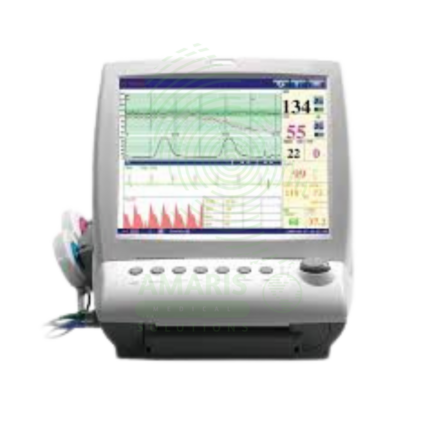
Fetal & Maternal Monitor
A Fetal & Maternal Monitor is an electronic monitoring system that simultaneously records fetal heart rate (via external ultrasound or internal scalp electrode), uterine contractions (via external tocodynamometer or intrauterine pressure catheter), and maternal vital signs (blood pressure, heart rate, oxygen saturation). Used for antepartum and intrapartum fetal assessment, non-stress tests, contraction stress tests, and monitoring of high-risk pregnancies including gestational diabetes, hypertensive disorders, and multiple gestations. Features high-resolution display, continuous paper recording, alarm systems for fetal distress, and data storage for medical records. External monitoring is non-invasive for routine use; internal monitoring provides more accurate data but requires ruptured membranes and cervical dilation. Class II medical device requiring FDA clearance and qualified interpretation of fetal heart rate patterns. Essential for assessing fetal well-being and guiding obstetric interventions.
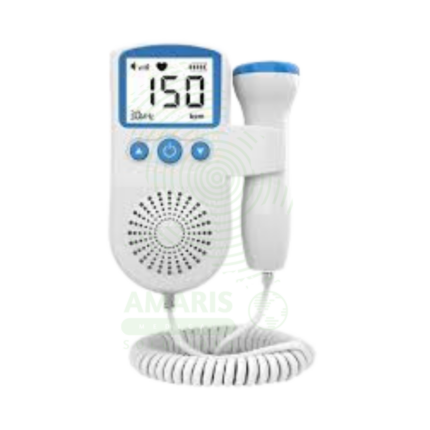
Fetoheart Sonic Aid Doppler (clinic/hospital use)
A Fetoheart Sonic Aid Doppler (Fetal Doppler) is a Class II medical ultrasound device (2-3 MHz probe) for real-time detection and audible/visual display of fetal heart rate in clinical obstetric settings from 10-12 weeks gestation. Features include handheld or tabletop console, waterproof probe, digital heart rate display (30-240 bpm), amplified speaker, headphone jack, and rechargeable battery or AC power operation. Continuous wave or pulsed wave Doppler technology with auto-correlation signal processing rejects maternal artifact. Primary clinical applications include fetal heart rate detection and monitoring during routine prenatal visits, confirmation of fetal viability in first trimester, intermittent fetal monitoring during labor, non-stress test administration, multiple gestation assessment, fetal presentation determination, and post-procedure confirmation (amniocentesis, CVS, ECV). Critical safety considerations include following ALARA principle (minimum necessary exposure), appropriate ultrasound gel use, probe pressure avoidance, infection control (probe cleaning between patients), differentiation of fetal from maternal signals, and interpretation by qualified providers. Essential equipment in outpatient obstetric clinics, hospital labor and delivery units, and prenatal care settings.
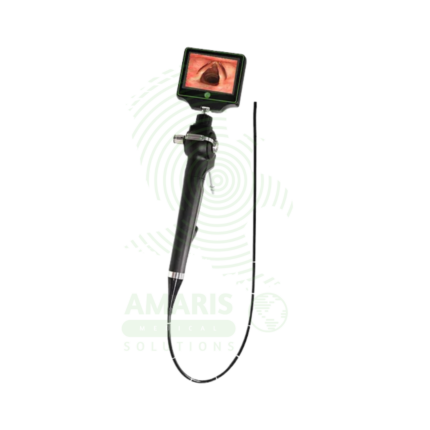
Flexible Fiber Optic Laryngoscope
A Flexible Fiber Optic Laryngoscope is a flexible endoscope (2-5 mm diameter, 30-60 cm working length) with fiber optic image transmission and steerable tip (120-180° angulation) for visualization of the upper airway and facilitation of difficult intubations. Features include control handle with angulation lever, working channel (1-2 mm) for suction or oxygen, external light source (halogen/xenon/LED), and optional camera for video display. Primary clinical applications include awake intubation in difficult airway management (limited mouth opening, cervical spine instability, obstructing pathology), nasotracheal intubation for oral surgery or maxillofacial trauma, intubation with cervical spine precautions (minimal neck movement), diagnostic airway assessment (stridor, hoarseness, vocal cord dysfunction, masses), double-lumen tube placement for thoracic surgery, pediatric difficult airway management, and tracheostomy tube placement guidance. Class II medical device requiring FDA clearance. Critical safety considerations include mandatory leak testing before immersion, antifog preparation, gentle insertion technique, airway maintenance with oxygen, topical anesthesia for patient comfort, suction availability, backup airway device, and strict infection control with validated reprocessing protocols.
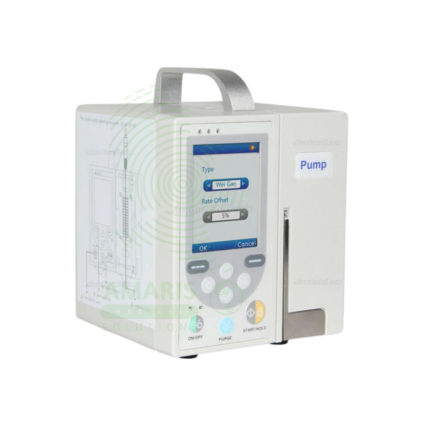
Infusion Pump
An Infusion Pump is a microprocessor-controlled device that delivers fluids, medications, or nutrients into a patient's circulatory system at precisely programmed rates. Replacing error-prone gravity drips, it is indispensable for the safe administration of critical IV therapies, including vasoactive drugs, chemotherapy, analgesics (via PCA), and nutrition. Engineered with multiple safety features—such as anti-free-flow mechanisms, air-in-line detectors, occlusion alarms, and dose error reduction software—it ensures accurate delivery and minimizes the risk of adverse events. Its use spans hospitals, clinics, and home care, making it a cornerstone of modern intravenous therapy.
mLabs and qLabs Platforms
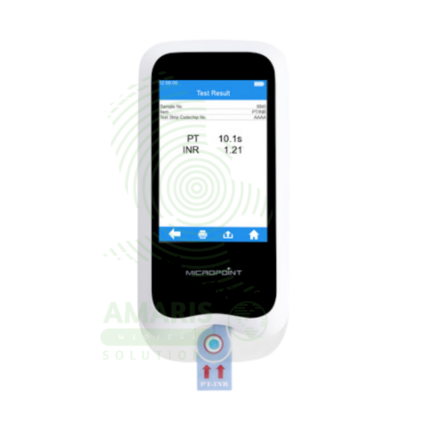
The mLabs and qLabs Platforms are integrated point-of-care testing systems manufactured by Micropoint Bioscience for rapid quantitative measurement of coagulation parameters (PT/INR, ACT), cardiac markers (troponin I, CK-MB, NT-proBNP), hemoglobin/hematocrit, electrolytes (Na+, K+, iCa), blood gases (pH, pCO2, pO2), glucose, ketones, and infectious disease markers. The qLabs platform specializes in coagulation and electrolyte testing using electrochemical technology, while the mLabs platform focuses on immunoassay and photometric testing for cardiac, hematology, and infectious disease applications. Features include portable design, touchscreen interface, rechargeable battery, USB/Bluetooth connectivity, and compatibility with single-use disposable test cards. Test times range from 1-15 minutes with sample volumes of 2-100 µL. Primary clinical applications include anticoagulation management (warfarin monitoring), cardiac surgery and intervention support (ACT monitoring), emergency cardiac diagnosis (troponin), anemia screening, diabetes management, critical care electrolyte and blood gas analysis, and infectious disease testing in endemic regions. Critical safety precautions include proper test card storage (temperature-sensitive), regular quality control, operator training, single-use lancets, and infection control protocols. Essential point-of-care testing solution for hospitals, clinics, emergency departments, surgical suites, and anticoagulation clinics.
Portable Oxygen Concentrator
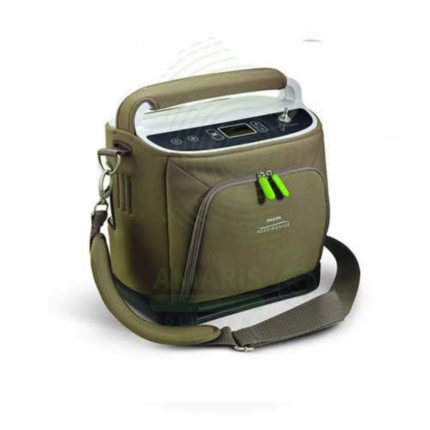
A Portable Oxygen Concentrator (POC) is a lightweight, battery-powered device that delivers oxygen via pulse dose technology, enabling active, mobile lifestyles for patients with chronic lung disease. By providing oxygen on-demand with each breath, it maximizes battery efficiency and portability, allowing users to travel, exercise, and socialize freely. It is a prescription-only device that requires careful titration to match a patient's needs during activity and is not a substitute for a stationary concentrator used at home and during sleep. Key considerations include FAA approval for air travel, battery life management, and understanding its specific use case as an ambulatory aid, not a primary oxygen source.
Syringe Pump
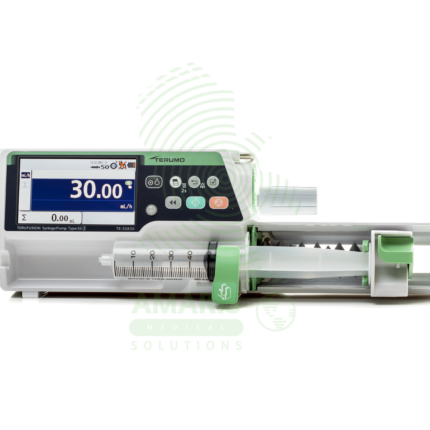
A Syringe Pump is a high-precision infusion device designed to advance the plunger of a standard medical syringe at a programmed rate, enabling the accurate delivery of small, critical medication volumes. It is the gold standard for administering potent, titratable drugs in intensive care, anesthesia, and neonatal/pediatric units, where flow rates as low as 0.1 mL/hour are required. With essential safety features like occlusion alarms, anti-free-flow mechanisms, and integrated drug libraries, it minimizes the risk of dosing errors. Its accuracy, compact design, and versatility for continuous or bolus dosing make it indispensable for managing high-risk intravenous therapies.