Dermatoscope and Magnifiers
 Diagnostic Kits
 Vital Signs Monitors
 Stethoscopes and Accessories
 Otoscopes, Ophthalmoscopes, and Retinoscopes
 Reflex Hammers and Neurological Tools
 Scales and Measuring Devices
 Spirometers and Pulmonary Function Tests
 Electrosurgical Units and Accessories
 Cutting Instruments
 Grasping and Holding Instruments
 Hemostatic Instruments
 Specialized Surgical Sets
 Single-Use Procedure Trays and Packs
 Surgical Drapes, Gowns, and Covers
 Tissue Unifying Instruments
 Radiation Protection
 X-Ray Machines and Accessories
 Ultrasound Systems and Probes
 MRI and CT Scanners
 Radiology Consumables
 Bone Densitometers
 Fluoroscopy Equipment
 Imaging Tables and Positioning Aids
 Microscopes and Accessories
 Centrifuges and Separators
 Analyzers
 Incubators and Ovens
 Pipettes, Dispensers, and Lab Glassware
 Refrigerators, Freezers, and Storage Units
 Lab Consumables
 Sterilizers and Autoclaves for Lab Use
 Multi-Parameter Monitors
 Ventilators and Respiratory Support Devices
 Defibrillators and AEDs
 Infusion Pumps and IV Systems
 Patient Warmers and Cooling Devices
 Central Monitoring Stations
 Accessories
 Anesthesia Machines and Workstations
 Oxygen Concentrators and Delivery Systems
 Nebulizers and Inhalers
 CPAP/BiPAP Machines
 Airway Management
 Anesthesia Masks, Circuits, and Bags
 Humidifiers and Heaters
 Respiratory Therapy Accessories
 First Aid Kits and Cabinets
 Emergency Resuscitation Equipment
 Trauma Supplies
 Emergency Carts and Crash Carts
 Burn Care Products
 Bleeding Control
 Automated External Defibrillators (AEDs)
 Transport and Evacuation
 Wheelchairs and Accessories
 Walkers, Crutches, and Canes
 Prosthetics and Orthotics
 Physical Therapy Equipment
 Transfer Devices
 Bathroom Safety
 Orthopedic Traction and Tables
 Hot/Cold Therapy Packs and Units
 Beds and Mattresses
 Chairs and Stools
 Tables
 Cabinets and Storage
 Privacy Screens & Curtains
 Stands and Racks
 Linens and Textiles
 Lighting
 Autoclaves and Sterilizers
 Ultrasonic Cleaners
 Disinfectant Solutions and Wipes
 Sterilization Pouches, Wraps, and Indicators
 Instrument Trays and Containers
 UV and Ozone Disinfection Devices
 Washer Disinfectors
 Wound Care
 Gloves
 Masks and Respirators
 Catheters and Tubing
 Swabs, Applicators, and Sponges
 Incontinence Products
 Personal Protective Equipment (PPE)
 Dental Chairs and Units
 Handpieces and Burs
 Instruments
 Consumables
 Sterilization for Dental Use
 Orthodontic Supplies
 Endodontic Tools
 Slit Lamps and Tonometers
 Lensometers and Phoropters
 Ophthalmic Surgical Instruments
 Eyewear Frames and Lenses
 Contact Lens Supplies
 Vision Testing Charts and Devices
 Eye Care Consumables
 Laser Systems for Eye Care
 ENT Exam Chairs and Tables
 Endoscopes
 Audiometers and Hearing Tests
 ENT Instruments
 Nasal and Throat Packs
 Hearing Aids and Accessories
 Otology Supplies
 Fetal Dopplers and Monitors
 Delivery Beds and Tables
 Gynecological Instruments
 Neonatal Incubators and Warmers
 Breast Pumps and Accessories
 Contraceptive Devices
 Maternity Supports and Pads
 Neonatal Consumables
 Cystoscopes and Urethroscopes
 Dialysis Machines and Supplies
 Urological Catheters and Bags
 Lithotripters
 Prostate Treatment Devices
 Urinary Incontinence Products
 Kidney Stone Management Tools
 Consumables & Disposables
 EEG and EMG Machines
 Neurosurgical Instruments
 Nerve Stimulators
 Headrests and Positioning Aids
 Lumbar Puncture Kits
 Seizure Monitoring Devices
 Consumables
 Rehabilitation for Neurological Conditions
 ECG Machines and Accessories
 Holter Monitors
 Stress Test Systems
 Pacemakers and Defibrillator Accessories
 Vascular Access Devices
 Cardiac Catheters and Guidewires
 Blood Flow Meters
 Consumables
 Orthopedic Instruments
 Casts, Splints, and Padding
 Joint Replacement Supplies
 Prosthetic Limbs and Components
 Bone Grafts and Substitutes
 Traction Devices
 Orthopedic Braces and Supports
 Rehabilitation Aids for Orthopedics
 Home Oxygen Therapy
 Hospital Beds for Home Use
 Mobility Aids
 Bathroom and Daily Living Aids
 Wound Care for Home
 Monitoring Devices
 Enteral Feeding Pumps and Tubes
 Hand Sanitizers and Dispensers
 Face Shields and Goggles
 Isolation Gowns and Suits
 Biohazard Waste Containers
 Air Purifiers and HEPA Filters
 Surface Disinfectants
 Sharps Containers
 Protective Barriers
 Cardiovascular & Endurance Training
 Strength Training & Weightlifting
 Functional Training & Core Conditioning
 Physical Therapy & Rehabilitation
 Sports & Outdoor Recreation
 Gym Flooring & Facility Equipment
 Fitness Monitoring & Accessories
 Kids & Novelties
Lazy Bike
$1.00
WhatsApp Order
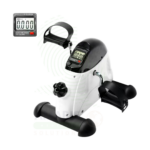
A Lazy Bike is a compact, portable seated pedal exerciser designed for passive, active-assisted, or active lower extremity cycling while the user remains seated in a standard chair, wheelchair, or recliner. Unlike traditional stationary bikes that require standing, balancing, or transferring to a specialized seat, the lazy bike places the pedal unit on the floor in front of the user, allowing patients with severe deconditioning, lower extremity weakness, neurological impairment, or post-operative restrictions to initiate lower extremity movement safely from their own chair. Adjustable magnetic or friction resistance allows for progressive strengthening, while forward and backward pedaling engages different muscle groups. For the physical therapist and rehabilitation specialist, the lazy bike provides an accessible entry point to lower extremity rehabilitation for patients who cannot yet tolerate upright exercise, including those recovering from stroke, spinal cord injury, joint replacement, cardiac surgery, or critical illness. For the patient with limited mobility, regular lazy bike use maintains joint range of motion, activates the calf muscle pump to reduce edema, prevents deconditioning, and supports functional recovery—all while remaining safely seated in their own chair.
Description
Lazy Bike
PRIMARY CLINICAL & DIAGNOSTIC USES
1. Seated Passive and Active-Assisted Lower Extremity Exercise
-
Primary Use: Provides a compact, seated pedal exerciser that allows patients with limited mobility to perform passive or active-assisted lower extremity cycling while seated in a standard chair, wheelchair, or recliner.
-
How it helps: For the physical therapist and occupational therapist, the lazy bike enables patients with severe deconditioning, lower extremity weakness, or neurological impairment to initiate lower extremity movement without the need for standing, balancing, or transferring to a traditional exercise bike. For the patient with limited mobility due to stroke, spinal cord injury, frailty, or post-operative status, the lazy bike provides a safe, accessible entry point for lower extremity rehabilitation that can be performed while seated in their own chair.
2. Range of Motion Maintenance for Bedbound or Chairbound Patients
-
Primary Use: Used to maintain and gradually improve passive and active range of motion in the hips, knees, and ankles for patients with prolonged immobility, contracture risk, or limited functional mobility.
-
How it helps: For the long-term care nurse and rehabilitation specialist, the lazy bike provides a simple, portable tool for daily range of motion exercises that prevents joint stiffness, contracture formation, and muscle shortening in patients with chronic immobility. For the patient who is bedbound, wheelchair-dependent, or has limited transfer ability, regular lazy bike use preserves joint mobility, reduces pain, and maintains the potential for future functional gains.
3. Circulation Improvement and Edema Reduction
-
Primary Use: Provides gentle, repetitive lower extremity movement that promotes venous return, reduces dependent edema, and improves circulation in patients with chronic venous insufficiency, lymphedema, or prolonged sitting.
-
How it helps: For the vascular specialist and wound care nurse, the lazy bike’s continuous pedaling action activates the calf muscle pump—enhancing venous return, reducing lower extremity swelling, and decreasing the risk of deep vein thrombosis in patients with limited mobility. For the patient with chronic leg swelling, venous stasis, or post-operative edema, regular lazy bike use reduces swelling, improves comfort, and supports wound healing.
4. Early Post-Operative and Deconditioning Rehabilitation
-
Primary Use: Used in the earliest phases of rehabilitation following major surgery, prolonged hospitalization, or critical illness when patients cannot yet tolerate upright exercise or transfer to standard exercise equipment.
-
How it helps: For the physical therapist and rehabilitation nurse, the lazy bike provides a safe, low-intensity exercise option for patients in the early post-operative period—initiating lower extremity movement while patients remain seated or semi-recumbent, often before they are cleared for ambulation. For the patient recovering from hip fracture, joint replacement, cardiac surgery, or critical illness, early lazy bike use preserves muscle mass, prevents deconditioning, and accelerates functional recovery.
SECONDARY & SUPPORTIVE USES
1. Stroke Rehabilitation Lower Extremity Retraining: Used for passive and active-assisted cycling to promote reciprocal lower extremity movement patterns in patients with hemiparesis.
2. Spinal Cord Injury Passive Range of Motion: Used for passive cycling to maintain joint mobility and muscle flexibility in patients with paralysis.
3. Multiple Sclerosis Fatigue Management: Used for gentle exercise during periods of fatigue when upright exercise is not tolerated.
4. Parkinson’s Disease Lower Extremity Conditioning: Used for seated cycling to maintain lower extremity function and reduce rigidity.
5. Total Knee Replacement Early Rehabilitation: Used in the immediate post-operative period for gentle range of motion before upright cycling is possible.
6. Total Hip Replacement Early Rehabilitation: Used while maintaining hip precautions for early mobility and circulation.
7. Chronic Obstructive Pulmonary Disease (COPD) Conditioning: Used for seated exercise in patients with severe dyspnea who cannot tolerate upright exertion.
8. Congestive Heart Failure Rehabilitation: Used for low-intensity seated exercise during early cardiac rehabilitation phases.
9. Venous Insufficiency and Lymphedema Management: Used to activate calf muscle pump and reduce lower extremity swelling.
10. Deep Vein Thrombosis Prevention: Used for seated patients at risk for DVT to promote venous return.
11. Geriatric Deconditioning: Used for frail elderly patients who cannot safely mount standard exercise equipment.
12. Bariatric Patient Exercise: Used as a seated exercise option for patients with weight-bearing limitations or size constraints.
13. Home Healthcare and Family Caregiver Use: Provides family caregivers with a safe, simple exercise tool for immobile family members.
14. Wheelchair User Exercise: Used while seated in wheelchair for lower extremity conditioning and circulation.
15. Prolonged Hospitalization Deconditioning: Used to prevent muscle atrophy and joint stiffness during extended hospital stays.
KEY PRODUCT FEATURES
1. BASIC IDENTIFICATION ATTRIBUTES
-
Device Type: A compact, portable seated pedal exerciser designed for passive, active-assisted, or active lower extremity cycling while the user remains seated in a standard chair, wheelchair, or recliner.
-
Designation: Lazy Bike, Pedal Exerciser, Seated Pedal Exerciser, Under Desk Bike, Portable Pedal Exerciser, Mini Exercise Bike, Pedal Exerciser for Seniors, Rehabilitation Pedal Bike, Passive Exercise Bike, Active-Assisted Pedal Bike.
-
Key Components:
o Pedal Unit: Compact frame with two pedals and cranks.
o Resistance Mechanism: Adjustable magnetic or friction resistance.
o Strap System: Non-slip feet or strap for securing pedal unit.
o Pedals: Standard pedals with adjustable toe straps.
o Display: Basic display showing time, count, or no display (manual models).
o Portability: Lightweight with carrying handle.
2. TECHNICAL & PERFORMANCE PROPERTIES
-
Resistance Types: Magnetic resistance (smooth, quiet) or adjustable friction resistance.
-
Resistance Levels: Typically 1-8 levels or adjustable tension knob.
-
Operation: Forward and backward pedaling capability.
-
Pedal Type: Standard pedals with adjustable toe straps.
-
Stability: Non-slip feet or strap system to secure unit.
-
Dimensions: Compact size for use under chair or at bedside.
-
Weight: Lightweight for portability (typically 5-15 pounds).
-
Weight Capacity: Typically no patient weight limit (device does not support patient weight).
-
Display: Basic LCD showing time, count, or RPM on electronic models.
-
Power: Self-powered (batteries) or no power required for manual models.
3. PHYSICAL & OPERATIONAL PROPERTIES
-
Construction: Steel or aluminum frame with powder-coat finish.
-
Portability: Lightweight with integrated carrying handle.
-
Storage: Easily stored under bed, in closet, or in cabinet.
-
Resistance Adjustment: Manual tension knob for resistance changes.
-
Pedaling Direction: Forward and backward pedaling for different muscle groups.
-
Foot Straps: Adjustable toe straps for foot security.
-
Non-Slip Base: Rubber feet or strap system to prevent sliding.
4. SAFETY & COMPLIANCE ATTRIBUTES
-
Regulatory Status: Class I medical device when labeled for therapeutic exercise; fitness equipment if for general wellness.
-
Stability: Non-slip feet prevent movement during use.
-
Low Profile: Low height allows use under standard chairs and wheelchairs.
-
Pedal Safety: Toe straps prevent foot slippage.
-
No Electrical Hazards: Manual models require no electricity.
5. STORAGE & HANDLING ATTRIBUTES
-
Storage: Store in a clean, dry location; compact design allows easy storage.
-
Cleaning: Wipe frame, pedals, and resistance mechanism with damp cloth and mild disinfectant.
-
Inspection: Inspect pedals, cranks, and resistance mechanism regularly; tighten loose hardware.
-
Maintenance: Lubricate moving parts per manufacturer schedule; magnetic resistance models require minimal maintenance.
-
Battery Replacement: Replace batteries in electronic display models as needed.
6. LABORATORY & CLINICAL APPLICATIONS
-
Primary Application: Seated lower extremity exercise for range of motion maintenance, circulation improvement, early post-operative rehabilitation, and deconditioning reversal in patients with limited mobility.
-
Clinical Role: Essential rehabilitation tool in physical therapy, occupational therapy, long-term care facilities, home healthcare, cardiac rehabilitation, stroke rehabilitation, and geriatric care for patients who cannot use standard upright exercise equipment.
SAFETY HANDLING PRECAUTIONS
1. SAFETY PRECAUTIONS
-
Proper Positioning: Position pedal unit securely under patient's chair or wheelchair with non-slip feet engaged.
-
Foot Placement: Secure feet in pedals with toe straps; ensure heels are properly positioned.
-
Start Slowly: Begin with low resistance and slow cadence; increase gradually.
-
Passive Exercise: For passive exercise, patient relaxes legs while caregiver or therapist moves pedals.
-
Active-Assisted: Patient initiates movement with caregiver assistance as needed.
-
Supervision: Patients with cognitive impairment, severe weakness, or balance issues require supervision.
-
Skin Assessment: Inspect feet and ankles before use for pressure points or skin breakdown.
-
Do Not Force: Do not force movement through painful range; stop if pain occurs.
-
Stability: Ensure unit does not slide during use; adjust non-slip feet or strap as needed.
-
Medical Clearance: Patients with acute DVT, unstable fractures, or severe contractures require medical clearance before use.
2. FIRST AID MEASURES
-
Skin Irritation: If foot straps cause skin irritation, pad with foam or adjust straps; discontinue if irritation persists.
-
Foot Slippage: If foot slips from pedal, stop immediately, assess for injury, adjust toe straps before resuming.
-
Increased Pain: If a patient experiences increased joint or muscle pain, stop exercise, assess, and consult a therapist.
3. FIRE FIGHTING MEASURES
-
Flammability: Frame is metal (non-flammable); plastic components may burn.
-
Extinguishing Media: Use carbon dioxide or dry chemical extinguisher for electrical fires in electronic display models.
-
Fire Response: Unplug if electrically powered; manual models present no fire hazard.
Related products
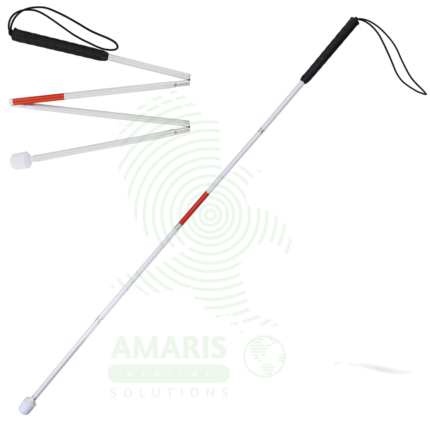
Blind Cane
A Blind Cane (white cane) is a specialized, lightweight mobility tool used by individuals who are blind or visually impaired for navigation and environmental awareness. Its core function is tactile and auditory detection of obstacles, drop-offs, and surface changes one step ahead of the user. Key features include a white shaft for visibility, an ergonomic grip, and a replaceable, specialized tip. It is not a walking stick for balance but a sensory probe. Its effective and safe use requires mandatory training in specific techniques from a certified Orientation and Mobility (O&M) specialist.
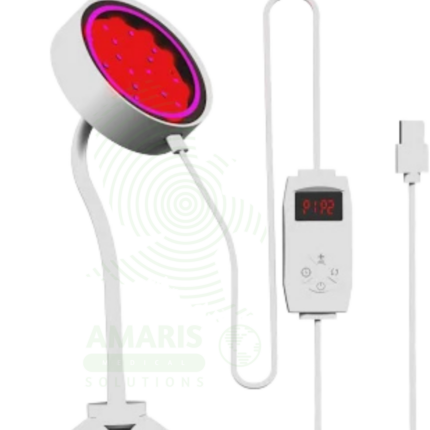
Desktop Infrared Therapy Lamp
A Desktop Infrared Therapy Lamp is a compact, focused heat therapy device that emits infrared radiation to deliver deep, penetrating warmth to targeted areas of the body. Used primarily for pain relief, muscle relaxation, and promoting healing in soft tissue and joint conditions, it is a common tool in physical therapy, chiropractic, and wellness practices. Its adjustable design allows precise positioning over areas like the neck, shoulder, or knee. Treatment involves non-invasive, radiant heat that increases local circulation. Critical safety practices include adhering to treatment time and distance guidelines, avoiding use over contraindicated areas, and never looking directly at the bulb.
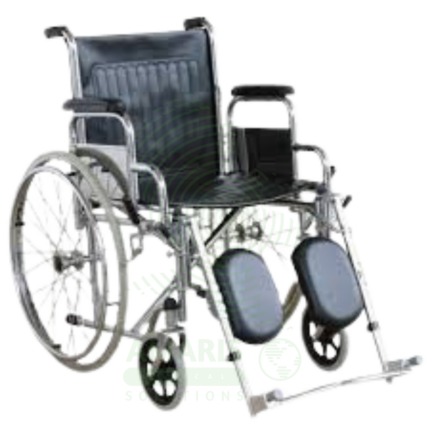
Detachable Wheelchair
A Detachable Wheelchair is a manual wheelchair designed for easy disassembly and transport. Its key feature is a folding X-frame and quick-release wheels, allowing it to break down into compact parts for storage in car trunks or small spaces. While offering superior portability and convenience for travel and occasional use, it is generally less efficient for long-distance self-propulsion than a rigid-frame wheelchair. Safety depends on ensuring all components, especially wheels and frame locks, are securely assembled before each use.
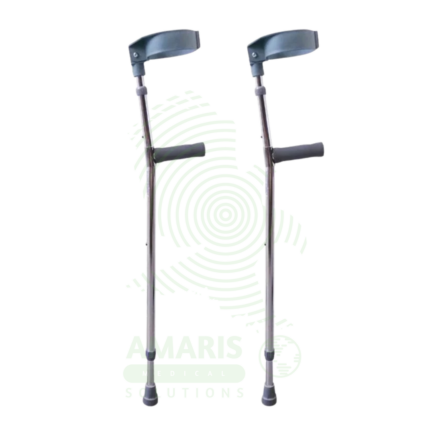
Elbow & Axiliary Crutches
An Elbow & Axiliary Crutches feature a forearm cuff and are designed for long-term mobility, offering a natural gait for unilateral or bilateral conditions. Auxiliary (Underarm) Crutches have an axillary pad and are for short-term, non-weight-bearing use after injury or surgery. Both require precise fitting—forearm crutch cuffs must be below the elbow, and underarm crutch weight must be borne through the hands to avoid nerve damage. Proper gait training from a therapist is essential for safe use of either type.
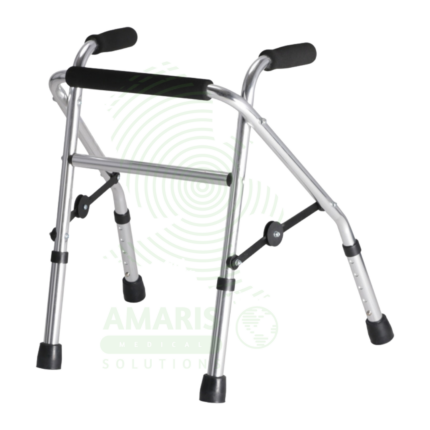
Pediatric Walking Frame
A Pediatric Walking Frame (Gait Trainer) is a supportive wheeled frame specifically designed to facilitate walking and standing for children with physical disabilities such as cerebral palsy. It provides adjustable postural support through a harness, trunk pad, and pelvic guide, enabling safe practice of gait patterns, weight-bearing, and upright mobility. Its primary role is therapeutic, aiming to develop ambulation skills, improve postural control, and promote independence and participation. Correct professional setup and supervision are essential for safety and to ensure it reinforces proper movement rather than abnormal patterns.
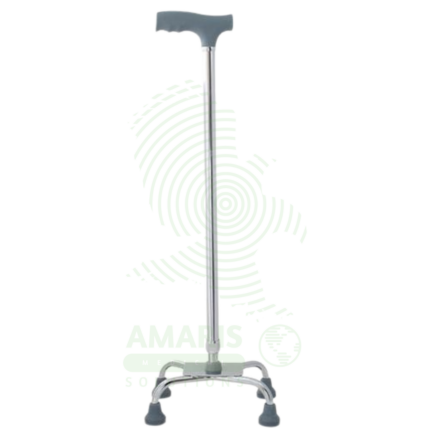
Quadpod Walking Stick
A Quadpod Walking Stick (Quad Cane) is a mobility aid featuring a four-legged base attached to a single shaft, providing significantly greater stability than a standard cane. It is designed for individuals with moderate balance issues or who need to safely offload weight from one leg due to pain or injury. Its wide base offers multi-directional support but requires a specific "lift-and-place" gait technique. While offering more security, its wider footprint can be cumbersome in tight spaces. Proper fitting and user training are essential for safe and effective use as a medically prescribed aid.
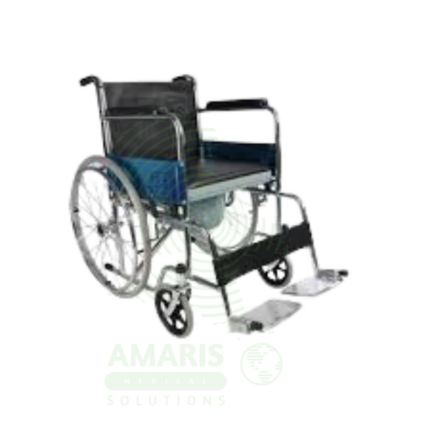
The Commode Wheelchair
The Commode Wheelchair is a dual-purpose manual wheelchair featuring a seat with a central opening and a removable commode pan, designed to function as both a mobility chair and a toilet. It is used to safely and hygienically manage toileting for non-ambulatory, high-fall-risk, or post-operative patients without requiring hazardous transfers to a separate toilet. Key features include a removable pan, swing-away armrests for easy lateral transfers, and often compatibility with standard toilets. Its use requires strict adherence to brake safety and rigorous cleaning protocols after each use to prevent infection.