Dermatoscope and Magnifiers
 Diagnostic Kits
 Vital Signs Monitors
 Stethoscopes and Accessories
 Otoscopes, Ophthalmoscopes, and Retinoscopes
 Reflex Hammers and Neurological Tools
 Scales and Measuring Devices
 Spirometers and Pulmonary Function Tests
 Electrosurgical Units and Accessories
 Cutting Instruments
 Grasping and Holding Instruments
 Hemostatic Instruments
 Specialized Surgical Sets
 Single-Use Procedure Trays and Packs
 Surgical Drapes, Gowns, and Covers
 Tissue Unifying Instruments
 Radiation Protection
 X-Ray Machines and Accessories
 Ultrasound Systems and Probes
 MRI and CT Scanners
 Radiology Consumables
 Bone Densitometers
 Fluoroscopy Equipment
 Imaging Tables and Positioning Aids
 Microscopes and Accessories
 Centrifuges and Separators
 Analyzers
 Incubators and Ovens
 Pipettes, Dispensers, and Lab Glassware
 Refrigerators, Freezers, and Storage Units
 Lab Consumables
 Sterilizers and Autoclaves for Lab Use
 Multi-Parameter Monitors
 Ventilators and Respiratory Support Devices
 Defibrillators and AEDs
 Infusion Pumps and IV Systems
 Patient Warmers and Cooling Devices
 Central Monitoring Stations
 Accessories
 Anesthesia Machines and Workstations
 Oxygen Concentrators and Delivery Systems
 Nebulizers and Inhalers
 CPAP/BiPAP Machines
 Airway Management
 Anesthesia Masks, Circuits, and Bags
 Humidifiers and Heaters
 Respiratory Therapy Accessories
 First Aid Kits and Cabinets
 Emergency Resuscitation Equipment
 Trauma Supplies
 Emergency Carts and Crash Carts
 Burn Care Products
 Bleeding Control
 Automated External Defibrillators (AEDs)
 Transport and Evacuation
 Wheelchairs and Accessories
 Walkers, Crutches, and Canes
 Prosthetics and Orthotics
 Physical Therapy Equipment
 Transfer Devices
 Bathroom Safety
 Orthopedic Traction and Tables
 Hot/Cold Therapy Packs and Units
 Beds and Mattresses
 Chairs and Stools
 Tables
 Cabinets and Storage
 Privacy Screens & Curtains
 Stands and Racks
 Linens and Textiles
 Lighting
 Autoclaves and Sterilizers
 Ultrasonic Cleaners
 Disinfectant Solutions and Wipes
 Sterilization Pouches, Wraps, and Indicators
 Instrument Trays and Containers
 UV and Ozone Disinfection Devices
 Washer Disinfectors
 Wound Care
 Gloves
 Masks and Respirators
 Catheters and Tubing
 Swabs, Applicators, and Sponges
 Incontinence Products
 Personal Protective Equipment (PPE)
 Dental Chairs and Units
 Handpieces and Burs
 Instruments
 Consumables
 Sterilization for Dental Use
 Orthodontic Supplies
 Endodontic Tools
 Slit Lamps and Tonometers
 Lensometers and Phoropters
 Ophthalmic Surgical Instruments
 Eyewear Frames and Lenses
 Contact Lens Supplies
 Vision Testing Charts and Devices
 Eye Care Consumables
 Laser Systems for Eye Care
 ENT Exam Chairs and Tables
 Endoscopes
 Audiometers and Hearing Tests
 ENT Instruments
 Nasal and Throat Packs
 Hearing Aids and Accessories
 Otology Supplies
 Fetal Dopplers and Monitors
 Delivery Beds and Tables
 Gynecological Instruments
 Neonatal Incubators and Warmers
 Breast Pumps and Accessories
 Contraceptive Devices
 Maternity Supports and Pads
 Neonatal Consumables
 Cystoscopes and Urethroscopes
 Dialysis Machines and Supplies
 Urological Catheters and Bags
 Lithotripters
 Prostate Treatment Devices
 Urinary Incontinence Products
 Kidney Stone Management Tools
 Consumables & Disposables
 EEG and EMG Machines
 Neurosurgical Instruments
 Nerve Stimulators
 Headrests and Positioning Aids
 Lumbar Puncture Kits
 Seizure Monitoring Devices
 Consumables
 Rehabilitation for Neurological Conditions
 ECG Machines and Accessories
 Holter Monitors
 Stress Test Systems
 Pacemakers and Defibrillator Accessories
 Vascular Access Devices
 Cardiac Catheters and Guidewires
 Blood Flow Meters
 Consumables
 Orthopedic Instruments
 Casts, Splints, and Padding
 Joint Replacement Supplies
 Prosthetic Limbs and Components
 Bone Grafts and Substitutes
 Traction Devices
 Orthopedic Braces and Supports
 Rehabilitation Aids for Orthopedics
 Home Oxygen Therapy
 Hospital Beds for Home Use
 Mobility Aids
 Bathroom and Daily Living Aids
 Wound Care for Home
 Monitoring Devices
 Enteral Feeding Pumps and Tubes
 Hand Sanitizers and Dispensers
 Face Shields and Goggles
 Isolation Gowns and Suits
 Biohazard Waste Containers
 Air Purifiers and HEPA Filters
 Surface Disinfectants
 Sharps Containers
 Protective Barriers
 Cardiovascular & Endurance Training
 Strength Training & Weightlifting
 Functional Training & Core Conditioning
 Physical Therapy & Rehabilitation
 Sports & Outdoor Recreation
 Gym Flooring & Facility Equipment
 Fitness Monitoring & Accessories
 Kids & Novelties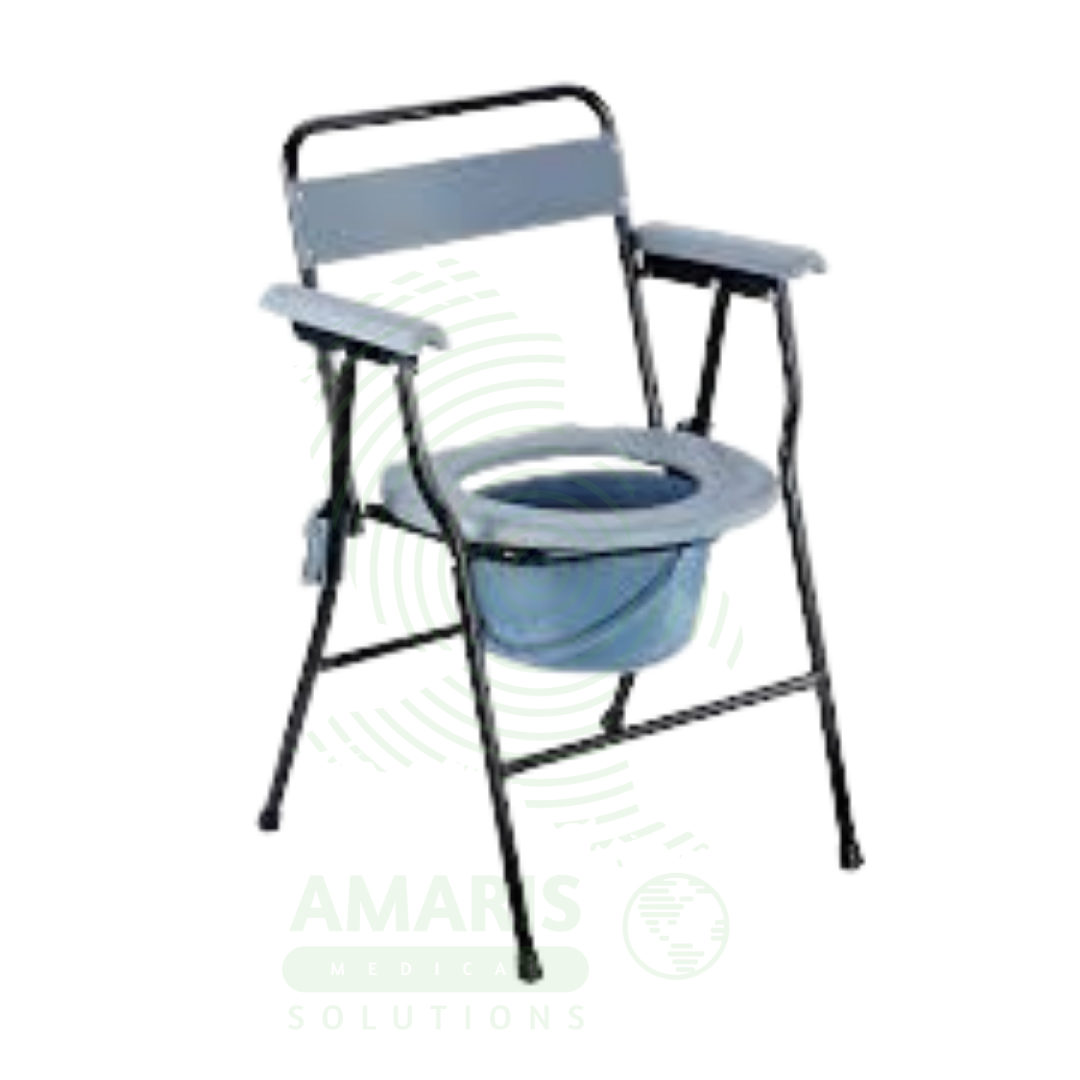
Commode Seat
$1.00
WhatsApp Order
A Commode Seat is an adaptive device that securely attaches to a standard toilet bowl to raise the seating height and provide supportive armrests. Its primary use is to make an existing bathroom toilet safer and more accessible for individuals with mobility challenges, weakness, or balance issues by reducing the distance required to sit and stand. It facilitates independent or assisted toileting with the hygiene of a plumbed toilet. Safety depends entirely on correct, secure installation and regular checking of its attachment to prevent dangerous shifting or collapse.
Description
Commode Seat
PRIMARY CLINICAL & DIAGNOSTIC USES
1. Adaptation of a Standard Toilet for Safe, Assisted Use
-
Primary Use: Modifies an existing household or institutional toilet to make it safer, more accessible, and more comfortable for individuals with mobility limitations, weakness, or balance issues, transforming a standard fixture into an accessible one.
-
How it helps: For the occupational therapist and home care coordinator, a commode seat is a simple but transformative intervention—taking an existing toilet that may be too low, too unstable, or lacking support and adapting it to meet the patient’s specific needs without requiring expensive bathroom renovation. For the individual aging in place or recovering from illness or injury, the commode seat means their own bathroom remains usable, preserving independence and delaying or avoiding the need for more disruptive changes to their home.
2. Reduction of Fall Risk during Toilet Transfers
-
Primary Use: By raising the seating height, it significantly reduces the distance a user must lower themselves to sit down or push up from to stand, decreasing the required strength, joint flexion, and balance, thereby preventing slips and falls.
-
How it helps: For the physical therapist and fall prevention specialist, the lowered toilet is a known hazard—requiring deeper knee and hip flexion, greater leg strength, and more balance than many patients possess. By raising the seat height, the commode seat transforms a high-risk transfer into a manageable one, reducing the fall risk that sends so many patients to emergency departments with fractures and head injuries.
3. Provision of Stability and Support during Toileting
-
Primary Use: Integrated armrests provide secure handholds for users to support their weight during the critical phases of sitting down and standing up, offering stability that the bare toilet does not.
-
How it helps: For the nurse and caregiver, armrests on a commode seat mean the patient has something stable to push down on when standing, and something to hold onto while lowering themselves—reducing the need for hands-on assistance and protecting both patient and caregiver from injury during transfers. For the patient with weak legs or poor balance, those armrests transform a terrifying free-fall onto a hard toilet into a controlled, supported descent.
4. Facilitation of Caregiver-Assisted Toileting
-
Primary Use: The raised height and armrests make it safer and more ergonomic for caregivers to assist with transfers onto and off of the toilet, reducing back strain and improving leverage.
-
How it helps: For the home health aide or family caregiver providing toileting assistance multiple times daily, a patient on a too-low toilet means bending, lifting, and straining that leads to caregiver back injuries and burnout. A commode seat that raises the patient to a more accessible height makes transfers safer for everyone, allowing caregivers to continue providing care without sacrificing their own physical health.
SECONDARY & SUPPORTIVE USES
1. Comfort for Users with Hip or Knee Joint Limitations: The increased height reduces the degree of hip and knee flexion required to sit, which is crucial for patients with arthritis, post-hip or knee replacement precautions, or pain. For the patient with osteoarthritis or a newly replaced joint, the higher seat means sitting down and standing up without the pain and mechanical stress of deep flexion.
2. Hygienic Management for Users with Some Ambulation Ability: For patients who can walk to the bathroom with assistance but struggle with the toilet itself, the commode seat allows them to use the plumbed toilet for flushing and sanitation, which is more dignified and hygienic than a bedside commode bucket. For the patient who wants to maintain as much normalcy as possible, using the actual toilet with adaptive support preserves dignity.
3. Temporary Post-Surgical Accommodation: Installed for short-term recovery periods after surgeries affecting the lower body, providing a safe toilet solution without permanent bathroom modifications. For the patient recovering from hip replacement, knee surgery, or fracture, a temporary commode seat bridges the gap between hospital and full recovery.
4. Bariatric Toilet Support: Wider, heavy-duty commode seats with reinforced armrests are available to provide safe support for patients of size using a standard toilet. For the bariatric patient, a properly rated commode seat ensures safe, dignified toileting without fear of equipment failure.
5. Aging in Place and Home Modification: A common, low-cost modification to enable elderly individuals to continue using their home bathroom safely, delaying or avoiding the need for institutional care. For the older adult who wants to remain in their own home, a simple commode seat can be the difference between independent living and facility placement.
KEY PRODUCT FEATURES
1. BASIC IDENTIFICATION ATTRIBUTES
-
Product Type: An adaptive device that sits on top of and attaches to a standard toilet bowl rim. Also called a raised toilet seat, toilet safety frame, or elevated commode seat.
-
Core Design: A raised plastic seat (often with a lid) that is secured to the toilet bowl. It is always used in conjunction with a permanent, plumbed toilet.
-
Key Components:
-
Raised Seat Platform: The main plastic or molded seat, which elevates the user.
-
Attachment Clips/Brackets: Mechanisms (often wingnuts or snap-clips) that secure the seat firmly to the porcelain toilet bowl to prevent shifting or tipping.
-
Armrests/Frames: Fixed or fold-up arms that attach to the sides of the seat platform, providing support. Some are full safety frames that stand on the floor.
-
Cover/Lid: Often includes a toilet seat lid.
-
Opening: Aligns with the toilet bowl underneath.
-
2. TECHNICAL & PERFORMANCE PROPERTIES
-
Height Increase: Standard raises are 3", 4", or 5". This is the critical measurement.
-
Weight Capacity: Varies by model; standard ~300-350 lbs (136-159 kg), bariatric models higher.
-
Stability: Must attach very securely to the toilet to prevent any rocking or movement during transfers. Floor-based frames offer the highest stability.
-
Toilet Compatibility: Designed to fit most standard elongated or round-front toilet bowls.
3. PHYSICAL & OPERATIONAL PROPERTIES
-
Construction: High-impact plastic for the seat; armrests may be plastic-coated steel.
-
Installation: Typically tool-free, installed by adjusting brackets under the toilet rim.
-
Cleanability: Wipes clean like a standard toilet seat. The area where it attaches to the toilet must be cleaned regularly to prevent grime buildup.
4. SAFETY & COMPLIANCE ATTRIBUTES
-
Regulatory Status: Class I medical device.
-
Safety Standards: Must be tested for stability and secure attachment.
5. STORAGE & HANDLING ATTRIBUTES
-
Storage: Not typically stored; installed semi-permanently on the toilet.
-
Cleaning & Disinfection: Wipe down the seat and armrests regularly with bathroom disinfectant. Periodically remove the seat to clean the toilet rim and the seat's attachment hardware.
-
Maintenance: Regularly check that all attachment points are tight and secure. Inspect for cracks in the plastic, especially near stress points.
6. LABORATORY & CLINICAL APPLICATIONS
-
Primary Application: A fundamental assistive technology for occupational therapists and discharge planners. It is prescribed or recommended to enable safe, independent toileting in a person's existing bathroom, supporting rehabilitation and aging in place.
SAFETY HANDLING PRECAUTIONS
1. SAFETY PRECAUTIONS
-
Secure Installation (CRITICAL): Before first use and weekly thereafter, verify the seat is firmly attached and does not rock, shift, or lift. A loose seat is a major fall hazard.
-
Weight Limit Adherence: Do not exceed the manufacturer's stated weight capacity.
-
Proper Use of Armrests: Instruct users to use the armrests for support, not to pull themselves up using towel bars or sinks, which can detach.
-
Non-Slip Surface: Ensure the bathroom floor is dry and non-slip, especially important as the user's feet may not rest flat due to the increased height.
-
Clearance: Ensure there is adequate space around the toilet for safe maneuvering with the added width of the armrests.
2. FIRST AID MEASURES
-
Seat Collapse/Displacement: If the seat detaches or breaks during use, carefully assist the user to a stable standing or sitting position on the floor. Check for injury from the fall or impact with the toilet bowl.
-
Fall During Transfer: Follow standard fall protocol. Assess for injury, noting if the commode seat was a contributing factor (e.g., was loose).
3. FIRE FIGHTING MEASURES
-
Flammability: Plastic components are combustible.
-
Extinguishing Media: Use water, foam, or CO₂.
Related products
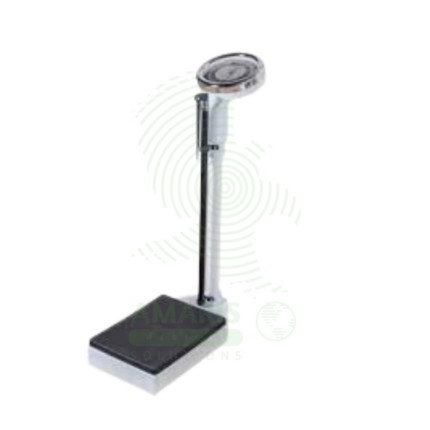
Analogue Weighing Scale With height
An Analogue Weighing Scale With height is a Class I medical device combining a mechanical beam scale (balance beam with sliding poises, accuracy ±0.1 kg, capacity 140-300 kg) with an integrated telescoping or folding height rod (range 60-200 cm, graduation 1 mm) for comprehensive anthropometric assessment without batteries or electronics. Features include heavy-gauge steel platform (50-70 cm × 40-50 cm) with non-slip surface, sliding counterweights (large for increments, small for fine measurement), zero adjustment mechanism, locking casters for mobility, and durable enamel or powder-coated finish. Primary clinical applications include comprehensive anthropometric assessment in resource-limited clinics, pediatric growth monitoring in community health centers, adult obesity screening and BMI calculation, geriatric nutritional assessment in long-term care, preoperative assessment in ambulatory surgery centers, school health screening programs, and developing world/humanitarian aid settings. Critical safety considerations include verifying zero balance before each use, locking casters before patient steps on, ensuring patient stands still without support, providing step assistance for mobility-impaired patients, and cleaning platform and height rod between patients. Essential durable, battery-free equipment for comprehensive weight and height measurement in clinical settings.
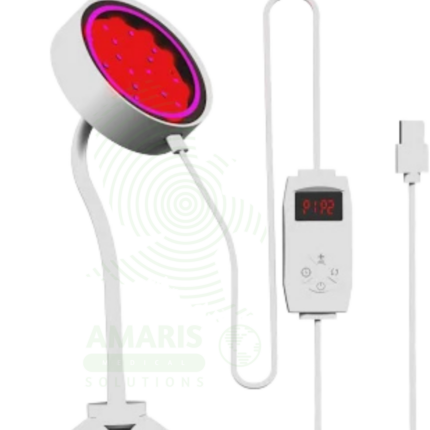
Desktop Infrared Therapy Lamp
A Desktop Infrared Therapy Lamp is a compact, focused heat therapy device that emits infrared radiation to deliver deep, penetrating warmth to targeted areas of the body. Used primarily for pain relief, muscle relaxation, and promoting healing in soft tissue and joint conditions, it is a common tool in physical therapy, chiropractic, and wellness practices. Its adjustable design allows precise positioning over areas like the neck, shoulder, or knee. Treatment involves non-invasive, radiant heat that increases local circulation. Critical safety practices include adhering to treatment time and distance guidelines, avoiding use over contraindicated areas, and never looking directly at the bulb.
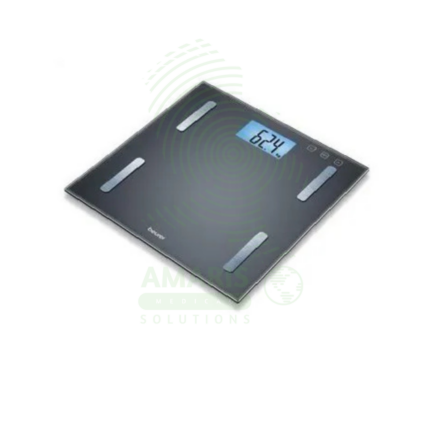
Digital weight scale with BMI calculator
A Digital Weight Scale with BMI Calculator is a Class I medical device (for health monitoring) combining precision strain gauge technology (four sensors, accuracy ±0.1-0.3 kg) with automatic BMI calculation based on user-entered height. Features include tempered glass, stainless steel, or ABS plastic platform (30-35 cm square), backlit LCD display showing weight and BMI, multiple user profiles (2-10 users) with height storage, memory for historical readings, auto-recognition on select models, Bluetooth connectivity for app integration, and weight capacity 150-200 kg (330-440 lbs) standard. Primary clinical applications include home-based BMI monitoring for weight management, hypertension and cardiovascular risk assessment, diabetes management and metabolic health, obesity screening and weight loss programs, bariatric surgery pre- and post-operative monitoring, geriatric nutritional status monitoring (detecting malnutrition), and pediatric/adolescent growth tracking. Critical safety considerations include accurate height entry for each user (essential for valid BMI), correct user profile selection, use on hard level surfaces (not carpet), glass platform inspection for cracks, staying within weight capacity, and understanding that BMI is a screening tool requiring healthcare provider interpretation. Essential home health device for individuals managing weight-related health conditions.
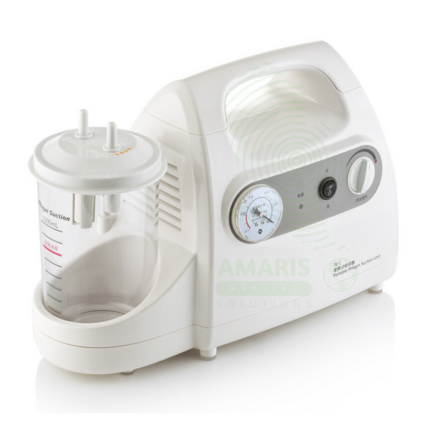
Electric Suction Machine
An Electric Suction Machine is a portable, electrically-powered medical device that generates vacuum pressure to remove fluids and secretions from a patient's airway, surgical site, or wound. It is a critical tool for maintaining a patent airway in emergency, surgical, post-operative, and chronic home care settings. The unit consists of a vacuum pump, a disposable collection canister with overflow protection, connecting tubing, and patient-end accessories. Key performance features include adjustable suction pressure, adequate airflow, and often battery backup for reliability. Strict adherence to pressure settings, suction duration, and single-use disposable components is essential for patient safety and infection control.
Hemoglobin Meter
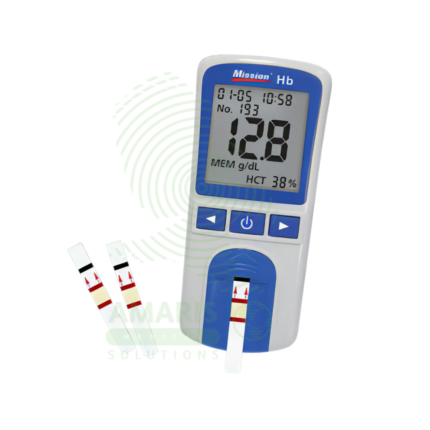
A Hemoglobin Meter is a Class II medical device (FDA-cleared, CE-marked) for quantitative point-of-care measurement of hemoglobin concentration in capillary or venous blood, providing results in 5-60 seconds from a 5-20 µL sample. The meter uses photometric, electrochemical, or conductivity technology to measure hemoglobin, with accuracy ±0.3-0.5 g/dL compared to reference methods. Features include backlit LCD display, memory storage for 100-1000 results, USB/Bluetooth connectivity for data transfer, and compatibility with single-use disposable cuvettes or test strips. Primary clinical applications include anemia screening and diagnosis (WHO criteria), preoperative assessment and surgical planning, antenatal care and maternal health monitoring, malaria-endemic region screening, chronic disease management (CKD, IBD, cancer), nutritional assessment and intervention programs, and blood donor screening. Critical safety precautions include single-use lancets, proper hand hygiene, correct sample application, quality control with control solutions, proper cuvette storage (protect from heat, light, humidity), and never using expired cuvettes. Essential point-of-care device for hemoglobin testing in hospitals, clinics, community health programs, and blood donation centers.
Mission Plus HB Machine
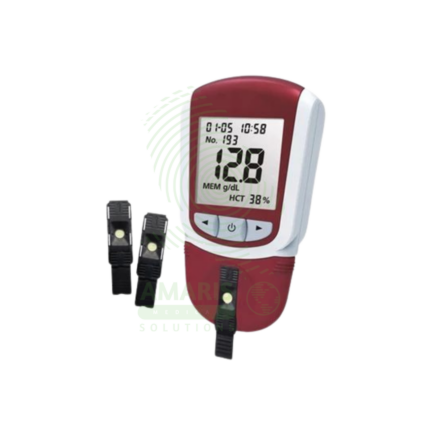
The Mission Plus HB Machine is a portable, battery-operated hemoglobin meter (Class II medical device, FDA-cleared/CE-marked) using photometric technology to measure hemoglobin concentration in capillary or venous blood within 5-15 seconds. Features include backlit LCD display, memory storage for 100-500 results, simple one-button operation, and disposable single-use cuvettes (5-20 µL sample volume). Accuracy ±0.3 g/dL compared to reference methods, measurement range 4-24 g/dL. Primary clinical applications include rapid anemia screening in outpatient clinics, preoperative assessment, antenatal care and maternal health monitoring, malaria-endemic region screening, chronic disease management (CKD, IBD, cancer), nutritional assessment and intervention programs, and blood donor screening. Critical safety precautions include single-use lancets, proper hand hygiene, correct sample application, quality control with control solutions, proper cuvette storage (protect from heat, light, humidity), and never using expired cuvettes. Essential point-of-care device for hemoglobin testing in diverse healthcare settings.
TENS Machine
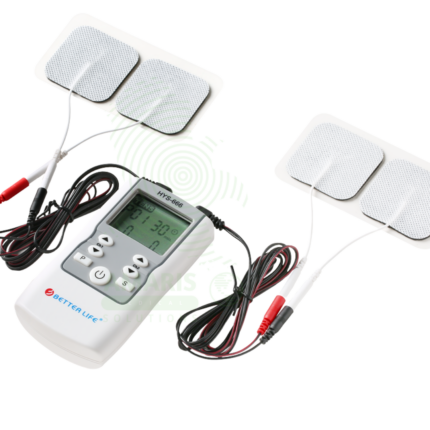
A TENS Machine is an electronic device used for non-invasive pain management, capable of independently controlling up to four pairs of electrodes (eight total) to treat multiple or complex pain areas simultaneously. By delivering adjustable, low-voltage electrical pulses through the skin, it modulates pain signals via the Gate Control mechanism and may stimulate the body's natural painkillers. Its key adjustable parameters—pulse rate, width, and amplitude—allow for personalized therapy for conditions ranging from arthritis to post-surgical pain. Safe operation requires strict adherence to electrode placement guidelines and contraindications, making it a versatile tool for clinical and prescribed home use.