Dermatoscope and Magnifiers
 Diagnostic Kits
 Vital Signs Monitors
 Stethoscopes and Accessories
 Otoscopes, Ophthalmoscopes, and Retinoscopes
 Reflex Hammers and Neurological Tools
 Scales and Measuring Devices
 Spirometers and Pulmonary Function Tests
 Electrosurgical Units and Accessories
 Cutting Instruments
 Grasping and Holding Instruments
 Hemostatic Instruments
 Specialized Surgical Sets
 Single-Use Procedure Trays and Packs
 Surgical Drapes, Gowns, and Covers
 Tissue Unifying Instruments
 Radiation Protection
 X-Ray Machines and Accessories
 Ultrasound Systems and Probes
 MRI and CT Scanners
 Radiology Consumables
 Bone Densitometers
 Fluoroscopy Equipment
 Imaging Tables and Positioning Aids
 Microscopes and Accessories
 Centrifuges and Separators
 Analyzers
 Incubators and Ovens
 Pipettes, Dispensers, and Lab Glassware
 Refrigerators, Freezers, and Storage Units
 Lab Consumables
 Sterilizers and Autoclaves for Lab Use
 Multi-Parameter Monitors
 Ventilators and Respiratory Support Devices
 Defibrillators and AEDs
 Infusion Pumps and IV Systems
 Patient Warmers and Cooling Devices
 Central Monitoring Stations
 Accessories
 Anesthesia Machines and Workstations
 Oxygen Concentrators and Delivery Systems
 Nebulizers and Inhalers
 CPAP/BiPAP Machines
 Airway Management
 Anesthesia Masks, Circuits, and Bags
 Humidifiers and Heaters
 Respiratory Therapy Accessories
 First Aid Kits and Cabinets
 Emergency Resuscitation Equipment
 Trauma Supplies
 Emergency Carts and Crash Carts
 Burn Care Products
 Bleeding Control
 Automated External Defibrillators (AEDs)
 Transport and Evacuation
 Wheelchairs and Accessories
 Walkers, Crutches, and Canes
 Prosthetics and Orthotics
 Physical Therapy Equipment
 Transfer Devices
 Bathroom Safety
 Orthopedic Traction and Tables
 Hot/Cold Therapy Packs and Units
 Beds and Mattresses
 Chairs and Stools
 Tables
 Cabinets and Storage
 Privacy Screens & Curtains
 Stands and Racks
 Linens and Textiles
 Lighting
 Autoclaves and Sterilizers
 Ultrasonic Cleaners
 Disinfectant Solutions and Wipes
 Sterilization Pouches, Wraps, and Indicators
 Instrument Trays and Containers
 UV and Ozone Disinfection Devices
 Washer Disinfectors
 Wound Care
 Gloves
 Masks and Respirators
 Catheters and Tubing
 Swabs, Applicators, and Sponges
 Incontinence Products
 Personal Protective Equipment (PPE)
 Dental Chairs and Units
 Handpieces and Burs
 Instruments
 Consumables
 Sterilization for Dental Use
 Orthodontic Supplies
 Endodontic Tools
 Slit Lamps and Tonometers
 Lensometers and Phoropters
 Ophthalmic Surgical Instruments
 Eyewear Frames and Lenses
 Contact Lens Supplies
 Vision Testing Charts and Devices
 Eye Care Consumables
 Laser Systems for Eye Care
 ENT Exam Chairs and Tables
 Endoscopes
 Audiometers and Hearing Tests
 ENT Instruments
 Nasal and Throat Packs
 Hearing Aids and Accessories
 Otology Supplies
 Fetal Dopplers and Monitors
 Delivery Beds and Tables
 Gynecological Instruments
 Neonatal Incubators and Warmers
 Breast Pumps and Accessories
 Contraceptive Devices
 Maternity Supports and Pads
 Neonatal Consumables
 Cystoscopes and Urethroscopes
 Dialysis Machines and Supplies
 Urological Catheters and Bags
 Lithotripters
 Prostate Treatment Devices
 Urinary Incontinence Products
 Kidney Stone Management Tools
 Consumables & Disposables
 EEG and EMG Machines
 Neurosurgical Instruments
 Nerve Stimulators
 Headrests and Positioning Aids
 Lumbar Puncture Kits
 Seizure Monitoring Devices
 Consumables
 Rehabilitation for Neurological Conditions
 ECG Machines and Accessories
 Holter Monitors
 Stress Test Systems
 Pacemakers and Defibrillator Accessories
 Vascular Access Devices
 Cardiac Catheters and Guidewires
 Blood Flow Meters
 Consumables
 Orthopedic Instruments
 Casts, Splints, and Padding
 Joint Replacement Supplies
 Prosthetic Limbs and Components
 Bone Grafts and Substitutes
 Traction Devices
 Orthopedic Braces and Supports
 Rehabilitation Aids for Orthopedics
 Home Oxygen Therapy
 Hospital Beds for Home Use
 Mobility Aids
 Bathroom and Daily Living Aids
 Wound Care for Home
 Monitoring Devices
 Enteral Feeding Pumps and Tubes
 Hand Sanitizers and Dispensers
 Face Shields and Goggles
 Isolation Gowns and Suits
 Biohazard Waste Containers
 Air Purifiers and HEPA Filters
 Surface Disinfectants
 Sharps Containers
 Protective Barriers
 Cardiovascular & Endurance Training
 Strength Training & Weightlifting
 Functional Training & Core Conditioning
 Physical Therapy & Rehabilitation
 Sports & Outdoor Recreation
 Gym Flooring & Facility Equipment
 Fitness Monitoring & Accessories
 Kids & Novelties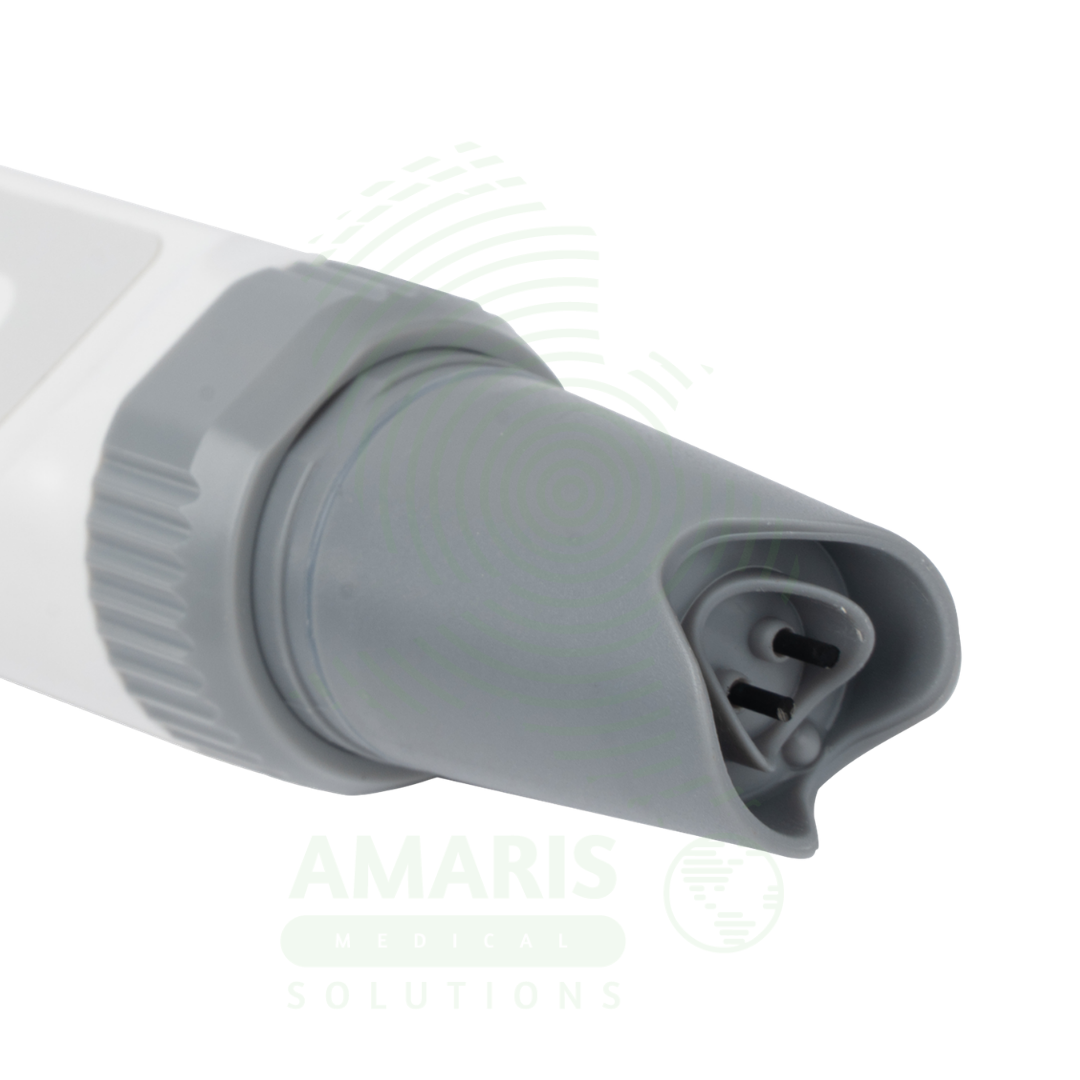
Conductivity Probe (DEC1-S)
WhatsApp Order
The Conductivity Probe (DEC1-S) is a replacement combined conductivity electrode specifically designed for DLAB Conductivity Probe (DEC1-S) pen-type conductivity meter and DEC1+ Bluetooth pen meter, enabling continued use of the instrument when the original probe becomes worn or damaged . Featuring platinum sensing elements for accurate conductivity measurement across automatic ranging segments (0~19.99 mS/cm), this replaceable probe supports multi-parameter measurement of EC, TDS (0~10.0 ppt), resistivity (50 Ω·cm~20 MΩ·cm), salinity (0~10 ppt), and temperature (0~60℃) .
The Conductivity Probe (DEC1-S) delivers conductivity accuracy of ±1.0% F.S. ±1 digit and temperature accuracy of ±0.2°C when used with compatible DEC1/DEC1+ meters . The probe is pre-installed in new meter kits and is available as a replacement part to extend instrument service life—electrode replacement rather than complete meter replacement .
For the clinical laboratory scientist, dialysis technician, and water quality specialist, the Conductivity Probe (DEC1-S) ensures continued, accurate conductivity monitoring of purified water systems, dialysis fluids, and pharmaceutical process water—critical parameters for ensuring patient safety during renal replacement therapy and drug manufacturing. The probe’s transparent housing allows visual confirmation of solution level and bubble detection, while its IP67 compatibility with DEC1 meters ensures reliable operation in harsh field environments .
For the patient, reliable replacement parts ensure continuous water quality monitoring in dialysis and pharmaceutical applications, preventing gaps in quality surveillance that could compromise patient safety. The Conductivity Probe (DEC1-S) probe is compatible with CH, USA, and NIST standard buffer solutions for flexible calibration options, and replacement is straightforward for trained laboratory personnel .
Description
Conductivity Probe (DEC1-S)
PRIMARY CLINICAL & DIAGNOSTIC USES
1. Replacement Conductivity Sensor for Portable Water Quality Meters
-
Primary Use: Provides a replacement combined conductivity electrode specifically designed for DLAB DEC1 and DEC1+ pen-type meters, enabling continued use of the instrument when the original probe becomes worn or damaged .
-
How it helps: For the clinical laboratory scientist and water quality specialist, the Conductivity Probe (DEC1-S) allows extended use of the DEC1/DEC1+ meter by replacing only the electrode rather than the entire instrument—reducing equipment costs and minimizing downtime for critical water quality monitoring. The probe features platinum sensing elements for accurate conductivity measurement across a wide range (0~19.99 mS/cm) . For the patient, reliable replacement parts ensure continuous monitoring of dialysis water and purified water systems, preventing gaps in water quality surveillance that could compromise patient safety.
2. High-Accuracy Conductivity and TDS Measurement
-
Primary Use: Measures electrical conductivity (EC), Total Dissolved Solids (TDS), salinity, and resistivity in aqueous samples, compatible with DEC1 pen meters that provide multi-parameter readouts .
-
How it helps: For the pharmaceutical QC chemist and laboratory technician, the DEC1-S probe delivers conductivity accuracy of ±1.0% F.S. ±1 digit, supporting precise measurement of water purity in pharmaceutical manufacturing, laboratory water systems, and dialysis fluid preparation . The replaceable design ensures that measurement accuracy is maintained over time by allowing probe replacement when performance degrades. For the patient, accurate conductivity measurement ensures that water used in dialysis and pharmaceutical processes meets stringent quality standards, preventing complications from improperly treated water.
3. Platinum Sensing Technology for Stable Readings
-
Primary Use: Features platinum sensing elements that provide stable, reproducible conductivity measurements across automatic ranging segments from 0~19.99 μS/cm to 2.00~19.99 mS/cm .
-
How it helps: For the water quality specialist, the platinum sensing technology ensures minimal polarization effects and stable readings even in low-conductivity samples such as purified water and water-for-injection (WFI). The probe’s design supports automatic temperature compensation (ATC) when used with compatible meters, correcting readings to reference temperature . For the patient, stable, accurate readings ensure that water quality monitoring reliably detects any deviations from quality standards that could affect patient treatment outcomes.
4. Compatibility with DEC1 and DEC1+ Meter Systems
-
Primary Use: Designed as the dedicated replacement electrode for DLAB DEC1 pen-type conductivity meter and DEC1+ Bluetooth pen meter, ensuring proper fit and electrical compatibility .
-
How it helps: For the laboratory manager and equipment coordinator, using the manufacturer-specified replacement probe ensures optimal instrument performance, calibration accuracy, and measurement reliability. The probe comes pre-installed in new meter kits and is available separately for replacement needs . For the patient, properly compatible replacement parts ensure that water quality monitoring equipment continues to function within manufacturer specifications, maintaining the integrity of quality assurance programs.
SECONDARY & SUPPORTIVE USES
1. Purified Water System Monitoring: Used with DEC1 meters to verify conductivity of purified water, water-for-injection (WFI), and distilled water in hospital and laboratory water treatment systems.
2. Pharmaceutical Process Water Testing: Supports conductivity measurement for validation and routine monitoring of pharmaceutical water systems, with probe replacement ensuring continued compliance .
3. Dialysis Water Quality Verification: Used with DEC1 meters to test conductivity of dialysis water and dialysate solutions, with regular probe replacement maintaining measurement accuracy.
4. Cooling Tower and Boiler Water Testing: Monitors conductivity and TDS in cooling towers, boiler feed water, and steam generation systems to control blowdown cycles.
5. Environmental and Wastewater Monitoring: Measures conductivity of wastewater discharge, surface water, and groundwater in hospital environmental monitoring programs.
6. Reagent and Buffer Quality Control: Verifies conductivity of laboratory reagents, buffers, and preparation solutions to ensure consistent experimental conditions.
7. Aquaculture and Zebrafish Facility Management: Used to check conductivity and salinity levels in aquatic animal housing facilities within research institutions.
8. Hydroponic and Agricultural Nutrient Management: Monitors nutrient solution conductivity (EC) in controlled environment agriculture and research plant growth facilities.
9. Electrode Replacement for Extended Instrument Life: Serves as the replacement component to extend the service life of DEC1/DEC1+ meters when the original probe reaches end of life .
10. Calibration Support: The probe is compatible with CH, USA, and NIST standard buffer solutions for flexible calibration options .
11. Low Maintenance Design: Features sealed, maintenance-free construction requiring no electrolyte refilling; simple cleaning and storage procedures .
12. IP67-Compatible Probe: The probe shares the meter’s IP67 dustproof/waterproof rating, suitable for use in harsh field environments .
KEY PRODUCT FEATURES
1. BASIC IDENTIFICATION ATTRIBUTES
-
Device Type: A replacement combined conductivity electrode (probe) for DLAB DEC1 and DEC1+ pen-type conductivity meters, featuring platinum sensing elements for EC, TDS, salinity, and resistivity measurement .
-
Designation: DEC1-S Conductivity Probe, DEC1-S Electrode, Replacement Conductivity Probe, DLAB DEC1-S .
-
Key Components:
o Sensing Element: Platinum electrodes for conductivity measurement .
o Probe Body: Sealed, combined probe design.
o Connection: Compatible with DEC1 and DEC1+ meter housing .
o Materials: Platinum sensing elements with durable plastic housing .
o Transparent Housing: Allows visual confirmation of solution level and bubble detection .
2. TECHNICAL & PERFORMANCE PROPERTIES
-
Compatible Meters: DEC1 Pen-Type Conductivity Meter, DEC1+ Bluetooth Pen Meter .
-
Conductivity Measurement Range (with compatible meter): 0~19.99 mS/cm, auto-ranging segments: 0~19.99 μS/cm; 20.0~199.9 μS/cm; 200~1999 μS/cm; 2.00~19.99 mS/cm .
-
TDS Range (with compatible meter): 0.0 mg/L to 10.0 g/L (coefficient adjustable) .
-
Resistivity Range (with compatible meter): 50 Ω·cm to 20 MΩ·cm .
-
Salinity Range (with compatible meter): 0~10 ppt .
-
Temperature Range (with compatible meter): 0~60°C (32~140°F) .
-
Conductivity Accuracy (with compatible meter): ±1.0% F.S. ± 1 digit .
-
Temperature Accuracy (with compatible meter): ±0.2°C .
-
Probe Type: Combined electrode design; replaceable .
-
Sensing Material: Platinum .
-
Protection Class (with meter): IP67 (dustproof and waterproof) .
-
Calibration Compatibility: Supports CH, USA, NIST standard buffer solutions .
-
Replacement Purpose: Extends instrument service life by allowing electrode replacement rather than complete meter replacement .
3. PHYSICAL & OPERATIONAL PROPERTIES
-
Construction: Pen-style combined probe designed to fit DEC1/DEC1+ meter housing; sealed, maintenance-free design .
-
Sensing Technology: Platinum electrodes for minimal polarization and stable readings .
-
Installation: User-replaceable; installs directly into DEC1/DEC1+ meter body .
-
Compatibility: Specifically designed for DLAB DEC1 and DEC1+ pen meters; not compatible with other meters .
-
Maintenance: Requires no electrolyte refilling; clean with distilled water after each use .
-
Storage: Store clean and dry with protective cap in place .
-
Visual Confirmation: Transparent housing allows visible confirmation of solution level and detection of air bubbles .
-
Durability: Designed for harsh field environments with IP67 rating when installed on meter .
-
Calibration: Performed through the DEC1/DEC1+ meter using standard solutions; probe does not require separate calibration .
4. SAFETY & COMPLIANCE ATTRIBUTES
-
Regulatory Status: Accessory/replacement part for IVD preparatory equipment (DEC1/DEC1+ meters).
-
Safety Certifications: Manufactured under ISO 9001:2015 quality management system; CE compliant.
-
Protection Class (with meter): IP67 (dustproof and waterproof against temporary immersion) .
-
Material Safety: Platinum sensing elements (biocompatible, corrosion-resistant); durable plastic housing; RoHS compliant materials.
-
Electrical Safety: Low-voltage passive component; safe for use with DEC1/DEC1+ meters (4 × AAA batteries, 1.5V each).
-
Platinum Sensor: Resists corrosion and provides stable readings in various sample matrices .
-
Replacement Indicator: Replace probe when readings become unstable, calibration fails repeatedly, or physical damage is visible .
5. STORAGE & HANDLING ATTRIBUTES
-
Storage: Store probe clean and dry with protective cap in place; avoid extreme temperatures and direct sunlight; do not store with dry residue on sensing elements.
-
Cleaning: Rinse with distilled water after each use; for stubborn residues, use mild detergent and soft brush, taking care not to damage platinum sensing elements; do not scrub platinum surfaces with abrasive materials .
-
Inspection: Inspect platinum sensing elements for damage or contamination before each use; check for any visible damage to the probe body; verify that the transparent housing is free of bubbles or residue .
-
Installation: Insert probe into DEC1/DEC1+ meter body securely; ensure proper electrical contact; follow meter instructions for probe replacement .
-
Calibration: After probe replacement, calibrate the DEC1/DEC1+ meter using appropriate conductivity standard solutions (1408 μS/cm and 12.85 mS/cm) before use .
-
Handling: Avoid touching platinum sensing elements with fingers; handle with care to prevent physical damage; do not bend or apply excessive force to the probe .
-
Bubble Detection: Use transparent housing to verify no air bubbles are trapped on sensing elements during measurement, as bubbles will cause unstable or inaccurate readings .
-
Replacement Frequency: Replace probe when meter readings become unstable, calibration fails repeatedly, or physical damage is evident; no fixed replacement interval—depends on usage and sample types.
-
Disposal: Dispose of used probe according to local electronic waste regulations; the probe contains platinum (precious metal) and plastic components.
6. LABORATORY & CLINICAL APPLICATIONS
-
Primary Application: Replacement conductivity electrode for DLAB DEC1 and DEC1+ pen meters, used for measuring conductivity, TDS, salinity, and resistivity in purified water, dialysis fluids, pharmaceutical process water, and environmental samples .
-
Clinical Role: Essential replacement component for water quality testing instruments used in dialysis units, hospital engineering departments, pharmaceutical quality control laboratories, and environmental monitoring programs requiring portable conductivity measurement .
SAFETY HANDLING PRECAUTIONS
1. SAFETY PRECAUTIONS
-
Handling: Handle probe with care to avoid damage to platinum sensing elements; do not touch sensing elements with fingers, as oils can affect measurement accuracy .
-
Cleaning: Do not use abrasive materials or harsh chemicals on platinum sensing elements; rinse thoroughly after cleaning to remove all residue .
-
Storage: Always store probe clean and dry with protective cap in place to prevent contamination and physical damage .
-
Compatibility: Use only with DLAB DEC1 or DEC1+ meters; using with incompatible meters may damage the probe or produce inaccurate readings .
-
Bubble Prevention: Ensure no air bubbles are trapped on sensing elements during measurement; bubbles cause unstable or inaccurate readings .
-
Calibration Requirement: Always recalibrate the meter after installing a new DEC1-S probe to ensure measurement accuracy .
-
Avoid Freezing: Do not allow the probe to freeze; freezing temperatures may damage the sensing elements .
-
Training: Only trained laboratory personnel should replace and handle the DEC1-S probe for water quality testing applications.
2. FIRST AID MEASURES
-
Probe Breakage: If the probe breaks, carefully collect any broken fragments; dispose in sharps container; inspect sample for contamination; avoid skin contact with broken plastic edges.
-
Sample Splash: If sample splashes into eyes, flush with water for 15 minutes, seek medical attention; if on skin, wash with soap and water.
-
Electrical Malfunction: If the meter with installed probe shows signs of electrical malfunction, remove batteries immediately; do not attempt to operate; contact service personnel.
3. FIRE FIGHTING MEASURES
-
Flammability: The plastic housing is combustible; may melt or burn if exposed to flame or high heat.
-
Extinguishing Media: Use carbon dioxide (CO₂) or dry chemical extinguisher for fires involving plastic components.
-
Fire Response: Remove from heat source if safe to do so; do not use water on electrical fire.
Related products
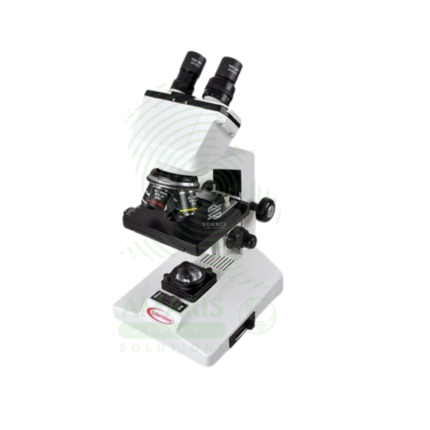
Binocular Microscope
A Binocular Microscope is a high-precision, compound optical instrument fundamental to clinical diagnostics. Featuring dual eyepieces for comfortable viewing and a suite of parfocal objective lenses (4x, 10x, 40x, 100x oil), it provides magnifications from 40x to 1000x. Its integrated LED illumination, mechanical stage, and Abbe condenser enable the detailed examination of stained blood films, tissue sections, microbiological specimens, and cytological preparations. As the primary tool for pathologists and laboratory scientists, it is indispensable for definitive diagnoses in hematology, histopathology, microbiology, and urinalysis, demanding skilled operation and meticulous maintenance for optimal performance.
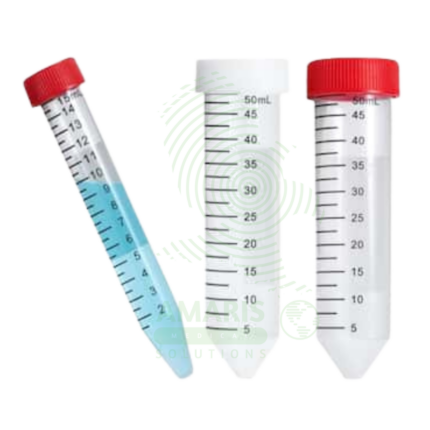
Centrifuge Tubes
Centrifuge Tubes are specialized disposable containers (polypropylene) designed to withstand high centrifugal forces (up to 30,000 x g) for separating biological fluids based on density. Available in microcentrifuge sizes (0.2-2.0 mL), conical tubes (15 mL, 50 mL), and larger volumes (100-500 mL). Features include leak-proof screw caps with O-rings (conical tubes), snap caps (microcentrifuge tubes), graduated volume markings, writing areas, and sterile/non-sterile options. Certified RNase/DNase-free, pyrogen-free, and autoclavable. Primary clinical applications include blood component separation (serum/plasma), urine sediment preparation, microbiology sample concentration, molecular biology (DNA/RNA extraction), cell culture processing, protein/enzyme analysis, and viral load testing. Critical safety precautions include never exceeding maximum RCF rating, proper balancing by weight, secure cap tightening, inspection for cracks, and disposal as biohazardous waste. Essential consumable in every clinical, research, and industrial laboratory.
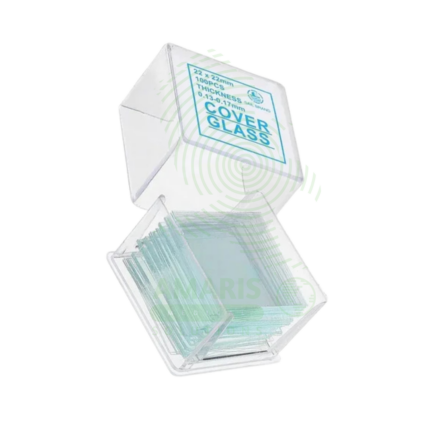
Cover Glass
Cover Glass (coverslips) are thin, transparent glass or plastic squares (e.g., 18×18 mm, 22×22 mm) or rectangles (22×30 mm, 24×50 mm) used to cover specimens on microscope slides for microscopic examination. Available in thickness No. 1 (0.13-0.16 mm) and No. 1.5 (0.16-0.19 mm) for optimal microscopy. Made from optical glass with high light transmission (>90%), refractive index 1.52 matching immersion oil. Packaged in boxes of 100-1000, interleaved with paper to prevent scratching. Primary clinical applications include covering blood films for manual differential counts and malaria diagnosis, wet mount preparations of urine sediment and vaginal secretions, histopathology and cytology slides, Gram-stained bacterial smears, semen analysis, KOH preparations for fungal elements, and India ink preparations for Cryptococcus. Critical safety precautions include handling with forceps (sharp edges), disposing of broken coverslips in sharps containers, avoiding fingerprints on optical surface, and proper disposal of biohazard-contaminated coverslips. Essential consumable in every clinical laboratory performing microscopy.
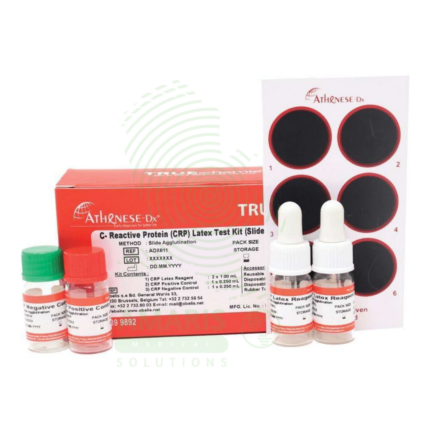
CRP Test Kit
CRP Test Kit (C-Reactive Protein) is a quantitative or semi-quantitative immunoassay (latex agglutination, turbidimetry, nephelometry, ELISA, or rapid immunochromatographic) for detecting C-reactive protein in blood, an acute-phase reactant produced in response to inflammation. Rapid rise within 6-12 hours, peaks at 24-48 hours, half-life 19 hours. Normal <5-10 mg/L; mild elevation 10-100 mg/L (viral infections, autoimmune flares); moderate 100-200 mg/L (bacterial infections); marked >200 mg/L (sepsis, major trauma). High-sensitivity CRP (hs-CRP) detects 0.1-10 mg/L for cardiovascular risk stratification (<1 mg/L low risk, 1-3 mg/L moderate, >3 mg/L high). Primary clinical applications include detection and monitoring of inflammation, diagnosis and management of infections (differentiating bacterial from viral), assessment of autoimmune disease activity, post-surgical monitoring for complications, cardiovascular risk screening (hs-CRP), monitoring rheumatic fever and inflammatory conditions, and neonatal sepsis evaluation. Critical safety precautions include proper sample handling (universal precautions), quality control verification, awareness of non-specific elevation, prozone phenomenon in very high concentrations, and clinical correlation for interpretation. Essential test for evaluating inflammation across all medical specialties.
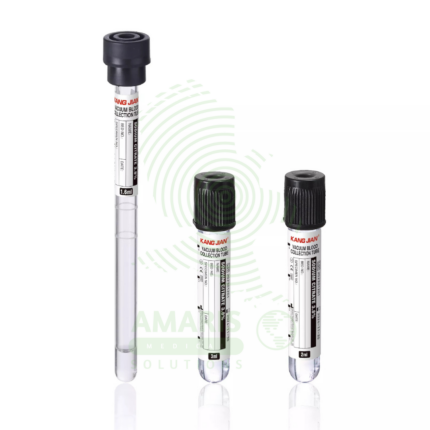
ESR Tubes Glass
ESR Tubes Glass are specialized glass tubes (300 mm length, 2.55 mm bore diameter, graduated 0-200 mm in 1 mm intervals) meeting ICSH and CLSI Westergren specifications for measuring erythrocyte sedimentation rate, a non-specific marker of inflammation. Used with citrated or diluted EDTA blood, filled to exactly 200 mm, placed vertically in Westergren stand, and read at 60 minutes. Primary clinical applications include determination of ESR for diagnosing and monitoring inflammatory conditions (infections, autoimmune disorders, malignancies), monitoring disease activity in rheumatoid arthritis, assessment of temporal arteritis and polymyalgia rheumatica, evaluation of infection and inflammatory response, screening for occult inflammatory conditions, and monitoring chronic inflammatory diseases (SLE, IBD, vasculitis). Critical safety precautions include handling glass tubes carefully to avoid breakage (sharps hazard), proper disposal in sharps containers as biohazardous waste, ensuring vertical alignment and constant temperature (18-25°C), reading at exactly 60 minutes, and avoiding air bubbles and vibration. Essential consumable for reference Westergren ESR testing in clinical laboratories.
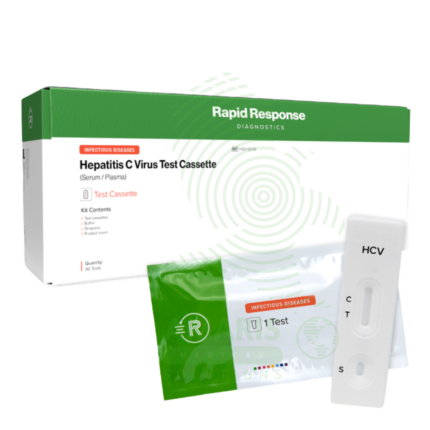
Hepatitis C Test Kit
The Hepatitis C Test Kit is an in vitro diagnostic device for the detection of Hepatitis C virus antibodies or RNA in human blood, serum, or plasma samples. Available in rapid, laboratory immunoassay, and molecular formats, it screens for HCV infection, confirms active infection with RNA testing, and monitors treatment response. With high sensitivity and specificity exceeding 99%, it is essential for identifying infected individuals, linking them to curative direct-acting antiviral therapy, and confirming cure. Essential applications include risk-based screening of high-risk populations, birth cohort screening of baby boomers, evaluation of acute hepatitis, management of occupational exposures, and monitoring of antiviral therapy that can cure over 95% of infections. All patient samples must be handled with universal precautions, and positive antibody results require confirmatory testing.
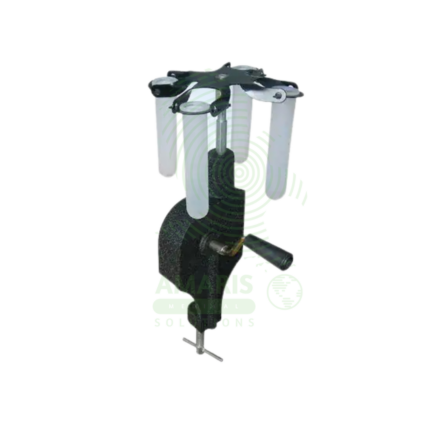
Manual Centrifuge
A Manual Centrifuge (hand-powered) is a non-electric mechanical device for separating fluids based on density, designed for use in field clinics, remote health posts, and developing world settings where electricity is unavailable or unreliable. Operated by hand crank, pull-cord, or foot pedal, achieving speeds of 1,000-4,000 RPM and RCF up to 1,500 x g. Accepts standard blood collection tubes (2-5 mL), microhematocrit tubes, and small centrifuge tubes. Primary clinical applications include separation of serum/plasma for basic diagnostic testing, urine sediment concentration for microscopy, microhematocrit determination for anemia screening, concentration of parasites for malaria and other vector-borne disease diagnosis, field epidemiology and outbreak investigation, veterinary medicine in rural settings, and teaching in resource-limited institutions. Critical safety precautions include meticulous balancing of tubes by weight (absolutely essential), never exceeding maximum rated speed, using appropriate PPE (no aerosol containment), regular inspection of gears and rotor for wear, and proper training of operators. Essential equipment for basic laboratory capabilities in low-resource and field settings.