Dermatoscope and Magnifiers
 Diagnostic Kits
 Vital Signs Monitors
 Stethoscopes and Accessories
 Otoscopes, Ophthalmoscopes, and Retinoscopes
 Reflex Hammers and Neurological Tools
 Scales and Measuring Devices
 Spirometers and Pulmonary Function Tests
 Electrosurgical Units and Accessories
 Cutting Instruments
 Grasping and Holding Instruments
 Hemostatic Instruments
 Specialized Surgical Sets
 Single-Use Procedure Trays and Packs
 Surgical Drapes, Gowns, and Covers
 Tissue Unifying Instruments
 Radiation Protection
 X-Ray Machines and Accessories
 Ultrasound Systems and Probes
 MRI and CT Scanners
 Radiology Consumables
 Bone Densitometers
 Fluoroscopy Equipment
 Imaging Tables and Positioning Aids
 Microscopes and Accessories
 Centrifuges and Separators
 Analyzers
 Incubators and Ovens
 Pipettes, Dispensers, and Lab Glassware
 Refrigerators, Freezers, and Storage Units
 Lab Consumables
 Sterilizers and Autoclaves for Lab Use
 Multi-Parameter Monitors
 Ventilators and Respiratory Support Devices
 Defibrillators and AEDs
 Infusion Pumps and IV Systems
 Patient Warmers and Cooling Devices
 Central Monitoring Stations
 Accessories
 Anesthesia Machines and Workstations
 Oxygen Concentrators and Delivery Systems
 Nebulizers and Inhalers
 CPAP/BiPAP Machines
 Airway Management
 Anesthesia Masks, Circuits, and Bags
 Humidifiers and Heaters
 Respiratory Therapy Accessories
 First Aid Kits and Cabinets
 Emergency Resuscitation Equipment
 Trauma Supplies
 Emergency Carts and Crash Carts
 Burn Care Products
 Bleeding Control
 Automated External Defibrillators (AEDs)
 Transport and Evacuation
 Wheelchairs and Accessories
 Walkers, Crutches, and Canes
 Prosthetics and Orthotics
 Physical Therapy Equipment
 Transfer Devices
 Bathroom Safety
 Orthopedic Traction and Tables
 Hot/Cold Therapy Packs and Units
 Beds and Mattresses
 Chairs and Stools
 Tables
 Cabinets and Storage
 Privacy Screens & Curtains
 Stands and Racks
 Linens and Textiles
 Lighting
 Autoclaves and Sterilizers
 Ultrasonic Cleaners
 Disinfectant Solutions and Wipes
 Sterilization Pouches, Wraps, and Indicators
 Instrument Trays and Containers
 UV and Ozone Disinfection Devices
 Washer Disinfectors
 Wound Care
 Gloves
 Masks and Respirators
 Catheters and Tubing
 Swabs, Applicators, and Sponges
 Incontinence Products
 Personal Protective Equipment (PPE)
 Dental Chairs and Units
 Handpieces and Burs
 Instruments
 Consumables
 Sterilization for Dental Use
 Orthodontic Supplies
 Endodontic Tools
 Slit Lamps and Tonometers
 Lensometers and Phoropters
 Ophthalmic Surgical Instruments
 Eyewear Frames and Lenses
 Contact Lens Supplies
 Vision Testing Charts and Devices
 Eye Care Consumables
 Laser Systems for Eye Care
 ENT Exam Chairs and Tables
 Endoscopes
 Audiometers and Hearing Tests
 ENT Instruments
 Nasal and Throat Packs
 Hearing Aids and Accessories
 Otology Supplies
 Fetal Dopplers and Monitors
 Delivery Beds and Tables
 Gynecological Instruments
 Neonatal Incubators and Warmers
 Breast Pumps and Accessories
 Contraceptive Devices
 Maternity Supports and Pads
 Neonatal Consumables
 Cystoscopes and Urethroscopes
 Dialysis Machines and Supplies
 Urological Catheters and Bags
 Lithotripters
 Prostate Treatment Devices
 Urinary Incontinence Products
 Kidney Stone Management Tools
 Consumables & Disposables
 EEG and EMG Machines
 Neurosurgical Instruments
 Nerve Stimulators
 Headrests and Positioning Aids
 Lumbar Puncture Kits
 Seizure Monitoring Devices
 Consumables
 Rehabilitation for Neurological Conditions
 ECG Machines and Accessories
 Holter Monitors
 Stress Test Systems
 Pacemakers and Defibrillator Accessories
 Vascular Access Devices
 Cardiac Catheters and Guidewires
 Blood Flow Meters
 Consumables
 Orthopedic Instruments
 Casts, Splints, and Padding
 Joint Replacement Supplies
 Prosthetic Limbs and Components
 Bone Grafts and Substitutes
 Traction Devices
 Orthopedic Braces and Supports
 Rehabilitation Aids for Orthopedics
 Home Oxygen Therapy
 Hospital Beds for Home Use
 Mobility Aids
 Bathroom and Daily Living Aids
 Wound Care for Home
 Monitoring Devices
 Enteral Feeding Pumps and Tubes
 Hand Sanitizers and Dispensers
 Face Shields and Goggles
 Isolation Gowns and Suits
 Biohazard Waste Containers
 Air Purifiers and HEPA Filters
 Surface Disinfectants
 Sharps Containers
 Protective Barriers
 Cardiovascular & Endurance Training
 Strength Training & Weightlifting
 Functional Training & Core Conditioning
 Physical Therapy & Rehabilitation
 Sports & Outdoor Recreation
 Gym Flooring & Facility Equipment
 Fitness Monitoring & Accessories
 Kids & Novelties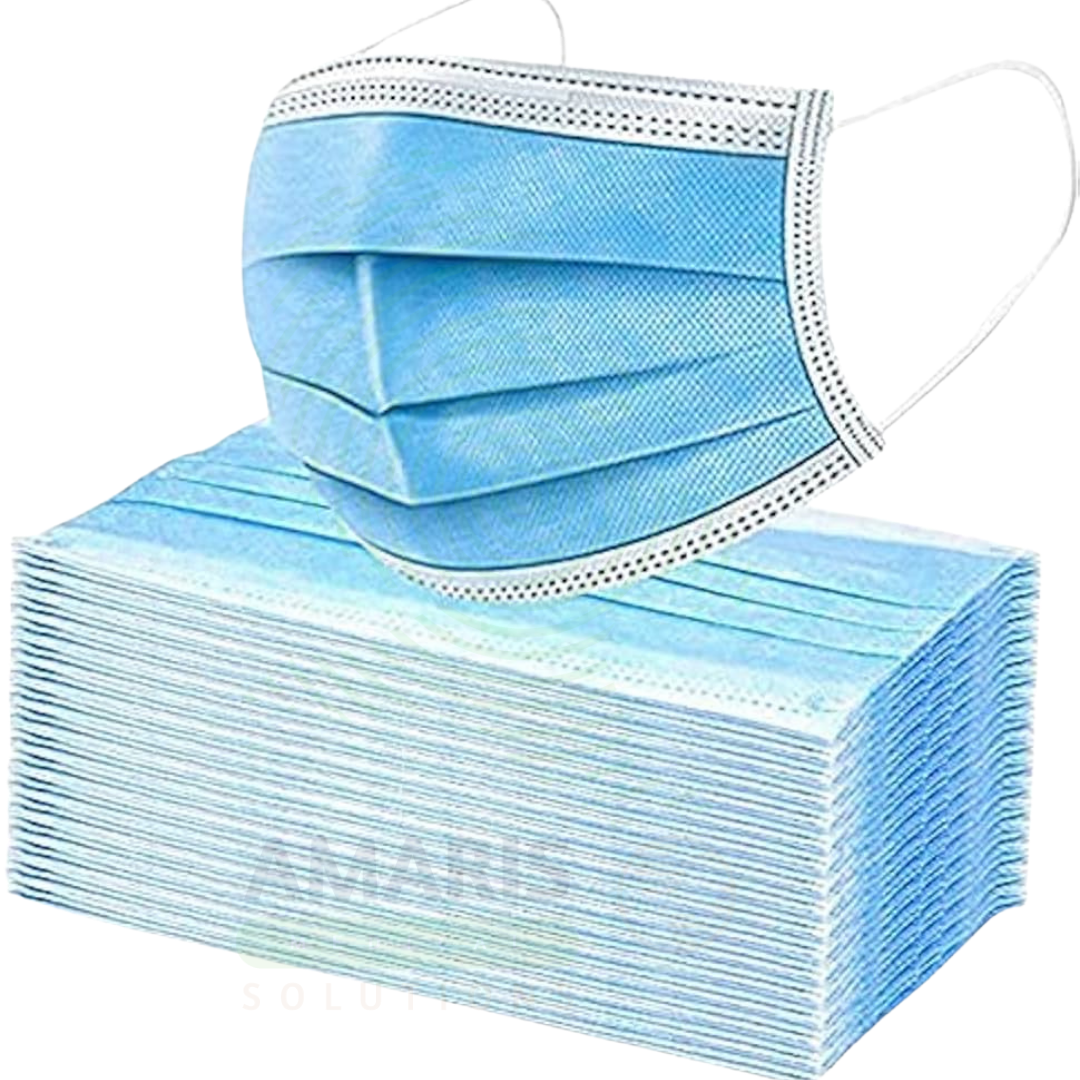
Face Masks
WhatsApp Order
A Face Mask is a disposable, loose-fitting or tight-fitting (respirator) barrier device designed to cover the wearer’s nose and mouth. Its primary functions are source control (to contain the wearer’s respiratory secretions) and personal protection (to filter inhaled airborne particles). In healthcare, specific types—such as ASTM-rated surgical masks for sterile procedures and NIOSH-certified respirators (e.g., N95) for aerosol-generating procedures—are critical PPE for infection prevention. Correct usage, including strict single-use protocols and proper donning/doffing technique, is essential for its effectiveness in interrupting pathogen transmission.
Description
Face Masks
PRIMARY CLINICAL & DIAGNOSTIC USES
1. Source Control and Respiratory Protection in Infection Prevention
-
Primary Use: Acts as a barrier to prevent the transmission of respiratory pathogens, serving two key functions: protecting the wearer from inhaling infectious droplets and aerosols from patients, and preventing a potentially infected wearer from expelling contaminants into the sterile field or environment.
-
How it helps: For the infection preventionist and healthcare worker, the face mask is a fundamental line of defense against respiratory pathogens—intercepting infectious droplets before they can be inhaled, containing the wearer’s own respiratory emissions, and breaking the chain of transmission in healthcare settings. For the patient, masks worn by healthcare workers mean reduced risk of acquiring infections during their hospital stay, and masks worn by infectious patients protect vulnerable others from exposure.
2. Personal Protective Equipment for Healthcare Workers
-
Primary Use: Essential PPE for doctors, nurses, technicians, and support staff during patient care activities, especially during procedures that generate aerosols or when in close contact with patients with suspected or confirmed airborne or droplet-transmitted infections.
-
How it helps: For the healthcare worker caring for patients with tuberculosis, influenza, COVID-19, or other respiratory infections, the face mask provides the protection that allows them to continue providing care without becoming infected themselves—preserving the workforce and preventing them from carrying infections home to their families. For the patient, knowing that their caregivers are protected means they can receive care without guilt or fear of transmitting their illness.
3. Patient Use for Infection Containment
-
Primary Use: Placed on patients with contagious respiratory infections during transport within a facility or while in waiting areas to minimize the dispersal of infectious droplets into the surrounding air, thereby protecting other patients, visitors, and staff.
-
How it helps: For the infection control team and facility managers, placing a mask on an infectious patient is a simple but highly effective containment strategy—capturing respiratory droplets at their source and preventing them from circulating through waiting rooms, hallways, and shared spaces. For other patients and visitors, masks on infectious individuals mean reduced exposure risk while sharing healthcare environments.
4. Surgical and Procedural Sterility Maintenance
-
Primary Use: Sterile surgical masks are worn by the entire surgical team in operating rooms and procedural suites to prevent microorganisms expelled from the wearer’s nose and mouth from contaminating the sterile surgical field, surgical instruments, and the patient’s open wound.
-
How it helps: For the surgeon and operating room team, the surgical mask is a critical component of sterile technique—ensuring that the bacteria normally present in the nose and mouth do not fall into an open incision, contaminate sterile instruments, or cause surgical site infections. For the patient undergoing surgery, masks worn by the entire team mean their risk of post-operative infection is significantly reduced.
5. Barrier Protection in Non-Surgical Clinical Procedures
-
Primary Use: Used during non-sterile but exposure-prone procedures such as wound dressing changes, lumbar punctures, insertion of intravenous lines, and preparation of cytotoxic drugs to protect both the clinician and the patient from cross-contamination.
-
How it helps: For the nurse and physician performing procedures that generate splashes or droplets, the face mask provides essential barrier protection—pretaining blood, body fluids, or medications from contacting the mucous membranes of the mouth and nose. For the patient, this barrier protects them from potential pathogens carried by the healthcare worker.
SECONDARY & SUPPORTIVE USES
1. General Public Use for Community Mitigation: Used by the general population in community settings during outbreaks or pandemics of respiratory illnesses to reduce the overall rate of transmission, particularly in crowded, confined, or high-risk settings. For the community, widespread mask use reduces disease spread and protects vulnerable individuals.
2. Protection Against Non-Infectious Particulates: Used in clinical and non-clinical environments to protect the wearer from inhaling non-infectious particulates, such as dust, allergens, powder from medication crushing, or environmental pollutants. For the worker crushing medications or the individual with allergies, masks provide protection from respiratory irritants.
3. Oxygen Delivery Adjunct: Simple face masks are used to deliver supplemental oxygen to patients in emergency departments, during resuscitation, or for general oxygen therapy. For the patient with respiratory distress, an oxygen mask delivers life-sustaining oxygen directly to their airways.
4. Nebulizer Therapy Interface: Used as a component of nebulizer kits for patients who cannot effectively use a mouthpiece, providing a sealed interface for delivering aerosolized medications to the respiratory tract. For the child or elderly patient receiving breathing treatments, a mask ensures medication reaches their lungs effectively.
5. Post-Mortem Care: Used by mortuary staff and pathologists as a standard PPE barrier during the handling and preparation of deceased individuals to protect against potential exposure to pathogens. For those who care for the deceased, masks provide essential protection against infectious agents that may still be present.
KEY PRODUCT FEATURES
1. BASIC IDENTIFICATION ATTRIBUTES
-
Product Type: A barrier device covering the nose, mouth, and chin.
-
Designation: Categorized by intended use and protective standard (e.g., Surgical Mask, Procedure Mask, Respirator [N95, FFP2], Oxygen Mask, Nebulizer Mask).
-
Core Components: Typically consists of multiple layers of non-woven fabric (e.g., spunbond polypropylene), a malleable nose wire for seal adjustment, ear loops or headbands, and pleats to allow expansion over the face.
2. TECHNICAL & PERFORMANCE PROPERTIES
-
Filtration Efficiency: The percentage of particulates (bacteria, viruses, particles) of a specific size filtered. ASTM-rated surgical masks test for Bacterial Filtration Efficiency (BFE) and Particle Filtration Efficiency (PFE). Respirators (N95) are certified to filter ≥95% of 0.3-micron particles.
-
Fluid Resistance: Critical for surgical masks, measured as resistance to penetration by synthetic blood under pressure (ASTM F1862). High fluid resistance protects the wearer from splashes and sprays.
-
Breathability: Measured as differential pressure (Delta-P). Lower Delta-P indicates easier airflow and greater comfort, balancing filtration performance with wearability.
3. PHYSICAL & OPERATIONAL PROPERTIES
-
Fit and Seal: Surgical/procedure masks are designed for loose fit. Respirators (N95) require formal fit-testing to ensure a tight facial seal, which is critical for their intended level of protection.
-
Packaging: Individually wrapped in sterile (for surgical use) or non-sterile packaging. Often dispensed in boxes of 20-50 masks or bulk for institutional use.
4. SAFETY & COMPLIANCE ATTRIBUTES
-
Regulatory Standards: Must comply with regional standards. Common ones include:
-
ASTM F2100: For surgical masks (Levels 1, 2, 3).
-
NIOSH 42 CFR Part 84: For respirators (N95, N99, N100).
-
EN 14683: For surgical masks in the EU.
-
FDA 510(k) Clearance: For surgical masks and respirators marketed in the U.S.
-
-
Flammability: Class I (low flammability) per 16 CFR Part 1610 (U.S. Standard).
-
Biocompatibility: Materials in contact with skin must be non-irritating and hypoallergenic.
-
Latex-Free: Must be manufactured without natural rubber latex.
5. STORAGE & HANDLING ATTRIBUTES
-
Storage: Store in a cool, dry, clean environment in original packaging. Protect from moisture, extreme temperatures, direct sunlight, and contaminants.
-
Shelf Life: Has an expiration date. Components (especially nose wire and elastic) can degrade over time, affecting fit and performance.
-
Single-Use Protocol: The vast majority of medical face masks and respirators are designated as single-use, disposable devices. They must be discarded after one patient encounter, when soiled, moist, damaged, or after leaving a contaminated area (e.g., a patient's room).
6. LABORATORY & CLINICAL APPLICATIONS
-
Primary Application: A fundamental consumable for implementing infection control protocols across all healthcare and community settings. The choice of mask type (procedure vs. surgical vs. respirator) is a risk-based decision guided by the anticipated exposure.
-
Decision Matrix: Selection depends on procedure (sterile vs. non-sterile), anticipated exposure to fluids, and the transmission route of the pathogen involved (contact/droplet vs. aerosol).
SAFETY HANDLING PRECAUTIONS
1. SAFETY PRECAUTIONS
-
Correct Donning and Doffing (Most Important): Improper handling contaminates the mask and the wearer. Perform hand hygiene before and after touching the mask. Avoid touching the front of the mask during use. Remove by the ear loops/headbands and discard immediately.
-
Seal Check (for Respirators): A user seal check (positive and negative pressure check) must be performed each time a respirator is donned to ensure no leakage.
-
Not a Substitute for Other Precautions: Mask use must be combined with other measures: hand hygiene, maintaining physical distance where possible, and appropriate environmental cleaning.
-
Contamination Avoidance: A mask is considered contaminated once worn. It must not be pulled down to the chin, stored in a pocket, or reused later. A damaged, soiled, or moist mask loses efficacy and must be replaced.
2. FIRST AID MEASURES
-
Adverse Skin Reaction: If irritation, rash, or allergic reaction occurs, remove the mask, gently cleanse the area, and discontinue use of that brand/model. Seek medical advice for severe reactions.
-
Difficulty Breathing: If the wearer experiences significant respiratory distress, dizziness, or lightheadedness, they should immediately move to a safe area, remove the mask, and seek fresh air/medical evaluation.
3. FIRE FIGHTING MEASURES
-
Flammability: Polypropylene material is combustible but not highly flammable.
-
Extinguishing Media: Use water, foam, CO₂, or dry chemical powder as appropriate for the surrounding fire. Smoke from burning plastics may be toxic.
Related products
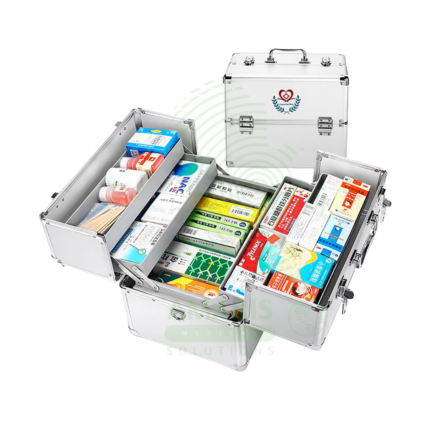
Aluminium First Aid Kit For Ambulance
An Aluminium First Aid Kit for Ambulance is a heavy-duty, weather-resistant storage case specifically designed for organizing, protecting, and securing medical supplies in emergency medical service vehicles. Constructed from 1.2-2.0 mm aluminium alloy with reinforced corners, durable latches, and rubber gaskets (IP54-IP67 rated), these cases protect contents from vibration, impact, moisture, and temperature extremes during emergency response. Available in various configurations including single compartment, multi-drawer, and clear-lid models with customizable interior dividers, elastic straps, and pouches. Designed to meet ambulance equipment mounting standards (KKK-A-1822, NFPA 1917, CEN 1789) with proper installation to withstand collision forces. Primary clinical applications include organized storage of airway management devices, bleeding control supplies, wound care materials, diagnostic equipment, emergency medications, IV supplies, splinting equipment, PPE, and obstetric supplies for BLS, ALS, and CCT ambulance services. Critical safety considerations include proper vehicle mounting to prevent projectile hazards, secure latching during transport, regular inventory management, expiration date monitoring, and decontamination after biohazard exposure. Essential equipment for organized, efficient, and safe emergency medical response.
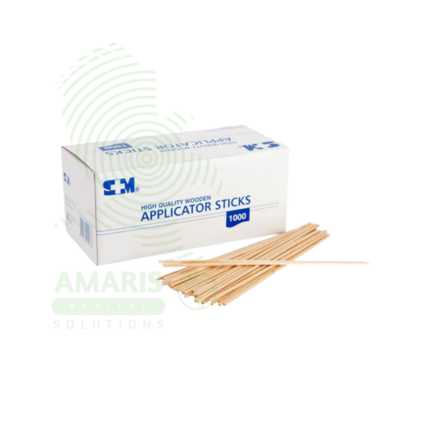
Applicator Sticks
Applicator Sticks are single-use medical devices with absorbent tips (cotton, rayon, flocked polyester) on wood, plastic, or paper shafts for collecting clinical specimens (throat, nasal, wound, cervical, urethral, rectal) for microbiological culture, rapid testing, and molecular diagnostics. Sterile individually wrapped or non-sterile bulk formats. Flocked swabs provide >90% specimen release for PCR testing. Primary applications include specimen collection for infection diagnosis, wound care and antiseptic application, gynecological sampling (Pap smears, STI testing), eye/ear specimen collection, laboratory slide preparation, and forensic evidence collection. Critical precautions include single-use only, sterile technique, proper collection method, and biohazard disposal. Essential consumable in all clinical settings.
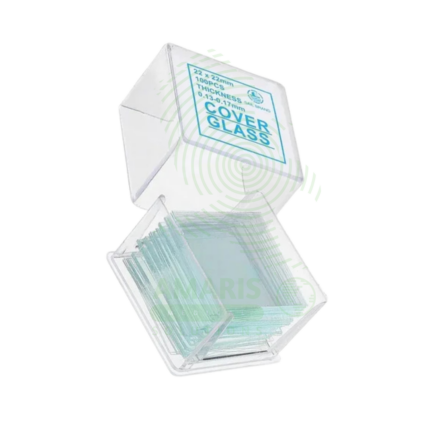
Cover Glass
Cover Glass (coverslips) are thin, transparent glass or plastic squares (e.g., 18×18 mm, 22×22 mm) or rectangles (22×30 mm, 24×50 mm) used to cover specimens on microscope slides for microscopic examination. Available in thickness No. 1 (0.13-0.16 mm) and No. 1.5 (0.16-0.19 mm) for optimal microscopy. Made from optical glass with high light transmission (>90%), refractive index 1.52 matching immersion oil. Packaged in boxes of 100-1000, interleaved with paper to prevent scratching. Primary clinical applications include covering blood films for manual differential counts and malaria diagnosis, wet mount preparations of urine sediment and vaginal secretions, histopathology and cytology slides, Gram-stained bacterial smears, semen analysis, KOH preparations for fungal elements, and India ink preparations for Cryptococcus. Critical safety precautions include handling with forceps (sharp edges), disposing of broken coverslips in sharps containers, avoiding fingerprints on optical surface, and proper disposal of biohazard-contaminated coverslips. Essential consumable in every clinical laboratory performing microscopy.
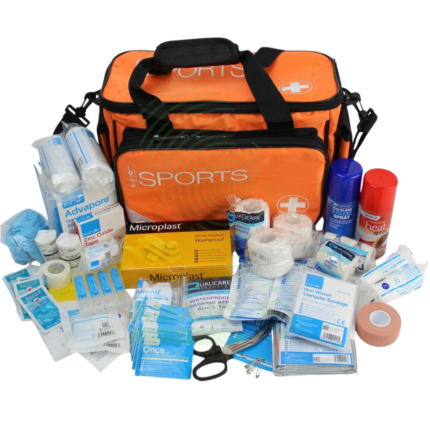
First Aid Kit For Sporting Places
A First Aid Kit for Sporting Places is a portable, organized medical kit specifically designed for the types and frequencies of injuries encountered in athletic and sporting environments. Available in various configurations including sideline kits for team use, personal sports pouches, team travel kits, and wall-mounted cabinets for gymnasiums. Constructed from ballistic nylon, polyester, ABS plastic, or aluminum with organized interior compartments, pouches, and elastic loops for rapid access to supplies. Contains sport-specific medical supplies including wound care materials, elastic bandages, instant cold packs, splinting materials, eye wash, blister care, concussion assessment tools, and personal protective equipment. Primary clinical applications include immediate treatment of common sports injuries (sprains, strains, contusions, abrasions, lacerations), concussion assessment, bleeding control, heat illness management, eye injury care, and emergency action plan implementation. Essential equipment for athletic teams, schools, fitness centers, recreational facilities, and sporting events, providing organized, accessible medical supplies for athlete safety and injury management.
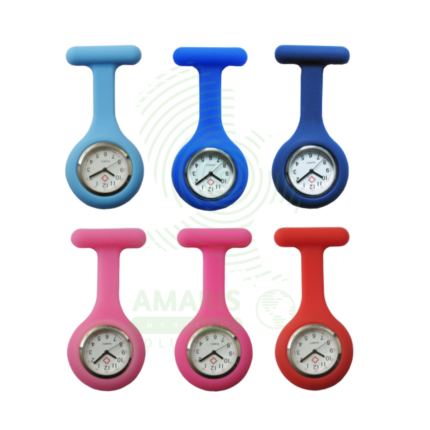
Nurse Watch
A Nurse Watch is a professional-grade analog wristwatch specifically designed for clinical use. Its hallmark is a built-in "pulsometer" scale that allows for rapid, on-the-spot calculation of a patient's heart rate by timing pulses over a short interval. Featuring a high-contrast dial with a clear sweep second hand, durable water-resistant construction, and a cleanable band, it is engineered for accuracy, legibility, and infection control in healthcare settings. It is an indispensable personal tool for nurses, enabling precise measurement of vital signs, timing of medications and procedures, and accurate clinical documentation throughout the shift.
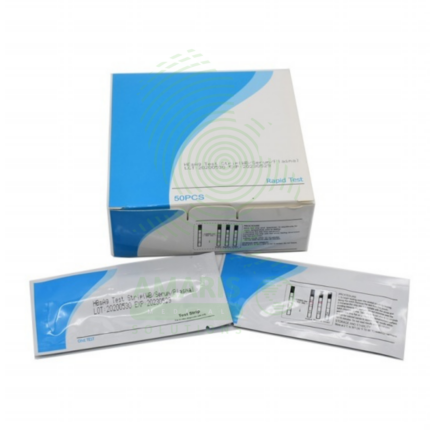
Rapid Test Kits (HIV, HBV, HCV, Malaria)
Rapid Test Kits for HIV, HBV, HCV, and Malaria are single-use, immunochromatographic devices designed for the quick, preliminary screening of these critical infectious diseases at the point of care. By detecting specific antibodies or antigens in a small blood sample (or oral fluid for some HIV tests), they provide a visual result within 15-30 minutes without the need for laboratory equipment. Their primary role is to expand access to testing in community and resource-limited settings, enabling immediate counseling, triage, and referral for confirmatory testing and treatment. As essential tools in public health, they are characterized by their simplicity, speed, and critical importance in early diagnosis and outbreak response.
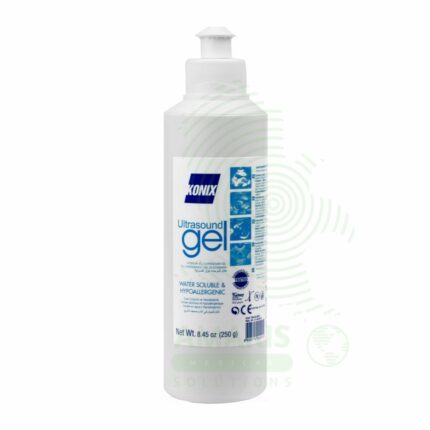
Ultrasound Gel
Ultrasound Gel is a water-based, hypoallergenic, acoustically conductive coupling medium essential for diagnostic and therapeutic ultrasound procedures. It eliminates air pockets between the transducer and skin, creating an efficient acoustic pathway for sound wave transmission and reception. Formulated to match the acoustic impedance of human tissue, it ensures high-quality imaging while providing lubrication for smooth probe movement and patient comfort. Available in standard, sterile, and hypoallergenic formulations, it is a single-use consumable critical for all ultrasound examinations. Proper storage, handling, and selection of appropriate sterile versus non-sterile formulations are essential for patient safety and image quality.