Dermatoscope and Magnifiers
 Diagnostic Kits
 Vital Signs Monitors
 Stethoscopes and Accessories
 Otoscopes, Ophthalmoscopes, and Retinoscopes
 Reflex Hammers and Neurological Tools
 Scales and Measuring Devices
 Spirometers and Pulmonary Function Tests
 Electrosurgical Units and Accessories
 Cutting Instruments
 Grasping and Holding Instruments
 Hemostatic Instruments
 Specialized Surgical Sets
 Single-Use Procedure Trays and Packs
 Surgical Drapes, Gowns, and Covers
 Tissue Unifying Instruments
 Radiation Protection
 X-Ray Machines and Accessories
 Ultrasound Systems and Probes
 MRI and CT Scanners
 Radiology Consumables
 Bone Densitometers
 Fluoroscopy Equipment
 Imaging Tables and Positioning Aids
 Microscopes and Accessories
 Centrifuges and Separators
 Analyzers
 Incubators and Ovens
 Pipettes, Dispensers, and Lab Glassware
 Refrigerators, Freezers, and Storage Units
 Lab Consumables
 Sterilizers and Autoclaves for Lab Use
 Multi-Parameter Monitors
 Ventilators and Respiratory Support Devices
 Defibrillators and AEDs
 Infusion Pumps and IV Systems
 Patient Warmers and Cooling Devices
 Central Monitoring Stations
 Accessories
 Anesthesia Machines and Workstations
 Oxygen Concentrators and Delivery Systems
 Nebulizers and Inhalers
 CPAP/BiPAP Machines
 Airway Management
 Anesthesia Masks, Circuits, and Bags
 Humidifiers and Heaters
 Respiratory Therapy Accessories
 First Aid Kits and Cabinets
 Emergency Resuscitation Equipment
 Trauma Supplies
 Emergency Carts and Crash Carts
 Burn Care Products
 Bleeding Control
 Automated External Defibrillators (AEDs)
 Transport and Evacuation
 Wheelchairs and Accessories
 Walkers, Crutches, and Canes
 Prosthetics and Orthotics
 Physical Therapy Equipment
 Transfer Devices
 Bathroom Safety
 Orthopedic Traction and Tables
 Hot/Cold Therapy Packs and Units
 Beds and Mattresses
 Chairs and Stools
 Tables
 Cabinets and Storage
 Privacy Screens & Curtains
 Stands and Racks
 Linens and Textiles
 Lighting
 Autoclaves and Sterilizers
 Ultrasonic Cleaners
 Disinfectant Solutions and Wipes
 Sterilization Pouches, Wraps, and Indicators
 Instrument Trays and Containers
 UV and Ozone Disinfection Devices
 Washer Disinfectors
 Wound Care
 Gloves
 Masks and Respirators
 Catheters and Tubing
 Swabs, Applicators, and Sponges
 Incontinence Products
 Personal Protective Equipment (PPE)
 Dental Chairs and Units
 Handpieces and Burs
 Instruments
 Consumables
 Sterilization for Dental Use
 Orthodontic Supplies
 Endodontic Tools
 Slit Lamps and Tonometers
 Lensometers and Phoropters
 Ophthalmic Surgical Instruments
 Eyewear Frames and Lenses
 Contact Lens Supplies
 Vision Testing Charts and Devices
 Eye Care Consumables
 Laser Systems for Eye Care
 ENT Exam Chairs and Tables
 Endoscopes
 Audiometers and Hearing Tests
 ENT Instruments
 Nasal and Throat Packs
 Hearing Aids and Accessories
 Otology Supplies
 Fetal Dopplers and Monitors
 Delivery Beds and Tables
 Gynecological Instruments
 Neonatal Incubators and Warmers
 Breast Pumps and Accessories
 Contraceptive Devices
 Maternity Supports and Pads
 Neonatal Consumables
 Cystoscopes and Urethroscopes
 Dialysis Machines and Supplies
 Urological Catheters and Bags
 Lithotripters
 Prostate Treatment Devices
 Urinary Incontinence Products
 Kidney Stone Management Tools
 Consumables & Disposables
 EEG and EMG Machines
 Neurosurgical Instruments
 Nerve Stimulators
 Headrests and Positioning Aids
 Lumbar Puncture Kits
 Seizure Monitoring Devices
 Consumables
 Rehabilitation for Neurological Conditions
 ECG Machines and Accessories
 Holter Monitors
 Stress Test Systems
 Pacemakers and Defibrillator Accessories
 Vascular Access Devices
 Cardiac Catheters and Guidewires
 Blood Flow Meters
 Consumables
 Orthopedic Instruments
 Casts, Splints, and Padding
 Joint Replacement Supplies
 Prosthetic Limbs and Components
 Bone Grafts and Substitutes
 Traction Devices
 Orthopedic Braces and Supports
 Rehabilitation Aids for Orthopedics
 Home Oxygen Therapy
 Hospital Beds for Home Use
 Mobility Aids
 Bathroom and Daily Living Aids
 Wound Care for Home
 Monitoring Devices
 Enteral Feeding Pumps and Tubes
 Hand Sanitizers and Dispensers
 Face Shields and Goggles
 Isolation Gowns and Suits
 Biohazard Waste Containers
 Air Purifiers and HEPA Filters
 Surface Disinfectants
 Sharps Containers
 Protective Barriers
 Cardiovascular & Endurance Training
 Strength Training & Weightlifting
 Functional Training & Core Conditioning
 Physical Therapy & Rehabilitation
 Sports & Outdoor Recreation
 Gym Flooring & Facility Equipment
 Fitness Monitoring & Accessories
 Kids & Novelties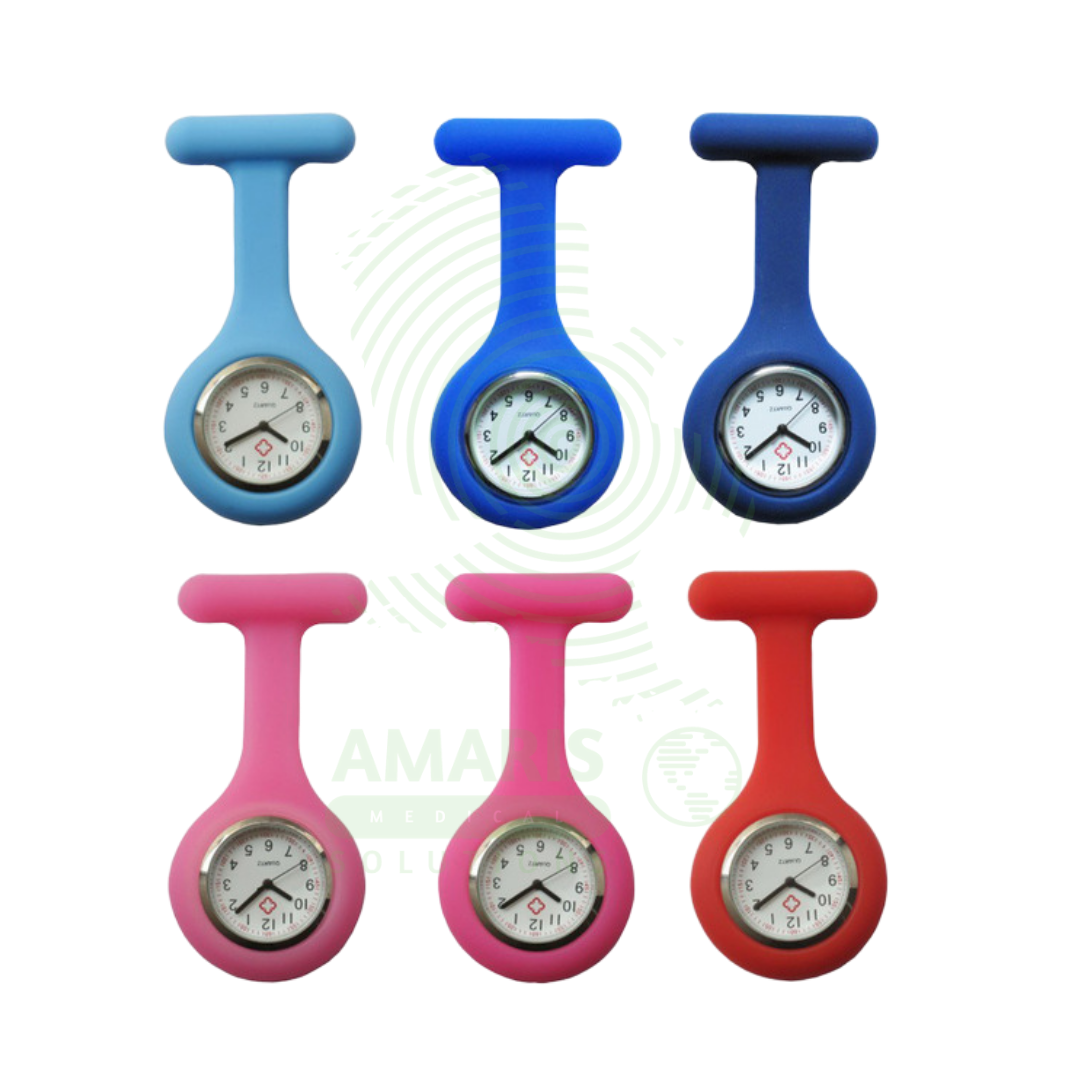
Nurse Watch
$1.00
WhatsApp Order
A Nurse Watch is a professional-grade analog wristwatch specifically designed for clinical use. Its hallmark is a built-in “pulsometer” scale that allows for rapid, on-the-spot calculation of a patient’s heart rate by timing pulses over a short interval. Featuring a high-contrast dial with a clear sweep second hand, durable water-resistant construction, and a cleanable band, it is engineered for accuracy, legibility, and infection control in healthcare settings. It is an indispensable personal tool for nurses, enabling precise measurement of vital signs, timing of medications and procedures, and accurate clinical documentation throughout the shift.
Description
Nurse Watch
PRIMARY CLINICAL & DIAGNOSTIC USES
1. Vital Signs Measurement & Timing:
-
Primary Use: The primary clinical use is to accurately measure and time key patient vital signs. This includes counting respiratory rate (for a full 60 seconds), measuring heart rate/pulse (especially when irregular or during CPR), and timing the duration of symptoms, seizures, or procedures.
-
How it helps: Provides nurses with the precise timing needed to detect subtle changes in a patient’s condition—from an irregular heartbeat to a slowing respiratory rate—that can signal the difference between stability and crisis.
2. Medication Administration & IV Drip Rate Calculation:
-
Primary Use: Essential for timing medication intervals (e.g., “give every 6 hours”) and for calculating and monitoring intravenous (IV) infusion drip rates (drops per minute), a fundamental nursing responsibility.
-
How it helps: Ensures patients receive medications exactly when they need them and IV fluids flow at the precise rate prescribed, preventing medication errors and complications from incorrect infusion speeds.
3. Clinical Documentation:
-
Primary Use: Used to record precise timestamps for patient assessments, medication administration, changes in condition, and nursing interventions in the medical chart, which is critical for legal documentation and continuity of care.
-
How it helps: Creates an accurate, legal record of care that protects both patients and providers, ensuring that every assessment and intervention is documented with the exact time it occurred.
4. Procedure Timing:
-
Primary Use: Used to time everything from capillary refill tests and Apgar scores for newborns to the length of wound dressing changes and physical therapy sessions.
-
How it helps: Provides objective, timed measurements that help track patient progress and ensure procedures are performed for the appropriate duration—long enough to be effective but not so long as to cause discomfort.
SECONDARY & SUPPORTIVE USES
1. Hand Hygiene Compliance: The second hand is often used as a visual reminder to adhere to the recommended 20-second handwashing duration as per WHO guidelines, helping prevent healthcare-associated infections.
2. Personal Time Management: Helps nurses manage their shift schedule, break times, and coordinate care with other team members, ensuring efficient patient care delivery.
3. Patient Interaction: Can be used to help anxious patients with breathing exercises by timing inhalations and exhalations, turning a moment of anxiety into a calming, structured activity.
KEY PRODUCT FEATURES
1. BASIC IDENTIFICATION ATTRIBUTES
-
Type: Specialized professional wristwatch.
-
Core Design Feature: Incorporates a "Pulsometer" or "Pulse Bezel"—a graduated scale (typically marked from 50 to 200) around the outer rim of the watch face or on a rotating bezel. This allows for instant heart rate calculation by counting pulses over a shortened, standardized time interval (e.g., 15, 20, or 30 seconds).
-
Display: Analog (with hour, minute, and a prominent sweep second hand) is the classic and most functional type. Digital nurse watches with stopwatch functions are also common.
2. TECHNICAL & PERFORMANCE PROPERTIES
-
Pulsometer Scale: The defining feature. To use it: start the second hand at zero, count patient pulses until the second hand reaches a marked number on the scale (e.g., 20), and read the corresponding heart rate number on the pulsometer scale where the second hand points.
-
High-Contrast Dial: Features a clean, highly legible dial with bold, contrasting numbers and clear markings (often with luminous hands and indices) for easy reading in low-light hospital environments.
-
Sweep Second Hand: A smooth-moving second hand (not a ticking one) is crucial for precise timing of short intervals, like counting respirations or a 15-second pulse.
-
Water Resistance: Has a degree of water resistance (e.g., 30m/3ATM) to withstand frequent handwashing, accidental splashes, and exposure to cleaning agents.
-
Durability: Constructed with a stainless steel case and a scratch-resistant mineral or sapphire crystal to endure the rigors of a clinical environment.
3. PHYSICAL & OPERATIONAL PROPERTIES
-
Band: Typically has a hygienic, non-porous band made of silicone, rubber, or stainless steel that can be easily cleaned and disinfected. Leather bands are less common due to infection control concerns.
-
Size & Weight: Designed to be lightweight and comfortable for all-day wear without interfering with patient care or glove use.
4. SAFETY & COMPLIANCE ATTRIBUTES
-
Infection Control: The entire watch, especially the band and caseback, must be made of materials that can withstand daily cleaning with hospital-grade disinfectants (alcohol wipes, chlorhexidine) without degrading.
-
No Jewellery Policy Compliance: A simple, professional nurse watch is often the only piece of jewellery permitted in clinical areas, as it is considered a necessary medical tool rather than an adornment.
5. STORAGE & HANDLING ATTRIBUTES
-
Daily Cleaning: Must be wiped down thoroughly at least once per shift (and after contact with infectious patients) with an approved disinfectant wipe to prevent it from becoming a fomite for pathogen transmission (e.g., MRSA).
-
Storage: When not worn (e.g., during sterile procedures), it should be stored in a clean, dry personal locker or pocket.
6. LABORATORY & CLINICAL APPLICATIONS
-
Primary Application: An essential, everyday personal medical tool that extends a nurse's (or doctor's) ability to make accurate clinical measurements and observations at the point of care.
-
Universal Tool: Its utility spans all nursing specialties, from emergency and critical care to pediatrics and community health.
SAFETY HANDLING PRECAUTIONS
1. SAFETY PRECAUTIONS
-
Infection Vector: The single greatest risk is cross-contamination. Strict, routine disinfection of the watch is non-negotiable. It should not be worn during sterile procedures (e.g., in the operating room, during central line insertion).
-
Correct Use of Pulsometer: Users must be trained to use the pulsometer scale correctly for it to provide an accurate heart rate estimate.
-
Allergens: Ensure the band material does not cause skin irritation or allergy for the wearer.
2. FIRST AID MEASURES
-
General: The device itself poses no hazard. In the event of a broken crystal, carefully dispose of glass fragments to prevent injury.
3. FIRE FIGHTING MEASURES
-
Flammability: The plastic/rubber/silicone band is combustible.
-
Extinguishing Media: Use standard extinguishing media as appropriate for the surrounding fire.
Related products
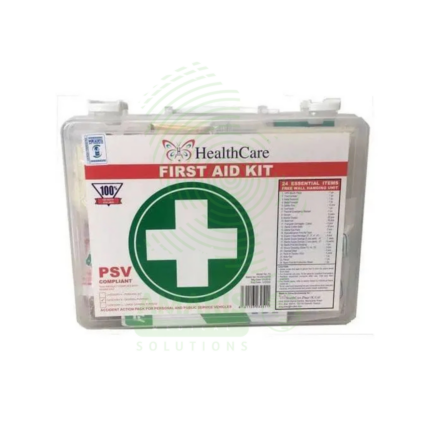
First Aid Kit
A First Aid Kit is an organized collection of medical supplies and equipment for providing initial care in emergency situations, available in various sizes and configurations for home, workplace, vehicle, travel, and specialized applications. Kits range from personal pouches (0.5-2 L) to comprehensive workplace cabinets (5-35 L) with soft-sided bags, hard cases, or wall-mounted containers. Contents are typically organized to meet regional standards (ANSI/ISEA Z308.1, CSA Z1220, BS 8599, DIN 13157/13169) and include wound care supplies (bandages, gauze, tape), antiseptics, burn care, eye care, emergency items (CPR mask, cold packs, foil blanket), instruments (scissors, tweezers), and PPE (gloves). Class A kits provide minimum supplies for low-hazard workplaces; Class B kits offer expanded quantities for high-hazard environments. Primary clinical applications include immediate treatment of minor injuries (cuts, abrasions, burns, sprains), bleeding control, wound care, fracture immobilization, and emergency assessment. Essential safety equipment for every home, workplace, vehicle, and public facility, providing critical medical supplies until professional care arrives.
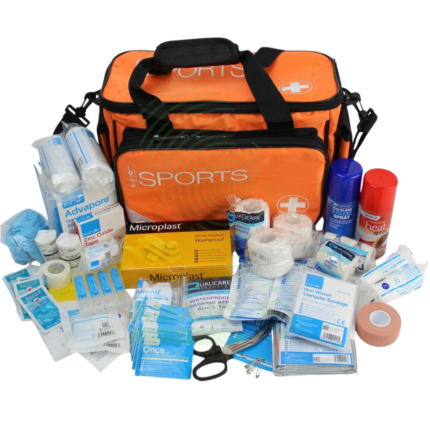
First Aid Kit For Sporting Places
A First Aid Kit for Sporting Places is a portable, organized medical kit specifically designed for the types and frequencies of injuries encountered in athletic and sporting environments. Available in various configurations including sideline kits for team use, personal sports pouches, team travel kits, and wall-mounted cabinets for gymnasiums. Constructed from ballistic nylon, polyester, ABS plastic, or aluminum with organized interior compartments, pouches, and elastic loops for rapid access to supplies. Contains sport-specific medical supplies including wound care materials, elastic bandages, instant cold packs, splinting materials, eye wash, blister care, concussion assessment tools, and personal protective equipment. Primary clinical applications include immediate treatment of common sports injuries (sprains, strains, contusions, abrasions, lacerations), concussion assessment, bleeding control, heat illness management, eye injury care, and emergency action plan implementation. Essential equipment for athletic teams, schools, fitness centers, recreational facilities, and sporting events, providing organized, accessible medical supplies for athlete safety and injury management.
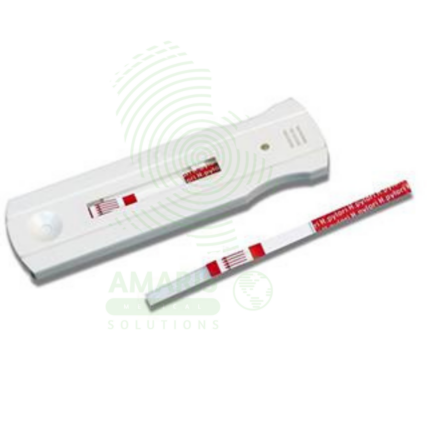
H. pylori Test Strips
H. pylori Test Strips are rapid, lateral flow immunochromatographic devices used for the qualitative detection of Helicobacter pylori antigens in human stool. As a non-invasive stool antigen test (SAT), it provides a convenient and reliable method for diagnosing active H. pylori infection and confirming eradication after therapy, with results available in under 15 minutes. Ideal for use in clinics and outpatient settings, it aids in the management of dyspepsia and peptic ulcer disease. Proper sample handling, adherence to pre-test medication restrictions, and strict biohazard precautions are essential for obtaining accurate results.
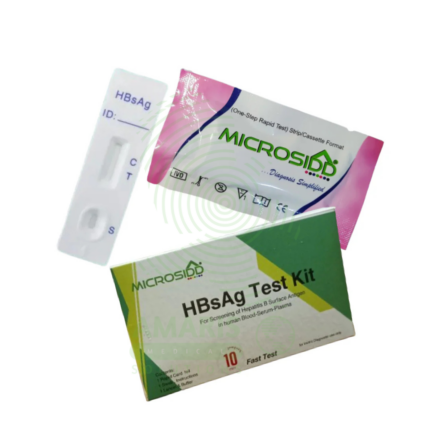
Hepatitis B Test Kit
The Hepatitis B Test Kit is an in vitro diagnostic device for the detection of Hepatitis B virus markers in human blood samples, available in rapid, ELISA, and molecular formats. It detects specific antigens (HBsAg) and antibodies (anti-HBc, anti-HBs) to diagnose acute and chronic infection, monitor treatment response, screen blood donations, and determine immunity status. With high sensitivity (>98%) and specificity (>99%), it provides results in 15 minutes to 4 hours depending on format. Essential applications include prenatal screening to prevent mother-to-child transmission, evaluation of acute hepatitis, pre-immunosuppression screening, and occupational health testing. All patient samples must be handled with universal precautions, and testing must include appropriate quality controls.
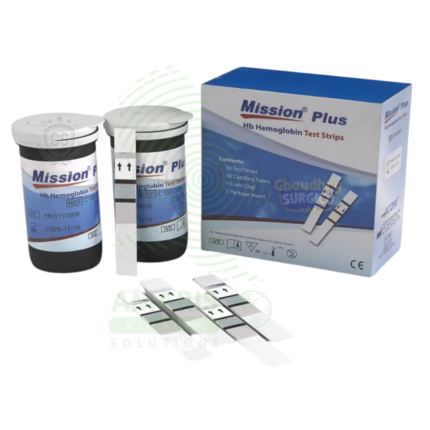
Mission plus strips
Mission Plus Strips are single-use, disposable electrochemical test strips (ISO 15197:2013 compliant) designed exclusively for use with Mission Plus glucose meters to measure capillary blood glucose from 0.5-1.0 µL samples in 5-7 seconds. Each strip contains glucose oxidase or glucose dehydrogenase reagents that generate electrical current proportional to glucose concentration (20-600 mg/dL range). Packaging options include multi-strip vials (25-100 strips) with desiccant for daily use or individually foil-wrapped strips for travel. Strips feature no-coding automatic calibration, hematocrit compensation (20-60%), and interference resistance. Primary clinical applications include daily blood glucose testing for Type 1, Type 2, and gestational diabetes management, hypoglycemia and hyperglycemia detection, pre- and post-meal glucose assessment, and hospital point-of-care testing. Critical safety precautions include single-use only, immediate vial closure after strip removal to prevent humidity damage, storage at 2-30°C away from bathrooms and temperature extremes, never using expired strips, proper hand hygiene before testing, and disposal in sharps containers. Essential consumable for diabetes self-management when used with Mission Plus meters.
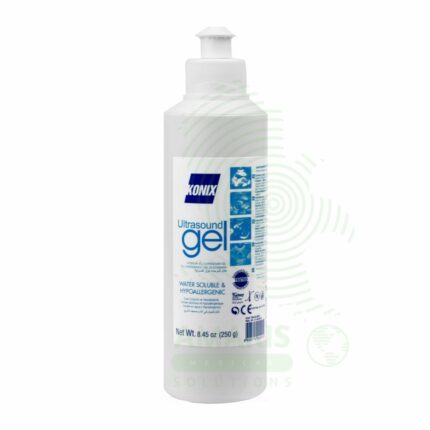
Ultrasound Gel
Ultrasound Gel is a water-based, hypoallergenic, acoustically conductive coupling medium essential for diagnostic and therapeutic ultrasound procedures. It eliminates air pockets between the transducer and skin, creating an efficient acoustic pathway for sound wave transmission and reception. Formulated to match the acoustic impedance of human tissue, it ensures high-quality imaging while providing lubrication for smooth probe movement and patient comfort. Available in standard, sterile, and hypoallergenic formulations, it is a single-use consumable critical for all ultrasound examinations. Proper storage, handling, and selection of appropriate sterile versus non-sterile formulations are essential for patient safety and image quality.
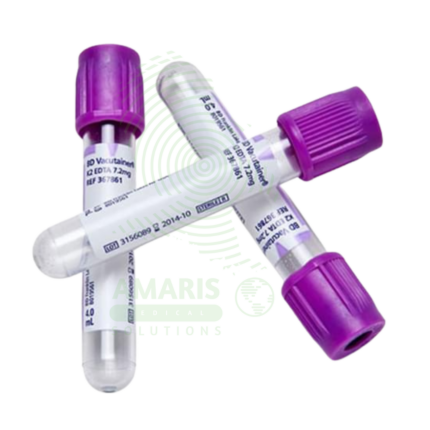
Vacutainer (EDTA/PLAIN)
Vacutainer (EDTA/PLAIN) is a sterile, evacuated blood collection tube (lavender/purple top) containing EDTA anticoagulant (K2EDTA or K3EDTA, 1.5-2.0 mg/mL blood) for hematology, blood banking, flow cytometry, and molecular diagnostics. Available in draw volumes 2-10 mL, glass or PET plastic, with color-coded stopper and sterile interior. EDTA chelates calcium, preventing coagulation while preserving cellular morphology. Primary clinical applications include complete blood count (CBC) and differential, blood typing and antibody screening (ABO/Rh, Coombs), hemoglobin A1c (HbA1c) testing, flow cytometry and immunophenotyping (CD4 counts), molecular diagnostics and PCR testing, sickle cell screening and hemoglobin electrophoresis, and parasitology (malaria smears). Critical safety precautions include filling to completion (correct blood-to-additive ratio), gentle inversion 8-10 times immediately after collection, never using for chemistry or coagulation testing, and proper disposal as biohazardous waste. Essential collection tube for hematology and immunohematology.