Dermatoscope and Magnifiers
 Diagnostic Kits
 Vital Signs Monitors
 Stethoscopes and Accessories
 Otoscopes, Ophthalmoscopes, and Retinoscopes
 Reflex Hammers and Neurological Tools
 Scales and Measuring Devices
 Spirometers and Pulmonary Function Tests
 Electrosurgical Units and Accessories
 Cutting Instruments
 Grasping and Holding Instruments
 Hemostatic Instruments
 Specialized Surgical Sets
 Single-Use Procedure Trays and Packs
 Surgical Drapes, Gowns, and Covers
 Tissue Unifying Instruments
 Radiation Protection
 X-Ray Machines and Accessories
 Ultrasound Systems and Probes
 MRI and CT Scanners
 Radiology Consumables
 Bone Densitometers
 Fluoroscopy Equipment
 Imaging Tables and Positioning Aids
 Microscopes and Accessories
 Centrifuges and Separators
 Analyzers
 Incubators and Ovens
 Pipettes, Dispensers, and Lab Glassware
 Refrigerators, Freezers, and Storage Units
 Lab Consumables
 Sterilizers and Autoclaves for Lab Use
 Multi-Parameter Monitors
 Ventilators and Respiratory Support Devices
 Defibrillators and AEDs
 Infusion Pumps and IV Systems
 Patient Warmers and Cooling Devices
 Central Monitoring Stations
 Accessories
 Anesthesia Machines and Workstations
 Oxygen Concentrators and Delivery Systems
 Nebulizers and Inhalers
 CPAP/BiPAP Machines
 Airway Management
 Anesthesia Masks, Circuits, and Bags
 Humidifiers and Heaters
 Respiratory Therapy Accessories
 First Aid Kits and Cabinets
 Emergency Resuscitation Equipment
 Trauma Supplies
 Emergency Carts and Crash Carts
 Burn Care Products
 Bleeding Control
 Automated External Defibrillators (AEDs)
 Transport and Evacuation
 Wheelchairs and Accessories
 Walkers, Crutches, and Canes
 Prosthetics and Orthotics
 Physical Therapy Equipment
 Transfer Devices
 Bathroom Safety
 Orthopedic Traction and Tables
 Hot/Cold Therapy Packs and Units
 Beds and Mattresses
 Chairs and Stools
 Tables
 Cabinets and Storage
 Privacy Screens & Curtains
 Stands and Racks
 Linens and Textiles
 Lighting
 Autoclaves and Sterilizers
 Ultrasonic Cleaners
 Disinfectant Solutions and Wipes
 Sterilization Pouches, Wraps, and Indicators
 Instrument Trays and Containers
 UV and Ozone Disinfection Devices
 Washer Disinfectors
 Wound Care
 Gloves
 Masks and Respirators
 Catheters and Tubing
 Swabs, Applicators, and Sponges
 Incontinence Products
 Personal Protective Equipment (PPE)
 Dental Chairs and Units
 Handpieces and Burs
 Instruments
 Consumables
 Sterilization for Dental Use
 Orthodontic Supplies
 Endodontic Tools
 Slit Lamps and Tonometers
 Lensometers and Phoropters
 Ophthalmic Surgical Instruments
 Eyewear Frames and Lenses
 Contact Lens Supplies
 Vision Testing Charts and Devices
 Eye Care Consumables
 Laser Systems for Eye Care
 ENT Exam Chairs and Tables
 Endoscopes
 Audiometers and Hearing Tests
 ENT Instruments
 Nasal and Throat Packs
 Hearing Aids and Accessories
 Otology Supplies
 Fetal Dopplers and Monitors
 Delivery Beds and Tables
 Gynecological Instruments
 Neonatal Incubators and Warmers
 Breast Pumps and Accessories
 Contraceptive Devices
 Maternity Supports and Pads
 Neonatal Consumables
 Cystoscopes and Urethroscopes
 Dialysis Machines and Supplies
 Urological Catheters and Bags
 Lithotripters
 Prostate Treatment Devices
 Urinary Incontinence Products
 Kidney Stone Management Tools
 Consumables & Disposables
 EEG and EMG Machines
 Neurosurgical Instruments
 Nerve Stimulators
 Headrests and Positioning Aids
 Lumbar Puncture Kits
 Seizure Monitoring Devices
 Consumables
 Rehabilitation for Neurological Conditions
 ECG Machines and Accessories
 Holter Monitors
 Stress Test Systems
 Pacemakers and Defibrillator Accessories
 Vascular Access Devices
 Cardiac Catheters and Guidewires
 Blood Flow Meters
 Consumables
 Orthopedic Instruments
 Casts, Splints, and Padding
 Joint Replacement Supplies
 Prosthetic Limbs and Components
 Bone Grafts and Substitutes
 Traction Devices
 Orthopedic Braces and Supports
 Rehabilitation Aids for Orthopedics
 Home Oxygen Therapy
 Hospital Beds for Home Use
 Mobility Aids
 Bathroom and Daily Living Aids
 Wound Care for Home
 Monitoring Devices
 Enteral Feeding Pumps and Tubes
 Hand Sanitizers and Dispensers
 Face Shields and Goggles
 Isolation Gowns and Suits
 Biohazard Waste Containers
 Air Purifiers and HEPA Filters
 Surface Disinfectants
 Sharps Containers
 Protective Barriers
 Cardiovascular & Endurance Training
 Strength Training & Weightlifting
 Functional Training & Core Conditioning
 Physical Therapy & Rehabilitation
 Sports & Outdoor Recreation
 Gym Flooring & Facility Equipment
 Fitness Monitoring & Accessories
 Kids & Novelties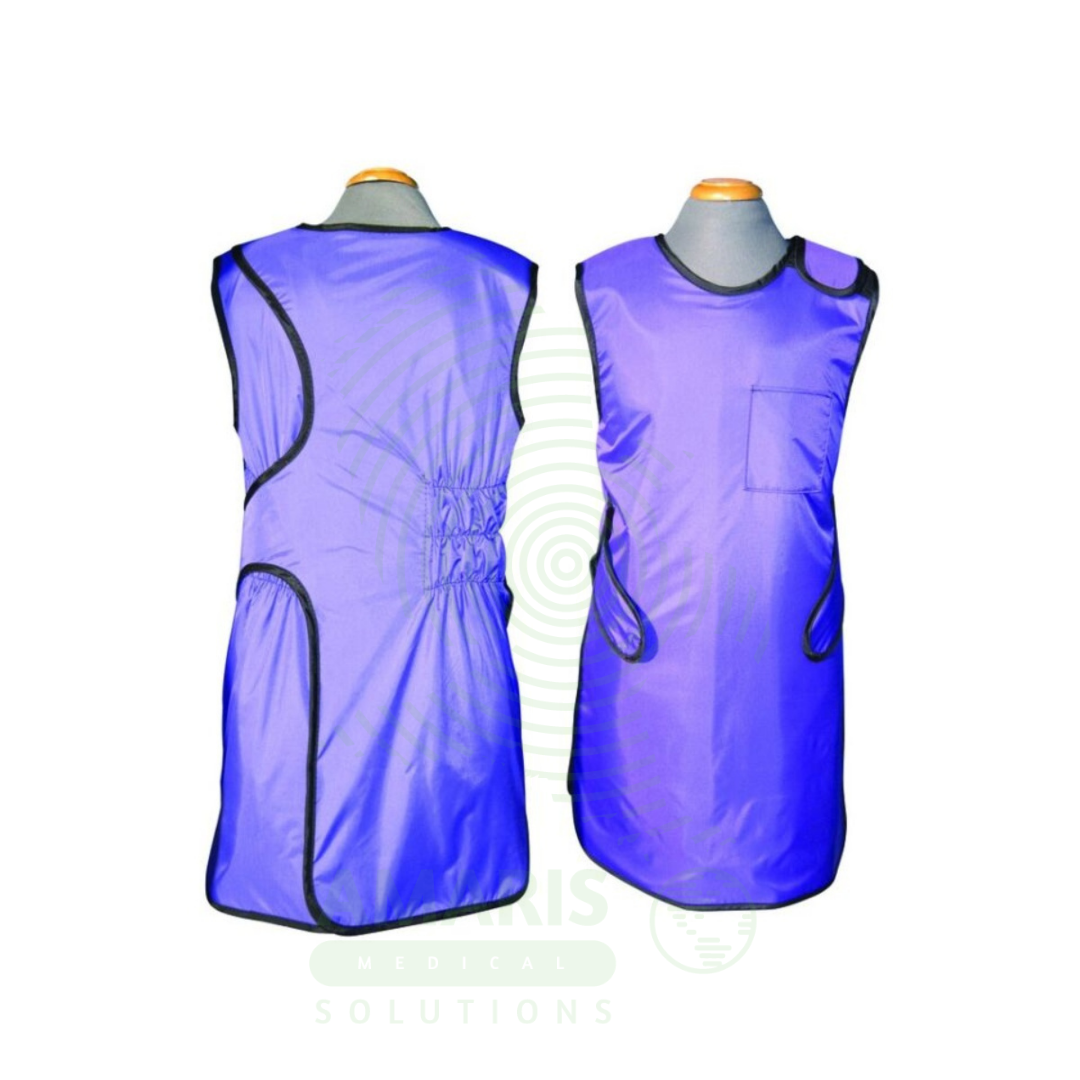
Lead Apron
WhatsApp Order
A Lead Apron is a protective garment worn by healthcare workers to shield against scatter radiation during fluoroscopic procedures, X-ray examinations, and interventional radiology. Made of lead-impregnated material, it attenuates scatter radiation to the thyroid, chest, and reproductive organs, ensuring occupational radiation exposure remains within safe limits. Available in frontal, wrap-around, and two-piece designs with lead equivalence ranging from 0.25 mm to 0.5 mm, proper storage, annual inspection, and use of thyroid shields are essential for effective radiation protection.
Description
Lead Apron
PRIMARY CLINICAL & DIAGNOSTIC USES
1. Radiation Protection for Healthcare Workers
-
Primary Use: Provides personal radiation shielding for healthcare workers during fluoroscopic procedures, interventional radiology, cardiac catheterization, and X-ray examinations. The lead-impregnated material attenuates scatter radiation, reducing occupational exposure to the thyroid, chest, and reproductive organs.
-
How it helps: For the interventional cardiologist, radiologist, and operating room staff who perform procedures with fluoroscopic guidance, the lead apron provides essential protection against cumulative radiation exposure—reducing the risk of radiation-induced cataracts, thyroid cancer, and other long-term health effects. For the healthcare worker who performs hundreds of fluoroscopic procedures annually, wearing a lead apron allows them to provide life-saving care while protecting their own health.
2. Protection During Fluoroscopic Procedures
-
Primary Use: Worn by all personnel in the procedure room during fluoroscopically guided interventions including cardiac catheterization, angiography, vertebroplasty, and endoscopic retrograde cholangiopancreatography. The apron shields the wearer from scatter radiation generated when the X-ray beam interacts with the patient.
-
How it helps: For the procedural team working in close proximity to the radiation source during long procedures, lead aprons provide the barrier needed to keep occupational radiation exposure within safe limits—allowing them to focus on patient care without exceeding annual dose limits. For the patient, a properly protected team can perform complex procedures safely without concern for staff radiation exposure limiting the procedure.
3. Thyroid and Gonadal Protection
-
Primary Use: Many lead aprons include or are used in conjunction with thyroid shields and gonad shields to provide additional protection to radiosensitive organs. Full-wrap aprons provide 360-degree protection for the trunk.
-
How it helps: For the radiation safety officer and medical physicist, lead aprons combined with thyroid shields provide comprehensive protection to the most radiosensitive tissues—the thyroid, breast tissue, and gonads—where radiation exposure carries the highest risk for long-term health effects. For the healthcare worker, wearing a thyroid shield in addition to a lead apron ensures that the most vulnerable areas are protected during every procedure.
4. Compliance with Occupational Dose Limits
-
Primary Use: Essential for ensuring that healthcare worker occupational radiation exposure remains within regulatory limits set by the Nuclear Regulatory Commission and state agencies. Lead aprons are a key component of the ALARA (As Low As Reasonably Achievable) principle.
-
How it helps: For the hospital radiation safety officer, lead aprons are a critical control measure for maintaining occupational doses within regulatory limits—protecting the institution from regulatory violations and protecting staff from the health effects of cumulative radiation exposure. For the healthcare worker, proper use of lead aprons provides assurance that their occupational exposure is being managed responsibly.
5. Radiation Safety for Pregnant Healthcare Workers
-
Primary Use: Provides essential protection for pregnant healthcare workers who must continue working in fluoroscopic environments. Double-wrapped aprons or aprons with additional fetal shielding are used to minimize radiation exposure to the developing fetus.
-
How it helps: For the pregnant healthcare worker and the radiation safety officer, lead aprons with fetal shielding provide the protection needed to allow continuation of essential job duties while minimizing risk to the developing fetus—ensuring that pregnancy does not force career interruption. For the unborn child, proper shielding helps keep in-utero radiation exposure well below recommended limits.
SECONDARY & SUPPORTIVE USES
1. Pediatric Procedure Protection: Used for parents or guardians holding children during X-ray examinations, providing protection from scatter radiation.
2. Veterinary Medicine: Used by veterinary staff during radiographic procedures on animals.
3. Mobile X-ray Protection: Worn by technologists performing bedside portable X-ray examinations.
4. Operating Room Use: Worn by surgical staff when intraoperative fluoroscopy is used.
5. C-arm Procedures: Essential for staff during any procedure using a mobile C-arm fluoroscopy system.
6. Training and Education: Used in radiation safety training programs to demonstrate proper protective equipment use.
KEY PRODUCT FEATURES
1. BASIC IDENTIFICATION ATTRIBUTES
-
Product Type: A protective garment made of lead-impregnated material worn to shield against scatter radiation.
-
Designation: Lead Apron, Radiation Protection Apron, X-ray Apron, Lead Shield, Protective Apron.
-
Types:
-
Frontal Apron: Protects front of body; open back.
-
Wrap-Around Apron: Provides 360-degree protection with overlapping front.
-
Two-Piece Apron: Separate vest and skirt for weight distribution.
-
Thyroid Shield: Separate collar worn with apron for thyroid protection.
-
-
Lead Equivalence: Typically 0.25 mm, 0.35 mm, 0.5 mm lead equivalent.
-
Key Components:
-
Lead-Impregnated Material: Rubber or vinyl with lead particles.
-
Outer Cover: Durable, cleanable fabric.
-
Fasteners: Buckles, Velcro, or snap closures.
-
Shoulder Straps: Padded for comfort during extended wear.
-
2. TECHNICAL & PERFORMANCE PROPERTIES
-
Lead Equivalence: 0.25 mm for low-dose procedures; 0.35 mm for general fluoroscopy; 0.5 mm for high-dose interventional procedures.
-
Attenuation: 90-99% attenuation of scatter radiation depending on energy and lead thickness.
-
Weight: 5-15 lbs depending on size and lead equivalence.
-
Material: Lead-impregnated vinyl or rubber with fabric cover.
-
Lead-Free Options: Some manufacturers offer non-lead shielding materials (tin, bismuth, tungsten) with similar attenuation.
3. PHYSICAL & OPERATIONAL PROPERTIES
-
Construction: Flexible lead-impregnated material with durable outer cover.
-
Weight Distribution: Wrap-around and two-piece designs distribute weight to hips rather than shoulders.
-
Fasteners: Secure closures with easy release.
-
Cleanability: Outer cover can be wiped with disinfectant; not washable.
4. SAFETY & COMPLIANCE ATTRIBUTES
-
Regulatory Status: Class I medical device.
-
Radiation Safety: Must be tested annually for cracks and defects.
-
Lead Equivalence: Verified by manufacturer; spot-checked by radiation safety.
-
Storage: Proper storage prevents cracking; must be hung, not folded.
5. STORAGE & HANDLING ATTRIBUTES
-
Storage: Store hanging on racks to prevent cracking; never fold.
-
Cleaning: Wipe with hospital-grade disinfectants; do not immerse or machine wash.
-
Inspection: Annual fluoroscopic inspection for cracks and defects; daily visual inspection.
-
Replacement: Replace if cracks, tears, or defects are found.
6. LABORATORY & CLINICAL APPLICATIONS
-
Primary Application: Personal radiation protection for healthcare workers during fluoroscopic and X-ray procedures.
-
Clinical Role: Essential PPE for interventional radiology, cardiac catheterization, operating rooms, and radiology departments.
SAFETY HANDLING PRECAUTIONS
1. SAFETY PRECAUTIONS
-
Storage: Always hang lead aprons; never fold or crumple, which causes cracks.
-
Inspection: Visually inspect before each use; annual fluoroscopic inspection required.
-
Proper Sizing: Use appropriately sized apron for the wearer; ensure adequate coverage.
-
Weight Distribution: Two-piece or wrap-around designs distribute weight to hips, reducing back strain.
-
Thyroid Shield: Always use thyroid shield with lead apron for complete protection.
-
Double-Wrap: Pregnant workers should use double-wrapped or additional fetal shielding.
-
Dosimeter Placement: Wear dosimeter under lead apron for effective dose measurement.
2. FIRST AID MEASURES
-
Back Strain: If back pain develops, use weight-distributing design; consult occupational health.
-
Skin Irritation: If skin irritation occurs, clean apron cover; consider hypoallergenic liner.
3. FIRE FIGHTING MEASURES
-
Flammability: Outer fabric may be combustible; lead-impregnated material is fire-resistant.
-
Extinguishing Media: Use water, foam, or CO₂ as appropriate for surrounding materials.
Related products
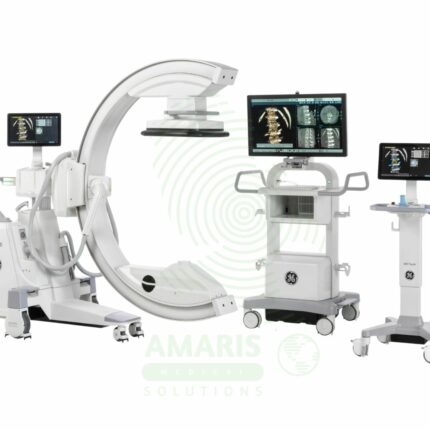
C-Arm Surgical System
A C-Arm Surgical System is a mobile fluoroscopic X-ray imaging device with a distinctive C-shaped arm connecting the X-ray tube and detector. It is an indispensable tool in modern operating rooms and interventional suites, providing real-time live imaging to guide complex procedures in orthopedics, spine surgery, pain management, and vascular interventions. Its mobility allows precise positioning around the patient, while features like pulsed fluoroscopy and dose monitoring are critical for radiation safety. Modern flat-panel systems offer high-resolution imaging and advanced capabilities like 3D Cone-Beam CT. Safe operation demands rigorous adherence to radiation protection protocols (ALARA) for both patients and the surgical team.
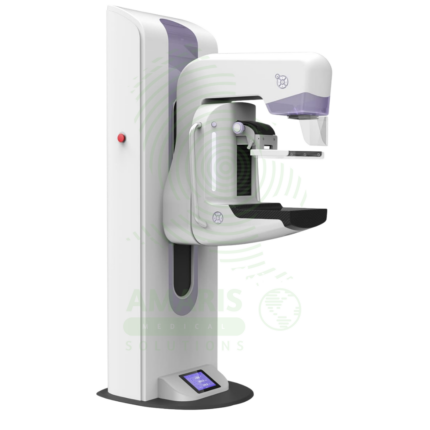
Digital Mammography System
A Digital Mammography System is a specialized X-ray imaging system designed for breast cancer screening and diagnosis. Using high-resolution digital detectors, it provides superior image quality with lower radiation dose compared to film mammography. Advanced systems offer tomosynthesis (3D) imaging, which improves cancer detection rates and reduces false positives. Used in breast imaging centers, radiology departments, and women's health facilities, it is the gold standard for early detection of breast cancer.
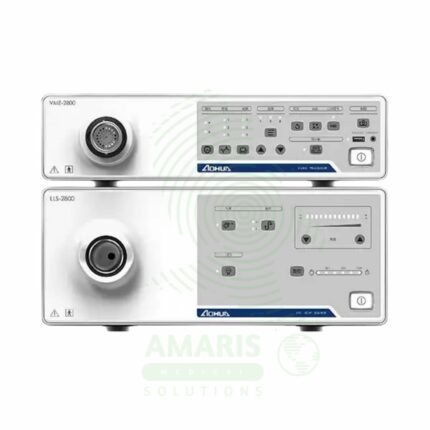
Endoscopy System
The Endoscopy System is a complete video processor and light source stack that forms the core of a modern digital endoscopy suite. It provides high-definition imaging for compatible Fujinon flexible video endoscopes, enabling diagnostic and therapeutic procedures in gastroenterology, pulmonology, and urology. Key features include advanced image processing and enhancement technologies like Narrow Band Imaging (NBI) for improved diagnostic accuracy. As a critical piece of capital equipment, it requires careful handling, the use of compatible accessories, and regular professional maintenance to ensure optimal performance and safety.
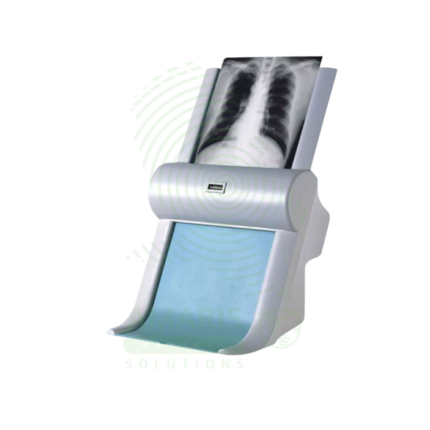
Film Digitizer
A Film Digitizer is a specialized scanner that converts analog radiographic films into high-fidelity digital images (DICOM format). It is the essential tool for migrating historical film archives into a modern digital PACS, enabling filmless workflow, remote access, and long-term preservation of diagnostic records. Its critical performance characteristics are a wide optical density range (to capture all film details) and high spatial resolution. By creating secure, accessible digital copies, it protects against the loss of physical films and integrates past patient history with current digital imaging, supporting comprehensive care and efficient radiology practice.
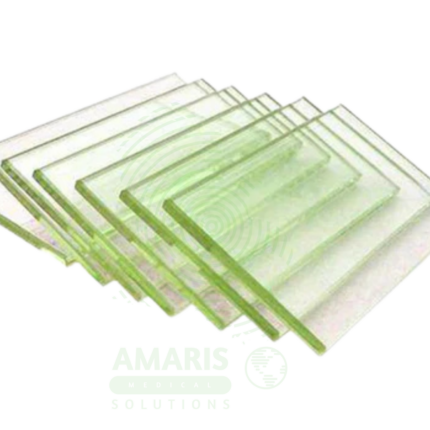
Lead Glass
Lead Glass is a transparent radiation shielding material used in X-ray rooms, CT suites, fluoroscopy suites, and radiation therapy control areas. Impregnated with lead oxide, it provides radiation attenuation equivalent to lead sheet while allowing direct visual observation of patients during procedures. Used for observation windows in control booths and procedure rooms, lead glass maintains the integrity of the radiation shielding envelope while enabling staff to monitor patient positioning, movement, and comfort. Proper installation with lead-lined frames and seals is essential for continuous radiation protection.
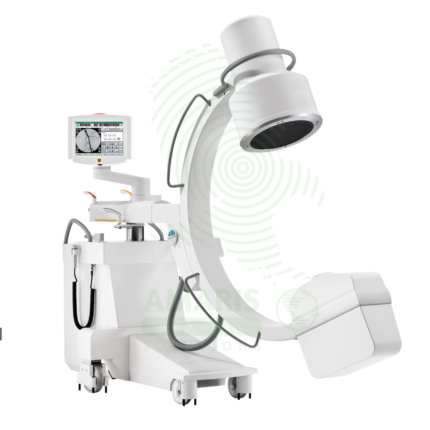
Mobile C-arm Surgical System
A Mobile C-arm Surgical System is a portable fluoroscopic imaging device used for real-time intraoperative guidance during orthopedic, spinal, vascular, and pain management procedures. The C-shaped arm allows flexible positioning around the patient, providing AP, lateral, and oblique views to verify instrument placement, fracture reduction, and device deployment. Essential for minimally invasive surgery, it enables surgeons to achieve precision and accuracy while reducing operative time and improving patient outcomes.
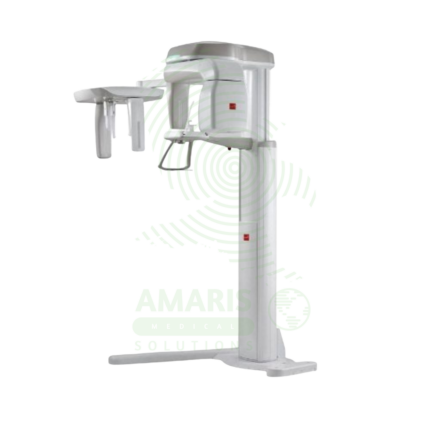
Panoramic X-ray Dental Machine
A Panoramic X-ray Dental Machine is a rotating extraoral radiographic system that produces a single, broad 2D image of the entire jaws, teeth, TMJs, and sinuses. By focusing on a curved "focal trough," it provides an efficient screening tool for wisdom teeth evaluation, orthodontic planning, and detecting large jaw pathologies. While offering a valuable overview with a relatively low radiation dose, its diagnostic utility is entirely dependent on precise patient positioning to avoid blurring and distortion. It is a cornerstone of modern dental diagnostic imaging, serving as a crucial first step in comprehensive oral assessment and treatment planning.