Dermatoscope and Magnifiers
 Diagnostic Kits
 Vital Signs Monitors
 Stethoscopes and Accessories
 Otoscopes, Ophthalmoscopes, and Retinoscopes
 Reflex Hammers and Neurological Tools
 Scales and Measuring Devices
 Spirometers and Pulmonary Function Tests
 Electrosurgical Units and Accessories
 Cutting Instruments
 Grasping and Holding Instruments
 Hemostatic Instruments
 Specialized Surgical Sets
 Single-Use Procedure Trays and Packs
 Surgical Drapes, Gowns, and Covers
 Tissue Unifying Instruments
 Radiation Protection
 X-Ray Machines and Accessories
 Ultrasound Systems and Probes
 MRI and CT Scanners
 Radiology Consumables
 Bone Densitometers
 Fluoroscopy Equipment
 Imaging Tables and Positioning Aids
 Microscopes and Accessories
 Centrifuges and Separators
 Analyzers
 Incubators and Ovens
 Pipettes, Dispensers, and Lab Glassware
 Refrigerators, Freezers, and Storage Units
 Lab Consumables
 Sterilizers and Autoclaves for Lab Use
 Multi-Parameter Monitors
 Ventilators and Respiratory Support Devices
 Defibrillators and AEDs
 Infusion Pumps and IV Systems
 Patient Warmers and Cooling Devices
 Central Monitoring Stations
 Accessories
 Anesthesia Machines and Workstations
 Oxygen Concentrators and Delivery Systems
 Nebulizers and Inhalers
 CPAP/BiPAP Machines
 Airway Management
 Anesthesia Masks, Circuits, and Bags
 Humidifiers and Heaters
 Respiratory Therapy Accessories
 First Aid Kits and Cabinets
 Emergency Resuscitation Equipment
 Trauma Supplies
 Emergency Carts and Crash Carts
 Burn Care Products
 Bleeding Control
 Automated External Defibrillators (AEDs)
 Transport and Evacuation
 Wheelchairs and Accessories
 Walkers, Crutches, and Canes
 Prosthetics and Orthotics
 Physical Therapy Equipment
 Transfer Devices
 Bathroom Safety
 Orthopedic Traction and Tables
 Hot/Cold Therapy Packs and Units
 Beds and Mattresses
 Chairs and Stools
 Tables
 Cabinets and Storage
 Privacy Screens & Curtains
 Stands and Racks
 Linens and Textiles
 Lighting
 Autoclaves and Sterilizers
 Ultrasonic Cleaners
 Disinfectant Solutions and Wipes
 Sterilization Pouches, Wraps, and Indicators
 Instrument Trays and Containers
 UV and Ozone Disinfection Devices
 Washer Disinfectors
 Wound Care
 Gloves
 Masks and Respirators
 Catheters and Tubing
 Swabs, Applicators, and Sponges
 Incontinence Products
 Personal Protective Equipment (PPE)
 Dental Chairs and Units
 Handpieces and Burs
 Instruments
 Consumables
 Sterilization for Dental Use
 Orthodontic Supplies
 Endodontic Tools
 Slit Lamps and Tonometers
 Lensometers and Phoropters
 Ophthalmic Surgical Instruments
 Eyewear Frames and Lenses
 Contact Lens Supplies
 Vision Testing Charts and Devices
 Eye Care Consumables
 Laser Systems for Eye Care
 ENT Exam Chairs and Tables
 Endoscopes
 Audiometers and Hearing Tests
 ENT Instruments
 Nasal and Throat Packs
 Hearing Aids and Accessories
 Otology Supplies
 Fetal Dopplers and Monitors
 Delivery Beds and Tables
 Gynecological Instruments
 Neonatal Incubators and Warmers
 Breast Pumps and Accessories
 Contraceptive Devices
 Maternity Supports and Pads
 Neonatal Consumables
 Cystoscopes and Urethroscopes
 Dialysis Machines and Supplies
 Urological Catheters and Bags
 Lithotripters
 Prostate Treatment Devices
 Urinary Incontinence Products
 Kidney Stone Management Tools
 Consumables & Disposables
 EEG and EMG Machines
 Neurosurgical Instruments
 Nerve Stimulators
 Headrests and Positioning Aids
 Lumbar Puncture Kits
 Seizure Monitoring Devices
 Consumables
 Rehabilitation for Neurological Conditions
 ECG Machines and Accessories
 Holter Monitors
 Stress Test Systems
 Pacemakers and Defibrillator Accessories
 Vascular Access Devices
 Cardiac Catheters and Guidewires
 Blood Flow Meters
 Consumables
 Orthopedic Instruments
 Casts, Splints, and Padding
 Joint Replacement Supplies
 Prosthetic Limbs and Components
 Bone Grafts and Substitutes
 Traction Devices
 Orthopedic Braces and Supports
 Rehabilitation Aids for Orthopedics
 Home Oxygen Therapy
 Hospital Beds for Home Use
 Mobility Aids
 Bathroom and Daily Living Aids
 Wound Care for Home
 Monitoring Devices
 Enteral Feeding Pumps and Tubes
 Hand Sanitizers and Dispensers
 Face Shields and Goggles
 Isolation Gowns and Suits
 Biohazard Waste Containers
 Air Purifiers and HEPA Filters
 Surface Disinfectants
 Sharps Containers
 Protective Barriers
 Cardiovascular & Endurance Training
 Strength Training & Weightlifting
 Functional Training & Core Conditioning
 Physical Therapy & Rehabilitation
 Sports & Outdoor Recreation
 Gym Flooring & Facility Equipment
 Fitness Monitoring & Accessories
 Kids & Novelties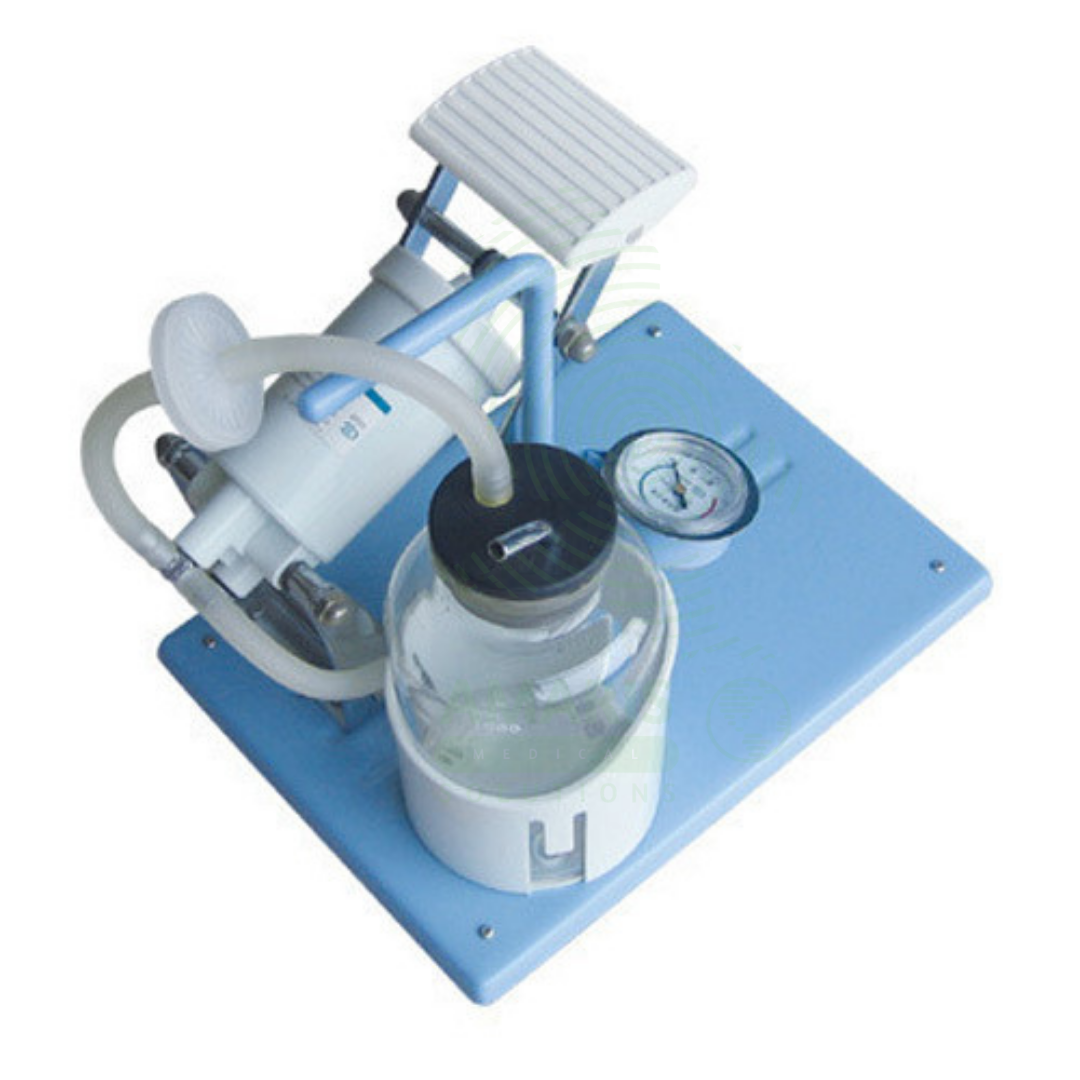
Manual Suction Machine
$1.00
WhatsApp Order
A Manual Suction Machine is a hand-powered medical device used to generate suction for emergency airway clearance and neonatal resuscitation. Functioning without electricity or batteries, it is the critical suction solution for pre-hospital care, field medicine, low-resource settings, and as a mandatory backup in all clinical environments. It typically consists of a collection canister, a manual pump (squeeze-bulb, lever, or syringe), and disposable patient tubing. While providing intermittent rather than continuous suction, its reliability, portability, and simplicity make it an indispensable first-response tool for removing airway obstructions and saving lives when power is not an option.
Description
Manual Suction Machine
PRIMARY CLINICAL & DIAGNOSTIC USES
1. Emergency Airway Clearance
-
Primary Use: Provides immediate, non-powered suction in emergency situations to clear a patient’s airway of blood, vomit, mucus, or other obstructions when an electric suction unit is unavailable, malfunctioning, or inaccessible.
-
How it helps: For the first responder, paramedic, or bystander facing an airway emergency, the manual suction unit requires no electricity, no batteries, and no waiting—just immediate suction power generated by hand. For the choking victim, the drowning patient, or the trauma casualty with blood obstructing their airway, this immediate manual suction can clear the obstruction in seconds, restoring oxygenation and preventing brain damage or death.
2. Neonatal Resuscitation
-
Primary Use: A cornerstone device in delivery rooms and neonatal resuscitation kits for suctioning amniotic fluid, meconium, and secretions from a newborn’s mouth and nose immediately after birth, often before the first breath.
-
How it helps: For the obstetrician, midwife, and neonatal team, gentle manual suction provides controlled, low-pressure aspiration perfectly suited for fragile newborn airways. For the infant taking their first breaths, clearing fluid and meconium from the airway means unobstructed air entry, supporting the critical transition to extrauterine life and preventing aspiration syndromes.
3. Pre-Hospital & Field Medicine
-
Primary Use: Essential for use in ambulances, helicopters, wilderness medicine, disaster response, and battlefield care where electricity is unreliable or absent.
-
How it helps: For the wilderness medic, combat medic, or disaster responder operating far from power sources, the manual suction unit is lightweight, durable, and infinitely reliable—it never runs out of battery. For the casualty in a remote location, a collapsed building, or a battlefield, this manual device provides the same life-saving airway clearance as a hospital electric unit, bringing critical care capability to the most austere environments.
4. Backup for Electric Suction Failure
-
Primary Use: Serves as a mandatory failsafe backup in all clinical settings (OR, ICU, ER) in case of power outages, equipment malfunction, or during patient transport where portable electric units may be depleted.
-
How it helps: For the operating room team and intensive care unit staff, a manual suction unit hanging on the wall or stored in the crash cart provides absolute redundancy—if the electric system fails, suction is still available instantly. For the patient on life support or undergoing surgery, this failsafe backup ensures that airway clearance capability never disappears, even during power outages or equipment failures.
SECONDARY & SUPPORTIVE USES
1. Low-Resource & Remote Clinic Settings: For the healthcare worker in a clinic without reliable electricity or with limited medical budgets, the manual suction unit provides a reliable, low-cost solution for basic airway management and wound care. For patients in underserved communities, this simple device brings essential suction capability that would otherwise be unavailable, supporting both emergency airway clearance and routine procedures.
2. Dental Procedures: For the mobile dentist or dental provider in remote locations, a manual suction unit offers a simple, quiet option for saliva and water evacuation without the need for electricity. For the patient receiving dental care in a mobile clinic or remote setting, manual suction ensures comfort and a clear operative field despite the lack of traditional dental infrastructure.
3. Home Care for Tracheostomy: For the home health nurse and family caregivers, a manual suction unit can be provided as a contingency device for patients with a tracheostomy, ensuring airway clearance is possible during power failures or travel. For the patient living at home with a tracheostomy, having a manual backup means peace of mind—knowing that even if the electricity fails, their airway can still be cleared.
4. Training & Simulation: For the medical educator and CPR instructor, manual suction units are extensively used to teach proper suction technique without the complexity and cost of electric units. For the trainee—whether medical student, nurse, or paramedic—practicing with a manual device builds fundamental skills and confidence that will translate to effective airway management when seconds count.
KEY PRODUCT FEATURES
1. BASIC IDENTIFICATION ATTRIBUTES
-
Device Type: Hand-operated, mechanical vacuum pump for medical suction.
-
Designation: "Manual" distinguishes it from electric suction devices, indicating it generates suction through human-powered operation (squeezing, pumping, or pulling).
-
Core Components:
-
Suction Unit/Chamber: A rigid, transparent collection canister (typically 200ml to 600ml) with a one-way valve system.
-
Actuation Mechanism: The manual power source, which can be a:
-
Squeeze-Bulb: A flexible bulb attached to the canister lid.
-
Reciprocating Pump Handle: A piston or diaphragm pump operated by a hand-held lever.
-
Syringe-Based: A large-bore (e.g., 60ml) catheter-tip syringe.
-
-
Connecting Tubing: Short length of tubing from the canister to the patient.
-
Suction Catheters & Tips: Disposable patient-end accessories (Yankauer, flexible catheter).
-
2. TECHNICAL & PERFORMANCE PROPERTIES
-
Vacuum Generation: Suction is generated by creating negative pressure manually. Maximum achievable vacuum is limited by user strength and mechanism design but is sufficient for clearing liquids and semi-solids (typically up to 500-600 mmHg with vigorous use of a pump handle).
-
Intermittent vs. Continuous Suction: Most manual devices provide intermittent suction. The user must repeatedly actuate the pump/handle/bulb to maintain suction, unlike the continuous vacuum of an electric machine. This requires a specific technique.
-
No Power Requirement: The defining performance feature. It operates entirely independently of electricity or batteries.
3. PHYSICAL & OPERATIONAL PROPERTIES
-
Portability & Compactness: Extremely lightweight, small, and often designed to be handheld or easily carried in a kit bag or crash cart drawer.
-
Durability: Constructed from robust plastics (polycarbonate, ABS) to withstand drops, temperature variations, and rough handling in field conditions.
-
Transparency: The collection chamber is clear for immediate visual assessment of the volume and character of aspirated material.
-
Disposability: Many modern manual suction units are designed as single-use, disposable devices to guarantee sterility and eliminate cleaning costs.
4. SAFETY & COMPLIANCE ATTRIBUTES
-
Regulatory Status: Classified as a Class I or II medical device, similar to its electric counterpart, due to its intended use for airway clearance.
-
Overflow Protection: Many units include an internal float valve or a high-volume chamber to prevent aspirated fluids from entering the pump mechanism and tubing.
-
Sterility: Disposable units are supplied sterile in sealed packaging. Reusable units (e.g., certain pump handles) must be sterilizable via autoclave or chemical disinfection.
-
Latex-Free: Components, especially squeeze bulbs, are typically latex-free.
5. STORAGE & HANDLING ATTRIBUTES
-
Storage (Unopened): Store in a clean, dry place within its sealed packaging. Protect from extreme heat which can deform plastic components.
-
Cleaning & Disinfection (Reusable Units Only):
-
Immediate Post-Use: Disassemble completely. Rinse all parts that contacted patient secretions under running water.
-
Cleaning: Wash with mild detergent and a brush.
-
High-Level Disinfection or Sterilization: Submerge in an approved disinfectant (e.g., Cidex) or autoclave according to manufacturer's instructions. Ensure complete drying before reassembly.
-
-
Single-Use Disposables: Must be discarded as regulated medical waste immediately after use. Never reprocess or reuse.
6. LABORATORY & CLINICAL APPLICATIONS
-
Primary Application: A life-saving, first-line intervention device for emergency airway obstruction and neonatal resuscitation where speed and reliability override the need for adjustable, continuous suction.
-
Setting-Specific Use: The device of choice for EMS, military medicine, remote clinics, and as a statutory backup in all hospital areas.
SAFETY HANDLING PRECAUTIONS
1. SAFETY PRECAUTIONS
-
Awareness of Limitation: Users must understand it provides intermittent, not continuous, suction. It may be less effective for thick, tenacious secretions compared to a powerful electric unit.
-
Proper Technique: For optimal suction, occlude the vent port on the Yankauer tip or catheter during the actuation (squeeze/pull) stroke, and release the port to clear the tip before the next stroke.
-
Sterile Field Maintenance: For sterile procedures (e.g., in the OR), only the disposable patient-end catheter should contact the field; the main unit should be handled by an assistant.
-
Inspection Before Use: For reusable units, check for cracked bulbs, damaged valves, or stiff pump mechanisms that could fail during use.
2. FIRST AID MEASURES
-
Device Failure: If the unit fails to generate suction during a critical procedure, immediately switch to an alternative method (e.g., electric suction, manual finger sweep if appropriate for solid obstruction) and replace the faulty unit.
-
Overflow: If the canister overflows, suction must stop to prevent contamination. Dispose of the unit and replace it with a new one.
-
Component Aspiration: Ensure patient-end catheters are securely attached to prevent detachment and potential aspiration of the small part.
3. FIRE FIGHTING MEASURES
-
Flammability: Plastic components are combustible.
-
Extinguishing Media: Use water, foam, CO2, or dry chemical extinguishers as appropriate for the surrounding fire.
Related products
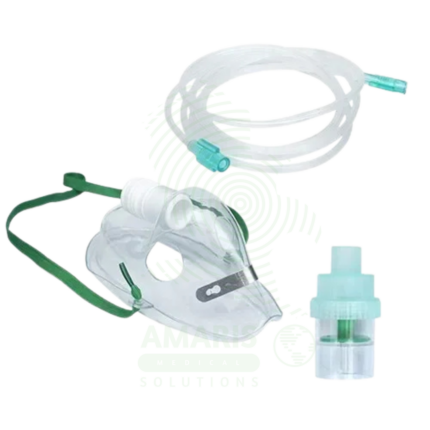
Adult & Pediatric Nebulizer Kit
An Adult & Pediatric Nebulizer Kit is a complete set of patient-contact components required for aerosol medication delivery, including a nebulizer cup, connecting tubing, and both an adult mouthpiece and a pediatric mask (or universal fit). Designed for use with a compressor, it provides the delivery circuit for treating asthma, COPD, and other respiratory conditions. Available in disposable (single-patient-use) formats for infection control in clinics or reusable formats for home care, its proper use, coupled with rigorous cleaning for reusable kits, is essential for effective therapy and preventing respiratory infections. The kit's universal connectors ensure compatibility with standard compressors.
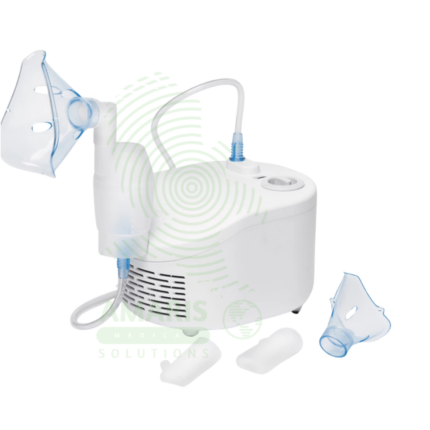
Compressor Nebulizer Machine
A Compressor Nebulizer Machine is a pneumatic device that transforms liquid medication into a breathable mist for treating respiratory conditions. Consisting of an electric air compressor, a nebulizer cup, tubing, and a mask or mouthpiece, it is particularly effective for infants, children, and patients with severe asthma, COPD, or cystic fibrosis who require reliable aerosol delivery. While offering robust performance for home and clinical use, its safety and efficacy depend critically on proper cleaning to prevent infection, correct assembly, and the use of prescribed nebulizer-compatible medications. It remains a fundamental tool for both acute intervention and chronic management of pulmonary diseases.
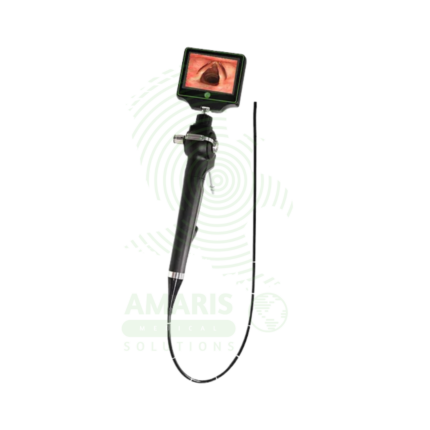
Flexible Fiber Optic Laryngoscope
A Flexible Fiber Optic Laryngoscope is a flexible endoscope (2-5 mm diameter, 30-60 cm working length) with fiber optic image transmission and steerable tip (120-180° angulation) for visualization of the upper airway and facilitation of difficult intubations. Features include control handle with angulation lever, working channel (1-2 mm) for suction or oxygen, external light source (halogen/xenon/LED), and optional camera for video display. Primary clinical applications include awake intubation in difficult airway management (limited mouth opening, cervical spine instability, obstructing pathology), nasotracheal intubation for oral surgery or maxillofacial trauma, intubation with cervical spine precautions (minimal neck movement), diagnostic airway assessment (stridor, hoarseness, vocal cord dysfunction, masses), double-lumen tube placement for thoracic surgery, pediatric difficult airway management, and tracheostomy tube placement guidance. Class II medical device requiring FDA clearance. Critical safety considerations include mandatory leak testing before immersion, antifog preparation, gentle insertion technique, airway maintenance with oxygen, topical anesthesia for patient comfort, suction availability, backup airway device, and strict infection control with validated reprocessing protocols.
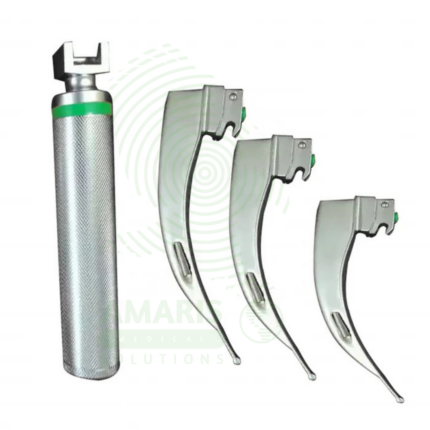
Macintosh Fiber Optic Laryngoscope
A Macintosh Fiber Optic Laryngoscope is a rigid laryngoscope with curved Macintosh blade (sizes 0-4, 70-160 mm) incorporating an integrated fiber optic light bundle that transmits bright, focused illumination (2,000-10,000+ Lux) from a handle-mounted LED or xenon bulb to the blade tip for enhanced visualization during tracheal intubation. The curved blade design allows indirect epiglottis elevation by placing the tip in the vallecula, requiring less force and neck extension than straight blades. Features stainless steel reusable blades, ergonomic handles with knurled grip, ISO standard hook-on fittings, and steam autoclave compatibility. Primary clinical applications include routine and emergency tracheal intubation during general anesthesia, difficult airway management with improved illumination, cervical spine precautions (minimal neck movement), teaching and training (enhanced visualization for instructors), rapid sequence intubation, neonatal and pediatric intubation (sizes 0-2), and oral/maxillofacial surgery. Class II medical device requiring FDA clearance. Critical safety considerations include pre-use light check (dark spots indicate broken fibers), appropriate blade size selection, proper lifting technique (not levering on teeth), battery verification, fiber optic care (avoid sharp bending), and backup device availability.
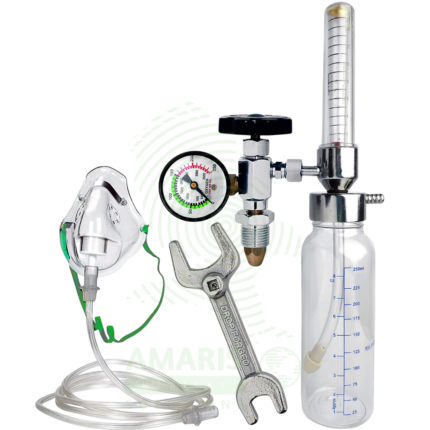
Oxygen set (gauge, humidifier, flow meter)
An Oxygen Set consists of a pressure gauge, flow meter, and humidifier that together regulate, monitor, and humidify oxygen delivered to a patient. The pressure gauge indicates cylinder contents, the flow meter controls delivery rate in liters per minute, and the humidifier adds moisture to dry medical oxygen to prevent airway irritation. Used with wall outlets or portable cylinders, this equipment is essential for all oxygen therapy delivery. Safe operation requires strict adherence to no-oil, no-smoking policies, regular monitoring of water levels and cylinder pressure, and proper orientation of the flow meter for accurate delivery.
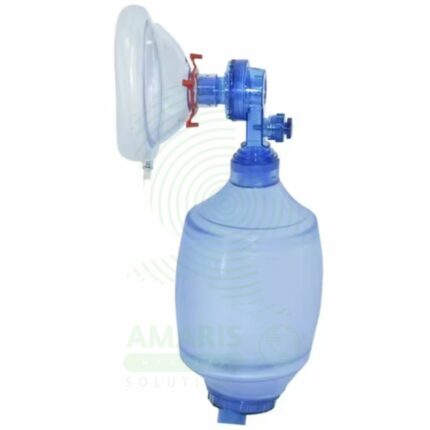
Silicone & PVC Ambubag
A Silicone & PVC Ambubag is a manual, self-inflating resuscitation bag used to provide emergency positive-pressure ventilation to non-breathing or inadequately breathing patients. As the core component of Bag-Valve-Mask (BVM) resuscitation, it is a critical, immediate-response device found in all crash carts and emergency settings. Silicone versions are durable and reusable; PVC versions are cost-effective and disposable. Effective use requires training to achieve a proper mask seal, appropriate ventilation rate and volume, and integration with oxygen supplementation. It is the fundamental tool for airway management and respiratory support prior to securing a definitive airway or accessing a mechanical ventilator.
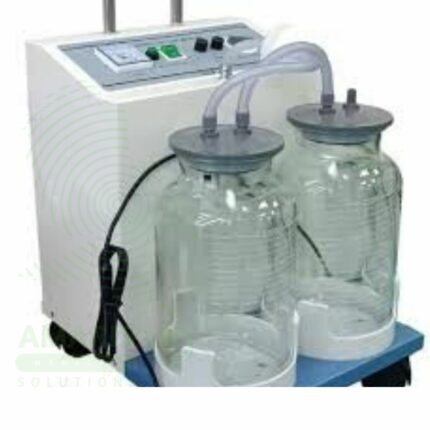
Two Bottle Suction Machine
A Two Bottle Suction Machine is a high-capacity suction unit designed for continuous, extended use in critical care, surgical, and post-operative settings. The dual-bottle system allows for seamless rotation between bottles, enabling uninterrupted suction during bottle emptying, while the larger total capacity accommodates patients with excessive secretions. Used in intensive care units, operating rooms, and post-anesthesia care units, it provides reliable suction for airway clearance, surgical field management, and chest drainage. Enhanced overflow protection, continuous operation capability, and robust pump design make it essential for patients requiring prolonged or high-volume suction support.