Dermatoscope and Magnifiers
 Diagnostic Kits
 Vital Signs Monitors
 Stethoscopes and Accessories
 Otoscopes, Ophthalmoscopes, and Retinoscopes
 Reflex Hammers and Neurological Tools
 Scales and Measuring Devices
 Spirometers and Pulmonary Function Tests
 Electrosurgical Units and Accessories
 Cutting Instruments
 Grasping and Holding Instruments
 Hemostatic Instruments
 Specialized Surgical Sets
 Single-Use Procedure Trays and Packs
 Surgical Drapes, Gowns, and Covers
 Tissue Unifying Instruments
 Radiation Protection
 X-Ray Machines and Accessories
 Ultrasound Systems and Probes
 MRI and CT Scanners
 Radiology Consumables
 Bone Densitometers
 Fluoroscopy Equipment
 Imaging Tables and Positioning Aids
 Microscopes and Accessories
 Centrifuges and Separators
 Analyzers
 Incubators and Ovens
 Pipettes, Dispensers, and Lab Glassware
 Refrigerators, Freezers, and Storage Units
 Lab Consumables
 Sterilizers and Autoclaves for Lab Use
 Multi-Parameter Monitors
 Ventilators and Respiratory Support Devices
 Defibrillators and AEDs
 Infusion Pumps and IV Systems
 Patient Warmers and Cooling Devices
 Central Monitoring Stations
 Accessories
 Anesthesia Machines and Workstations
 Oxygen Concentrators and Delivery Systems
 Nebulizers and Inhalers
 CPAP/BiPAP Machines
 Airway Management
 Anesthesia Masks, Circuits, and Bags
 Humidifiers and Heaters
 Respiratory Therapy Accessories
 First Aid Kits and Cabinets
 Emergency Resuscitation Equipment
 Trauma Supplies
 Emergency Carts and Crash Carts
 Burn Care Products
 Bleeding Control
 Automated External Defibrillators (AEDs)
 Transport and Evacuation
 Wheelchairs and Accessories
 Walkers, Crutches, and Canes
 Prosthetics and Orthotics
 Physical Therapy Equipment
 Transfer Devices
 Bathroom Safety
 Orthopedic Traction and Tables
 Hot/Cold Therapy Packs and Units
 Beds and Mattresses
 Chairs and Stools
 Tables
 Cabinets and Storage
 Privacy Screens & Curtains
 Stands and Racks
 Linens and Textiles
 Lighting
 Autoclaves and Sterilizers
 Ultrasonic Cleaners
 Disinfectant Solutions and Wipes
 Sterilization Pouches, Wraps, and Indicators
 Instrument Trays and Containers
 UV and Ozone Disinfection Devices
 Washer Disinfectors
 Wound Care
 Gloves
 Masks and Respirators
 Catheters and Tubing
 Swabs, Applicators, and Sponges
 Incontinence Products
 Personal Protective Equipment (PPE)
 Dental Chairs and Units
 Handpieces and Burs
 Instruments
 Consumables
 Sterilization for Dental Use
 Orthodontic Supplies
 Endodontic Tools
 Slit Lamps and Tonometers
 Lensometers and Phoropters
 Ophthalmic Surgical Instruments
 Eyewear Frames and Lenses
 Contact Lens Supplies
 Vision Testing Charts and Devices
 Eye Care Consumables
 Laser Systems for Eye Care
 ENT Exam Chairs and Tables
 Endoscopes
 Audiometers and Hearing Tests
 ENT Instruments
 Nasal and Throat Packs
 Hearing Aids and Accessories
 Otology Supplies
 Fetal Dopplers and Monitors
 Delivery Beds and Tables
 Gynecological Instruments
 Neonatal Incubators and Warmers
 Breast Pumps and Accessories
 Contraceptive Devices
 Maternity Supports and Pads
 Neonatal Consumables
 Cystoscopes and Urethroscopes
 Dialysis Machines and Supplies
 Urological Catheters and Bags
 Lithotripters
 Prostate Treatment Devices
 Urinary Incontinence Products
 Kidney Stone Management Tools
 Consumables & Disposables
 EEG and EMG Machines
 Neurosurgical Instruments
 Nerve Stimulators
 Headrests and Positioning Aids
 Lumbar Puncture Kits
 Seizure Monitoring Devices
 Consumables
 Rehabilitation for Neurological Conditions
 ECG Machines and Accessories
 Holter Monitors
 Stress Test Systems
 Pacemakers and Defibrillator Accessories
 Vascular Access Devices
 Cardiac Catheters and Guidewires
 Blood Flow Meters
 Consumables
 Orthopedic Instruments
 Casts, Splints, and Padding
 Joint Replacement Supplies
 Prosthetic Limbs and Components
 Bone Grafts and Substitutes
 Traction Devices
 Orthopedic Braces and Supports
 Rehabilitation Aids for Orthopedics
 Home Oxygen Therapy
 Hospital Beds for Home Use
 Mobility Aids
 Bathroom and Daily Living Aids
 Wound Care for Home
 Monitoring Devices
 Enteral Feeding Pumps and Tubes
 Hand Sanitizers and Dispensers
 Face Shields and Goggles
 Isolation Gowns and Suits
 Biohazard Waste Containers
 Air Purifiers and HEPA Filters
 Surface Disinfectants
 Sharps Containers
 Protective Barriers
 Cardiovascular & Endurance Training
 Strength Training & Weightlifting
 Functional Training & Core Conditioning
 Physical Therapy & Rehabilitation
 Sports & Outdoor Recreation
 Gym Flooring & Facility Equipment
 Fitness Monitoring & Accessories
 Kids & Novelties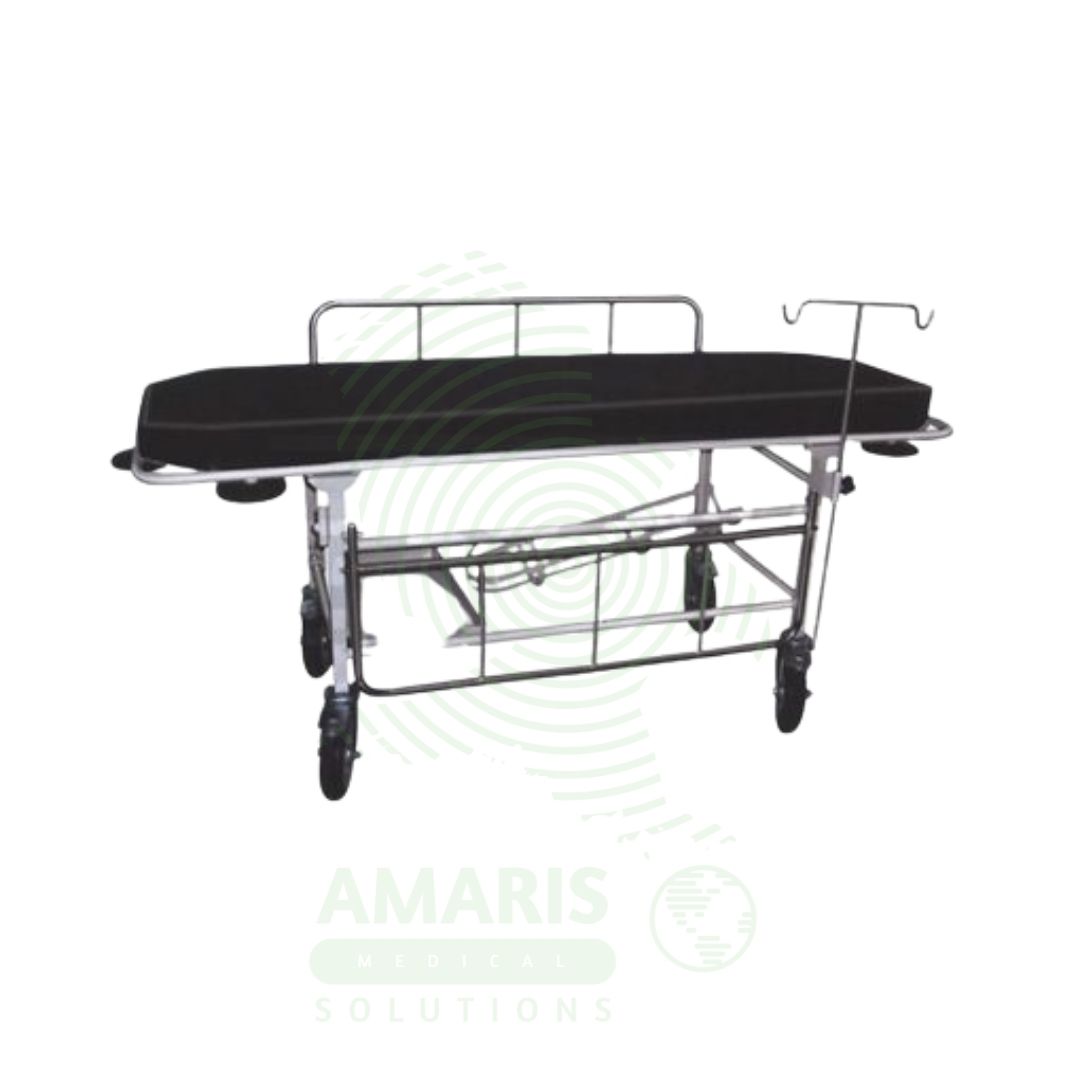
Patient Trolley
WhatsApp Order
A Patient Trolley (also known as a hospital stretcher or gurney) is a mobile, height-adjustable wheeled bed essential for the safe transport and temporary holding of patients within a healthcare facility. Its core function is to serve as the primary link between clinical departments (e.g., Ward to Radiology, ED to OR), enabling efficient patient flow. Key features include locking casters, safety side rails, an IV pole, and a thin, cleanable mattress. Designed for maneuverability in corridors and elevators, it is the fundamental piece of equipment for patient logistics, emergency response, and serving as a mobile treatment platform in hospitals and large clinics.
Description
Patient Trolley
PRIMARY CLINICAL & DIAGNOSTIC USES
1. Patient Transport Within Healthcare Facilities
-
Definitive Use: Safely and efficiently moves patients between departments, such as from a hospital ward to Radiology, from the Emergency Department to an inpatient bed, from the Operating Room to the Post-Anesthesia Care Unit, or to and from therapy sessions.
-
How it helps: For the porter, nurse, and transport team, the patient trolley is the vehicle that keeps the hospital moving—transferring patients to the CT scanner for diagnostic imaging, to the operating room for surgery, or to the ICU for higher level of care, all while maintaining patient comfort and safety. For the patient being moved through unfamiliar hospital corridors, the trolley provides a stable, secure platform that keeps them comfortable during transitions, with side rails that prevent falls and a mattress that cushions against the bumps of elevator thresholds and hallway intersections.
2. Emergency Response and Crash Cart Integration
-
Primary Use: Serves as the primary platform for moving critically ill or injured patients during internal hospital emergencies, and is the base for a crash cart or resuscitation trolley, allowing a full team and all necessary equipment to move swiftly with the patient to a higher level of care.
-
How it helps: For the code team responding to a cardiac arrest in a remote location, the patient trolley becomes both transport and treatment platform—allowing CPR to continue during movement, carrying the defibrillator and drugs alongside the patient, and providing a firm surface for compressions. For the critically ill patient needing immediate transfer to the ICU or catheterization lab, the trolley ensures they remain on a stable, monitored platform throughout the journey, with no interruption in care.
3. Procedure and Treatment Mobility
-
Primary Use: Functions as a mobile treatment station, allowing patients to remain on the trolley for minor procedures, examinations, or therapeutic interventions in a treatment room, eliminating risky transfers.
-
How it helps: For the emergency physician and nursing team, a patient who can remain on the same trolley for triage, examination, suturing, and radiology avoids multiple risky transfers that could dislodge IV lines, aggravate injuries, or cause patient discomfort. For the trauma patient with suspected spinal injury, the fractured bone patient in agony, or the critically ill patient with multiple lines, remaining on one trolley throughout their emergency department stay reduces pain and prevents complications.
4. Holding and Observation Area Bed
-
Primary Use: Provides a temporary bed space for patients in Emergency Department holding areas, pre-operative holding bays, or recovery areas, where they can be monitored while awaiting the next stage of care.
-
How it helps: For the charge nurse managing patient flow in a busy emergency department, trolleys in the hallways or holding areas extend capacity, allowing patients to be monitored while awaiting inpatient beds. For the patient waiting for an operating room to become available or an inpatient bed to be cleaned, the trolley provides a place to rest, with monitoring capability and easy access for nursing assessment.
SECONDARY & SUPPORTIVE USES
1. Overflow Patient Accommodation: During periods of high census or surge capacity events, trolleys can be deployed as temporary inpatient beds in hallways or converted spaces. For the facility facing a sudden influx of patients during a disaster or pandemic, having trolleys that can serve as temporary beds expands capacity and ensures every patient has a place.
2. Equipment and Supply Transport: When not in use for patients, the trolley can be repurposed to move heavy medical equipment or bulk supplies between storage and clinical areas. For the supply chain team, a sturdy trolley provides a versatile transport solution that can be pressed into service when dedicated equipment movers are unavailable.
3. Code Blue and Rapid Response Team Mobilization: The trolley itself is often the first piece of equipment fetched during a cardiac or medical arrest call, providing an immediate firm surface for CPR and a means to rapidly move the patient if required. For the responder arriving at a code, a nearby trolley means CPR can begin on an appropriate surface immediately, and the patient can be moved to a higher level of care without delay.
4. Bariatric Patient Transfer and Care: Specialized bariatric trolleys with wider frames and higher weight capacities are essential for the safe movement and imaging of patients of size. For the bariatric patient and the care team, a trolley designed for their body weight ensures safe transport, dignified care, and access to all necessary hospital services.
5. Disaster and Mass Casualty Triage: Used in disaster preparedness plans to move multiple patients in a field hospital or overwhelmed Emergency Department setting, with mobility key to dynamic patient flow management. For the community struck by disaster, having trolleys that can rapidly move casualties through triage and treatment areas improves outcomes and saves lives.
KEY PRODUCT FEATURES
1. BASIC IDENTIFICATION ATTRIBUTES
-
Product Type: A mobile, wheeled stretcher or cot designed for patient transport and temporary care within a healthcare facility.
-
Core Design: A rectangular frame on large, swiveling casters, supporting a patient surface that is often height-adjustable and may have articulating sections (head, knee).
-
Key Components:
-
Patient Surface (Deck): A vinyl-upholstered mattress on a rigid panel or a canvas sling on a folding frame.
-
Side Rails: Full-length or segmented safety rails that fold down.
-
Casters: Four large-diameter wheels (typically 5-8 inches) with central locking brakes and often swivel locks. Two are usually fixed for steering.
-
IV Pole(s): One or two poles for hanging infusion bags.
-
Storage: Undershelf or baskets for patient belongings and equipment.
-
Trendelenburg Release: A manual lever to tilt the entire deck head-down for shock management.
-
2. TECHNICAL & PERFORMANCE PROPERTIES
-
Height Adjustment: Electric, hydraulic, or manual mechanisms to lower the deck for safe patient transfer (as low as ~20") and raise it for ergonomic clinician pushing (up to ~36").
-
Weight Capacity: Standard capacities range from 350-450 lbs (159-204 kg). Bariatric models support 500-1000+ lbs (227-454+ kg).
-
Maneuverability: Defined by caster size, swivel design, and overall length. A shorter wheelbase improves maneuverability in tight spaces like elevators and ICU rooms.
-
Patient Surface Type: Fixed Deck (solid, easier to clean) vs. Folding Canvas (lighter, easier to store in ambulances but less comfortable and stable).
3. PHYSICAL & OPERATIONAL PROPERTIES
-
Construction: Tubular steel or aluminum frame. Aluminum is lighter for improved maneuverability; steel is more robust for high-use areas.
-
Mattress: A thin, firm, conductive, and fluid-resistant foam mattress covered in medical-grade vinyl.
-
Accessories: May include oxygen cylinder holders, monitor mounting brackets, restraint points, and removable headboards/footboards.
4. SAFETY & COMPLIANCE ATTRIBUTES
-
Regulatory Status: Class I medical device.
-
Safety Features: Mandatory include side rails, braking systems, and patient restraint compatibility. Must not have sharp edges or pinch points.
-
Stability: Must have a low center of gravity to prevent tipping, especially when raised to full height or with heavy equipment attached.
-
Electrical Safety (for powered models): Battery-powered drives or lifts must be safely enclosed and insulated.
5. STORAGE & HANDLING ATTRIBUTES
-
Storage: Often stored in designated alcoves or docking stations in departments like ED, Radiology, or transport services. Folding models save significant space.
-
Cleaning & Disinfection: Must be cleaned with a hospital-grade disinfectant after each patient use, with particular attention to side rails, handles, and mattress surfaces. Check mattress integrity regularly for tears.
-
Preventive Maintenance: Requires regular inspection of casters (for hair/debris), brakes, hydraulic systems, and side rail latches. Lubrication of moving parts per schedule.
6. LABORATORY & CLINICAL APPLICATIONS
-
Primary Application: The indispensable workhorse of internal hospital logistics. It is the interface between nearly all clinical departments, enabling patient flow. It is not a primary diagnostic or treatment device but is the critical mobile platform that makes centralized services accessible.
-
Versatility: Its value lies in its multifunctionality as a transporter, temporary bed, and procedure surface, adapting to the immediate needs of patient care logistics.
SAFETY HANDLING PRECAUTIONS
1. SAFETY PRECAUTIONS
-
Braking (CRITICAL): Always engage both central wheel brakes whenever the trolley is stationary, especially during patient transfer on/off or during any procedure. Use swivel locks for added stability during transfers.
-
Side Rails: Raise side rails whenever the patient is unattended, sedated, confused, or at risk of falling. Ensure they are fully latched in the "up" position.
-
Safe Transfer: Use proper lift equipment (e.g., slide sheets, hover mats) or adequate staff (typically 3-4 people) for manual patient transfers to and from the trolley to prevent staff and patient injury.
-
Load Security: Secure all equipment (monitors, oxygen tanks) and IV poles to the trolley before moving. Never overload the undershelf.
-
Ergonomic Pushing: Adjust the height so the clinician can push with arms slightly bent. Push from the head end for best control. Never pull a loaded trolley.
2. FIRST AID MEASURES
-
Trolley Tip-Over: If a trolley tips, first ensure the patient is stabilized and not in immediate danger of further falling. Call for help. Do not attempt to right a heavy, loaded trolley alone. Assess the patient for injuries.
-
Entrapment: If a limb is caught in folding mechanisms or side rails, use manual release levers if available. Do not force components. Seek engineering assistance if needed and provide first aid for crush injuries.
-
Runaway Trolley: If a trolley gets away on a slope, do not try to stop it bodily. Clear the path and alert others. Attempt to steer it into a soft stop (e.g., a wall) from the side if possible without endangering yourself.
3. FIRE FIGHTING MEASURES
-
Flammability: Upholstery, mattress, and plastic components are combustible.
-
Extinguishing Media: Use water, foam, or CO₂. For electrical fires involving powered lifts, use CO₂ or dry chemical extinguishers. The primary action is to evacuate the patient from the area.
Related products
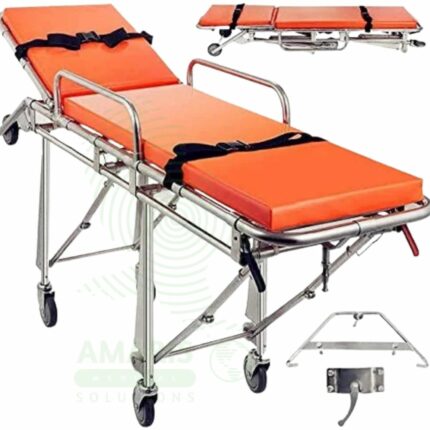
Ambulance Stretcher Trolley
An Ambulance Stretcher Trolley is a heavy-duty, purpose-built mobile cot designed for the demanding environment of emergency medical services. Its core functions are the safe extrication of patients from ground level, their secure restraint during road transport, and serving as a stable platform for pre-hospital critical care. Key distinguishing features include a robust retractable undercarriage for ambulance loading, a wide height adjustment range, large all-terrain wheels, an integrated crash-tested patient restraint system, and positive locking mechanisms for ambulance mounting. It is engineered to withstand physical stress, ensure patient safety during vehicle movement, and comply with specific ambulance equipment standards, making it the fundamental patient-handling tool for paramedics and EMTs.
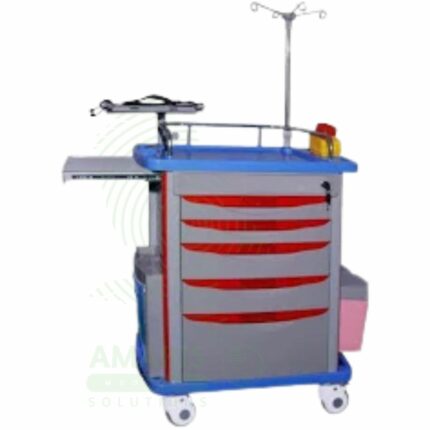
Crash Cart Medicine Trolley
A Crash Cart Medicine Trolley, or Emergency Resuscitation Trolley, is a specially designed, mobile cabinet that serves as a completely stocked and organized response station for hospital medical emergencies, primarily cardiac and respiratory arrests. It consolidates all essential equipment—including a defibrillator/monitor, emergency medications, airway management tools, and IV supplies—into a standardized, rapidly deployable unit. Its core function is to eliminate delays in life-saving treatment by bringing a comprehensive set of resources directly to the patient's bedside. Rigorous daily checks and strict restocking protocols ensure it is always in a state of immediate readiness, making it a critical component of hospital safety and emergency response infrastructure.
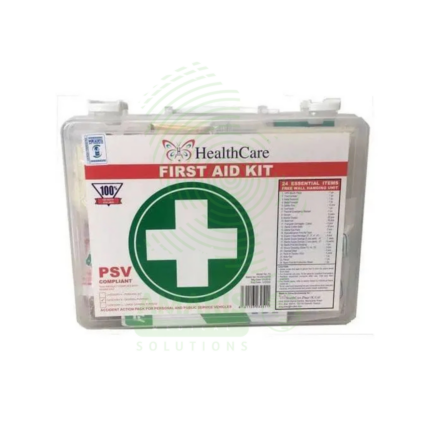
First Aid Kit
A First Aid Kit is an organized collection of medical supplies and equipment for providing initial care in emergency situations, available in various sizes and configurations for home, workplace, vehicle, travel, and specialized applications. Kits range from personal pouches (0.5-2 L) to comprehensive workplace cabinets (5-35 L) with soft-sided bags, hard cases, or wall-mounted containers. Contents are typically organized to meet regional standards (ANSI/ISEA Z308.1, CSA Z1220, BS 8599, DIN 13157/13169) and include wound care supplies (bandages, gauze, tape), antiseptics, burn care, eye care, emergency items (CPR mask, cold packs, foil blanket), instruments (scissors, tweezers), and PPE (gloves). Class A kits provide minimum supplies for low-hazard workplaces; Class B kits offer expanded quantities for high-hazard environments. Primary clinical applications include immediate treatment of minor injuries (cuts, abrasions, burns, sprains), bleeding control, wound care, fracture immobilization, and emergency assessment. Essential safety equipment for every home, workplace, vehicle, and public facility, providing critical medical supplies until professional care arrives.
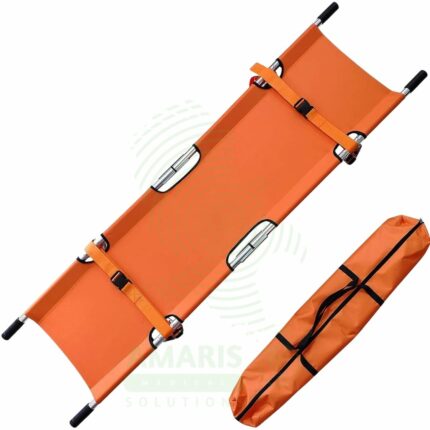
Foldable Stretcher
A Foldable Stretcher is a portable, manual patient-carrying device consisting of a hinged metal frame and a fabric sling, designed for compact storage and rapid deployment. Its primary use is for evacuating patients from confined spaces, rough terrain, or disaster scenes where wheeled trolleys cannot access. It is a fundamental piece of equipment for emergency medical services, search and rescue teams, industrial first aid, and mass casualty management, enabling a team of bearers to safely transport a patient to a point where advanced care or wheeled transport is available. Its key advantage is its minimal storage footprint, making it an essential logistical tool for any emergency response system.
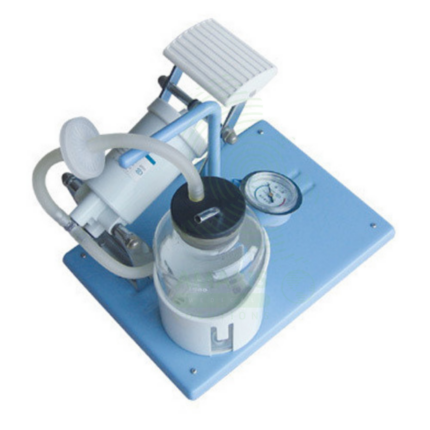
Manual Suction Machine
A Manual Suction Machine is a hand-powered medical device used to generate suction for emergency airway clearance and neonatal resuscitation. Functioning without electricity or batteries, it is the critical suction solution for pre-hospital care, field medicine, low-resource settings, and as a mandatory backup in all clinical environments. It typically consists of a collection canister, a manual pump (squeeze-bulb, lever, or syringe), and disposable patient tubing. While providing intermittent rather than continuous suction, its reliability, portability, and simplicity make it an indispensable first-response tool for removing airway obstructions and saving lives when power is not an option.
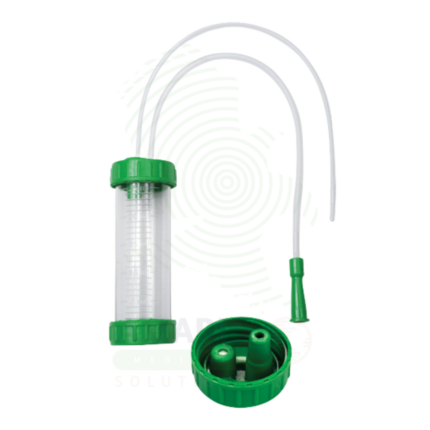
Mucus Extractor
Mucus Extractors are sterile, single-use handheld suction devices designed for the rapid clearance of secretions from the oral cavity, pharynx, and trachea, with distinct configurations for neonatal and adult populations. Neonatal/infant extractors feature soft, flexible, small-diameter tips with low suction capacity (30-60 mL) to minimize trauma to delicate airways. Adult/universal extractors (Yank Auer) are rigid, large-bore, angled devices with multiple suction eyes and high-flow capacity (150-300 mL) for rapid clearance of blood, vomitus, and thick secretions. Select models incorporate sterile specimen traps for collection of respiratory secretions for microbiological analysis. Critical safety requirements include strict limitation of suction duration (≤10 seconds; ≤5 seconds in neonates), avoidance of excessive suction pressure (neonates ≤80 mmHg), use of non-traumatic multiple-eye tips for vulnerable patients, and absolute single-use protocol. An indispensable airway device in neonatal resuscitation, pediatric care, emergency medicine, and perioperative settings.
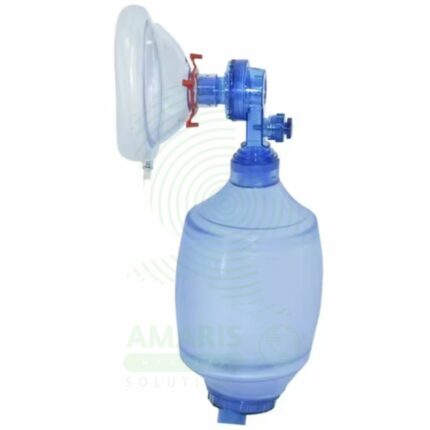
Silicone & PVC Ambubag
A Silicone & PVC Ambubag is a manual, self-inflating resuscitation bag used to provide emergency positive-pressure ventilation to non-breathing or inadequately breathing patients. As the core component of Bag-Valve-Mask (BVM) resuscitation, it is a critical, immediate-response device found in all crash carts and emergency settings. Silicone versions are durable and reusable; PVC versions are cost-effective and disposable. Effective use requires training to achieve a proper mask seal, appropriate ventilation rate and volume, and integration with oxygen supplementation. It is the fundamental tool for airway management and respiratory support prior to securing a definitive airway or accessing a mechanical ventilator.