Dermatoscope and Magnifiers
 Diagnostic Kits
 Vital Signs Monitors
 Stethoscopes and Accessories
 Otoscopes, Ophthalmoscopes, and Retinoscopes
 Reflex Hammers and Neurological Tools
 Scales and Measuring Devices
 Spirometers and Pulmonary Function Tests
 Electrosurgical Units and Accessories
 Cutting Instruments
 Grasping and Holding Instruments
 Hemostatic Instruments
 Specialized Surgical Sets
 Single-Use Procedure Trays and Packs
 Surgical Drapes, Gowns, and Covers
 Tissue Unifying Instruments
 Radiation Protection
 X-Ray Machines and Accessories
 Ultrasound Systems and Probes
 MRI and CT Scanners
 Radiology Consumables
 Bone Densitometers
 Fluoroscopy Equipment
 Imaging Tables and Positioning Aids
 Microscopes and Accessories
 Centrifuges and Separators
 Analyzers
 Incubators and Ovens
 Pipettes, Dispensers, and Lab Glassware
 Refrigerators, Freezers, and Storage Units
 Lab Consumables
 Sterilizers and Autoclaves for Lab Use
 Multi-Parameter Monitors
 Ventilators and Respiratory Support Devices
 Defibrillators and AEDs
 Infusion Pumps and IV Systems
 Patient Warmers and Cooling Devices
 Central Monitoring Stations
 Accessories
 Anesthesia Machines and Workstations
 Oxygen Concentrators and Delivery Systems
 Nebulizers and Inhalers
 CPAP/BiPAP Machines
 Airway Management
 Anesthesia Masks, Circuits, and Bags
 Humidifiers and Heaters
 Respiratory Therapy Accessories
 First Aid Kits and Cabinets
 Emergency Resuscitation Equipment
 Trauma Supplies
 Emergency Carts and Crash Carts
 Burn Care Products
 Bleeding Control
 Automated External Defibrillators (AEDs)
 Transport and Evacuation
 Wheelchairs and Accessories
 Walkers, Crutches, and Canes
 Prosthetics and Orthotics
 Physical Therapy Equipment
 Transfer Devices
 Bathroom Safety
 Orthopedic Traction and Tables
 Hot/Cold Therapy Packs and Units
 Beds and Mattresses
 Chairs and Stools
 Tables
 Cabinets and Storage
 Privacy Screens & Curtains
 Stands and Racks
 Linens and Textiles
 Lighting
 Autoclaves and Sterilizers
 Ultrasonic Cleaners
 Disinfectant Solutions and Wipes
 Sterilization Pouches, Wraps, and Indicators
 Instrument Trays and Containers
 UV and Ozone Disinfection Devices
 Washer Disinfectors
 Wound Care
 Gloves
 Masks and Respirators
 Catheters and Tubing
 Swabs, Applicators, and Sponges
 Incontinence Products
 Personal Protective Equipment (PPE)
 Dental Chairs and Units
 Handpieces and Burs
 Instruments
 Consumables
 Sterilization for Dental Use
 Orthodontic Supplies
 Endodontic Tools
 Slit Lamps and Tonometers
 Lensometers and Phoropters
 Ophthalmic Surgical Instruments
 Eyewear Frames and Lenses
 Contact Lens Supplies
 Vision Testing Charts and Devices
 Eye Care Consumables
 Laser Systems for Eye Care
 ENT Exam Chairs and Tables
 Endoscopes
 Audiometers and Hearing Tests
 ENT Instruments
 Nasal and Throat Packs
 Hearing Aids and Accessories
 Otology Supplies
 Fetal Dopplers and Monitors
 Delivery Beds and Tables
 Gynecological Instruments
 Neonatal Incubators and Warmers
 Breast Pumps and Accessories
 Contraceptive Devices
 Maternity Supports and Pads
 Neonatal Consumables
 Cystoscopes and Urethroscopes
 Dialysis Machines and Supplies
 Urological Catheters and Bags
 Lithotripters
 Prostate Treatment Devices
 Urinary Incontinence Products
 Kidney Stone Management Tools
 Consumables & Disposables
 EEG and EMG Machines
 Neurosurgical Instruments
 Nerve Stimulators
 Headrests and Positioning Aids
 Lumbar Puncture Kits
 Seizure Monitoring Devices
 Consumables
 Rehabilitation for Neurological Conditions
 ECG Machines and Accessories
 Holter Monitors
 Stress Test Systems
 Pacemakers and Defibrillator Accessories
 Vascular Access Devices
 Cardiac Catheters and Guidewires
 Blood Flow Meters
 Consumables
 Orthopedic Instruments
 Casts, Splints, and Padding
 Joint Replacement Supplies
 Prosthetic Limbs and Components
 Bone Grafts and Substitutes
 Traction Devices
 Orthopedic Braces and Supports
 Rehabilitation Aids for Orthopedics
 Home Oxygen Therapy
 Hospital Beds for Home Use
 Mobility Aids
 Bathroom and Daily Living Aids
 Wound Care for Home
 Monitoring Devices
 Enteral Feeding Pumps and Tubes
 Hand Sanitizers and Dispensers
 Face Shields and Goggles
 Isolation Gowns and Suits
 Biohazard Waste Containers
 Air Purifiers and HEPA Filters
 Surface Disinfectants
 Sharps Containers
 Protective Barriers
 Cardiovascular & Endurance Training
 Strength Training & Weightlifting
 Functional Training & Core Conditioning
 Physical Therapy & Rehabilitation
 Sports & Outdoor Recreation
 Gym Flooring & Facility Equipment
 Fitness Monitoring & Accessories
 Kids & Novelties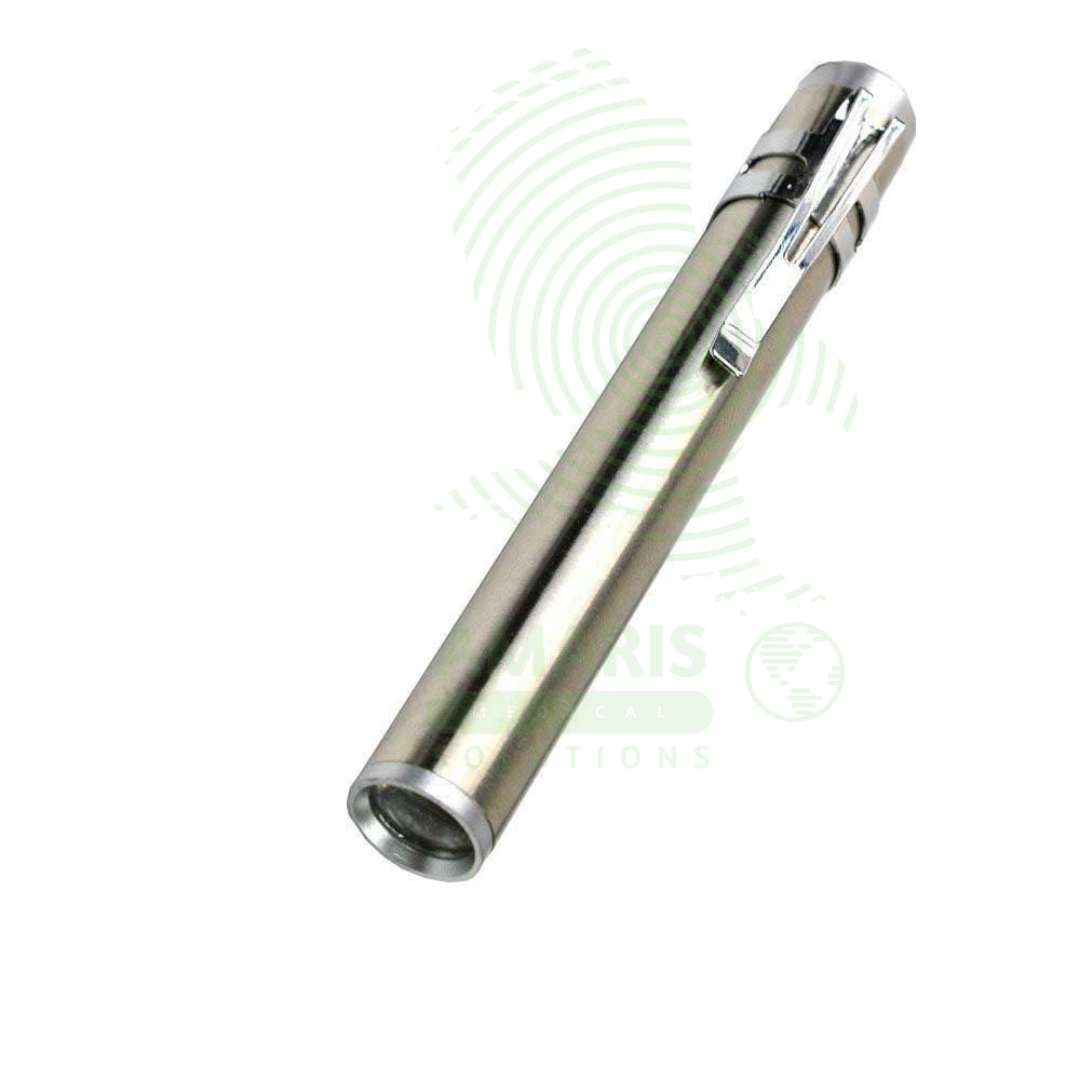
Pen torch
WhatsApp Order
A Pen Torch (penlight) is a compact, handheld, battery-powered diagnostic illumination device essential for directed clinical examination including pupillary reflex assessment, oropharyngeal and nasal inspection, wound visualization, foreign body detection, and transillumination. Available in reusable clinical-grade (aluminum/stainless steel, replaceable batteries, LED/incandescent) and disposable (economical plastic, single-patient-use) configurations. LED models provide 20-200 lumens with beam angles 5-60°, color temperature 4000-6500K, and CRI up to 90+ for accurate tissue assessment. Features include pocket clip, end-cap or slide switch, and lightweight construction (20-80 grams). Primary clinical applications include neurological examination (pupillary reflexes, cranial nerve assessment), emergency trauma evaluation, primary care physical examination, critical care monitoring, and pediatric assessment. Class I medical device. Critical safety considerations include ocular safety (avoid prolonged direct exposure), infection control (disinfect reusable devices between patients), battery safety, and contraindication in sterile fields unless sterile-wrapped.
Description
Pen torch
PRIMARY CLINICAL & DIAGNOSTIC USES
1. Pupillary Reflex Assessment:
-
Primary Use: Provides focused illumination for evaluating pupillary size, shape, symmetry, and reactivity to light (direct and consensual responses) during neurological examinations. This fundamental assessment helps detect conditions such as anisocoria, relative afferent pupillary defect (Marcus Gunn pupil), and brainstem dysfunction in conscious, sedated, or unconscious patients.
-
How it helps: Offers doctors a simple, immediate way to assess brain function at the bedside, with the pupils acting as windows into the brain’s health—constricting when the brainstem is intact, failing to react when it is not.
2. Oropharyngeal Examination:
-
Primary Use: Illuminates the oral cavity, pharynx, tonsils, and posterior pharynx for visual inspection of erythema, exudate, swelling, lesions, or foreign bodies in patients presenting with sore throat, dysphagia, or upper respiratory symptoms.
-
How it helps: Allows clinicians to see the source of a patient’s sore throat or difficulty swallowing, distinguishing between viral pharyngitis, bacterial tonsillitis, and other conditions that require different treatments.
3. Nasal Cavity Inspection:
-
Primary Use: Directs light into nasal passages to assess for mucosal inflammation, polyps, foreign bodies, or bleeding in patients with nasal congestion, epistaxis, or suspected sinusitis.
-
How it helps: Reveals the cause of nasal symptoms, from swollen turbinates blocking airflow to the source of a nosebleed that needs cauterization.
4. Wound and Skin Assessment:
-
Primary Use: Provides directed lighting for examining lacerations, abrasions, surgical incisions, pressure injuries, and skin lesions, allowing assessment of wound depth, edge characteristics, exudate, and surrounding tissue viability.
-
How it helps: Illuminates the details of wounds that might be missed in ordinary light, helping doctors determine which need suturing, which are healing properly, and which show signs of infection.
5. Foreign Body Detection:
-
Primary Use: Assists in locating and visualizing foreign bodies in the eye, ear, nose, throat, or superficial wounds prior to removal, particularly in emergency and primary care settings.
-
How it helps: Helps emergency physicians spot tiny objects lodged in sensitive areas—a contact lens in the eye, a bead in the ear, a splinter in the skin—that would otherwise be nearly invisible.
6. Neurological Cranial Nerve Examination:
-
Primary Use: Used to test optic nerve function (CN II) through light perception and pupillary response, and oculomotor nerve function (CN III) through accommodation and convergence testing.
-
How it helps: Provides a quick, non-invasive way to assess two critical cranial nerves, helping localize neurological problems to specific pathways in the brain.
7. Transillumination:
-
Primary Use: Applied to selected tissues for diagnostic purposes including sinus transillumination (frontal and maxillary sinuses), hydrocele or spermatocele identification, and assessment of fluid collections in darkly pigmented skin.
-
How it helps: Uses light to reveal what lies beneath the surface—shining through fluid-filled sinuses to diagnose infection, or through the scrotum to distinguish between solid masses and fluid collections.
SECONDARY & SUPPORTIVE USES
1. Patient Chart Review in Low-Light Conditions: Illuminates medical records, medication labels, and equipment in dimly lit patient rooms without disturbing sleeping patients, allowing quiet, respectful care during nighttime hours.
2. Venipuncture and IV Cannulation Assistance: Provides additional directed lighting for difficult venous access, particularly in patients with poor vasculature, dark skin pigmentation, or low-light emergency settings, helping clinicians start IVs with fewer attempts.
3. Equipment and Monitor Visualization: Illuminates equipment panels, infusion pump displays, ventilator controls, and monitor screens in darkened procedure rooms or during patient transport, ensuring equipment settings are correct.
4. Teaching and Precepting: Used by instructors to direct student attention to specific physical examination findings during bedside teaching, helping train the next generation of clinicians.
5. Home Healthcare Visits: Assists home health nurses with wound assessment, medication administration, and physical examination in home environments with inadequate lighting, extending quality care into patients’ homes.
6. Disaster and Austere Environment Medicine: Compact, battery-powered illumination source when conventional lighting is unavailable during field operations or mass casualty incidents, providing light when and where it’s needed most.
KEY PRODUCT FEATURES
1. BASIC IDENTIFICATION ATTRIBUTES
-
Device Type: Compact, handheld, battery-powered illumination device specifically designed for clinical diagnostic examination.
-
Common Names: Pen Torch, Penlight, Diagnostic Penlight, Medical Penlight, Clinical Flashlight.
-
Light Source Types:
-
Incandescent: Traditional bulb, warm light, shorter battery life, less durable.
-
LED (Light Emitting Diode): Modern standard, bright white light, longer battery life, shock-resistant.
-
Xenon: High-intensity, color-corrected light, premium option.
-
-
Form Factors:
-
Standard Penlight: Cylindrical metal or plastic housing with pocket clip.
-
Disposable Penlight: Economical plastic housing, non-replaceable batteries, single-patient-use.
-
Reusable Clinical Grade: Metal housing, replaceable batteries, durable construction.
-
Sterile Penlight: Individually wrapped, terminally sterilized for intraoperative use.
-
-
Power Source: Disposable batteries (AAA, AA, N-cell, or button cell) or rechargeable lithium-ion with USB charging.
2. TECHNICAL & PERFORMANCE PROPERTIES
-
Illuminance (Light Output):
-
Basic LED: 20-50 lumens (adequate for routine examination).
-
High-Intensity Diagnostic LED: 50-200 lumens (enhanced for detailed assessment).
-
Incandescent: 5-15 lumens (sufficient for basic pupillary assessment).
-
-
Beam Characteristics:
-
Focused Spot: 5-15 degree beam angle for directed examination of specific structures.
-
Flood Beam: 30-60 degree angle for general illumination (select models with adjustable focus).
-
Beam Uniformity: Even illumination without hotspots or concentric rings that could obscure findings.
-
-
Color Temperature:
-
LED: 5000-6500K (cool, blue-white) - standard for general use.
-
Diagnostic LED: 4000-5000K (neutral white) - optimal for accurate tissue color rendition.
-
Incandescent/Xenon: 2700-3200K (warm, yellow-white) - traditional, less blue light.
-
-
Color Rendering Index (CRI): Diagnostic-grade models: CRI ≥90 for accurate tissue color assessment; essential for dermatologic and mucosal evaluation.
-
Battery Life: 2-50+ hours continuous illumination depending on light source and battery capacity.
-
Switch Mechanism:
-
Push-Button (End-Cap): Momentary or on/off; common in metal-barrel designs.
-
Slide Switch: Side-mounted; maintained on/off.
-
Twist Head: Rotating head actuates on/off.
-
Pressure-Activated: Squeeze body; variable intensity on some models.
-
3. PHYSICAL & OPERATIONAL PROPERTIES
-
Dimensions: 10-15 cm (4-6 inches) length; 1-2 cm (0.4-0.8 inches) diameter.
-
Weight: 20-80 grams (batteries included); lightweight for pocket carry.
-
Housing Material:
-
Aluminum: Durable, lightweight, premium reusable models.
-
Stainless Steel: Heavy-duty, corrosion-resistant.
-
ABS Plastic: Economical, lightweight, disposable or reusable.
-
Polycarbonate: Impact-resistant, transparent options.
-
-
Pocket Clip: Spring steel or molded plastic; removable on select models; secures to uniform or pocket.
-
Lens: Glass or acrylic; scratch-resistant coating on premium models.
-
Water Resistance: Some models rated IPX4 (splash-resistant) for clinical cleaning.
-
Color Options: Clinical white, black, blue, silver; some models color-coded by department.
4. SAFETY & COMPLIANCE ATTRIBUTES
-
Regulatory Status: Class I medical device (low risk); generally 510(k) exempt.
-
Intended Use: Indicated for medical examination and diagnostic illumination in clinical settings.
-
Electrical Safety: Low-voltage battery operation; no shock hazard; complies with IEC 60601-1 if marketed as a medical device.
-
Biocompatibility: Housing materials in patient contact must be non-irritating and hypoallergenic.
-
Latex-Free: All components manufactured without natural rubber latex.
-
Sterility: Sterile models terminally sterilized via ethylene oxide or gamma irradiation; sterility assurance level (SAL) 10⁻⁶.
-
Ingress Protection: Non-sterile models should withstand wiping with disinfectant without damage.
5. STORAGE & HANDLING ATTRIBUTES
-
Storage: Store in a clean, dry environment at room temperature. Remove batteries during prolonged storage to prevent leakage and corrosion.
-
Battery Replacement: Verify correct battery orientation; use only specified battery type; replace depleted batteries promptly.
-
Cleaning (Reusable): Wipe with EPA-registered hospital disinfectant wipe between patients. Do not immerse unless specifically rated waterproof. For heavily soiled units, clean with mild soap and water, dry thoroughly, then disinfect.
-
Cleaning (Disposable): Single-patient-use only; discard after use; do not attempt to clean or reuse.
-
Inspection: Before each use, verify light output, switch function, and housing integrity. Check for cracked lens or damaged components.
6. LABORATORY & CLINICAL APPLICATIONS
-
Primary Application: Essential diagnostic instrument for rapid point-of-care physical examination across all healthcare settings: inpatient wards, emergency departments, intensive care units, outpatient clinics, long-term care facilities, and home healthcare.
-
Clinical Settings:
-
Neurology/Neurosurgery: Pupillary assessment in stroke, head injury, brain tumor, and coma evaluation.
-
Emergency Medicine: Rapid trauma assessment, pupillary check in altered mental status.
-
Primary Care: Routine physical examination, sore throat evaluation, ear and nose inspection.
-
Critical Care: Serial pupillary checks in sedated and ventilated patients.
-
Pediatrics: Child-friendly examination with non-threatening light source.
-
-
Limitations: Provides illumination only; not for detailed ophthalmologic examination (requires slit lamp); not for procedures requiring sterile illumination (use sterile disposable or sterile-sheathed).
SAFETY HANDLING PRECAUTIONS
1. SAFETY PRECAUTIONS
-
Ocular Safety: Do not shine directly into the patient's eye at close range for extended periods. Limit pupillary assessment to 3-5 seconds per eye. Use the lowest intensity that permits adequate examination. Avoid repeated or prolonged exposure in patients with retinal disease, photosensitizing medications, or aphakia.
-
Infection Control: Reusable pen torches are high-touch, multi-patient devices that can harbor nosocomial pathogens (MRSA, VRE, C. difficile). Disinfect after every patient use. Consider disposable, single-patient-use devices for isolation rooms or high-risk populations.
-
Battery Safety: Remove batteries during prolonged storage to prevent leakage and corrosion. Do not insert batteries with reversed polarity. Dispose of depleted batteries properly.
-
Do Not Use as Tongue Depressor: Pen torch is not designed or sterilized for intraoral contact; use dedicated tongue depressor for oropharyngeal examination.
-
Do Not Use in Sterile Field: Non-sterile pen torches are not for intraoperative use within a sterile field unless specifically designated sterile and wrapped.
-
Aspiration Hazard: Keep away from children; contains small parts (batteries, clip) posing choking/aspiration risk.
2. FIRST AID MEASURES
-
Battery Leakage: Remove batteries immediately. Avoid skin contact with electrolytes. Clean compartment with vinegar (alkaline batteries) or isopropyl alcohol (lithium). Dispose of damaged devices properly.
-
Eye Exposure (Excessive Light): If a patient reports persistent visual disturbance, photophobia, or scotoma following pen torch examination, perform a comprehensive ophthalmic examination. Most effects transient; permanent injury rare.
-
Skin Irritation (Contact Dermatitis): Rare. If localized erythema, pruritus, or rash occurs at skin contact sites, discontinue use of that device/material. Substitute with a hypoallergenic alternative.
-
Battery Ingestion: If a patient (especially child) swallows batteries, seek immediate emergency medical attention. Button batteries cause caustic esophageal burns within 2 hours.
3. FIRE FIGHTING MEASURES
-
Flammability: Plastic housing components are combustible; aluminum and stainless steel housings are non-combustible.
-
Extinguishing Media: Use water, foam, CO₂, or dry chemical as appropriate for surrounding fire.
-
Battery Fire: Damaged lithium battery may ignite; use Class D extinguisher or sand.
Related products
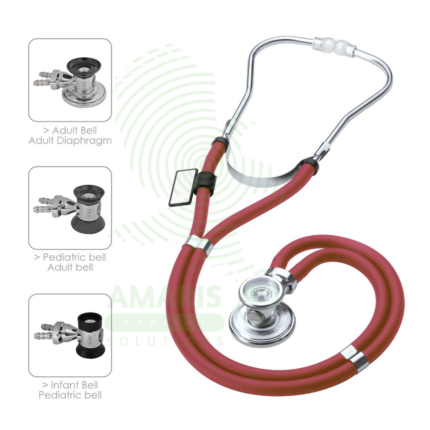
Dual Head Stethoscope
The Dual Head Stethoscope is the classic, essential acoustic diagnostic tool used by healthcare professionals worldwide. Its defining feature is a two-sided chestpiece, combining a diaphragm for high-frequency sounds (breath sounds, normal heart tones) and a bell for low-frequency sounds (heart murmurs, abnormal heart tones). Through mechanical sound conduction, it provides critical information for assessing cardiac, pulmonary, and vascular systems during physical examinations and manual blood pressure measurement. Its effectiveness relies on proper technique, a good acoustic seal, and consistent cleaning. As a fundamental symbol of medical practice, it balances functionality, durability, and affordability.
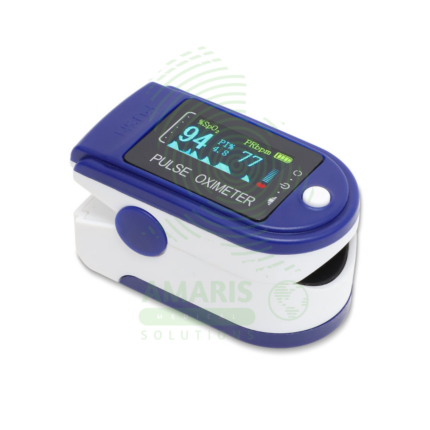
Fingertip Pulse Oximeter
A Fingertip Pulse Oximeter is a compact, non-invasive medical device that clips onto a finger to measure peripheral arterial oxygen saturation (SpO2) and pulse rate in seconds. Utilizing light-based technology, it provides critical, real-time data on respiratory and circulatory status. Its portability and ease of use make it indispensable in hospitals (from ORs to general wards), for patients managing chronic lung conditions at home, and for situational monitoring in sports or high-altitude environments. While an extremely valuable screening tool, readings must be interpreted in context, considering factors like patient movement, perfusion, and clinical symptoms.
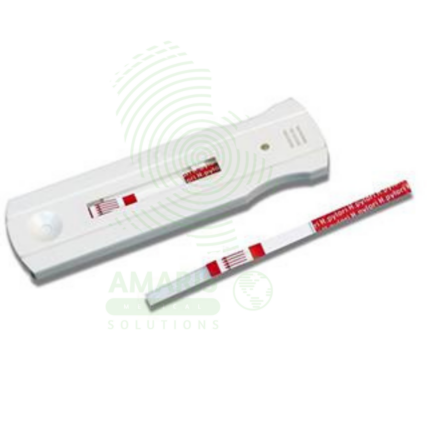
H. pylori Test Strips
H. pylori Test Strips are rapid, lateral flow immunochromatographic devices used for the qualitative detection of Helicobacter pylori antigens in human stool. As a non-invasive stool antigen test (SAT), it provides a convenient and reliable method for diagnosing active H. pylori infection and confirming eradication after therapy, with results available in under 15 minutes. Ideal for use in clinics and outpatient settings, it aids in the management of dyspepsia and peptic ulcer disease. Proper sample handling, adherence to pre-test medication restrictions, and strict biohazard precautions are essential for obtaining accurate results.
Height Board
A Height Board, or stadiometer, is a precision medical instrument designed for the accurate measurement of human stature. As a wall-mounted or portable device featuring a vertical scale and a sliding horizontal headpiece, it is the clinical standard for obtaining height. This measurement is foundational for calculating Body Mass Index (BMI), tracking growth in children, screening for nutritional issues, and assessing adults for conditions like osteoporosis. Its accuracy, dependent on proper installation and technique, makes it an indispensable tool in pediatrics, primary care, nutrition, and public health
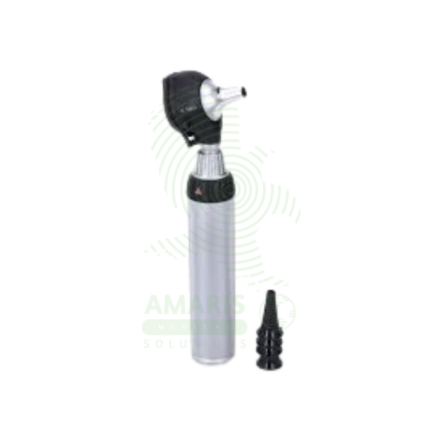
LED Otoscope
An LED Otoscope is a handheld medical device used for illuminating and magnifying the external ear canal and tympanic membrane. Featuring a bright, cool, and long-lasting LED light source, it provides superior visualization for diagnosing common conditions like ear infections, wax impaction, and perforations. Its design, incorporating a reusable handle/head and disposable specula, ensures hygiene and patient safety. As an essential tool in family medicine, pediatrics, and ENT, it enables clinicians to perform accurate otoscopic examinations and, when equipped with an insufflator, crucial pneumatic otoscopy to assess middle ear function.
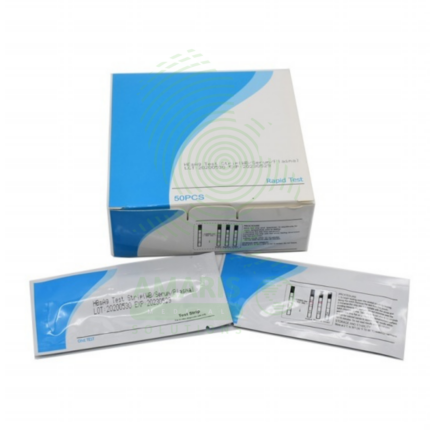
Rapid Test Kits (HIV, HBV, HCV, Malaria)
Rapid Test Kits for HIV, HBV, HCV, and Malaria are single-use, immunochromatographic devices designed for the quick, preliminary screening of these critical infectious diseases at the point of care. By detecting specific antibodies or antigens in a small blood sample (or oral fluid for some HIV tests), they provide a visual result within 15-30 minutes without the need for laboratory equipment. Their primary role is to expand access to testing in community and resource-limited settings, enabling immediate counseling, triage, and referral for confirmatory testing and treatment. As essential tools in public health, they are characterized by their simplicity, speed, and critical importance in early diagnosis and outbreak response.
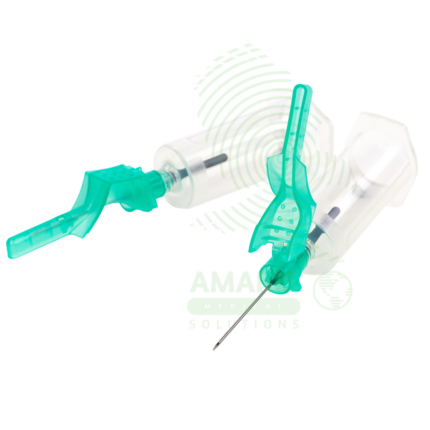
SAFE SERIES Blood Collection Needles
The SAFE SERIES (AM-SAFE) by Beijing Precil (Mindray subsidiary) is a comprehensive line of safety-engineered blood collection devices designed to prevent accidental needlestick injuries in healthcare workers. The series includes venous blood collection needles (AM-SAFE-V), standard safety needles (AM-SAFE1), winged infusion sets/butterfly needles (AM-SAFE2), high-gauge thin-wall needles for fragile veins (AM-SAFE3), premium coated needles for enhanced patient comfort (AM-GOLD), and nurse-friendly one-handed safety variants (AM-NURSE). All devices incorporate integral safety mechanisms that shield the contaminated needle immediately after withdrawal, complying with OSHA Needlestick Safety and Prevention Act requirements. Available in various gauges (18G-25G) and configurations for routine venipuncture, difficult vein access, pediatric/geriatric patients, and frequent blood draws. Sterile, single-use, latex-free, and color-coded for easy gauge identification. Essential safety devices for blood collection in hospitals, clinics, laboratories, and home healthcare settings.