Dermatoscope and Magnifiers
 Diagnostic Kits
 Vital Signs Monitors
 Stethoscopes and Accessories
 Otoscopes, Ophthalmoscopes, and Retinoscopes
 Reflex Hammers and Neurological Tools
 Scales and Measuring Devices
 Spirometers and Pulmonary Function Tests
 Electrosurgical Units and Accessories
 Cutting Instruments
 Grasping and Holding Instruments
 Hemostatic Instruments
 Specialized Surgical Sets
 Single-Use Procedure Trays and Packs
 Surgical Drapes, Gowns, and Covers
 Tissue Unifying Instruments
 Radiation Protection
 X-Ray Machines and Accessories
 Ultrasound Systems and Probes
 MRI and CT Scanners
 Radiology Consumables
 Bone Densitometers
 Fluoroscopy Equipment
 Imaging Tables and Positioning Aids
 Microscopes and Accessories
 Centrifuges and Separators
 Analyzers
 Incubators and Ovens
 Pipettes, Dispensers, and Lab Glassware
 Refrigerators, Freezers, and Storage Units
 Lab Consumables
 Sterilizers and Autoclaves for Lab Use
 Multi-Parameter Monitors
 Ventilators and Respiratory Support Devices
 Defibrillators and AEDs
 Infusion Pumps and IV Systems
 Patient Warmers and Cooling Devices
 Central Monitoring Stations
 Accessories
 Anesthesia Machines and Workstations
 Oxygen Concentrators and Delivery Systems
 Nebulizers and Inhalers
 CPAP/BiPAP Machines
 Airway Management
 Anesthesia Masks, Circuits, and Bags
 Humidifiers and Heaters
 Respiratory Therapy Accessories
 First Aid Kits and Cabinets
 Emergency Resuscitation Equipment
 Trauma Supplies
 Emergency Carts and Crash Carts
 Burn Care Products
 Bleeding Control
 Automated External Defibrillators (AEDs)
 Transport and Evacuation
 Wheelchairs and Accessories
 Walkers, Crutches, and Canes
 Prosthetics and Orthotics
 Physical Therapy Equipment
 Transfer Devices
 Bathroom Safety
 Orthopedic Traction and Tables
 Hot/Cold Therapy Packs and Units
 Beds and Mattresses
 Chairs and Stools
 Tables
 Cabinets and Storage
 Privacy Screens & Curtains
 Stands and Racks
 Linens and Textiles
 Lighting
 Autoclaves and Sterilizers
 Ultrasonic Cleaners
 Disinfectant Solutions and Wipes
 Sterilization Pouches, Wraps, and Indicators
 Instrument Trays and Containers
 UV and Ozone Disinfection Devices
 Washer Disinfectors
 Wound Care
 Gloves
 Masks and Respirators
 Catheters and Tubing
 Swabs, Applicators, and Sponges
 Incontinence Products
 Personal Protective Equipment (PPE)
 Dental Chairs and Units
 Handpieces and Burs
 Instruments
 Consumables
 Sterilization for Dental Use
 Orthodontic Supplies
 Endodontic Tools
 Slit Lamps and Tonometers
 Lensometers and Phoropters
 Ophthalmic Surgical Instruments
 Eyewear Frames and Lenses
 Contact Lens Supplies
 Vision Testing Charts and Devices
 Eye Care Consumables
 Laser Systems for Eye Care
 ENT Exam Chairs and Tables
 Endoscopes
 Audiometers and Hearing Tests
 ENT Instruments
 Nasal and Throat Packs
 Hearing Aids and Accessories
 Otology Supplies
 Fetal Dopplers and Monitors
 Delivery Beds and Tables
 Gynecological Instruments
 Neonatal Incubators and Warmers
 Breast Pumps and Accessories
 Contraceptive Devices
 Maternity Supports and Pads
 Neonatal Consumables
 Cystoscopes and Urethroscopes
 Dialysis Machines and Supplies
 Urological Catheters and Bags
 Lithotripters
 Prostate Treatment Devices
 Urinary Incontinence Products
 Kidney Stone Management Tools
 Consumables & Disposables
 EEG and EMG Machines
 Neurosurgical Instruments
 Nerve Stimulators
 Headrests and Positioning Aids
 Lumbar Puncture Kits
 Seizure Monitoring Devices
 Consumables
 Rehabilitation for Neurological Conditions
 ECG Machines and Accessories
 Holter Monitors
 Stress Test Systems
 Pacemakers and Defibrillator Accessories
 Vascular Access Devices
 Cardiac Catheters and Guidewires
 Blood Flow Meters
 Consumables
 Orthopedic Instruments
 Casts, Splints, and Padding
 Joint Replacement Supplies
 Prosthetic Limbs and Components
 Bone Grafts and Substitutes
 Traction Devices
 Orthopedic Braces and Supports
 Rehabilitation Aids for Orthopedics
 Home Oxygen Therapy
 Hospital Beds for Home Use
 Mobility Aids
 Bathroom and Daily Living Aids
 Wound Care for Home
 Monitoring Devices
 Enteral Feeding Pumps and Tubes
 Hand Sanitizers and Dispensers
 Face Shields and Goggles
 Isolation Gowns and Suits
 Biohazard Waste Containers
 Air Purifiers and HEPA Filters
 Surface Disinfectants
 Sharps Containers
 Protective Barriers
 Cardiovascular & Endurance Training
 Strength Training & Weightlifting
 Functional Training & Core Conditioning
 Physical Therapy & Rehabilitation
 Sports & Outdoor Recreation
 Gym Flooring & Facility Equipment
 Fitness Monitoring & Accessories
 Kids & Novelties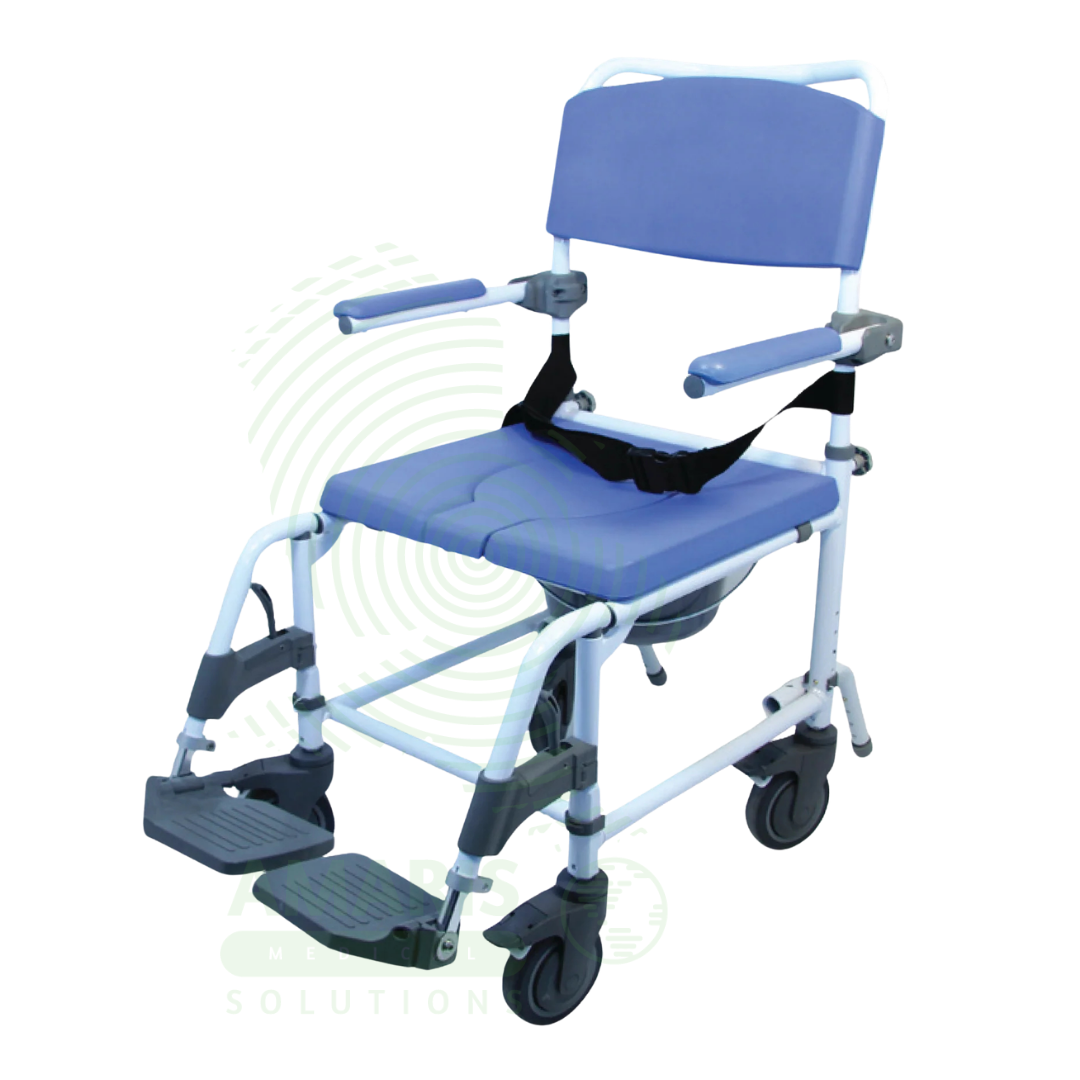
Standard Commode Wheelchair With Flipping Armrest
$1.00
WhatsApp Order
The Standard Commode Wheelchair with Flipping Armrest is a manual wheelchair that combines a commode seat with one or two armrests that swing down and out of the way. This key feature facilitates safe, easy lateral transfers from a bed with minimal caregiver assistance, directly addressing fall risks and reducing caregiver strain during toileting. It is used for integrated mobility and hygiene care for non-ambulatory, post-operative, or frail patients. Safety hinges on the robust locking mechanism of the armrest, which must be verified before each use, alongside strict adherence to cleaning protocols for infection control.
Description
Standard Commode Wheelchair With Flipping Armrest
PRIMARY CLINICAL & DIAGNOSTIC USES
1. Safe, Independent Toileting with Minimal Caregiver Transfer Assistance
-
Primary Use: Provides a combined mobility and toileting solution where the flipping armrest allows a patient to perform a near-independent lateral transfer from a bed to the chair. The user can flip the armrest down and out of the way, slide across onto the commode seat, and then flip the armrest back up for support and safety, drastically reducing caregiver lift burden.
-
How it helps: For the physical therapist and nursing team, the flipping armrest transforms a high-risk, two-person transfer into a manageable one-person assist or even an independent task, reducing staff injuries and freeing caregivers for other duties. For the patient with limited mobility, being able to transfer with minimal assistance preserves their dignity and sense of independence, allowing them to participate actively in their own care rather than being passively lifted and moved.
2. Reduction of Fall Risk During Toileting Routines
-
Primary Use: By eliminating the need to navigate around a fixed armrest during transfers, this design minimizes the risk of patients losing balance, catching clothing, or falling during the critical movement onto or off of the commode chair, a high-risk activity for the elderly and frail.
-
How it helps: For the fall prevention coordinator and geriatric specialist, the flipping armrest addresses one of the most dangerous moments in a patient’s day—the transfer onto a toilet or commode—by removing the obstacle that causes many falls. For the elderly or frail patient, not having to step over or maneuver around a fixed armrest means they can transfer safely even when weak, tired, or in a hurry, reducing the fear that keeps them from attempting independent toileting.
3. Hygienic Management of Incontinence and Scheduled Toileting Programs
-
Primary Use: Facilitates easy and regular positioning of patients over the commode pan for scheduled bowel and bladder care, which is essential for managing incontinence, preventing constipation, and maintaining skin integrity, all while preserving patient dignity.
-
How it helps: For the wound care nurse and incontinence specialist, a commode wheelchair with a flipping armrest makes scheduled toileting programs more successful by making transfers easier and less stressful, reducing episodes of incontinence that lead to skin breakdown. For the patient managing incontinence, having a chair that allows for easy, dignified toileting means fewer accidents, less time lying in wet or soiled linens, and greater confidence to participate in social activities.
4. Post-Operative and Rehabilitation Mobility with Integrated Toilet Access
-
Primary Use: Ideal for patients recovering from orthopedic surgeries where strict precautions make standard toilet transfers impossible. The chair can be wheeled to the bedside, the armrest flipped down for a safe lateral transfer, and used without violating movement restrictions.
-
How it helps: For the orthopedic surgeon and physical therapist managing patients with hip replacement precautions or other surgical restrictions, the flipping armrest allows for toileting that respects the patient’s limitations—no deep hip flexion, no twisting, no weight-bearing on the surgical site. For the patient navigating the vulnerable post-operative period, this chair means they can meet their toileting needs without the terror of dislocating their new joint or disrupting their surgical repair.
SECONDARY & SUPPORTIVE USES
1. Facilitation of Bedside Care and Hygiene: Allows for efficient bed bathing and perineal care; the caregiver can flip the armrest down to gain unobstructed lateral access to the patient seated in the chair. For the nursing assistant providing personal care, this access makes hygiene tasks easier and more dignified for both caregiver and patient.
2. Shower and Bathroom Transfers: The flipping armrest makes it easier to pivot the chair and position it closely next to a shower bench or over a standard toilet for use as a shower and commode chair, streamlining the bathing process. For the patient who struggles with multiple transfers, a single chair that serves both functions reduces the number of times they must move.
3. Bariatric Patient Care: Heavy-duty versions with flipping armrests are critical for safely transferring larger patients, as the open side allows for the use of transfer boards and better caregiver positioning. For the bariatric patient and the staff caring for them, this design makes transfers safer and more dignified for everyone involved.
4. Night-Time Toileting Convenience and Safety: Kept at the bedside, it enables quick, safe nocturnal toileting. The easy-transfer design is particularly beneficial in low-light conditions where complex maneuvers are riskier. For the patient who rises multiple times at night, having a chair that allows for safe transfer even when drowsy prevents falls and preserves sleep for both patient and caregiver.
5. Long-Term Care and Home Care Efficiency: In settings with limited staff, the reduced transfer assistance required per patient allows caregivers to manage toileting needs more efficiently across multiple residents. For the facility administrator and care team, equipment that makes transfers safer and less staff-intensive improves both patient outcomes and staff retention.
KEY PRODUCT FEATURES
1. BASIC IDENTIFICATION ATTRIBUTES
-
Product Type: A manual commode wheelchair where one or both armrests are hinged to swing outward and downward, clearing the path for lateral patient transfer.
-
Core Design: A standard commode wheelchair frame with a seat opening and pan holder, but with armrests mounted on a pivot mechanism rather than being fixed.
-
Key Components:
-
Flipping/Swing-Away Armrest: The defining feature. It locks securely in the "up" position for use and releases to swing down and away, typically moving through a 90-180 degree arc.
-
Commode Seat with Opening: A vinyl or padded seat with a large central opening.
-
Commod Pan Bracket & Removable Pan: A holder for a standard bedpan located beneath the seat.
-
Secure Armrest Locking Mechanism: A button, lever, or pin that firmly locks the armrest in the upright position to prevent accidental collapse during use or transfers.
-
Flip-Up Footrests: To allow the chair to be pushed close to beds, toilets, or for over-toilet use.
-
2. TECHNICAL & PERFORMANCE PROPERTIES
-
Armrest Mechanism Strength: Must be robust enough to support patient weight when leaning on it in the "up" position and to withstand repeated cycling. The lock must be secure and easy for staff (and some patients) to operate.
-
Clearance Arc: The path the armrest takes when flipped should provide maximum lateral clearance without hitting the wheel or frame, allowing for unobstructed slide transfers.
-
Weight Capacity: Standard models support ~250-300 lbs (113-136 kg). The armrest mechanism is a critical factor in this rating.
-
Seat-to-Floor Height: Often adjustable to match bed height, which is crucial for level, safe lateral transfers when the armrest is down.
3. PHYSICAL & OPERATIONAL PROPERTIES
-
Construction: Steel frame with durable upholstery. The armrest pivot is a high-wear point and is typically reinforced.
-
Maneuverability: Functions as a standard wheelchair. The flipping armrest does not impede propulsion.
-
Cleanability: Designed for easy wiping. The armrest mechanism should have minimal crevices where contaminants can lodge.
4. SAFETY & COMPLIANCE ATTRIBUTES
-
Regulatory Status: Class I medical device.
-
Armrest Lock Reliability: The most critical safety feature. It must be designed to prevent accidental release under load.
-
Infection Control: Materials and design must allow for effective disinfection of the armrest hinge area.
5. STORAGE & HANDLING ATTRIBUTES
-
Storage: Armrests should be left in the "up" and locked position when stored to prevent damage to the mechanism.
-
Cleaning & Disinfection: Clean and disinfect the armrest, its pivot mechanism, and the locking button/lever after every use, as these are high-touch points. Follow standard commode chair cleaning for the seat and pan.
-
Maintenance: Regularly inspect the armrest locking mechanism for wear, looseness, or damage. Lubricate the pivot as per manufacturer instructions. A faulty armrest lock renders the chair unsafe.
6. LABORATORY & CLINICAL APPLICATIONS
-
Primary Application: A patient-centered design innovation primarily used in geriatric wards, stroke units, spinal injury centers, and post-operative care units. It directly addresses the ergonomic and safety challenges of patient transfers, aligning with safe patient handling principles and promoting greater patient independence in a fundamental activity of daily living (ADL).
SAFETY HANDLING PRECAUTIONS
1. SAFETY PRECAUTIONS
-
Armrest Lock Verification (CRITICAL): Before allowing a patient to sit in the chair or lean on the armrest, visually and physically confirm that the armrest is fully locked in the upright position. This check is mandatory.
-
Controlled Descent of Armrest: When flipping the armrest down, control its motion. Do not let it drop, as this can damage the mechanism or pinch fingers.
-
Brake Engagement During Transfer: As with all commode chairs, ensure brakes are fully engaged on both wheels during any transfer, whether the armrest is up or down.
-
Patient and Caregiver Education: Train patients and caregivers on the correct operation of the armrest mechanism to prevent improper use that could lead to failure.
-
Weight Limit Adherence: Do not exceed the rated capacity, as excessive force on the flipped-down armrest during a transfer can bend or break the mechanism.
2. FIRST AID MEASURES
-
Armrest Collapse: If an armrest fails and collapses while a patient is transferring or seated, support the patient to prevent a fall. Immediately remove the patient from the chair and do not use the chair until it is repaired.
-
Pinch Injury in Mechanism: If a finger is caught, carefully release the mechanism. Provide first aid for the crush or pinch injury.
-
Fall During Transfer: Follow standard fall protocol. Assess for injury, noting if armrest failure was a contributing factor.
3. FIRE FIGHTING MEASURES
-
Flammability: Upholstery and plastic components are combustible.
-
Extinguishing Media: Use water, foam, or CO₂.
Related products
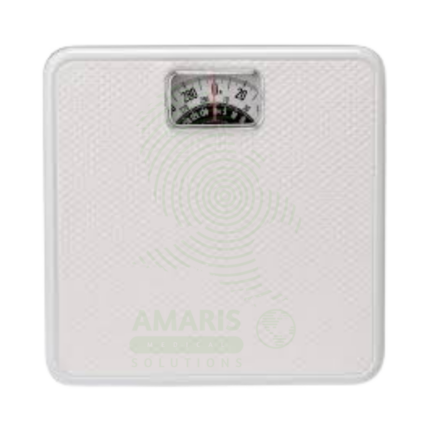
Analogue Bathroom Weighing Scale
An Analogue Bathroom Weighing Scale is a mechanical Class I medical device (for health monitoring) using a precision spring and lever system to measure body weight without batteries or electronics. Features include enameled steel, stainless steel, or ABS plastic platform (25-30 cm square), large circular dial (10-15 cm diameter) with clear numerals and pointer, zero adjustment knob for calibration before each use, weight capacity 120-180 kg (265-400 lbs) standard (heavy-duty models to 250 kg/550 lbs), and graduation 0.5 kg or 1 lb increments with accuracy ±0.5-1 kg. Primary clinical applications include home weight monitoring for patients who prefer non-electronic devices, chronic disease management in resource-limited settings (heart failure, CKD), geriatric and low-vision patient weighing (large, clear dial), bariatric patient monitoring (higher weight capacities), pediatric growth monitoring in home settings, pregnancy weight tracking, and post-hospitalization transition monitoring. Critical safety considerations include verifying zero adjustment before each use, placement on hard level surface (not carpet), staying within weight capacity, reading at eye level to avoid parallax error, and recognizing that spring fatigue over years may affect accuracy. Essential non-electronic alternative for patients needing simple, reliable, battery-free weight monitoring.
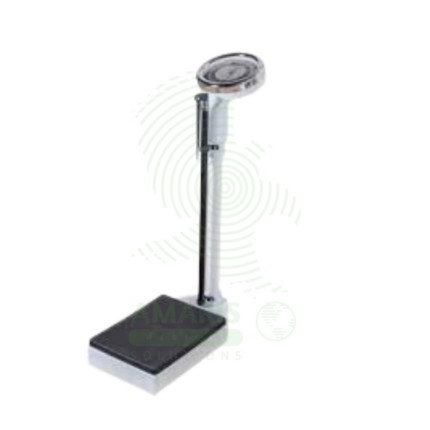
Analogue Weighing Scale With height
An Analogue Weighing Scale With height is a Class I medical device combining a mechanical beam scale (balance beam with sliding poises, accuracy ±0.1 kg, capacity 140-300 kg) with an integrated telescoping or folding height rod (range 60-200 cm, graduation 1 mm) for comprehensive anthropometric assessment without batteries or electronics. Features include heavy-gauge steel platform (50-70 cm × 40-50 cm) with non-slip surface, sliding counterweights (large for increments, small for fine measurement), zero adjustment mechanism, locking casters for mobility, and durable enamel or powder-coated finish. Primary clinical applications include comprehensive anthropometric assessment in resource-limited clinics, pediatric growth monitoring in community health centers, adult obesity screening and BMI calculation, geriatric nutritional assessment in long-term care, preoperative assessment in ambulatory surgery centers, school health screening programs, and developing world/humanitarian aid settings. Critical safety considerations include verifying zero balance before each use, locking casters before patient steps on, ensuring patient stands still without support, providing step assistance for mobility-impaired patients, and cleaning platform and height rod between patients. Essential durable, battery-free equipment for comprehensive weight and height measurement in clinical settings.
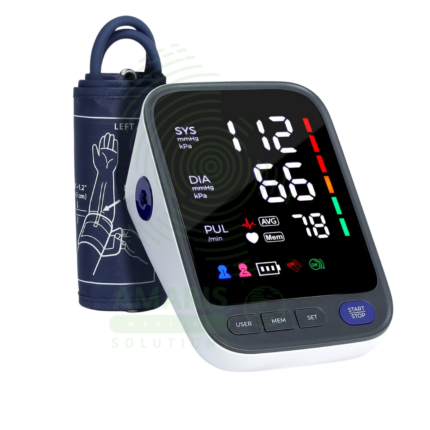
Bluetooth Blood Pressure Machine
A Bluetooth Blood Pressure Machine is an automatic oscillometric blood pressure monitor with integrated wireless technology that transmits readings from patient homes to smartphones and healthcare providers. Measures systolic (60-260 mmHg) and diastolic (40-200 mmHg) pressure with clinical accuracy (≤±3 mmHg) validated per AAMI/ESH/ISO 81060-2 standards. Features intelligent cuff inflation, movement detection, irregular heartbeat flagging, and multi-user memory (60-200 readings). Bluetooth 4.0-5.0 LE connectivity enables automatic data synchronization with companion apps for trend analysis, medication tracking, and secure provider sharing. Primary clinical applications include remote patient monitoring for hypertension management, medication adherence and efficacy tracking, gestational hypertension and preeclampsia surveillance, post-operative BP monitoring, pediatric hypertension follow-up, and clinical trial data collection. Class II medical device requiring FDA clearance. Critical safety considerations include proper cuff size selection, correct measurement conditions (rest, positioning, bare arm), movement restriction during measurement, irregular heartbeat interpretation limitations, and regular calibration verification.
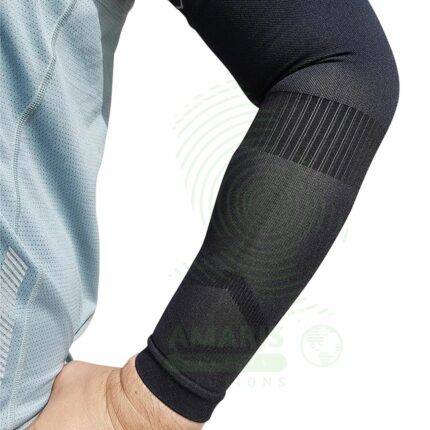
Compression Arm Sleeve
A Compression Arm Sleeve is a medical-grade elastic sleeve that applies graduated pressure from the wrist to the upper arm. Its primary clinical purpose is the management and reduction of swelling (edema) caused by conditions such as lymphedema (often post-mastectomy), chronic venous insufficiency, or post-surgical recovery. By enhancing lymphatic and venous return, it helps control limb volume, reduce discomfort, and prevent complications like skin fibrosis. Correct sizing and consistent daily wear are essential for therapeutic efficacy, and the garment requires specific daily care through gentle hand-washing to maintain its compression properties and hygiene.
Compressor Nebulizer Machine
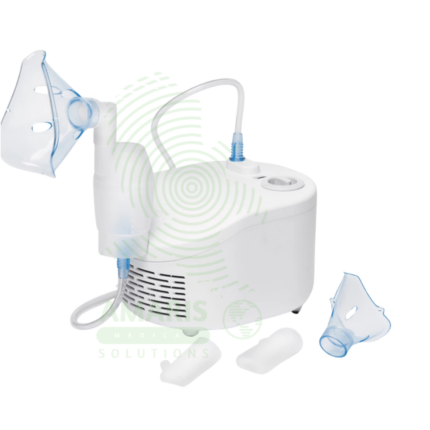
A Compressor Nebulizer Machine is a pneumatic device that transforms liquid medication into a breathable mist for treating respiratory conditions. Consisting of an electric air compressor, a nebulizer cup, tubing, and a mask or mouthpiece, it is particularly effective for infants, children, and patients with severe asthma, COPD, or cystic fibrosis who require reliable aerosol delivery. While offering robust performance for home and clinical use, its safety and efficacy depend critically on proper cleaning to prevent infection, correct assembly, and the use of prescribed nebulizer-compatible medications. It remains a fundamental tool for both acute intervention and chronic management of pulmonary diseases.
Desktop Infrared Therapy Lamp
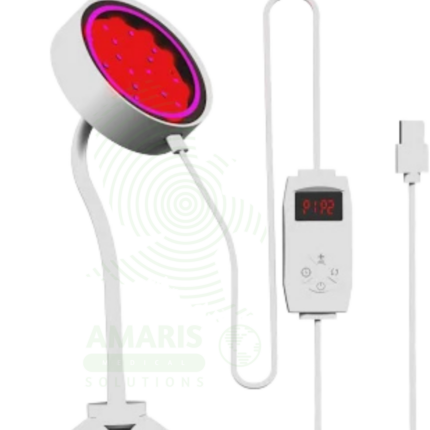
A Desktop Infrared Therapy Lamp is a compact, focused heat therapy device that emits infrared radiation to deliver deep, penetrating warmth to targeted areas of the body. Used primarily for pain relief, muscle relaxation, and promoting healing in soft tissue and joint conditions, it is a common tool in physical therapy, chiropractic, and wellness practices. Its adjustable design allows precise positioning over areas like the neck, shoulder, or knee. Treatment involves non-invasive, radiant heat that increases local circulation. Critical safety practices include adhering to treatment time and distance guidelines, avoiding use over contraindicated areas, and never looking directly at the bulb.
Non-Touch Digital Thermometer
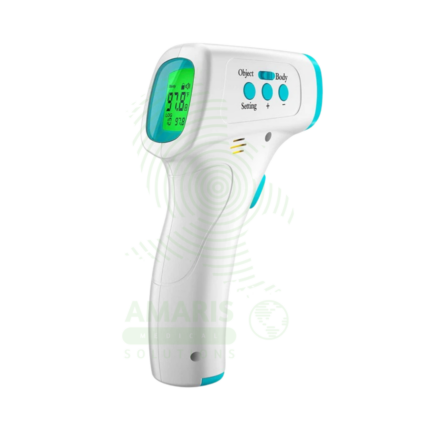
A Non-Touch Digital Thermometer is a Class II medical device using infrared thermopile sensor technology (8-14 µm spectral response) to measure body temperature from the forehead or temporal artery without skin contact in 1-3 seconds with accuracy ±0.2-0.3°C. Features include backlit LCD display, fever alert (audible and color-coded), memory storage (10-50 readings), auto-shutoff, and selectable modes (body/surface/ambient). Measurement distance 3-15 cm; requires clean, dry forehead free of hair, sweat, or cosmetics. Primary clinical applications include pediatric fever screening in infants and children (non-distressing), infection control and isolation precautions (reduces healthcare worker exposure), mass screening at airports, schools, and workplaces, neonatal and NICU temperature monitoring (minimal handling), burn unit and wound care patients (non-contact over damaged skin), intraoperative and post-anesthesia care, and geriatric/dementia care (non-stressful for agitated patients). Critical safety considerations include environmental acclimation (10-15 minutes at room temperature), clean sensor lens, correct measurement distance, avoidance of laser in eyes (if equipped), and confirmation of suspected fever with contact thermometer. Essential screening tool for infection control, pediatrics, and high-volume settings.