Dermatoscope and Magnifiers
 Diagnostic Kits
 Vital Signs Monitors
 Stethoscopes and Accessories
 Otoscopes, Ophthalmoscopes, and Retinoscopes
 Reflex Hammers and Neurological Tools
 Scales and Measuring Devices
 Spirometers and Pulmonary Function Tests
 Electrosurgical Units and Accessories
 Cutting Instruments
 Grasping and Holding Instruments
 Hemostatic Instruments
 Specialized Surgical Sets
 Single-Use Procedure Trays and Packs
 Surgical Drapes, Gowns, and Covers
 Tissue Unifying Instruments
 Radiation Protection
 X-Ray Machines and Accessories
 Ultrasound Systems and Probes
 MRI and CT Scanners
 Radiology Consumables
 Bone Densitometers
 Fluoroscopy Equipment
 Imaging Tables and Positioning Aids
 Microscopes and Accessories
 Centrifuges and Separators
 Analyzers
 Incubators and Ovens
 Pipettes, Dispensers, and Lab Glassware
 Refrigerators, Freezers, and Storage Units
 Lab Consumables
 Sterilizers and Autoclaves for Lab Use
 Multi-Parameter Monitors
 Ventilators and Respiratory Support Devices
 Defibrillators and AEDs
 Infusion Pumps and IV Systems
 Patient Warmers and Cooling Devices
 Central Monitoring Stations
 Accessories
 Anesthesia Machines and Workstations
 Oxygen Concentrators and Delivery Systems
 Nebulizers and Inhalers
 CPAP/BiPAP Machines
 Airway Management
 Anesthesia Masks, Circuits, and Bags
 Humidifiers and Heaters
 Respiratory Therapy Accessories
 First Aid Kits and Cabinets
 Emergency Resuscitation Equipment
 Trauma Supplies
 Emergency Carts and Crash Carts
 Burn Care Products
 Bleeding Control
 Automated External Defibrillators (AEDs)
 Transport and Evacuation
 Wheelchairs and Accessories
 Walkers, Crutches, and Canes
 Prosthetics and Orthotics
 Physical Therapy Equipment
 Transfer Devices
 Bathroom Safety
 Orthopedic Traction and Tables
 Hot/Cold Therapy Packs and Units
 Beds and Mattresses
 Chairs and Stools
 Tables
 Cabinets and Storage
 Privacy Screens & Curtains
 Stands and Racks
 Linens and Textiles
 Lighting
 Autoclaves and Sterilizers
 Ultrasonic Cleaners
 Disinfectant Solutions and Wipes
 Sterilization Pouches, Wraps, and Indicators
 Instrument Trays and Containers
 UV and Ozone Disinfection Devices
 Washer Disinfectors
 Wound Care
 Gloves
 Masks and Respirators
 Catheters and Tubing
 Swabs, Applicators, and Sponges
 Incontinence Products
 Personal Protective Equipment (PPE)
 Dental Chairs and Units
 Handpieces and Burs
 Instruments
 Consumables
 Sterilization for Dental Use
 Orthodontic Supplies
 Endodontic Tools
 Slit Lamps and Tonometers
 Lensometers and Phoropters
 Ophthalmic Surgical Instruments
 Eyewear Frames and Lenses
 Contact Lens Supplies
 Vision Testing Charts and Devices
 Eye Care Consumables
 Laser Systems for Eye Care
 ENT Exam Chairs and Tables
 Endoscopes
 Audiometers and Hearing Tests
 ENT Instruments
 Nasal and Throat Packs
 Hearing Aids and Accessories
 Otology Supplies
 Fetal Dopplers and Monitors
 Delivery Beds and Tables
 Gynecological Instruments
 Neonatal Incubators and Warmers
 Breast Pumps and Accessories
 Contraceptive Devices
 Maternity Supports and Pads
 Neonatal Consumables
 Cystoscopes and Urethroscopes
 Dialysis Machines and Supplies
 Urological Catheters and Bags
 Lithotripters
 Prostate Treatment Devices
 Urinary Incontinence Products
 Kidney Stone Management Tools
 Consumables & Disposables
 EEG and EMG Machines
 Neurosurgical Instruments
 Nerve Stimulators
 Headrests and Positioning Aids
 Lumbar Puncture Kits
 Seizure Monitoring Devices
 Consumables
 Rehabilitation for Neurological Conditions
 ECG Machines and Accessories
 Holter Monitors
 Stress Test Systems
 Pacemakers and Defibrillator Accessories
 Vascular Access Devices
 Cardiac Catheters and Guidewires
 Blood Flow Meters
 Consumables
 Orthopedic Instruments
 Casts, Splints, and Padding
 Joint Replacement Supplies
 Prosthetic Limbs and Components
 Bone Grafts and Substitutes
 Traction Devices
 Orthopedic Braces and Supports
 Rehabilitation Aids for Orthopedics
 Home Oxygen Therapy
 Hospital Beds for Home Use
 Mobility Aids
 Bathroom and Daily Living Aids
 Wound Care for Home
 Monitoring Devices
 Enteral Feeding Pumps and Tubes
 Hand Sanitizers and Dispensers
 Face Shields and Goggles
 Isolation Gowns and Suits
 Biohazard Waste Containers
 Air Purifiers and HEPA Filters
 Surface Disinfectants
 Sharps Containers
 Protective Barriers
 Cardiovascular & Endurance Training
 Strength Training & Weightlifting
 Functional Training & Core Conditioning
 Physical Therapy & Rehabilitation
 Sports & Outdoor Recreation
 Gym Flooring & Facility Equipment
 Fitness Monitoring & Accessories
 Kids & Novelties
Tourniquet
WhatsApp Order
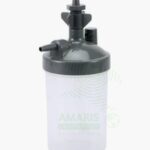
A Tourniquet is a constricting device applied to a limb to occlude blood flow for hemorrhage control, surgical bloodless field, or venous engorgement. Combat application tourniquets with windlass mechanisms are essential for stopping life-threatening extremity bleeding in trauma, military, and prehospital settings. Elastic tourniquets facilitate venipuncture by engorging superficial veins. Pneumatic tourniquets create controlled ischemia for extremity surgery. Proper application, time documentation, and understanding that tourniquets for hemorrhage control should not be loosened until surgical control are critical for safe and effective use.
Description
Tourniquet
PRIMARY CLINICAL & DIAGNOSTIC USES
1. Life-Saving Control of Catastrophic Hemorrhage
-
Primary Use: Applies circumferential pressure to a limb to completely occlude arterial blood flow, stopping life-threatening external hemorrhage from traumatic amputations, severe lacerations, crush injuries, or penetrating trauma. This is the definitive intervention for preventing exsanguination in prehospital and combat settings.
-
How it helps: For the combat medic, paramedic, and trauma surgeon, the tourniquet is the most powerful tool in the hemorrhage control arsenal—a device that can completely stop arterial bleeding from a mangled limb in seconds, preventing the otherwise inevitable progression from severe hemorrhage to hypovolemic shock to cardiac arrest. For the trauma patient with a life-threatening limb injury, a properly applied tourniquet means the difference between exsanguination and survival, buying precious time to reach definitive surgical care.
2. Tactical Combat Casualty Care
-
Primary Use: Essential medical device for military personnel, mandated in individual first aid kits for immediate self-aid or buddy-aid under fire, with early tourniquet application indicated for any major limb injury with uncontrolled bleeding.
-
How it helps: For the soldier on the battlefield, the tourniquet carried in their individual first aid kit is a lifeline—a device they can apply to their own wounded limb or a buddy under active fire, stopping catastrophic hemorrhage before they become a fatality. For the combat casualty, a tourniquet applied immediately at the point of injury means they have a chance to survive long enough for evacuation to surgical care, dramatically improving battlefield mortality.
3. Prehospital and Emergency Medical Services
-
Primary Use: Standard equipment for EMS ground ambulances, air medical transport, and emergency department trauma bays for immediate hemorrhage control during patient packaging, transport, and initial resuscitation.
-
How it helps: For the paramedic responding to a motor vehicle crash or industrial accident, the tourniquet provides immediate control of extremity hemorrhage that cannot be managed with direct pressure alone—allowing them to stabilize the patient at the scene and during transport to definitive care. For the patient with severe limb trauma, prehospital tourniquet application means they arrive at the trauma center still alive, with hemorrhage controlled and shock prevented.
4. Venipuncture and Intravenous Access Facilitation
-
Primary Use: Elastic tourniquets are applied to the upper arm or leg to engorge superficial veins by occluding venous return while preserving arterial inflow, facilitating venipuncture, intravenous cannulation, and blood donation.
-
How it helps: For the phlebotomist, nurse, and anyone performing venipuncture, the elastic tourniquet makes veins visible and palpable—creating venous engorgement that transforms difficult-to-find veins into accessible targets for blood draws and IV starts. For the patient, a properly applied tourniquet means fewer needle sticks, faster successful access, and less discomfort during procedures.
5. Surgical and Procedural Hemostasis
-
Primary Use: Used in operating rooms and procedure suites to create a bloodless field for extremity surgery, including orthopedic, vascular, plastic, and hand surgery. Pneumatic tourniquets are standard for this application, providing controlled, time-limited ischemia.
-
How it helps: For the orthopedic surgeon performing hand surgery, the plastic surgeon repairing tendons, or the vascular surgeon operating on distal vessels, the tourniquet creates a bloodless field—allowing them to see fine structures clearly, work precisely without bleeding obscuring the field, and complete procedures that would be nearly impossible in a bloody environment. For the patient undergoing extremity surgery, a bloodless field means more precise surgery, shorter operative times, and better outcomes.
6. Mass Casualty and Disaster Response
-
Primary Use: Enables rapid triage and hemorrhage control for multiple patients with limb trauma in mass casualty incidents, allowing responders to prioritize life-saving interventions.
-
How it helps: For the incident commander and triage officer managing a mass casualty event, tourniquets allow for rapid hemorrhage control across multiple patients—stopping bleeding quickly with a simple intervention, then moving on to the next casualty while definitive care is mobilized. For victims of bombings, shootings, or natural disasters, widespread tourniquet availability means more lives saved.
SECONDARY & SUPPORTIVE USES
1. Limb Surgery Bloodless Field: Pneumatic tourniquets with pressure-regulating systems create controlled, time-limited ischemia for extremity procedures. For the patient undergoing limb surgery, a bloodless field means more precise surgical dissection and better outcomes.
2. IV Starts in Difficult Access Patients: Elastic tourniquets assist in locating and cannulating non-palpable veins in dehydrated, elderly, or chronically ill patients. For the patient with difficult venous access, proper tourniquet technique can mean the difference between successful IV placement and multiple failed attempts.
3. Blood Donation Phlebotomy: Applied to donor arm to increase venous pressure and facilitate rapid whole blood collection. For the blood donor, a tourniquet makes donation faster and more comfortable.
4. Self-Injection Assistance: Used by patients self-administering intravenous medications to engorge veins prior to injection. For the patient managing their own IV therapy at home, a tourniquet enables independence and successful self-care.
5. Emergency Preparedness: Included in first aid kits, emergency response bags, and trauma kits for civilian and professional use in hemorrhage control scenarios.
6. Military and Tactical Medicine: Standard issue for combat medics, corpsmen, and tactical responders for casualty care in operational environments.
KEY PRODUCT FEATURES
1. BASIC IDENTIFICATION ATTRIBUTES
-
Device Type: A constricting band applied to a limb to occlude blood flow for hemorrhage control or venous engorgement.
-
Designation: Tourniquet, Emergency Tourniquet, Combat Application Tourniquet, Venipuncture Tourniquet, Pneumatic Tourniquet.
-
Types:
-
Combat Application Tourniquet: Ratcheting windlass system designed for one-handed self-application; used for life-threatening extremity hemorrhage.
-
Elastic Tourniquet: Stretchable latex or rubber band for venous engorgement during venipuncture; not for hemorrhage control.
-
Pneumatic Tourniquet: Inflatable cuff with pressure gauge for surgical bloodless field; used in operating rooms.
-
Velcro Tourniquet: Adjustable strap with hook-and-loop closure for venipuncture and mild compression.
-
2. TECHNICAL & PERFORMANCE PROPERTIES
-
Occlusion Pressure: Must exceed systolic blood pressure to achieve arterial occlusion for hemorrhage control.
-
Width: Wider bands distribute pressure more evenly; narrow bands may cause tissue damage.
-
Application Time: Maximum safe application time for hemorrhage control is typically 2 hours before risk of irreversible tissue damage increases.
-
Pressure Monitoring: Pneumatic tourniquets have pressure gauges to maintain consistent pressure.
-
Material: Latex-free options available; windlass systems use durable nylon or polymer.
3. PHYSICAL & OPERATIONAL PROPERTIES
-
Construction: Durable, high-tensile materials for combat tourniquets; elastic latex or rubber for venipuncture tourniquets.
-
Closure System: Windlass with locking mechanism, hook-and-loop, or buckle closure.
-
Size: Various lengths to accommodate different limb circumferences.
-
Portability: Compact for carry in individual first aid kits and trauma bags.
4. SAFETY & COMPLIANCE ATTRIBUTES
-
Regulatory Status: Class I and Class II medical devices; combat tourniquets are FDA-cleared.
-
Latex-Free Options: Available for patients and providers with latex sensitivity.
-
Single-Use: Combat tourniquets are single-use devices; not intended for reuse after application.
5. STORAGE & HANDLING ATTRIBUTES
-
Storage: Store in a clean, dry location; protect from extreme temperatures and UV exposure.
-
Inspection: Regularly inspect for damage, wear, or degradation; replace if compromised.
-
Accessibility: Stored in easily accessible locations for rapid deployment in emergencies.
6. LABORATORY & CLINICAL APPLICATIONS
-
Primary Application: Hemorrhage control for life-threatening extremity bleeding; venous engorgement for venipuncture; bloodless field for extremity surgery.
-
Clinical Role: Essential tool in trauma care, emergency medicine, surgery, and phlebotomy.
SAFETY HANDLING PRECAUTIONS
1. SAFETY PRECAUTIONS
-
Application Time: For hemorrhage control, note application time; tourniquet should not remain in place for more than 2 hours without surgical intervention.
-
Do Not Loosen: Once applied for hemorrhage control, do not loosen or remove until surgical control is achieved; loosening can dislodge clot and cause fatal rebleeding.
-
Pressure: Apply sufficient pressure to stop arterial bleeding; venous tourniquets for venipuncture should occlude venous return only, not arterial flow.
-
Site Selection: Apply 2-3 inches above wound, not over joint; avoid applying directly over wound site.
-
Venipuncture Use: Remove after procedure; do not leave in place for extended periods.
-
Skin Integrity: Monitor for skin damage under tourniquet; remove or reposition periodically as appropriate.
-
Documentation: For hemorrhage control, document application time and communicate to receiving providers.
2. FIRST AID MEASURES
-
Tourniquet Pain: Severe pain during application is expected; pain does not indicate incorrect application.
-
Distal Ischemia: Numbness and coolness below tourniquet are expected; do not remove.
-
Bleeding Continues: If bleeding continues despite tourniquet, tighten further or apply second tourniquet above the first.
-
Incorrect Application: If tourniquet applied incorrectly (e.g., over joint), remove and reapply correctly.
3. FIRE FIGHTING MEASURES
-
Flammability: Nylon and rubber components are combustible.
-
Extinguishing Media: Use water, foam, or CO₂ as appropriate for surrounding materials.
Related products
ABS Trolley (Crash Cart)
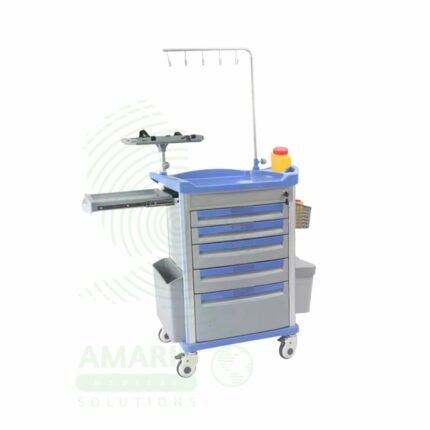
An ABS Trolley Crash Cart is a mobile, durable resuscitation station constructed from impact-resistant ABS plastic, designed for the immediate management of cardiac arrest and medical emergencies. It consolidates and organizes all essential equipment—including a defibrillator, emergency medications, airway management tools, and IV supplies—into a standardized, rapidly deployable unit following ACLS/PALS protocols. Its primary function is to eliminate treatment delays by delivering a complete set of resources directly to the patient's bedside. Rigorous daily checks and strict restocking protocols ensure it is always in a state of immediate readiness, making it a critical component of hospital safety infrastructure.

Alcohol Swabs
Alcohol Swabs are sterile, single-use, individually packaged pads saturated with 70% isopropyl alcohol, the standard concentration for optimal bactericidal and virucidal activity. They are the fundamental device for skin antisepsis prior to injections, venipuncture, intravenous cannulation, and minor surgical procedures, and for disinfection of vial tops and intravenous injection ports. Clinical efficacy requires a minimum 30-second application with mechanical friction followed by complete air drying (30 seconds) before skin puncture. Alcohol is rapidly bactericidal against vegetative Gram-positive and Gram-negative bacteria, tuberculocidal, fungicidal, and virucidal against enveloped viruses, but ineffective against bacterial spores and non-enveloped viruses. Critical safety precautions include avoidance of mucous membranes, strict single-use protocol, awareness of flammability (keep away from ignition sources), and absolute requirement for complete drying to prevent injection site pain and medication inactivation. Latex-free and available in various sizes.
Aluminium First Aid Kit For Ambulance
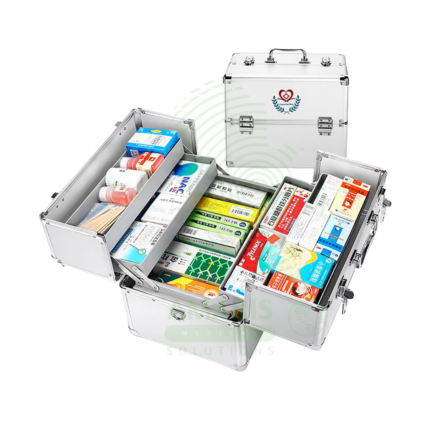
An Aluminium First Aid Kit for Ambulance is a heavy-duty, weather-resistant storage case specifically designed for organizing, protecting, and securing medical supplies in emergency medical service vehicles. Constructed from 1.2-2.0 mm aluminium alloy with reinforced corners, durable latches, and rubber gaskets (IP54-IP67 rated), these cases protect contents from vibration, impact, moisture, and temperature extremes during emergency response. Available in various configurations including single compartment, multi-drawer, and clear-lid models with customizable interior dividers, elastic straps, and pouches. Designed to meet ambulance equipment mounting standards (KKK-A-1822, NFPA 1917, CEN 1789) with proper installation to withstand collision forces. Primary clinical applications include organized storage of airway management devices, bleeding control supplies, wound care materials, diagnostic equipment, emergency medications, IV supplies, splinting equipment, PPE, and obstetric supplies for BLS, ALS, and CCT ambulance services. Critical safety considerations include proper vehicle mounting to prevent projectile hazards, secure latching during transport, regular inventory management, expiration date monitoring, and decontamination after biohazard exposure. Essential equipment for organized, efficient, and safe emergency medical response.
Ambulance Stretcher Trolley
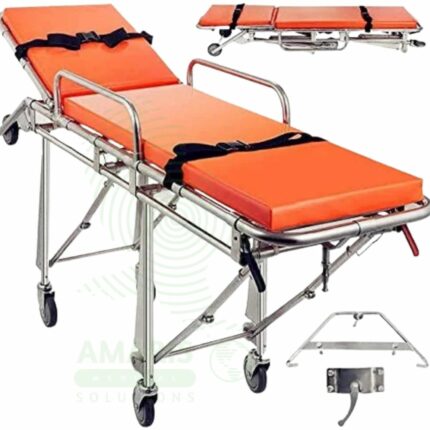
An Ambulance Stretcher Trolley is a heavy-duty, purpose-built mobile cot designed for the demanding environment of emergency medical services. Its core functions are the safe extrication of patients from ground level, their secure restraint during road transport, and serving as a stable platform for pre-hospital critical care. Key distinguishing features include a robust retractable undercarriage for ambulance loading, a wide height adjustment range, large all-terrain wheels, an integrated crash-tested patient restraint system, and positive locking mechanisms for ambulance mounting. It is engineered to withstand physical stress, ensure patient safety during vehicle movement, and comply with specific ambulance equipment standards, making it the fundamental patient-handling tool for paramedics and EMTs.
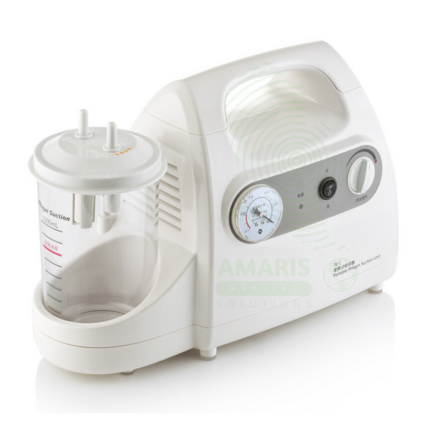
Electric Suction Machine
An Electric Suction Machine is a portable, electrically-powered medical device that generates vacuum pressure to remove fluids and secretions from a patient's airway, surgical site, or wound. It is a critical tool for maintaining a patent airway in emergency, surgical, post-operative, and chronic home care settings. The unit consists of a vacuum pump, a disposable collection canister with overflow protection, connecting tubing, and patient-end accessories. Key performance features include adjustable suction pressure, adequate airflow, and often battery backup for reliability. Strict adherence to pressure settings, suction duration, and single-use disposable components is essential for patient safety and infection control.
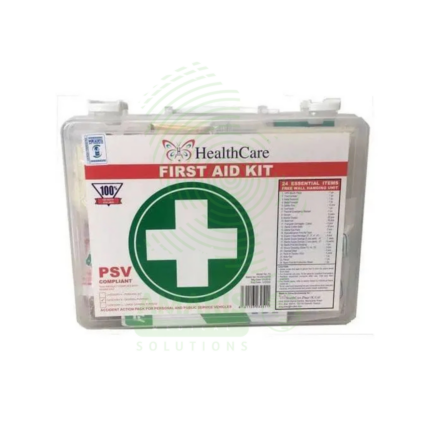
First Aid Kit
A First Aid Kit is an organized collection of medical supplies and equipment for providing initial care in emergency situations, available in various sizes and configurations for home, workplace, vehicle, travel, and specialized applications. Kits range from personal pouches (0.5-2 L) to comprehensive workplace cabinets (5-35 L) with soft-sided bags, hard cases, or wall-mounted containers. Contents are typically organized to meet regional standards (ANSI/ISEA Z308.1, CSA Z1220, BS 8599, DIN 13157/13169) and include wound care supplies (bandages, gauze, tape), antiseptics, burn care, eye care, emergency items (CPR mask, cold packs, foil blanket), instruments (scissors, tweezers), and PPE (gloves). Class A kits provide minimum supplies for low-hazard workplaces; Class B kits offer expanded quantities for high-hazard environments. Primary clinical applications include immediate treatment of minor injuries (cuts, abrasions, burns, sprains), bleeding control, wound care, fracture immobilization, and emergency assessment. Essential safety equipment for every home, workplace, vehicle, and public facility, providing critical medical supplies until professional care arrives.