Dermatoscope and Magnifiers
 Diagnostic Kits
 Vital Signs Monitors
 Stethoscopes and Accessories
 Otoscopes, Ophthalmoscopes, and Retinoscopes
 Reflex Hammers and Neurological Tools
 Scales and Measuring Devices
 Spirometers and Pulmonary Function Tests
 Electrosurgical Units and Accessories
 Cutting Instruments
 Grasping and Holding Instruments
 Hemostatic Instruments
 Specialized Surgical Sets
 Single-Use Procedure Trays and Packs
 Surgical Drapes, Gowns, and Covers
 Tissue Unifying Instruments
 Radiation Protection
 X-Ray Machines and Accessories
 Ultrasound Systems and Probes
 MRI and CT Scanners
 Radiology Consumables
 Bone Densitometers
 Fluoroscopy Equipment
 Imaging Tables and Positioning Aids
 Microscopes and Accessories
 Centrifuges and Separators
 Analyzers
 Incubators and Ovens
 Pipettes, Dispensers, and Lab Glassware
 Refrigerators, Freezers, and Storage Units
 Lab Consumables
 Sterilizers and Autoclaves for Lab Use
 Multi-Parameter Monitors
 Ventilators and Respiratory Support Devices
 Defibrillators and AEDs
 Infusion Pumps and IV Systems
 Patient Warmers and Cooling Devices
 Central Monitoring Stations
 Accessories
 Anesthesia Machines and Workstations
 Oxygen Concentrators and Delivery Systems
 Nebulizers and Inhalers
 CPAP/BiPAP Machines
 Airway Management
 Anesthesia Masks, Circuits, and Bags
 Humidifiers and Heaters
 Respiratory Therapy Accessories
 First Aid Kits and Cabinets
 Emergency Resuscitation Equipment
 Trauma Supplies
 Emergency Carts and Crash Carts
 Burn Care Products
 Bleeding Control
 Automated External Defibrillators (AEDs)
 Transport and Evacuation
 Wheelchairs and Accessories
 Walkers, Crutches, and Canes
 Prosthetics and Orthotics
 Physical Therapy Equipment
 Transfer Devices
 Bathroom Safety
 Orthopedic Traction and Tables
 Hot/Cold Therapy Packs and Units
 Beds and Mattresses
 Chairs and Stools
 Tables
 Cabinets and Storage
 Privacy Screens & Curtains
 Stands and Racks
 Linens and Textiles
 Lighting
 Autoclaves and Sterilizers
 Ultrasonic Cleaners
 Disinfectant Solutions and Wipes
 Sterilization Pouches, Wraps, and Indicators
 Instrument Trays and Containers
 UV and Ozone Disinfection Devices
 Washer Disinfectors
 Wound Care
 Gloves
 Masks and Respirators
 Catheters and Tubing
 Swabs, Applicators, and Sponges
 Incontinence Products
 Personal Protective Equipment (PPE)
 Dental Chairs and Units
 Handpieces and Burs
 Instruments
 Consumables
 Sterilization for Dental Use
 Orthodontic Supplies
 Endodontic Tools
 Slit Lamps and Tonometers
 Lensometers and Phoropters
 Ophthalmic Surgical Instruments
 Eyewear Frames and Lenses
 Contact Lens Supplies
 Vision Testing Charts and Devices
 Eye Care Consumables
 Laser Systems for Eye Care
 ENT Exam Chairs and Tables
 Endoscopes
 Audiometers and Hearing Tests
 ENT Instruments
 Nasal and Throat Packs
 Hearing Aids and Accessories
 Otology Supplies
 Fetal Dopplers and Monitors
 Delivery Beds and Tables
 Gynecological Instruments
 Neonatal Incubators and Warmers
 Breast Pumps and Accessories
 Contraceptive Devices
 Maternity Supports and Pads
 Neonatal Consumables
 Cystoscopes and Urethroscopes
 Dialysis Machines and Supplies
 Urological Catheters and Bags
 Lithotripters
 Prostate Treatment Devices
 Urinary Incontinence Products
 Kidney Stone Management Tools
 Consumables & Disposables
 EEG and EMG Machines
 Neurosurgical Instruments
 Nerve Stimulators
 Headrests and Positioning Aids
 Lumbar Puncture Kits
 Seizure Monitoring Devices
 Consumables
 Rehabilitation for Neurological Conditions
 ECG Machines and Accessories
 Holter Monitors
 Stress Test Systems
 Pacemakers and Defibrillator Accessories
 Vascular Access Devices
 Cardiac Catheters and Guidewires
 Blood Flow Meters
 Consumables
 Orthopedic Instruments
 Casts, Splints, and Padding
 Joint Replacement Supplies
 Prosthetic Limbs and Components
 Bone Grafts and Substitutes
 Traction Devices
 Orthopedic Braces and Supports
 Rehabilitation Aids for Orthopedics
 Home Oxygen Therapy
 Hospital Beds for Home Use
 Mobility Aids
 Bathroom and Daily Living Aids
 Wound Care for Home
 Monitoring Devices
 Enteral Feeding Pumps and Tubes
 Hand Sanitizers and Dispensers
 Face Shields and Goggles
 Isolation Gowns and Suits
 Biohazard Waste Containers
 Air Purifiers and HEPA Filters
 Surface Disinfectants
 Sharps Containers
 Protective Barriers
 Cardiovascular & Endurance Training
 Strength Training & Weightlifting
 Functional Training & Core Conditioning
 Physical Therapy & Rehabilitation
 Sports & Outdoor Recreation
 Gym Flooring & Facility Equipment
 Fitness Monitoring & Accessories
 Kids & Novelties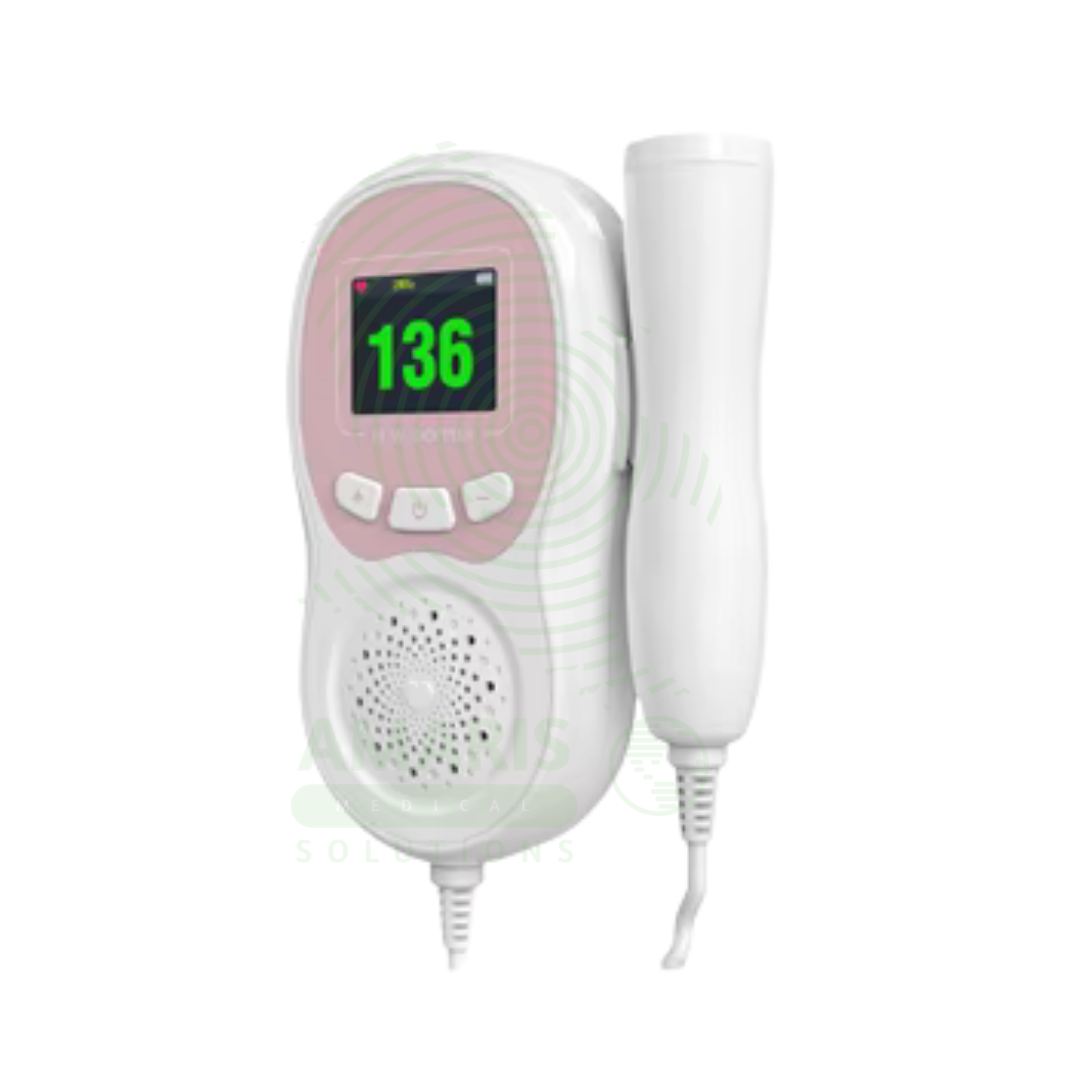
Fetoheart Sonic Aid Doppler (home use)
$1.00
WhatsApp Order
A Fetoheart Sonic Aid (Doppler) for Home Use is a consumer-grade, FDA-cleared handheld ultrasound device (2-3 MHz) that enables expectant parents to detect and listen to fetal heart sounds in the home environment from approximately 16 weeks gestation. Features include compact lightweight design (100-250g), simple controls, digital heart rate display (50-210 bpm), built-in speaker, headphone jack, and AA battery or USB rechargeable power. Continuous wave Doppler technology provides real-time audio of fetal heart sounds for maternal reassurance and bonding. Primary applications include maternal reassurance and emotional bonding between prenatal visits, confirmation of fetal activity, supplemental monitoring for high-risk pregnancies under provider guidance, and family involvement in the pregnancy experience. Critical safety information includes FDA-mandated labeling that device is for reassurance only (not medical diagnosis), optimal use after 16 weeks, limitation to 5–10-minute sessions, recognition that inability to detect heartbeat may not indicate a problem, and requirement to continue regular prenatal care. Not a substitute for professional medical evaluation; seek immediate care for bleeding, pain, fluid leakage, or decreased fetal movement.
Description
Fetoheart Sonic Aid Doppler (home use)
PRIMARY CLINICAL & DIAGNOSTIC USES
1. Maternal Reassurance and Bonding:
-
Primary Use: Enables expectant parents to listen to fetal heart sounds in the home environment, providing emotional reassurance and enhancing prenatal bonding between parents and unborn baby between scheduled prenatal visits.
-
How it helps: Brings the miracle of hearing baby’s heartbeat from the doctor’s office into the comfort of home, strengthening the emotional connection between parents and their unborn child throughout the pregnancy journey.
2. Fetal Movement Confirmation:
-
Primary Use: Allows mothers to verify fetal cardiac activity when experiencing decreased fetal movement or other concerns, potentially reducing unnecessary emergency department visits for false alarms.
-
How it helps: Offers peace of mind during moments of worry, helping parents distinguish between normal variations in fetal movement and situations that genuinely require medical attention.
3. High-Risk Pregnancy Supplemental Monitoring:
-
Primary Use: Provides adjunctive home monitoring for patients with history of miscarriage, stillbirth, or high-risk conditions under the guidance of their healthcare provider, allowing more frequent fetal well-being checks.
-
How it helps: Gives parents with high-risk pregnancies an extra layer of reassurance between doctor visits, helping them feel more in control and connected to their baby during anxious times.
4. Twins and Multiple Gestation:
-
Primary Use: Parents expecting multiples can identify and monitor individual fetal heart rates with practice, providing reassurance for each fetus.
-
How it helps: Allows parents of twins or triplets to bond with each baby individually, hearing each unique heartbeat and reassuring themselves that every child is thriving.
5. Later Gestation Positioning Aid:
-
Primary Use: Helps parents identify fetal presentation (cephalic vs. breech) by locating point of maximal intensity of heart sounds, under provider guidance.
-
How it helps: Involves parents in preparing for birth by helping them understand how their baby is positioned, making the experience more engaging and educational.
6. Sibling and Family Involvement:
-
Primary Use: Allows older siblings and family members to participate in the pregnancy experience by listening to the baby’s heartbeat, promoting family bonding.
-
How it helps: Creates precious family moments where brothers, sisters, and grandparents can connect with the newest family member before they are even born, building excitement and anticipation.
7. Recording and Sharing:
-
Primary Use: Some home Dopplers include recording capabilities, allowing parents to capture fetal heart sounds for sharing with family or bringing to prenatal appointments.
-
How it helps: Creates a treasured keepsake of the pregnancy and allows parents to share the joy with loved ones who couldn’t be there in person.
SECONDARY & SUPPORTIVE USES
1. Maternal Anxiety Reduction: Provides a tool for anxious mothers to check on their baby between appointments, potentially reducing stress and anxiety during pregnancy by offering reassurance on demand.
2. Birth Preparation: Helps parents become familiar with fetal heart sounds in preparation for labor and delivery monitoring, making the hospital experience less intimidating.
3. Memory Keepsake: Recorded heart sounds can serve as a cherished memory of the pregnancy, preserving the first sounds of the baby’s life for years to come.
4. Remote Family Sharing: Enables grandparents and distant family members to participate in the pregnancy experience via recorded or live audio sharing, bringing far-flung families together.
KEY PRODUCT FEATURES
1. BASIC IDENTIFICATION ATTRIBUTES
-
Device Type: Consumer-grade handheld Doppler ultrasound device for home detection of fetal heart sounds.
-
Common Names: Home Fetal Doppler, Personal Fetal Doppler, Baby Heartbeat Monitor, Prenatal Doppler, Home Doptone.
-
Components:
-
Main Unit: Compact, lightweight handheld console with simple controls.
-
Probe/Transducer: 2-3 MHz waterproof probe with integrated ultrasound crystal.
-
Display: Basic LCD showing fetal heart rate (numeric) and battery status.
-
Speaker: Built-in speaker for audible heart sounds; headphone jack included.
-
Power Source: AA batteries or rechargeable lithium-ion via USB.
-
-
Probe Frequencies: 2 MHz (deeper penetration, later gestation), 3 MHz (better resolution, earlier gestation) - some models offer switchable frequencies.
-
Display Range: 50-210 bpm typical.
-
Detection Capability: Typically reliable after 16-20 weeks gestation; earlier detection possible but less consistent.
2. TECHNICAL & PERFORMANCE PROPERTIES
-
Ultrasound Technology: Continuous wave Doppler detecting motion of fetal heart structures.
-
Output Display: Digital numeric display of fetal heart rate (averaged over 3-6 beats).
-
Audio Output: Amplified heart sounds through speaker; adjustable volume.
-
Auto-Correlation: Basic signal processing to reduce maternal vessel noise.
-
Depth Penetration: Up to 10-15 cm depending on frequency and tissue characteristics.
-
Detection Threshold: Optimal after 16-20 weeks; may be difficult in early gestation, maternal obesity, or with anterior placenta.
-
Battery Life: 2-4 hours continuous use depending on model.
-
Ultrasound Gel Required: Must use with appropriate coupling gel; some models include gel packets.
3. PHYSICAL & OPERATIONAL PROPERTIES
-
Unit Dimensions: 10-15 cm × 5-7 cm × 2-4 cm (4-6 × 2-3 × 1-1.5 inches).
-
Weight: 100-250 grams (3.5-9 ounces) with batteries.
-
Probe: 8-12 cm length, 2-3 cm diameter; with attached cable (1-1.5 meters).
-
Display: Small LCD (2-3 cm) with heart rate numerals.
-
Controls: Simple on/off, volume, and sometimes frequency switch.
-
Speaker: Small built-in speaker; headphone jack for private listening.
-
Probe Storage: Some models have built-in probe holder; others store separately.
-
Packaging: Consumer-friendly retail packaging; often includes gel, batteries, and instructions.
-
Color Options: Pink, blue, white, or neutral colors for consumer appeal.
4. SAFETY & COMPLIANCE ATTRIBUTES
-
Regulatory Status: FDA-cleared for home use; Class II medical device requiring 510(k) clearance with specific indications for over-the-counter use.
-
Intended Use: For detection of fetal heart rate in the home environment by expectant parents.
-
Ultrasound Safety: Output within FDA limits for diagnostic fetal use; mechanical index (MI) < 1.9, thermal index (TI) < 1.0.
-
ALARA Principle: Device operates at lowest feasible output; fixed settings prevent user from increasing power.
-
Electrical Safety: Compliant with IEC 60601-1 for medical electrical equipment; low-voltage battery operation.
-
Probe Disinfection: Consumer use only; probe cleaning instructions provided.
-
User Manual: Comprehensive instructions including:
-
Gestational age recommendations (typically 16+ weeks).
-
Explanation that device is for reassurance, not medical diagnosis.
-
Instructions to contact provider with concerns, not rely on device.
-
Limitations and potential for false reassurance or unnecessary anxiety.
-
-
FDA Labeling Requirements: Must include warnings that device is not a substitute for professional medical care and that inability to detect heartbeat does not necessarily indicate a problem.
5. STORAGE & HANDLING ATTRIBUTES
-
Storage: Store in clean, dry environment at room temperature; protect from impact.
-
Battery Maintenance: Remove batteries if storing long-term; recharge rechargeables per manufacturer.
-
Probe Care: Clean probe with soft, damp cloth after use; do not immerse; store with protective cap.
-
Cleaning: Wipe unit with soft, damp cloth; do not use harsh chemicals.
-
Gel: Use only ultrasound gel; do not use lotions, oils, or other substitutes.
-
Inspection: Before each use, verify unit function and probe condition.
6. LABORATORY & CLINICAL APPLICATIONS
-
Primary Application: Home-based fetal heart rate detection for maternal reassurance and bonding between scheduled prenatal visits.
-
Optimal Use Guidelines:
-
Gestational Age: 16+ weeks for consistent detection.
-
Timing: After meals when baby may be more active.
-
Position: Semi-reclined with full bladder (early gestation) or empty bladder (later gestation).
-
Technique: Apply gel, start suprapubically, slowly sweep until heartbeat identified.
-
Duration: Limit sessions to 5-10 minutes.
-
-
What to Expect: Fetal heart rate typically 110-160 bpm; sound quality varies with position and gestation.
-
Limitations:
-
May not detect heartbeat in early gestation (pre-16 weeks).
-
Difficult in maternal obesity, anterior placenta, or with retroverted uterus.
-
Cannot detect fetal distress or abnormalities.
-
Not a substitute for prenatal care or medical evaluation.
-
False reassurance possible; unnecessary anxiety also possible.
-
SAFETY HANDLING PRECAUTIONS
1. SAFETY PRECAUTIONS
-
Not a Medical Device for Diagnosis: This device is for maternal reassurance only; it does not diagnose fetal distress, hypoxia, or other complications. Always consult healthcare provider with concerns.
-
Gestational Age Limitation: Do not use before recommended gestational age (typically 16 weeks); inability to detect heartbeat earlier causes unnecessary anxiety.
-
Ultrasound Safety: Although safe for intermittent use, prolonged or frequent use is not recommended. Limit sessions to 5-10 minutes.
-
Gel Use: Always use appropriate ultrasound gel; never use with dry probe.
-
Probe Pressure: Use gentle pressure only; excessive pressure may cause discomfort.
-
Do Not Panic: Inability to detect heartbeat may be due to fetal position, maternal body habitus, or gestational age - not necessarily a problem. Contact provider if concerned.
-
Continue Prenatal Care: This device does not replace regular prenatal visits, fetal movement counting, or other recommended monitoring.
-
Emergency Symptoms: Do not use device if experiencing vaginal bleeding, severe pain, fluid leakage, or decreased fetal movement - seek immediate medical attention.
-
Keep Away from Children: Small parts pose choking hazard; device not for use by children.
-
Probe Cleaning: Clean probe after each use to prevent gel residue buildup.
2. FIRST AID MEASURES
-
Inability to Detect Heartbeat: Wait and try again later at different times of day; if persistent inability after several attempts and beyond 20-24 weeks, contact a healthcare provider.
-
Gel in Eyes: Flush with copious water; seek medical attention if irritation persists.
-
Device Malfunction: Stop use; contact manufacturer for support or replacement.
-
Maternal Discomfort: Stop use; reposition; reduce probe pressure.
3. FIRE FIGHTING MEASURES
-
Flammability: Plastic casing and components are combustible.
-
Extinguishing Media: For electrical fire, use CO₂ or dry chemical (Class C) extinguisher.
-
Battery Fire: Damaged lithium battery may ignite; use Class D extinguisher or sand.
Related products
Delivery Set
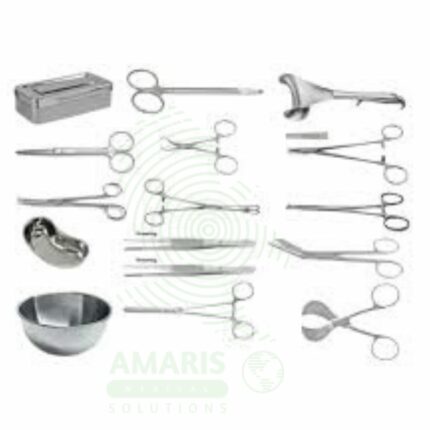
A Delivery Set is a sterile instrument tray containing the instruments necessary for attending vaginal deliveries, including episiotomy, cord clamping and cutting, placental delivery, and perineal repair. Essential for labor and delivery units, birthing centers, and emergency obstetric services, it ensures that all required instruments are organized, sterile, and immediately available during the delivery process. Proper sterile technique, instrument counting, and placental inspection are critical for safe maternal and neonatal outcomes.

Evacuation Set
An Evacuation Set is a sterile instrument tray containing the instruments necessary for uterine evacuation procedures, including dilation and curettage, suction aspiration, and management of incomplete miscarriage. The set includes cervical dilators, curettes, suction cannulas, ovum forceps, and supporting instruments. Used in obstetrics and gynecology for therapeutic abortion, management of pregnancy loss, retained products of conception, and diagnostic curettage, it ensures that all required instruments are sterile, organized, and immediately available for safe and effective uterine evacuation procedures.
Infant radiant warmer (resuscitaire)
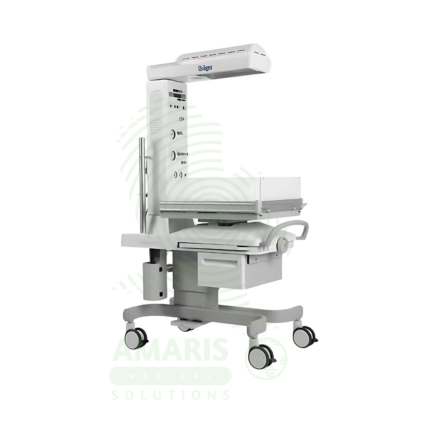
An Infant Radiant Warmer (Resuscitaire) is an open-bassinet, overhead radiant heating system designed for neonatal thermoregulation and resuscitation. It provides servo-controlled infrared warmth to maintain infant body temperature during the critical transition from intrauterine to extrauterine life. The integrated resuscitation platform features built-in oxygen and air sources, suction apparatus, cardiorespiratory monitoring, and storage for resuscitation equipment, ensuring all necessary tools are immediately accessible during newborn stabilization. Essential equipment for every delivery room and neonatal intensive care unit, the radiant warmer supports thermoregulation, resuscitation, and ongoing care while allowing unrestricted access to the infant. Proper temperature probe placement, pre-warming, and alarm response are critical for safe operation.
IUD Removal Set
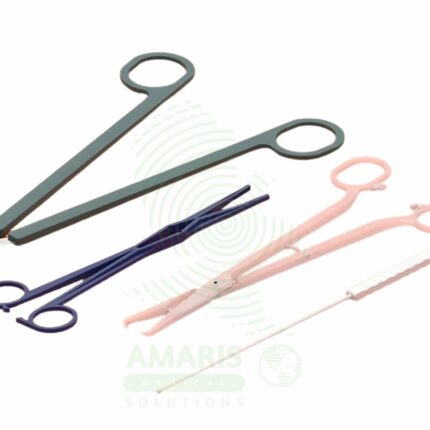
An IUD Removal Set is a sterile instrument tray containing instruments for the safe removal of intrauterine contraceptive devices. The set includes vaginal speculum, ring forceps, tenaculum, uterine sound, IUD retrieval instruments, and cervical dilators for managing routine and complex IUD removals. Used in gynecology clinics, family planning centers, and office-based procedure suites, it supports safe removal of copper and hormonal IUDs, management of non-visible strings, and retrieval of embedded or fragmented devices. Proper technique and careful handling are essential for patient safety and successful IUD removal.
Neonatal Jaundice Treatment Device
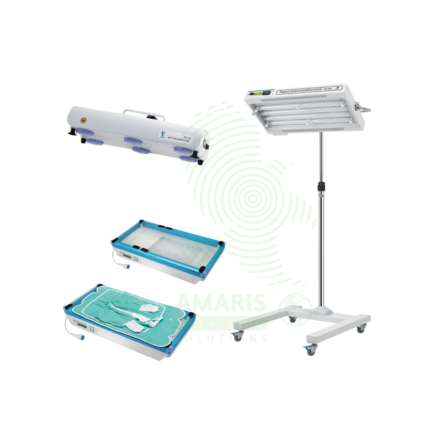
A Neonatal Jaundice Treatment Device (phototherapy unit) is a Class II medical device that delivers therapeutic blue light (450-470 nm) to treat hyperbilirubinemia in newborns, preventing bilirubin-induced neurological damage (kernicterus). Available as overhead units (mobile stands with LED or fluorescent lamps), fiberoptic systems (Biliblanket) with illuminated pads placed against the infant's skin, and combination systems for intensive therapy. Irradiance ranges from 10-50+ µW/cm²/nm at treatment distance. LED units offer specific wavelength output, minimal heat, long life (10,000-50,000 hours), and energy efficiency. Treatment indications follow AAP hour-specific nomograms based on gestational age, birth weight, postnatal age, and risk factors. Essential safety requirements include opaque eye shields to protect neonatal retinas, temperature monitoring to prevent hyperthermia, hydration maintenance, and regular irradiance verification. Used in hospital NICUs, newborn nurseries, and (select devices) home care settings for mild jaundice. Critical for preventing permanent neurological sequelae of untreated severe neonatal jaundice.
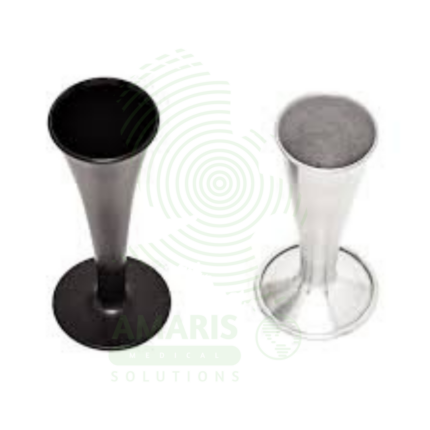
Pinnard Fetoscope (plastic/metal)
A Pinnard Fetoscope (Pinard horn) is a mechanical acoustic horn (150-200 mm length, 40-60 mm bell) for auscultation of fetal heart sounds through the maternal abdomen, available in traditional metal (stainless steel/chrome-plated, 150-300g, autoclavable, durable, requires warming) and modern plastic (medical-grade polymer, 30-80g, lightweight, unbreakable, economical, not autoclavable) versions. The flared bell collects fetal heart sounds, concentrating them through the tapered horn to the single earpiece for mechanical amplification (10-20 dB). Primary clinical applications include intermittent fetal heart rate monitoring during prenatal care and labor in low-risk pregnancies, confirming fetal viability, determining fetal presentation and position through point of maximal intensity, monitoring multiple gestations, and providing non-interventive fetal assessment in natural childbirth, home birth, and resource-limited settings. Class I medical device. Requires significant practitioner training and experience; reliable after 18-20 weeks gestation; limited by maternal obesity, anterior placenta, and ambient noise. Critical safety considerations include infection control (metal autoclavable, plastic chemical disinfection only), gentle abdominal pressure, maternal positioning, and recognition that Pinnard is not a replacement for electronic monitoring in high-risk pregnancies.
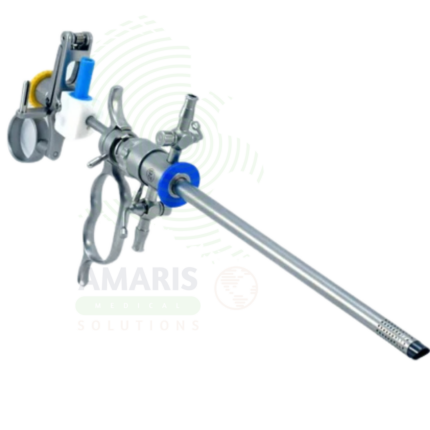
Resectoscope
A Resectoscope is a specialized endoscopic instrument used for transurethral resection of the prostate, bladder tumors, and endometrium. Combining a telescope, working element, and resecting loop, it enables precise cutting and coagulation of tissue under direct visualization. Essential in urology for benign prostatic hyperplasia and bladder cancer treatment, and in gynecology for endometrial resection, it provides minimally invasive treatment with rapid recovery and preservation of organ function.