Dermatoscope and Magnifiers
 Diagnostic Kits
 Vital Signs Monitors
 Stethoscopes and Accessories
 Otoscopes, Ophthalmoscopes, and Retinoscopes
 Reflex Hammers and Neurological Tools
 Scales and Measuring Devices
 Spirometers and Pulmonary Function Tests
 Electrosurgical Units and Accessories
 Cutting Instruments
 Grasping and Holding Instruments
 Hemostatic Instruments
 Specialized Surgical Sets
 Single-Use Procedure Trays and Packs
 Surgical Drapes, Gowns, and Covers
 Tissue Unifying Instruments
 Radiation Protection
 X-Ray Machines and Accessories
 Ultrasound Systems and Probes
 MRI and CT Scanners
 Radiology Consumables
 Bone Densitometers
 Fluoroscopy Equipment
 Imaging Tables and Positioning Aids
 Microscopes and Accessories
 Centrifuges and Separators
 Analyzers
 Incubators and Ovens
 Pipettes, Dispensers, and Lab Glassware
 Refrigerators, Freezers, and Storage Units
 Lab Consumables
 Sterilizers and Autoclaves for Lab Use
 Multi-Parameter Monitors
 Ventilators and Respiratory Support Devices
 Defibrillators and AEDs
 Infusion Pumps and IV Systems
 Patient Warmers and Cooling Devices
 Central Monitoring Stations
 Accessories
 Anesthesia Machines and Workstations
 Oxygen Concentrators and Delivery Systems
 Nebulizers and Inhalers
 CPAP/BiPAP Machines
 Airway Management
 Anesthesia Masks, Circuits, and Bags
 Humidifiers and Heaters
 Respiratory Therapy Accessories
 First Aid Kits and Cabinets
 Emergency Resuscitation Equipment
 Trauma Supplies
 Emergency Carts and Crash Carts
 Burn Care Products
 Bleeding Control
 Automated External Defibrillators (AEDs)
 Transport and Evacuation
 Wheelchairs and Accessories
 Walkers, Crutches, and Canes
 Prosthetics and Orthotics
 Physical Therapy Equipment
 Transfer Devices
 Bathroom Safety
 Orthopedic Traction and Tables
 Hot/Cold Therapy Packs and Units
 Beds and Mattresses
 Chairs and Stools
 Tables
 Cabinets and Storage
 Privacy Screens & Curtains
 Stands and Racks
 Linens and Textiles
 Lighting
 Autoclaves and Sterilizers
 Ultrasonic Cleaners
 Disinfectant Solutions and Wipes
 Sterilization Pouches, Wraps, and Indicators
 Instrument Trays and Containers
 UV and Ozone Disinfection Devices
 Washer Disinfectors
 Wound Care
 Gloves
 Masks and Respirators
 Catheters and Tubing
 Swabs, Applicators, and Sponges
 Incontinence Products
 Personal Protective Equipment (PPE)
 Dental Chairs and Units
 Handpieces and Burs
 Instruments
 Consumables
 Sterilization for Dental Use
 Orthodontic Supplies
 Endodontic Tools
 Slit Lamps and Tonometers
 Lensometers and Phoropters
 Ophthalmic Surgical Instruments
 Eyewear Frames and Lenses
 Contact Lens Supplies
 Vision Testing Charts and Devices
 Eye Care Consumables
 Laser Systems for Eye Care
 ENT Exam Chairs and Tables
 Endoscopes
 Audiometers and Hearing Tests
 ENT Instruments
 Nasal and Throat Packs
 Hearing Aids and Accessories
 Otology Supplies
 Fetal Dopplers and Monitors
 Delivery Beds and Tables
 Gynecological Instruments
 Neonatal Incubators and Warmers
 Breast Pumps and Accessories
 Contraceptive Devices
 Maternity Supports and Pads
 Neonatal Consumables
 Cystoscopes and Urethroscopes
 Dialysis Machines and Supplies
 Urological Catheters and Bags
 Lithotripters
 Prostate Treatment Devices
 Urinary Incontinence Products
 Kidney Stone Management Tools
 Consumables & Disposables
 EEG and EMG Machines
 Neurosurgical Instruments
 Nerve Stimulators
 Headrests and Positioning Aids
 Lumbar Puncture Kits
 Seizure Monitoring Devices
 Consumables
 Rehabilitation for Neurological Conditions
 ECG Machines and Accessories
 Holter Monitors
 Stress Test Systems
 Pacemakers and Defibrillator Accessories
 Vascular Access Devices
 Cardiac Catheters and Guidewires
 Blood Flow Meters
 Consumables
 Orthopedic Instruments
 Casts, Splints, and Padding
 Joint Replacement Supplies
 Prosthetic Limbs and Components
 Bone Grafts and Substitutes
 Traction Devices
 Orthopedic Braces and Supports
 Rehabilitation Aids for Orthopedics
 Home Oxygen Therapy
 Hospital Beds for Home Use
 Mobility Aids
 Bathroom and Daily Living Aids
 Wound Care for Home
 Monitoring Devices
 Enteral Feeding Pumps and Tubes
 Hand Sanitizers and Dispensers
 Face Shields and Goggles
 Isolation Gowns and Suits
 Biohazard Waste Containers
 Air Purifiers and HEPA Filters
 Surface Disinfectants
 Sharps Containers
 Protective Barriers
 Cardiovascular & Endurance Training
 Strength Training & Weightlifting
 Functional Training & Core Conditioning
 Physical Therapy & Rehabilitation
 Sports & Outdoor Recreation
 Gym Flooring & Facility Equipment
 Fitness Monitoring & Accessories
 Kids & Novelties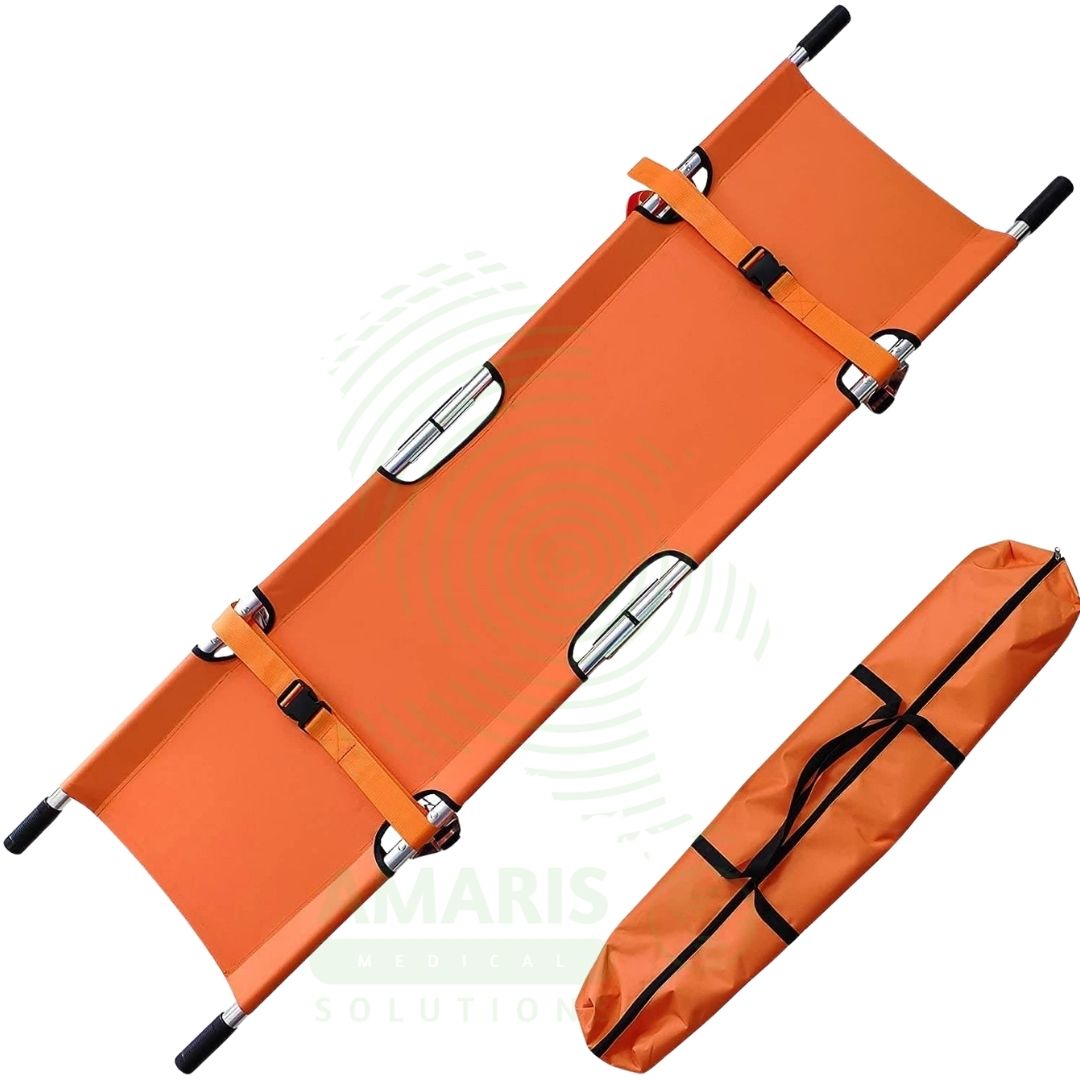
Foldable Stretcher
$1.00
WhatsApp Order
A Foldable Stretcher is a portable, manual patient-carrying device consisting of a hinged metal frame and a fabric sling, designed for compact storage and rapid deployment. Its primary use is for evacuating patients from confined spaces, rough terrain, or disaster scenes where wheeled trolleys cannot access. It is a fundamental piece of equipment for emergency medical services, search and rescue teams, industrial first aid, and mass casualty management, enabling a team of bearers to safely transport a patient to a point where advanced care or wheeled transport is available. Its key advantage is its minimal storage footprint, making it an essential logistical tool for any emergency response system.
Description
Foldable Stretcher
PRIMARY CLINICAL & DIAGNOSTIC USES
1. Emergency Patient Evacuation in Confined or Inaccessible Areas
-
Definitive Use: Enables rapid extrication and movement of patients through narrow passages, tight spaces, or rough terrain where a rigid-frame stretcher cannot pass, including evacuation from cramped residential rooms, basements, construction sites, shipboard compartments, and aircraft aisles.
-
How it helps: For the first responder, firefighter, or search and rescue technician, the foldable stretcher transforms an impossible evacuation into a manageable one—collapsing down to pass through a narrow window or stairwell, then expanding to safely support the patient once clear. For the injured person trapped in a collapsed building, a wrecked vehicle, or a confined space, this stretcher’s ability to reach them where rigid equipment cannot means they can be extracted and brought to definitive care, rather than remaining inaccessible.
2. Mass Casualty Incident and Disaster Response Triage and Transport
-
Primary Use: Essential equipment for disaster bags and MCI trailers, with compact storage allowing for the deployment of dozens of units to establish field collection points, move multiple patients short distances in a casualty clearing station, and efficiently load patients into waiting ambulances.
-
How it helps: For the incident commander and triage officer managing a mass casualty event, having dozens of foldable stretchers pre-staged means that as patients are triaged, they can be moved to treatment areas and loading zones efficiently, without waiting for limited rigid stretchers to be cycled back. For the victims of a bus crash, building collapse, or terrorist attack, this rapid movement through the casualty collection process means they reach definitive care faster, improving survival.
3. Sports Medicine and Event Medical Standby
-
Primary Use: Used by sideline medical teams at sporting events, marathons, or concerts to quickly remove an injured athlete or spectator from the field of play or crowded area to a designated treatment tent or ambulance access point without requiring a full-size trolley to navigate crowds.
-
How it helps: For the athletic trainer and event medic, a foldable stretcher kept in a medical backpack means they can respond immediately when an athlete collapses on the field or a spectator falls in the stands—deploying the stretcher on-site and moving the patient through crowds that rigid equipment could not navigate. For the injured athlete or ill spectator, this rapid response means their emergency is addressed immediately, with extraction beginning seconds after they go down.
4. Search and Rescue Operations
-
Primary Use: A primary tool for wilderness SAR, mountain rescue, and technical rope rescue teams, with the ability to be carried by hand, compatibility with rescue litters and skeds, and suitability for packaging a patient for helicopter hoisting in remote or rugged environments.
-
How it helps: For the search and rescue team hiking miles into the wilderness or being lowered from a helicopter, the foldable stretcher’s compact storage and lightweight design means they can carry it to the patient rather than needing to bring the patient to the equipment. For the lost hiker with a broken ankle, the climber injured on a remote face, or the skier caught in an avalanche, this portability means rescue teams can reach them with the equipment needed for safe extraction.
SECONDARY & SUPPORTIVE USES
1. Routine In-Hospital Patient Moves in Restricted Spaces: Employed by hospital portering teams for moving stable, non-acute patients between beds in situations where a full-size patient trolley is impractical, such as within crowded multi-bed bays or through very narrow doorways. For the patient being transferred within an older facility with tight spaces, a foldable stretcher means their move happens smoothly, without the need for complicated maneuvering of oversized equipment.
2. Military and Tactical Field Medicine: Standard issue for combat medics and field hospitals due to portability, durability, and low storage footprint, used for casualty evacuation from the point of injury to a vehicle or treatment area. For the wounded soldier, having a foldable stretcher in the medic’s pack means extraction can begin immediately, without waiting for vehicles to reach the point of injury.
3. Industrial First Aid and Workplace Evacuation: Stored in industrial first aid rooms, factories, offshore platforms, and mining sites for emergency evacuation of an injured worker from hazardous or difficult-to-access locations. For the worker injured on an offshore platform or deep in a mine, a foldable stretcher stored nearby means rapid evacuation through confined passages to the surface and medical care.
4. Morgue and Mortuary Logistics: Used in temporary morgues, disaster mortuary operations, or hospital morgues for respectfully and efficiently moving deceased individuals when space is limited or higher-capacity equipment is unavailable. For the deceased and their families, respectful handling during difficult times is supported by equipment designed for dignity even in challenging circumstances.
5. Training and Drills for Emergency Responders: A fundamental tool for training firefighters, EMTs, and disaster response teams in patient packaging, lifting techniques, and confined space rescue scenarios. For the countless future patients who will be rescued by well-trained responders, every drill with a foldable stretcher builds the muscle memory and competence that saves lives.
KEY PRODUCT FEATURES
1. BASIC IDENTIFICATION ATTRIBUTES
-
Product Type: A portable, non-wheeled patient carrying device with a rigid or semi-rigid frame that can be folded or collapsed for compact storage.
-
Core Design: Typically consists of a rectangular frame made of tubular aluminum or steel, with a canvas, polyester, or vinyl sling stretched across it. Features folding hinges at the center and/or ends.
-
Key Components:
-
Frame: Two or four longitudinal poles with cross-braces and central hinges.
-
Carrying Sling: A durable fabric bed, often with reinforced webbing handles along the sides.
-
Handles: Multiple (typically 6-8) sturdy handles integrated into the sling or frame for balanced carrying by a team.
-
Restraint Straps: Simple torso and leg restraint straps to secure the patient during movement.
-
Carrying Bag/Storage Case: A dedicated bag for compact storage and transport.
-
2. TECHNICAL & PERFORMANCE PROPERTIES
-
Weight Capacity: Varies by model but typically ranges from 250 lbs to 400 lbs (113 kg to 181 kg). Heavy-duty rescue models can exceed this.
-
Frame Material: Anodized aluminum is standard for its light weight and corrosion resistance. Steel is used for heavier-duty, higher-capacity models.
-
Folded Dimensions: The primary feature, allowing it to be stored in a space as small as 36" x 12" x 6" (approx. 91 x 30 x 15 cm) or even smaller.
-
Deployment Speed: Can be unfolded and made ready for patient loading in under 30 seconds.
-
Load Distribution: Designed to be carried by 2 or 4 bearers, with handles positioned to distribute the patient's weight evenly.
3. PHYSICAL & OPERATIONAL PROPERTIES
-
Construction: Simple, mechanical design with minimal moving parts (hinges, locking pins). No wheels, hydraulics, or electrical components.
-
Patient Surface: A flexible fabric sling, which provides less support than a rigid surface but is essential for folding. May include a thin, removable pad for comfort and insulation.
-
Cleanability: The fabric sling can be wiped down or, in many cases, fully removed and machine-washed. The frame can be disinfected with standard cleaners.
4. SAFETY & COMPLIANCE ATTRIBUTES
-
Regulatory Status: Generally considered a Class I medical device.
-
Strength Testing: Should be tested to relevant standards for static load (e.g., EN 1865 for stretchers).
-
Handle Integrity: Handles and their anchor points must be robustly constructed to prevent failure during a carry, especially on uneven terrain or stairs.
5. STORAGE & HANDLING ATTRIBUTES
-
Storage: Stored folded in its dedicated bag or case, typically mounted on walls of emergency vehicles, in equipment closets, or in disaster response trailers.
-
Cleaning & Disinfection: Remove fabric sling if possible. Clean fabric with soap and water or a disinfectant solution; allow to dry completely before storage to prevent mildew. Wipe down frame with disinfectant. Never store wet.
-
Inspection: Regularly inspect for fabric tears, frayed stitching on handles and straps, corrosion on the frame, and proper function of hinge locks or pins.
6. LABORATORY & CLINICAL APPLICATIONS
-
Primary Application: A logistical and evacuation tool, not a treatment or diagnostic platform. Its value lies in its portability and ability to bridge the gap between a patient in a difficult location and a wheeled transport device (ambulance stretcher, hospital trolley).
SAFETY HANDLING PRECAUTIONS
1. SAFETY PRECAUTIONS
-
Team Lift Required: A foldable stretcher must always be carried by an adequate number of trained personnel (minimum 2 for a light patient on level ground, 4 for safer handling, especially on stairs or rough ground). Never attempt a one-person carry.
-
Patient Securement (CRITICAL): Always use the provided restraint straps across the patient's torso and thighs before lifting. A patient can easily slide off the flexible surface if not secured.
-
Terrain Assessment: Carefully assess the route before moving. Plan for obstacles, stairs, and uneven ground. Use spotters in difficult sections.
-
Lifting Technique: All bearers must use proper biomechanical lifting techniques: keep backs straight, lift with legs, and communicate clearly during the lift and movement.
-
Compatibility with Care: Be aware that the flexible sling provides no spinal support. For patients with suspected spinal injury, the stretcher must be used in conjunction with full spinal immobilization (e.g., patient secured to a longboard, which is then placed on the stretcher).
2. FIRST AID MEASURES
-
Stretcher or Handle Failure: If a handle tears or a frame hinge fails during a carry, the team should slowly and carefully lower the stretcher to the ground. Transfer the patient to a backup stretcher or use alternative manual carries (e.g., blanket carry) if necessary.
-
Bearer Injury: If a bearer is injured, safely lower the stretcher. The priority is to stabilize the situation without dropping the patient. Call for additional personnel to take over.
3. FIRE FIGHTING MEASURES
-
Flammability: Fabric slings and padding are combustible.
-
Extinguishing Media: Use water, foam, or CO₂. Remove the patient from the stretcher as the primary action if it is involved in fire.
Related products
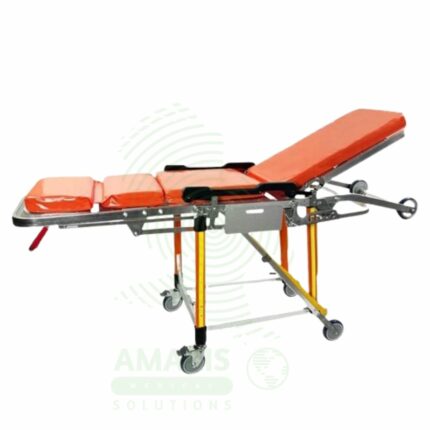
Ambulance Stretcher
An Ambulance Stretcher is a heavy-duty, purpose-built wheeled cot engineered exclusively for the demands of emergency medical services. Its core functions are the safe, low-lift extrication of patients from ground level at an emergency scene, their secure, crash-tested restraint during road transport, and provision of a stable platform for advanced pre-hospital care. Distinctive features include a robust retractable undercarriage for ambulance loading, a wide hydraulic height adjustment range, large all-terrain wheels, an integrated crash-rated patient restraint system, and a positive locking mechanism for secure ambulance mounting. It is the fundamental patient-care and transport tool for paramedics, designed to withstand extreme physical stresses and comply with stringent vehicle safety standards.
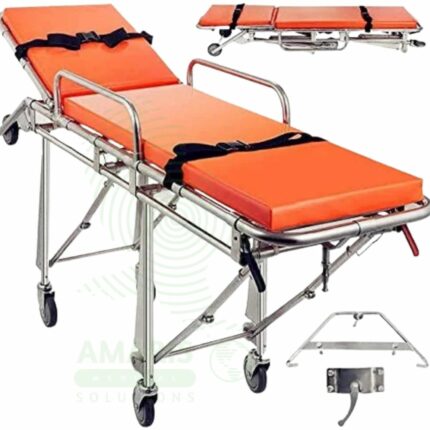
Ambulance Stretcher Trolley
An Ambulance Stretcher Trolley is a heavy-duty, purpose-built mobile cot designed for the demanding environment of emergency medical services. Its core functions are the safe extrication of patients from ground level, their secure restraint during road transport, and serving as a stable platform for pre-hospital critical care. Key distinguishing features include a robust retractable undercarriage for ambulance loading, a wide height adjustment range, large all-terrain wheels, an integrated crash-tested patient restraint system, and positive locking mechanisms for ambulance mounting. It is engineered to withstand physical stress, ensure patient safety during vehicle movement, and comply with specific ambulance equipment standards, making it the fundamental patient-handling tool for paramedics and EMTs.
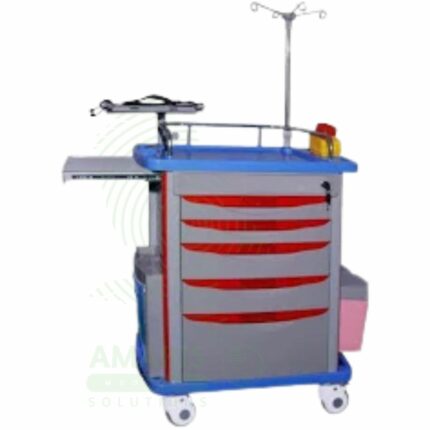
Crash Cart Medicine Trolley
A Crash Cart Medicine Trolley, or Emergency Resuscitation Trolley, is a specially designed, mobile cabinet that serves as a completely stocked and organized response station for hospital medical emergencies, primarily cardiac and respiratory arrests. It consolidates all essential equipment—including a defibrillator/monitor, emergency medications, airway management tools, and IV supplies—into a standardized, rapidly deployable unit. Its core function is to eliminate delays in life-saving treatment by bringing a comprehensive set of resources directly to the patient's bedside. Rigorous daily checks and strict restocking protocols ensure it is always in a state of immediate readiness, making it a critical component of hospital safety and emergency response infrastructure.
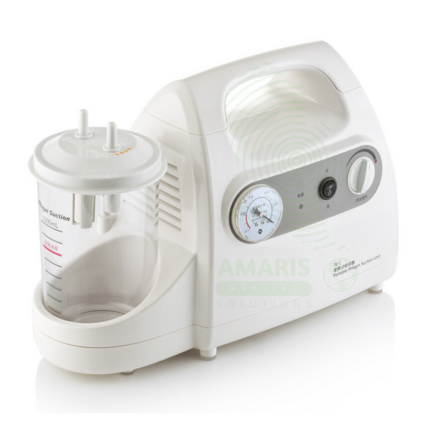
Electric Suction Machine
An Electric Suction Machine is a portable, electrically-powered medical device that generates vacuum pressure to remove fluids and secretions from a patient's airway, surgical site, or wound. It is a critical tool for maintaining a patent airway in emergency, surgical, post-operative, and chronic home care settings. The unit consists of a vacuum pump, a disposable collection canister with overflow protection, connecting tubing, and patient-end accessories. Key performance features include adjustable suction pressure, adequate airflow, and often battery backup for reliability. Strict adherence to pressure settings, suction duration, and single-use disposable components is essential for patient safety and infection control.
First Aid Boxes
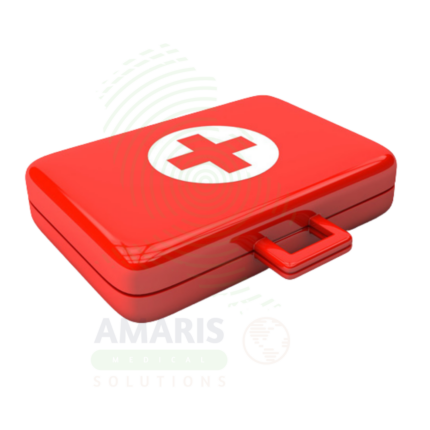
First Aid Boxes are durable, portable containers designed for the organized storage, protection, and rapid deployment of first aid supplies and equipment for immediate treatment of minor injuries and medical emergencies. Available in multiple configurations including personal, Class A (basic workplace), Class B (comprehensive/high-hazard), industrial/heavy-duty, wall-mounted, portable/trauma, vehicle, and specialty variants (burn, eye injury). Constructed from impact-resistant materials (ABS plastic, polycarbonate, HDPE, stainless steel, aluminum) with secure latching mechanisms, carrying handles, mounting provisions, and organizational compartments. Essential for regulatory compliance in workplace, school, vehicle, and public facility settings. Critical safety principles include unobstructed accessibility, regular inspection and restocking, removal of expired contents, and absolute prohibition of sharps disposal within the unit. An indispensable component of occupational health and safety, emergency preparedness, and community first response.
First Aid Kit
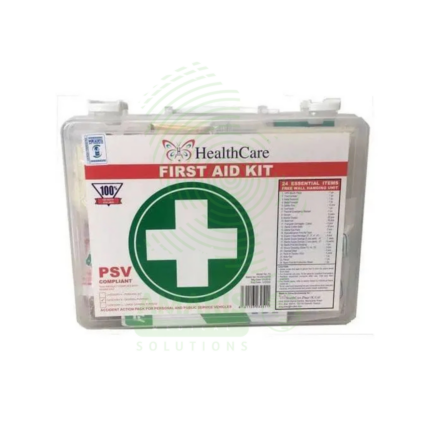
A First Aid Kit is an organized collection of medical supplies and equipment for providing initial care in emergency situations, available in various sizes and configurations for home, workplace, vehicle, travel, and specialized applications. Kits range from personal pouches (0.5-2 L) to comprehensive workplace cabinets (5-35 L) with soft-sided bags, hard cases, or wall-mounted containers. Contents are typically organized to meet regional standards (ANSI/ISEA Z308.1, CSA Z1220, BS 8599, DIN 13157/13169) and include wound care supplies (bandages, gauze, tape), antiseptics, burn care, eye care, emergency items (CPR mask, cold packs, foil blanket), instruments (scissors, tweezers), and PPE (gloves). Class A kits provide minimum supplies for low-hazard workplaces; Class B kits offer expanded quantities for high-hazard environments. Primary clinical applications include immediate treatment of minor injuries (cuts, abrasions, burns, sprains), bleeding control, wound care, fracture immobilization, and emergency assessment. Essential safety equipment for every home, workplace, vehicle, and public facility, providing critical medical supplies until professional care arrives.
First Aid Kit For Sporting Places
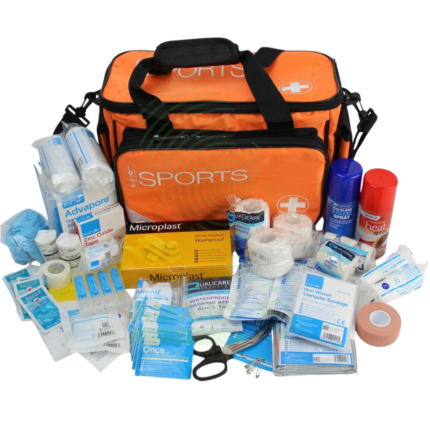
A First Aid Kit for Sporting Places is a portable, organized medical kit specifically designed for the types and frequencies of injuries encountered in athletic and sporting environments. Available in various configurations including sideline kits for team use, personal sports pouches, team travel kits, and wall-mounted cabinets for gymnasiums. Constructed from ballistic nylon, polyester, ABS plastic, or aluminum with organized interior compartments, pouches, and elastic loops for rapid access to supplies. Contains sport-specific medical supplies including wound care materials, elastic bandages, instant cold packs, splinting materials, eye wash, blister care, concussion assessment tools, and personal protective equipment. Primary clinical applications include immediate treatment of common sports injuries (sprains, strains, contusions, abrasions, lacerations), concussion assessment, bleeding control, heat illness management, eye injury care, and emergency action plan implementation. Essential equipment for athletic teams, schools, fitness centers, recreational facilities, and sporting events, providing organized, accessible medical supplies for athlete safety and injury management.