Dermatoscope and Magnifiers
 Diagnostic Kits
 Vital Signs Monitors
 Stethoscopes and Accessories
 Otoscopes, Ophthalmoscopes, and Retinoscopes
 Reflex Hammers and Neurological Tools
 Scales and Measuring Devices
 Spirometers and Pulmonary Function Tests
 Electrosurgical Units and Accessories
 Cutting Instruments
 Grasping and Holding Instruments
 Hemostatic Instruments
 Specialized Surgical Sets
 Single-Use Procedure Trays and Packs
 Surgical Drapes, Gowns, and Covers
 Tissue Unifying Instruments
 Radiation Protection
 X-Ray Machines and Accessories
 Ultrasound Systems and Probes
 MRI and CT Scanners
 Radiology Consumables
 Bone Densitometers
 Fluoroscopy Equipment
 Imaging Tables and Positioning Aids
 Microscopes and Accessories
 Centrifuges and Separators
 Analyzers
 Incubators and Ovens
 Pipettes, Dispensers, and Lab Glassware
 Refrigerators, Freezers, and Storage Units
 Lab Consumables
 Sterilizers and Autoclaves for Lab Use
 Multi-Parameter Monitors
 Ventilators and Respiratory Support Devices
 Defibrillators and AEDs
 Infusion Pumps and IV Systems
 Patient Warmers and Cooling Devices
 Central Monitoring Stations
 Accessories
 Anesthesia Machines and Workstations
 Oxygen Concentrators and Delivery Systems
 Nebulizers and Inhalers
 CPAP/BiPAP Machines
 Airway Management
 Anesthesia Masks, Circuits, and Bags
 Humidifiers and Heaters
 Respiratory Therapy Accessories
 First Aid Kits and Cabinets
 Emergency Resuscitation Equipment
 Trauma Supplies
 Emergency Carts and Crash Carts
 Burn Care Products
 Bleeding Control
 Automated External Defibrillators (AEDs)
 Transport and Evacuation
 Wheelchairs and Accessories
 Walkers, Crutches, and Canes
 Prosthetics and Orthotics
 Physical Therapy Equipment
 Transfer Devices
 Bathroom Safety
 Orthopedic Traction and Tables
 Hot/Cold Therapy Packs and Units
 Beds and Mattresses
 Chairs and Stools
 Tables
 Cabinets and Storage
 Privacy Screens & Curtains
 Stands and Racks
 Linens and Textiles
 Lighting
 Autoclaves and Sterilizers
 Ultrasonic Cleaners
 Disinfectant Solutions and Wipes
 Sterilization Pouches, Wraps, and Indicators
 Instrument Trays and Containers
 UV and Ozone Disinfection Devices
 Washer Disinfectors
 Wound Care
 Gloves
 Masks and Respirators
 Catheters and Tubing
 Swabs, Applicators, and Sponges
 Incontinence Products
 Personal Protective Equipment (PPE)
 Dental Chairs and Units
 Handpieces and Burs
 Instruments
 Consumables
 Sterilization for Dental Use
 Orthodontic Supplies
 Endodontic Tools
 Slit Lamps and Tonometers
 Lensometers and Phoropters
 Ophthalmic Surgical Instruments
 Eyewear Frames and Lenses
 Contact Lens Supplies
 Vision Testing Charts and Devices
 Eye Care Consumables
 Laser Systems for Eye Care
 ENT Exam Chairs and Tables
 Endoscopes
 Audiometers and Hearing Tests
 ENT Instruments
 Nasal and Throat Packs
 Hearing Aids and Accessories
 Otology Supplies
 Fetal Dopplers and Monitors
 Delivery Beds and Tables
 Gynecological Instruments
 Neonatal Incubators and Warmers
 Breast Pumps and Accessories
 Contraceptive Devices
 Maternity Supports and Pads
 Neonatal Consumables
 Cystoscopes and Urethroscopes
 Dialysis Machines and Supplies
 Urological Catheters and Bags
 Lithotripters
 Prostate Treatment Devices
 Urinary Incontinence Products
 Kidney Stone Management Tools
 Consumables & Disposables
 EEG and EMG Machines
 Neurosurgical Instruments
 Nerve Stimulators
 Headrests and Positioning Aids
 Lumbar Puncture Kits
 Seizure Monitoring Devices
 Consumables
 Rehabilitation for Neurological Conditions
 ECG Machines and Accessories
 Holter Monitors
 Stress Test Systems
 Pacemakers and Defibrillator Accessories
 Vascular Access Devices
 Cardiac Catheters and Guidewires
 Blood Flow Meters
 Consumables
 Orthopedic Instruments
 Casts, Splints, and Padding
 Joint Replacement Supplies
 Prosthetic Limbs and Components
 Bone Grafts and Substitutes
 Traction Devices
 Orthopedic Braces and Supports
 Rehabilitation Aids for Orthopedics
 Home Oxygen Therapy
 Hospital Beds for Home Use
 Mobility Aids
 Bathroom and Daily Living Aids
 Wound Care for Home
 Monitoring Devices
 Enteral Feeding Pumps and Tubes
 Hand Sanitizers and Dispensers
 Face Shields and Goggles
 Isolation Gowns and Suits
 Biohazard Waste Containers
 Air Purifiers and HEPA Filters
 Surface Disinfectants
 Sharps Containers
 Protective Barriers
 Cardiovascular & Endurance Training
 Strength Training & Weightlifting
 Functional Training & Core Conditioning
 Physical Therapy & Rehabilitation
 Sports & Outdoor Recreation
 Gym Flooring & Facility Equipment
 Fitness Monitoring & Accessories
 Kids & Novelties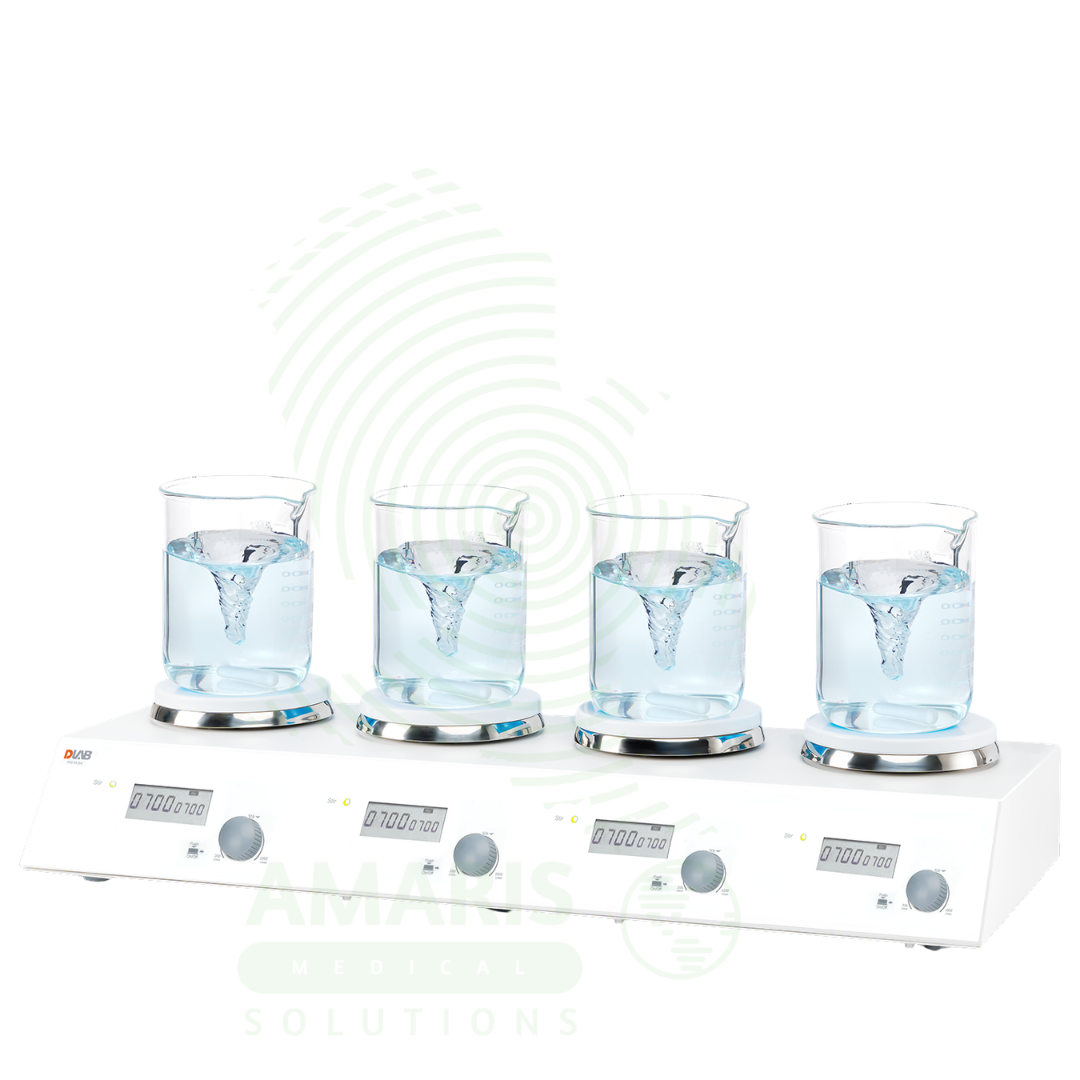

Channel LCD Digital Magnetic Stirrer (MS-M-S 44)
WhatsApp Order
The Channel LCD Digital Magnetic Stirrer is a high‑throughput, non‑heating benchtop instrument engineered for the independent, reproducible stirring of up to four samples simultaneously in clinical diagnostics, pharmaceutical quality control, analytical chemistry, and academic research laboratories. Featuring four independent 5‑inch (Ø134 mm) ceramic‑coated aluminum work plates, this stirrer provides a speed range of 200 to 1500 rpm (1 rpm resolution) per channel, with a maximum stirring capacity of 3 liters of water per channel (12 liters total).
Every Channel LCD Digital Magnetic Stirrer is equipped with four independent high‑contrast LCD digital displays, one per channel, showing the actual stirring speed in real time. The four maintenance‑free, spark‑free brushless DC motors provide stable torque, ultra‑quiet operation, and long‑term reliability without routine maintenance. The ceramic‑coated aluminum work plates resist strong acids, strong alkalis, and organic solvents, ensuring chemical durability and easy cleaning. Four independent control panels allow each channel to be started, stopped, and adjusted to a different speed without cross‑interference.
Key user‑focused features include true independent parallel stirring, a compact space‑saving design (701 × 265 mm footprint) that integrates four stirring positions into a single instrument, and an IP21‑rated metal housing for basic splash and dust protection. The universal power supply (100–240 V, 50/60 Hz) allows worldwide use without voltage converters.
For the clinical laboratory scientist, pharmaceutical QC technician, and research scientist, the MS‑M‑S4 delivers the independent, high‑throughput stirring required for parallel clinical sample mixing, buffer and standard preparation, environmental sample homogenization, and educational laboratory demonstrations. For the patient, the reliable, reproducible performance of this instrument ensures that diagnostic reagents, quality control materials, and research samples are prepared consistently and efficiently, directly supporting accurate diagnostic outcomes and patient safety.
Description
Channel LCD Digital Magnetic Stirrer
(MS-M-S4 4)
PRIMARY CLINICAL & DIAGNOSTIC USES
1.High‑Throughput Parallel Stirring for Clinical and Pharmaceutical Research
Primary Use: Provides a 4‑channel, non‑heating LCD digital magnetic stirrer with independent control of each stirring position, used for the simultaneous and reproducible mixing of up to four separate clinical samples, reagents, buffers, or biological specimens in clinical diagnostic, pharmaceutical, and research laboratories. Each channel features a 5‑inch (Ø134 mm) ceramic‑coated aluminum work plate, a maximum stirring capacity of 3 liters of water per channel (12 liters total), and a stepless digital speed range of 200 to 1500 rpm with 1 rpm resolution, with each channel having its own LCD display for independent real‑time speed monitoring.
How it helps: For the clinical pharmaceutical research scientist and high‑throughput laboratory technician, the four‑channel design enables the parallel processing of up to four independent experiments or conditions simultaneously, dramatically increasing throughput while maintaining reproducibility. Each stirring position can be independently set to a different speed, start/stop status, and display. The ceramic‑coated aluminum work plates provide excellent chemical resistance against strong acids, strong alkalis, and organic solvents, ensuring long‑term durability even with aggressive reagents. The brushless DC motors are spark‑free and maintenance‑free, making the instrument safe for use in environments where flammable solvents may be present. For the patient, the ability to rapidly process multiple samples under controlled, reproducible conditions helps ensure accurate and timely diagnostic test results, directly supporting effective clinical decision‑making.
2. Parallel Sample Preparation for Clinical Chemistry, Toxicology, and Microbiology
Primary Use: Enables the controlled, independent stirring of up to four patient specimens (serum, plasma, urine, whole blood) for routine clinical chemistry panels, toxicology screening, and microbiology media preparation. The 3‑liter per channel capacity supports batch processing of quality control materials, standards, and reagents.
How it helps: For the clinical chemistry technologist and toxicology analyst processing large numbers of patient samples, the 4‑channel design supports the simultaneous preparation of up to four independent samples or QC materials in a single run, considerably reducing total processing time for routine panels (e.g., lipid profiles, liver function tests) and high‑volume toxicology screening (e.g., drugs of abuse, alcohol panels). The independent control of each channel allows the operator to stir different sample types at different speeds without cross‑contamination. The IP21‑rated housing offers basic protection against solid foreign objects (>12.5 mm) and vertically falling water drops, ensuring reliable service in busy clinical environments. For the patient, consistent, efficient processing ensures that diagnostic test results are accurate, timely, and reproducible across large numbers of specimens.
3. General Solution Preparation for Quality Control and Research Laboratories
Primary Use: Serves as a versatile tool for the general mixing and dissolution of chemical and biological samples, including the preparation of standard solutions, buffers, culture media, and reagents for a wide range of laboratory applications, from food and feed safety testing to environmental analysis and polymer research.
How it helps: For the quality control analyst and research scientist, the Channel LCD Digital Magnetic Stirrer compatibility with various reaction vessels (beakers, flasks, tubes) and its wide speed range (200–1500 rpm with 1 rpm resolution) allow it to be adapted to many different mixing tasks across chemistry, biotechnology, and pharmaceutical industries. The intuitive LCD displays for each channel provide real‑time feedback of the actual stirring speed, reducing the chance of operator error. The compact, space‑saving design (701 × 265 × 127 mm) integrates four stirring positions into a single benchtop footprint, freeing up valuable laboratory space. For the patient, the reliable preparation of standards and controls supported by this instrument contributes to the accuracy and safety of pharmaceutical products and food supplies.
SECONDARY & SUPPORTIVE USES
1. General solution preparation for pharmaceutical and food analysis: Used for the efficient dissolution of solid samples and the preparation of standard solutions, buffers, and mobile phases in pharmaceutical and food analysis quality control laboratories, ensuring homogeneity for HPLC, UV‑Vis spectrophotometry, and other analytical testing, with a 12‑liter total capacity and independent control of up to four vessels.
2. Sample preparation for environmental and water testing: Prepares liquid samples for heavy metal analysis, organic pollutant screening, and nutrient determination by maintaining solid particles in suspension for accurate sampling; the corrosion‑resistant ceramic‑coated plates are durable even when exposed to acidic or alkaline media.
3. Parallel titration and electrochemical measurements: Provides stable, consistent stirring for up to four independent pH calibrations, ion‑selective electrode measurements, or manual titrations simultaneously, ensuring uniform ion concentration around each electrode and improving laboratory throughput for routine electrochemical analysis.
4. Quality control sample preparation in textile and polymer testing: Used in textile, fiber, polymer, rubber, and plastics testing laboratories for the preparation of test solutions, dissolution of polymer samples, and mixing of solvents for viscosity and mechanical property testing, with the ability to run up to four different formulations in parallel.
5. Soil, sludge, and water treatment sample homogenization: Prepares up to four solid environmental samples – such as soils, sediments, sludges, and treated water – by mixing them with extraction solvents or reagents in parallel, ensuring representative results with high throughput for environmental monitoring and remediation studies.
6. Education and advanced teaching laboratory stirring: Serves as a robust, user‑friendly teaching tool for undergraduate and graduate courses in chemistry, clinical laboratory science, and biochemistry, allowing students to run multiple independent mixing experiments on a single compact benchtop instrument, with each station having its own digital speed display for precise learning.
KEY PRODUCT FEATURES
1. BASIC IDENTIFICATION ATTRIBUTES
-
Device Type: A 4‑channel, non‑heating LCD digital magnetic stirrer with independent control of each stirring position.
-
Designation: Channel LCD Digital Magnetic Stirrer.
-
Key Components:
-
Four independent stirring positions, each with a ceramic‑coated aluminum work plate (Ø134 mm, 5‑inch)
-
Four independent high‑contrast LCD displays for per‑channel real‑time speed monitoring
-
Four independent control panels for start/stop and speed adjustment per channel
-
Four maintenance‑free, spark‑free brushless DC motors (5 W per channel)
-
IP21‑rated fully enclosed metal housing with powder‑coated finish
-
Universal power supply (100–240 V, 50/60 Hz)
-
Non‑slip rubber feet for stability
-
2. TECHNICAL & PERFORMANCE PROPERTIES
-
Number of stirring positions: 4.
-
Work plate dimensions (each): Ø134 mm (5 inches).
-
Work plate material: Aluminum with ceramic coating (strong acid‑resistant, strong alkali‑resistant, corrosion‑resistant, easy to clean).
-
Motor type: Maintenance‑free, spark‑free brushless DC motor per channel.
-
Motor output power (each channel): 5 W.
-
Maximum stirring capacity per channel (H₂O): 3 L (12 L total).
-
Speed range per channel: 200 to 1500 rpm (adjustable in 1 rpm increments).
-
Speed control accuracy: ±20 rpm.
-
Speed display: Independent LCD digital readout per channel (shows actual speed).
-
Maximum stir bar length per channel: 40 mm.
-
Protection class: IP21 (protection against solid objects >12.5 mm and vertically falling water drops).
-
Power requirements: 100–240 V, 50/60 Hz (universal input).
-
Dimensions (L × W × H): 701 × 265 × 127 mm.
-
Weight: 8.7 kg.
-
Operating conditions: 5–40 °C, ≤80 % relative humidity.
-
Certifications: CE, cTUVus, FCC (TÜV‑certified safety); meets DIN/EN 60529 (IP code), IEC/EN 61010‑1 safety requirements.
3. PHYSICAL & OPERATIONAL PROPERTIES
-
Construction: Durable, fully enclosed metal housing with a powder‑coated, corrosion‑resistant finish. The four independent ceramic‑coated aluminum work plates are each designed for strong chemical resistance, easy cleaning, and long‑term durability in busy laboratory environments. IP21‑rated housing provides basic protection against solid foreign objects (>12.5 mm) and vertically falling water drops.
-
Work plates: Four independent Ø134 mm (5‑inch) ceramic‑coated aluminum discs, providing fast, uniform magnetic coupling, strong chemical resistance, and easy cleaning. The separate plates prevent cross‑contamination between channels and can accommodate a wide range of laboratory vessels, beakers, and flasks.
-
Displays: Four independent high‑contrast LCD digital displays (one per channel) simultaneously show the actual stirring speed for each channel in real time, providing complete operational visibility without toggling between parameters or channels.
-
Operation: Simple, intuitive independent digital controls for each channel, with dedicated buttons for start/stop and speed adjustment (1 rpm resolution). Each channel can be run independently, allowing the user to stir up to four different samples at different speeds simultaneously.
-
Motor technology: Four independent maintenance‑free, spark‑free brushless DC motors (one per channel) provide stable torque, extended life, and ultra‑quiet, vibration‑free operation. The brushless design requires no routine motor maintenance, and the spark‑free operation makes the instrument safe for use in environments where flammable solvents may be present.
-
Spill protection: IP21‑rated metal housing offers protection against solid foreign objects >12.5 mm and vertically falling water drops. The ceramic‑coated work plates are chemical‑resistant and easy to clean after spills.
-
Portability: Compact benchtop design with a footprint of 701 × 265 mm and weight of 8.7 kg, easily moved between workstations.
-
Maintenance: Each of the four brushless DC motors is maintenance‑free, requiring no routine brush replacement or lubrication. The four ceramic‑coated work plates are easy to clean with a mild detergent and soft, damp cloth.
-
Included accessories: The standard package includes the magnetic stirrer, four appropriate PTFE‑coated magnetic stirring bars (maximum length 40 mm per channel), and a region‑specific power cord, with a quick start guide and calibration certificate.
4. SAFETY & COMPLIANCE ATTRIBUTES
-
Regulatory Status: General laboratory equipment for in vitro diagnostic (IVD) use. Manufactured under ISO 9001 and ISO 13485 quality management systems. TÜV‑certified safety: CE, cTUVus, FCC; meets DIN/EN 60529 (IP code), IEC/EN 61010‑1 safety requirements.
-
Motor Safety: Brushless, spark‑free DC motors are intrinsically safe for use in environments where flammable solvents are present.
-
Electrical Safety: Designed with a universal power supply (100–240 V, 50/60 Hz) for safe operation across multiple regions. The IP21‑rated housing offers protection against solid foreign objects >12.5 mm and vertically falling water drops.
-
Chemical Safety: The four ceramic‑coated aluminum work plates are resistant to strong acids, strong alkalis, and organic solvents, preventing corrosion and ensuring a long service life even when handling aggressive reagents.
-
Fire Safety: Metal housing and ceramic‑coated work plates provide good fire protection and heat dissipation.
-
Spill Protection: IP21‑rated housing and smooth ceramic coating protect internal electronics from minor spills and splashes.
-
Quality Assurance: Each instrument is factory‑calibrated and supplied with a calibration certificate. The instrument is backed by the manufacturer’s warranty.
5. STORAGE & HANDLING ATTRIBUTES
-
Storage: Store the instrument in a clean, dry, dust‑free environment at room temperature (15–30 °C) when not in use. Keep the work plates covered to prevent dust accumulation.
-
Installation: Place the instrument on a stable, level, non‑flammable laboratory benchtop away from flammable materials, volatile solvents, and strong magnetic fields (e.g., large magnets, NMR equipment). Allow adequate clearance for ventilation.
-
Cleaning: Unplug the unit before cleaning. Wipe each ceramic‑coated work plate and the metal housing with a soft, damp cloth using a mild laboratory detergent or 70 % isopropyl alcohol. Do not immerse the unit in liquid. Do not use abrasive cleaners or metal‑scouring pads, which may scratch the ceramic coating.
-
Pre‑use inspection: Before each use, inspect the power cord and plug for any damage. Ensure all four work plates are clean, dry, and free of chemical residues. Verify that all magnetic stir bars are in good condition without chips or cracks and are appropriate for the vessel size (maximum length 40 mm).
-
Operation: For each channel independently, place a stirring vessel (e.g., a beaker or flask) centrally on the respective work plate and add a magnetic stir bar. Turn on the main power. Set the desired stirring speed (200–1500 rpm) via the channel’s dedicated control panel. The LCD display for that channel will show the actual real‑time speed. Always start stirring at a low speed (200–300 rpm) to allow the stir bar to couple correctly before gradually increasing to the target speed.
-
Cooling down: Not applicable (non‑heating model). The work plates may warm slightly due to motor operation but remain safe to touch.
-
Periodic verification: Verify the stirring performance periodically for each channel by observing the LCD speed reading and comparing with an independent tachometer if required. If any deviation is detected beyond the ±20 rpm specification, consult the manufacturer’s service guidelines.
6. LABORATORY & CLINICAL APPLICATIONS
-
Primary Application: General‑purpose, non‑heating 4‑channel stirring for clinical diagnostics (parallel sample mixing), pharmaceutical quality control (buffer and standard preparation), food and feed analysis, environmental testing, and academic research laboratories where independent, reproducible stirring of up to four samples simultaneously is required.
Clinical Role: A versatile and essential high‑throughput benchtop instrument for hospital and clinical chemistry laboratories, toxicology departments, pharmaceutical QC facilities, food and feed testing laboratories, environmental monitoring stations, and research institutions. Critical for parallel mixing of QC materials, standards, reagents, and patient samples where independent, reproducible stirring across multiple channels is required for diagnostic accuracy and laboratory efficiency.
SAFETY HANDLING PRECAUTIONS
1. SAFETY PRECAUTIONS
-
Magnetic Field Interference: The stirrer contains strong permanent magnets. People with implanted medical devices (e.g., pacemakers, implantable cardioverter‑defibrillators, neurostimulators) should keep a safe distance of at least 30 cm from the operating stirrer. Do not place the instrument near credit cards, hard drives, computer monitors, or other magnetic‑sensitive equipment.
-
Channel Independence and Vessel Spacing: The four channels operate independently. Ensure that vessels placed on adjacent channels do not touch or interfere with each other. The pre‑determined channel spacing (approximately 190 mm centre‑to‑centre) allows standard beakers up to 3 L capacity, but oversized vessels may crowd adjacent positions. Always allow sufficient clearance to prevent magnetic interference between channels.
-
Vessel and Stir Bar Selection: Use only flat‑bottomed vessels (beakers, Erlenmeyer flasks, crystallizing dishes) that sit flush on the ceramic‑coated work plates. Ensure each magnetic stir bar is in good condition without chips, cracks, or deformities and is properly centered in each vessel before starting. Do not exceed the maximum stir bar length (40 mm) per channel.
-
Start Slowly: For each channel independently, always start stirring at a low speed (200–300 rpm) and gradually increase to the desired level. A sudden high‑speed start may cause the stir bar to decouple, spin erratically, or strike the vessel wall, leading to splashing, spillage, or vessel breakage. Because the four channels are independent, slowly increase speed on each channel sequentially.
-
Electrical Safety: Do not operate the instrument with wet hands. Ensure the power cord does not come into contact with liquids or sharp edges that could damage the insulation. Use only the supplied grounded power cord and ensure the outlet provides proper grounding. Disconnect the power cord before cleaning, servicing, or moving the unit. Do not operate if the power cord is damaged.
-
Chemical Compatibility: The ceramic‑coated aluminum work plates are resistant to strong acids, strong alkalis, and organic solvents. However, prolonged exposure to some concentrated mineral acids or aggressive organic solvents may degrade the coating. Clean spills promptly. Refer to the Safety Data Sheet (SDS) for specific chemicals.
-
Spill Management: If a liquid spill occurs on any work plate during operation, turn off the affected channel(s) immediately. Unplug the unit, wipe the spill clean, and allow the work plate to dry thoroughly before resuming use. Do not let liquids enter the instrument housing. The IP21 rating provides protection against vertically falling water drops, but not against immersion or prolonged liquid exposure.
-
Operating Environment: Use the MS‑M‑S4 indoors only, on a stable, level, non‑flammable laboratory benchtop. Do not use in explosive atmospheres or in the presence of flammable gases or vapors. The permissible ambient temperature range is 5–40 °C with relative humidity not exceeding 80 %. Allow at least 10 cm clearance on all sides for proper airflow and cooling. Do not cover the instrument during operation.
-
Cleaning: Unplug the unit before cleaning. Do not immerse the unit in liquid. Do not use abrasive cleaners, metal scouring pads, or sharp objects that could scratch the ceramic coating on the work plates. Use only a soft, damp cloth with mild detergent or 70 % isopropyl alcohol.
-
Maintenance and Inspection: Periodically inspect the power cord and plug for any damage. Check that each magnetic stir bar rotates smoothly without wobbling. If any stir bar shows signs of wear (chipping, cracking, uneven rotation), replace it immediately. The brushless DC motors require no routine lubrication or brush replacement.
-
Long‑term Use: For continuous operation, it is recommended to operate at medium speed (500–1000 rpm) for extended periods to minimize motor and electronic stress. The instrument is designed for prolonged use, but allowing a cool‑down period of 30 minutes after 8 hours of continuous operation can extend the service life.
-
Training Requirement: Only trained laboratory personnel with appropriate technical background in laboratory equipment operation should operate the MS‑M‑S4 for clinical diagnostic or research applications. Users must read and understand the operator’s manual before first use. Laboratory managers should ensure that all operators are aware of the independent channel control features and the proper procedure for starting and stopping stir bars across four channels.
2. FIRST AID MEASURES
-
Chemical Splash to Eyes: If a biological or chemical sample splashes into the eyes during operation, immediately flush the eyes with copious amounts of water or sterile saline for at least 15 minutes, holding the eyelids open. Seek immediate medical attention.
-
Skin Contact with Chemical Sample: Remove contaminated clothing at once. Wash the affected skin area with soap and water for at least 5 minutes. If irritation, redness, or signs of chemical burn develop, seek medical evaluation. Refer to the Safety Data Sheet (SDS) for the specific chemical involved.
-
Sharps Injury (Broken Glassware): If a broken vessel punctures the skin, allow the wound to bleed freely (do not squeeze). Wash the wound with soap and water for 15 minutes. Apply antiseptic and a sterile bandage. If the vessel contained patient biological material, follow the facility’s exposure management protocol for bloodborne pathogens. Seek medical evaluation for potential exposure.
-
Inhalation of Chemical Vapors: If vapors from volatile reagents are inhaled during sample preparation or stirring, move the affected person to fresh air immediately. If breathing is difficult, administer oxygen if trained. If breathing stops, perform CPR. Seek immediate medical attention if coughing, dizziness, nausea, or respiratory distress persists.
-
Electrical Shock: If an electrical shock incident occurs, disconnect power at the circuit breaker before attempting to assist the victim. Do not touch the victim until the power is disconnected. Call emergency medical services immediately. Perform CPR if trained and necessary. Seek medical evaluation for all electrical shock victims, even if symptoms appear mild.
3. FIRE FIGHTING MEASURES
-
Flammability: The metal housing is non‑combustible, but the power cord, internal wiring, electronic components, and plastic control panels are combustible. Do not operate near flammable solvents, gases, or volatile materials (e.g., diethyl ether, acetone, hexane, ethanol). The primary fire hazard is the flammable liquids being stirred.
-
Extinguishing Media: Use carbon dioxide (CO₂) or a dry chemical (ABC‑class) extinguisher for fires involving the electrical components or nearby flammable materials. Do not use water on electrical fires, as water conducts electricity and may cause electrical shock or damage the instrument.
-
Fire Response: In case of fire, immediately disconnect the instrument from its power source if safe to do so. Evacuate the immediate area. Use an appropriate fire extinguisher for small, contained fires. For larger fires, evacuate the laboratory and call emergency services. Do not attempt to extinguish a fire if not trained or if the fire is spreading rapidly.
-
Special Protective Equipment for Firefighters: Firefighters should wear self‑contained breathing apparatus (SCBA) and full structural firefighting gear when fighting fires in laboratory settings, as combustion products may include toxic fumes from burning plastics and chemicals.
Related products
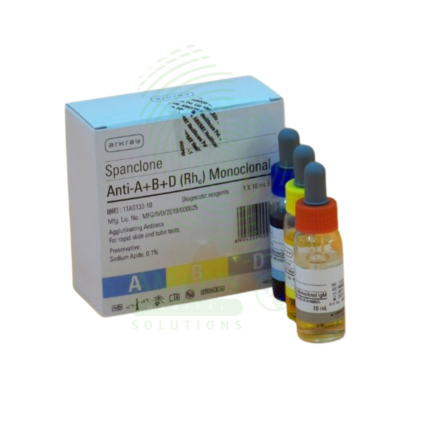
Blood Grouping kit
A Blood Grouping Kit is a Class II medical device (FDA-cleared/CE-marked) containing monoclonal antibodies (Anti-A, Anti-B, Anti-D) and control reagents for determining ABO blood group and Rh factor by agglutination method. The kit includes color-coded reagent vials, reaction cards or slides, mixing sticks, lancets, and capillary pipettes. Test time 2-5 minutes (slide method) or 15-30 minutes (tube method). Interpretation based on agglutination pattern: Anti-A positive = group A; Anti-B positive = group B; both positive = group AB; both negative = group O; Anti-D positive = Rh positive; Anti-D negative = Rh negative. Primary clinical applications include pre-transfusion compatibility testing, prenatal and neonatal testing (Rh incompatibility prevention), preoperative blood typing, blood donor screening, and emergency blood typing. Critical safety precautions include refrigerated storage (2-8°C), proper disposal of lancets in sharps containers, universal precautions for blood samples, and confirmation with reverse typing when possible. Essential kit for transfusion medicine, obstetrics, surgery, and emergency care.
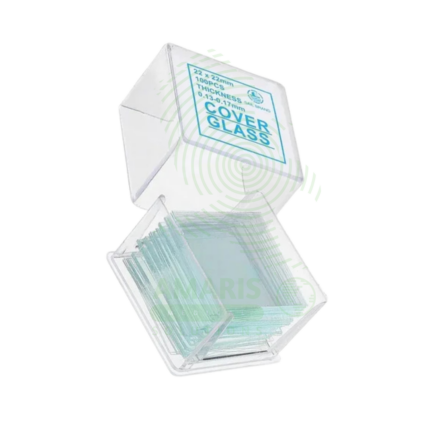
Cover Glass
Cover Glass (coverslips) are thin, transparent glass or plastic squares (e.g., 18×18 mm, 22×22 mm) or rectangles (22×30 mm, 24×50 mm) used to cover specimens on microscope slides for microscopic examination. Available in thickness No. 1 (0.13-0.16 mm) and No. 1.5 (0.16-0.19 mm) for optimal microscopy. Made from optical glass with high light transmission (>90%), refractive index 1.52 matching immersion oil. Packaged in boxes of 100-1000, interleaved with paper to prevent scratching. Primary clinical applications include covering blood films for manual differential counts and malaria diagnosis, wet mount preparations of urine sediment and vaginal secretions, histopathology and cytology slides, Gram-stained bacterial smears, semen analysis, KOH preparations for fungal elements, and India ink preparations for Cryptococcus. Critical safety precautions include handling with forceps (sharp edges), disposing of broken coverslips in sharps containers, avoiding fingerprints on optical surface, and proper disposal of biohazard-contaminated coverslips. Essential consumable in every clinical laboratory performing microscopy.
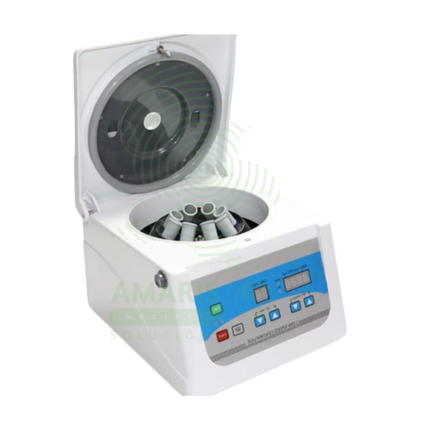
Electric Centrifuge
An Electric Centrifuge is a Class I medical device that uses rapid rotation to separate fluids of different densities, essential in clinical laboratories for processing blood, urine, and other biological specimens. Available in benchtop, refrigerated, microcentrifuge, hematocrit, and high-speed models with fixed-angle, swinging-bucket, or vertical rotors. Speed range 1,000-30,000+ RPM with RCF up to 65,000+ x g. Features include brushless induction motor, digital controls, imbalance detection, lid lock safety, and programmable protocols. Primary clinical applications include separation of serum/plasma for chemistry and hematology testing, urine sediment analysis for microscopy, platelet-rich plasma (PRP) preparation for regenerative medicine, concentration of bacteria for microbiology, cytology fluid analysis, blood banking, and molecular biology sample processing. Critical safety precautions include proper balancing of loads (weight matching), use of sealed rotors for biohazardous samples, regular rotor inspection for corrosion or cracks, never exceeding maximum rated speed, and never opening lid during operation. Essential equipment in clinical, research, and teaching laboratories.
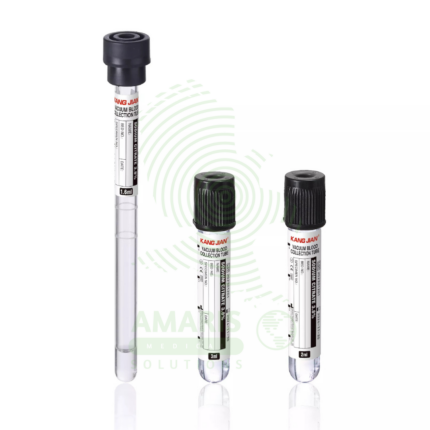
ESR Tubes Glass
ESR Tubes Glass are specialized glass tubes (300 mm length, 2.55 mm bore diameter, graduated 0-200 mm in 1 mm intervals) meeting ICSH and CLSI Westergren specifications for measuring erythrocyte sedimentation rate, a non-specific marker of inflammation. Used with citrated or diluted EDTA blood, filled to exactly 200 mm, placed vertically in Westergren stand, and read at 60 minutes. Primary clinical applications include determination of ESR for diagnosing and monitoring inflammatory conditions (infections, autoimmune disorders, malignancies), monitoring disease activity in rheumatoid arthritis, assessment of temporal arteritis and polymyalgia rheumatica, evaluation of infection and inflammatory response, screening for occult inflammatory conditions, and monitoring chronic inflammatory diseases (SLE, IBD, vasculitis). Critical safety precautions include handling glass tubes carefully to avoid breakage (sharps hazard), proper disposal in sharps containers as biohazardous waste, ensuring vertical alignment and constant temperature (18-25°C), reading at exactly 60 minutes, and avoiding air bubbles and vibration. Essential consumable for reference Westergren ESR testing in clinical laboratories.
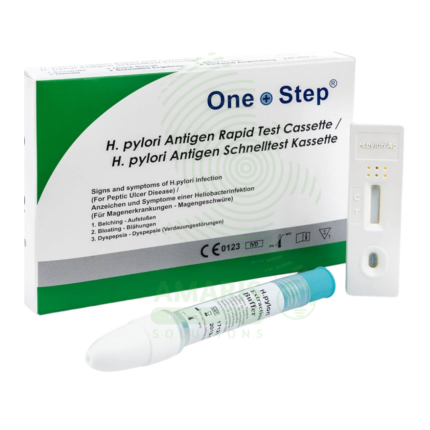
H.pylori test kits (Antigen)
H.pylori test kits (Antigen) are Class II medical devices (FDA-cleared/CE-marked) for rapid immunochromatographic or enzyme immunoassay detection of Helicobacter pylori antigens in stool specimens, enabling non-invasive diagnosis of active infection and post-treatment eradication confirmation. Test principles use monoclonal or polyclonal antibodies specific to H. pylori antigens, producing visible results in 10-20 minutes (rapid tests) or 1-2 hours (EIA). Sensitivity 90-98%, specificity 92-99% compared to gold standard methods. Primary clinical applications include rapid diagnosis of H. pylori infection in patients with dyspepsia, initial screening in uncomplicated dyspepsia (test-and-treat strategy), confirmation of active infection before therapy, post-treatment eradication confirmation (4-6 weeks after therapy), pediatric testing (preferred non-invasive method), screening in high-risk populations (family history of gastric cancer), and monitoring in patients with peptic ulcer disease or MALT lymphoma. Critical safety precautions include mandatory washout period (4 weeks off antibiotics, 2 weeks off PPIs) to avoid false negatives, proper specimen handling (universal precautions), refrigerated storage of kits (2-30°C), quality control verification, and disposal as biohazardous waste. Essential non-invasive tool for H. pylori management in gastroenterology and primary care.
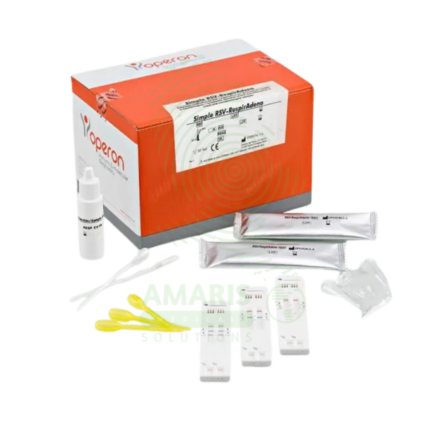
Rota virus
Rota virus rapid tests are immunochromatographic assays (CE-marked, FDA-cleared for some brands) for qualitative detection of rotavirus group A antigens in stool specimens, providing results in 10-20 minutes. The test principle uses monoclonal or polyclonal antibodies against rotavirus antigens (typically VP6 protein) immobilized on membranes, capturing antigens that form a visible line. Sensitivity 90-98%, specificity 95-99% compared to ELISA or PCR. The kit includes individually foil-wrapped test devices, sample diluent, and collection applicators. Primary clinical applications include rapid diagnosis of acute gastroenteritis in children (rotavirus is the leading cause of severe diarrhea in under-5 children), outbreak investigation in daycare centers and schools, hospital infection control and isolation precautions, differential diagnosis of acute diarrhea (viral vs. bacterial vs. parasitic), vaccine effectiveness monitoring and surveillance, assessment of dehydration risk, and evaluation of immunocompromised patients. Critical safety precautions include proper specimen collection (clean container, avoid contamination), biological hazard precautions (all stool potentially infectious), quality control verification, and awareness that a negative test does not rule out other causes of gastroenteritis. Essential tool for pediatric gastroenteritis management, infection control, and public health surveillance.
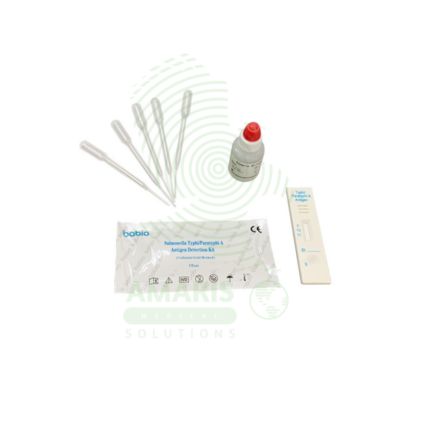
Salmonella Typhi Test Peratop
The Salmonella typhi test peratop is a CE-marked rapid immunochromatographic assay for qualitative detection of IgG and IgM antibodies to Salmonella enterica serotype Typhi in human serum, plasma, or whole blood, providing results in 15-20 minutes. The test uses recombinant S. typhi antigens immobilized on a membrane to capture specific antibodies, with separate lines for IgG and IgM interpretation. The kit includes individually foil-wrapped test cassettes, sample diluent, disposable pipettes, and package insert. Primary clinical applications include rapid diagnosis of typhoid fever in endemic regions (Indian subcontinent, Southeast Asia, Africa, South America), differentiation of acute (IgM positive) from past infection (IgG only), outbreak investigation and control, screening in febrile patients, travel medicine assessment, antibiotic stewardship, and maternal/child health in endemic areas. Critical safety precautions include proper specimen handling (universal precautions), quality control verification, awareness of window period (repeat testing if early infection suspected), and clinical correlation of results. Essential rapid test for typhoid fever diagnosis in resource-limited and endemic settings.