Dermatoscope and Magnifiers
 Diagnostic Kits
 Vital Signs Monitors
 Stethoscopes and Accessories
 Otoscopes, Ophthalmoscopes, and Retinoscopes
 Reflex Hammers and Neurological Tools
 Scales and Measuring Devices
 Spirometers and Pulmonary Function Tests
 Electrosurgical Units and Accessories
 Cutting Instruments
 Grasping and Holding Instruments
 Hemostatic Instruments
 Specialized Surgical Sets
 Single-Use Procedure Trays and Packs
 Surgical Drapes, Gowns, and Covers
 Tissue Unifying Instruments
 Radiation Protection
 X-Ray Machines and Accessories
 Ultrasound Systems and Probes
 MRI and CT Scanners
 Radiology Consumables
 Bone Densitometers
 Fluoroscopy Equipment
 Imaging Tables and Positioning Aids
 Microscopes and Accessories
 Centrifuges and Separators
 Analyzers
 Incubators and Ovens
 Pipettes, Dispensers, and Lab Glassware
 Refrigerators, Freezers, and Storage Units
 Lab Consumables
 Sterilizers and Autoclaves for Lab Use
 Multi-Parameter Monitors
 Ventilators and Respiratory Support Devices
 Defibrillators and AEDs
 Infusion Pumps and IV Systems
 Patient Warmers and Cooling Devices
 Central Monitoring Stations
 Accessories
 Anesthesia Machines and Workstations
 Oxygen Concentrators and Delivery Systems
 Nebulizers and Inhalers
 CPAP/BiPAP Machines
 Airway Management
 Anesthesia Masks, Circuits, and Bags
 Humidifiers and Heaters
 Respiratory Therapy Accessories
 First Aid Kits and Cabinets
 Emergency Resuscitation Equipment
 Trauma Supplies
 Emergency Carts and Crash Carts
 Burn Care Products
 Bleeding Control
 Automated External Defibrillators (AEDs)
 Transport and Evacuation
 Wheelchairs and Accessories
 Walkers, Crutches, and Canes
 Prosthetics and Orthotics
 Physical Therapy Equipment
 Transfer Devices
 Bathroom Safety
 Orthopedic Traction and Tables
 Hot/Cold Therapy Packs and Units
 Beds and Mattresses
 Chairs and Stools
 Tables
 Cabinets and Storage
 Privacy Screens & Curtains
 Stands and Racks
 Linens and Textiles
 Lighting
 Autoclaves and Sterilizers
 Ultrasonic Cleaners
 Disinfectant Solutions and Wipes
 Sterilization Pouches, Wraps, and Indicators
 Instrument Trays and Containers
 UV and Ozone Disinfection Devices
 Washer Disinfectors
 Wound Care
 Gloves
 Masks and Respirators
 Catheters and Tubing
 Swabs, Applicators, and Sponges
 Incontinence Products
 Personal Protective Equipment (PPE)
 Dental Chairs and Units
 Handpieces and Burs
 Instruments
 Consumables
 Sterilization for Dental Use
 Orthodontic Supplies
 Endodontic Tools
 Slit Lamps and Tonometers
 Lensometers and Phoropters
 Ophthalmic Surgical Instruments
 Eyewear Frames and Lenses
 Contact Lens Supplies
 Vision Testing Charts and Devices
 Eye Care Consumables
 Laser Systems for Eye Care
 ENT Exam Chairs and Tables
 Endoscopes
 Audiometers and Hearing Tests
 ENT Instruments
 Nasal and Throat Packs
 Hearing Aids and Accessories
 Otology Supplies
 Fetal Dopplers and Monitors
 Delivery Beds and Tables
 Gynecological Instruments
 Neonatal Incubators and Warmers
 Breast Pumps and Accessories
 Contraceptive Devices
 Maternity Supports and Pads
 Neonatal Consumables
 Cystoscopes and Urethroscopes
 Dialysis Machines and Supplies
 Urological Catheters and Bags
 Lithotripters
 Prostate Treatment Devices
 Urinary Incontinence Products
 Kidney Stone Management Tools
 Consumables & Disposables
 EEG and EMG Machines
 Neurosurgical Instruments
 Nerve Stimulators
 Headrests and Positioning Aids
 Lumbar Puncture Kits
 Seizure Monitoring Devices
 Consumables
 Rehabilitation for Neurological Conditions
 ECG Machines and Accessories
 Holter Monitors
 Stress Test Systems
 Pacemakers and Defibrillator Accessories
 Vascular Access Devices
 Cardiac Catheters and Guidewires
 Blood Flow Meters
 Consumables
 Orthopedic Instruments
 Casts, Splints, and Padding
 Joint Replacement Supplies
 Prosthetic Limbs and Components
 Bone Grafts and Substitutes
 Traction Devices
 Orthopedic Braces and Supports
 Rehabilitation Aids for Orthopedics
 Home Oxygen Therapy
 Hospital Beds for Home Use
 Mobility Aids
 Bathroom and Daily Living Aids
 Wound Care for Home
 Monitoring Devices
 Enteral Feeding Pumps and Tubes
 Hand Sanitizers and Dispensers
 Face Shields and Goggles
 Isolation Gowns and Suits
 Biohazard Waste Containers
 Air Purifiers and HEPA Filters
 Surface Disinfectants
 Sharps Containers
 Protective Barriers
 Cardiovascular & Endurance Training
 Strength Training & Weightlifting
 Functional Training & Core Conditioning
 Physical Therapy & Rehabilitation
 Sports & Outdoor Recreation
 Gym Flooring & Facility Equipment
 Fitness Monitoring & Accessories
 Kids & Novelties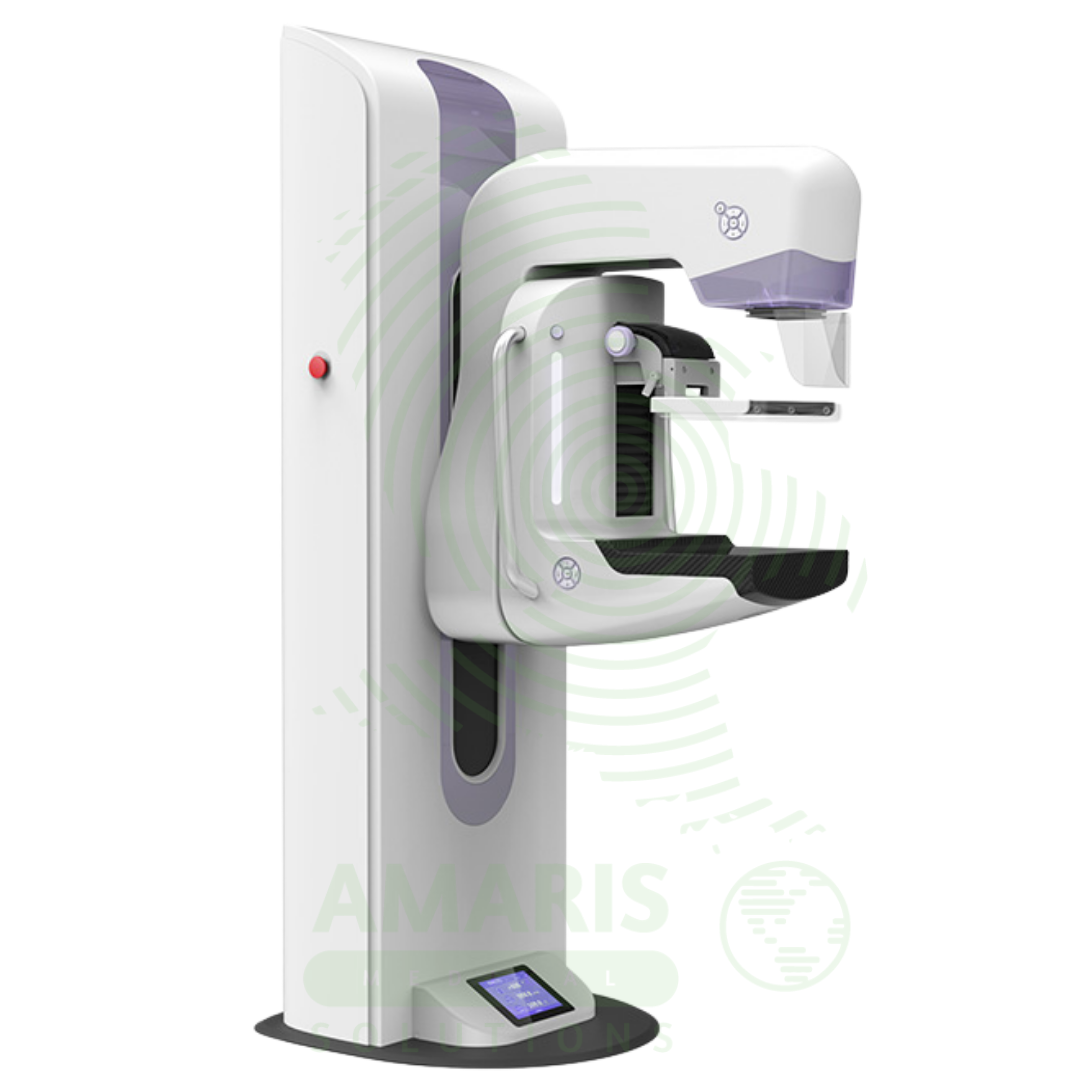
Mammography Machine
WhatsApp Order
A Mammography Machine is a specialized, low-dose X-ray system designed exclusively for imaging the breast. It is the gold-standard tool for breast cancer screening and diagnostic evaluation, utilizing firm breast compression and high-resolution digital detectors to produce detailed images of breast tissue. Modern systems often incorporate Digital Breast Tomosynthesis (DBT or “3D mammography”) to reduce tissue overlap and improve cancer detection. Its operation is highly regulated, requiring certified technologists, qualified interpreting physicians, and a rigorous quality assurance program to ensure patient safety, optimal image quality, and accurate early detection of breast cancer, which is vital for reducing mortality.
Description
Mammography Machine
PRIMARY CLINICAL & DIAGNOSTIC USES
1. Breast Cancer Screening
-
Primary Use: Provides routine screening of asymptomatic women to detect early, non-palpable breast cancer, significantly reducing mortality through early detection.
-
How it helps: For the radiologist and breast imaging specialist, screening mammography is the most powerful tool for finding breast cancer at its earliest, most treatable stage—detecting tumors years before they can be felt, identifying microcalcifications that signal early disease, and revealing subtle architectural distortions that warrant investigation. For the woman undergoing regular screening, a mammogram means peace of mind when results are normal and, when cancer is found, the best possible chance of cure with less aggressive treatment and better long-term outcomes.
2. Diagnostic Evaluation of Breast Symptoms
-
Primary Use: Investigates clinical signs such as a palpable lump, nipple discharge, skin changes, or persistent breast pain, using additional views and magnification to characterize abnormalities found on screening or during physical exams.
-
How it helps: For the breast surgeon and radiologist evaluating a patient with a concerning finding, diagnostic mammography provides the detailed characterization needed to determine the next steps—distinguishing benign from suspicious findings, mapping the extent of disease, and guiding biopsy decisions. For the patient who has found a lump or noticed a change in her breast, diagnostic imaging provides answers, whether the reassurance of a benign finding or the definitive diagnosis that allows treatment to begin.
3. Pre-operative Localization and Guidance
-
Primary Use: Guides needle localization procedures to mark non-palpable lesions for surgical biopsy or excision, and directs stereotactic core needle biopsies for precise tissue sampling without open surgery.
-
How it helps: For the breast surgeon and interventional radiologist, mammographic guidance transforms a blind surgical exploration into a precisely targeted procedure—placing localization wires exactly at the lesion site, guiding biopsy needles to the exact area of suspicion, and ensuring that the right tissue is sampled or removed. For the patient with a non-palpable abnormality, image-guided procedures mean a definitive diagnosis can be obtained with minimal discomfort and scarring, often avoiding the need for open surgical biopsy.
4. Monitoring and Follow-up
-
Primary Use: Provides surveillance for patients with a personal history of breast cancer or high-risk lesions to detect recurrence or new primary cancers.
-
How it helps: For the oncologist and breast surgeon managing breast cancer survivors, annual surveillance mammography is essential for detecting recurrences at an early, treatable stage—comparing current images with prior studies to identify subtle changes that might signal disease recurrence. For the patient who has already faced breast cancer, regular surveillance mammograms provide reassurance that she remains cancer-free and the earliest possible warning if a new disease appears.
5. Evaluation of Breast Implants
-
Primary Use: Specialized views are used to image breast tissue in patients with implants, assessing for rupture and detecting cancers that may be obscured by the implant.
-
How it helps: For the plastic surgeon and breast imager, dedicated implant views displace the implant backward while bringing breast tissue forward, allowing clear visualization of tissue that would otherwise be hidden. For the woman with breast implants, whether for reconstruction after cancer or cosmetic augmentation, specialized mammographic techniques ensure that her breast tissue is adequately screened despite the presence of implants.
SECONDARY & SUPPORTIVE USES
1. Assessment of High-Risk Patients: Used as part of a surveillance strategy for women with a strong family history or genetic predisposition to breast cancer, often starting at a younger age. For the woman with a BRCA mutation or other high-risk factors, earlier and more frequent screening provides the best chance for early detection.
2. Guiding Other Interventional Procedures: Can be used to guide other percutaneous breast procedures, such as cyst aspiration or abscess drainage. For the patient with a symptomatic breast cyst or infection, image guidance ensures accurate needle placement and successful treatment.
3. Research and Clinical Trials: Used to acquire standardized images for research studies on breast density, cancer risk, and the efficacy of new imaging technologies or treatments. For the advancement of breast cancer detection and treatment, mammography provides the standardized imaging essential for clinical research.
KEY PRODUCT FEATURES
1. BASIC IDENTIFICATION ATTRIBUTES
-
Type: A dedicated X-ray imaging system optimized for examining the breast.
-
Designation: Full-Field Digital Mammography (FFDM) System (modern standard) or Digital Breast Tomosynthesis (DBT) System (3D mammography, often combined with FFDM).
-
Common Variants:
-
2D Full-Field Digital Mammography (FFDM): Captures standard two-dimensional high-resolution images of the compressed breast.
-
Digital Breast Tomosynthesis (DBT or "3D Mammography"): Acquires a series of low-dose X-ray images from different angles, which are reconstructed into thin slices. This reduces tissue overlap, improving cancer detection and reducing false-positive recalls.
-
Contrast-Enhanced Mammography (CEM): An advanced technique where an iodinated contrast agent is injected, and dual-energy images are acquired to highlight areas of abnormal angiogenesis associated with tumors.
-
2. TECHNICAL & PERFORMANCE PROPERTIES
-
Imaging Principle: Uses low-dose X-rays. The breast is compressed between a paddle and a dedicated digital detector to spread tissue, reduce thickness (lowering dose), minimize motion blur, and improve image uniformity.
-
Key Components:
-
X-ray Tube with Molybdenum/Rhodium Anode: Produces an X-ray spectrum optimized for breast tissue contrast.
-
Compression Paddle: Applies firm, even compression. Automatic Exposure Control (AEC) sensors are integrated.
-
Digital Detector: A large-area flat-panel detector that converts X-rays directly into a digital image (Direct Radiography) or via a phosphor plate (Computed Radiography - now rare).
-
-
Image Quality Metrics: Spatial Resolution (measured in line pairs/mm, must be very high to see microcalcifications), Contrast Resolution, and Signal-to-Noise Ratio (SNR).
-
Dose: Uses low-dose radiation. Systems are designed to deliver the lowest possible dose while maintaining diagnostic image quality (ALARA principle).
3. PHYSICAL & OPERATIONAL PROPERTIES
-
Gantry Design: Features a C-arm that rotates to allow standard craniocaudal (CC) and mediolateral oblique (MLO) views, as well as additional angles for diagnostic work.
-
Workstation: Includes a high-resolution review monitor and specialized software for image processing, Computer-Aided Detection (CAD) analysis, and comparison with prior studies.
-
Ergonomics: Designed for patient comfort and efficient technologist workflow, with intuitive controls and adjustable height.
4. SAFETY & COMPLIANCE ATTRIBUTES
-
Regulatory Status: Class II medical device (radiation-emitting), subject to stringent regulatory oversight (e.g., FDA MQSA in the USA).
-
Quality Assurance (QA): Requires a rigorous, daily, weekly, and annual QA program mandated by law (under MQSA) to ensure consistent image quality, accurate dosage, and mechanical safety. This includes phantom imaging and testing of compression force.
-
Radiation Safety: Must comply with dose regulations. Technologists must be certified, and interpreting physicians must meet specific qualification requirements.
-
Compression Safety: Includes mechanisms to limit maximum force and allow the patient to self-release compression in an emergency.
5. STORAGE & HANDLING ATTRIBUTES
-
Storage: N/A – It is a fixed, installed piece of capital equipment.
-
Cleaning & Disinfection: The compression paddle, breast support table, and patient contact surfaces must be cleaned and disinfected after each patient using approved agents to prevent cross-contamination.
-
Preventive Maintenance: Requires scheduled service by specialized engineers to calibrate the X-ray tube, detector, and compression system, ensuring optimal performance and safety.
6. LABORATORY & CLINICAL APPLICATIONS
-
Primary Application: The cornerstone of breast imaging, deployed in dedicated breast imaging centers, hospital radiology departments, and mobile screening vans.
-
Interpretation: Images are interpreted by radiologists with specialized training in breast imaging, often using comparison with prior mammograms and in conjunction with ultrasound or MRI.
SAFETY HANDLING PRECAUTIONS
1. SAFETY PRECAUTIONS
-
Pregnancy Screening (CRITICAL): Always screen for possible pregnancy. Mammography is generally contraindicated during pregnancy due to fetal radiation exposure unless there is a strong clinical indication.
-
Patient Identification and Laterality: Meticulous protocol is required to ensure correct patient identification and accurate marking of right/left breast and view on every image. Errors can have catastrophic consequences.
-
Compression Technique: Proper compression is essential for image quality and dose reduction but must be applied with care and communication to minimize patient discomfort and anxiety.
-
Radiation Dose Monitoring: Ensure the AEC is functioning correctly and that the system is not operating outside its calibrated dose range.
-
Informed Consent: For screening, ensure patients understand the benefits, risks (including false positives and radiation exposure), and limitations of the exam.
2. FIRST AID MEASURES
-
Patient Injury from Compression (e.g., Pinch): Release compression immediately using the emergency release. Assess for injury and provide first aid. Document the incident.
-
Patient Faint or Fall: Lower the machine, support the patient, and call for clinical assistance.
-
Equipment Malfunction Causing Excessive Dose: This is a reportable event. Immediately take the machine out of service. Notify the Radiation Safety Officer (RSO) and service engineer.
3. FIRE FIGHTING MEASURES
-
Electrical Fire Hazard: Contains high-voltage components and electronics.
-
Extinguishing Media: Use CO₂ or dry chemical extinguishers. Evacuate and alert the fire department.
Related products
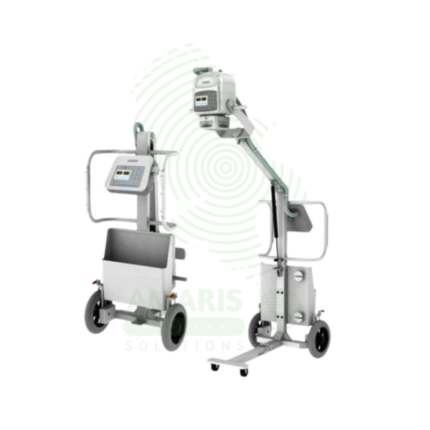
Analogue Mobile X-ray Machine
An Analogue Mobile X-ray Machine is a battery-powered, portable X-ray system using traditional film cassettes for bedside imaging in intensive care units, neonatal intensive care units, emergency departments, and operating rooms. The mobile unit enables chest, abdominal, and extremity imaging at the patient's bedside, eliminating the risks associated with transporting critically ill patients. Film cassettes are processed in darkroom facilities for image development. Used in hospitals without digital radiography, as backup for digital systems, and in resource-limited settings where digital infrastructure is not available.
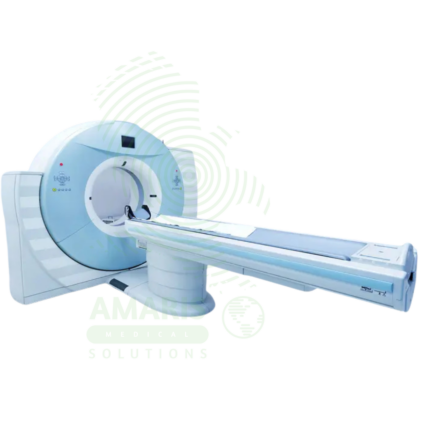
Computed Tomography (CT)
Computed Tomography (CT) is a diagnostic imaging modality that uses X-rays and computer processing to create detailed cross-sectional images of the body. Essential for trauma evaluation, cancer diagnosis, vascular imaging, and surgical planning, CT provides rapid, high-resolution images that guide life-saving decisions in emergency medicine, oncology, and surgery. Advanced multi-slice systems enable whole-body scanning in seconds with sub-millimeter resolution. Radiation dose optimization and contrast safety protocols are essential for patient safety.
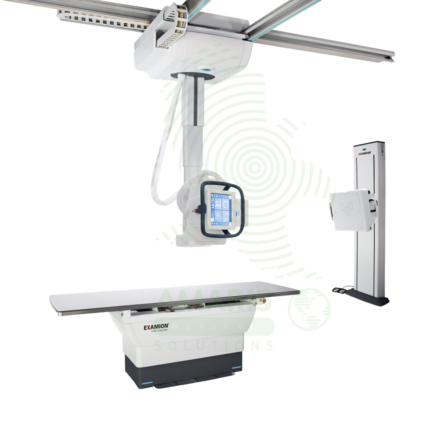
Digital Ceiling X-ray
A Digital Ceiling X-ray is a ceiling-mounted digital radiography system for general diagnostic imaging of the skeletal, chest, abdominal, and extremity anatomy. The ceiling-mounted tube assembly provides full room coverage for flexible patient positioning, while digital flat panel detectors produce immediate high-resolution images for rapid diagnosis. Integrated with PACS and RIS, it supports efficient digital workflow from image acquisition to interpretation. Used in radiology departments, emergency rooms, and outpatient imaging centers.
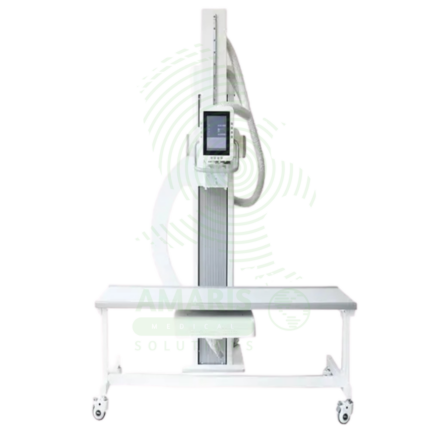
Digital U-arm X-ray
A Digital U-arm X-ray is a versatile digital radiography system designed for emergency departments, urgent care centers, and outpatient clinics. The U-arm configuration provides flexible positioning for chest, abdominal, skeletal, and extremity imaging with easy patient access for stretcher and wheelchair patients. Digital detectors produce immediate high-resolution images for rapid diagnosis, while the compact footprint allows installation in space-constrained settings. Essential for rapid, high-quality imaging in emergency and ambulatory care environments.
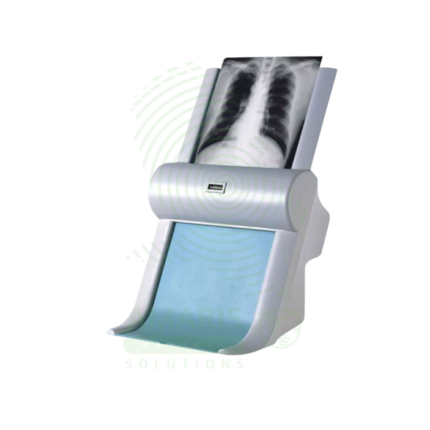
Film Digitizer
A Film Digitizer is a specialized scanner that converts analog radiographic films into high-fidelity digital images (DICOM format). It is the essential tool for migrating historical film archives into a modern digital PACS, enabling filmless workflow, remote access, and long-term preservation of diagnostic records. Its critical performance characteristics are a wide optical density range (to capture all film details) and high spatial resolution. By creating secure, accessible digital copies, it protects against the loss of physical films and integrates past patient history with current digital imaging, supporting comprehensive care and efficient radiology practice.
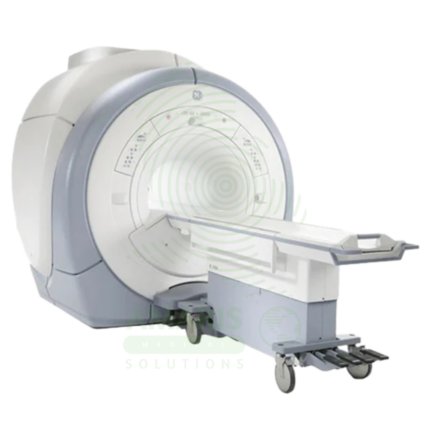
Magnetic Resonance Imaging
Magnetic Resonance Imaging (MRI) is a non-invasive diagnostic imaging modality that uses powerful magnetic fields and radiofrequency waves to produce detailed images of soft tissues, organs, and internal structures without ionizing radiation. It is the gold standard for imaging the brain, spinal cord, joints, muscles, and ligaments, and is essential for neurological, musculoskeletal, oncologic, and cardiovascular diagnosis. MRI provides exceptional soft tissue contrast, enabling precise anatomical characterization, tumor staging, and treatment planning. Strict safety protocols for ferromagnetic screening and contrast administration are essential for patient safety.
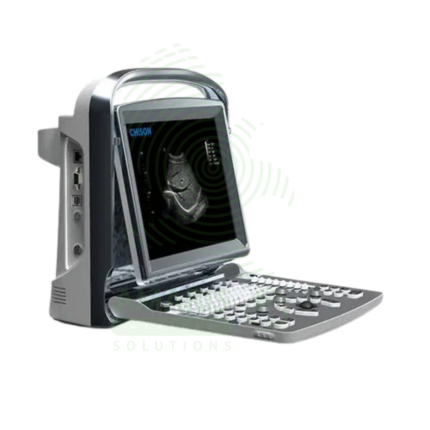
Portable Ultrasound Machine
A Portable Ultrasound Machine is a compact, battery-powered imaging device designed for point-of-care use, bringing diagnostic capability directly to the patient's bedside. It is essential for rapid triage in emergency and critical care settings, procedural guidance, and basic examinations in clinics and remote locations. While offering core imaging modes like B-mode and Color Doppler in a lightweight, durable package, its effective use requires clinician training to recognize both its diagnostic value and its limitations compared to comprehensive departmental systems. Proper cleaning, battery management, and data security are paramount for its safe and effective deployment.