Dermatoscope and Magnifiers
 Diagnostic Kits
 Vital Signs Monitors
 Stethoscopes and Accessories
 Otoscopes, Ophthalmoscopes, and Retinoscopes
 Reflex Hammers and Neurological Tools
 Scales and Measuring Devices
 Spirometers and Pulmonary Function Tests
 Electrosurgical Units and Accessories
 Cutting Instruments
 Grasping and Holding Instruments
 Hemostatic Instruments
 Specialized Surgical Sets
 Single-Use Procedure Trays and Packs
 Surgical Drapes, Gowns, and Covers
 Tissue Unifying Instruments
 Radiation Protection
 X-Ray Machines and Accessories
 Ultrasound Systems and Probes
 MRI and CT Scanners
 Radiology Consumables
 Bone Densitometers
 Fluoroscopy Equipment
 Imaging Tables and Positioning Aids
 Microscopes and Accessories
 Centrifuges and Separators
 Analyzers
 Incubators and Ovens
 Pipettes, Dispensers, and Lab Glassware
 Refrigerators, Freezers, and Storage Units
 Lab Consumables
 Sterilizers and Autoclaves for Lab Use
 Multi-Parameter Monitors
 Ventilators and Respiratory Support Devices
 Defibrillators and AEDs
 Infusion Pumps and IV Systems
 Patient Warmers and Cooling Devices
 Central Monitoring Stations
 Accessories
 Anesthesia Machines and Workstations
 Oxygen Concentrators and Delivery Systems
 Nebulizers and Inhalers
 CPAP/BiPAP Machines
 Airway Management
 Anesthesia Masks, Circuits, and Bags
 Humidifiers and Heaters
 Respiratory Therapy Accessories
 First Aid Kits and Cabinets
 Emergency Resuscitation Equipment
 Trauma Supplies
 Emergency Carts and Crash Carts
 Burn Care Products
 Bleeding Control
 Automated External Defibrillators (AEDs)
 Transport and Evacuation
 Wheelchairs and Accessories
 Walkers, Crutches, and Canes
 Prosthetics and Orthotics
 Physical Therapy Equipment
 Transfer Devices
 Bathroom Safety
 Orthopedic Traction and Tables
 Hot/Cold Therapy Packs and Units
 Beds and Mattresses
 Chairs and Stools
 Tables
 Cabinets and Storage
 Privacy Screens & Curtains
 Stands and Racks
 Linens and Textiles
 Lighting
 Autoclaves and Sterilizers
 Ultrasonic Cleaners
 Disinfectant Solutions and Wipes
 Sterilization Pouches, Wraps, and Indicators
 Instrument Trays and Containers
 UV and Ozone Disinfection Devices
 Washer Disinfectors
 Wound Care
 Gloves
 Masks and Respirators
 Catheters and Tubing
 Swabs, Applicators, and Sponges
 Incontinence Products
 Personal Protective Equipment (PPE)
 Dental Chairs and Units
 Handpieces and Burs
 Instruments
 Consumables
 Sterilization for Dental Use
 Orthodontic Supplies
 Endodontic Tools
 Slit Lamps and Tonometers
 Lensometers and Phoropters
 Ophthalmic Surgical Instruments
 Eyewear Frames and Lenses
 Contact Lens Supplies
 Vision Testing Charts and Devices
 Eye Care Consumables
 Laser Systems for Eye Care
 ENT Exam Chairs and Tables
 Endoscopes
 Audiometers and Hearing Tests
 ENT Instruments
 Nasal and Throat Packs
 Hearing Aids and Accessories
 Otology Supplies
 Fetal Dopplers and Monitors
 Delivery Beds and Tables
 Gynecological Instruments
 Neonatal Incubators and Warmers
 Breast Pumps and Accessories
 Contraceptive Devices
 Maternity Supports and Pads
 Neonatal Consumables
 Cystoscopes and Urethroscopes
 Dialysis Machines and Supplies
 Urological Catheters and Bags
 Lithotripters
 Prostate Treatment Devices
 Urinary Incontinence Products
 Kidney Stone Management Tools
 Consumables & Disposables
 EEG and EMG Machines
 Neurosurgical Instruments
 Nerve Stimulators
 Headrests and Positioning Aids
 Lumbar Puncture Kits
 Seizure Monitoring Devices
 Consumables
 Rehabilitation for Neurological Conditions
 ECG Machines and Accessories
 Holter Monitors
 Stress Test Systems
 Pacemakers and Defibrillator Accessories
 Vascular Access Devices
 Cardiac Catheters and Guidewires
 Blood Flow Meters
 Consumables
 Orthopedic Instruments
 Casts, Splints, and Padding
 Joint Replacement Supplies
 Prosthetic Limbs and Components
 Bone Grafts and Substitutes
 Traction Devices
 Orthopedic Braces and Supports
 Rehabilitation Aids for Orthopedics
 Home Oxygen Therapy
 Hospital Beds for Home Use
 Mobility Aids
 Bathroom and Daily Living Aids
 Wound Care for Home
 Monitoring Devices
 Enteral Feeding Pumps and Tubes
 Hand Sanitizers and Dispensers
 Face Shields and Goggles
 Isolation Gowns and Suits
 Biohazard Waste Containers
 Air Purifiers and HEPA Filters
 Surface Disinfectants
 Sharps Containers
 Protective Barriers
 Cardiovascular & Endurance Training
 Strength Training & Weightlifting
 Functional Training & Core Conditioning
 Physical Therapy & Rehabilitation
 Sports & Outdoor Recreation
 Gym Flooring & Facility Equipment
 Fitness Monitoring & Accessories
 Kids & Novelties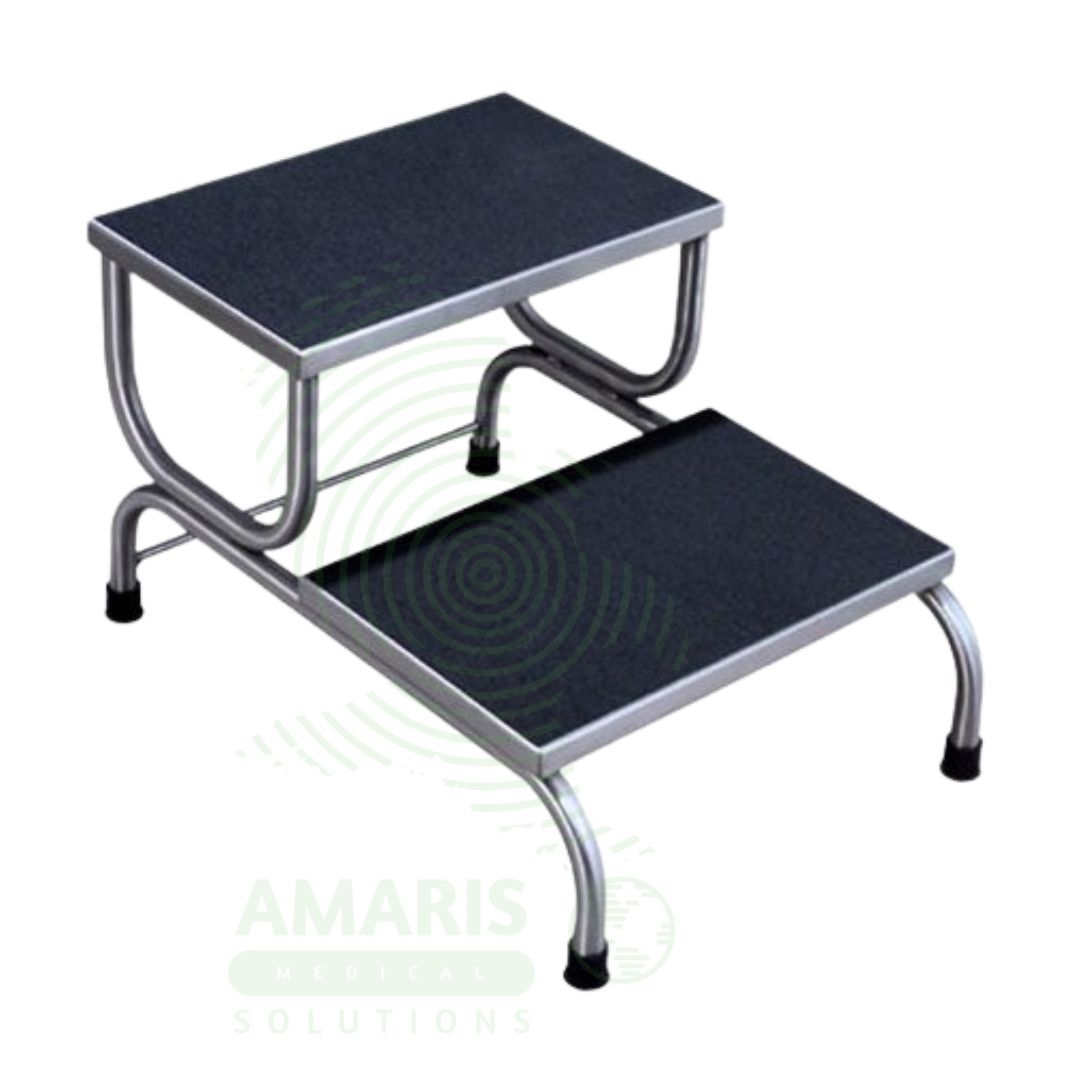
Step Stool
WhatsApp Order
A Step Stool is a low, portable platform with one or two steps, designed to provide safe, temporary elevation in clinical settings. Its primary uses are to assist patients in accessing high examination tables and beds, and to provide healthcare staff with an ergonomic means of reaching high storage and equipment. Key safety features include a robust load rating, a wide stable base, non-slip step surfaces, and non-marking feet. It is a simple yet essential piece of equipment for preventing falls and promoting safe patient handling and staff ergonomics throughout hospitals and clinics.
Description
Step Stool
PRIMARY CLINICAL & DIAGNOSTIC USES
1. Safe Patient Access to and from Elevated Surfaces
-
Definitive Use: Provides a stable, low-rise platform to assist patients, particularly the elderly, mobility-impaired, or those with limited lower body strength, in safely getting onto and off of high examination tables, procedure chairs, imaging tables, and hospital beds.
-
How it helps: For the nurse and medical assistant rooming patients, the step stool transforms a potentially dangerous climb into a safe, controlled step—reducing the risk of falls that could result in fractures, head injuries, or extended hospital stays. For the elderly patient with arthritic hips, the post-operative patient with limited mobility, or the frail patient lacking lower body strength, having a stable stool at the bedside or exam table means they can access care surfaces with dignity and safety, rather than struggling to climb or requiring full lifting assistance.
2. Ergonomic Assistance for Healthcare Staff
-
Primary Use: Used by clinicians, nurses, and technicians to safely reach high storage shelves, cupboards, medication cabinets, supply racks, and wall-mounted equipment without over-stretching or using unstable improvised platforms, reducing the risk of workplace falls and musculoskeletal injuries.
-
How it helps: For the nurse reaching for supplies on a high shelf, the technician accessing wall-mounted monitors, or the physician retrieving equipment from overhead storage, a sturdy step stool provides secure elevation that prevents the back strain and fall risk associated with stretching or climbing on unstable surfaces. For the healthcare worker who performs these reaches dozens of times per shift, having a stable platform readily available reduces cumulative strain and the risk of acute injury that could take them away from patient care.
3. Support During Patient Transfers and Mobilization
-
Primary Use: Provides a stable point of support for patients during supervised standing, pivoting transfers, or early ambulation activities conducted by physical or occupational therapists.
-
How it helps: For the physical therapist working with a patient taking their first steps after surgery, or the nurse assisting a patient in a pivot transfer from bed to chair, a strategically placed step stool can provide an intermediate point of support—a place to rest, a stable surface to steady themselves, a confidence-building tool during the challenging process of regaining mobility. For the patient rebuilding strength and balance, having a stable stool nearby reduces the fear of falling and encourages greater participation in therapy.
4. Positioning Aid for Procedures and Examinations
-
Primary Use: Used to position a patient’s feet or to allow a shorter clinician to achieve a better working height during certain examinations or minor procedures at the bedside or in an exam room.
-
How it helps: For the clinician whose height makes certain examinations awkward, a step stool provides the elevation needed to perform procedures comfortably and effectively, improving both clinician ergonomics and procedural precision. For the patient, a properly positioned clinician is one who can focus on their care rather than struggling with awkward positioning.
SECONDARY & SUPPORTIVE USES
1. Portable Platform for Equipment Maintenance: Used by biomedical engineering or facilities staff as a stable, movable platform to safely access and service ceiling-mounted lights, HVAC vents, or medical gas outlets. For the maintenance team keeping hospital infrastructure functional, a safe, stable step stool prevents falls and supports efficient repairs.
2. Teaching and Demonstration Aid: Used in clinical skills training to simulate height adjustments or to allow an instructor to demonstrate techniques at a visible height to a group of students. For the learners who will become tomorrow’s clinicians, being able to clearly see demonstrations builds the skills they will need for patient care.
3. Cleaning and Environmental Services: Used by housekeeping staff to safely reach and clean high surfaces, windows, and light fixtures. For the environmental services team maintaining a clean, safe environment, a sturdy step stool provides secure access to all areas requiring attention.
4. Pediatric Patient Engagement: A low, sturdy step stool can be used to help pediatric patients feel more involved and independent, such as reaching a sink to wash their hands. For the child in a hospital setting, a simple step stool can restore a measure of independence and normalcy, allowing them to participate in their own care and daily activities.
KEY PRODUCT FEATURES
1. BASIC IDENTIFICATION ATTRIBUTES
-
Product Type: A low, portable platform with one or two steps, designed to provide a temporary, stable elevation for a person.
-
Core Design: A rigid frame supporting a horizontal platform or series of platforms (steps). May include a handle for support and mobility.
-
Key Components:
-
Step Platform(s): The primary standing surface, typically textured or coated with a non-slip material.
-
Frame: Sturdy construction from metal (steel, aluminum) or high-impact plastic.
-
Non-Slip Feet: Rubber or elastomer caps on all legs to prevent sliding on smooth floors.
-
Handle/Handrail: An integrated handle on some models, especially those designed for patient use, to provide stability while stepping up or down.
-
2. TECHNICAL & PERFORMANCE PROPERTIES
-
Load Capacity: Rated to support significant weight, typically 250 lbs (113 kg) to 500 lbs (227 kg) for heavy-duty clinical models.
-
Stability: A wide base relative to its height is critical to prevent tipping. The step should not rock or wobble under load.
-
Step Height: Usually between 6 to 12 inches (15 to 30 cm) for a single step, or with a second step reaching 18-24 inches (45-60 cm) total.
-
Non-Slip Surface: The standing surface must have a permanent, effective non-slip texture or coating, even when wet.
3. PHYSICAL & OPERATIONAL PROPERTIES
-
Construction: Welded steel tubing, die-cast aluminum, or molded structural plastic. Free of sharp edges or burrs.
-
Weight: Light enough to be easily carried by staff but heavy enough to feel stable in use.
-
Storage: Often designed to be stackable or nestable to save space when not in use.
-
Cleanability: Made of materials that can be easily wiped clean and disinfected.
4. SAFETY & COMPLIANCE ATTRIBUTES
-
Regulatory Status: Considered a piece of equipment or furnishing.
-
Safety Standards: Should be designed and tested to meet relevant safety standards for step stools or light-duty ladders (e.g., ANSI/OSHA requirements for slip resistance, stability, and load rating in workplace settings).
-
Visibility: Often colored in high-visibility colors (e.g., yellow, orange) to prevent tripping when not in use.
5. STORAGE & HANDLING ATTRIBUTES
-
Storage: Should be stored in a designated location (e.g., in a corner, under a counter, in a storage room) when not in use to avoid becoming a trip hazard in walkways.
-
Cleaning & Disinfection: Wipe down the steps, handles, and frame regularly with a hospital-grade disinfectant, as they are high-touch surfaces.
-
Maintenance: Regularly inspect for loose parts, cracks (especially in plastic models), worn non-slip surfaces, and damaged or missing foot caps. Remove from service immediately if damaged.
6. LABORATORY & CLINICAL APPLICATIONS
-
Primary Application: A fundamental piece of support equipment for both patient safety and staff safety across all clinical environments. It is a simple but critical tool for preventing falls—the most common cause of injury in healthcare settings for both patients and staff.
SAFETY HANDLING PRECAUTIONS
1. SAFETY PRECAUTIONS
-
Stable Placement (CRITICAL): Always place the step stool on a firm, level, dry surface. Never place it on an uneven floor, on top of another object, or near the edge of a raised surface.
-
Weight Limit: Never exceed the manufacturer's stated weight capacity.
-
Proper Use: Face the step stool when ascending or descending. Use the handrail if provided. Only one person should use it at a time. Do not stand on the very edge of the step.
-
Patient Supervision: Always supervise and assist patients using a step stool. Do not leave a patient unattended on a step stool.
-
Clear Area: Ensure the area around the step stool is free of obstacles, cords, or liquids that could cause a trip or slip.
2. FIRST AID MEASURES
-
Fall from Stool: If a patient or staff member falls, do not move them if a spinal injury is suspected. Call for emergency assistance and provide first aid for visible injuries while waiting.
-
Stool Collapse: If the stool breaks or collapses under a person, carefully help them off if possible without causing further injury. Seek medical attention for any injuries. Remove the damaged stool from service immediately.
3. FIRE FIGHTING MEASURES
-
Flammability: Plastic components and rubber feet are combustible.
-
Extinguishing Media: Use water, foam, or CO₂. Move the stool away from the fire if it is safe to do so.
Related products
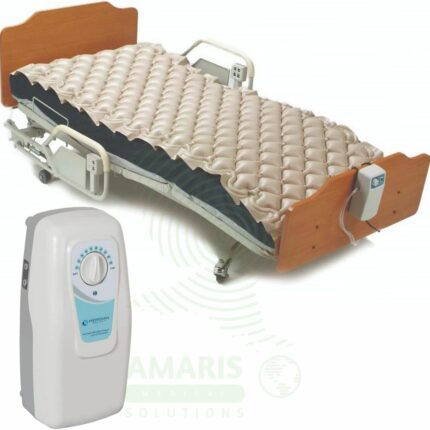
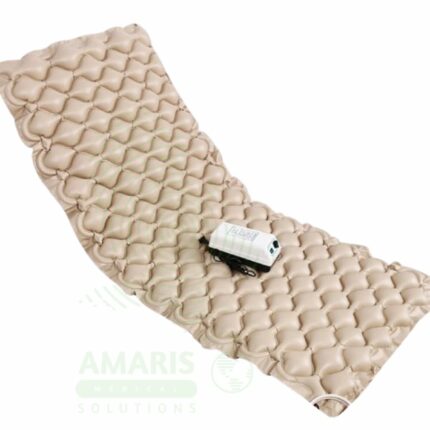
Alternating Mattress
An Alternating Mattress is a powered, dynamic support surface designed for the prevention and treatment of pressure injuries in high-risk, immobile patients. Its core function is the cyclical inflation and deflation of air cells, which constantly shifts pressure away from bony prominences to maintain tissue perfusion. Consisting of a durable air-cell mattress, an intelligent control pump with alarms, and a fluid-proof cover, it is a critical intervention in intensive care, spinal units, and wound care. Its use requires vigilant monitoring of alarms and patient skin integrity as part of a comprehensive pressure injury prevention protocol.
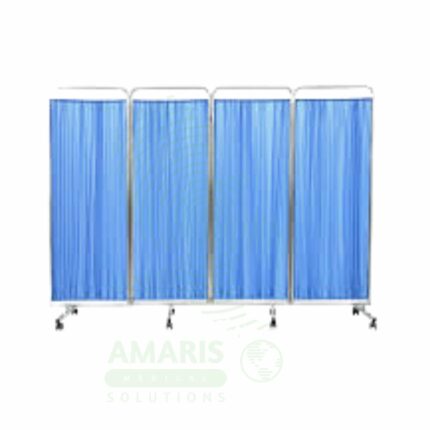
Foldable Ward Screen
A Foldable Ward Screen is a portable, folding partition used to create instant visual privacy around a patient's bed or procedure area in multi-bed hospital wards, emergency departments, and clinics. Typically consisting of three hinged opaque panels, it provides dignity during examinations and personal care, aids in infection control by creating temporary barriers, and helps manage the clinical environment. Its free-standing, foldable design allows for easy deployment, storage, and cleaning, making it a fundamental piece of non-clinical equipment for patient-centered care in shared spaces.
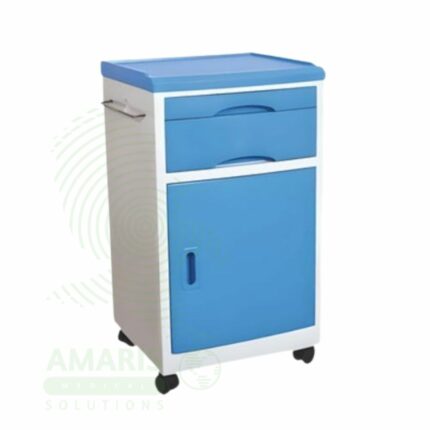
Imported Hospital Bedside Lockers
Imported Hospital Bedside Lockers are secure storage units designed for patient bedside use in hospitals, long-term care facilities, and patient care areas. Featuring lockable drawers for valuables and medications, open shelves for frequently used items, and smooth, non-porous surfaces for easy cleaning, they provide organized, secure storage for patient personal belongings and clinical supplies. The top surface serves as a convenient platform for water, tissues, and call bells, supporting patient independence and comfort. Essential for maintaining an organized, dignified patient environment while supporting infection control protocols.
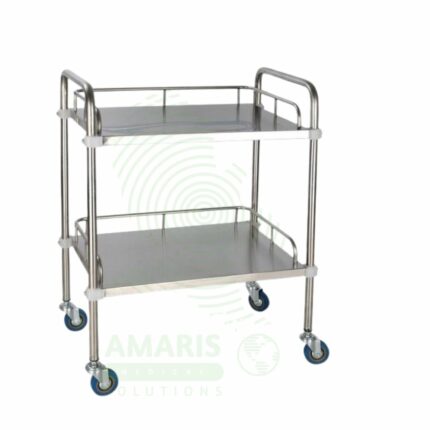
Instrument & Medicine Trolley
An Instrument & Medicine Trolley is a versatile, secure, mobile cart designed to transport, organize, and administer both medical instruments and medications. It functions as a mobile workstation for procedures, medication rounds, or emergency response, depending on its configuration. Key features include lockable, compartmentalized drawers for secure storage, a flat work surface, and smooth-rolling casters for mobility. Its adaptability makes it essential across hospital settings, from wards to treatment rooms, ensuring that organized, secure, and complete sets of tools and drugs are delivered efficiently to the point of patient care.
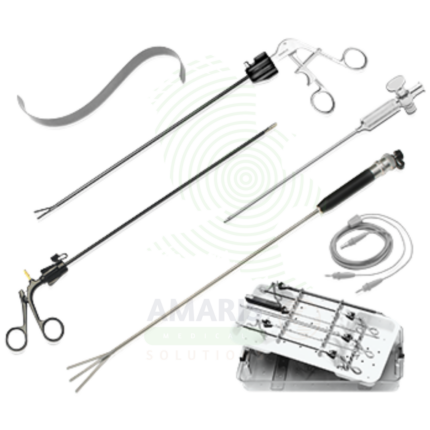
Laparoscopic Accessories
Laparoscopic accessories encompass a range of ancillary equipment and supplies essential for minimally invasive surgery, including cleaning brushes, sterilization containers, insufflation tubing, instrument storage systems, and single-use protective covers. These accessories support instrument care, procedural efficiency, and infection control, ensuring that laparoscopic instruments remain in optimal condition and that procedures run smoothly. Essential for operating rooms, sterile processing departments, and surgical suites.
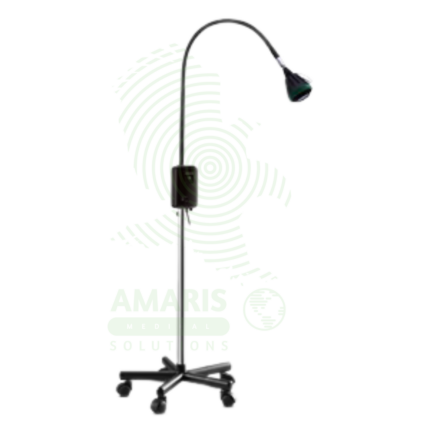
Portable Examination Light (LED/Halogen)
A Portable Examination Light (LED/Halogen) is a mobile, adjustable light source designed for clinical examinations, minor procedures, and wound assessment. LED models offer energy efficiency, long bulb life, and cool operation; halogen models provide high intensity with warm color temperature. The flexible gooseneck or articulating arm allows precise positioning to illuminate examination sites without shadows. Used in examination rooms, procedure rooms, emergency departments, and home healthcare settings, it provides the focused illumination needed for accurate assessment and safe procedures.
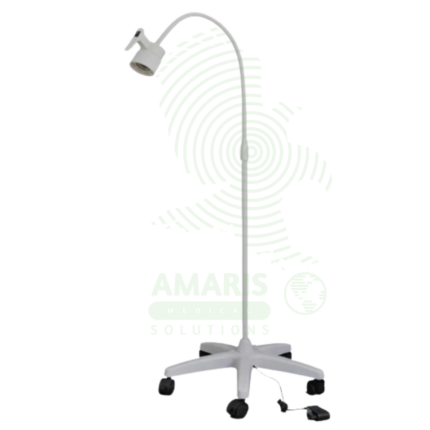
Portable Flexible LED Examination Lamp
A Portable Flexible LED Examination Lamp is a clinical lighting device featuring a high-intensity LED light source mounted on a flexible gooseneck arm. The LED provides bright, cool illumination with high color rendering index (CRI) for accurate tissue color discrimination during physical examinations, minor procedures, and wound assessment. The flexible gooseneck allows precise positioning to eliminate shadows and direct light into body cavities. Available in corded and battery-powered configurations, it is used in examination rooms, procedure rooms, emergency departments, and home healthcare settings. LED technology offers long bulb life, minimal heat output, and energy efficiency.