Dermatoscope and Magnifiers
 Diagnostic Kits
 Vital Signs Monitors
 Stethoscopes and Accessories
 Otoscopes, Ophthalmoscopes, and Retinoscopes
 Reflex Hammers and Neurological Tools
 Scales and Measuring Devices
 Spirometers and Pulmonary Function Tests
 Electrosurgical Units and Accessories
 Cutting Instruments
 Grasping and Holding Instruments
 Hemostatic Instruments
 Specialized Surgical Sets
 Single-Use Procedure Trays and Packs
 Surgical Drapes, Gowns, and Covers
 Tissue Unifying Instruments
 Radiation Protection
 X-Ray Machines and Accessories
 Ultrasound Systems and Probes
 MRI and CT Scanners
 Radiology Consumables
 Bone Densitometers
 Fluoroscopy Equipment
 Imaging Tables and Positioning Aids
 Microscopes and Accessories
 Centrifuges and Separators
 Analyzers
 Incubators and Ovens
 Pipettes, Dispensers, and Lab Glassware
 Refrigerators, Freezers, and Storage Units
 Lab Consumables
 Sterilizers and Autoclaves for Lab Use
 Multi-Parameter Monitors
 Ventilators and Respiratory Support Devices
 Defibrillators and AEDs
 Infusion Pumps and IV Systems
 Patient Warmers and Cooling Devices
 Central Monitoring Stations
 Accessories
 Anesthesia Machines and Workstations
 Oxygen Concentrators and Delivery Systems
 Nebulizers and Inhalers
 CPAP/BiPAP Machines
 Airway Management
 Anesthesia Masks, Circuits, and Bags
 Humidifiers and Heaters
 Respiratory Therapy Accessories
 First Aid Kits and Cabinets
 Emergency Resuscitation Equipment
 Trauma Supplies
 Emergency Carts and Crash Carts
 Burn Care Products
 Bleeding Control
 Automated External Defibrillators (AEDs)
 Transport and Evacuation
 Wheelchairs and Accessories
 Walkers, Crutches, and Canes
 Prosthetics and Orthotics
 Physical Therapy Equipment
 Transfer Devices
 Bathroom Safety
 Orthopedic Traction and Tables
 Hot/Cold Therapy Packs and Units
 Beds and Mattresses
 Chairs and Stools
 Tables
 Cabinets and Storage
 Privacy Screens & Curtains
 Stands and Racks
 Linens and Textiles
 Lighting
 Autoclaves and Sterilizers
 Ultrasonic Cleaners
 Disinfectant Solutions and Wipes
 Sterilization Pouches, Wraps, and Indicators
 Instrument Trays and Containers
 UV and Ozone Disinfection Devices
 Washer Disinfectors
 Wound Care
 Gloves
 Masks and Respirators
 Catheters and Tubing
 Swabs, Applicators, and Sponges
 Incontinence Products
 Personal Protective Equipment (PPE)
 Dental Chairs and Units
 Handpieces and Burs
 Instruments
 Consumables
 Sterilization for Dental Use
 Orthodontic Supplies
 Endodontic Tools
 Slit Lamps and Tonometers
 Lensometers and Phoropters
 Ophthalmic Surgical Instruments
 Eyewear Frames and Lenses
 Contact Lens Supplies
 Vision Testing Charts and Devices
 Eye Care Consumables
 Laser Systems for Eye Care
 ENT Exam Chairs and Tables
 Endoscopes
 Audiometers and Hearing Tests
 ENT Instruments
 Nasal and Throat Packs
 Hearing Aids and Accessories
 Otology Supplies
 Fetal Dopplers and Monitors
 Delivery Beds and Tables
 Gynecological Instruments
 Neonatal Incubators and Warmers
 Breast Pumps and Accessories
 Contraceptive Devices
 Maternity Supports and Pads
 Neonatal Consumables
 Cystoscopes and Urethroscopes
 Dialysis Machines and Supplies
 Urological Catheters and Bags
 Lithotripters
 Prostate Treatment Devices
 Urinary Incontinence Products
 Kidney Stone Management Tools
 Consumables & Disposables
 EEG and EMG Machines
 Neurosurgical Instruments
 Nerve Stimulators
 Headrests and Positioning Aids
 Lumbar Puncture Kits
 Seizure Monitoring Devices
 Consumables
 Rehabilitation for Neurological Conditions
 ECG Machines and Accessories
 Holter Monitors
 Stress Test Systems
 Pacemakers and Defibrillator Accessories
 Vascular Access Devices
 Cardiac Catheters and Guidewires
 Blood Flow Meters
 Consumables
 Orthopedic Instruments
 Casts, Splints, and Padding
 Joint Replacement Supplies
 Prosthetic Limbs and Components
 Bone Grafts and Substitutes
 Traction Devices
 Orthopedic Braces and Supports
 Rehabilitation Aids for Orthopedics
 Home Oxygen Therapy
 Hospital Beds for Home Use
 Mobility Aids
 Bathroom and Daily Living Aids
 Wound Care for Home
 Monitoring Devices
 Enteral Feeding Pumps and Tubes
 Hand Sanitizers and Dispensers
 Face Shields and Goggles
 Isolation Gowns and Suits
 Biohazard Waste Containers
 Air Purifiers and HEPA Filters
 Surface Disinfectants
 Sharps Containers
 Protective Barriers
 Cardiovascular & Endurance Training
 Strength Training & Weightlifting
 Functional Training & Core Conditioning
 Physical Therapy & Rehabilitation
 Sports & Outdoor Recreation
 Gym Flooring & Facility Equipment
 Fitness Monitoring & Accessories
 Kids & Novelties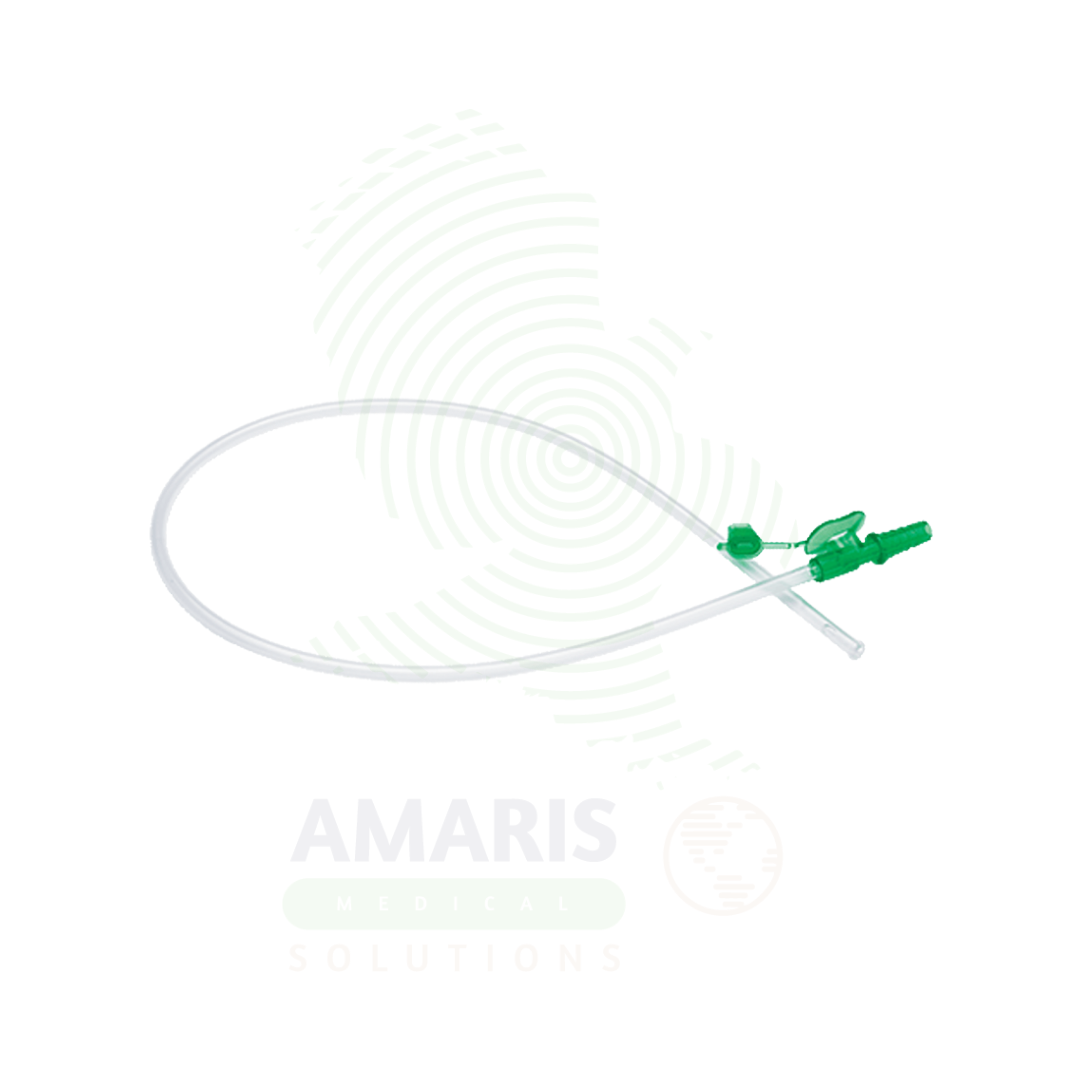
Suction Catheters
WhatsApp Order
Suction Catheters are sterile, single-use flexible tubes designed for aspiration of pulmonary secretions from the airways of intubated, tracheostomized, or spontaneously breathing patients unable to clear their own secretions. Available in French sizes 5 Fr-18 Fr, with whistle-tip or coude configurations, single or multiple eyelets, and thumb-controlled suction valves. Open suction catheters are single-pass devices requiring strict sterile technique and immediate disposal. Closed (in-line) suction catheters are enclosed in a sterile sheath, permitting suctioning without ventilator disconnection, maintaining PEEP, and reducing aerosolization of pathogens—essential for high-frequency ventilation, ARDS, and airborne precautions. Critical safety parameters include catheter gauge not exceeding one-half the endotracheal tube internal diameter, suction duration ≤15 seconds, and vacuum pressure ≤150 mmHg. Proper technique prevents hypoxemia, mucosal trauma, and ventilator-associated pneumonia.
Description
Suction Catheters
PRIMARY CLINICAL & DIAGNOSTIC USES
1. Clearance of Pulmonary Secretions
-
Primary Use: Removes accumulated mucus, sputum, blood, or other secretions from the trachea and lower airways in patients who cannot clear their own airway effectively, maintaining airway patency, improving oxygenation, preventing atelectasis, and reducing risk of ventilator-associated pneumonia.
-
How it helps: For the respiratory therapist, critical care nurse, and pulmonologist, the suction catheter is a lifeline for patients who cannot clear their own airways—reaching deep into the trachea to remove secretions that would otherwise obstruct breathing, cause oxygen desaturation, and provide a breeding ground for infection. For the ventilated patient or the individual with an ineffective cough, gentle suctioning means their airway remains clear, their lungs remain expanded, and their risk of pneumonia is reduced.
2. Airway Management in Mechanically Ventilated Patients
-
Primary Use: Essential for endotracheal and tracheostomy tubes to remove secretions that obstruct airflow, reduce tube lumen diameter, and provide a medium for bacterial colonization, serving as a fundamental component of ventilator care protocols.
-
How it helps: For the intensive care team managing a patient on mechanical ventilation, regular suctioning through the endotracheal or tracheostomy tube is essential to maintain airway patency—removing the secretions that would otherwise narrow the tube, increase work of breathing, and create a biofilm where bacteria can thrive. For the ventilated patient, proper suctioning means their artificial airway remains clear, ventilation remains effective, and the risk of ventilator-associated pneumonia is minimized.
3. Suctioning of Non-Intubated Patients
-
Primary Use: Used via nasal or oral route to reach the pharynx and trachea in patients with ineffective cough, retained secretions, or impaired consciousness who are not intubated but require airway clearance.
-
How it helps: For the nurse and respiratory therapist caring for a patient with stroke, neuromuscular disease, or post-operative weakness, nasotracheal suctioning provides a means to clear the airway when the patient’s own cough is too weak to be effective—removing secretions that would otherwise pool, desaturate, and eventually be aspirated. For the patient who cannot clear their own airway, suctioning means they can breathe more easily and avoid the pneumonia that comes from aspirated secretions.
4. Maintenance of Tube Patency
-
Primary Use: Prevents occlusion of endotracheal and tracheostomy tubes by removing dried or tenacious secretions that accumulate on the inner lumen wall, ensuring adequate airflow and preventing emergency tube obstruction.
-
How it helps: For the respiratory therapist and nurse caring for a patient with an artificial airway, regular suctioning prevents the gradual buildup of secretions that could suddenly occlude the tube—avoiding the terrifying emergency of a completely blocked airway that requires immediate tube change or replacement. For the patient dependent on their artificial airway, consistent suctioning means their lifeline remains open and functional.
5. Specimen Collection for Microbiological Diagnosis
-
Primary Use: Used with a sterile specimen trap to collect lower respiratory tract secretions for culture and sensitivity testing, aiding in targeted antimicrobial therapy for ventilator-associated pneumonia and other respiratory infections.
-
How it helps: For the infectious disease physician and microbiologist, a suction catheter with a specimen trap provides a direct sample from the lower airways—allowing identification of the specific bacteria causing pneumonia and determination of which antibiotics will be effective. For the patient with ventilator-associated pneumonia, culture results from a properly collected specimen mean their antibiotics can be narrowed from broad-spectrum to targeted therapy, improving outcomes and reducing side effects.
SECONDARY & SUPPORTIVE USES
1. Suctioning of Oral and Pharyngeal Secretions: Clears pooled saliva, blood, or vomitus from the oropharynx in patients unable to swallow or manage their own secretions, reducing aspiration risk. For the patient with dysphagia or impaired consciousness, oral suctioning prevents aspiration of secretions into the lungs.
2. Bronchoscopy Adjunct: Used in conjunction with bronchoscopy for suctioning of lavage fluid or secretions during diagnostic and therapeutic bronchoscopic procedures. For the patient undergoing bronchoscopy, effective suctioning clears the field and improves visualization.
3. Neonatal and Pediatric Airway Clearance: Specialized small-gauge suction catheters are used for delicate airway suctioning in neonates and infants with respiratory distress syndrome, meconium aspiration, or congenital airway anomalies. For the smallest patients, appropriately sized catheters mean effective suctioning without airway trauma.
4. Post-Operative Airway Management: Routinely used in post-anesthesia care units following extubation to clear residual secretions and prevent post-operative atelectasis or aspiration. For the patient emerging from anesthesia, suctioning ensures a clear airway during recovery.
5. Emergency Airway Management: Essential equipment in emergency departments and code carts for rapid clearance of the airway during resuscitation of patients with compromised airways due to trauma, overdose, or cardiopulmonary arrest. For the patient in extremis, immediate suctioning can be life-saving.
6. Home Care for Chronic Respiratory Conditions: Used by patients with chronic tracheostomies, neuromuscular disorders, or home mechanical ventilation to manage daily airway secretions and maintain independence. For the patient managing their own airway at home, suction catheters provide the means to maintain independence and avoid hospitalization.
KEY PRODUCT FEATURES
1. BASIC IDENTIFICATION ATTRIBUTES
-
Product Type: A sterile, single-use, flexible hollow tube designed for connection to a vacuum source to aspirate secretions from the airway.
-
Designation: Defined by French (Fr) gauge, length, tip style, number of eyes, and presence of control valve.
-
Core Components:
-
Catheter Shaft: Flexible, transparent medical-grade PVC or silicone tubing.
-
Tip: Distal end that enters the airway. Styles: straight (whistle tip), coude (curved), blunt-tip.
-
Eyes (Eyelets): Side openings at or near the tip for aspiration; single-eye, double-eye (two side eyes), or multiple-eye configurations.
-
Control Valve: Thumb-controlled vacuum port at the proximal end for intermittent suction application.
-
Connector: Standard tapered female connector (15 mm) for attachment to suction tubing and vacuum source.
-
-
Specific Variations:
-
Closed Suction Catheters (In-Line): Enclosed in a sterile plastic sheath, allowing suctioning without disconnecting the patient from the ventilator. Maintains PEEP, reduces VAP risk, and protects staff from aerosolized pathogens.
-
Open Suction Catheters: Traditional, single-use catheter disconnected from ventilator for each suction pass.
-
Yankauer Suction Tip: Rigid, wide-bore pharyngeal suction tip (not a catheter; separate product category).
-
2. TECHNICAL & PERFORMANCE PROPERTIES
-
French Gauge (Fr): Circumference in millimeters, approximates outer diameter. 1 Fr = 0.33 mm diameter. Range: 5 Fr (neonatal) to 18 Fr (adult, large-bore). Selection rule: catheter Fr size should not exceed half the internal diameter (ID) of the endotracheal/tracheostomy tube in millimeters (e.g., 8.0 mm ETT = ≤16 Fr catheter).
-
Length: Standard adult suction catheters: 22-24 inches (56-60 cm). Pediatric: 15-20 inches (38-50 cm). Closed suction catheters: longer to accommodate sheath mechanism.
-
Tip Configuration:
-
Whistle Tip (Angled): Smooth, rounded, slightly angled tip with single end-hole and one side eye. Reduces mucosal trauma. Most common.
-
Coude Tip (Curved): Angled tip designed to navigate the left mainstem bronchus more easily.
-
Blunt Tip: Rounded, non-traumatic tip for sensitive airways.
-
Multiple-Eye: Several lateral eyes distributed near the tip for more uniform suction distribution and reduced tissue grab.
-
-
Suction Control Valve: Proximal thumb port for intermittent suction. Open = suction off; occluded = suction on. Allows precise control, prevents continuous suction trauma.
-
Flow Rate: Volume of air/fluid aspirated per unit time at a given vacuum pressure. Affected by catheter gauge, length, and number/size of eyes.
-
Radiopacity: Radiopaque stripe or impregnated barium sulfate throughout the catheter length for radiographic visualization to confirm placement and detect retained fragments.
3. PHYSICAL & OPERATIONAL PROPERTIES
-
Material:
-
PVC (Polyvinyl Chloride): Most common. Transparent, moderately flexible, economical. May contain DEHP plasticizer (non-DEHP alternatives available).
-
Silicone: Softer, more biocompatible, latex-free, reduced friction. Used for patients with PVC sensitivity or requiring extended indwelling suction (e.g., chronic tracheostomy).
-
Red Rubber: Less common; reusable (historical).
-
-
Transparency: Clear or translucent material permits visualization of aspirated secretions (color, consistency, volume, presence of blood).
-
Surface Lubricity: Some catheters are coated with hydrophilic polymer (activated by water or saline) to reduce friction during insertion and minimize mucosal trauma.
-
Depth Markings: Graduated centimeter markings along the shaft to guide insertion depth and prevent over-insertion or bronchial trauma.
-
Packaging: Individually wrapped in sterile, peel-open tray or spiral-wound package. Closed suction catheters packaged sterile with integral sheath and swivel adapter.
4. SAFETY & COMPLIANCE ATTRIBUTES
-
Regulatory Standards:
-
ISO 8836: Suction catheters for use in the respiratory tract.
-
ASTM F960: Standard specification for medical-grade suction catheters.
-
FDA 510(k) Clearance: Required for US marketing.
-
CE Marking: Required for European market.
-
-
Biocompatibility: Materials must meet ISO 10993 standards for cytotoxicity, sensitization, irritation, and systemic toxicity. PVC catheters must comply with DEHP restrictions per regional regulations (e.g., EU MDR, California Proposition 65).
-
Latex-Free: Modern suction catheters are manufactured without natural rubber latex.
-
Sterility: Terminal sterilization via ethylene oxide (EtO) or gamma irradiation. Sterility assurance level (SAL) of 10⁻⁶. Sterile unless packaging is compromised or expired.
-
Non-Pyrogenic: Certified free of endotoxins.
-
Single-Patient Use (Closed Suction): Closed suction catheters are single-patient-use devices but may remain in-line for 24-72 hours per facility protocol. The catheter itself is not reused across multiple patients but is changed per manufacturer guidelines.
5. STORAGE & HANDLING ATTRIBUTES
-
Storage: Store in original, unopened packaging in a cool, dry environment. Protect from direct sunlight, extreme temperatures, and moisture.
-
Shelf Life: Typically 3-5 years from date of manufacture. Expiration date printed on each package. Do not use it after expiration.
-
Package Inspection: Before use, inspect packaging for any signs of compromise: tears, punctures, moisture ingress, or damage to sterile barrier. Do not use it if integrity is questionable.
-
Single-Use Protocol (Open Suction): Open suction catheters are strictly single-use, single-patient, single-pass devices. A new sterile catheter must be used for each suction episode. Never reuse a suction catheter, even on the same patient. Reuse is associated with:
-
Introduction of pathogens into the lower airway.
-
Cross-contamination and VAP.
-
Material degradation and tip trauma.
-
-
Closed Suction Protocol: Closed suction catheters are changed per facility protocol (typically every 24-72 hours) or immediately if visibly soiled, damaged, or upon suspected contamination. The irrigation port must be used with sterile normal saline only.
6. LABORATORY & CLINICAL APPLICATIONS
-
Primary Application: The standard device for endotracheal and tracheostomy tube suctioning in intubated, mechanically ventilated, or spontaneously breathing patients with an artificial airway.
-
Selection Criteria:
-
Patient age/size: Determines French gauge.
-
Airway device size: Catheter Fr ≤ ½ ETT ID (mm).
-
Secretions viscosity: Thick, tenacious secretions may require larger gauge or multiple-eye catheters.
-
Suction frequency: Frequent suctioning (>6x/day) may favor closed suction systems to reduce ventilator disconnections and VAP risk.
-
Infection control requirements: Known or suspected airborne infection (e.g., TB, COVID-19, measles) mandates a closed suction system to prevent aerosolization.
-
-
Closed vs. Open Suction Decision:
-
Closed Suction Indications: High PEEP, ARDS, airborne precautions, frequent suctioning, unstable oxygenation, neonatal/pediatric populations.
-
-
Open Suction Indications: Short-term intubation, low infection risk, absence of ventilator, resource-limited settings.
SAFETY HANDLING PRECAUTIONS
1. SAFETY PRECAUTIONS
-
Do Not Exceed Catheter-to-ETT Ratio (Most Important): Catheter French gauge must not exceed one-half the internal diameter of the endotracheal or tracheostomy tube in millimeters. Oversized catheters cause:
-
Trauma to the airway mucosa.
-
Excessive negative pressure and lung volume loss (atelectasis).
-
Occlusion of the tube lumen during suctioning, impairing ventilation and oxygenation.
-
Difficulty passing the catheter.
-
-
Limit Suction Pressure: Use the lowest effective vacuum pressure. Recommended range: neonates 60-80 mmHg, infants 80-100 mmHg, children 100-120 mmHg, adults 120-150 mmHg. Higher pressures cause mucosal injury, hypoxemia, and atelectasis.
-
Limit Suction Duration: Each suction pass should not exceed 10-15 seconds (adults) or 5-10 seconds (neonates/pediatrics). Prolonged suctioning causes hypoxemia, bradycardia, and cardiac arrhythmias.
-
Preoxygenate: Hyperoxygenate the patient (100% FiO₂) for 30-60 seconds before and after suctioning to prevent suction-induced hypoxemia.
-
Gentle Insertion: Insert catheter only to predetermined depth (length of ETT/trach tube + 1-2 cm). Do not advance against resistance. Do not apply suction during insertion. Never force the catheter.
-
Intermittent Suction Only: Apply suction only during withdrawal, using a rotating motion. Continuous suction during insertion or prolonged stationary suction causes mucosal grab and trauma.
-
Monitor Patient During Procedure: Observe for bradycardia, desaturation, dysrhythmias, agitation, or bronchospasm. Stop immediately and reoxygenate if any adverse event occurs.
-
Sterile Technique (Open Suction): Use sterile gloves, sterile catheter, and sterile saline for irrigation. Maintain sterility of the catheter tip and distal shaft until insertion. Contamination of the lower airway is direct and immediate.
-
Closed Suction Precautions: Rinse the catheter lumen with sterile normal saline after each suction pass to maintain patency. Do not exceed 7 days of in-line use (per manufacturer). Change per protocol.
-
Never Reinsert Without Rinsing: For closed suction, always irrigate the catheter lumen after each pass. For open suction, discard and use a new sterile catheter for each pass.
2. FIRST AID MEASURES
-
Suction-Induced Hypoxemia: If patient develops oxygen desaturation (<90%), bradycardia, or cyanosis during suctioning, immediately withdraw catheter, reconnect ventilator or administer 100% oxygen via manual resuscitation bag, and ventilate until recovery. Do not resume suctioning until the patient is stabilized.
-
Mucosal Trauma/Bleeding: If blood is aspirated during suctioning, stop procedure, assess for source, and notify provider. Minor bleeding often resolves with saline irrigation and temporary cessation of suctioning. Significant bleeding may indicate tracheal injury requiring bronchoscopy.
-
Catheter Retention/Fracture: If a catheter tip shears off and remains in the airway, do not attempt blind retrieval. Maintain the patient's airway, administer high-flow oxygen, and obtain immediate bronchoscopy for foreign body removal.
-
Vagal Response/Bradycardia: Suctioning can stimulate the vagus nerve, causing bradycardia and hypotension. Stop suctioning immediately, ventilate with 100% oxygen, and assess heart rate. Atropine may be required per advanced cardiac life support (ACLS) protocols.
3. FIRE FIGHTING MEASURES
-
Flammability: PVC, silicone, and polyurethane materials are combustible.
-
Extinguishing Media: Use water, foam, CO₂, or dry chemical powder as appropriate for the surrounding fire. Burning PVC releases hydrogen chloride and toxic fumes; use self-contained breathing apparatus (SCBA) in enclosed spaces.
Related products
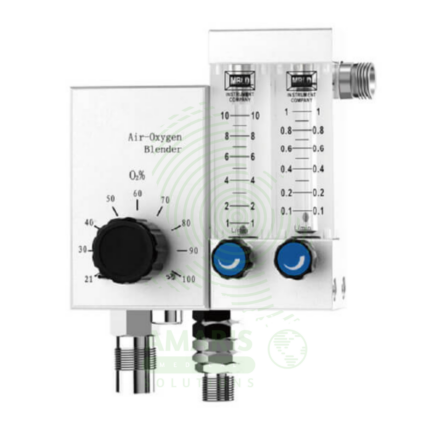
Air & Oxygen Blender
An Air & Oxygen Blender is a Class II medical device that precisely mixes compressed medical air and oxygen to deliver controlled fractions of inspired oxygen (FiO2 21-100%) to patients requiring respiratory support. Essential in neonatal, pediatric, and adult critical care, these devices ensure accurate oxygen delivery via ventilators, CPAP systems, oxygen hoods, incubators, and transport systems. Operating at 40-60 psi inlet pressure, they maintain set FiO2 within ±2-5% accuracy across varying flow demands (0-120 L/min). Gas-specific DISS or NIST fittings prevent dangerous cross-connection between oxygen and air supplies. Available in wall-mounted, rail-mounted, portable, and ventilator-integrated configurations. Primary clinical applications include neonatal intensive care (oxygen hoods, incubators, nasal CPAP), pediatric and adult mechanical ventilation, non-invasive ventilation, and critical care transport. Critical safety requirements include verification of correct gas connections, regular calibration, leak testing, and immediate response to gas supply failure alarms. Indispensable for preventing both hypoxemia and oxygen toxicity (particularly retinopathy of prematurity in neonates) in patients requiring precise oxygen therapy.
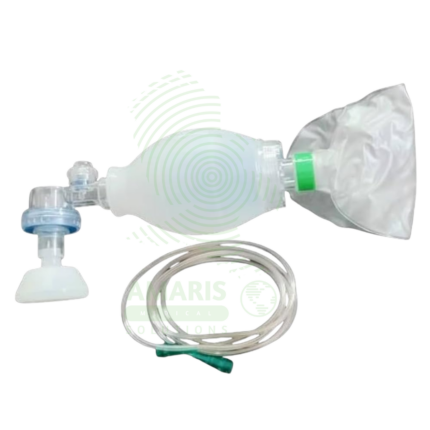
Breath Resuscitation Bag
A Breath Resuscitation Bag (manual resuscitator, bag-valve-mask) is a Class II medical device used to deliver positive-pressure ventilation to patients in respiratory arrest, cardiac arrest, or respiratory failure. Available in adult (1,500-2,000 mL), pediatric (450-750 mL), and infant/neonatal (200-350 mL) sizes with self-inflating silicone or PVC bags, one-way non-rebreathing valves, transparent cushioned masks, and oxygen reservoirs for high FiO2 delivery (90-100% with reservoir). Oxygen inlet allows connection to flow meter (10-15 L/min recommended). Pediatric/neonatal models include pressure-limiting valves (35-45 cmH2O) to prevent barotrauma. Essential for CPR (AHA guidelines: adult 10-12 breaths/min, child 12-20, infant 20-30), preoxygenation before intubation, transport ventilation, and recovery from anesthesia. Critical safety considerations include avoiding excessive ventilation pressure (prevents gastric insufflation), maintaining proper mask seal, monitoring chest rise, and having backup equipment readily available. Indispensable emergency airway equipment in hospitals, ambulances, crash carts, and emergency response kits worldwide.
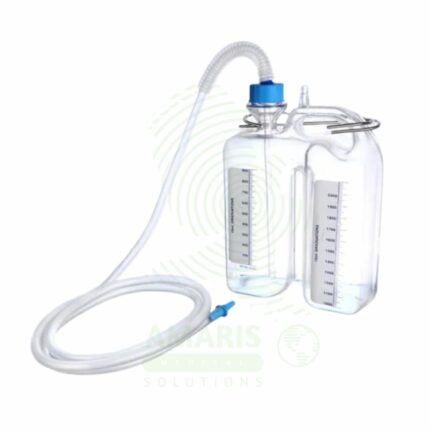
Chest Bottle
A Chest Bottle (Underwater Seal Drainage System) is a three-chamber disposable device used to drain air and fluid from the pleural space via a chest tube. Its critical component is a water seal chamber that acts as a one-way valve, preventing air from re-entering the chest while allowing drainage. It is used to treat pneumothorax, hemothorax, and pleural effusions, and is mandatory post-thoracic surgery. The system must always be kept upright and below the patient's chest level. It provides essential clinical information through tidaling in the water seal (indicating tube patency and lung expansion) and bubbling (indicating an air leak), making it both a therapeutic and diagnostic tool.
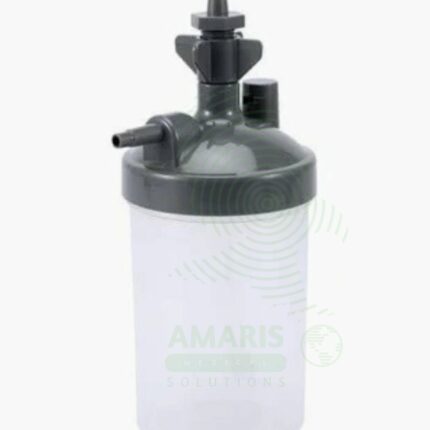
Humidifier Bottle
A Humidifier Bottle is a water reservoir device that adds moisture to dry medical oxygen before delivery to the patient. It attaches between the oxygen flow meter and the patient's oxygen delivery device, bubbling oxygen through sterile water to achieve relative humidity levels of 80-95%. Essential for patients receiving oxygen at flow rates above 4-6 liters per minute, it prevents drying of the nasal mucosa, pharynx, and lower airways, reducing discomfort and maintaining normal mucociliary clearance. Available in disposable sterile and reusable configurations, the bottle requires daily water changes with sterile water and proper positioning below the patient to prevent water carryover. Pressure relief valves protect against over-pressurization.
Infant Oxygen Hood
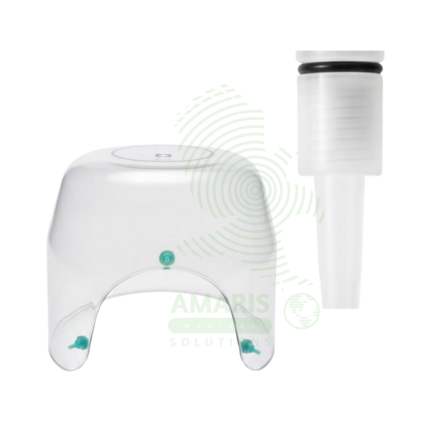
An Infant Oxygen Hood is a Class II medical device used to deliver controlled concentrations of supplemental oxygen to spontaneously breathing newborns and infants. Made of transparent medical-grade acrylic or polycarbonate, the hood fits over the infant's head with a soft foam or rubber neck seal, creating an oxygen-enriched environment while allowing easy access for monitoring and care. Available in premature/neonatal, infant, and older infant sizes with gas inlet ports (22 mm) for connection to air/oxygen blenders (FiO2 21-100%), access ports for monitoring leads and IV lines, and outlet vents to prevent CO2 accumulation. Requires minimum flow rate of 5 L/min to ensure adequate CO2 washout. Used with heated humidifiers for prolonged therapy to prevent airway drying. Primary clinical applications include management of respiratory distress syndrome (RDS) in premature infants, neonatal pneumonia, post-extubation oxygen support, congenital heart disease, and palliative care. Critical safety considerations include maintaining adequate flow rate to prevent rebreathing, monitoring FiO2 at hood level, ensuring proper neck seal without constriction, and preventing hyperoxia to reduce retinopathy of prematurity (ROP) risk. Essential equipment in NICUs and special care nurseries for controlled oxygen delivery to vulnerable infants.
Manual Suction Machine
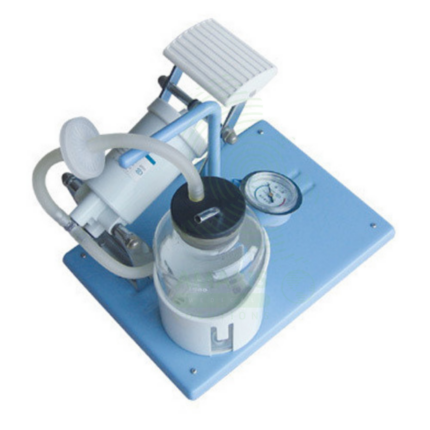
A Manual Suction Machine is a hand-powered medical device used to generate suction for emergency airway clearance and neonatal resuscitation. Functioning without electricity or batteries, it is the critical suction solution for pre-hospital care, field medicine, low-resource settings, and as a mandatory backup in all clinical environments. It typically consists of a collection canister, a manual pump (squeeze-bulb, lever, or syringe), and disposable patient tubing. While providing intermittent rather than continuous suction, its reliability, portability, and simplicity make it an indispensable first-response tool for removing airway obstructions and saving lives when power is not an option.
Miller Bulb Laryngoscope
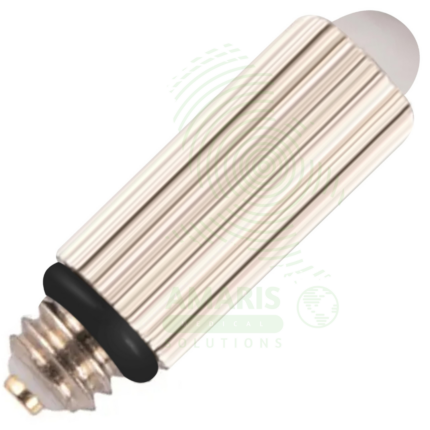
A Miller Bulb Laryngoscope is a rigid laryngoscope with straight Miller blade (sizes 0-4, 70-160 mm) featuring a distal incandescent (xenon, krypton, halogen) or LED bulb at the blade tip for direct illumination during tracheal intubation. The straight blade design allows direct elevation of the epiglottis rather than the indirect vallecula technique, making it the preferred choice for pediatric and neonatal intubation, patients with floppy or prominent epiglottis, and anterior airways requiring direct epiglottic control. Features stainless steel reusable blades (or disposable plastic), ergonomic handles with knurled grip, ISO standard hook-on fittings, and autoclavable options. Light output 500-3,000 Lux depending on bulb type and battery condition. Primary clinical applications include direct epiglottis elevation for tracheal intubation (especially pediatric and neonatal), patients with prominent or floppy epiglottis, anterior airway management, teaching and training (straight blade technique), neonatal resuscitation, and use in resource-limited settings. Class II medical device requiring FDA clearance. Critical safety considerations include pre-use light check (brightness, bulb security), appropriate blade size selection (especially critical in pediatrics), proper lifting technique (direct epiglottic lift, not levering on teeth), pediatric fragility awareness, bulb obstruction risk from secretions, battery verification, and backup device availability.