Dermatoscope and Magnifiers
 Diagnostic Kits
 Vital Signs Monitors
 Stethoscopes and Accessories
 Otoscopes, Ophthalmoscopes, and Retinoscopes
 Reflex Hammers and Neurological Tools
 Scales and Measuring Devices
 Spirometers and Pulmonary Function Tests
 Electrosurgical Units and Accessories
 Cutting Instruments
 Grasping and Holding Instruments
 Hemostatic Instruments
 Specialized Surgical Sets
 Single-Use Procedure Trays and Packs
 Surgical Drapes, Gowns, and Covers
 Tissue Unifying Instruments
 Radiation Protection
 X-Ray Machines and Accessories
 Ultrasound Systems and Probes
 MRI and CT Scanners
 Radiology Consumables
 Bone Densitometers
 Fluoroscopy Equipment
 Imaging Tables and Positioning Aids
 Microscopes and Accessories
 Centrifuges and Separators
 Analyzers
 Incubators and Ovens
 Pipettes, Dispensers, and Lab Glassware
 Refrigerators, Freezers, and Storage Units
 Lab Consumables
 Sterilizers and Autoclaves for Lab Use
 Multi-Parameter Monitors
 Ventilators and Respiratory Support Devices
 Defibrillators and AEDs
 Infusion Pumps and IV Systems
 Patient Warmers and Cooling Devices
 Central Monitoring Stations
 Accessories
 Anesthesia Machines and Workstations
 Oxygen Concentrators and Delivery Systems
 Nebulizers and Inhalers
 CPAP/BiPAP Machines
 Airway Management
 Anesthesia Masks, Circuits, and Bags
 Humidifiers and Heaters
 Respiratory Therapy Accessories
 First Aid Kits and Cabinets
 Emergency Resuscitation Equipment
 Trauma Supplies
 Emergency Carts and Crash Carts
 Burn Care Products
 Bleeding Control
 Automated External Defibrillators (AEDs)
 Transport and Evacuation
 Wheelchairs and Accessories
 Walkers, Crutches, and Canes
 Prosthetics and Orthotics
 Physical Therapy Equipment
 Transfer Devices
 Bathroom Safety
 Orthopedic Traction and Tables
 Hot/Cold Therapy Packs and Units
 Beds and Mattresses
 Chairs and Stools
 Tables
 Cabinets and Storage
 Privacy Screens & Curtains
 Stands and Racks
 Linens and Textiles
 Lighting
 Autoclaves and Sterilizers
 Ultrasonic Cleaners
 Disinfectant Solutions and Wipes
 Sterilization Pouches, Wraps, and Indicators
 Instrument Trays and Containers
 UV and Ozone Disinfection Devices
 Washer Disinfectors
 Wound Care
 Gloves
 Masks and Respirators
 Catheters and Tubing
 Swabs, Applicators, and Sponges
 Incontinence Products
 Personal Protective Equipment (PPE)
 Dental Chairs and Units
 Handpieces and Burs
 Instruments
 Consumables
 Sterilization for Dental Use
 Orthodontic Supplies
 Endodontic Tools
 Slit Lamps and Tonometers
 Lensometers and Phoropters
 Ophthalmic Surgical Instruments
 Eyewear Frames and Lenses
 Contact Lens Supplies
 Vision Testing Charts and Devices
 Eye Care Consumables
 Laser Systems for Eye Care
 ENT Exam Chairs and Tables
 Endoscopes
 Audiometers and Hearing Tests
 ENT Instruments
 Nasal and Throat Packs
 Hearing Aids and Accessories
 Otology Supplies
 Fetal Dopplers and Monitors
 Delivery Beds and Tables
 Gynecological Instruments
 Neonatal Incubators and Warmers
 Breast Pumps and Accessories
 Contraceptive Devices
 Maternity Supports and Pads
 Neonatal Consumables
 Cystoscopes and Urethroscopes
 Dialysis Machines and Supplies
 Urological Catheters and Bags
 Lithotripters
 Prostate Treatment Devices
 Urinary Incontinence Products
 Kidney Stone Management Tools
 Consumables & Disposables
 EEG and EMG Machines
 Neurosurgical Instruments
 Nerve Stimulators
 Headrests and Positioning Aids
 Lumbar Puncture Kits
 Seizure Monitoring Devices
 Consumables
 Rehabilitation for Neurological Conditions
 ECG Machines and Accessories
 Holter Monitors
 Stress Test Systems
 Pacemakers and Defibrillator Accessories
 Vascular Access Devices
 Cardiac Catheters and Guidewires
 Blood Flow Meters
 Consumables
 Orthopedic Instruments
 Casts, Splints, and Padding
 Joint Replacement Supplies
 Prosthetic Limbs and Components
 Bone Grafts and Substitutes
 Traction Devices
 Orthopedic Braces and Supports
 Rehabilitation Aids for Orthopedics
 Home Oxygen Therapy
 Hospital Beds for Home Use
 Mobility Aids
 Bathroom and Daily Living Aids
 Wound Care for Home
 Monitoring Devices
 Enteral Feeding Pumps and Tubes
 Hand Sanitizers and Dispensers
 Face Shields and Goggles
 Isolation Gowns and Suits
 Biohazard Waste Containers
 Air Purifiers and HEPA Filters
 Surface Disinfectants
 Sharps Containers
 Protective Barriers
 Cardiovascular & Endurance Training
 Strength Training & Weightlifting
 Functional Training & Core Conditioning
 Physical Therapy & Rehabilitation
 Sports & Outdoor Recreation
 Gym Flooring & Facility Equipment
 Fitness Monitoring & Accessories
 Kids & Novelties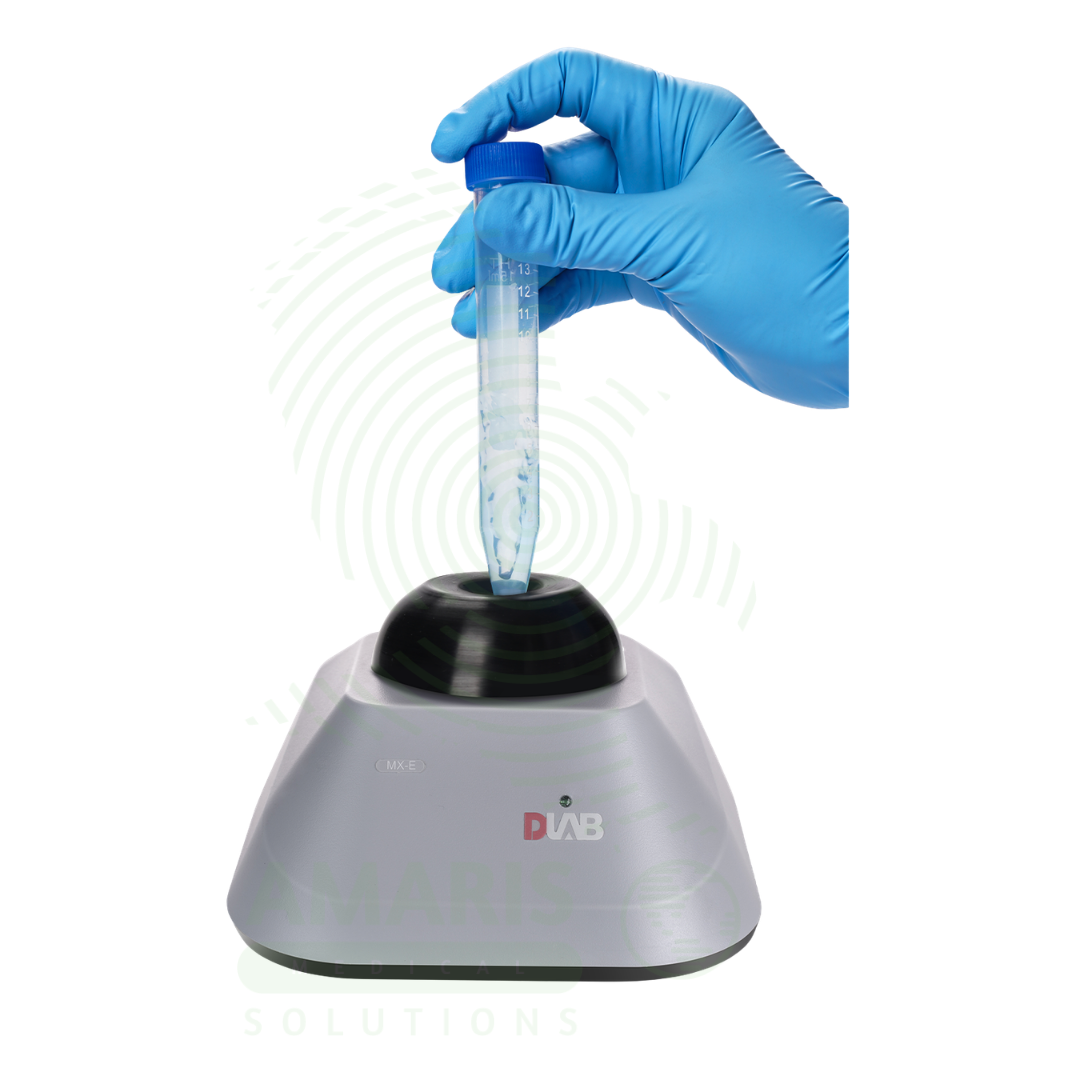

Vortex Mixer (MX-E)
WhatsApp Order
The Vortex Mixer (MX-E) is a compact, fixed-speed (3000 rpm) laboratory mixer designed for efficient, touch-activated mixing of small-volume samples. Utilizing a powerful DC brushless motor and a 4.8 mm orbital motion, it provides instant homogenization of liquids for clinical chemistry, microbiology, and molecular diagnostics. Its small footprint, electronic speed stabilization, and corrosion-resistant silicone cup make it a vital tool for quick sample preparation in any routine clinical or research laboratory.
Description
Vortex Mixer (MX-E)
PRIMARY CLINICAL & DIAGNOSTIC USES
1. Rapid Mixing of Clinical Chemistry Reagents
-
Primary Use: Provides a compact, fixed-speed vortex mixer operating at 3000 rpm with a 4.8 mm orbital diameter, designed for rapid and efficient mixing of liquid reagents, control samples, and patient specimens in clinical chemistry laboratories.
-
How it helps: For the clinical laboratory scientist and medical technologist, the Vortex Mixer (MX-E) delivers instant, reproducible mixing of blood samples, serum, plasma, and reagent solutions—ensuring homogeneous mixtures for accurate test results in chemistry analyzers. For the patient, consistent mixing of their blood sample with diagnostic reagents reduces the risk of erroneous results, ensuring that conditions such as diabetes, high cholesterol, and kidney disease are detected and monitored accurately.
2. Sample Preparation for Immunoassays and Serology
-
Primary Use: Essential for mixing antigens, antibodies, and patient serum samples in immunoassay and serological testing, including ELISA, rapid tests, and agglutination assays.
-
How it helps: For the immunology technician, the touch-activated mixer allows for standardized, hands-free mixing of test tubes and vials, which is crucial for the proper binding of antigens and antibodies during infectious disease testing. For the patient undergoing screening for viral infections (e.g., HIV, Hepatitis) or autoimmune disorders, this precise preparation step ensures that the antibodies or antigens in their sample are properly mixed, leading to reliable diagnostic outcomes that guide treatment decisions.
3. Resuspension of Cell Pellets and Microorganisms
-
Primary Use: Used for the vigorous re-suspension of cell pellets, bacterial colonies, and fungal elements in culture media or buffer solutions for microbiological identification and antimicrobial susceptibility testing.
-
How it helps: For the clinical microbiologist, the vortex mixer efficiently breaks up cell clumps and creates uniform microbial suspensions, which is critical for accurate Gram staining, colony counting, and sensitivity testing. For the patient suffering from a bacterial infection (e.g., sepsis, UTI, pneumonia), proper resuspension of their cultured specimen ensures that the laboratory can correctly identify the specific pathogen and determine the most effective antibiotic for treatment.
4. Preparation of Molecular Diagnostic Assays (PCR)
-
Primary Use: Facilitates the mixing and spin-down of master mix components, primers, probes, and extracted DNA/RNA samples prior to Polymerase Chain Reaction (PCR) amplification.
-
How it helps: For the molecular biologist, the Vortex Mixer (MX-E) provides rapid vortexing of PCR tubes to ensure complete mixing of viscous solutions and reagents, which is vital for the uniformity and efficiency of the nucleic acid amplification process. For the patient undergoing molecular testing for COVID-19, influenza, or genetic disorders, consistent sample mixing ensures that the PCR test result is accurate, helping to avoid false negatives that could delay critical treatment.
SECONDARY & SUPPORTIVE USES
1. Clinical Sample Dilutions: Used to mix dilutions of patient specimens (e.g., urine, cerebrospinal fluid, stool suspensions) for manual chemistry testing and microscopic examination.
2. Solubilization of Powders and Pellets: Accelerates the dissolution of lyophilized controls, powdered reagents, and drug compounds into liquid solutions for quality control testing.
3. Hematology Sample Preparation: Mixes whole blood samples gently but thoroughly before automated complete blood count (CBC) analysis to prevent sedimentation.
4. Routine Quality Control (QC): Used to homogenize QC material vials before running them on clinical analyzers, ensuring that the control results accurately reflect the instrument’s calibration.
5. Cosmetic and Pharmaceutical Formulation: Mixes small-volume liquid components, creams, or oils in laboratory formulation and stability testing for topical products.
6. Educational Laboratories: Serves as a versatile tool for teaching fundamental mixing techniques in medical and university laboratory training programs.
7. Veterinary Practice: Mixes small animal blood samples, fecal flotation solutions, and diagnostic test reagents in point-of-care veterinary settings.
8. Industrial and Chemical Applications: Suitable for mixing inks, dyes, paints, and adhesives for quality assurance testing.
9. Nail and Beauty Industry: Used for mixing nail polish, eyelash glue, and tint solutions in professional salons.
KEY PRODUCT FEATURES
1. BASIC IDENTIFICATION ATTRIBUTES
-
Device Type: A compact, fixed-speed laboratory vortex mixer with touch activation, designed for basic mixing of small-volume liquids to create a homogenous solution.
-
Designation: MX-E Vortex Mixer, Economic Vortex Mixer, Touch-Activated Mixer, Fixed Speed Vortex Mixer.
-
Key Components:
o Motor: Powerful 12W DC brushless motor for quiet, maintenance-free operation.
o Operation: Touch/pressure-activated (inching mode); no separate power switch.
o Sample Cup: Standard silicone or rubber cup holder for holding micro-tubes directly on the unit.
o Housing: Compact, durable ABS/plastic body with a heavy aluminum base and rubber suction feet to prevent "walking".
o Electrical: Universal voltage (100-240V, 50/60Hz) CE and cTUVus approved.
2. TECHNICAL & PERFORMANCE PROPERTIES
-
Orbital Diameter: 4.8 mm, ensures a vigorous "vortex" action for thorough mixing.
-
Speed Range: Fixed speed of 3000 rpm.
-
Power Consumption: 12W (energy efficient).
-
Motor Type: Brushless DC motor (provides high torque and long lifespan).
-
Operating Mode: Inching (Touch) operation only.
-
Weight: Lightweight (approx. 1.3 lbs) but stable.
-
Dimensions: Ultra-compact footprint (approx. 133x133mm) to save bench space.
3. PHYSICAL & OPERATIONAL PROPERTIES
-
Construction: Solid steel/aluminum cast base with an ABS exterior casing.
-
Stability: Silicone suction feet and a heavy base prevent the unit from moving or "walking" across the bench.
-
Cooling: Passive air convection; safe for continuous operation.
-
Safety Rating: IP21 (Protected against solid objects over 12mm and vertical dripping water).
-
Control Interface: Press the tube or container down onto the cup; release to stop.
-
Portability: Extremely lightweight and compact (fits in small spaces).
4. SAFETY & COMPLIANCE ATTRIBUTES
-
Regulatory Status: General Laboratory Equipment (Class I). Requires external testing protocol for medical IVD use.
-
Safety Certifications: CE Marked, cTUVus certified, RoHS compliant.
-
Electrical Safety: Operates on low voltage (12V DC) with an external power supply adapter.
-
Environmental: Designed for indoor use in dry, dust-free environments (0-40°C).
-
Chemical Resistance: Silicone cup is resistant to standard laboratory solvents and disinfectants.
5. STORAGE & HANDLING ATTRIBUTES
-
Storage: Store in a dry location on a flat even surface. Do not store heavy items on top of the mixer.
-
Cleaning: Wipe down with 70% ethanol or isopropyl alcohol. Do not immerse the unit in liquid.
-
Maintenance: Routine checking of the suction cup feet for debris. Brushless motor requires zero regular maintenance.
6. LABORATORY & CLINICAL APPLICATIONS
-
Primary Application: Routine liquid mixing, homogenization, and re-suspension of single samples in qualitative or quick-test environments.
-
Clinical Role: Foundational equipment in physician office labs, clinic reception labs, high-throughput hospital chemistry departments, and microbiology labs.
SAFETY HANDLING PRECAUTIONS
1. SAFETY PRECAUTIONS
-
Liquid Spills: If liquid spills into the unit, unplug immediately and dry thoroughly before reuse.
-
Unstable Containers: Do not attempt to vortex uncapped tubes or open beakers containing volatile, toxic, or infectious substances.
-
Footing: Place the unit on a level, dry bench to ensure the suction feet adhere properly.
-
Electrical: Ensure the local voltage matches the required input (100-240V) before connecting.
2. FIRST AID MEASURES
-
Mechanical: If the unit moves excessively ("walks"), stop, reposition the unit, and clean the bench surface.
-
Electrical: If the unit fails to start, check the power connection. If a burning smell occurs, disconnect immediately.
3. FIRE FIGHTING MEASURES
-
Extinguishing Media: Use CO₂, dry chemical, or foam for surrounding fires.
-
Fire Response: Disconnect the mains plug if safe to do so. The plastic housing is combustible.
Related products
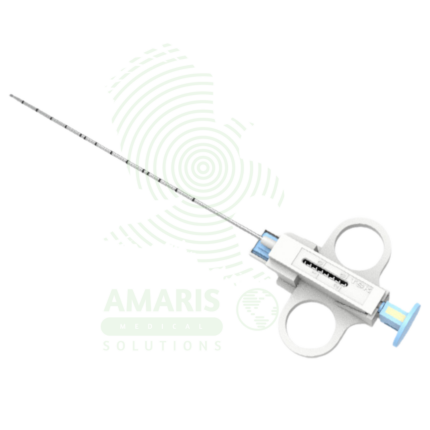
Biopsy Needles
Biopsy Needles are sterile, single-use precision medical devices designed to obtain tissue or cellular specimens from internal organs, masses, and lesions for histopathological or cytological diagnosis. Available in core biopsy (automatic spring-loaded, semi-automatic, vacuum-assisted, coaxial) and fine needle aspiration configurations, with gauges ranging from 14G-27G and lengths from 6-25 cm. Core biopsy needles obtain intact tissue cores preserving histological architecture; FNA needles aspirate cellular material for cytological evaluation. Specialized variants include bone marrow biopsy needles (Jamshidi, Illinois), echogenic-tip needles for ultrasound guidance, and MRI-compatible needles (nitinol, titanium). Critical safety requirements include strict image guidance for non-palpable lesions, verification of coagulation status, adherence to single-use protocols, and immediate post-procedure monitoring for complications (hemorrhage, pneumothorax, organ injury). An indispensable tool in interventional radiology, oncology, and minimally invasive diagnosis.
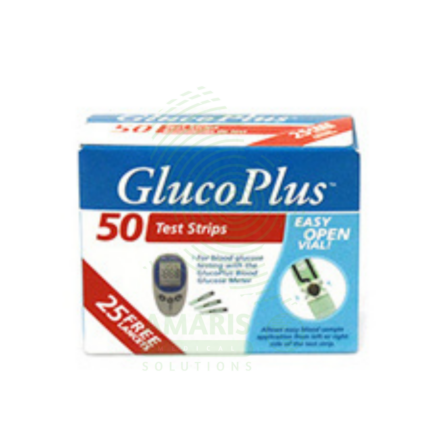
Glucosics Blood Sugar Sticks
Glucosics Blood Sugar Sticks are single-use, disposable electrochemical test sticks (ISO 15197:2013 compliant) designed exclusively for use with Glucosics glucose meters to measure capillary blood glucose from 0.5-1.0 µL samples in 5-7 seconds. Each stick contains glucose oxidase or glucose dehydrogenase reagents that generate electrical current proportional to glucose concentration (20-600 mg/dL range). Packaging options include multi-stick vials (25-100 sticks) with desiccant for daily use or individually foil-wrapped sticks for travel. Sticks feature no-coding automatic calibration, hematocrit compensation (20-60%), and interference resistance. Primary clinical applications include daily blood glucose testing for Type 1, Type 2, and gestational diabetes management, hypoglycemia and hyperglycemia detection, pre- and post-meal glucose assessment, and hospital point-of-care testing. Critical safety precautions include single-use only, immediate vial closure after stick removal to prevent humidity damage, storage at 2-30°C away from bathrooms and temperature extremes, never using expired sticks, proper hand hygiene before testing, and disposal in sharps containers. Essential consumable for diabetes self-management when used with Glucosics meters.
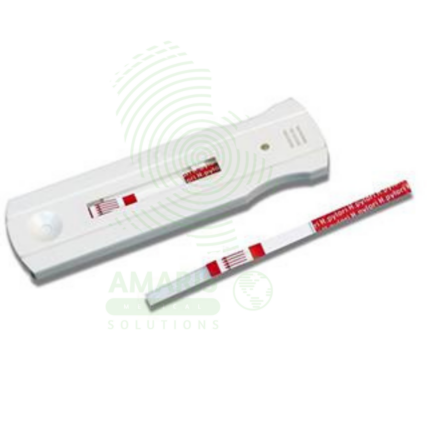
H. pylori Test Strips
H. pylori Test Strips are rapid, lateral flow immunochromatographic devices used for the qualitative detection of Helicobacter pylori antigens in human stool. As a non-invasive stool antigen test (SAT), it provides a convenient and reliable method for diagnosing active H. pylori infection and confirming eradication after therapy, with results available in under 15 minutes. Ideal for use in clinics and outpatient settings, it aids in the management of dyspepsia and peptic ulcer disease. Proper sample handling, adherence to pre-test medication restrictions, and strict biohazard precautions are essential for obtaining accurate results.
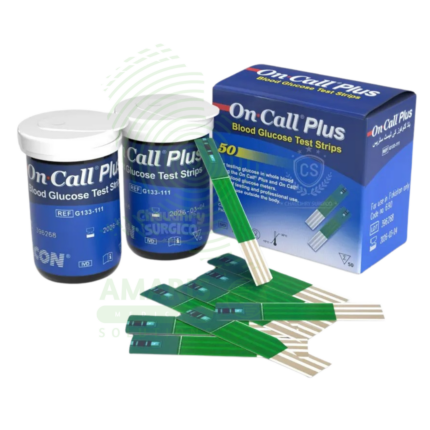
On Call Blood Sugar Strips
On Call Blood Sugar Strips are single-use, disposable electrochemical test strips (ISO 15197:2013 compliant) designed exclusively for use with On Call glucose meters to measure capillary blood glucose from 0.5-1.0 µL samples in 5-7 seconds. Each strip contains glucose oxidase or glucose dehydrogenase reagents that generate electrical current proportional to glucose concentration (20-600 mg/dL range). Packaging options include multi-strip vials (25-100 strips) with desiccant for daily use or individually foil-wrapped strips for travel. Strips feature no-coding automatic calibration, hematocrit compensation (20-60%), and interference resistance. Primary clinical applications include daily blood glucose testing for Type 1, Type 2, and gestational diabetes management, hypoglycemia and hyperglycemia detection, pre- and post-meal glucose assessment, and hospital point-of-care testing. Critical safety precautions include single-use only, immediate vial closure after strip removal to prevent humidity damage, storage at 2-30°C away from bathrooms and temperature extremes, never using expired strips, proper hand hygiene before testing, and disposal in sharps containers. Essential consumable for diabetes self-management when used with On Call meters.
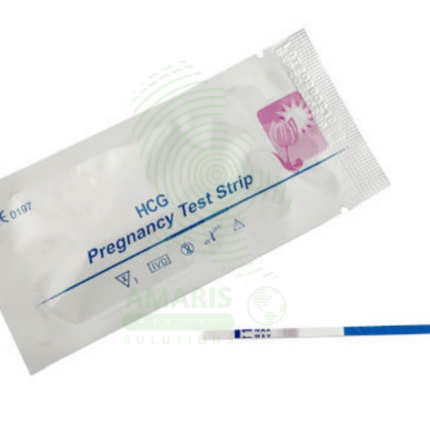
Pregnancy Test Strips
Pregnancy Test Strips are simple, dip-style lateral flow devices designed for the rapid, qualitative detection of human chorionic gonadotropin (hCG) in urine to indicate pregnancy. As the most fundamental format of home pregnancy tests, they offer high sensitivity (often from 10 mIU/mL), affordability, and a quick result within 3-5 minutes. Their ease of use makes them a widely accessible first step in pregnancy detection for personal use and clinical screening. A visible test line, even if faint, is a positive result, though confirmation with a healthcare provider is always recommended.
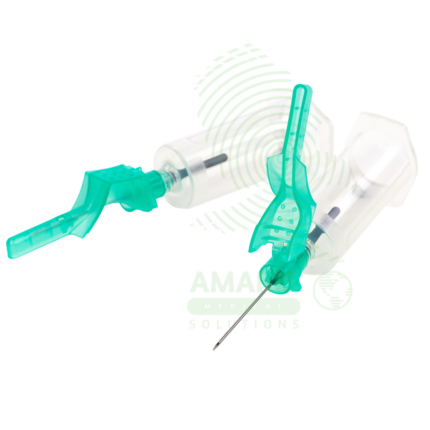
SAFE SERIES Blood Collection Needles
The SAFE SERIES (AM-SAFE) by Beijing Precil (Mindray subsidiary) is a comprehensive line of safety-engineered blood collection devices designed to prevent accidental needlestick injuries in healthcare workers. The series includes venous blood collection needles (AM-SAFE-V), standard safety needles (AM-SAFE1), winged infusion sets/butterfly needles (AM-SAFE2), high-gauge thin-wall needles for fragile veins (AM-SAFE3), premium coated needles for enhanced patient comfort (AM-GOLD), and nurse-friendly one-handed safety variants (AM-NURSE). All devices incorporate integral safety mechanisms that shield the contaminated needle immediately after withdrawal, complying with OSHA Needlestick Safety and Prevention Act requirements. Available in various gauges (18G-25G) and configurations for routine venipuncture, difficult vein access, pediatric/geriatric patients, and frequent blood draws. Sterile, single-use, latex-free, and color-coded for easy gauge identification. Essential safety devices for blood collection in hospitals, clinics, laboratories, and home healthcare settings.
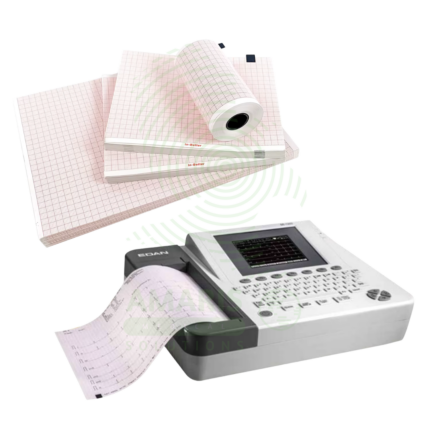
Thermal Printing Paper Roll
Thermal Printing Paper Roll is a heat-sensitive recording medium used with medical monitoring and diagnostic equipment including ECG machines, fetal monitors, ultrasound printers, and telemetry systems. The paper produces high-contrast, permanent images of physiological waveforms and data when passed over the printer's thermal head. Available in various widths, lengths, and grid patterns to match specific device requirements, it is an essential consumable for creating hard copy records for patient charts, consultation, and legal documentation. Proper storage away from light, heat, and moisture is essential to preserve image quality. BPA-free and archival-grade options are available for specific applications.