Dermatoscope and Magnifiers
 Diagnostic Kits
 Vital Signs Monitors
 Stethoscopes and Accessories
 Otoscopes, Ophthalmoscopes, and Retinoscopes
 Reflex Hammers and Neurological Tools
 Scales and Measuring Devices
 Spirometers and Pulmonary Function Tests
 Electrosurgical Units and Accessories
 Cutting Instruments
 Grasping and Holding Instruments
 Hemostatic Instruments
 Specialized Surgical Sets
 Single-Use Procedure Trays and Packs
 Surgical Drapes, Gowns, and Covers
 Tissue Unifying Instruments
 Radiation Protection
 X-Ray Machines and Accessories
 Ultrasound Systems and Probes
 MRI and CT Scanners
 Radiology Consumables
 Bone Densitometers
 Fluoroscopy Equipment
 Imaging Tables and Positioning Aids
 Microscopes and Accessories
 Centrifuges and Separators
 Analyzers
 Incubators and Ovens
 Pipettes, Dispensers, and Lab Glassware
 Refrigerators, Freezers, and Storage Units
 Lab Consumables
 Sterilizers and Autoclaves for Lab Use
 Multi-Parameter Monitors
 Ventilators and Respiratory Support Devices
 Defibrillators and AEDs
 Infusion Pumps and IV Systems
 Patient Warmers and Cooling Devices
 Central Monitoring Stations
 Accessories
 Anesthesia Machines and Workstations
 Oxygen Concentrators and Delivery Systems
 Nebulizers and Inhalers
 CPAP/BiPAP Machines
 Airway Management
 Anesthesia Masks, Circuits, and Bags
 Humidifiers and Heaters
 Respiratory Therapy Accessories
 First Aid Kits and Cabinets
 Emergency Resuscitation Equipment
 Trauma Supplies
 Emergency Carts and Crash Carts
 Burn Care Products
 Bleeding Control
 Automated External Defibrillators (AEDs)
 Transport and Evacuation
 Wheelchairs and Accessories
 Walkers, Crutches, and Canes
 Prosthetics and Orthotics
 Physical Therapy Equipment
 Transfer Devices
 Bathroom Safety
 Orthopedic Traction and Tables
 Hot/Cold Therapy Packs and Units
 Beds and Mattresses
 Chairs and Stools
 Tables
 Cabinets and Storage
 Privacy Screens & Curtains
 Stands and Racks
 Linens and Textiles
 Lighting
 Autoclaves and Sterilizers
 Ultrasonic Cleaners
 Disinfectant Solutions and Wipes
 Sterilization Pouches, Wraps, and Indicators
 Instrument Trays and Containers
 UV and Ozone Disinfection Devices
 Washer Disinfectors
 Wound Care
 Gloves
 Masks and Respirators
 Catheters and Tubing
 Swabs, Applicators, and Sponges
 Incontinence Products
 Personal Protective Equipment (PPE)
 Dental Chairs and Units
 Handpieces and Burs
 Instruments
 Consumables
 Sterilization for Dental Use
 Orthodontic Supplies
 Endodontic Tools
 Slit Lamps and Tonometers
 Lensometers and Phoropters
 Ophthalmic Surgical Instruments
 Eyewear Frames and Lenses
 Contact Lens Supplies
 Vision Testing Charts and Devices
 Eye Care Consumables
 Laser Systems for Eye Care
 ENT Exam Chairs and Tables
 Endoscopes
 Audiometers and Hearing Tests
 ENT Instruments
 Nasal and Throat Packs
 Hearing Aids and Accessories
 Otology Supplies
 Fetal Dopplers and Monitors
 Delivery Beds and Tables
 Gynecological Instruments
 Neonatal Incubators and Warmers
 Breast Pumps and Accessories
 Contraceptive Devices
 Maternity Supports and Pads
 Neonatal Consumables
 Cystoscopes and Urethroscopes
 Dialysis Machines and Supplies
 Urological Catheters and Bags
 Lithotripters
 Prostate Treatment Devices
 Urinary Incontinence Products
 Kidney Stone Management Tools
 Consumables & Disposables
 EEG and EMG Machines
 Neurosurgical Instruments
 Nerve Stimulators
 Headrests and Positioning Aids
 Lumbar Puncture Kits
 Seizure Monitoring Devices
 Consumables
 Rehabilitation for Neurological Conditions
 ECG Machines and Accessories
 Holter Monitors
 Stress Test Systems
 Pacemakers and Defibrillator Accessories
 Vascular Access Devices
 Cardiac Catheters and Guidewires
 Blood Flow Meters
 Consumables
 Orthopedic Instruments
 Casts, Splints, and Padding
 Joint Replacement Supplies
 Prosthetic Limbs and Components
 Bone Grafts and Substitutes
 Traction Devices
 Orthopedic Braces and Supports
 Rehabilitation Aids for Orthopedics
 Home Oxygen Therapy
 Hospital Beds for Home Use
 Mobility Aids
 Bathroom and Daily Living Aids
 Wound Care for Home
 Monitoring Devices
 Enteral Feeding Pumps and Tubes
 Hand Sanitizers and Dispensers
 Face Shields and Goggles
 Isolation Gowns and Suits
 Biohazard Waste Containers
 Air Purifiers and HEPA Filters
 Surface Disinfectants
 Sharps Containers
 Protective Barriers
 Cardiovascular & Endurance Training
 Strength Training & Weightlifting
 Functional Training & Core Conditioning
 Physical Therapy & Rehabilitation
 Sports & Outdoor Recreation
 Gym Flooring & Facility Equipment
 Fitness Monitoring & Accessories
 Kids & Novelties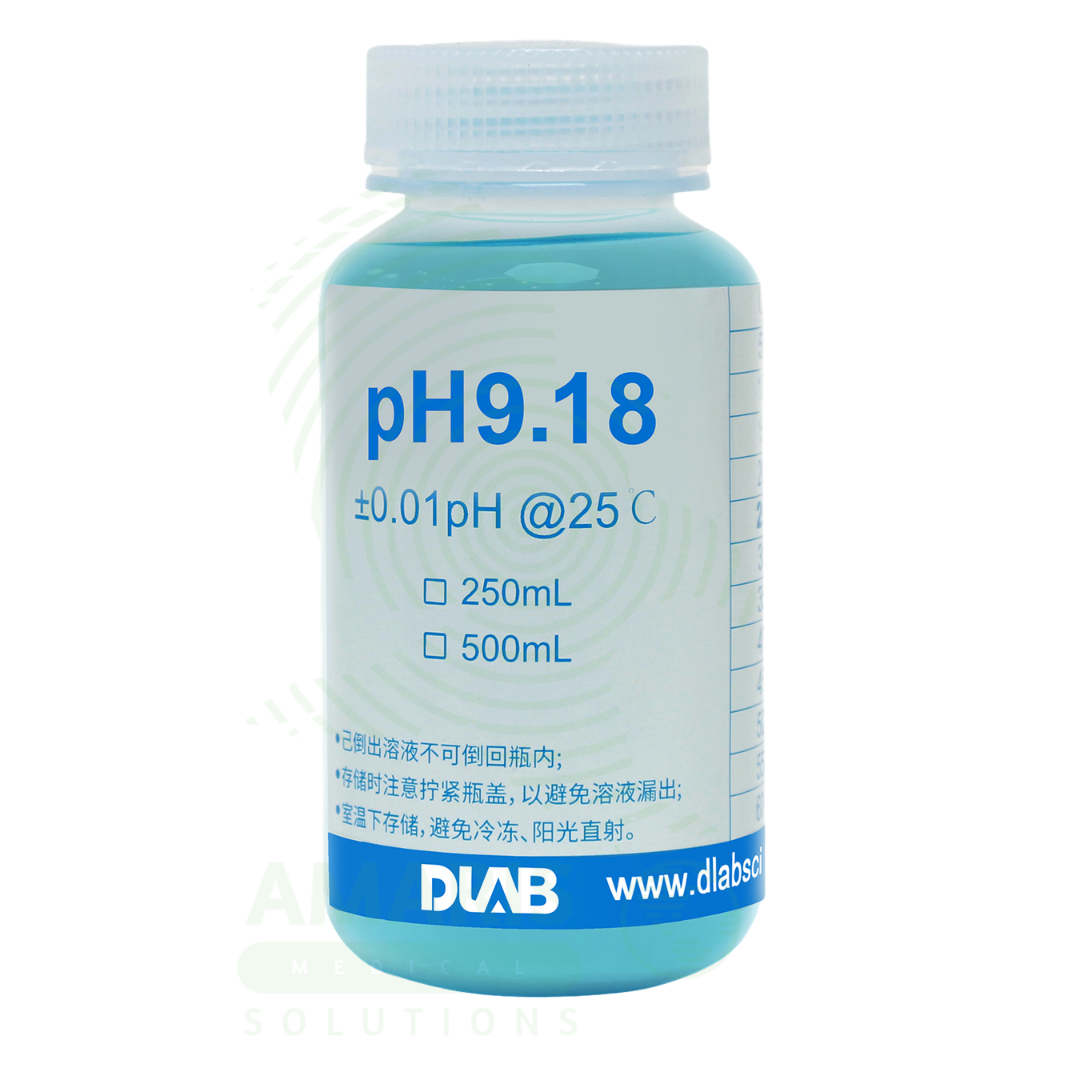

Buffer Solution (pH 9.18)
WhatsApp Order
Buffer Solution (pH 9.18) is a sterile, ready-to-use liquid reagent with a precisely known pH value of 9.18 at 25°C, specifically formulated for the calibration and quality control of pH meters, pH electrodes, and automated analyzers in the alkaline range for clinical diagnostic and research laboratories. The solution is composed of sodium tetraborate decahydrate (borax) in purified water, manufactured under ISO/IEC 17025 and ISO 17034 accreditation with traceability to NIST standard reference materials and PTB primary certified reference standards.
For the clinical laboratory scientist and medical technologist, Buffer Solution (pH 9.18) serves as the alkaline calibration standard for three-point pH meter calibration (in conjunction with pH 6.86 and pH 4.00 buffers), ensuring accurate pH measurement of alkaline biological specimens including urine, pancreatic fluid, and certain diagnostic reagents. The solution is measured using a combined glass electrode following a 5-point calibration method, compliant with DIN 19268, NIST, IUPAC, Ph. Eur, and USP standards. Each batch is accompanied by a detailed and batch-specific certificate of analysis (CoA) containing lot number, measured pH value, pH/temperature table (9.22 at 20°C, 9.18 at 25°C, 9.14 at 30°C, 9.09 at 37°C), uncertainty (±0.02 pH), and expiration date.
The solution is classified as a Class I Medical Device (FDA Product Code JCC – General Purpose Reagent) and is 510(K) exempt, with GMP exempt status when not labeled as sterile. pH 9.18 buffer solution is available in various packaging formats including 30 mL sachets, 60 mL bottles, 100 mL bottles, 500 mL bottles, and 1 L bottles. Some manufacturers color-code the solution for easy identification (e.g., blue or clear depending on the brand), and a pH/temperature table is printed on the label for accurate calibrations at different temperatures. The unopened shelf life is 2 years when stored at room temperature (15-25°C); once opened, the solution should be used within 90 days.
For the patient undergoing diagnostic testing for metabolic alkalosis, renal tubular acidosis, pancreatic function disorders, or other conditions requiring alkaline pH measurement, accurate pH measurement of biological fluids—verified through proper three-point calibration using certified pH 9.18 buffer—ensures reliable test results that guide appropriate treatment decisions across clinical chemistry, urinalysis, pancreatic function testing, and pharmaceutical quality control applications.
Description
Buffer Solution (pH 9.18)
PRIMARY CLINICAL & DIAGNOSTIC USES
1. Calibration of pH Meters for Accurate Diagnostic Testing
-
Primary Use: Provides a sterile, ready-to-use solution with a precisely known pH value of 9.18 at 25°C, used as a calibration standard for pH meters and pH electrodes to ensure accurate pH measurement of alkaline biological specimens and diagnostic reagents.
-
How it helps: For the clinical laboratory scientist, medical technologist, and quality control officer, the pH 9.18 buffer solution serves as the alkaline calibration standard, typically used as the third calibration point in three-point calibration protocols (pH 6.86, pH 4.00, and pH 9.18 buffers). The solution is gravimetrically prepared at ISO/IEC 17025 accredited laboratories using sodium tetraborate decahydrate (borax) with an uncertainty of ±0.02 pH. For the patient, accurate pH measurement of alkaline biological fluids (such as urine, pancreatic fluid, and diagnostic reagents) ensures reliable diagnosis of metabolic alkalosis, renal tubular acidosis, and other acid-base disorders.
2. Verification of pH Electrode Performance in Alkaline Range
-
Primary Use: Used to verify the slope, response time, and accuracy of pH electrodes and pH meters in the alkaline pH range during routine quality control procedures before patient sample testing.
-
How it helps: For the clinical laboratory scientist and quality assurance manager, measuring a pH 9.18 buffer solution as an external quality control standard provides objective evidence that the pH electrode is functioning within acceptable parameters in the alkaline range. The solution is measured using a combined glass electrode following a 5-point calibration method, compliant with DIN 19268 and reference buffer standards including NIST, IUPAC, Ph. Eur, and USP. For the patient, routine verification of pH electrode performance with certified buffer solutions ensures that pH measurements used for clinical decision-making are accurate and reproducible across the entire pH range.
3. Alkaline Calibration Point for Acid-Base Balance Testing
-
Primary Use: Employed as the alkaline calibration point during three-point calibration (pH 6.86, pH 4.00, and pH 9.18) of pH meters used in clinical laboratories for measuring alkaline patient specimens.
-
How it helps: For the medical technologist and clinical chemist, the pH 9.18 buffer is specifically indicated for calibrating pH meters when measuring alkaline samples (pH > 7.00). Using the buffer as a calibration standard corrects for the alkaline portion of the electrode response curve, ensuring accurate measurement of patient specimens with pH values above neutrality. For the patient undergoing diagnostic testing for conditions that require precise alkaline pH measurement (such as pancreatic function testing or urinary alkalinization monitoring), proper three-point calibration using pH 9.18 buffer ensures that test results accurately reflect the patient’s clinical status.
4. Quality Control and Regulatory Compliance
-
Primary Use: Serves as a certified reference material for Good Laboratory Practice (GLP) compliance, with traceability to NIST (National Institute of Standards and Technology) standard reference materials and PTB primary certified reference standards.
-
How it helps: For the laboratory quality manager and regulatory compliance officer, pH 9.18 buffer solutions manufactured under ISO 17025 and ISO 17034 accreditation provide documented traceability to primary reference standards. Each batch is accompanied by a detailed and batch-specific certificate of analysis (CoA) containing lot number, measured pH value, uncertainty (±0.02 pH), and expiration date, supporting regulatory compliance for GLP, CAP, CLIA, and ISO 15189 standards. For the patient, the use of certified, traceable buffer solutions in clinical laboratory quality assurance programs ensures that pH measurements meet regulatory requirements for accuracy and reliability.
5. Verification of Blood Gas and Electrolyte Analyzers
-
Primary Use: Used to verify the pH channel accuracy of blood gas analyzers and electrolyte analyzers during quality control procedures in critical care settings, particularly for alkaline blood samples.
-
How it helps: For the critical care laboratory scientist and point-of-care coordinator, pH 9.18 buffer solution is employed as a quality control material to verify the performance of blood gas analyzers that measure pH in arterial blood samples, particularly when monitoring patients with metabolic alkalosis. The buffer helps confirm that the instrument’s pH channel is within acceptable limits across the alkaline range before patient sample analysis. For the critically ill patient requiring arterial blood gas monitoring for assessment of metabolic alkalosis, respiratory disorders, or acid-base disturbances, accurate pH measurement verified with certified buffer solutions ensures appropriate ventilator settings, medication adjustments, and clinical interventions.
SECONDARY & SUPPORTIVE USES
1. Routine Laboratory Quality Control: Used as an external quality control standard to monitor pH meter performance between calibrations, ensuring ongoing accuracy throughout the testing day, particularly for alkaline sample measurements.
2. Electrode Storage and Conditioning: Some pH electrodes require periodic soaking in pH 9.18 buffer to condition the glass membrane and maintain optimal response time, particularly for electrodes used in alkaline sample measurement applications.
3. Verification of pH Test Strips and Colorimetric Methods: Used as a standard to verify the accuracy of pH test strips, pH paper, and colorimetric pH test kits used in clinical laboratories and point-of-care settings for alkaline range measurements.
4. System Suitability Testing for Pharmaceutical Analysis: Employed in pharmaceutical quality control laboratories as a system suitability standard for pH measurement during drug stability testing, dissolution testing, and formulation development for alkaline pharmaceutical preparations.
5. Validation of Automated Analyzer pH Channels: Used during installation qualification (IQ), operational qualification (OQ), and performance qualification (PQ) of automated clinical chemistry analyzers with integrated pH measurement capabilities.
6. Academic and Educational Laboratory Training: Serves as a teaching standard for training medical technology students and clinical laboratory science trainees in proper pH meter calibration and measurement techniques in the alkaline range.
7. Research and Development pH Measurement: Used as a calibration standard in research laboratories for pH measurement during drug discovery, biomaterial development, and tissue engineering research involving alkaline conditions.
8. Environmental and Water Quality Testing: Employed in hospital environmental monitoring programs to calibrate pH meters used for testing alkaline wastewater discharge and treated water from certain industrial processes.
9. Dissolution Testing for Alkaline Formulations: Used in pharmaceutical dissolution testing to prepare pH-specific dissolution media for alkaline drug formulations and to verify the pH of dissolution apparatus vessels.
10. Buffer Capacity Verification: Used to verify the buffer capacity of laboratory-prepared alkaline buffers and to check the performance of pH electrodes in alkaline solutions.
11. Temperature Verification of pH Systems: The temperature-dependent relationship of pH 9.18 buffer (pH value decreases as temperature increases) is printed on the product label as a pH/temperature table for accurate calibrations at different temperatures.
12. Inter-Laboratory Comparison Studies: Used as a blind sample in proficiency testing and inter-laboratory comparison studies to evaluate the accuracy of pH measurements across different laboratories in the alkaline range.
13. Custom Buffer Preparation: Employed as a starting standard for preparing custom alkaline buffer solutions with specific pH requirements for specialized diagnostic applications.
14. Troubleshooting pH Electrode Issues: Used to diagnose electrode problems by comparing the measured pH of fresh buffer to the expected value; deviation in the alkaline range indicates electrode contamination, aging, or damage requiring maintenance or replacement.
15. Validation of pH Meter Repairs: Used after pH meter repair or maintenance to verify instrument alkaline range accuracy before returning to clinical service.
16. Pharmaceutical Clean-in-Place (CIP) Verification: Used to verify the pH of alkaline cleaning solutions in pharmaceutical manufacturing clean-in-place systems.
17. Buffer Solution for Specific Ion Meter Calibration: pH 9.18 buffer may be used in conjunction with ion-selective electrode (ISE) calibration for certain analytes when alkaline pH adjustment is required.
18. Food and Beverage Quality Control: Used in hospital nutrition services and food safety testing to verify pH of alkaline foods, beverages, and nutritional supplements.
19. Pancreatic Function Testing Quality Control: Used in quality control procedures for pancreatic function tests that require precise alkaline pH measurement of collected specimens.
20. Facial Skin Protection: The distinctive color-coding of pH 9.18 buffer (often blue or clear depending on manufacturer) aids in easy visual identification and prevents buffer solution mix-ups in high-volume testing environments.
KEY PRODUCT FEATURES
1. BASIC IDENTIFICATION ATTRIBUTES
-
Device Type: A sterile, ready-to-use liquid solution with a precisely known pH value of 9.18 at 25°C, used for calibration and quality control of pH measuring instruments in the alkaline range for clinical diagnostic laboratories.
-
Designation: pH 9.18 Buffer Solution, Borax Buffer Solution, Alkaline pH Calibration Standard, pH Reference Standard, pH Calibration Buffer, Alkaline Calibration Solution.
-
Key Components:
-
Active Ingredient: Sodium tetraborate decahydrate (Na₂B₄O₇·10H₂O / borax) – the primary buffering agent.
-
Solvent: Purified water (>98% of solution).
-
Preservative: Methylparaben or other preservative to prevent microbial growth.
-
Color Additive: May be colorless or color-coded (e.g., blue, clear, or colorless depending on manufacturer).
-
2. TECHNICAL & PERFORMANCE PROPERTIES
-
pH Value: 9.18 ± 0.01 to ± 0.05 at 25°C (depending on grade and manufacturer).
-
pH Value at 20°C: 9.22.
-
pH Value at 30°C: 9.14.
-
pH Value at 37°C: 9.09.
-
Composition: Sodium tetraborate decahydrate (borax).
-
Concentration: Gravimetrically prepared at registered calibration laboratory.
-
Measurement Method: 5-point calibration using combined glass electrode according to DIN 19268.
-
Compliance Standards: DIN 19266, NIST, IUPAC, Ph. Eur, and USP.
-
Traceability: Traceable to NIST standard reference materials (SRMs) and PTB primary certified reference standards.
-
Uncertainty: ±0.02 pH at 25°C.
-
Appearance: Clear, colorless or color-coded liquid.
-
Odor: Odorless.
-
Shelf Life (Unopened): 2 years.
-
Shelf Life (Opened): Use within 90 days for pH 9.18 buffer.
-
Storage Temperature: 15-25°C (room temperature); avoid freezing.
-
pH Temperature Dependency: pH value varies with temperature (decreases as temperature increases); pH/temperature table printed on product label for accurate calibrations.
-
Manufacturing Accreditation: ISO/IEC 17025 and ISO 17034 accredited.
-
Quality Level: Certified reference material grade available.
-
Regulatory Classification: FDA Product Code JCC – General Purpose Reagent; Class I Medical Device.
-
GMP Status: Exempt from GMP regulations when not labeled or represented as sterile.
-
Regulation Number: 21 CFR 864.4010.
-
GMDN Term Code: 42693 – pH-adjusted buffer solution IVD.
3. PHYSICAL & OPERATIONAL PROPERTIES
-
Physical Form: Liquid with low viscosity.
-
Container Types: Available in various packaging formats including 30 mL sachets, 60 mL bottles, 100 mL bottles, 250 mL bottles, 500 mL bottles, 1 L bottles, and 5 x 60 mL convenience packs.
-
Color Coding: Rainbow bottle design with specific color for each pH value; pH 9.18 is often blue or clear depending on manufacturer.
-
Ready-to-Use: No preparation or dilution required; use directly from container.
-
Temperature Sensitivity: pH value is temperature dependent; equilibrate to room temperature or measurement temperature before use; pH/temperature table provided.
-
Stability After Opening: Certified buffer solutions remain stable for 90 days after opening when stored properly and protected from contamination.
-
Certificate of Analysis (CoA): Provided with each batch, including lot-specific pH value, measurement uncertainty, expiry date, and traceability information.
-
Label Information: Includes ordering number, article description, lot number, safety data, expiry date, and pH/temperature table, following ISO Guide 31.
-
Storage Stability: Packaging material subjected to comprehensive stability studies as per ISO Guide 35.
-
Shelf Life Classification: "Fair" under normal storage conditions.
4. SAFETY & COMPLIANCE ATTRIBUTES
-
Signal Word: CAUTION.
-
Hazard Classification:
-
May be harmful if swallowed.
-
May cause mild skin irritation.
-
May cause mild eye irritation.
-
-
Flammability: Nonflammable, noncombustible solution.
-
Reactivity: Stable under normal storage conditions; avoid heat.
-
Incompatibilities: Avoid contact with strong oxidizing agents and strong acids.
-
Storage Conditions: Store in a cool, dry location; protect from freezing and extreme temperatures.
-
Regulatory Exemptions: 510(K) Exempt; GMP Exempt (except for records and complaint files) when not labeled as sterile.
-
Device Class: Class I Medical Device.
-
Sterility: Not sterile; intended for external use as a calibration standard, not for administration to patients.
-
Non-latex: Contains no latex components.
-
Alkaline pH Range: 9.18 pH is above neutrality, suitable for alkaline calibration applications.
5. STORAGE & HANDLING ATTRIBUTES
-
Storage: Store in a cool, dry location at room temperature (15-25°C / 59-77°F). Avoid freezing and protect from direct sunlight and extreme heat.
-
Shelf Life (Unopened): 2 years from date of manufacture; refer to expiration date on product label.
-
Shelf Life (Opened): Use within 90 days of opening for pH 9.18 buffer; discard after 90 days.
-
Inspection: Do not use if solution appears cloudy, contains precipitate, is discolored, or if the container is damaged.
-
Temperature Equilibration: Allow buffer solution to equilibrate to room temperature or measurement temperature before use, as pH value is temperature-dependent.
-
Usage Precautions: If using small volumes, aliquot into a clean container to avoid contaminating the main stock solution.
-
Electrode Preparation: Rinse pH electrode with distilled or deionized water before immersing in buffer solution.
-
Avoid Cross-Contamination: Do not return used buffer solution to the original container.
-
First Pour Usage: For critical calibrations, use the first pour of buffer solution from the bottle to ensure maximum freshness and accuracy.
-
Container Disposal: Dispose of empty containers according to local environmental regulations for chemical waste.
-
Spill Management: Ventilate area; contain spill with inert absorbent material; neutralize with dilute acid (e.g., acetic acid); collect in sealed container.
6. LABORATORY & CLINICAL APPLICATIONS
-
Primary Application: Calibration and quality control of pH meters, pH electrodes, and automated analyzers with pH measurement capabilities in the alkaline range for clinical diagnostic, pharmaceutical, and research laboratories.
-
Clinical Role: Essential quality control and calibration reagent in clinical chemistry laboratories, hospital laboratories, blood gas laboratories, pharmaceutical quality control labs, and research facilities for ensuring accurate pH measurement in alkaline patient sample testing.
SAFETY HANDLING PRECAUTIONS
1. SAFETY PRECAUTIONS
-
Personal Protective Equipment: Wear appropriate PPE—laboratory coat, chemical-resistant gloves (nitrile or neoprene), and safety glasses or face shield—when handling buffer solution.
-
Eye Contact: If solution contacts eyes, rinse cautiously with water for several minutes. Remove contact lenses if present and easy to do. Continue rinsing. If eye irritation persists, seek medical attention.
-
Skin Contact: Wash affected area with plenty of water. If skin irritation occurs, seek medical advice or attention.
-
Inhalation: If vapors are inhaled and feeling unwell, move to fresh air. Seek medical attention if symptoms persist.
-
Ingestion: Rinse mouth. Call a poison center or physician if feeling unwell.
-
Spill Response: Ventilate area. Contain spill with sand or other inert absorbent material. Neutralize with dilute acid (acetic acid). Collect in sealed bag or container. Dispose according to local regulations.
-
Fire Fighting Measures: Use tri-class dry chemical fire extinguisher for surrounding fires; solution itself is nonflammable.
-
Storage Compatibility: Store with other buffer solutions; separate from strong acids; follow laboratory chemical storage protocols.
-
Disposal: Dispose of the product according to relevant regulations; do not dispose of it casually.
-
Do Not Use For Clinical Diagnosis: This product is for research and quality control use only, not for direct patient diagnosis or treatment.
-
Not for Internal Use: For external use as a calibration and quality control reagent; not for injection or infusion into patients.
2. FIRST AID MEASURES
-
Eye Exposure: If buffer solution splashes into eyes, rinse cautiously with water for several minutes. Remove contact lenses if present and easy to do. Continue rinsing for at least 15 minutes. If irritation persists, seek medical attention.
-
Skin Exposure: If buffer solution contacts skin, wash with plenty of water. If skin irritation occurs, seek medical advice or attention.
-
Inhalation: If vapors are inhaled, move to fresh air. Seek medical attention if respiratory symptoms develop.
-
Ingestion: If swallowed, rinse mouth. Do not induce vomiting unless directed by medical personnel. Call a poison center or physician if feeling unwell.
-
Chemical Spill: If large spill occurs, contain spill, neutralize with dilute acetic acid, and dispose according to local environmental regulations.
3. FIRE FIGHTING MEASURES
-
Flammability: Nonflammable, noncombustible solution.
-
Extinguishing Media: Use tri-class dry chemical fire extinguisher for fires involving surrounding combustible materials.
-
Fire Response: No special fire hazards beyond typical combustible materials.
Related products
Biopsy Needles
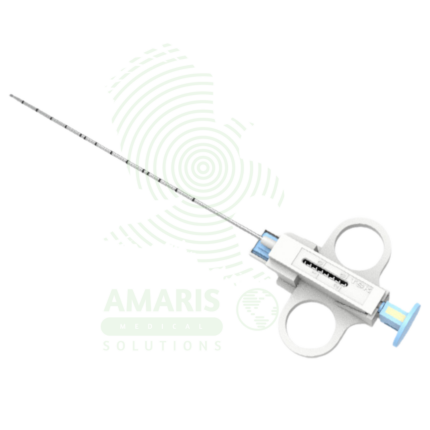
Biopsy Needles are sterile, single-use precision medical devices designed to obtain tissue or cellular specimens from internal organs, masses, and lesions for histopathological or cytological diagnosis. Available in core biopsy (automatic spring-loaded, semi-automatic, vacuum-assisted, coaxial) and fine needle aspiration configurations, with gauges ranging from 14G-27G and lengths from 6-25 cm. Core biopsy needles obtain intact tissue cores preserving histological architecture; FNA needles aspirate cellular material for cytological evaluation. Specialized variants include bone marrow biopsy needles (Jamshidi, Illinois), echogenic-tip needles for ultrasound guidance, and MRI-compatible needles (nitinol, titanium). Critical safety requirements include strict image guidance for non-palpable lesions, verification of coagulation status, adherence to single-use protocols, and immediate post-procedure monitoring for complications (hemorrhage, pneumothorax, organ injury). An indispensable tool in interventional radiology, oncology, and minimally invasive diagnosis.
First Aid Kit
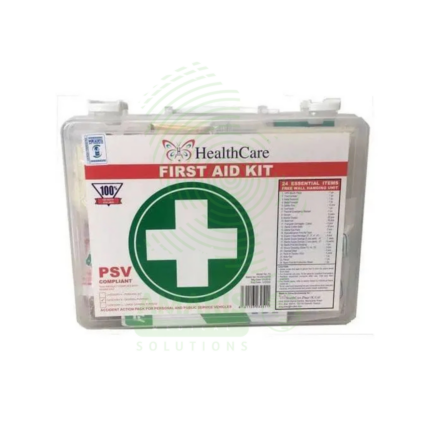
A First Aid Kit is an organized collection of medical supplies and equipment for providing initial care in emergency situations, available in various sizes and configurations for home, workplace, vehicle, travel, and specialized applications. Kits range from personal pouches (0.5-2 L) to comprehensive workplace cabinets (5-35 L) with soft-sided bags, hard cases, or wall-mounted containers. Contents are typically organized to meet regional standards (ANSI/ISEA Z308.1, CSA Z1220, BS 8599, DIN 13157/13169) and include wound care supplies (bandages, gauze, tape), antiseptics, burn care, eye care, emergency items (CPR mask, cold packs, foil blanket), instruments (scissors, tweezers), and PPE (gloves). Class A kits provide minimum supplies for low-hazard workplaces; Class B kits offer expanded quantities for high-hazard environments. Primary clinical applications include immediate treatment of minor injuries (cuts, abrasions, burns, sprains), bleeding control, wound care, fracture immobilization, and emergency assessment. Essential safety equipment for every home, workplace, vehicle, and public facility, providing critical medical supplies until professional care arrives.
First Aid Kit For Sporting Places
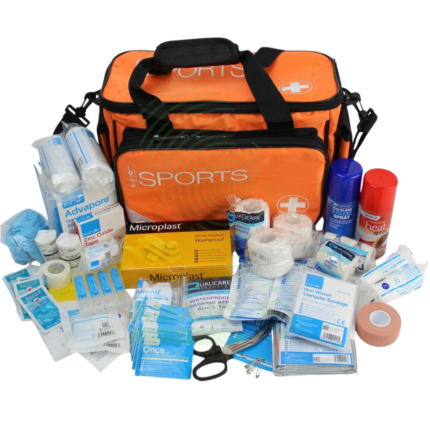
A First Aid Kit for Sporting Places is a portable, organized medical kit specifically designed for the types and frequencies of injuries encountered in athletic and sporting environments. Available in various configurations including sideline kits for team use, personal sports pouches, team travel kits, and wall-mounted cabinets for gymnasiums. Constructed from ballistic nylon, polyester, ABS plastic, or aluminum with organized interior compartments, pouches, and elastic loops for rapid access to supplies. Contains sport-specific medical supplies including wound care materials, elastic bandages, instant cold packs, splinting materials, eye wash, blister care, concussion assessment tools, and personal protective equipment. Primary clinical applications include immediate treatment of common sports injuries (sprains, strains, contusions, abrasions, lacerations), concussion assessment, bleeding control, heat illness management, eye injury care, and emergency action plan implementation. Essential equipment for athletic teams, schools, fitness centers, recreational facilities, and sporting events, providing organized, accessible medical supplies for athlete safety and injury management.
Hepatitis B Test Kit
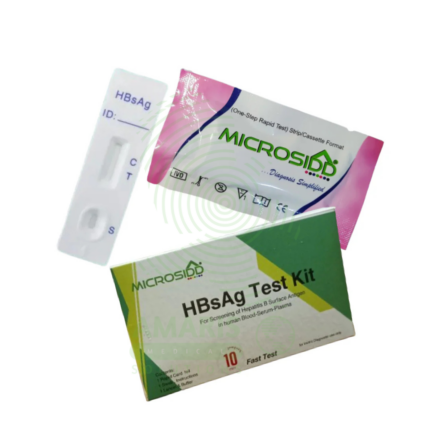
The Hepatitis B Test Kit is an in vitro diagnostic device for the detection of Hepatitis B virus markers in human blood samples, available in rapid, ELISA, and molecular formats. It detects specific antigens (HBsAg) and antibodies (anti-HBc, anti-HBs) to diagnose acute and chronic infection, monitor treatment response, screen blood donations, and determine immunity status. With high sensitivity (>98%) and specificity (>99%), it provides results in 15 minutes to 4 hours depending on format. Essential applications include prenatal screening to prevent mother-to-child transmission, evaluation of acute hepatitis, pre-immunosuppression screening, and occupational health testing. All patient samples must be handled with universal precautions, and testing must include appropriate quality controls.
Nurse Watch
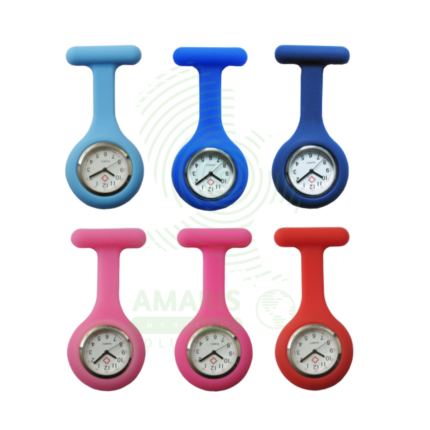
A Nurse Watch is a professional-grade analog wristwatch specifically designed for clinical use. Its hallmark is a built-in "pulsometer" scale that allows for rapid, on-the-spot calculation of a patient's heart rate by timing pulses over a short interval. Featuring a high-contrast dial with a clear sweep second hand, durable water-resistant construction, and a cleanable band, it is engineered for accuracy, legibility, and infection control in healthcare settings. It is an indispensable personal tool for nurses, enabling precise measurement of vital signs, timing of medications and procedures, and accurate clinical documentation throughout the shift.
SAFE SERIES Blood Collection Needles
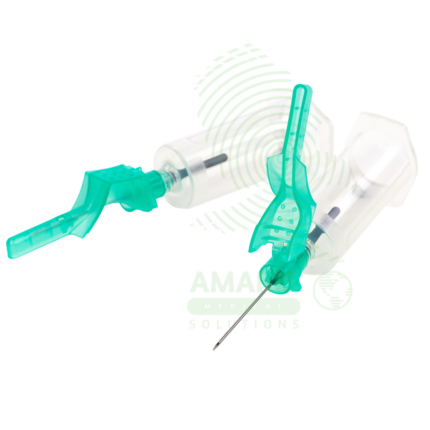
The SAFE SERIES (AM-SAFE) by Beijing Precil (Mindray subsidiary) is a comprehensive line of safety-engineered blood collection devices designed to prevent accidental needlestick injuries in healthcare workers. The series includes venous blood collection needles (AM-SAFE-V), standard safety needles (AM-SAFE1), winged infusion sets/butterfly needles (AM-SAFE2), high-gauge thin-wall needles for fragile veins (AM-SAFE3), premium coated needles for enhanced patient comfort (AM-GOLD), and nurse-friendly one-handed safety variants (AM-NURSE). All devices incorporate integral safety mechanisms that shield the contaminated needle immediately after withdrawal, complying with OSHA Needlestick Safety and Prevention Act requirements. Available in various gauges (18G-25G) and configurations for routine venipuncture, difficult vein access, pediatric/geriatric patients, and frequent blood draws. Sterile, single-use, latex-free, and color-coded for easy gauge identification. Essential safety devices for blood collection in hospitals, clinics, laboratories, and home healthcare settings.
Vacutainer Needle Holder
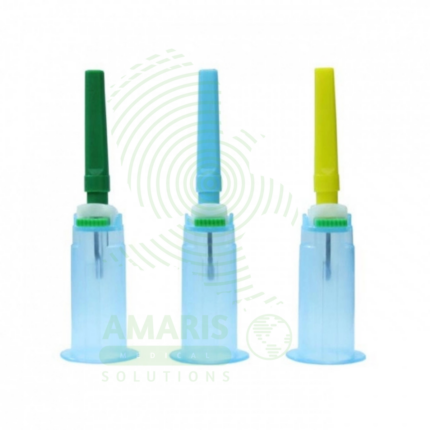
A Vacutainer Needle Holder is a disposable plastic device (Class I/II medical device) used to securely hold double-ended blood collection needles and evacuated tubes during venipuncture, enabling safe and efficient collection of multiple blood specimens from a single venipuncture. Made from medical-grade ABS plastic or polypropylene, latex-free, approximately 12 cm length, with threaded end for needle attachment and flanged opening with flexible fingers to securely hold standard evacuated tubes (13 × 75 mm, 16 × 100 mm). Compatible with all standard double-ended needles and safety-engineered needles. Primary clinical applications include blood collection for laboratory testing (hematology, chemistry, coagulation, blood banking), multiple tube collection from single venipuncture, standardized venipuncture procedures, infection control (works with safety needles), and phlebotomy training. Critical safety precautions include single-use only (never reuse), secure needle attachment, immediate disposal of an entire unit with a needle in a sharps container, never recapping needles, and inspection for damage before use. Essential components of blood collection systems in hospitals, clinics, and laboratories.