Dermatoscope and Magnifiers
 Diagnostic Kits
 Vital Signs Monitors
 Stethoscopes and Accessories
 Otoscopes, Ophthalmoscopes, and Retinoscopes
 Reflex Hammers and Neurological Tools
 Scales and Measuring Devices
 Spirometers and Pulmonary Function Tests
 Electrosurgical Units and Accessories
 Cutting Instruments
 Grasping and Holding Instruments
 Hemostatic Instruments
 Specialized Surgical Sets
 Single-Use Procedure Trays and Packs
 Surgical Drapes, Gowns, and Covers
 Tissue Unifying Instruments
 Radiation Protection
 X-Ray Machines and Accessories
 Ultrasound Systems and Probes
 MRI and CT Scanners
 Radiology Consumables
 Bone Densitometers
 Fluoroscopy Equipment
 Imaging Tables and Positioning Aids
 Microscopes and Accessories
 Centrifuges and Separators
 Analyzers
 Incubators and Ovens
 Pipettes, Dispensers, and Lab Glassware
 Refrigerators, Freezers, and Storage Units
 Lab Consumables
 Sterilizers and Autoclaves for Lab Use
 Multi-Parameter Monitors
 Ventilators and Respiratory Support Devices
 Defibrillators and AEDs
 Infusion Pumps and IV Systems
 Patient Warmers and Cooling Devices
 Central Monitoring Stations
 Accessories
 Anesthesia Machines and Workstations
 Oxygen Concentrators and Delivery Systems
 Nebulizers and Inhalers
 CPAP/BiPAP Machines
 Airway Management
 Anesthesia Masks, Circuits, and Bags
 Humidifiers and Heaters
 Respiratory Therapy Accessories
 First Aid Kits and Cabinets
 Emergency Resuscitation Equipment
 Trauma Supplies
 Emergency Carts and Crash Carts
 Burn Care Products
 Bleeding Control
 Automated External Defibrillators (AEDs)
 Transport and Evacuation
 Wheelchairs and Accessories
 Walkers, Crutches, and Canes
 Prosthetics and Orthotics
 Physical Therapy Equipment
 Transfer Devices
 Bathroom Safety
 Orthopedic Traction and Tables
 Hot/Cold Therapy Packs and Units
 Beds and Mattresses
 Chairs and Stools
 Tables
 Cabinets and Storage
 Privacy Screens & Curtains
 Stands and Racks
 Linens and Textiles
 Lighting
 Autoclaves and Sterilizers
 Ultrasonic Cleaners
 Disinfectant Solutions and Wipes
 Sterilization Pouches, Wraps, and Indicators
 Instrument Trays and Containers
 UV and Ozone Disinfection Devices
 Washer Disinfectors
 Wound Care
 Gloves
 Masks and Respirators
 Catheters and Tubing
 Swabs, Applicators, and Sponges
 Incontinence Products
 Personal Protective Equipment (PPE)
 Dental Chairs and Units
 Handpieces and Burs
 Instruments
 Consumables
 Sterilization for Dental Use
 Orthodontic Supplies
 Endodontic Tools
 Slit Lamps and Tonometers
 Lensometers and Phoropters
 Ophthalmic Surgical Instruments
 Eyewear Frames and Lenses
 Contact Lens Supplies
 Vision Testing Charts and Devices
 Eye Care Consumables
 Laser Systems for Eye Care
 ENT Exam Chairs and Tables
 Endoscopes
 Audiometers and Hearing Tests
 ENT Instruments
 Nasal and Throat Packs
 Hearing Aids and Accessories
 Otology Supplies
 Fetal Dopplers and Monitors
 Delivery Beds and Tables
 Gynecological Instruments
 Neonatal Incubators and Warmers
 Breast Pumps and Accessories
 Contraceptive Devices
 Maternity Supports and Pads
 Neonatal Consumables
 Cystoscopes and Urethroscopes
 Dialysis Machines and Supplies
 Urological Catheters and Bags
 Lithotripters
 Prostate Treatment Devices
 Urinary Incontinence Products
 Kidney Stone Management Tools
 Consumables & Disposables
 EEG and EMG Machines
 Neurosurgical Instruments
 Nerve Stimulators
 Headrests and Positioning Aids
 Lumbar Puncture Kits
 Seizure Monitoring Devices
 Consumables
 Rehabilitation for Neurological Conditions
 ECG Machines and Accessories
 Holter Monitors
 Stress Test Systems
 Pacemakers and Defibrillator Accessories
 Vascular Access Devices
 Cardiac Catheters and Guidewires
 Blood Flow Meters
 Consumables
 Orthopedic Instruments
 Casts, Splints, and Padding
 Joint Replacement Supplies
 Prosthetic Limbs and Components
 Bone Grafts and Substitutes
 Traction Devices
 Orthopedic Braces and Supports
 Rehabilitation Aids for Orthopedics
 Home Oxygen Therapy
 Hospital Beds for Home Use
 Mobility Aids
 Bathroom and Daily Living Aids
 Wound Care for Home
 Monitoring Devices
 Enteral Feeding Pumps and Tubes
 Hand Sanitizers and Dispensers
 Face Shields and Goggles
 Isolation Gowns and Suits
 Biohazard Waste Containers
 Air Purifiers and HEPA Filters
 Surface Disinfectants
 Sharps Containers
 Protective Barriers
 Cardiovascular & Endurance Training
 Strength Training & Weightlifting
 Functional Training & Core Conditioning
 Physical Therapy & Rehabilitation
 Sports & Outdoor Recreation
 Gym Flooring & Facility Equipment
 Fitness Monitoring & Accessories
 Kids & Novelties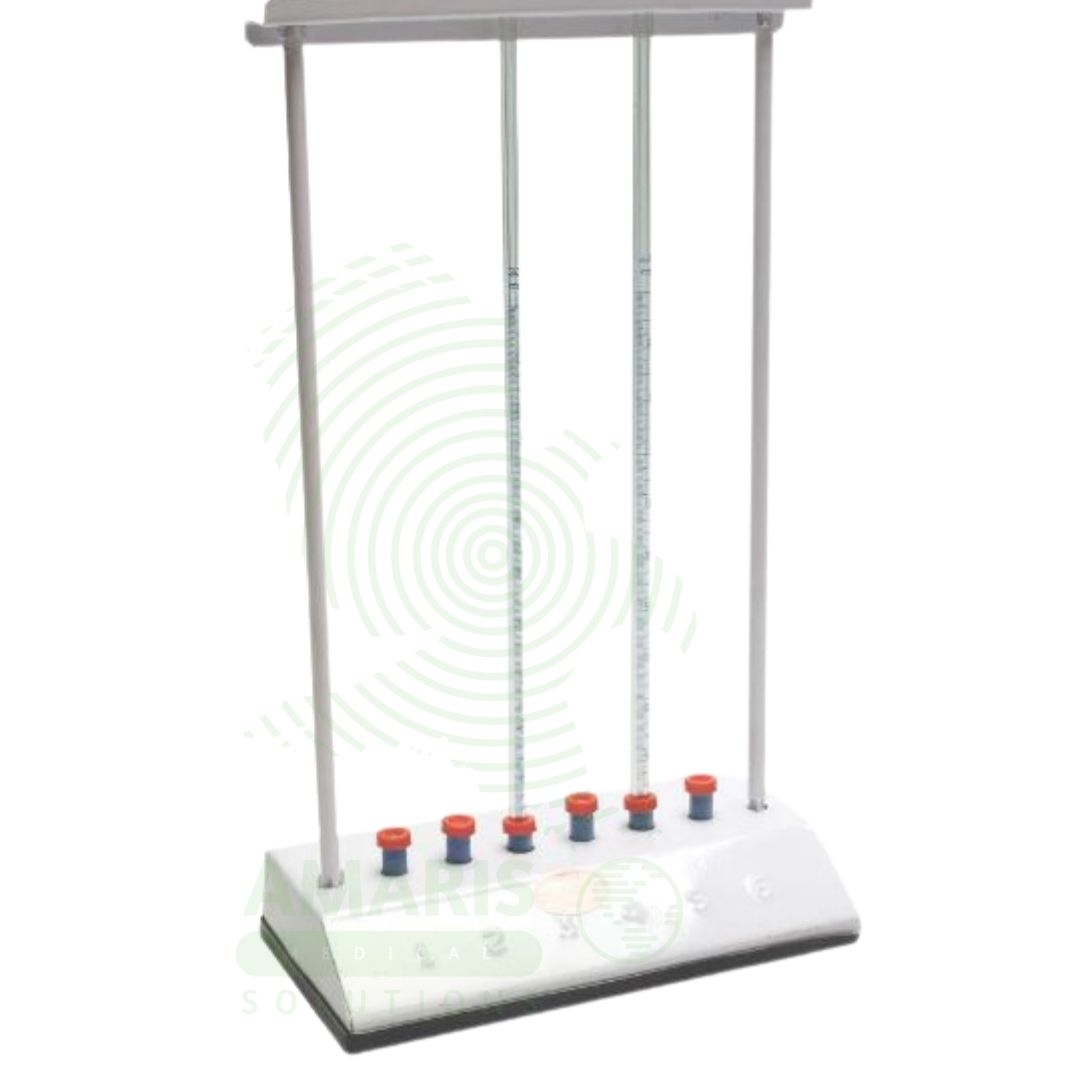
ESR Stand
WhatsApp Order
An ESR Stand is a simple but critical laboratory accessory designed to hold Westergren pipettes perfectly vertical and vibration-free for the manual measurement of the Erythrocyte Sedimentation Rate (ESR). Its sole function is to ensure standardized conditions for this one-hour test, where even minor tilting can cause significant result errors. Key to its correct use is meticulous leveling on a stable surface and placement away from vibrations. While automated analyzers have largely replaced manual ESR, the stand remains essential for reference methods, backup testing, and in low-resource laboratory settings.
Description
ESR Stand
PRIMARY CLINICAL & DIAGNOSTIC USES
1. Measurement of Erythrocyte Sedimentation Rate (ESR)
-
Primary Use: Holds Westergren pipettes perfectly vertical and stable during the one-hour incubation period required for the manual Westergren method of ESR testing, which measures the rate at which red blood cells settle in anticoagulated blood as a non-specific indicator of inflammation.
-
How it helps: For the laboratory scientist and medical technologist, the ESR stand transforms a simple biological phenomenon into a standardized diagnostic test—ensuring that gravity acts uniformly on every sample, that vibration doesn’t disturb settling, and that results are reproducible and comparable. For the clinician managing a patient with suspected temporal arteritis, monitoring rheumatoid arthritis activity, or evaluating for occult infection, the ESR result from this carefully incubated sample provides objective data about systemic inflammation that guides diagnosis and treatment decisions.
2. Support for Manual ESR Methodology
-
Primary Use: A fundamental piece of equipment for performing the reference method (Westergren) for ESR, which is used to monitor inflammatory conditions such as temporal arteritis, polymyalgia rheumatica, rheumatoid arthritis, and infections.
-
How it helps: For the laboratory supervisor and quality assurance professional, the manual ESR stand represents the gold standard method against which automated systems are validated—providing a reliable reference when questions arise about new technology or unusual results. For the patient whose inflammatory disease is being monitored over months or years, consistent methodology ensured by proper equipment means that changes in ESR reflect true changes in disease activity, not variation in testing technique.
SECONDARY & SUPPORTIVE USES
1. Training and Teaching: For the medical technology educator, the ESR stand is an essential tool for teaching the principles and manual technique of ESR testing to students entering the laboratory profession. For the future laboratory scientist who will one day be responsible for accurate inflammatory marker testing, hands-on experience with manual methodology builds understanding of test principles that informs their work even when using automated systems.
2. Backup for Automated Analyzers: In laboratories with automated ESR analyzers, the manual stand serves as a critical backup method in case of instrument failure or for validating unusual results that don’t match clinical expectations. For the patient whose diagnosis or treatment depends on ESR results, this backup capability ensures that testing continues uninterrupted even when primary systems are down, and that questionable results can be verified before clinical decisions are made.
KEY PRODUCT FEATURES
1. BASIC IDENTIFICATION ATTRIBUTES
-
Device Type: A simple, non-mechanical laboratory stand designed to hold multiple Westergren pipettes in a perfectly vertical position.
-
Designation: Often called a Westergren stand or ESR rack.
-
Core Components:
-
Sturdy Base: Provides stability and prevents tipping. Often made of heavy plastic or metal.
-
Vertical Support Column(s) or Rack: Attached to the base, featuring multiple holes or clips.
-
Pipette Holders: Individual slots, holes, or adjustable clips designed to securely grip the top of 200mm Westergren pipettes, ensuring they remain exactly vertical (±1° from vertical is critical for accuracy).
-
Leveling Device: Many stands have a built-in bubble level to ensure the base (and thus the pipettes) is perfectly horizontal before use.
-
Capacity: Typically holds 10, 20, or 30 pipettes simultaneously.
-
2. TECHNICAL & PERFORMANCE PROPERTIES
-
Vertical Alignment: The most critical attribute. Any tilt will significantly alter the ESR result.
-
Stability: Must not wobble or vibrate during the one-hour test period.
-
Durability: Constructed to withstand routine laboratory use.
3. PHYSICAL & OPERATIONAL PROPERTIES
-
Construction: Typically made of corrosion-resistant materials (ABS plastic, aluminum).
-
Footprint: Compact enough to fit on a standard laboratory bench.
4. SAFETY & COMPLIANCE ATTRIBUTES
-
Regulatory Status: Considered a Class I laboratory accessory.
-
Compliance: The stand itself must allow the test to be performed in accordance with the Clinical and Laboratory Standards Institute (CLSI) guidelines (H02) for the ESR procedure.
5. STORAGE & HANDLING ATTRIBUTES
-
Storage: Stored on the laboratory bench or in a cabinet when not in use.
-
Setup: Must be placed on a level, stable, vibration-free surface. Use the built-in level to adjust. Avoid placement near doors, centrifuges, or other sources of vibration.
-
Cleaning: Wipe down with a disinfectant regularly. In case of blood spillage from a broken pipette, decontaminate immediately according to standard bloodborne pathogen protocols.
6. LABORATORY & CLINICAL APPLICATIONS
-
Primary Application: Found in clinical hematology laboratories, smaller hospital labs, and physician office laboratories (POLs) that perform manual ESR testing.
-
Clinical Role: Enables the performance of a standardized, manual inflammatory marker test. While automated methods are common, the manual method with a stand is considered the reference procedure and is essential for labs without automation or for verifying automated results.
SAFETY HANDLING PRECAUTIONS
1. SAFETY PRECAUTIONS
-
Leveling is Critical: Always verify the stand is perfectly level using the bubble level before inserting any pipettes. An unlevel stand is the most common source of erroneous manual ESR results.
-
Avoid Vibration: Place the stand in a location free from bumps, vibrations, or drafts (e.g., away from centrifuges, doors, air conditioning vents).
-
Pipette Handling: Ensure Westergren pipettes are filled correctly (to the "0" mark) and inserted securely into the holder without tilting.
-
Biohazard Awareness: Westergren pipettes contain whole blood. Handle with care to prevent breakage. Wear appropriate PPE (gloves, lab coat, eye protection).
-
2. FIRST AID MEASURES
-
Pipette Breakage: If a pipette breaks in the stand, carefully remove any glass fragments using forceps. Decontaminate the affected holder and area with an appropriate disinfectant (e.g., 1:10 bleach solution). Treat any cuts as a potential bloodborne pathogen exposure.
-
Spillage of Blood: Clean and disinfect the spill area immediately according to laboratory biohazard spill protocol.
3. FIRE FIGHTING MEASURES
-
Flammability: Plastic components are combustible.
-
Extinguishing Media: Use appropriate extinguishing media for the surrounding fire.
Related products
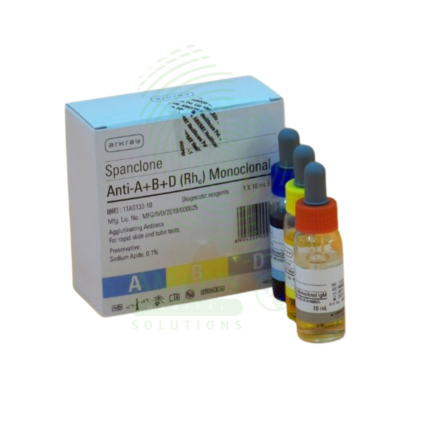
Blood Grouping kit
A Blood Grouping Kit is a Class II medical device (FDA-cleared/CE-marked) containing monoclonal antibodies (Anti-A, Anti-B, Anti-D) and control reagents for determining ABO blood group and Rh factor by agglutination method. The kit includes color-coded reagent vials, reaction cards or slides, mixing sticks, lancets, and capillary pipettes. Test time 2-5 minutes (slide method) or 15-30 minutes (tube method). Interpretation based on agglutination pattern: Anti-A positive = group A; Anti-B positive = group B; both positive = group AB; both negative = group O; Anti-D positive = Rh positive; Anti-D negative = Rh negative. Primary clinical applications include pre-transfusion compatibility testing, prenatal and neonatal testing (Rh incompatibility prevention), preoperative blood typing, blood donor screening, and emergency blood typing. Critical safety precautions include refrigerated storage (2-8°C), proper disposal of lancets in sharps containers, universal precautions for blood samples, and confirmation with reverse typing when possible. Essential kit for transfusion medicine, obstetrics, surgery, and emergency care.
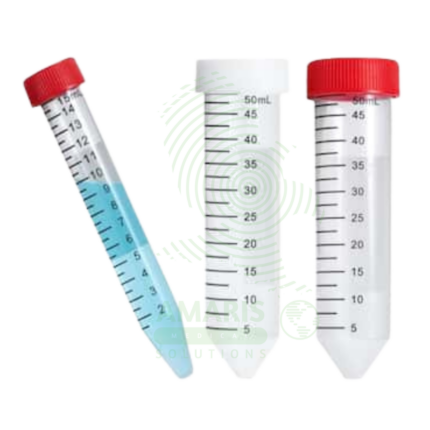
Centrifuge Tubes
Centrifuge Tubes are specialized disposable containers (polypropylene) designed to withstand high centrifugal forces (up to 30,000 x g) for separating biological fluids based on density. Available in microcentrifuge sizes (0.2-2.0 mL), conical tubes (15 mL, 50 mL), and larger volumes (100-500 mL). Features include leak-proof screw caps with O-rings (conical tubes), snap caps (microcentrifuge tubes), graduated volume markings, writing areas, and sterile/non-sterile options. Certified RNase/DNase-free, pyrogen-free, and autoclavable. Primary clinical applications include blood component separation (serum/plasma), urine sediment preparation, microbiology sample concentration, molecular biology (DNA/RNA extraction), cell culture processing, protein/enzyme analysis, and viral load testing. Critical safety precautions include never exceeding maximum RCF rating, proper balancing by weight, secure cap tightening, inspection for cracks, and disposal as biohazardous waste. Essential consumable in every clinical, research, and industrial laboratory.
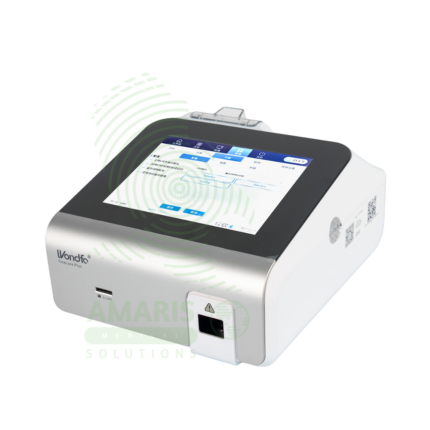
Finecare Analyzer
The Finecare Analyzer is a Class II medical device (FDA-cleared, CE-marked) fluorescence immunoassay system manufactured by Wondfo Biotech for quantitative detection of cardiac markers (troponin I, CK-MB, myoglobin), inflammatory markers (CRP, procalcitonin), thyroid hormones (TSH, FT3, FT4), diabetes markers (HbA1c), reproductive hormones (LH, FSH, prolactin), tumor markers (AFP, CEA, PSA), and infectious disease markers. Features include time-resolved fluorescence technology, color touchscreen interface, built-in printer (select models), USB/Ethernet connectivity, and internal rechargeable battery for portable use. Test time 3-15 minutes, sample volume 50-100 µL (whole blood, serum, plasma). Primary clinical applications include rapid diagnosis of acute myocardial infarction in chest pain patients, early detection of sepsis and bacterial infections, thyroid disorder diagnosis and monitoring, long-term glycemic control assessment in diabetes, fertility and reproductive health evaluation, cancer screening and surveillance, and infectious disease testing in endemic and clinical settings. Critical safety precautions include proper test cartridge storage (2-8°C), regular quality control, biohazard safety protocols, and operator training. Essential point-of-care testing system for hospitals, clinics, and remote healthcare facilities requiring rapid, quantitative results.
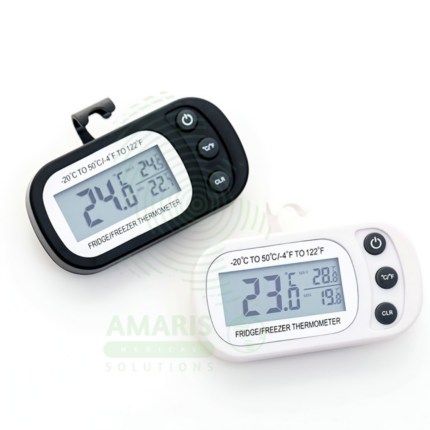
Fridge Thermometer
A Fridge Thermometer is a precision temperature monitoring device designed for continuous use inside medical and laboratory refrigerators and freezers. Its primary role is to safeguard the potency of vaccines, medications, and biological samples by ensuring storage temperatures remain within a critical specified range (e.g., +2°C to +8°C). Available in analog or digital formats, accurate models with memory functions are essential for compliance with cold chain protocols, requiring daily monitoring, logging, and regular calibration. It is a fundamental quality control tool in pharmacies, clinics, immunization centers, and laboratories.
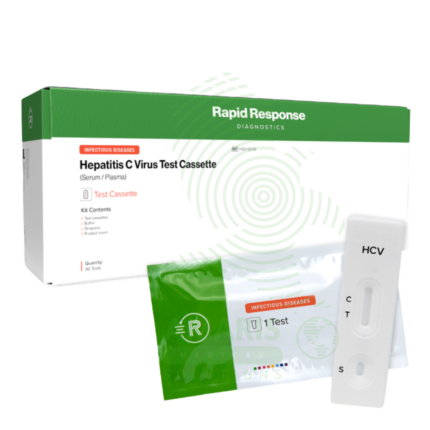
Hepatitis C Test Kit
The Hepatitis C Test Kit is an in vitro diagnostic device for the detection of Hepatitis C virus antibodies or RNA in human blood, serum, or plasma samples. Available in rapid, laboratory immunoassay, and molecular formats, it screens for HCV infection, confirms active infection with RNA testing, and monitors treatment response. With high sensitivity and specificity exceeding 99%, it is essential for identifying infected individuals, linking them to curative direct-acting antiviral therapy, and confirming cure. Essential applications include risk-based screening of high-risk populations, birth cohort screening of baby boomers, evaluation of acute hepatitis, management of occupational exposures, and monitoring of antiviral therapy that can cure over 95% of infections. All patient samples must be handled with universal precautions, and positive antibody results require confirmatory testing.
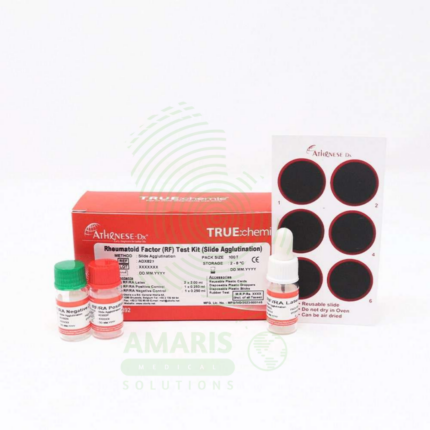
Rheumatoid factor
Rheumatoid Factor (RF) testing is a quantitative or semi-quantitative serological assay (nephelometry, turbidimetry, latex agglutination, or ELISA) for detecting autoantibodies against the Fc portion of immunoglobulin G, primarily of the IgM isotype. RF is a key marker in the ACR/EULAR classification criteria for rheumatoid arthritis, with sensitivity 60-80% and specificity 70-90%. Test requires serum samples; results reported in IU/mL (reference <15-20 IU/mL) or titer. Primary clinical applications include diagnosis and classification of rheumatoid arthritis, prognostic assessment (high-titer RF correlates with severe, erosive disease), differential diagnosis of inflammatory arthritis, monitoring disease activity, diagnosis of Sjögren's syndrome, evaluation of mixed cryoglobulinemia (hepatitis C-associated), and assessment of other autoimmune and chronic inflammatory conditions. Critical safety precautions include awareness of false positives (other autoimmune diseases, chronic infections, healthy elderly), false negatives (seronegative RA 20-30%), need for clinical correlation, and anti-CCP antibody testing to improve diagnostic accuracy. Essential test for rheumatology practice, autoimmune disease evaluation, and differential diagnosis of inflammatory arthritis.
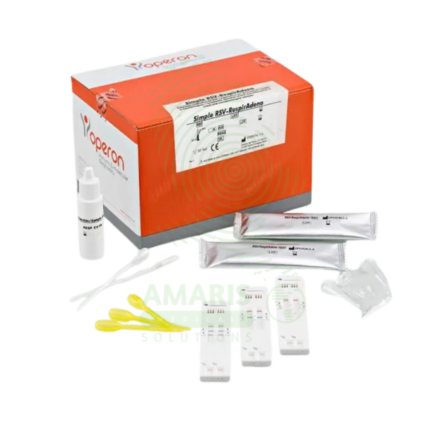
Rota virus
Rota virus rapid tests are immunochromatographic assays (CE-marked, FDA-cleared for some brands) for qualitative detection of rotavirus group A antigens in stool specimens, providing results in 10-20 minutes. The test principle uses monoclonal or polyclonal antibodies against rotavirus antigens (typically VP6 protein) immobilized on membranes, capturing antigens that form a visible line. Sensitivity 90-98%, specificity 95-99% compared to ELISA or PCR. The kit includes individually foil-wrapped test devices, sample diluent, and collection applicators. Primary clinical applications include rapid diagnosis of acute gastroenteritis in children (rotavirus is the leading cause of severe diarrhea in under-5 children), outbreak investigation in daycare centers and schools, hospital infection control and isolation precautions, differential diagnosis of acute diarrhea (viral vs. bacterial vs. parasitic), vaccine effectiveness monitoring and surveillance, assessment of dehydration risk, and evaluation of immunocompromised patients. Critical safety precautions include proper specimen collection (clean container, avoid contamination), biological hazard precautions (all stool potentially infectious), quality control verification, and awareness that a negative test does not rule out other causes of gastroenteritis. Essential tool for pediatric gastroenteritis management, infection control, and public health surveillance.