Dermatoscope and Magnifiers
 Diagnostic Kits
 Vital Signs Monitors
 Stethoscopes and Accessories
 Otoscopes, Ophthalmoscopes, and Retinoscopes
 Reflex Hammers and Neurological Tools
 Scales and Measuring Devices
 Spirometers and Pulmonary Function Tests
 Electrosurgical Units and Accessories
 Cutting Instruments
 Grasping and Holding Instruments
 Hemostatic Instruments
 Specialized Surgical Sets
 Single-Use Procedure Trays and Packs
 Surgical Drapes, Gowns, and Covers
 Tissue Unifying Instruments
 Radiation Protection
 X-Ray Machines and Accessories
 Ultrasound Systems and Probes
 MRI and CT Scanners
 Radiology Consumables
 Bone Densitometers
 Fluoroscopy Equipment
 Imaging Tables and Positioning Aids
 Microscopes and Accessories
 Centrifuges and Separators
 Analyzers
 Incubators and Ovens
 Pipettes, Dispensers, and Lab Glassware
 Refrigerators, Freezers, and Storage Units
 Lab Consumables
 Sterilizers and Autoclaves for Lab Use
 Multi-Parameter Monitors
 Ventilators and Respiratory Support Devices
 Defibrillators and AEDs
 Infusion Pumps and IV Systems
 Patient Warmers and Cooling Devices
 Central Monitoring Stations
 Accessories
 Anesthesia Machines and Workstations
 Oxygen Concentrators and Delivery Systems
 Nebulizers and Inhalers
 CPAP/BiPAP Machines
 Airway Management
 Anesthesia Masks, Circuits, and Bags
 Humidifiers and Heaters
 Respiratory Therapy Accessories
 First Aid Kits and Cabinets
 Emergency Resuscitation Equipment
 Trauma Supplies
 Emergency Carts and Crash Carts
 Burn Care Products
 Bleeding Control
 Automated External Defibrillators (AEDs)
 Transport and Evacuation
 Wheelchairs and Accessories
 Walkers, Crutches, and Canes
 Prosthetics and Orthotics
 Physical Therapy Equipment
 Transfer Devices
 Bathroom Safety
 Orthopedic Traction and Tables
 Hot/Cold Therapy Packs and Units
 Beds and Mattresses
 Chairs and Stools
 Tables
 Cabinets and Storage
 Privacy Screens & Curtains
 Stands and Racks
 Linens and Textiles
 Lighting
 Autoclaves and Sterilizers
 Ultrasonic Cleaners
 Disinfectant Solutions and Wipes
 Sterilization Pouches, Wraps, and Indicators
 Instrument Trays and Containers
 UV and Ozone Disinfection Devices
 Washer Disinfectors
 Wound Care
 Gloves
 Masks and Respirators
 Catheters and Tubing
 Swabs, Applicators, and Sponges
 Incontinence Products
 Personal Protective Equipment (PPE)
 Dental Chairs and Units
 Handpieces and Burs
 Instruments
 Consumables
 Sterilization for Dental Use
 Orthodontic Supplies
 Endodontic Tools
 Slit Lamps and Tonometers
 Lensometers and Phoropters
 Ophthalmic Surgical Instruments
 Eyewear Frames and Lenses
 Contact Lens Supplies
 Vision Testing Charts and Devices
 Eye Care Consumables
 Laser Systems for Eye Care
 ENT Exam Chairs and Tables
 Endoscopes
 Audiometers and Hearing Tests
 ENT Instruments
 Nasal and Throat Packs
 Hearing Aids and Accessories
 Otology Supplies
 Fetal Dopplers and Monitors
 Delivery Beds and Tables
 Gynecological Instruments
 Neonatal Incubators and Warmers
 Breast Pumps and Accessories
 Contraceptive Devices
 Maternity Supports and Pads
 Neonatal Consumables
 Cystoscopes and Urethroscopes
 Dialysis Machines and Supplies
 Urological Catheters and Bags
 Lithotripters
 Prostate Treatment Devices
 Urinary Incontinence Products
 Kidney Stone Management Tools
 Consumables & Disposables
 EEG and EMG Machines
 Neurosurgical Instruments
 Nerve Stimulators
 Headrests and Positioning Aids
 Lumbar Puncture Kits
 Seizure Monitoring Devices
 Consumables
 Rehabilitation for Neurological Conditions
 ECG Machines and Accessories
 Holter Monitors
 Stress Test Systems
 Pacemakers and Defibrillator Accessories
 Vascular Access Devices
 Cardiac Catheters and Guidewires
 Blood Flow Meters
 Consumables
 Orthopedic Instruments
 Casts, Splints, and Padding
 Joint Replacement Supplies
 Prosthetic Limbs and Components
 Bone Grafts and Substitutes
 Traction Devices
 Orthopedic Braces and Supports
 Rehabilitation Aids for Orthopedics
 Home Oxygen Therapy
 Hospital Beds for Home Use
 Mobility Aids
 Bathroom and Daily Living Aids
 Wound Care for Home
 Monitoring Devices
 Enteral Feeding Pumps and Tubes
 Hand Sanitizers and Dispensers
 Face Shields and Goggles
 Isolation Gowns and Suits
 Biohazard Waste Containers
 Air Purifiers and HEPA Filters
 Surface Disinfectants
 Sharps Containers
 Protective Barriers
 Cardiovascular & Endurance Training
 Strength Training & Weightlifting
 Functional Training & Core Conditioning
 Physical Therapy & Rehabilitation
 Sports & Outdoor Recreation
 Gym Flooring & Facility Equipment
 Fitness Monitoring & Accessories
 Kids & Novelties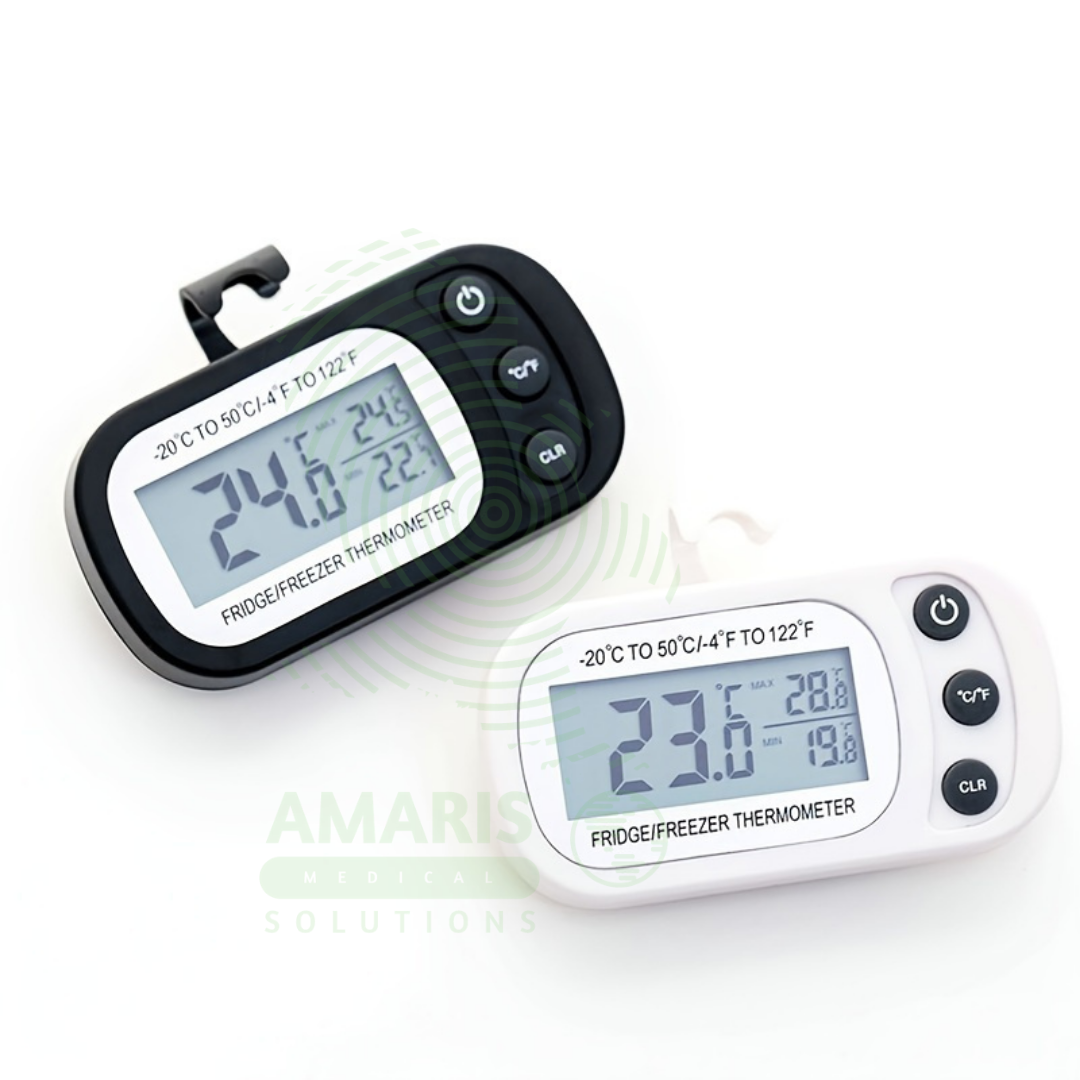
Fridge Thermometer
WhatsApp Order
A Fridge Thermometer is a precision temperature monitoring device designed for continuous use inside medical and laboratory refrigerators and freezers. Its primary role is to safeguard the potency of vaccines, medications, and biological samples by ensuring storage temperatures remain within a critical specified range (e.g., +2°C to +8°C). Available in analog or digital formats, accurate models with memory functions are essential for compliance with cold chain protocols, requiring daily monitoring, logging, and regular calibration. It is a fundamental quality control tool in pharmacies, clinics, immunization centers, and laboratories.
Description
Fridge Thermometer
PRIMARY CLINICAL & DIAGNOSTIC USES
1. Temperature Monitoring for Vaccine Storage:
-
Primary Use: The primary and most critical clinical use is for the continuous monitoring of temperatures in refrigerators and freezers used to store vaccines and biologics. Maintaining the cold chain within a strict range (typically +2°C to +8°C for refrigerators) is mandatory to ensure vaccine potency, efficacy, and patient safety. It is a requirement for all immunization programs and clinics.
-
How it helps: Protects patients from receiving ineffective vaccines by ensuring that these life-saving medications have been stored at the correct temperature from the moment they leave the manufacturer to the moment they are administered.
2. Pharmaceutical Storage Compliance:
-
Primary Use: Essential for monitoring storage conditions of temperature-sensitive medications (e.g., insulin, certain antibiotics, eye drops) in pharmacy dispensaries, hospital wards, and clinical refrigerators to ensure they remain within their labeled storage specifications.
-
How it helps: Guarantees that medications patients rely on—from insulin for diabetes to antibiotics for infections—remain potent and safe to use, preventing treatment failures caused by improper storage.
3. Laboratory Reagent & Sample Integrity:
-
Primary Use: Used in clinical and research laboratories to monitor refrigerators storing sensitive reagents, enzymes, antibodies, and patient samples (e.g., blood, serum) to prevent degradation.
-
How it helps: Ensures that laboratory test results are accurate by verifying that the reagents used in testing and the patient samples being tested have been stored properly, preventing misdiagnosis due to degraded materials.
4. Point-of-Care Testing (POCT) Quality Assurance:
-
Primary Use: Used to verify that storage conditions for POCT kits (e.g., rapid tests, glucose strips) are within the manufacturer’s specified range, which is part of quality control protocols.
-
How it helps: Guarantees that rapid tests used at the bedside—for everything from strep throat to heart attacks—are functioning correctly, ensuring that clinical decisions based on these tests are reliable.
SECONDARY & SUPPORTIVE USES
1. Blood Bank Storage Monitoring: Used as a secondary check or backup monitor for refrigerators storing blood products (though dedicated, alarmed blood bank refrigerators are the standard), providing an extra layer of safety for this critical resource.
2. Food Safety in Healthcare Facilities: Used in kitchen and dietary service refrigerators in hospitals and care homes to ensure food is stored at safe temperatures (<5°C / 41°F) to prevent bacterial growth, protecting immunocompromised patients from foodborne illness.
3. General Laboratory & Facility Management: A standard tool for environmental monitoring of any temperature-controlled storage unit in a healthcare setting, ensuring all temperature-sensitive materials are properly maintained.
KEY PRODUCT FEATURES
1. BASIC IDENTIFICATION ATTRIBUTES
-
Device Type: Temperature Monitoring Instrument.
-
Form Factors: Can be dial (bimetallic coil) thermometers or digital (electronic) thermometers with an LCD display. May have a probe on a wire or be a self-contained unit.
-
Mounting: Designed to be placed inside a refrigerator/freezer. Often features a hook, magnet, or stand for placement on a shelf or attachment to the wall.
-
Measurement Range: Typically covers a range from at least -20°C to +40°C (-4°F to 104°F) to accommodate both refrigerator and freezer monitoring.
2. TECHNICAL & PERFORMANCE PROPERTIES
-
Accuracy: Must have sufficient accuracy for its intended use. For vaccine storage, a tolerance of ±0.5°C (±1°F) is often recommended. Should be clearly stated on the device or packaging.
-
Scale & Readability: The scale must be easy to read. Digital displays are often clearer. Analog dials should have clear, bold markings.
-
Memory Function (Digital Models): Advanced digital models record minimum and maximum temperatures reached over a period (e.g., since last reset), which is crucial for identifying excursions outside the safe range that may have occurred when the refrigerator was unattended.
-
Calibration: Should be calibratable or verifiable against a certified reference thermometer. Many are designed for easy field calibration using an ice-water bath (0°C / 32°F) or other method.
3. PHYSICAL & OPERATIONAL PROPERTIES
-
Durability: Must withstand cold, humid conditions and potential condensation. Housing should be water-resistant.
-
Battery (Digital): Long-life battery for continuous operation. Should provide a low-battery indicator.
4. SAFETY & COMPLIANCE ATTRIBUTES
-
Compliance Standards: For vaccine storage, devices should meet the performance criteria outlined by national public health bodies (e.g., CDC Vaccine Storage and Handling Toolkit in the US, WHO EPI guidelines globally).
-
Traceability: Should have a unique serial number for tracking as part of a quality management system. May come with a Certificate of Calibration.
-
Data Logging (Advanced Models): Some are continuous data loggers that record temperature at set intervals, allowing for downloading and review of historical data—a best practice for audits.
5. STORAGE & HANDLING ATTRIBUTES
-
Placement: Should be placed in the central area of the refrigerator, away from walls, cooling vents, doors, and directly next to stored products, to measure the "representative" air temperature.
-
Calibration Schedule: Should be verified for accuracy at regular intervals (e.g., annually or biannually) and after any event that might affect it (e.g., being dropped). Calibration should be traceable to a national standard.
-
Cleaning: Wipe with a damp cloth and mild detergent. Do not immerse in water unless specified as waterproof.
6. LABORATORY & CLINICAL APPLICATIONS
-
Primary Application: A continuous monitoring device to ensure the integrity of temperature-sensitive medical commodities (vaccines, drugs, specimens) by verifying that storage equipment is functioning correctly.
-
Quality Control Tool: Its readings are a direct input into quality assurance and cold chain management protocols.
SAFETY HANDLING PRECAUTIONS
1. SAFETY PRECAUTIONS
-
Correct Placement: Incorrect placement (e.g., in the door or against a cold wall) will give a false reading not representative of the storage conditions for the contents.
-
Regular Reading & Recording: Temperatures must be read and recorded at least twice daily (start and end of day) in a log, with immediate action taken if out of range.
-
Response to Excursions: Have a clear, written protocol for what to do if temperatures fall outside the safe range (e.g., moving products to a backup unit, assessing viability, reporting).
2. FIRST AID MEASURES
-
General: The device itself poses no hazard. If a glass dial thermometer breaks, carefully dispose of glass and any liquid (which may contain alcohol, not mercury in modern types).
3. FIRE FIGHTING MEASURES
-
Flammability: Plastic housing and electronic components are combustible.
-
Extinguishing Media: Use standard extinguishing media appropriate for the surrounding fire.
Related products
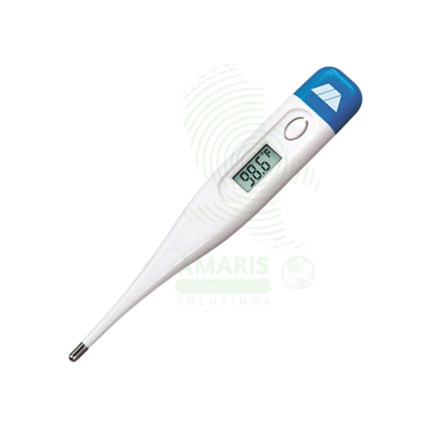
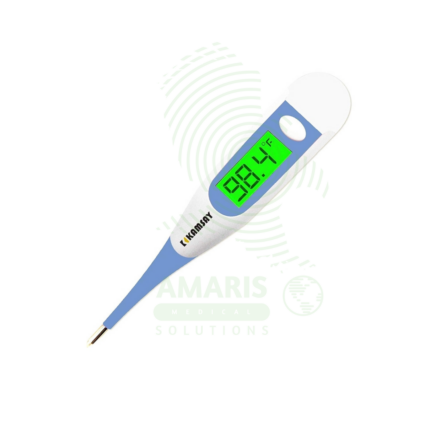
Digital Thermometer
A Digital Thermometer is an electronic device for measuring body temperature, having largely replaced glass mercury thermometers due to its safety, speed, and ease of use. It uses a thermistor sensor to provide a rapid, accurate digital readout on an LCD screen via oral, rectal, axillary, or other specialized routes. Key features often include a fever alarm, memory recall, and waterproof design for easy cleaning. Its accuracy, hygienic benefits (especially with disposable probe covers), and suitability for all age groups make it an indispensable tool in hospitals, clinics, and homes for detecting fever, monitoring illness, and assessing overall patient health.
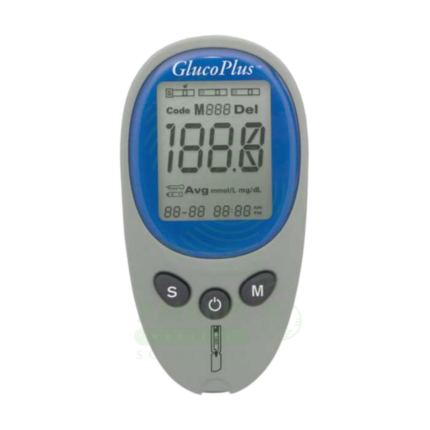
Glucosplus Blood Sugar Machine
The Glucosplus Blood Sugar Machine is a Class II medical device (FDA-cleared, ISO 15197:2013 compliant) using electrochemical biosensor technology to measure capillary blood glucose from a 0.5-1.0 µL sample in 5-7 seconds. Features include no-coding system eliminating user error, 300-500 result memory with date/time stamps, 7/14/30-day averaging, pre-/post-meal event tagging, push-button strip ejection, backlit LCD display, and auto-shutoff. Primary clinical applications include self-monitoring for Type 1, Type 2, and gestational diabetes, insulin dose adjustment, acute glycemic event detection (hypoglycemia/hyperglycemia), hospital point-of-care testing, long-term glycemic control assessment, and preconception planning for diabetic women. Critical safety considerations include single-use lancets (never share), proper hand hygiene before testing, correct test strip storage (sealed vial, temperature control), never using expired strips, regular control solution testing, and immediate action for hypoglycemia per 15-15 rule. Essential tool for daily diabetes self-management enabling patients to achieve glycemic targets and reduce long-term complications.
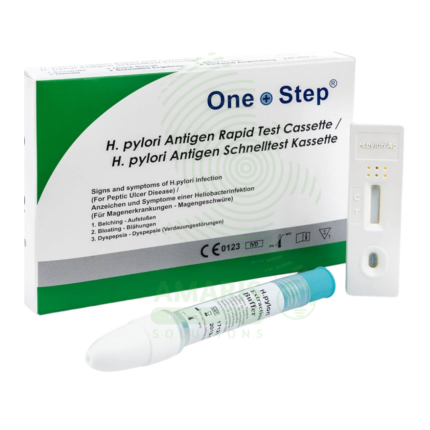
H.pylori test kits (Antigen)
H.pylori test kits (Antigen) are Class II medical devices (FDA-cleared/CE-marked) for rapid immunochromatographic or enzyme immunoassay detection of Helicobacter pylori antigens in stool specimens, enabling non-invasive diagnosis of active infection and post-treatment eradication confirmation. Test principles use monoclonal or polyclonal antibodies specific to H. pylori antigens, producing visible results in 10-20 minutes (rapid tests) or 1-2 hours (EIA). Sensitivity 90-98%, specificity 92-99% compared to gold standard methods. Primary clinical applications include rapid diagnosis of H. pylori infection in patients with dyspepsia, initial screening in uncomplicated dyspepsia (test-and-treat strategy), confirmation of active infection before therapy, post-treatment eradication confirmation (4-6 weeks after therapy), pediatric testing (preferred non-invasive method), screening in high-risk populations (family history of gastric cancer), and monitoring in patients with peptic ulcer disease or MALT lymphoma. Critical safety precautions include mandatory washout period (4 weeks off antibiotics, 2 weeks off PPIs) to avoid false negatives, proper specimen handling (universal precautions), refrigerated storage of kits (2-30°C), quality control verification, and disposal as biohazardous waste. Essential non-invasive tool for H. pylori management in gastroenterology and primary care.
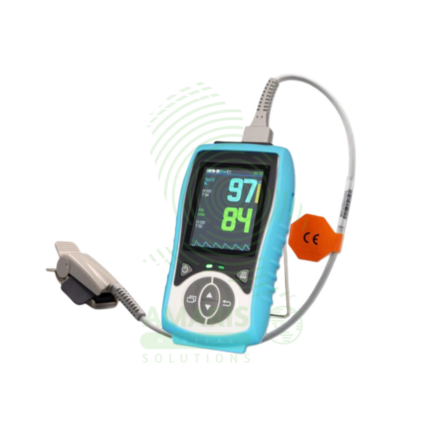
Handheld Pulse Oximeter
A Handheld Pulse Oximeter is a professional-grade, portable medical device used by healthcare providers for accurate and reliable monitoring of blood oxygen saturation (SpO2) and pulse rate. It consists of a durable, feature-rich monitor unit and separate, interchangeable sensors for use on fingers, toes, or ears. Superior to basic fingertip models, it offers advanced functions like configurable alarms, detailed plethysmograph display, trend memory, and data connectivity. Its robust design, clinical accuracy under challenging conditions (motion, low perfusion), and versatility make it an essential tool in hospitals, clinics, ambulances, and home health for patient assessment and monitoring.
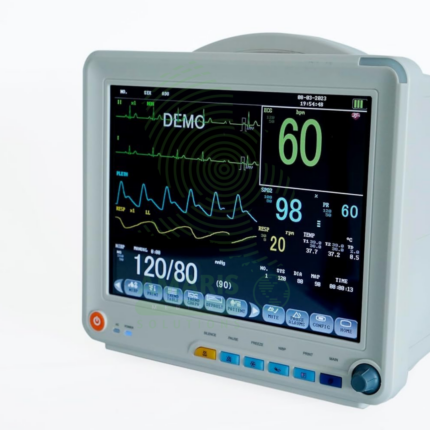
Patient Monitor
The Patient Monitor (6 Parameters BCCMS8000) is a versatile multi-parameter monitor designed for continuous surveillance of core vital signs in various clinical settings. It tracks six essential parameters—ECG, SpO2, Non-Invasive Blood Pressure (NIBP), Respiration, Temperature, and Pulse Rate—providing clinicians with real-time waveforms and numerical data on a clear color display. With its robust alarm system, battery backup for transport, and reliable performance, it is a fundamental tool for ensuring patient safety on general hospital wards, during procedures, and in emergency departments. Its design balances comprehensive monitoring capability with user-friendly operation.
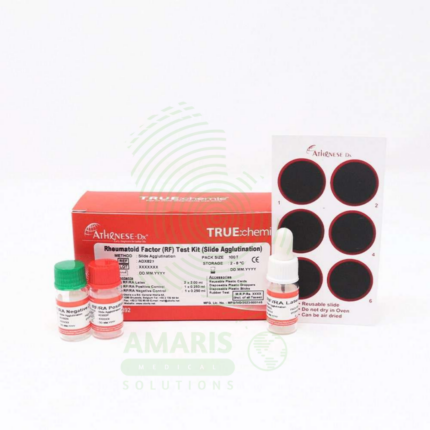
Rheumatoid factor
Rheumatoid Factor (RF) testing is a quantitative or semi-quantitative serological assay (nephelometry, turbidimetry, latex agglutination, or ELISA) for detecting autoantibodies against the Fc portion of immunoglobulin G, primarily of the IgM isotype. RF is a key marker in the ACR/EULAR classification criteria for rheumatoid arthritis, with sensitivity 60-80% and specificity 70-90%. Test requires serum samples; results reported in IU/mL (reference <15-20 IU/mL) or titer. Primary clinical applications include diagnosis and classification of rheumatoid arthritis, prognostic assessment (high-titer RF correlates with severe, erosive disease), differential diagnosis of inflammatory arthritis, monitoring disease activity, diagnosis of Sjögren's syndrome, evaluation of mixed cryoglobulinemia (hepatitis C-associated), and assessment of other autoimmune and chronic inflammatory conditions. Critical safety precautions include awareness of false positives (other autoimmune diseases, chronic infections, healthy elderly), false negatives (seronegative RA 20-30%), need for clinical correlation, and anti-CCP antibody testing to improve diagnostic accuracy. Essential test for rheumatology practice, autoimmune disease evaluation, and differential diagnosis of inflammatory arthritis.
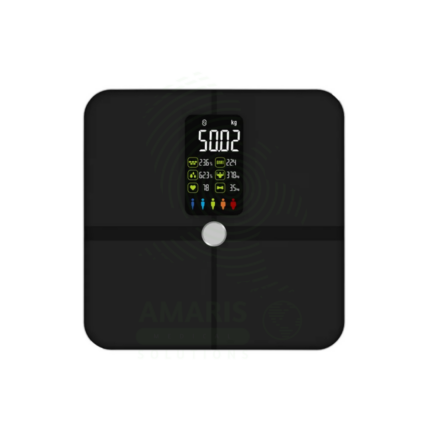
Smart Weighting Scale With Bluetooth
A Smart Weighting Scale With Bluetooth is a digital body weight scale with integrated wireless technology that transmits weight measurements from home to smartphones and healthcare platforms for remote patient monitoring. Features four high-precision strain gauge sensors providing accuracy ±0.1-0.3 kg, tempered glass or reinforced plastic platform with 180-400 lb capacity, backlit LCD display, and Bluetooth 4.0-5.0 LE connectivity. Advanced models include bioelectrical impedance analysis (BIA) for body composition (body fat, muscle mass, bone mass, hydration, visceral fat). Primary clinical applications include remote weight monitoring in heart failure management (early fluid overload detection), obesity and weight management programs, bariatric surgery pre/post-operative monitoring, chronic kidney disease fluid management, pregnancy weight gain tracking, telehealth programs, and medication-induced weight change surveillance. Class I medical device (weight function); Class II if body composition claims made. Critical safety considerations include weight capacity limits, platform integrity inspection, proper surface placement (hard, level), standardized weighing conditions, BIA contraindications (pacemakers, ICDs, pregnancy), and rapid weight gain recognition in heart failure patients.