Dermatoscope and Magnifiers
 Diagnostic Kits
 Vital Signs Monitors
 Stethoscopes and Accessories
 Otoscopes, Ophthalmoscopes, and Retinoscopes
 Reflex Hammers and Neurological Tools
 Scales and Measuring Devices
 Spirometers and Pulmonary Function Tests
 Electrosurgical Units and Accessories
 Cutting Instruments
 Grasping and Holding Instruments
 Hemostatic Instruments
 Specialized Surgical Sets
 Single-Use Procedure Trays and Packs
 Surgical Drapes, Gowns, and Covers
 Tissue Unifying Instruments
 Radiation Protection
 X-Ray Machines and Accessories
 Ultrasound Systems and Probes
 MRI and CT Scanners
 Radiology Consumables
 Bone Densitometers
 Fluoroscopy Equipment
 Imaging Tables and Positioning Aids
 Microscopes and Accessories
 Centrifuges and Separators
 Analyzers
 Incubators and Ovens
 Pipettes, Dispensers, and Lab Glassware
 Refrigerators, Freezers, and Storage Units
 Lab Consumables
 Sterilizers and Autoclaves for Lab Use
 Multi-Parameter Monitors
 Ventilators and Respiratory Support Devices
 Defibrillators and AEDs
 Infusion Pumps and IV Systems
 Patient Warmers and Cooling Devices
 Central Monitoring Stations
 Accessories
 Anesthesia Machines and Workstations
 Oxygen Concentrators and Delivery Systems
 Nebulizers and Inhalers
 CPAP/BiPAP Machines
 Airway Management
 Anesthesia Masks, Circuits, and Bags
 Humidifiers and Heaters
 Respiratory Therapy Accessories
 First Aid Kits and Cabinets
 Emergency Resuscitation Equipment
 Trauma Supplies
 Emergency Carts and Crash Carts
 Burn Care Products
 Bleeding Control
 Automated External Defibrillators (AEDs)
 Transport and Evacuation
 Wheelchairs and Accessories
 Walkers, Crutches, and Canes
 Prosthetics and Orthotics
 Physical Therapy Equipment
 Transfer Devices
 Bathroom Safety
 Orthopedic Traction and Tables
 Hot/Cold Therapy Packs and Units
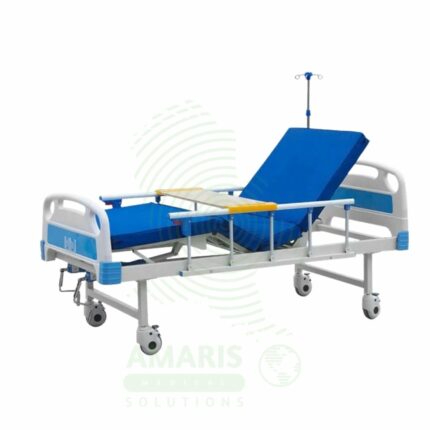
 Beds and Mattresses
 Chairs and Stools
 Tables
 Cabinets and Storage
 Privacy Screens & Curtains
 Stands and Racks
 Linens and Textiles
 Lighting
 Autoclaves and Sterilizers
 Ultrasonic Cleaners
 Disinfectant Solutions and Wipes
 Sterilization Pouches, Wraps, and Indicators
 Instrument Trays and Containers
 UV and Ozone Disinfection Devices
 Washer Disinfectors
 Wound Care
 Gloves
 Masks and Respirators
 Catheters and Tubing
 Swabs, Applicators, and Sponges
 Incontinence Products
 Personal Protective Equipment (PPE)
 Dental Chairs and Units
 Handpieces and Burs
 Instruments
 Consumables
 Sterilization for Dental Use
 Orthodontic Supplies
 Endodontic Tools
 Slit Lamps and Tonometers
 Lensometers and Phoropters
 Ophthalmic Surgical Instruments
 Eyewear Frames and Lenses
 Contact Lens Supplies
 Vision Testing Charts and Devices
 Eye Care Consumables
 Laser Systems for Eye Care
 ENT Exam Chairs and Tables
 Endoscopes
 Audiometers and Hearing Tests
 ENT Instruments
 Nasal and Throat Packs
 Hearing Aids and Accessories
 Otology Supplies
 Fetal Dopplers and Monitors
 Delivery Beds and Tables
 Gynecological Instruments
 Neonatal Incubators and Warmers
 Breast Pumps and Accessories
 Contraceptive Devices
 Maternity Supports and Pads
 Neonatal Consumables
 Cystoscopes and Urethroscopes
 Dialysis Machines and Supplies
 Urological Catheters and Bags
 Lithotripters
 Prostate Treatment Devices
 Urinary Incontinence Products
 Kidney Stone Management Tools
 Consumables & Disposables
 EEG and EMG Machines
 Neurosurgical Instruments
 Nerve Stimulators
 Headrests and Positioning Aids
 Lumbar Puncture Kits
 Seizure Monitoring Devices
 Consumables
 Rehabilitation for Neurological Conditions
 ECG Machines and Accessories
 Holter Monitors
 Stress Test Systems
 Pacemakers and Defibrillator Accessories
 Vascular Access Devices
 Cardiac Catheters and Guidewires
 Blood Flow Meters
 Consumables
 Orthopedic Instruments
 Casts, Splints, and Padding
 Joint Replacement Supplies
 Prosthetic Limbs and Components
 Bone Grafts and Substitutes
 Traction Devices
 Orthopedic Braces and Supports
 Rehabilitation Aids for Orthopedics
 Home Oxygen Therapy
 Hospital Beds for Home Use
 Mobility Aids
 Bathroom and Daily Living Aids
 Wound Care for Home
 Monitoring Devices
 Enteral Feeding Pumps and Tubes
 Hand Sanitizers and Dispensers
 Face Shields and Goggles
 Isolation Gowns and Suits
 Biohazard Waste Containers
 Air Purifiers and HEPA Filters
 Surface Disinfectants
 Sharps Containers
 Protective Barriers
 Cardiovascular & Endurance Training
 Strength Training & Weightlifting
 Functional Training & Core Conditioning
 Physical Therapy & Rehabilitation
 Sports & Outdoor Recreation
 Gym Flooring & Facility Equipment
 Fitness Monitoring & Accessories
 Kids & Novelties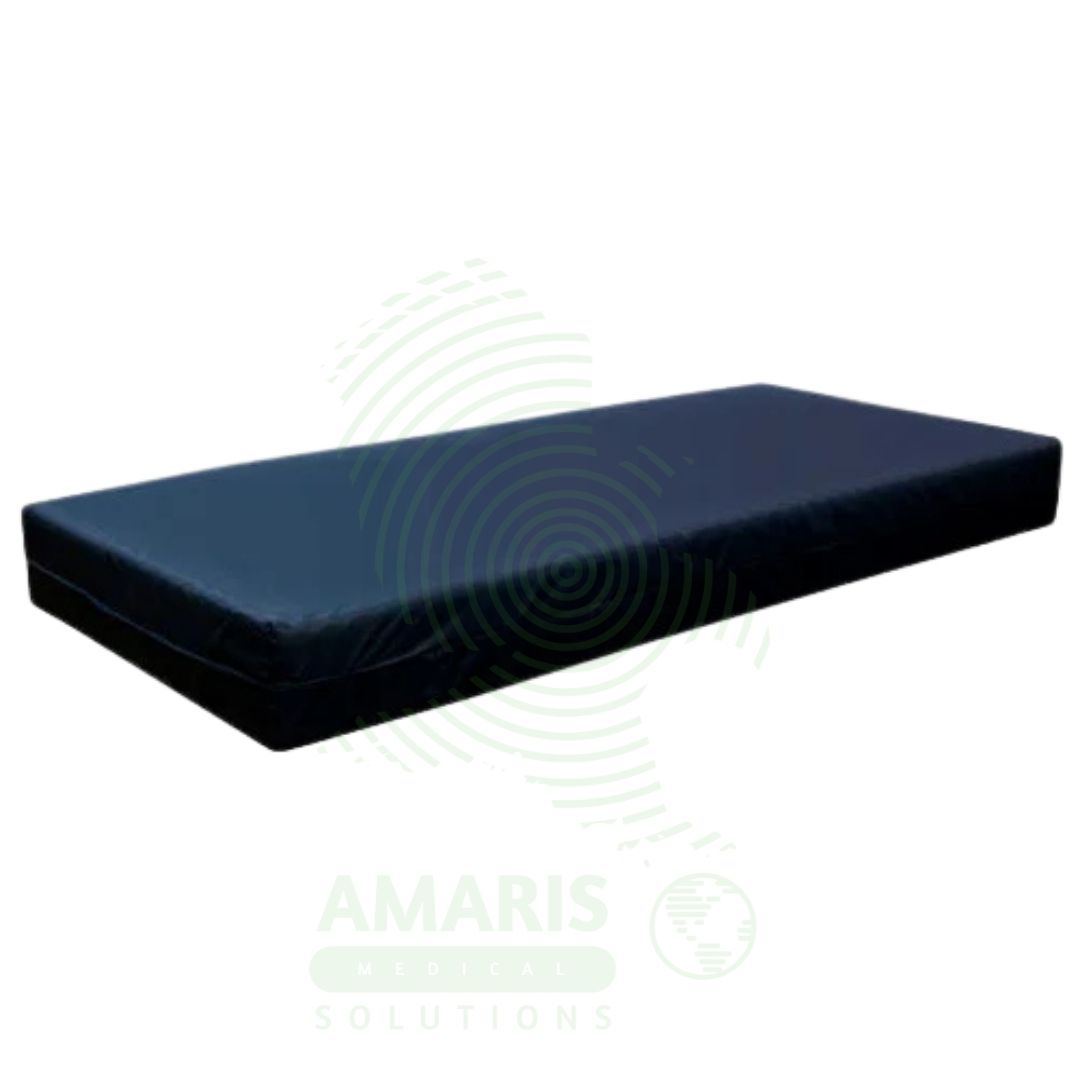

Hospital Mattress with Rexine
$1.00
WhatsApp Order
A Hospital Mattress with Rexine is a medical-grade mattress designed for use on hospital beds in clinical and home care settings. Featuring a high-density foam core for pressure redistribution and support, and a waterproof, fluid-resistant Rexine cover for infection control, it provides a comfortable, hygienic surface for patients requiring bed rest. The durable construction withstands repeated cleaning and disinfection, making it suitable for high-use environments. Essential for pressure injury prevention and patient comfort during hospitalization or long-term care.
Description
Hospital Mattress with Rexine
PRIMARY CLINICAL & DIAGNOSTIC USES
1. Pressure Redistribution and Pressure Injury Prevention
-
Primary Use: Provides a supportive, pressure-redistributing surface for patients confined to bed, helping to prevent the development of pressure ulcers by reducing sustained pressure on bony prominences including the sacrum, heels, and occiput.
-
How it helps: For the wound care nurse and care team, a hospital mattress with appropriate pressure-redistributing properties is a critical component of pressure injury prevention protocols—providing a foundation that supports skin integrity during prolonged bed rest. For the patient, a supportive mattress reduces the risk of developing painful, difficult-to-heal pressure injuries that can complicate recovery and extend hospitalization.
2. Fluid Resistance and Infection Control
-
Primary Use: The Rexine (PVC or polyurethane) cover provides a waterproof, fluid-resistant barrier that protects the mattress core from contamination by bodily fluids, blood, urine, and wound drainage. The non-porous surface allows for thorough cleaning and disinfection between patients.
-
How it helps: For the infection prevention team and environmental services staff, the fluid-resistant cover is essential for maintaining a hygienic patient environment—preventing fluid penetration into the mattress core, reducing the risk of cross-contamination between patients, and enabling effective cleaning with hospital-grade disinfectants. For the patient, a clean, disinfected mattress surface reduces the risk of healthcare-associated infections.
3. Patient Comfort and Support
-
Primary Use: The mattress provides a comfortable, supportive surface that conforms to the patient’s body while maintaining proper spinal alignment. The foam core offers cushioning that reduces pressure points while providing adequate support for rest and sleep.
-
How it helps: For the nursing team and patient, a comfortable mattress supports rest and sleep, which are essential for healing and recovery. For the patient confined to bed for extended periods, a supportive mattress reduces the discomfort associated with prolonged immobility and contributes to overall well-being.
4. Durability for High-Use Clinical Environments
-
Primary Use: Constructed with high-density foam core and durable Rexine cover designed to withstand repeated use, cleaning, and disinfection in busy hospital and long-term care settings. The cover is tear-resistant and maintains integrity through multiple cleaning cycles.
-
How it helps: For the facility manager and purchasing department, a durable mattress represents a cost-effective investment that maintains its integrity through repeated use and cleaning—reducing the frequency of replacement and ensuring consistent quality of patient support. For the patient, a well-maintained mattress provides consistent comfort and support throughout their stay.
5. Compatibility with Hospital Bed Systems
-
Primary Use: Designed to fit standard hospital bed frames, including manual and electric beds with articulating head and foot sections. The mattress flexes with bed movements to maintain patient comfort during positioning changes.
-
How it helps: For the clinical team, a mattress that fits properly on articulating hospital beds ensures that patient positioning for respiratory support, feeding, and pressure relief can be achieved without compromising comfort or safety. For the patient, a mattress that moves with the bed allows for smooth positioning changes without creating gaps or pressure points.
SECONDARY & SUPPORTIVE USES
1. Bariatric Patient Support: Heavy-duty mattresses with higher density foam and wider dimensions are available to support bariatric patients.
2. Pressure Injury Management: Used in conjunction with pressure redistribution overlays or alternating pressure mattresses for patients with existing pressure ulcers.
3. Post-Operative Recovery: Provides supportive surface for patients recovering from surgery, supporting rest and healing.
4. Home Healthcare: Used in home care settings for patients requiring long-term bed rest.
5. Long-Term Care: Essential for nursing homes and long-term care facilities where residents require extended bed rest.
6. Palliative and Hospice Care: Provides comfortable support for terminally ill patients during end-of-life care.
KEY PRODUCT FEATURES
1. BASIC IDENTIFICATION ATTRIBUTES
-
Product Type: A hospital-grade mattress with fluid-resistant Rexine cover, designed for use on hospital beds.
-
Designation: Hospital Mattress, Medical Mattress, Rexine Mattress, Pressure Relief Mattress, Patient Mattress.
-
Key Components:
-
Core: High-density foam for support and pressure redistribution.
-
Cover: Rexine (PVC or polyurethane) waterproof, fluid-resistant material.
-
Zipper or Seam: Sealed seams to prevent fluid penetration.
-
Dimensions: Standard hospital bed sizes (36x80 inches, 36x84 inches, etc.).
-
2. TECHNICAL & PERFORMANCE PROPERTIES
-
Foam Density: High-density foam (typically 30-40 kg/m³) for durability and support.
-
Pressure Redistribution: Designed to reduce peak pressure on bony prominences.
-
Fluid Resistance: Rexine cover prevents fluid penetration; sealed seams.
-
Fire Retardancy: Meets flammability standards for healthcare environments.
-
Weight Capacity: Standard models 300-500 lbs; bariatric models up to 800 lbs.
3. PHYSICAL & OPERATIONAL PROPERTIES
-
Construction: High-density foam core with Rexine cover; may be zippered for cover removal.
-
Cleaning: Wipe clean with hospital-grade disinfectants; covers may be removable for laundering.
-
Flexibility: Designed to flex with articulating bed sections.
-
Weight: Varies by size and density.
4. SAFETY & COMPLIANCE ATTRIBUTES
-
Regulatory Status: Class I medical device.
-
Flammability: Compliant with California Technical Bulletin 117 or equivalent.
-
Latex-Free: Available in latex-free formulations.
-
Biocompatibility: Materials safe for patient contact.
5. STORAGE & HANDLING ATTRIBUTES
-
Storage: Store in clean, dry area; protect from damage.
-
Cleaning: Clean between patients with hospital-grade disinfectants; removable covers may be laundered.
-
Inspection: Regularly inspect for tears, cracks, or fluid penetration; replace if damaged.
6. LABORATORY & CLINICAL APPLICATIONS
-
Primary Application: Patient support surface for hospital beds in clinical and home care settings.
-
Clinical Role: Essential component of pressure injury prevention and patient comfort during bed rest.
SAFETY HANDLING PRECAUTIONS
1. SAFETY PRECAUTIONS
-
Fluid Penetration: Inspect cover for tears or punctures; fluid penetration can compromise infection control.
-
Weight Capacity: Do not exceed stated weight capacity; verify capacity for patient weight.
-
Cleaning: Disinfect between patients; follow manufacturer guidelines for cleaning products.
-
Inspection: Check for signs of wear, compression, or damage; replace if mattress no longer provides adequate support.
2. FIRST AID MEASURES
-
Fluid Spill: If fluid spills on the mattress, clean immediately with disinfectant; inspect for penetration.
-
Cover Tear: If cover tears, remove mattress from service; repair or replace cover to prevent fluid penetration.
3. FIRE FIGHTING MEASURES
-
Flammability: Foam core and Rexine cover are combustible.
-
Extinguishing Media: Use water, foam, or CO₂ as appropriate for surrounding materials.
Related products
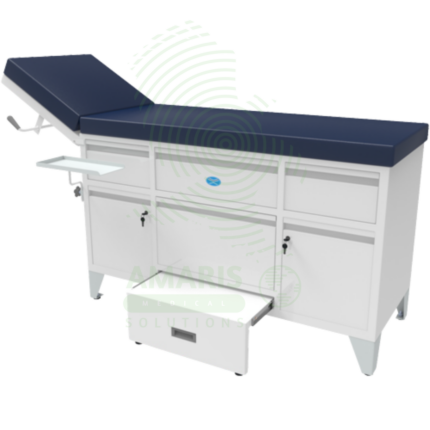
Examination Couch
An Examination Couch is a versatile, height-adjustable table designed as the central fixture in medical exam rooms. It provides a clean, comfortable, and adaptable surface for patient examinations, minor outpatient procedures, and diagnostic testing. Key features often include an adjustable backrest, extendable stirrups for gynecological/urological exams, and easy-clean upholstery. Its primary function is to facilitate efficient and ergonomic patient care while ensuring comfort and safety for both the patient and the clinician in general practice, specialty clinics, and urgent care settings.
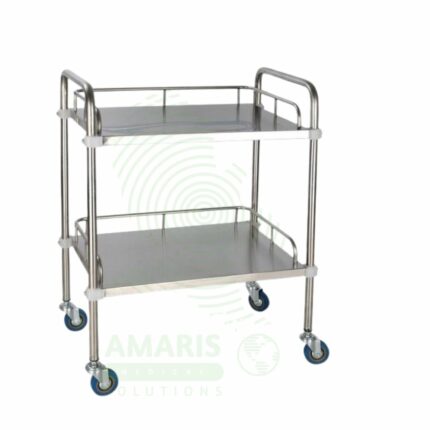
Instrument & Medicine Trolley
An Instrument & Medicine Trolley is a versatile, secure, mobile cart designed to transport, organize, and administer both medical instruments and medications. It functions as a mobile workstation for procedures, medication rounds, or emergency response, depending on its configuration. Key features include lockable, compartmentalized drawers for secure storage, a flat work surface, and smooth-rolling casters for mobility. Its adaptability makes it essential across hospital settings, from wards to treatment rooms, ensuring that organized, secure, and complete sets of tools and drugs are delivered efficiently to the point of patient care.
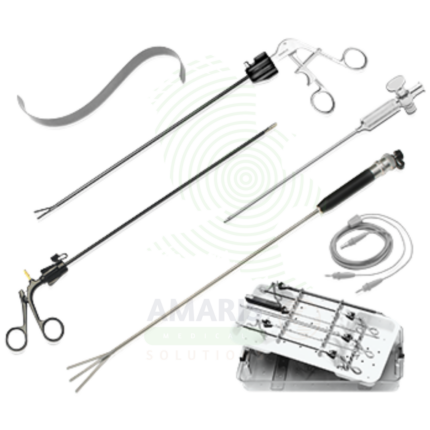
Laparoscopic Accessories
Laparoscopic accessories encompass a range of ancillary equipment and supplies essential for minimally invasive surgery, including cleaning brushes, sterilization containers, insufflation tubing, instrument storage systems, and single-use protective covers. These accessories support instrument care, procedural efficiency, and infection control, ensuring that laparoscopic instruments remain in optimal condition and that procedures run smoothly. Essential for operating rooms, sterile processing departments, and surgical suites.
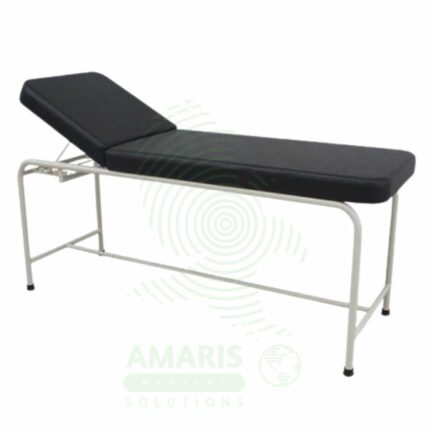
Resin Coated Examination Table
The Resin Coated Examination Table is a heavy-duty, non-upholstered medical table designed for maximum infection control and durability. Its seamless, hard plastic resin surface is impervious to fluids and resistant to damage from sharp instruments and harsh chemicals, allowing for aggressive cleaning and disinfection. It is the ideal platform for minor surgical procedures, gynecological exams, and high-throughput clinical settings where hygiene and longevity are prioritized over padded comfort. Patient comfort is provided through the use of disposable paper sheets or thin pads.
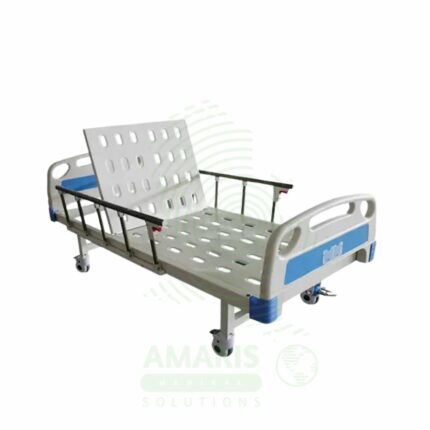
Single Crank Hospital Bed
A Single Crank Hospital Bed is the most basic type of manually adjustable bed, featuring only one hand crank to raise and lower the head section. It provides essential backrest elevation for patient comfort, feeding, and respiratory support but lacks knee elevation and height adjustment. Its simplicity makes it durable and low-cost, but it poses significant risks: patients are prone to sliding down the bed, and caregivers face ergonomic hazards due to the fixed height and manual operation. It is suitable only for minimal-care settings where patient mobility and clinical needs are very low.
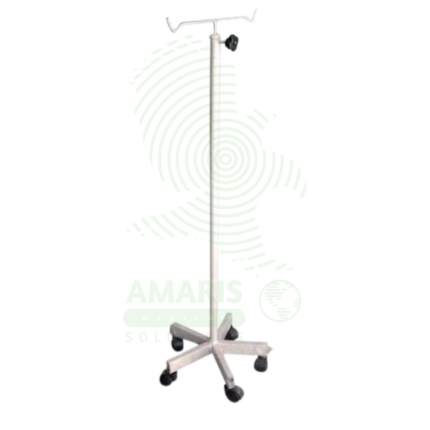
Stainless Steel Drip Stand
A Stainless Steel Drip Stand is a mobile, height-adjustable pole on a wheeled base, designed to securely hold intravenous fluid bags, blood products, and infusion pumps. Its primary function is to provide the necessary height for gravity-fed IV therapy and to serve as a stable transport system for infusions during patient mobility. Constructed from durable, corrosion-resistant stainless steel for easy cleaning and long-term use in hospitals and clinics, it is an indispensable piece of equipment for the safe and organized delivery of intravenous medications and fluids.
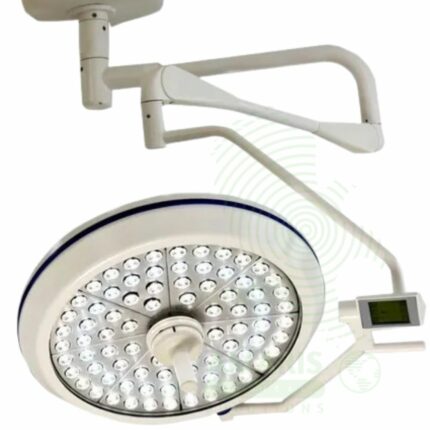
Theatre Ceiling Operating Light
An Theatre Ceiling Operating Light is a high-performance, ceiling-track-mounted surgical illumination system permanently installed in an operating theatre. It is engineered to deliver intense (40,000+ lux), shadow-reduced, and color-accurate (CRI >90) "cold" light deep into surgical cavities. Its articulated, counterbalanced arms allow precise positioning over the entire operating table. As a critical piece of fixed capital equipment, its performance is fundamental to surgical precision and safety. Proper use requires pre-procedure positioning, adherence to sterile handle protocols, and awareness of minimal thermal risks. It is the definitive primary light source for major surgical interventions.