Dermatoscope and Magnifiers
 Diagnostic Kits
 Vital Signs Monitors
 Stethoscopes and Accessories
 Otoscopes, Ophthalmoscopes, and Retinoscopes
 Reflex Hammers and Neurological Tools
 Scales and Measuring Devices
 Spirometers and Pulmonary Function Tests
 Electrosurgical Units and Accessories
 Cutting Instruments
 Grasping and Holding Instruments
 Hemostatic Instruments
 Specialized Surgical Sets
 Single-Use Procedure Trays and Packs
 Surgical Drapes, Gowns, and Covers
 Tissue Unifying Instruments
 Radiation Protection
 X-Ray Machines and Accessories
 Ultrasound Systems and Probes
 MRI and CT Scanners
 Radiology Consumables
 Bone Densitometers
 Fluoroscopy Equipment
 Imaging Tables and Positioning Aids
 Microscopes and Accessories
 Centrifuges and Separators
 Analyzers
 Incubators and Ovens
 Pipettes, Dispensers, and Lab Glassware
 Refrigerators, Freezers, and Storage Units
 Lab Consumables
 Sterilizers and Autoclaves for Lab Use
 Multi-Parameter Monitors
 Ventilators and Respiratory Support Devices
 Defibrillators and AEDs
 Infusion Pumps and IV Systems
 Patient Warmers and Cooling Devices
 Central Monitoring Stations
 Accessories
 Anesthesia Machines and Workstations
 Oxygen Concentrators and Delivery Systems
 Nebulizers and Inhalers
 CPAP/BiPAP Machines
 Airway Management
 Anesthesia Masks, Circuits, and Bags
 Humidifiers and Heaters
 Respiratory Therapy Accessories
 First Aid Kits and Cabinets
 Emergency Resuscitation Equipment
 Trauma Supplies
 Emergency Carts and Crash Carts
 Burn Care Products
 Bleeding Control
 Automated External Defibrillators (AEDs)
 Transport and Evacuation
 Wheelchairs and Accessories
 Walkers, Crutches, and Canes
 Prosthetics and Orthotics
 Physical Therapy Equipment
 Transfer Devices
 Bathroom Safety
 Orthopedic Traction and Tables
 Hot/Cold Therapy Packs and Units
 Beds and Mattresses
 Chairs and Stools
 Tables
 Cabinets and Storage
 Privacy Screens & Curtains
 Stands and Racks
 Linens and Textiles
 Lighting
 Autoclaves and Sterilizers
 Ultrasonic Cleaners
 Disinfectant Solutions and Wipes
 Sterilization Pouches, Wraps, and Indicators
 Instrument Trays and Containers
 UV and Ozone Disinfection Devices
 Washer Disinfectors
 Wound Care
 Gloves
 Masks and Respirators
 Catheters and Tubing
 Swabs, Applicators, and Sponges
 Incontinence Products
 Personal Protective Equipment (PPE)
 Dental Chairs and Units
 Handpieces and Burs
 Instruments
 Consumables
 Sterilization for Dental Use
 Orthodontic Supplies
 Endodontic Tools
 Slit Lamps and Tonometers
 Lensometers and Phoropters
 Ophthalmic Surgical Instruments
 Eyewear Frames and Lenses
 Contact Lens Supplies
 Vision Testing Charts and Devices
 Eye Care Consumables
 Laser Systems for Eye Care
 ENT Exam Chairs and Tables
 Endoscopes
 Audiometers and Hearing Tests
 ENT Instruments
 Nasal and Throat Packs
 Hearing Aids and Accessories
 Otology Supplies
 Fetal Dopplers and Monitors
 Delivery Beds and Tables
 Gynecological Instruments
 Neonatal Incubators and Warmers
 Breast Pumps and Accessories
 Contraceptive Devices
 Maternity Supports and Pads
 Neonatal Consumables
 Cystoscopes and Urethroscopes
 Dialysis Machines and Supplies
 Urological Catheters and Bags
 Lithotripters
 Prostate Treatment Devices
 Urinary Incontinence Products
 Kidney Stone Management Tools
 Consumables & Disposables
 EEG and EMG Machines
 Neurosurgical Instruments
 Nerve Stimulators
 Headrests and Positioning Aids
 Lumbar Puncture Kits
 Seizure Monitoring Devices
 Consumables
 Rehabilitation for Neurological Conditions
 ECG Machines and Accessories
 Holter Monitors
 Stress Test Systems
 Pacemakers and Defibrillator Accessories
 Vascular Access Devices
 Cardiac Catheters and Guidewires
 Blood Flow Meters
 Consumables
 Orthopedic Instruments
 Casts, Splints, and Padding
 Joint Replacement Supplies
 Prosthetic Limbs and Components
 Bone Grafts and Substitutes
 Traction Devices
 Orthopedic Braces and Supports
 Rehabilitation Aids for Orthopedics
 Home Oxygen Therapy
 Hospital Beds for Home Use
 Mobility Aids
 Bathroom and Daily Living Aids
 Wound Care for Home
 Monitoring Devices
 Enteral Feeding Pumps and Tubes
 Hand Sanitizers and Dispensers
 Face Shields and Goggles
 Isolation Gowns and Suits
 Biohazard Waste Containers
 Air Purifiers and HEPA Filters
 Surface Disinfectants
 Sharps Containers
 Protective Barriers
 Cardiovascular & Endurance Training
 Strength Training & Weightlifting
 Functional Training & Core Conditioning
 Physical Therapy & Rehabilitation
 Sports & Outdoor Recreation
 Gym Flooring & Facility Equipment
 Fitness Monitoring & Accessories
 Kids & Novelties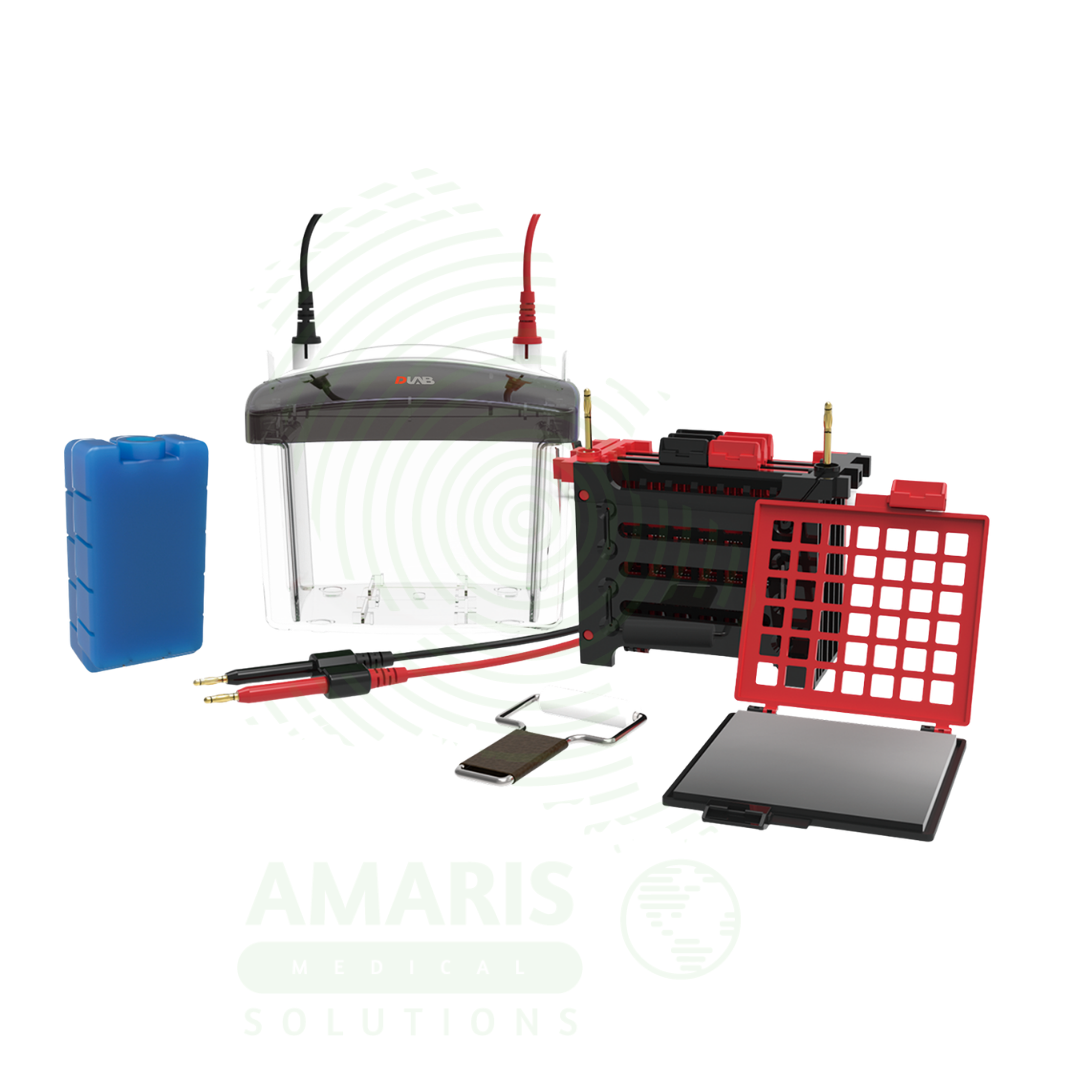

Transfer electrophoresis tank (DL-ZY04)
WhatsApp Order
The Transfer electrophoresis tank (DL-ZY04) is a large-format, high-capacity electroblotting (wet transfer) system designed for high-throughput Western, Southern, and Northern blotting in advanced clinical research and high-volume reference laboratory settings . Capable of transferring up to six mini-gels or multiple large preparative gels simultaneously, this system dramatically scales up the throughput of confirmatory diagnostic testing and proteomics research .
Manufactured from highly transparent polycarbonate and featuring an expanded array of 99.99% pure platinum electrodes, the Transfer electrophoresis tank (DL-ZY04) generates a powerful, uniform electric field across a large transfer area for efficient, consistent transfer of proteins and nucleic acids of all sizes . A multi-chamber cooling system (built-in ice box + multiple blue units) provides superior thermal management for high-intensity, high-resolution transfer runs .
Featuring a versatile, modular core design, large-format user-friendly cassettes, and a specialized bubble roller, the Transfer electrophoresis tank (DL-ZY04) simplifies the assembly of large gel-membrane sandwiches while ensuring artifact-free, reproducible results . Its robust construction, advanced safety features, and high capacity make it an essential tool for complex immunoblotting, proteomics research, and high-volume clinical validation in large hospital central labs, reference labs, and biopharmaceutical R&D .
Description
Transfer electrophoresis tank (DL-ZY04)
PRIMARY CLINICAL & DIAGNOSTIC USES
1. Large-Format Western Blot Protein Transfer for Advanced Diagnostic Confirmation
-
Primary Use: Provides a oversized, high-capacity electroblotting (transfer) tank designed for the rapid and simultaneous transfer of large-format proteins from preparative gels onto membranes for Western blot-based confirmatory diagnostic testing and proteomics research .
-
How it helps: For the clinical immunologist and research pathologist, the Transfer electrophoresis tank (DL-ZY04) large capacity enables the processing of high-resolution protein separations for complex diagnostic applications such as the differentiation of autoimmune antibody profiles and detection of large protein complexes. For the patient, this technology supports the development and execution of advanced diagnostic tests for complex autoimmune neurological conditions and rare proteinopathies.
2. Nucleic Acid Transfer for High-Resolution Southern and Northern Blotting
-
Primary Use: Facilitates the efficient transfer of high-molecular-weight DNA (Southern Blot) and RNA (Northern Blot) fragments from large preparative agarose gels to membranes for detailed genetic analysis and gene expression studies .
-
How it helps: For the molecular geneticist, the Transfer electrophoresis tank (DL-ZY04) large membrane capacity supports in-depth molecular diagnostics, including the analysis of large genomic fragments for telomere research, detection of large structural variants in cancer genomes, and complex gene mapping studies. For the patient, this capability is crucial for research that leads to the discovery of novel genetic markers and targeted gene therapies.
3. Uniform High-Performance Protein Transfer with Enhanced Electrode Field
-
Primary Use: Features an expanded, highly uniform platinum electrode array that generates an exceptionally strong and consistent electric field across the entire membrane surface, ensuring rapid and complete transfer of very high and low molecular weight proteins .
-
How it helps: For the laboratory scientist, the uniform field guarantees that the complete profile of proteins from complex samples is transferred faithfully, eliminating the risk of partial transfer that can lead to misinterpretation of diagnostic immunoblots. For the patient, a reliable transfer ensures the highest diagnostic sensitivity is achieved, particularly for low-abundance autoantibodies in conditions like Myositis or rare neurological disorders.
4. High-Capacity Processing for Clinical Reference Laboratories
-
Primary Use: Capable of transferring up to six mini-gels or multiple large-format gels simultaneously, offering maximum throughput for high-volume Western blot testing environments .
-
How it helps: For the clinical laboratory manager in a reference lab setting, the high capacity of the DL-ZY04 allows for the consolidation of testing into fewer runs, significantly reducing labor, reagent costs, and turn-around time. For the patient, this drives down the cost of complex testing and ensures that results from specialized send-out tests are returned to the requesting physician more quickly.
5. Advanced Thermal Management for High-Resolution Diagnostic Blots
-
Primary Use: Integrates a multi-chamber cooling system (built-in ice box + multiple blue cooling units) to rapidly and evenly dissipate heat generated during intensive high-voltage transfers, preventing protein denaturation and ensuring the highest quality band resolution .
-
How it helps: For the laboratory scientist, the superior cooling prevents “smiling” and band distortion across the entire large membrane, which is critical when interpreting complex banding patterns for conditions with many diagnostically significant bands (e.g., HIV, Lyme disease). For the patient, maintaining a stable thermal environment during transfer ensures the blot will be clear and unambiguous, reducing the risk of inconclusive results and the need for repeat testing.
SECONDARY & SUPPORTIVE USES
1. High-Throughput Proteomics and Biomarker Discovery: Supports the transfer of thousands of protein spots from large 2D gels for mass spectrometry identification in cancer biomarker discovery projects .
2. Quality Control of Next-Generation Biologics: Used in Western blot analysis for the characterization and stability testing of complex gene therapy vectors (e.g., AAV, Lentivirus) and bispecific antibodies .
3. Comprehensive Autoimmune Disease Profiling: Used for large-panel immunoblotting to detect a wide array of autoantibodies simultaneously in complex autoimmune diseases like Antisynthetase Syndrome and Systemic Sclerosis .
4. Neurodegenerative Disease Research: Supports the transfer of aggregated and oligomeric protein species for the study of Alzheimer’s, Parkinson’s, and Huntington’s disease pathology .
5. Host Cell Protein (HCP) Analysis in Biomanufacturing: Used in the detection and semi-quantitative analysis of process-related impurities in biopharmaceutical manufacturing .
6. Viral Vector Characterization: Facilitates the transfer of viral capsid proteins for the analysis of AAV and other gene therapy vector purity and identity .
7. Environmental Proteomics: Used for the identification of protein signatures in complex environmental samples (e.g., soil, water) for bioremediation and ecological monitoring .
8. Veterinary Diagnostic Reference Testing: Supports complex confirmatory testing for zoonotic diseases and animal prion diseases (e.g., Chronic Wasting Disease) .
9. Clinical Assay Development and Validation: Used as a reference method for validating ELISA and CLIA assays for novel clinical biomarkers .
10. Batch-to-Batch Consistency Testing: Used in the quality control release of commercial diagnostic Western blot kits to ensure lot-to-lot reproducibility .
KEY PRODUCT FEATURES
1. BASIC IDENTIFICATION ATTRIBUTES
-
Device Type: A large-format, high-capacity wet transfer system for the electroblotting (electrotransfer) of proteins and nucleic acids from large preparative gels to membranes for high-throughput Western, Southern, and Northern blotting .
-
Designation: DL-ZY04 Transfer Electrophoresis Tank, Large-Format High-Throughput Electroblotting System, Oversized Western Blot Transfer Cell, DLAB DL-ZY04, High-Capacity Membrane Transfer System .
-
Key Components:
-
Tank Body: Oversized, highly transparent polycarbonate tank for real-time monitoring of the transfer process .
-
Electrode Array: Expanded array of 99.99% pure platinum wire electrodes for a wide, uniform electric field .
-
Reconfigurable Transfer Core: Accommodates multiple gel/membrane cassettes for varied throughput .
-
Gel Holder Cassettes: User-friendly, open-ended cassettes for easy assembly of large gel-membrane sandwiches .
-
Sponge Pads: High-quality foam pads to ensure uniform pressure across large-format gels and membranes .
-
Multi-Chamber Cooling System: An integrated large ice box and multiple blue cooling units for superior, uniform thermal management .
-
Bubble Roller: A special large-format roller tool included to remove air bubbles from the gel-membrane sandwich .
-
2. TECHNICAL & PERFORMANCE PROPERTIES
-
Transfer Area per Cassette: 200 × 200 mm (approx.) .
-
Gel Compatibility: Compatible with large-format and preparative gels; can accommodate 83 × 73 mm mini-gels using adapters .
-
Maximum Capacity: Capable of transferring up to 6 mini-gels or 2 large preparative gels per run .
-
Electrode Material: 99.99% high-purity platinum (Pt) wire, φ0.25mm, configured in an optimized, high-coverage array .
-
Electrical Field: Generates a powerful, highly uniform electric field over the entire 200 × 200 mm area for consistent transfer .
-
Construction Material: Highly transparent, durable, chemically resistant polycarbonate (PC) .
-
Safety: Incorporates multiple fail-safe design features, including polarity reversal protection .
-
Dimensions (W×D×H): 300 × 150 × 180 mm (approx.) .
-
Weight: Approximately 2.5 kg .
3. PHYSICAL & OPERATIONAL PROPERTIES
-
Construction: Ultra-durable, leak-proof design manufactured via high-precision injection molding for flawless performance .
-
Electrode Quality: 99.99% high-purity platinum electrodes for maximum conductivity, corrosion resistance, and long-term reliability .
-
Thermal Management: Features a large built-in ice reservoir and an expanded number of blue cooling units (included) for superior, uniform cooling .
-
Safety Design: Designed with a "limit function" on the upper cover to prevent the polarity from being reversed when connecting to the power supply .
-
Modular Design: Versatile core can be configured to run different numbers and sizes of gels, adapting to daily workflow variations .
-
Compatibility: Designed to work seamlessly with all standard mini-gel and large-format electrophoresis systems .
-
Ease of Use: User-friendly, open-ended cassette design and included large-format bubble roller ensure artifact-free transfer sandwich assembly .
4. SAFETY & COMPLIANCE ATTRIBUTES
-
Regulatory Status: Medical laboratory equipment for in vitro diagnostic (IVD) use .
-
Safe Operation: Safety interconnects and cover design prevent operation if not correctly assembled .
-
Electrical Safety: Designed for safe low-voltage operation when used with a standard high-current electrophoresis power supply .
-
Material Safety: High-strength, non-toxic polycarbonate material for the tank body .
5. STORAGE & HANDLING ATTRIBUTES
-
Storage: Store on a clean, dry benchtop. Ensure the tank is completely clean and dry before long-term storage .
-
Cleaning: Rinse thoroughly with distilled water after each use. For stubborn buffer salts, a mild detergent can be used .
-
Cooling Unit Care: Freeze the built-in ice box and all blue cooling units thoroughly before each use. Clean and dry after use .
-
Sponge Pad Care: Inspect and rinse sponge pads thoroughly with distilled water after each use to remove salt deposits. Squeeze dry and replace if they become compressed or torn .
-
Platinum Electrode Care: Handle with extreme care. Clean by gentle rinsing with distilled water; do not use abrasive cleaners or brushes .
6. LABORATORY & CLINICAL APPLICATIONS
-
Primary Application: High-capacity, large-format wet electroblotting (electrotransfer) of proteins and nucleic acids for advanced research and high-volume clinical diagnostic confirmatory testing via Western, Southern, and Northern blotting .
-
Clinical Diagnosis: Enable high-throughput confirmatory diagnostic testing for complex infectious diseases, autoimmune disorders, and genetic research where large-format protein separation is required .
SAFETY HANDLING PRECAUTIONS
1. SAFETY PRECAUTIONS
-
Correct Polarity: While the cover has safety features, always double-check the electrode connections before starting the run .
-
Buffer Level: Fill the tank completely with the recommended volume of pre-chilled transfer buffer to ensure the transfer cassettes are submerged .
-
Temperature Control: Mandatory use of the pre-frozen multi-chamber cooling system is critical for high-intensity, high-voltage runs .
-
Air Bubble Removal: Always use the supplied large-format bubble roller to gently remove all air bubbles from the gel-membrane sandwich .
-
Membrane Handling: Use clean gloves and large flat-tipped forceps when handling expensive and sensitive large-format membranes .
-
Electrical Safety: Do not open the lid or touch the buffer while the system is active to avoid electric shock .
-
Training: Only trained laboratory personnel should operate the DL-ZY04 for clinical diagnostic applications .
2. FIRST AID MEASURES
-
Buffer Spill: If large volumes of Transfer Buffer (containing methanol and Tris-glycine) spill, evacuate the area due to toxic fumes. Wash skin immediately with soap and water .
-
Electrical Shock: Disconnect the main power supply immediately and seek urgent medical attention for any electrical injury .
-
Mechanical Injury: While highly durable, if breakage occurs, carefully collect broken fragments and dispose of them in a sharps container .
3. FIRE FIGHTING MEASURES
-
Flammability: Transfer buffer contains methanol, a Class IB flammable liquid. Polycarbonate tank components are combustible .
-
Extinguishing Media: Use carbon dioxide (CO₂), dry chemical, or alcohol-resistant foam for fires involving the buffer or electrical components .
-
Fire Response: Disconnect the power supply immediately. Evacuate the area if the fire cannot be quickly contained .
Related products
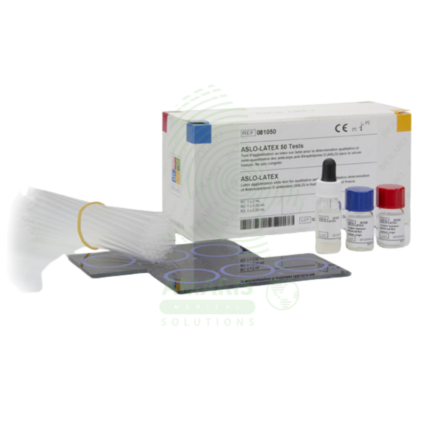
Anti-Streptol Olysin O Titer (ASOT)
Anti-Streptol Olysin O Titer (ASOT) is a quantitative or semi-quantitative serological test (latex agglutination, turbidimetry, nephelometry, or ELISA) for detecting antibodies against streptolysin O, an exotoxin produced by Group A Streptococcus. Elevated or rising titers indicate recent streptococcal infection and are essential for diagnosing post-streptococcal sequelae including acute rheumatic fever (Jones criteria) and post-streptococcal glomerulonephritis. The test requires serum samples; acute and convalescent (2-4 weeks apart) with fourfold rise confirms recent infection. Reference range typically <200-250 Todd units/mL (adults), varies by age and population. Primary clinical applications include diagnosis of Group A streptococcal infections, acute rheumatic fever evaluation, post-streptococcal glomerulonephritis diagnosis, differentiation of acute vs. past infection, evaluation of unexplained arthritis or carditis, pediatric inflammatory conditions (PANDAS), and monitoring disease activity in rheumatic fever. Critical safety precautions include proper timing of acute and convalescent samples, awareness of false negatives/positives, clinical correlation for diagnosis, and standard biohazard precautions. Essential test for rheumatology, nephrology, cardiology, and infectious disease practice.
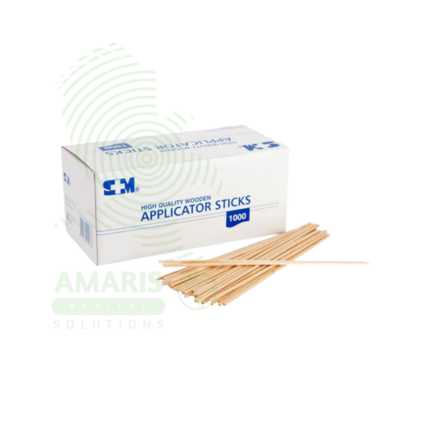
Applicator Sticks
Applicator Sticks are single-use medical devices with absorbent tips (cotton, rayon, flocked polyester) on wood, plastic, or paper shafts for collecting clinical specimens (throat, nasal, wound, cervical, urethral, rectal) for microbiological culture, rapid testing, and molecular diagnostics. Sterile individually wrapped or non-sterile bulk formats. Flocked swabs provide >90% specimen release for PCR testing. Primary applications include specimen collection for infection diagnosis, wound care and antiseptic application, gynecological sampling (Pap smears, STI testing), eye/ear specimen collection, laboratory slide preparation, and forensic evidence collection. Critical precautions include single-use only, sterile technique, proper collection method, and biohazard disposal. Essential consumable in all clinical settings.
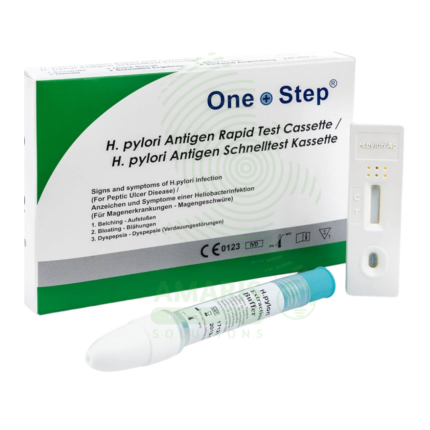
H.pylori test kits (Antigen)
H.pylori test kits (Antigen) are Class II medical devices (FDA-cleared/CE-marked) for rapid immunochromatographic or enzyme immunoassay detection of Helicobacter pylori antigens in stool specimens, enabling non-invasive diagnosis of active infection and post-treatment eradication confirmation. Test principles use monoclonal or polyclonal antibodies specific to H. pylori antigens, producing visible results in 10-20 minutes (rapid tests) or 1-2 hours (EIA). Sensitivity 90-98%, specificity 92-99% compared to gold standard methods. Primary clinical applications include rapid diagnosis of H. pylori infection in patients with dyspepsia, initial screening in uncomplicated dyspepsia (test-and-treat strategy), confirmation of active infection before therapy, post-treatment eradication confirmation (4-6 weeks after therapy), pediatric testing (preferred non-invasive method), screening in high-risk populations (family history of gastric cancer), and monitoring in patients with peptic ulcer disease or MALT lymphoma. Critical safety precautions include mandatory washout period (4 weeks off antibiotics, 2 weeks off PPIs) to avoid false negatives, proper specimen handling (universal precautions), refrigerated storage of kits (2-30°C), quality control verification, and disposal as biohazardous waste. Essential non-invasive tool for H. pylori management in gastroenterology and primary care.
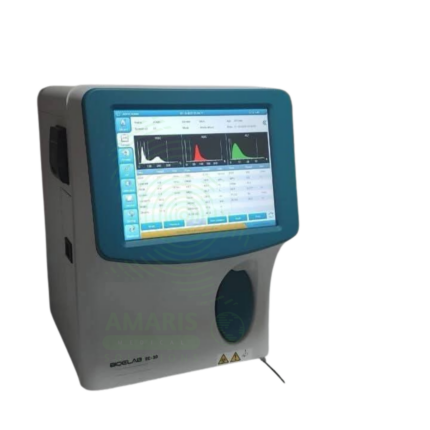
Hematology Analyzer
A Hematology Analyzer is a compact, automated benchtop analyzer designed to perform Complete Blood Counts (CBC) with a 3-part white blood cell differential. Utilizing impedance and photometric methods, it delivers rapid, precise results for red blood cells, white blood cells, platelets, and key indices from a small blood sample. Ideal for physician offices, small clinics, and satellite laboratories, it enables in-house hematology testing with walk-away operation. Its automated flagging system highlights abnormal results that require further manual smear review. As a core instrument for initial hematological screening, it combines efficiency with essential diagnostic capability for routine patient management.
Hemoglobin Meter
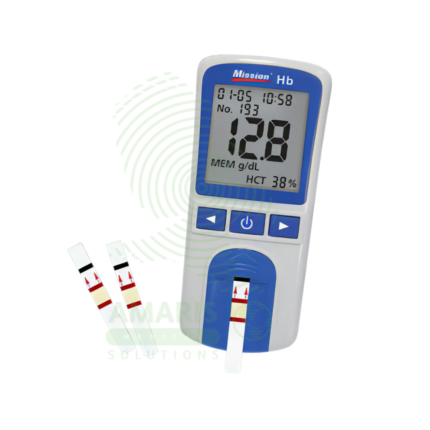
A Hemoglobin Meter is a Class II medical device (FDA-cleared, CE-marked) for quantitative point-of-care measurement of hemoglobin concentration in capillary or venous blood, providing results in 5-60 seconds from a 5-20 µL sample. The meter uses photometric, electrochemical, or conductivity technology to measure hemoglobin, with accuracy ±0.3-0.5 g/dL compared to reference methods. Features include backlit LCD display, memory storage for 100-1000 results, USB/Bluetooth connectivity for data transfer, and compatibility with single-use disposable cuvettes or test strips. Primary clinical applications include anemia screening and diagnosis (WHO criteria), preoperative assessment and surgical planning, antenatal care and maternal health monitoring, malaria-endemic region screening, chronic disease management (CKD, IBD, cancer), nutritional assessment and intervention programs, and blood donor screening. Critical safety precautions include single-use lancets, proper hand hygiene, correct sample application, quality control with control solutions, proper cuvette storage (protect from heat, light, humidity), and never using expired cuvettes. Essential point-of-care device for hemoglobin testing in hospitals, clinics, community health programs, and blood donation centers.
Salmonella Typhi Test Peratop
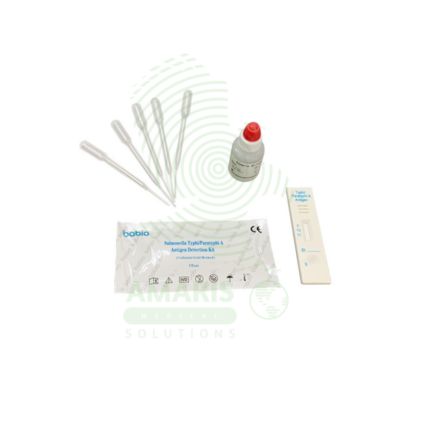
The Salmonella typhi test peratop is a CE-marked rapid immunochromatographic assay for qualitative detection of IgG and IgM antibodies to Salmonella enterica serotype Typhi in human serum, plasma, or whole blood, providing results in 15-20 minutes. The test uses recombinant S. typhi antigens immobilized on a membrane to capture specific antibodies, with separate lines for IgG and IgM interpretation. The kit includes individually foil-wrapped test cassettes, sample diluent, disposable pipettes, and package insert. Primary clinical applications include rapid diagnosis of typhoid fever in endemic regions (Indian subcontinent, Southeast Asia, Africa, South America), differentiation of acute (IgM positive) from past infection (IgG only), outbreak investigation and control, screening in febrile patients, travel medicine assessment, antibiotic stewardship, and maternal/child health in endemic areas. Critical safety precautions include proper specimen handling (universal precautions), quality control verification, awareness of window period (repeat testing if early infection suspected), and clinical correlation of results. Essential rapid test for typhoid fever diagnosis in resource-limited and endemic settings.
Vacutainer (EDTA/PLAIN)
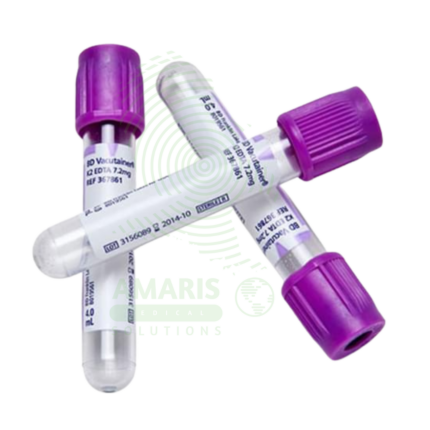
Vacutainer (EDTA/PLAIN) is a sterile, evacuated blood collection tube (lavender/purple top) containing EDTA anticoagulant (K2EDTA or K3EDTA, 1.5-2.0 mg/mL blood) for hematology, blood banking, flow cytometry, and molecular diagnostics. Available in draw volumes 2-10 mL, glass or PET plastic, with color-coded stopper and sterile interior. EDTA chelates calcium, preventing coagulation while preserving cellular morphology. Primary clinical applications include complete blood count (CBC) and differential, blood typing and antibody screening (ABO/Rh, Coombs), hemoglobin A1c (HbA1c) testing, flow cytometry and immunophenotyping (CD4 counts), molecular diagnostics and PCR testing, sickle cell screening and hemoglobin electrophoresis, and parasitology (malaria smears). Critical safety precautions include filling to completion (correct blood-to-additive ratio), gentle inversion 8-10 times immediately after collection, never using for chemistry or coagulation testing, and proper disposal as biohazardous waste. Essential collection tube for hematology and immunohematology.