Dermatoscope and Magnifiers
 Diagnostic Kits
 Vital Signs Monitors
 Stethoscopes and Accessories
 Otoscopes, Ophthalmoscopes, and Retinoscopes
 Reflex Hammers and Neurological Tools
 Scales and Measuring Devices
 Spirometers and Pulmonary Function Tests
 Electrosurgical Units and Accessories
 Cutting Instruments
 Grasping and Holding Instruments
 Hemostatic Instruments
 Specialized Surgical Sets
 Single-Use Procedure Trays and Packs
 Surgical Drapes, Gowns, and Covers
 Tissue Unifying Instruments
 Radiation Protection
 X-Ray Machines and Accessories
 Ultrasound Systems and Probes
 MRI and CT Scanners
 Radiology Consumables
 Bone Densitometers
 Fluoroscopy Equipment
 Imaging Tables and Positioning Aids
 Microscopes and Accessories
 Centrifuges and Separators
 Analyzers
 Incubators and Ovens
 Pipettes, Dispensers, and Lab Glassware
 Refrigerators, Freezers, and Storage Units
 Lab Consumables
 Sterilizers and Autoclaves for Lab Use
 Multi-Parameter Monitors
 Ventilators and Respiratory Support Devices
 Defibrillators and AEDs
 Infusion Pumps and IV Systems
 Patient Warmers and Cooling Devices
 Central Monitoring Stations
 Accessories
 Anesthesia Machines and Workstations
 Oxygen Concentrators and Delivery Systems
 Nebulizers and Inhalers
 CPAP/BiPAP Machines
 Airway Management
 Anesthesia Masks, Circuits, and Bags
 Humidifiers and Heaters
 Respiratory Therapy Accessories
 First Aid Kits and Cabinets
 Emergency Resuscitation Equipment
 Trauma Supplies
 Emergency Carts and Crash Carts
 Burn Care Products
 Bleeding Control
 Automated External Defibrillators (AEDs)
 Transport and Evacuation
 Wheelchairs and Accessories
 Walkers, Crutches, and Canes
 Prosthetics and Orthotics
 Physical Therapy Equipment
 Transfer Devices
 Bathroom Safety
 Orthopedic Traction and Tables
 Hot/Cold Therapy Packs and Units
 Beds and Mattresses
 Chairs and Stools
 Tables
 Cabinets and Storage
 Privacy Screens & Curtains
 Stands and Racks
 Linens and Textiles
 Lighting
 Autoclaves and Sterilizers
 Ultrasonic Cleaners
 Disinfectant Solutions and Wipes
 Sterilization Pouches, Wraps, and Indicators
 Instrument Trays and Containers
 UV and Ozone Disinfection Devices
 Washer Disinfectors
 Wound Care
 Gloves
 Masks and Respirators
 Catheters and Tubing
 Swabs, Applicators, and Sponges
 Incontinence Products
 Personal Protective Equipment (PPE)
 Dental Chairs and Units
 Handpieces and Burs
 Instruments
 Consumables
 Sterilization for Dental Use
 Orthodontic Supplies
 Endodontic Tools
 Slit Lamps and Tonometers
 Lensometers and Phoropters
 Ophthalmic Surgical Instruments
 Eyewear Frames and Lenses
 Contact Lens Supplies
 Vision Testing Charts and Devices
 Eye Care Consumables
 Laser Systems for Eye Care
 ENT Exam Chairs and Tables
 Endoscopes
 Audiometers and Hearing Tests
 ENT Instruments
 Nasal and Throat Packs
 Hearing Aids and Accessories
 Otology Supplies
 Fetal Dopplers and Monitors
 Delivery Beds and Tables
 Gynecological Instruments
 Neonatal Incubators and Warmers
 Breast Pumps and Accessories
 Contraceptive Devices
 Maternity Supports and Pads
 Neonatal Consumables
 Cystoscopes and Urethroscopes
 Dialysis Machines and Supplies
 Urological Catheters and Bags
 Lithotripters
 Prostate Treatment Devices
 Urinary Incontinence Products
 Kidney Stone Management Tools
 Consumables & Disposables
 EEG and EMG Machines
 Neurosurgical Instruments
 Nerve Stimulators
 Headrests and Positioning Aids
 Lumbar Puncture Kits
 Seizure Monitoring Devices
 Consumables
 Rehabilitation for Neurological Conditions
 ECG Machines and Accessories
 Holter Monitors
 Stress Test Systems
 Pacemakers and Defibrillator Accessories
 Vascular Access Devices
 Cardiac Catheters and Guidewires
 Blood Flow Meters
 Consumables
 Orthopedic Instruments
 Casts, Splints, and Padding
 Joint Replacement Supplies
 Prosthetic Limbs and Components
 Bone Grafts and Substitutes
 Traction Devices
 Orthopedic Braces and Supports
 Rehabilitation Aids for Orthopedics
 Home Oxygen Therapy
 Hospital Beds for Home Use
 Mobility Aids
 Bathroom and Daily Living Aids
 Wound Care for Home
 Monitoring Devices
 Enteral Feeding Pumps and Tubes
 Hand Sanitizers and Dispensers
 Face Shields and Goggles
 Isolation Gowns and Suits
 Biohazard Waste Containers
 Air Purifiers and HEPA Filters
 Surface Disinfectants
 Sharps Containers
 Protective Barriers
 Cardiovascular & Endurance Training
 Strength Training & Weightlifting
 Functional Training & Core Conditioning
 Physical Therapy & Rehabilitation
 Sports & Outdoor Recreation
 Gym Flooring & Facility Equipment
 Fitness Monitoring & Accessories
 Kids & Novelties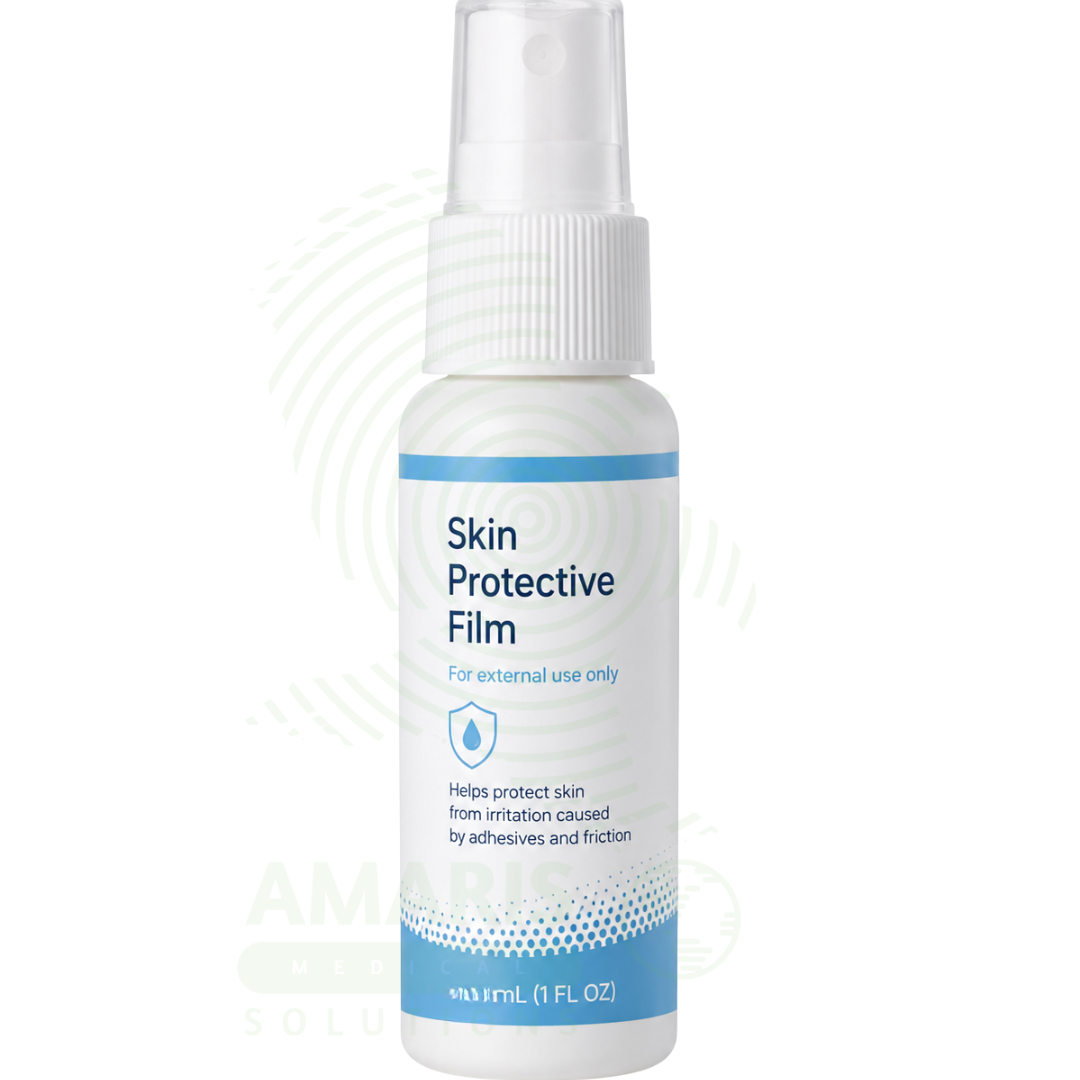
Skin protective film (bottle)
WhatsApp Order
A Skin Protective Film is a liquid polymer solution applied to the skin via a pump spray bottle that dries to form a transparent, breathable, waterproof barrier . Specifically designed to protect the skin from body fluids (stool, urine, wound drainage), adhesive trauma, and friction, it is a cornerstone product in ostomy, wound, and incontinence care .
For the Wound, Ostomy, and Continence Nurse (WOCN), the spray bottle version provides fast, broad coverage for large areas of at-risk peristomal or sacral skin . It is a critical tool for managing Moisture-Associated Skin Damage (MASD) and Medical Adhesive-Related Skin Injury (MARSI) .
For the patient, the film (particularly “No Sting” formulas) provides painless protection, allowing ostomy pouches or incontinence pads to be removed without stripping skin cells. It is available in alcohol-based or alcohol-free formulas depending on the condition of the skin . One coat is sufficient for extended wear, offers up to 72 hours of protection against incontinence irritants, and removes easily with soap and water.
Description
Skin Protective Film (Bottle)
PRIMARY CLINICAL & DIAGNOSTIC USES
1. Protection of Peristomal Skin from Stoma Output
-
Primary Use: Provides a liquid, film-forming skin barrier applied as a spray or liquid that dries to form a transparent, breathable protective film over the peristomal skin, shielding it from corrosive stoma output (urine, stool) .
-
How it helps: For the ostomy patient and wound care nurse, the skin protective film acts as an invisible shield between the skin and the stoma pouch adhesive. This barrier prevents effluent from seeping under the wafer and digesting the skin . For the patient, this prevents the painful cycle of peristomal moisture-associated skin damage (MASD), reducing itching, burning, and the risk of infection, leading to a more secure pouch seal and longer wear time.
2. Prevention of Medical Adhesive-Related Skin Injury (MARSI)
-
Primary Use: Designed to be applied to the skin before attaching ostomy pouches, drainage tubes, external catheters, or adhesive dressings. It forms a durable film that absorbs friction and prevents the stripping of skin cells when the adhesive device is removed .
-
How it helps: For the clinician, protecting fragile or at-risk skin from adhesive trauma (MARSI) is a key goal, especially in geriatric or chronically ill patients. The protective film acts as a “sacrificial” layer; the adhesive sticks to the film, and the film sticks to the skin, allowing the appliance to be removed without damaging the epidermis . For the patient, this prevents painful skin tears, denudation, and the cycle of irritation caused by repeated taping and removal.
3. Barrier Against Incontinence-Associated Dermatitis (IAD)
-
Primary Use: Applied to the perianal or sacral skin of incontinent patients, the film creates a long-lasting (up to 72 hours), waterproof barrier that protects skin from irritation caused by urine and feces .
-
How it helps: For the critical care or long-term care nurse managing patients with incontinence, the skin protective film is a critical tool for preventing and treating IAD. It seals the skin off from moisture, significantly reducing the risk of fungal infections and chemical burns caused by ammonia in urine. For the patient, this means reduced pain, a lower risk of pressure injuries, and preservation of dignity.
4. Support for Wound Healing in Periwound Skin
-
Primary Use: Used to protect the skin surrounding a wound (periwound skin) from maceration caused by wound drainage or adhesives used to secure foam or gauze dressings .
-
How it helps: For the wound care specialist, the integrity of the periwound skin is essential for wound healing. If the surrounding skin breaks down, the wound actually expands. The protective film acts as a moisture and adhesive barrier, preventing breakdown and allowing the primary wound dressing to do its job without causing further skin damage . For the patient, this facilitates faster wound closure and reduces pain during dressing changes.
5. Protection of Damaged or Denuded Skin
-
Primary Use: Unlike alcohol-based products, alcohol-free (no-sting) formulas are specifically designed for application to compromised, fragile, or freshly denuded skin to create a protective layer without causing pain .
-
How it helps: For the clinician, treating raw, weeping skin (“denuded”) is a “chicken or the egg” problem: the skin needs a dressing to heal, but the raw skin is too painful for adhesives. No-sting skin protective films solve this problem; they seal the raw nerve endings and provide a dry surface for the pouch or dressing to adhere to. For the patient, this enables the device to stick over a sore area, which is otherwise impossible, without the searing pain associated with alcohol-based wipes.
SECONDARY & SUPPORTIVE USES
1. Preparation for Drainage Tubes: Used to prepare skin attachment sites for surgical drains or chest tubes to protect the surrounding skin from friction and drainage fluid .
2. Securement of External Catheters: Provides a barrier under external urinary catheters (Texas condom catheters) or fecal collection devices to prevent breakdown from urine or stool.
3. Application Under Negative Pressure Wound Therapy (NPWT): Used to protect peri-wound skin from the aggressive adhesive drapes used in NPWT “wound vac” systems.
4. Protection from Friction: Applied to bony prominences (elbows, heels, knees) to reduce friction and shear from bedding or braces .
5. Diabetes Foot Care: Used on intact skin to prevent breakdown from shear forces inside diabetic shoes.
6. Pediatric Skin Care: Used in neonatal and pediatric settings where fragile skin requires gentle protection from adhesives used to secure IV lines or monitoring leads.
7. Central Line (PICC) Site Care: Applied under the securement dressings for central lines to extend wear time and prevent adhesive burns .
8. Mechanical Ventilation Tube Securement: Used to protect the skin on the face or neck from the adhesives holding endotracheal tubes in place.
9. Radiation Dermatitis Prevention: Applied to the radiation field prior to treatment to help protect the skin from radiation-induced moisture damage.
10. Prevention of Skin Stripping: Used on patients who require frequent dressing changes (e.g., post-surgical drains) to prevent the top layer of skin from being pulled off with the tape.
11. Temporary Coverage of Minor Cuts/Blisters: Some formulations are indicated for OTC use to cover and protect minor cuts, scrapes, or friction blisters .
KEY PRODUCT FEATURES
1. BASIC IDENTIFICATION ATTRIBUTES
-
Device Type: A non-sterile (or sterile, depending on brand), liquid, film-forming polymer solution applied via spray bottle or pump-dispensed liquid to create an invisible, breathable, waterproof protective barrier on the skin .
-
Designation: Skin Protective Film, Barrier Film, Liquid Skin Barrier, Cavilon No Sting Barrier (3M), Skin Prep, No-Sting Skin Protectant, Liquid Bandage .
-
Key Components:
-
Protective Polymer: Active ingredient (e.g., Acrylate Terpolymer, Silicone, Copolymer) that forms the solid film .
-
Solvent: Carrier liquid (alcohol or volatile silicone) that evaporates to leave the polymer film behind.
-
Container: High-Density Polyethylene (HDPE) bottle with a pump spray top or dabber applicator .
-
2. TECHNICAL & PERFORMANCE PROPERTIES
-
Film Characteristics: Transparent, colorless/translucent, breathable (allows oxygen and moisture vapor to pass through), waterproof, non-sticky to the touch once dry .
-
Durability: Provides a durable barrier that can last 24-72 hours, depending on the manufacturer (e.g., Cavilon is clinically proven for up to 72 hours of protection) .
-
Drying Time: Fast-drying; typically dries to the touch in approximately 60 seconds .
-
Application Modes: Spray, liquid dabber, or wipe.
-
Alcohol Formulations: Available in alcohol-based (stings on open skin) and "No-Sting" alcohol-free versions (safe for denuded skin) .
-
Sterility: Available either as non-sterile (general skin protection) or sterile (for use directly adjacent to open wounds/sterile sites) .
-
CHG Compatibility: Most modern polymer barriers (e.g., Cavilon) are compatible with Chlorhexidine Gluconate (CHG) skin antiseptics, meaning they can be used without flaking or losing integrity .
3. PHYSICAL & OPERATIONAL PROPERTIES
-
Appearance: Clear liquid.
-
Container: Squeezable or rigid plastic bottle with a pump spray mechanism. Volumes include 28 mL (commonly 1 oz / 28 ml spray bottles), 4 oz (118 ml) spray bottles, and larger 8 oz or 250 ml sizes .
-
Shelf Life: Typically 12 months after opening for multi-use bottles, provided the cap is sealed .
-
Portability: Pump spray bottles are designed for easy bedside use and travel.
4. SAFETY & COMPLIANCE ATTRIBUTES
-
Regulatory Status: Class I or Class II Medical Device (depending on claims for infection protection) .
-
FDA Product Code: KMF (General Hospital Liquid Bandage) .
-
Regulation Number: 21 CFR 880.5090 (Liquid Bandage / Topical Skin Protectant) .
-
HCPCS Code: A4369 (Skin barrier, liquid, spray or cream, per oz) .
-
Biocompatibility: Tested to ISO 10993 standards; certified as non-cytotoxic, non-sensitizing, and non-irritating .
-
Latex-Free: Manufactured without natural rubber latex .
5. STORAGE & HANDLING ATTRIBUTES
-
Storage: Store in a cool, dry place (controlled room temperature). Avoid freezing or exposure to direct heat/sunlight.
-
Stability: The solution is stable; the pump mechanism should be rinsed with warm water if it becomes clogged with dried film.
-
Cleaning: The film is removed easily with soap and water or standard medical adhesive removers (wipes/sprays) .
-
Inspection: Check that the nozzle is clear before spraying. Do not use if the solution appears cloudy or separated.
6. LABORATORY & CLINICAL APPLICATIONS
-
Primary Application: Skin protection for ostomy patients, incontinent patients, and wound care patients requiring protection from body fluids, adhesives, and friction .
-
Clinical Role: An essential preventative and therapeutic skin care product in ostomy management, wound care clinics, long-term care facilities, intensive care units, and home healthcare.
SAFETY HANDLING PRECAUTIONS
1. SAFETY PRECAUTIONS
-
Drying Time: The barrier must be completely dry before applying the pouch, dressing, or tape; otherwise, the adhesive will not stick to the wet film . Wait approximately 60 seconds .
-
Alcohol Stinging: Historically, skin preps contain alcohol. If applied to denuded, bleeding, or irritated skin, alcohol-based versions will cause intense stinging. Use alcohol-free ("No Sting") formulas for damaged skin .
-
Do Not Over-Apply: A single, thin coat is all that is needed. Multiple coats may create a sticky or gooey residue that inhibits adhesion.
-
Eye Contact: Avoid spraying directly onto the face or in the eyes. If contact occurs, flush with water.
-
Flammability: Alcohol-based skin preps are highly flammable. Allow them to dry thoroughly before using electrosurgery equipment (cautery) or applying heat.
-
Allergic Reaction: If rash, redness, or itching develops after application, discontinue use and assess for contact dermatitis.
-
Not for Deep Wounds: Do not pour directly into deep, tunneling wounds, as the polymer may impede granulation. It is intended for intact skin or periwound skin only, unless the product is specifically indicated for wound beds (e.g., chitosan spray) .
2. FIRST AID MEASURES
-
Inhalation: If overspray is inhaled, move to fresh air (usually not an issue in well-ventilated rooms).
-
Eye Contact: Rinse eyes immediately with copious amounts of water for 15 minutes. If irritation persists, seek medical attention.
-
Skin Irritation: If a new rash develops, wash the area with soap and water to remove the film and discontinue use.
3. FIRE FIGHTING MEASURES
-
Flammability: Alcohol-based preps are highly flammable liquids. The plastic bottle is combustible.
-
Extinguishing Media: Use water, foam, dry chemical, or CO₂ for fires involving the packaging.
-
Fire Response: Do not apply alcohol-based skin prep near open flames or active surgical lasers/cautery devices.
Related products
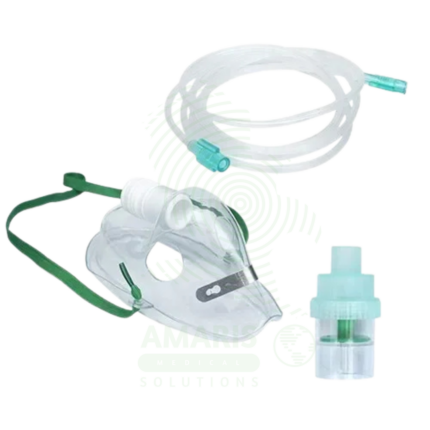
Adult & Pediatric Nebulizer Kit
An Adult & Pediatric Nebulizer Kit is a complete set of patient-contact components required for aerosol medication delivery, including a nebulizer cup, connecting tubing, and both an adult mouthpiece and a pediatric mask (or universal fit). Designed for use with a compressor, it provides the delivery circuit for treating asthma, COPD, and other respiratory conditions. Available in disposable (single-patient-use) formats for infection control in clinics or reusable formats for home care, its proper use, coupled with rigorous cleaning for reusable kits, is essential for effective therapy and preventing respiratory infections. The kit's universal connectors ensure compatibility with standard compressors.
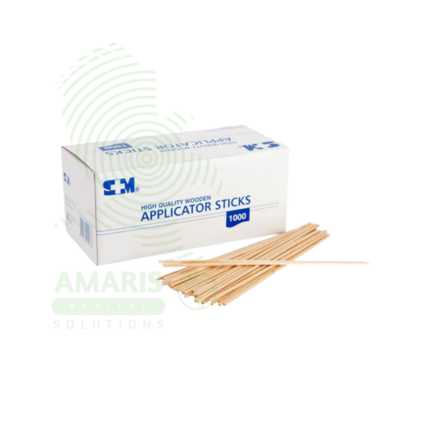
Applicator Sticks
Applicator Sticks are single-use medical devices with absorbent tips (cotton, rayon, flocked polyester) on wood, plastic, or paper shafts for collecting clinical specimens (throat, nasal, wound, cervical, urethral, rectal) for microbiological culture, rapid testing, and molecular diagnostics. Sterile individually wrapped or non-sterile bulk formats. Flocked swabs provide >90% specimen release for PCR testing. Primary applications include specimen collection for infection diagnosis, wound care and antiseptic application, gynecological sampling (Pap smears, STI testing), eye/ear specimen collection, laboratory slide preparation, and forensic evidence collection. Critical precautions include single-use only, sterile technique, proper collection method, and biohazard disposal. Essential consumable in all clinical settings.
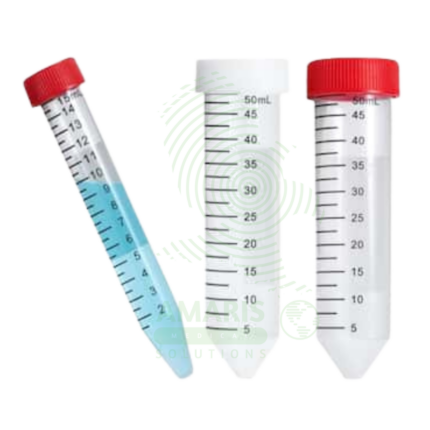
Centrifuge Tubes
Centrifuge Tubes are specialized disposable containers (polypropylene) designed to withstand high centrifugal forces (up to 30,000 x g) for separating biological fluids based on density. Available in microcentrifuge sizes (0.2-2.0 mL), conical tubes (15 mL, 50 mL), and larger volumes (100-500 mL). Features include leak-proof screw caps with O-rings (conical tubes), snap caps (microcentrifuge tubes), graduated volume markings, writing areas, and sterile/non-sterile options. Certified RNase/DNase-free, pyrogen-free, and autoclavable. Primary clinical applications include blood component separation (serum/plasma), urine sediment preparation, microbiology sample concentration, molecular biology (DNA/RNA extraction), cell culture processing, protein/enzyme analysis, and viral load testing. Critical safety precautions include never exceeding maximum RCF rating, proper balancing by weight, secure cap tightening, inspection for cracks, and disposal as biohazardous waste. Essential consumable in every clinical, research, and industrial laboratory.
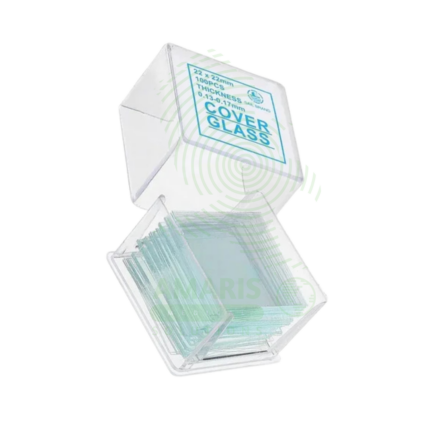
Cover Glass
Cover Glass (coverslips) are thin, transparent glass or plastic squares (e.g., 18×18 mm, 22×22 mm) or rectangles (22×30 mm, 24×50 mm) used to cover specimens on microscope slides for microscopic examination. Available in thickness No. 1 (0.13-0.16 mm) and No. 1.5 (0.16-0.19 mm) for optimal microscopy. Made from optical glass with high light transmission (>90%), refractive index 1.52 matching immersion oil. Packaged in boxes of 100-1000, interleaved with paper to prevent scratching. Primary clinical applications include covering blood films for manual differential counts and malaria diagnosis, wet mount preparations of urine sediment and vaginal secretions, histopathology and cytology slides, Gram-stained bacterial smears, semen analysis, KOH preparations for fungal elements, and India ink preparations for Cryptococcus. Critical safety precautions include handling with forceps (sharp edges), disposing of broken coverslips in sharps containers, avoiding fingerprints on optical surface, and proper disposal of biohazard-contaminated coverslips. Essential consumable in every clinical laboratory performing microscopy.
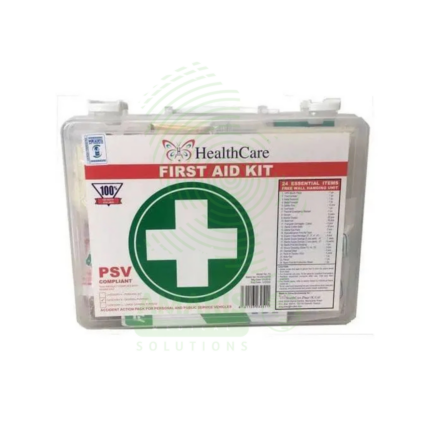
First Aid Kit
A First Aid Kit is an organized collection of medical supplies and equipment for providing initial care in emergency situations, available in various sizes and configurations for home, workplace, vehicle, travel, and specialized applications. Kits range from personal pouches (0.5-2 L) to comprehensive workplace cabinets (5-35 L) with soft-sided bags, hard cases, or wall-mounted containers. Contents are typically organized to meet regional standards (ANSI/ISEA Z308.1, CSA Z1220, BS 8599, DIN 13157/13169) and include wound care supplies (bandages, gauze, tape), antiseptics, burn care, eye care, emergency items (CPR mask, cold packs, foil blanket), instruments (scissors, tweezers), and PPE (gloves). Class A kits provide minimum supplies for low-hazard workplaces; Class B kits offer expanded quantities for high-hazard environments. Primary clinical applications include immediate treatment of minor injuries (cuts, abrasions, burns, sprains), bleeding control, wound care, fracture immobilization, and emergency assessment. Essential safety equipment for every home, workplace, vehicle, and public facility, providing critical medical supplies until professional care arrives.
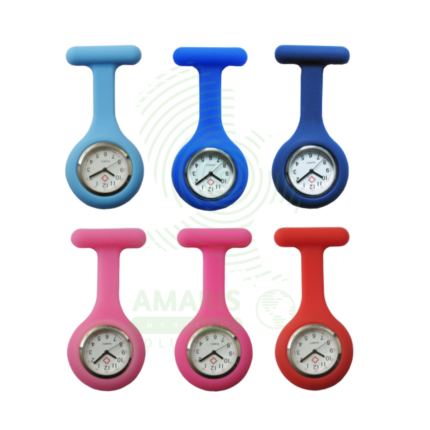
Nurse Watch
A Nurse Watch is a professional-grade analog wristwatch specifically designed for clinical use. Its hallmark is a built-in "pulsometer" scale that allows for rapid, on-the-spot calculation of a patient's heart rate by timing pulses over a short interval. Featuring a high-contrast dial with a clear sweep second hand, durable water-resistant construction, and a cleanable band, it is engineered for accuracy, legibility, and infection control in healthcare settings. It is an indispensable personal tool for nurses, enabling precise measurement of vital signs, timing of medications and procedures, and accurate clinical documentation throughout the shift.
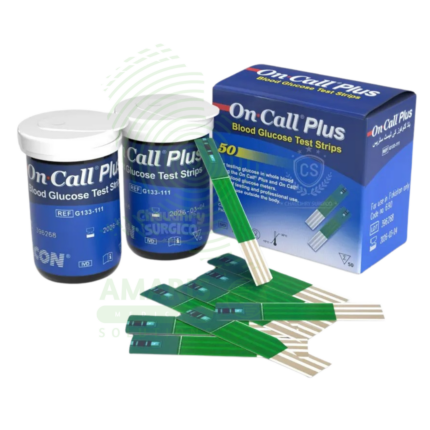
On Call Blood Sugar Strips
On Call Blood Sugar Strips are single-use, disposable electrochemical test strips (ISO 15197:2013 compliant) designed exclusively for use with On Call glucose meters to measure capillary blood glucose from 0.5-1.0 µL samples in 5-7 seconds. Each strip contains glucose oxidase or glucose dehydrogenase reagents that generate electrical current proportional to glucose concentration (20-600 mg/dL range). Packaging options include multi-strip vials (25-100 strips) with desiccant for daily use or individually foil-wrapped strips for travel. Strips feature no-coding automatic calibration, hematocrit compensation (20-60%), and interference resistance. Primary clinical applications include daily blood glucose testing for Type 1, Type 2, and gestational diabetes management, hypoglycemia and hyperglycemia detection, pre- and post-meal glucose assessment, and hospital point-of-care testing. Critical safety precautions include single-use only, immediate vial closure after strip removal to prevent humidity damage, storage at 2-30°C away from bathrooms and temperature extremes, never using expired strips, proper hand hygiene before testing, and disposal in sharps containers. Essential consumable for diabetes self-management when used with On Call meters.