Dermatoscope and Magnifiers
 Diagnostic Kits
 Vital Signs Monitors
 Stethoscopes and Accessories
 Otoscopes, Ophthalmoscopes, and Retinoscopes
 Reflex Hammers and Neurological Tools
 Scales and Measuring Devices
 Spirometers and Pulmonary Function Tests
 Electrosurgical Units and Accessories
 Cutting Instruments
 Grasping and Holding Instruments
 Hemostatic Instruments
 Specialized Surgical Sets
 Single-Use Procedure Trays and Packs
 Surgical Drapes, Gowns, and Covers
 Tissue Unifying Instruments
 Radiation Protection
 X-Ray Machines and Accessories
 Ultrasound Systems and Probes
 MRI and CT Scanners
 Radiology Consumables
 Bone Densitometers
 Fluoroscopy Equipment
 Imaging Tables and Positioning Aids
 Microscopes and Accessories
 Centrifuges and Separators
 Analyzers
 Incubators and Ovens
 Pipettes, Dispensers, and Lab Glassware
 Refrigerators, Freezers, and Storage Units
 Lab Consumables
 Sterilizers and Autoclaves for Lab Use
 Multi-Parameter Monitors
 Ventilators and Respiratory Support Devices
 Defibrillators and AEDs
 Infusion Pumps and IV Systems
 Patient Warmers and Cooling Devices
 Central Monitoring Stations
 Accessories
 Anesthesia Machines and Workstations
 Oxygen Concentrators and Delivery Systems
 Nebulizers and Inhalers
 CPAP/BiPAP Machines
 Airway Management
 Anesthesia Masks, Circuits, and Bags
 Humidifiers and Heaters
 Respiratory Therapy Accessories
 First Aid Kits and Cabinets
 Emergency Resuscitation Equipment
 Trauma Supplies
 Emergency Carts and Crash Carts
 Burn Care Products
 Bleeding Control
 Automated External Defibrillators (AEDs)
 Transport and Evacuation
 Wheelchairs and Accessories
 Walkers, Crutches, and Canes
 Prosthetics and Orthotics
 Physical Therapy Equipment
 Transfer Devices
 Bathroom Safety
 Orthopedic Traction and Tables
 Hot/Cold Therapy Packs and Units
 Beds and Mattresses
 Chairs and Stools
 Tables
 Cabinets and Storage
 Privacy Screens & Curtains
 Stands and Racks
 Linens and Textiles
 Lighting
 Autoclaves and Sterilizers
 Ultrasonic Cleaners
 Disinfectant Solutions and Wipes
 Sterilization Pouches, Wraps, and Indicators
 Instrument Trays and Containers
 UV and Ozone Disinfection Devices
 Washer Disinfectors
 Wound Care
 Gloves
 Masks and Respirators
 Catheters and Tubing
 Swabs, Applicators, and Sponges
 Incontinence Products
 Personal Protective Equipment (PPE)
 Dental Chairs and Units
 Handpieces and Burs
 Instruments
 Consumables
 Sterilization for Dental Use
 Orthodontic Supplies
 Endodontic Tools
 Slit Lamps and Tonometers
 Lensometers and Phoropters
 Ophthalmic Surgical Instruments
 Eyewear Frames and Lenses
 Contact Lens Supplies
 Vision Testing Charts and Devices
 Eye Care Consumables
 Laser Systems for Eye Care
 ENT Exam Chairs and Tables
 Endoscopes
 Audiometers and Hearing Tests
 ENT Instruments
 Nasal and Throat Packs
 Hearing Aids and Accessories
 Otology Supplies
 Fetal Dopplers and Monitors
 Delivery Beds and Tables
 Gynecological Instruments
 Neonatal Incubators and Warmers
 Breast Pumps and Accessories
 Contraceptive Devices
 Maternity Supports and Pads
 Neonatal Consumables
 Cystoscopes and Urethroscopes
 Dialysis Machines and Supplies
 Urological Catheters and Bags
 Lithotripters
 Prostate Treatment Devices
 Urinary Incontinence Products
 Kidney Stone Management Tools
 Consumables & Disposables
 EEG and EMG Machines
 Neurosurgical Instruments
 Nerve Stimulators
 Headrests and Positioning Aids
 Lumbar Puncture Kits
 Seizure Monitoring Devices
 Consumables
 Rehabilitation for Neurological Conditions
 ECG Machines and Accessories
 Holter Monitors
 Stress Test Systems
 Pacemakers and Defibrillator Accessories
 Vascular Access Devices
 Cardiac Catheters and Guidewires
 Blood Flow Meters
 Consumables
 Orthopedic Instruments
 Casts, Splints, and Padding
 Joint Replacement Supplies
 Prosthetic Limbs and Components
 Bone Grafts and Substitutes
 Traction Devices
 Orthopedic Braces and Supports
 Rehabilitation Aids for Orthopedics
 Home Oxygen Therapy
 Hospital Beds for Home Use
 Mobility Aids
 Bathroom and Daily Living Aids
 Wound Care for Home
 Monitoring Devices
 Enteral Feeding Pumps and Tubes
 Hand Sanitizers and Dispensers
 Face Shields and Goggles
 Isolation Gowns and Suits
 Biohazard Waste Containers
 Air Purifiers and HEPA Filters
 Surface Disinfectants
 Sharps Containers
 Protective Barriers
 Cardiovascular & Endurance Training
 Strength Training & Weightlifting
 Functional Training & Core Conditioning
 Physical Therapy & Rehabilitation
 Sports & Outdoor Recreation
 Gym Flooring & Facility Equipment
 Fitness Monitoring & Accessories
 Kids & Novelties









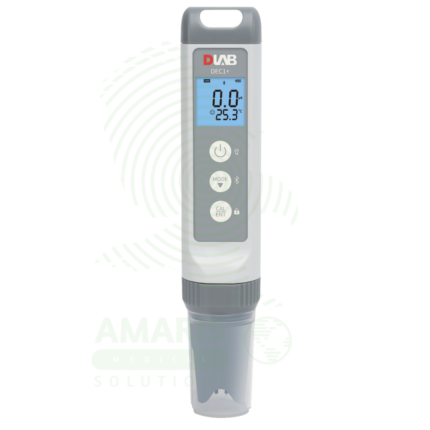
Bluetooth Pen Meter (DEC1+)
The Bluetooth Pen Meter( DEC1+) is a pocket-sized, Bluetooth-enabled pen meter featuring automatic ranging conductivity measurement (0~19.99 mS/cm), measurement of TDS (0~10.0 ppt), Resistivity (50 Ω·cm~20 MΩ·cm), Salinity (0~10 ppt), and Temperature (0~60℃), replaceable combined probe design (DEC1-S electrode), multi-color backlit LCD display, IP67 dustproof/waterproof rating, 1-point automatic calibration, and wireless connectivity to mobile APP for two-way control, unlimited data storage, and advanced data management—ideal for water quality testing in clinical, pharmaceutical, and environmental applications .
For the dialysis technician, water quality specialist, and pharmaceutical QC chemist, the Bluetooth Pen Meter( DEC1+) enables rapid, on-site verification of conductivity in purified water systems, dialysis fluids, and pharmaceutical process water—critical parameters for ensuring patient safety during renal replacement therapy and drug manufacturing . The Bluetooth connectivity and APP support allow wireless data transfer, calibration reminders, sample ID management.
Key features include multi-color backlit display with reading stability indicator and auto data lock , low battery indicator , user-configurable auto shut-off (1-8 minutes) and backlight duration (5-20 seconds) , compatibility with CH, USA, and NIST calibration standards , and IP67 rating for reliable operation in harsh field environments . The replaceable combined probe design extends instrument service life—electrode replacement rather than complete instrument replacement .
For the patient, accurate conductivity, TDS, and resistivity monitoring of water used in dialysis and pharmaceutical manufacturing ensures that critical treatment fluids meet stringent safety and quality standards—preventing potential harm from improperly treated water and supporting the production of safe, effective medications.
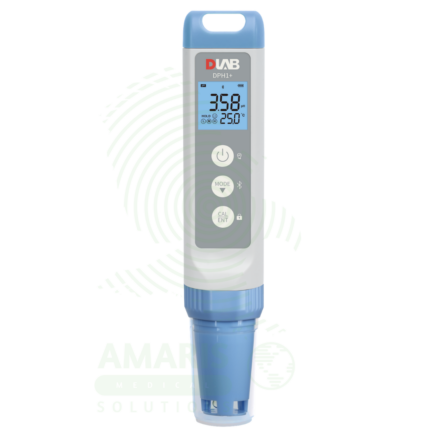
Bluetooth Pen Meter (DPH1+)
The Bluetooth Pen Meter (DPH1+) is a pocket-sized, single-parameter Bluetooth-enabled pen tester measuring pH (-2.00 to 16.00) with ±0.01 pH ±1 digit accuracy and 0.1/0.01 resolution, and ORP (-1000.0 to +1000.0 mV) with ±0.1 percent of full scale ±1 digit accuracy, featuring replaceable combined electrode design (DPH1-S), multi-color backlit LCD display with reading stability indicator and automatic data lock, IP67 dustproof and waterproof rating, 0 to 60 degrees Celsius temperature measurement with ±0.2 degrees Celsius accuracy, automatic temperature compensation (ATC), 1 to 3 point automatic pH calibration with buffer recognition, support for CH, USA, and NIST standard buffer solutions, low battery indicator, user-configurable automatic shut-off and backlight duration, power-on self-diagnosis, and Bluetooth connectivity to a mobile application for two-way control, unlimited data storage, graphical display modes (graph, table, dial, general), graphic navigation operation guides, calibration reminders, measurement object ID management, timed storage, and high/low value warning settings—with complete field-ready kit including hard carrying case (28.0 × 23.0 × 8.2 centimeters), pH buffers (pH 4.00, 6.86, and 9.18, 30 mL each), 3 mol KCl electrode storage solution (10 mL), sample vials (30 mL × 3), four AAA batteries, and lanyard—ideal for water quality testing in clinical, pharmaceutical, and environmental applications .
For the dialysis technician, water quality specialist, clinical laboratory scientist, pharmaceutical QC chemist, and infection control officer, the Bluetooth Pen Meter (DPH1+) enables rapid, on-site pH and ORP measurement of biological fluids (serum, plasma, urine, cerebrospinal fluid) for metabolic assessment, purified water systems, dialysis fluids, and pharmaceutical process water—critical parameters for ensuring patient safety during renal replacement therapy, diagnosing acid-base disorders, verifying disinfection efficacy, and supporting drug manufacturing .
Key features include multi-color backlit display with reading stability indicator and automatic data lock when stable, power-on self-diagnosis function, low battery indicator, user-configurable automatic shut-off time and backlight duration, replaceable electrode design with removable protective cover for extended instrument life and easy cleaning, and compatibility with CH, USA, and NIST calibration standards . The IP67 dustproof and waterproof rating ensures reliable operation in harsh field environments, while the complete accessory kit provides field-ready capability .
The Bluetooth connectivity allows wireless connection to a mobile application with two-way control, unlimited data storage, graphical display modes (graph mode for trend analysis, table mode for data review, dial mode for analog-style reading, and general mode for basic measurement), graphic navigation operation guides for user training, calibration reminders to ensure instrument accuracy, measurement object ID management for traceability, timed storage for scheduled data logging, and high/low value warning settings for critical parameter monitoring .
The replaceable DPH1-S electrode is pre-installed in new meters and is available as a replacement part, extending instrument service life—electrode replacement rather than complete meter replacement. The electrode features a removable protective cover that prevents damage to the glass bulb and facilitates cleaning . The electrode must be stored with the pH sensing bulb moist using 3 mol KCl storage solution to prevent drying .
For the patient, accurate pH and ORP monitoring of water used in dialysis and pharmaceutical manufacturing ensures that critical treatment fluids meet stringent safety and quality standards—preventing potential harm from improperly treated water and supporting the production of safe, effective medications. Additionally, pH measurement of biological fluids supports early detection of metabolic disturbances, acid-base imbalances, and renal dysfunction—enabling timely clinical intervention.
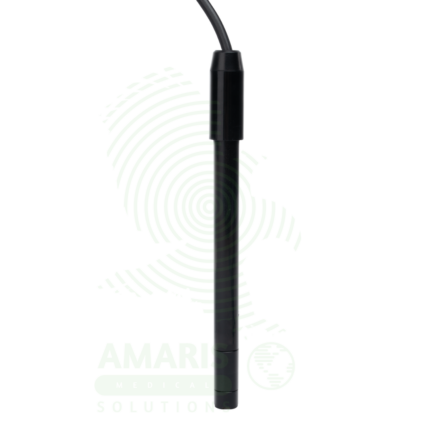
Dissolved Oxygen Probe (DO Probe)
A DO Probe (Dissolved Oxygen Probe) is an analytical sensor used to measure the concentration of oxygen dissolved in a liquid sample, designed for clinical diagnostic, bioprocessing, and water quality applications . Dissolved Oxygen levels serve as a significative indicator to evaluate pathological conditions such as tissue hypoxia or hyperoxia, and are used to monitor the effects of therapeutic treatments in critical care settings . The probe outputs a signal (millivolt or digital) corresponding to the oxygen partial pressure (pO₂) after compensating for temperature and salinity .
Dissolved Oxygen probes are available in polarographic (electrochemical) or optical (RDO - Rugged Dissolved Oxygen) technologies. Polarographic probes (requiring a 30-60 minute warm-up, electrolyte solution, and periodic maintenance) are suitable for sensitive laboratory measurements, while optical probes (no warm-up, no electrolyte, low maintenance) are preferred for field-ready and point-of-care use . Polarographic probes consume oxygen during measurement and therefore require sample stirring, whereas optical probes do not consume oxygen and require no stirring.
For the clinical researcher and critical care physician, dissolved oxygen probes used in conjunction with tissue monitors enable the long-term measurement of tissue oxygenation and perfusion in organs such as the kidneys and brain, providing valuable insights into the causes of acute kidney injury and cognitive impairment following sepsis or cardiopulmonary bypass. For the bioprocessing engineer, autoclavable dissolved oxygen sensors are essential for monitoring and controlling oxygen levels in sterile bioreactors, ensuring optimal conditions for cell culture and recombinant protein production. For the laboratory quality manager, a dissolved oxygen probe is a fundamental tool for Biological Oxygen Demand (BOD) testing, measuring the oxygen consumed by microorganisms to assess water quality and validate the efficacy of hospital water treatment systems.
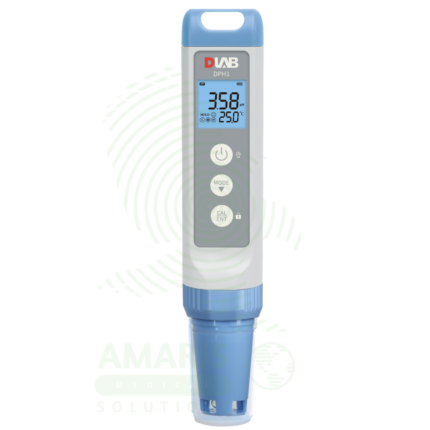
Pen Meter (DPH1)
The Pen Meter (DPH1) is a pocket-sized, single-parameter pen tester measuring pH (-2.00 to 16.00) with ±0.01 pH ±1 digit accuracy and 0.1/0.01 resolution, featuring replaceable combined electrode design (DPH1-S), multi-color backlit LCD display with reading stability indicator and automatic data lock, IP67 dustproof and waterproof rating, 0 to 60 degrees Celsius temperature measurement with ±0.2 degrees Celsius accuracy, automatic temperature compensation (ATC), 1 to 3 point automatic pH calibration with buffer recognition, support for CH, USA, and NIST standard buffer solutions, low battery indicator, user-configurable automatic shut-off and backlight duration, power-on self-diagnosis, and complete field-ready kit including hard carrying case (28.0 × 23.0 × 8.2 centimeters), pH buffers (pH 4.00, 6.86, and 9.18, 30 mL each), 3 mol KCl electrode storage solution (10 mL), sample vials (30 mL × 3), four AAA batteries, and lanyard—ideal for water quality testing in clinical, pharmaceutical, and environmental applications .
The Pen Meter (DPH1) can also measure oxidation-reduction potential (ORP) by simply adding the optional DORP1-S ORP electrode, extending the instrument's utility for disinfection efficacy monitoring in water treatment systems .
For the dialysis technician, water quality specialist, clinical laboratory scientist, and pharmaceutical QC chemist, the Pen Meter (DPH1) enables rapid, on-site pH measurement of biological fluids (serum, plasma, urine, cerebrospinal fluid) for metabolic assessment, purified water systems, dialysis fluids, and pharmaceutical process water—critical parameters for ensuring patient safety during renal replacement therapy, diagnosing acid-base disorders, and supporting drug manufacturing .
Key features include multi-color backlit display with reading stability indicator and automatic data lock when stable (smiley icon), power-on self-diagnosis function, low battery indicator, user-configurable automatic shut-off time and backlight duration, replaceable electrode design for extended instrument life, and compatibility with CH, USA, and NIST calibration standards . The IP67 dustproof and waterproof rating ensures reliable operation in harsh field environments, while the complete accessory kit provides field-ready capability .
The replaceable DPH1-S electrode is pre-installed in new meters and is available as a replacement part, extending instrument service life—electrode replacement rather than complete meter replacement . The electrode must be stored with the pH sensing bulb moist using 3 mol KCl storage solution to prevent drying .
For the patient, accurate pH monitoring of water used in dialysis and pharmaceutical manufacturing ensures that critical treatment fluids meet stringent safety and quality standards—preventing potential harm from improperly treated water and supporting the production of safe, effective medications. Additionally, pH measurement of biological fluids supports early detection of metabolic disturbances, acid-base imbalances, and renal dysfunction—enabling timely clinical intervention.
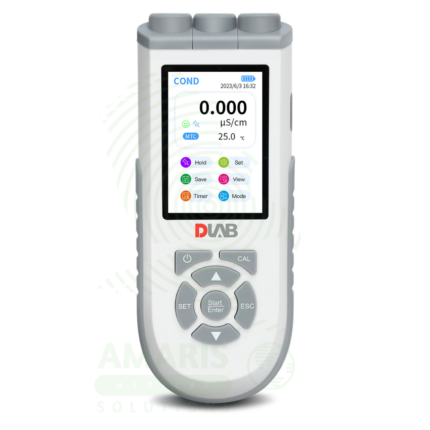
Portable Conductivity Meter – Single Parameter (DEC10)
The Portable Conductivity Meter - Single Parameter (DEC10) is a rugged, handheld instrument designed for accurate, on-site conductivity, TDS, salinity, and resistivity analysis of aqueous samples in clinical, pharmaceutical, and environmental settings . Featuring automatic temperature compensation (ATC) across a wide measurement range (0~2000.0 mS/cm with auto-ranging) and accuracy of ±0.5% FS, this meter provides reliable water quality assessment for critical healthcare applications .
Key features include a 3.5-inch TFT LCD color screen for clear visibility, IP57 dustproof/waterproof rating for field use, Type-C rechargeable lithium battery for convenient power, 3000-data-set storage with full traceability, one-point automatic calibration with preset standards, and PC software for data export and GLP documentation . The meter is supplied with a DCON201T epoxy-body platinum conductivity electrode (K=1.0 cm⁻¹), calibration standards (146.6µS/cm, 1408µS/cm, 12.85mS/cm), rechargeable battery, charging cable, and hard carrying case .
For the clinical laboratory scientist, water quality specialist, and pharmaceutical QC chemist, the Portable Conductivity Meter - Single Parameter (DEC10) supports conductivity verification of purified water systems and dialysis water, TDS and salinity measurement for research applications, resistivity monitoring for pharmaceutical water quality, and cleaning validation for pharmaceutical manufacturing equipment .
For the patient, accurate conductivity measurement of water used in dialysis and pharmaceutical manufacturing ensures that critical treatment fluids meet stringent safety and quality standards—preventing potential harm from improperly treated water and supporting the production of safe, effective medications.
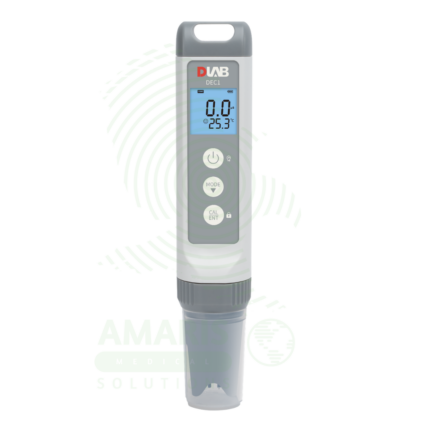
Portable Conductivity Meter (DEC1)
The Portable Conductivity Meter (DEC1) is a pocket-sized, single-parameter conductivity tester featuring automatic ranging (0~19.99 mS/cm), multi-color backlit LCD display, automatic temperature compensation (ATC), 1-point automatic calibration, replaceable combined probe design, IP67 dustproof/waterproof rating, and measurement of TDS (0~10.0 g/L), Salinity (0~10 ppt), and Resistivity (50 Ω·cm~20 MΩ·cm) . The DEC1+ variant adds Bluetooth connectivity, mobile APP support, unlimited data storage, graphical display modes (chart, curve, dial), calibration reminders, sample ID management, and timed storage .
For the clinical laboratory scientist, dialysis technician, and water quality specialist, the DEC1 enables rapid, on-site verification of conductivity in purified water systems, dialysis fluids, and pharmaceutical process water—critical parameters for ensuring patient safety during renal replacement therapy and drug manufacturing . The meter is supplied with a hard carrying case, DEC1-S conductivity electrode (pre-installed), 30mL sample vials (2 pieces), 1408 μS/cm and 12.85 mS/cm calibration standards, 4 × AAA batteries, and lanyard .
Key features include multi-color backlit display for easy reading in various lighting conditions , auto data lock when readings stabilize , low battery indicator , user-configurable auto shut-off (1-8 minutes) and backlight duration (5-20 seconds) , and compatibility with CH, USA, and NIST calibration standards . The IP67 rating ensures reliable operation in harsh field environments .
For the patient, accurate conductivity, TDS, and resistivity monitoring of water used in dialysis and pharmaceutical manufacturing ensures that critical treatment fluids meet stringent safety and quality standards—preventing potential harm from improperly treated water and supporting the production of safe, effective medications.
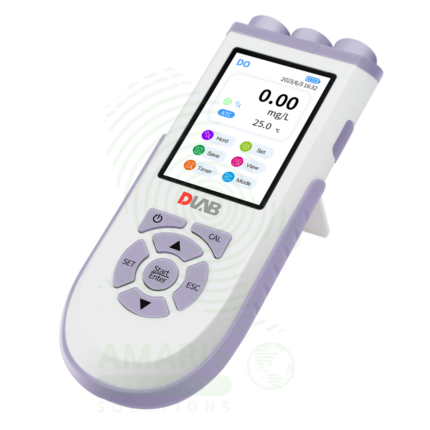
Portable Optical Dissolved Oxygen Meter – Single Parameter (DDOPRO10)
The Portable Optical Dissolved Oxygen Meter - Single Parameter (DDOPRO10) is a rugged, handheld instrument designed for accurate, low-maintenance, on-site dissolved oxygen analysis. Utilizing optical/fluorescence sensor technology , it measures DO concentration (0.00~20.00 mg/L) and percent saturation (0.0~200.0%) with automatic compensation for temperature, barometric pressure, and manual salinity changes .
Featuring a 3.5-inch TFT color screen and a user-friendly UI interface , the Portable Optical Dissolved Oxygen Meter - Single Parameter (DDOPRO10) simplifies field water quality testing. It stores up to 3000 data sets, supporting GLP-compliant documentation, and its rechargeable lithium battery with a Type-C port ensures convenient power for mobile use. The system includes an optical DO probe (DODO01-3M) with a POM shell and stainless steel protection sleeve , a hard carrying case, and charging cable .
For the water quality specialist, the Portable Optical Dissolved Oxygen Meter - Single Parameter (DDOPRO10) is essential for monitoring dissolved oxygen in purified water systems (WFI, dialysis water), assessing aeration in wastewater treatment, and verifying water quality in pharmaceutical production and hospital facilities . Its optical technology eliminates the need for electrolyte refills, membrane cap replacements, long polarization times, and frequent calibrations — dramatically reducing maintenance compared to polarographic DO meters and allowing for precise measurements without sample stirring .
For the patient, this rigorous monitoring helps ensure that water used in dialysis and other medical treatments meets stringent safety standards, preventing potential harm from improperly treated water. The meter provides quick (<15 second response), reliable, and verifiable results for any application requiring critical DO measurement.
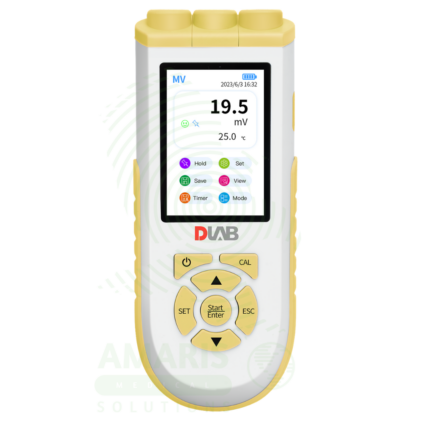
Portable ORP Meter – Single Parameter (DORP10)
The Portable ORP Meter (DORP10) is a rugged, high-precision analytical instrument designed for the critical task of monitoring Oxidation-Reduction Potential in water quality applications across clinical, pharmaceutical, and environmental settings . This single-parameter meter accurately measures ORP from -1999.9 mV to +1999.9 mV and includes a separate stainless steel temperature probe (DTEMP-02H) for Automatic Temperature Compensation (ATC), ensuring reliable readings regardless of sample temperature fluctuations .
Featuring a 3.5-inch TFT color screen and a user-friendly UI, the Portable ORP Meter (DORP10) simplifies on-site testing of disinfection efficacy in dialysis water systems, pharmaceutical purified water loops, and hospital wastewater discharge . The meter supports GLP-compliant data management by storing up to 3,000 data sets with complete timestamps and can be powered by a rechargeable lithium battery charged via a Type-C port .
Supplied with a hard carrying case, ORP electrode (DORP301), stainless steel temperature electrode, 222mV calibration standard, and a Type-C charging cable, the DORP10 is a comprehensive solution for ensuring the oxidative state of water used in patient treatments and drug manufacturing . For the patient, this rigorous monitoring helps ensure that critical treatment fluids meet stringent safety standards, preventing potential harm from improperly treated water.
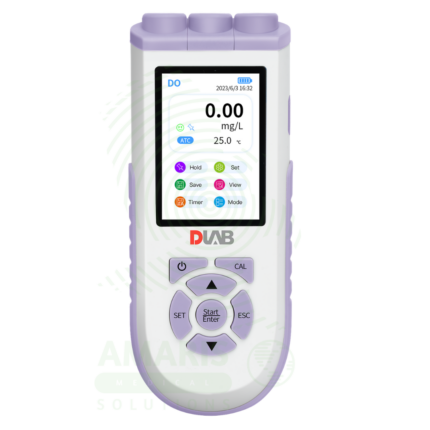
Portable Polarized Dissolved Oxygen Meter – Single Parameter (DDO10)
The Portable Polarized Dissolved Oxygen Meter - Single Parameter (DDO10) is a rugged, handheld instrument designed for accurate, on-site dissolved oxygen analysis. Utilizing a polarographic probe technology, it measures DO concentration (0.00~20.00 mg/L) and percent saturation (0.0~200.0%) with automatic compensation for temperature, barometric pressure, and manual salinity changes.
Featuring a 3.5-inch TFT color screen and a user-friendly UI interface, the Portable Polarized Dissolved Oxygen Meter - Single Parameter (DDO10) simplifies field water quality testing. It stores up to 3000 data sets, supporting GLP-compliant documentation, and its rechargeable lithium battery with a Type-C port ensures convenient power for mobile use. The system includes a polarographic DO probe (DDO01-2M-H), maintenance solutions, membrane caps, and a hard carrying case, making it ready for deployment.
For the water quality specialist, the Portable Polarized Dissolved Oxygen Meter - Single Parameter (DDO10) is essential for monitoring dissolved oxygen in purified water systems (WFI, dialysis water), assessing aeration in wastewater treatment, and verifying water quality in pharmaceutical production and hospital facilities. For the patient, this rigorous monitoring helps ensure that water used in dialysis and other medical treatments meets stringent safety standards, preventing potential harm from improperly treated water. The meter provides quick, reliable, and verifiable results for any application requiring critical DO measurement.
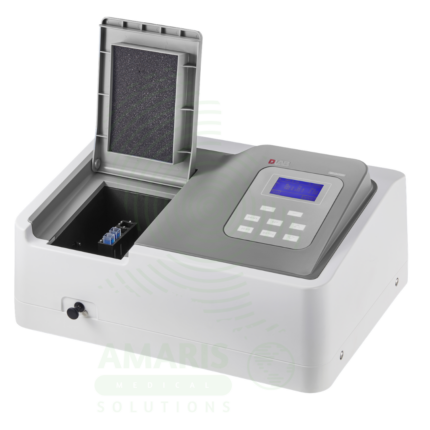
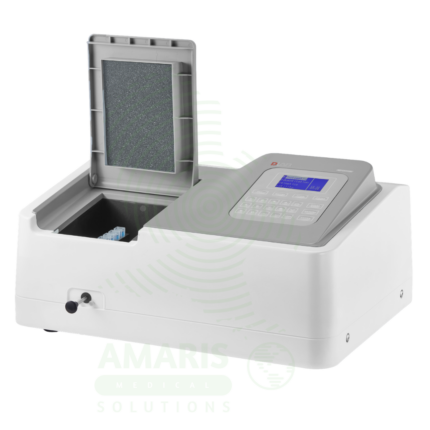
UV-Vis Spectrophotometer (SP-UV1000)
The UV-Vis Spectrophotometer (SP-UV1000) is a high-performance single-beam instrument engineered for accurate, reproducible analysis of nucleic acids, proteins, clinical chemistry analytes, and pharmaceutical compounds in clinical diagnostics, molecular biology, and pharmaceutical quality control. Covering a wavelength range of 190–1100 nm with automatic switching between tungsten and deuterium lamps, this spectrophotometer provides the analytical versatility required for routine and specialized laboratory workflows.
Every UV-Vis Spectrophotometer (SP-UV1000) is factory calibrated and supplied with a certificate of calibration, delivering exceptional photometric accuracy of ±0.003 A at 0.5 A and precision with photometric repeatability of ≤0.0015 A at the same absorbance. The instrument's stability of ≤0.002 A/h at 500 nm after a 2-hour warm-up ensures reliable, drift-free measurements for endpoint and kinetic assays. A large 128 × 64 dot backlit LCD display provides clear data visualization, and the 4-position sample compartment accommodates standard 10 mm path length cuvettes, with optional holders available for path lengths from 5 to 100 mm.
Key user-focused features include automatic wavelength calibration via arrow keys to reduce user errors, data storage for up to 200 test data groups and 200 standard curves with automatic backup to prevent data loss during power interruption, and multi-function measurement modes including photometric, quantitative analysis, and multi-wavelength scanning. The optional Wave Professional software enables computer control, kinetics analysis, and nucleic acid/protein measurement functions.
The UV-Vis Spectrophotometer (SP-UV1000) is supplied with four glass and two quartz square cuvettes (3.5 mL) and includes USB and parallel ports for printer connection. The instrument is manufactured under ISO quality systems, and the manufacturer's CNAS-certified calibration laboratory ensures measurement traceability and confidence in results.
For the clinical laboratory scientist, molecular biologist, and pharmaceutical quality control analyst, the UV-Vis Spectrophotometer (SP-UV1000) delivers the accuracy, stability, and versatility required for DNA/RNA purity assessment, protein quantification, enzyme kinetic assays, and routine clinical chemistry testing. For the patient, reliable spectrophotometric analysis ensures that diagnostic results are accurate and reproducible, directly supporting effective clinical decision-making, appropriate treatment selection, and confident disease monitoring.